



Giovanna Crippa
Product Manager Europe
Write
Choose which cookies you accept. Privacy policy
Audience measurement
Google Analytics and Matomo cookies — journeys, searches and bookings.
Targeted advertising
Google Ads, Meta and Effinity — conversions, personalised ads and campaign attribution.
Travel assistant
AI-generated answers. Check important information on our information pages, in your contract or with a human advisor at Kelifos.
AI answers — when in doubt, ask an advisor.


Picture a Cretan morning: the scent of wild thyme carried on the breeze, a table set in the shade of a centuries-old olive tree, and before you, a breakfast of local cheeses, mountain honey and sun-ripened fruit. Crete is the island where every path leads to a discovery: a village with flower-filled lanes, a monastery perched above the sea, a family taverna where you are welcomed as a long-lost friend. With Kelifos, you explore the largest Greek island at a pace that suits you: cultural walks designed for pleasure, charming addresses selected for their authenticity, and seamless organisation so you need only savour the moment. To prepare your itinerary, we have gathered our favourites in our selection of the best hikes in Crete and a survey of the easy Cretan gorges. And if you are comparing Greek destinations, our guide Crete or the Cyclades helps you decide according to your wishes.

From US$659
5 · 2 reviews

From US$1,042

From Price on request

From Price on request
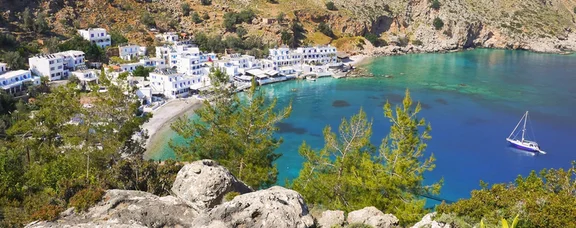
From Price on request
No trips found for these criteria.
None of these quite the trip you had in mind?
Our specialists build the itinerary around you — dates, pace, accommodation, all of it adapts.
Giovanna Crippa
Product Manager Europe
Cretan gastronomy is not a mere accompaniment to the trip; it is its guiding thread. On this sun-nourished land, olive oil flows with legendary generosity, aromatic herbs perfume the hillsides, and every village has its own specialities handed down from mother to daughter. A crunchy dakos drizzled with virgin oil, snails cooked with maquis herbs, a raki offered as a gesture of welcome: so many rituals that transform a simple stop into a moment of sharing.
The markets of Heraklion and Chania overflow with colourful stalls where citrus fruits, cave-aged sheep cheeses and thyme honey renowned across the Mediterranean sit side by side. By travelling at your own pace, you have the leisure to linger at a stall, exchange a few words with a producer, taste before you choose. It is this deliberate slowness that reveals the true face of Crete.
Long before travellers discovered its beaches, Crete was writing one of the earliest chapters of European civilisation. The palace of Knossos, with its dolphin frescoes and labyrinthine corridors, bears witness to a refined culture four millennia old. But Cretan heritage does not end with the Minoan era. The Venetian harbours of Chania and Rethymno, with their ochre facades and sea-gazing fortresses, tell centuries of exchange between East and West.
As you wander, you will encounter Byzantine chapels nestled in valley hollows, Ottoman fountains at the corner of a shaded square, and monasteries still inhabited where time seems to stand still. Our guided trips weave in these visits with passionate local guides who bring every stone and every legend back to life.
Crete offers a variety of vistas that few Mediterranean islands can match. On the northern coast, long sandy beaches border calm, warm waters, perfect for a swim after a morning stroll. To the south, cliffs plunge into the Libyan Sea and isolated coves are earned at the end of paths fragrant with sage and rosemary.
Between these two shores, the White Mountains and Mount Psiloritis trace a generous relief where verdant plateaux dotted with flocks cling to the slopes. The gorges (Samaria, of course, but also dozens of lesser-known and equally striking ones) carve the rock with their vertiginous walls. With Kelifos, itineraries are designed to offer you these natural spectacles without ever sacrificing your comfort: an easy pace, panoramic pauses, and each evening the pleasure of returning to a boutique hotel where you can rest.
Crete is so vast and so rich that it would be a shame to settle for a single shore. Here are the places that, on their own, justify the journey and compose a mosaic of landscapes, heritage and Mediterranean light.
The palace of Knossos remains the beating heart of Minoan civilisation. To enjoy it fully, visit early in the morning, before the heat and the crowds. The frescoes, inner courtyards and pithoi storerooms recover their tranquillity. Complete the experience with the Archaeological Museum of Heraklion, about twenty minutes away: the original palace frescoes are exhibited there, along with the celebrated Phaistos Disc and jewellery of remarkable finesse. Together they form a four-millennia plunge, accessible and fascinating.
Many travellers consider Chania the most beautiful town in Crete. Its Venetian harbour, lined with colourful facades and topped by an emblematic lighthouse, offers a vista you willingly contemplate from a cafe terrace. Deeper into the lanes, the Turkish quarter of Splantzia reveals discreet minarets, bougainvillea and shaded little squares. The covered market (agora), built in a cruciform plan, brims with cheeses, dried herbs and thyme honey. It is the perfect place to bring home a bottle of olive oil and a few gourmet souvenirs.
It is the longest canyon in Europe: sixteen kilometres of descent through the White Mountains, from the Omalos plateau to the Libyan Sea. The path winds between walls that narrow to the celebrated Iron Gates, a passage just three metres wide. The arrival at Agia Roumeli, a small coastal village accessible only by boat, rewards walkers with a swim in crystal-clear waters. For a gentler approach, you can walk up the gorge for a few kilometres from Agia Roumeli without covering the entire route. Our walks in Crete often include this natural jewel.
Imagine a lagoon of turquoise water, sand tinted pink by crushed shells, and a silence broken only by the surf. Elafonissi, at the southwestern tip of the island, is this little paradise. The road to reach it winds through the mountains, offering spectacular views over valleys and olive groves. Once there, you wade across a shallow arm of the sea to reach the islet, feet in the warm water.
To the northwest, the lagoon of Balos rivals the most beautiful tropical landscapes. You reach it by boat from Kissamos or by a steep path descending from the road. The spectacle is striking: three shades of blue merge in a setting of dunes and rocks. It is a place best savoured by arriving early, when the morning light turns the water to a mirror.
Between Chania and Heraklion, Rethymno charms with its blend of Venetian and Ottoman influences. The Fortezza fortress, one of the largest ever built by the Venetians, dominates the old town and offers a panorama over the sea and tiled rooftops. Below, the narrow lanes brim with artisan shops, family tavernas and sculpted fountains. The small fishing harbour, peaceful and photogenic, invites you to linger over an ouzo as the sun sets.
The island is so extensive (260 kilometres from east to west) that each region has its own character. Depending on your wishes, the journey will take on a very different colour.
This is the most spectacular and wildest part. Chania is the gateway, Samaria Gorge the beating heart, and the beaches of Elafonissi and Balos the coastal jewels. The White Mountains (Lefka Ori) rise to over 2,400 metres and plunge toward the sea in vertiginous cliffs. The hinterland villages, such as Theriso or Milia, preserve a mountain art of living made of fresh cheese, raki and conversations in the village square. If you seek breathtaking vistas and unspoilt nature, this is where to set down your bags.
Gentler and more discreet, the eastern part captivates with its tamarisk-fringed beaches and little-known heritage. Agios Nikolaos, on the shores of Lake Voulismeni, makes a charming stop. Further east, Sitia and its Venetian fortress welcome travellers in an authentic, unhurried atmosphere. The islet of Spinalonga, a former Venetian leper colony off Elounda, tells a poignant story in a postcard setting. And at the very tip of the island, the palm grove of Vai spreads its natural palms to the shoreline, a landscape unique in Europe.
This is the Crete of connoisseurs. Here, no major roads: villages are reached by sea or by winding roads that cross the mountains. Loutro, nestled at the foot of the cliffs and accessible only by boat or on foot, embodies this serenity. Sfakia, Plakias and its neighbouring coves, Matala and its caves carved into golden rock: each stop is an invitation to slow down. The rhythm here is that of fishermen and shepherds. You dine with your feet in the sand, you fall asleep to the sound of the waves. This is the Crete our self-guided holidays let you discover.
Heraklion, the capital, serves as the starting point for exploring the palace of Knossos and the surrounding vineyards. Cretan wines, long underappreciated, are gaining recognition thanks to indigenous grape varieties such as vidiano and kotsifali. Moving away from the coast, the Lassithi Plateau offers a green landscape of market gardens and windmills, framed by a mountain amphitheatre. It is a generous terroir where gastronomy and heritage meet at every turn.
Crete is served by two international airports: Heraklion (east) and Chania (west). From the UK and US, direct or connecting flights reach both cities in around four hours, with higher frequencies in spring and autumn. For those who prefer a more contemplative arrival, the overnight ferry from Piraeus (Athens) crosses the Aegean in about nine hours. You fall asleep in your cabin and wake at sunrise, with the Cretan coastline taking shape on the horizon. The journey has already begun.
The KTEL bus network covers the main towns and tourist sites at very reasonable fares. For exploring the southern coves or mountain villages, a hire car remains the most comfortable choice. The narrow, winding southern coastal roads call for unhurried driving, but reward every bend with a new view over the Libyan Sea.
If you prefer not to plan a thing, Kelifos arranges all your transfers. Accommodation is chosen for its location, stages calibrated so that journeys remain a pleasure, never a chore. You simply enjoy the passing landscapes.
Crete lends itself beautifully to a star itinerary from a single base or a circuit crossing the island from west to east. By visiting in October, you enjoy clear roads and golden light that elevates every vista. Whatever the format, our advisors compose a route tailored to your pace, your wishes and the season you choose.
Spring and autumn are the most pleasant seasons to discover Crete in the best conditions. From April to June, the island is carpeted with wildflowers, temperatures are mild and the light incomparably soft. It is the ideal time to wander without the summer crowds, enjoying still-quiet terraces and brilliantly green landscapes.
From September to November, the sea retains its summer warmth and the days remain long and sunny. The grape harvest is in full swing, the olive groves begin to bow under the weight of their fruit, and the atmosphere takes on a special serenity. Whatever the season you choose, our Kelifos advisors guide you towards the trip best suited to your wishes.
To scout the paths yourself, the 1:25,000 maps published by Anavasi and Terrain cover the island’s main massifs and are the reference among walkers in Greece. The European E4 path also crosses Crete from east to west, linking its finest landscapes, waymarked with two red stripes. If you would rather prepare nothing, our self-guided holidays hand you detailed route notes and the track for every stage: you simply follow the path, with no route to piece together and no map to buy.
Crete lends itself wonderfully to a quiet walk: many gorges are covered on the flat or on a gentle slope, in the shade of the walls and beside the water. The easiest Cretan gorges, such as Imbros or Agia Irini, are perfectly suited to a family outing, with shaded stretches and an arrival near the sea. Our itineraries are calibrated on short stages and a peaceful rhythm, to savour the landscape rather than count the kilometres.
It all depends on what you feel like. On a guided trip, an English-speaking leader brings every gorge and every Minoan palace back to life, in a small group and at a pace open to all walkers, even beginners. On a self-guided holiday, you travel at your own rhythm alone, route notes in hand and luggage carried from one stage to the next. In both formulas your charming accommodation is booked and your transfers arranged: all that is left is to walk and to savour.
The island is vast (260 kilometres from east to west) and deserves to be taken slowly. Our stays generally run from eight to twelve days, enough to combine the western gorges, the villages of the south coast and the Minoan heritage without ever rushing. A week is enough to taste a single region, but it is by staying a little longer that Crete fully reveals its flavours.
Travellers captivated by Cretan charm often find in the other Greek islands a natural extension of their discovery. The Cyclades and their immaculate villages perched above the Aegean offer a radically different atmosphere, between shepherd paths and legendary sunsets. The Ionian Islands, greener still, captivate with their endless olive groves and emerald waters.
For those who wish to vary the pleasures, Crete also lends itself beautifully to cycling: quiet coastal roads, hinterland villages linked by winding lanes, and always that Cretan hospitality which transforms every pause into a moment of conviviality.
Bernadette 7/3/26 • Crete: White Mountains and azure sea
— We are very happy with the itinerary and with the hike itself, which crosses magnificent landscapes and offers various options to take shortcuts by boat at certain points. The hotels chosen are good and comfortable, except the one in Omalos, which is now dated and not very well maintained (we had stayed there in 2013 and nothing has changed). Everywhere the reception and service staff were friendly, warm, efficient, and full of good advice.
—
— Reply from the team
Pierre 7/3/26 • Crete: White Mountains and azure sea
— Beautiful nature trek with good hotels, charming hosts, magnificent scenery. But too many people at Samaria and a bit of a struggle to set off early (breakfast served at 8 a.m.) when it's very hot.
—
— Reply from the team

From US$1,307
4,5 · 2 reviews

From US$1,648
4,6 · 20 reviews
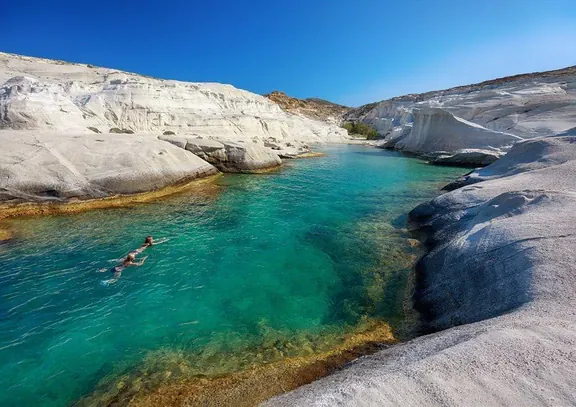
From Price on request

From Price on request
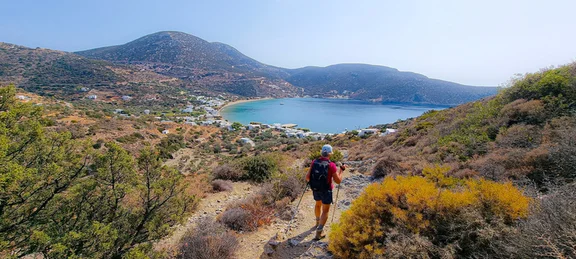
From US$1,036
4,6 · 20 reviews

From US$1,171
4,5 · 2 reviews
Your next adventure
Confirmed trips only
No trip matches — let us guide you Need help choosing?
Call us
Receive our best travel inspirations and expert tips straight to your inbox.
Your weekly dose of travel inspiration.