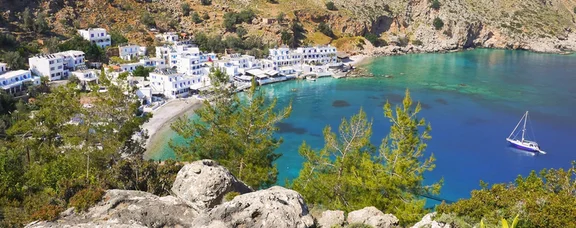


October is Crete’s best-kept secret. The beaches empty, the gorges recover their silence, and the whole island seems to breathe a sigh of relief after the summer. For anyone who likes to travel on foot, it is a golden season: the light is soft, the air mild, and the Cretans, released from the summer frenzy, rediscover the pleasure of welcoming you.
The climate in October
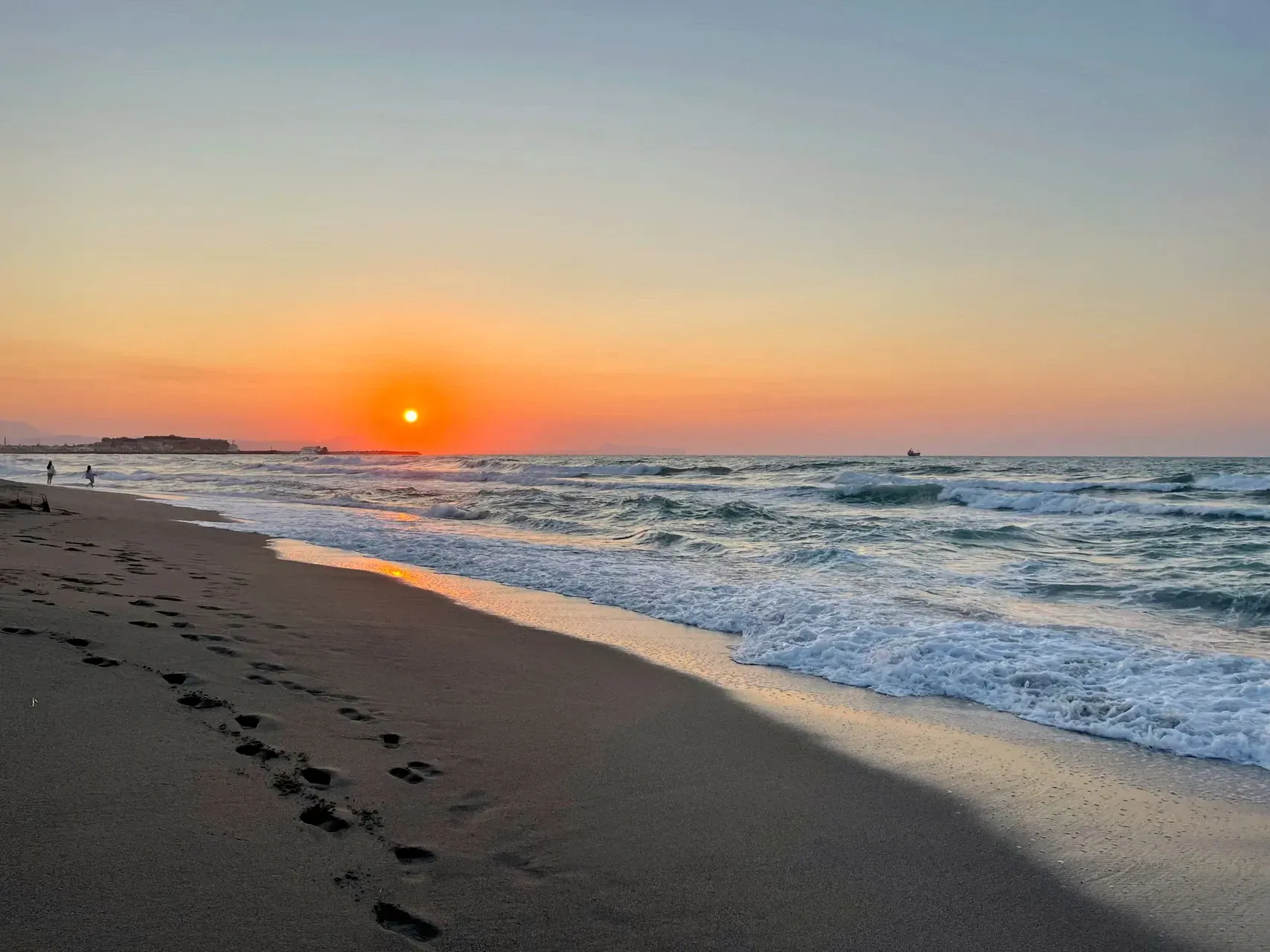
Picture bright mornings at 19 degrees, afternoons at 25, a light breeze carrying the scent of thyme and warm earth. The sea, still full of the summer’s heat, holds at 23 degrees, a temperature that invites a swim after every walk. Rain may make an appearance towards the end of the month, brief and welcome, just enough to revive the colours of the earth. The evenings are mild, perfect for dinner on a terrace under the stars, a glass of local wine in hand.
This is not a climate you look up in a table, it is a climate you feel: the warmth on your skin, the clarity of the air, that low late-day light that gilds the cliffs and turns every landscape into a painting. On average, reckon on around 24 degrees by day, 17 degrees at night, a sea still at 23 degrees and 6 to 7 hours of sunshine, with rare showers late in the month.
Why October is perfect for Crete on foot
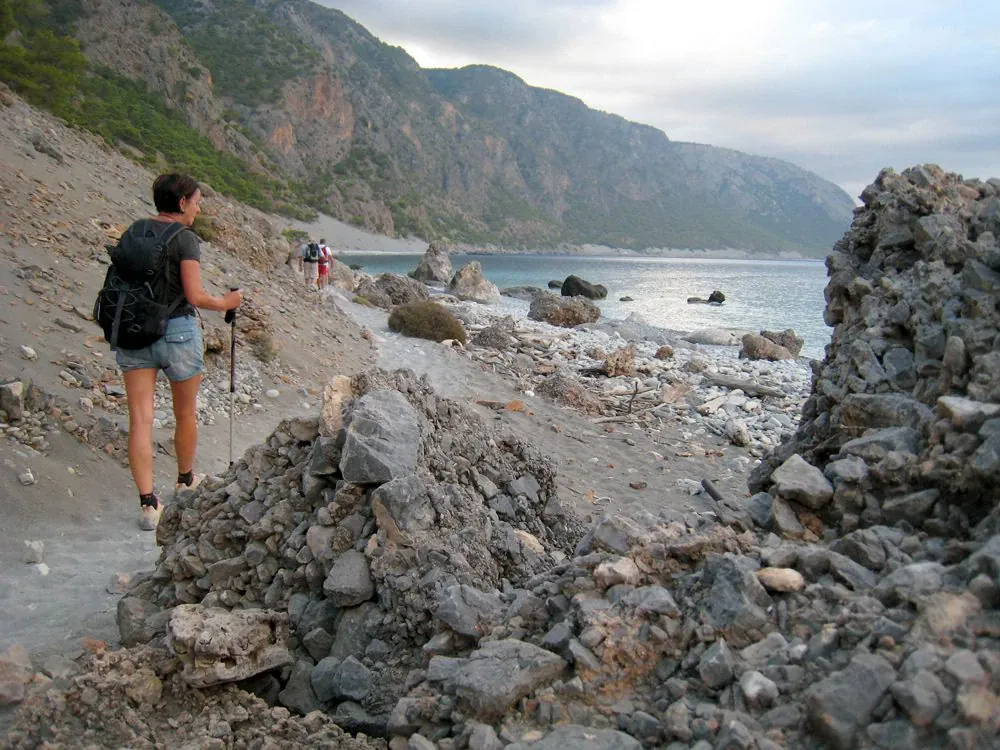
Crete’s paths take on a particular quality in October. The heat is no longer an obstacle, and pauses in the shade are no longer a necessity but a pleasure. You walk at your own pace, light, your gaze free.
The Imbros gorge, rid of its summer visitors, recovers its silent majesty. The southern coastal paths, between Loutro and Paleochora, are walked in a benevolent solitude. October light, low and golden, is the light photographers prefer: it deepens the relief, lengthens the shadows, gives the white villages a particular brilliance.
And then there is the welcome. In October, the Cretans have time. The taverna owner comes and sits at your table, the shepherd stops to exchange a few words, the hotel owner makes you a homemade cake. This is authentic Crete, the one that shows itself only to those who take the time to meet it.
What to see, what to do
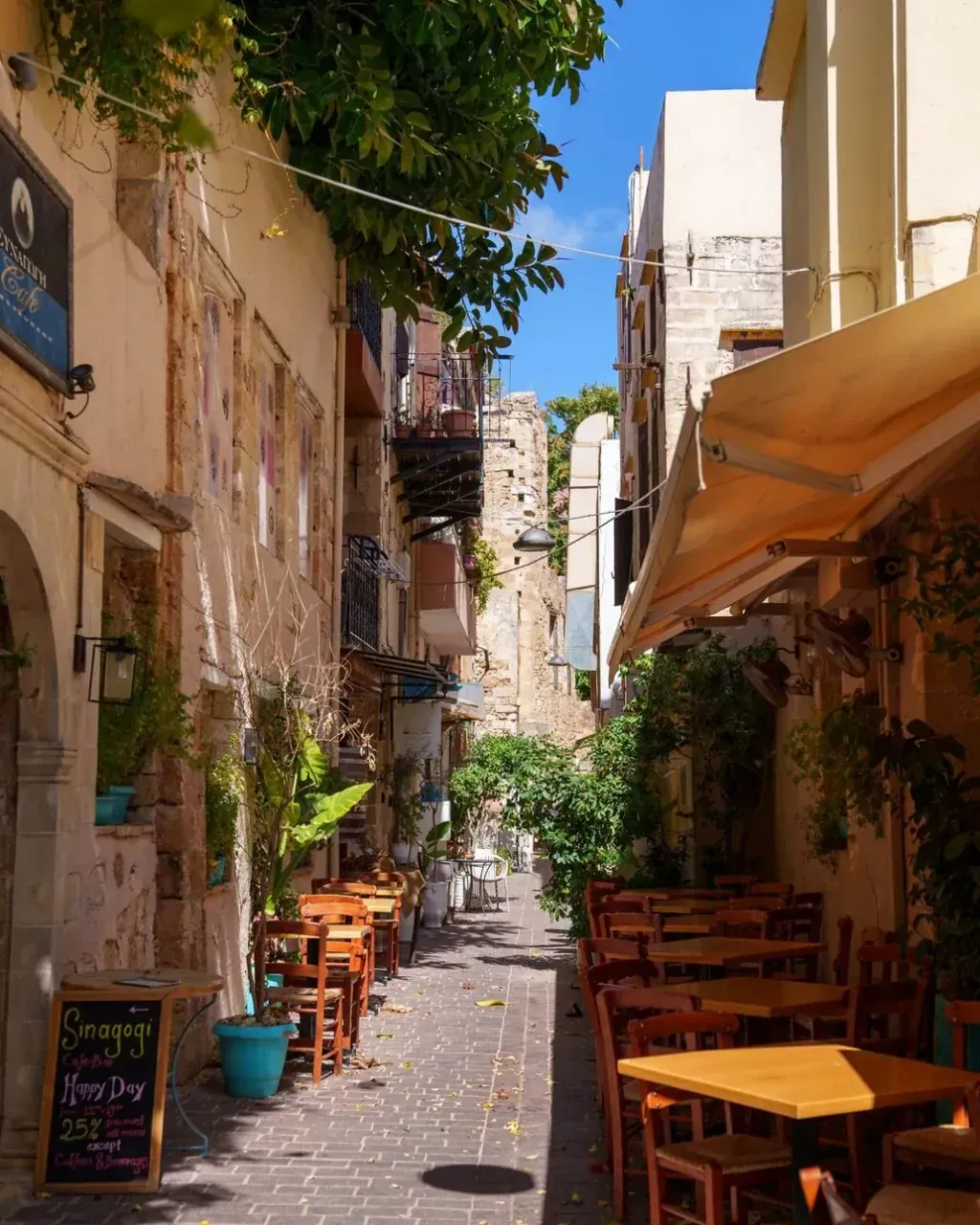
The Imbros gorge is a perfect walk for October: accessible, magnificent, never overwhelming. The Samaria gorge is in principle open until the end of October. Only heavy autumn rains can bring the closure forward, so it is best to check before setting out late in the month.
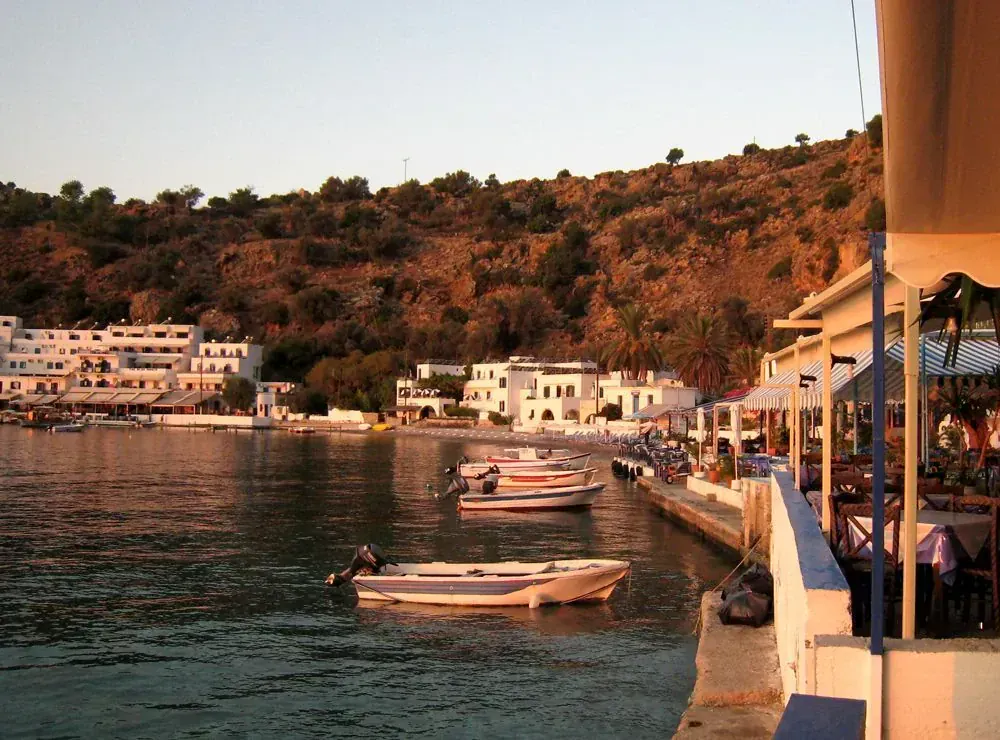
The south coast concentrates all the charm of Crete in autumn. Loutro, that roadless village reachable by boat or on foot, lives out its last weeks of the season in a gentle, companionable atmosphere.
Paleochora, further west, offers its long beaches and seafront tavernas with a nonchalance that is the whole of its charm.
As for the towns, Chania is a delight. The old Venetian harbour, the lanes of the historic quarter, the covered market with its stalls of spices and honey: everything is visited on foot, at your own pace. Rethymno, with its Venetian fortress and Ottoman fountains, offers a stroll every bit as rich.
Heraklion, the capital, also deserves a day of discovery. The archaeological museum, one of the richest in Greece, holds the treasures of the Minoan civilisation: colourful frescoes, gold jewellery, the celebrated Phaistos Disc. And a few kilometres south of the city, the palace of Knossos, more than 3,500 years old, brings the myth of the Minotaur back to life in a labyrinth of courtyards, staircases and painted halls. In October the site is visited in a rare calm, far from the summer crowds, and the low autumn light gives the stones a golden tint that adds to the feeling.
The beaches, finally, have not said their last word. The Balos lagoon, in the north-west, keeps its turquoise water and immaculate sand. Elafonissi, with its pink reflections and its peninsula reachable at low tide, is savoured in the quiet of the late season. And the beach of Matala, backed by its cave-pierced cliffs, still holds the memory of the travellers who, long before us, stopped there to contemplate the Libyan Sea.
The Cretan table in October
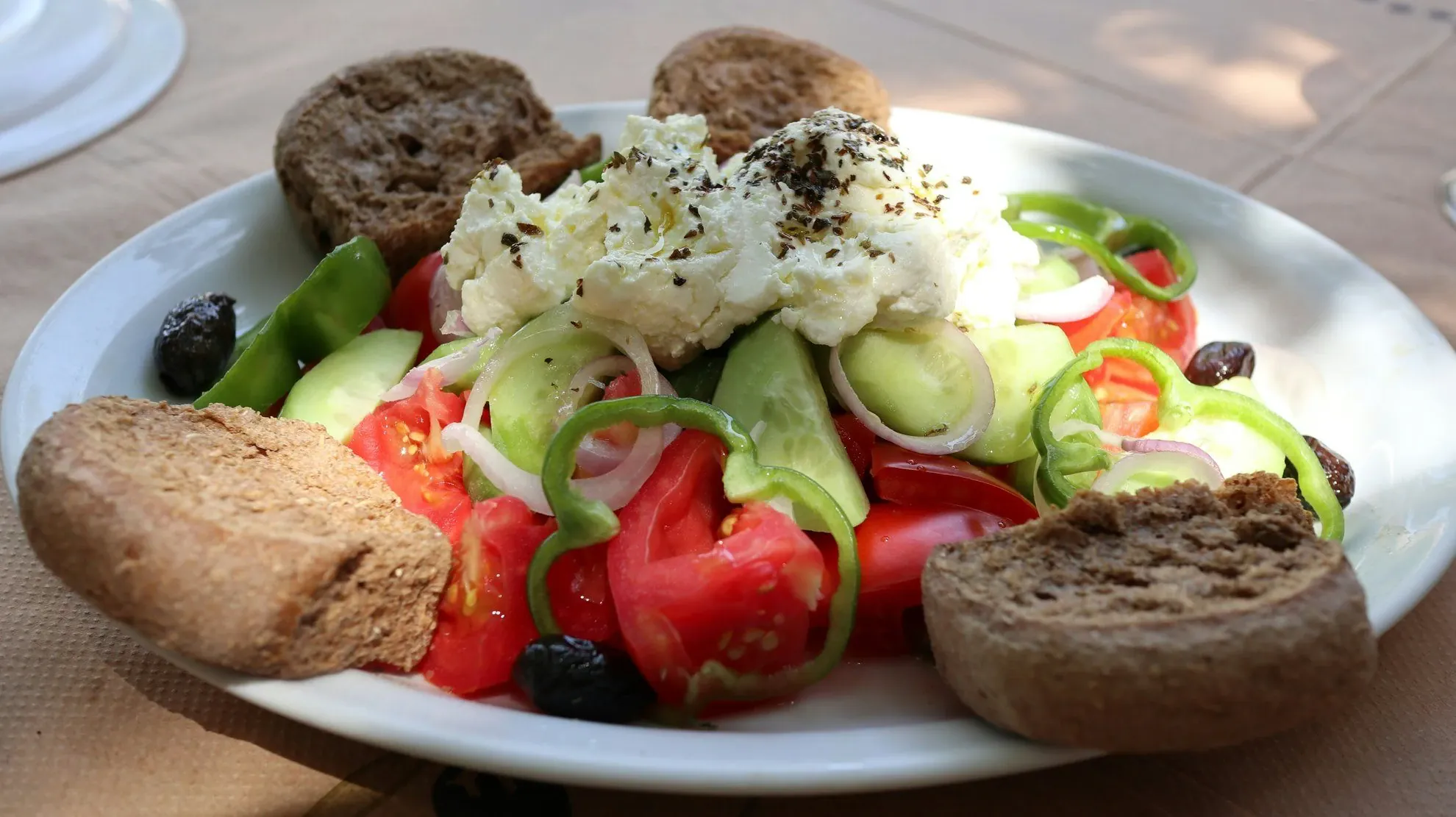
It is in October that Crete comes to the table most generously. The olive trees are beginning to bend under the weight of their fruit, and the harvest ahead puts everyone in good spirits. The first new oils, green and peppery, appear on taverna tables.
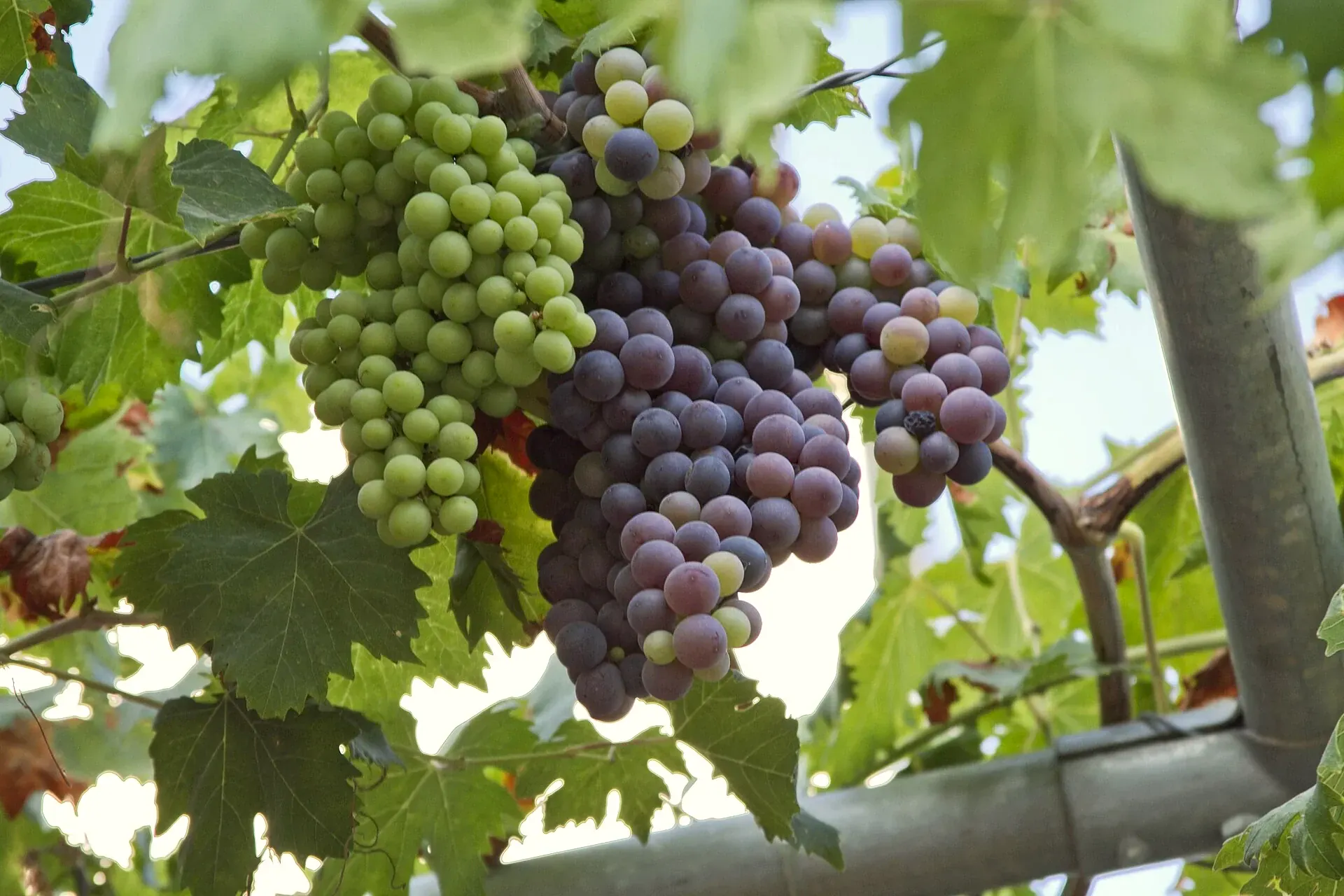
It is also the season of tsikoudia, the Cretan spirit. In the villages, distilling the grape marc is a social event: people gather around the still, they taste, they share, they tell stories. The figs are still there, the pomegranates burst with red, the raisins dry on the terraces. Thyme honey, harvested in the autumn, perfumes the breakfast yoghurt.
Eating in Crete in October means tasting the terroir in its most sincere form. Vegetables full of sun, sheep’s cheeses aged in caves, fish caught that very morning, wild herbs gathered on the hillsides. Every meal is a discovery, every taverna a small happiness.
October festivals and traditions
October gives Cretan life the rhythm of its seasonal gatherings. Towards the end of the month, the village of Elos and its neighbours celebrate the Chestnut Festival: you taste cakes, jams and slow-cooked dishes made with this autumn fruit, all accompanied by traditional music and dancing. It is a moment of simple, warm sharing, open to all visitors.
In the countryside, the kazania season is in full swing: the copper stills are lit to distil grape marc into tsikoudia, and every family opens its doors. You taste, you sing, you raise a glass. These evenings around the still are among the finest memories you can bring back from Crete in autumn.
On 28 October, a national public holiday, Greece commemorates the “Ochi” (No) of 1940. In every Cretan town and village, parades and ceremonies pay tribute to the resistance. It is a rare chance to see Cretans in traditional dress, proud of their history, and to understand how alive that memory remains.
Practical advice
Flights to Heraklion and Chania remain frequent in October, with fares often gentler than in high season, and airlines still have good availability at this time of year.
On accommodation, October lets you stay in charming addresses without booking months ahead, though the best guesthouses fill quickly. Rates are often softer than in high season, which lets you treat yourself to hotels of character you would not have considered in July.
Pack a few light layers for the evenings and for mornings at altitude, a windproof for the boat crossings, and good walking shoes. A light woollen will be welcome for dinners on a terrace when the breeze picks up. The rest, Crete takes care of.
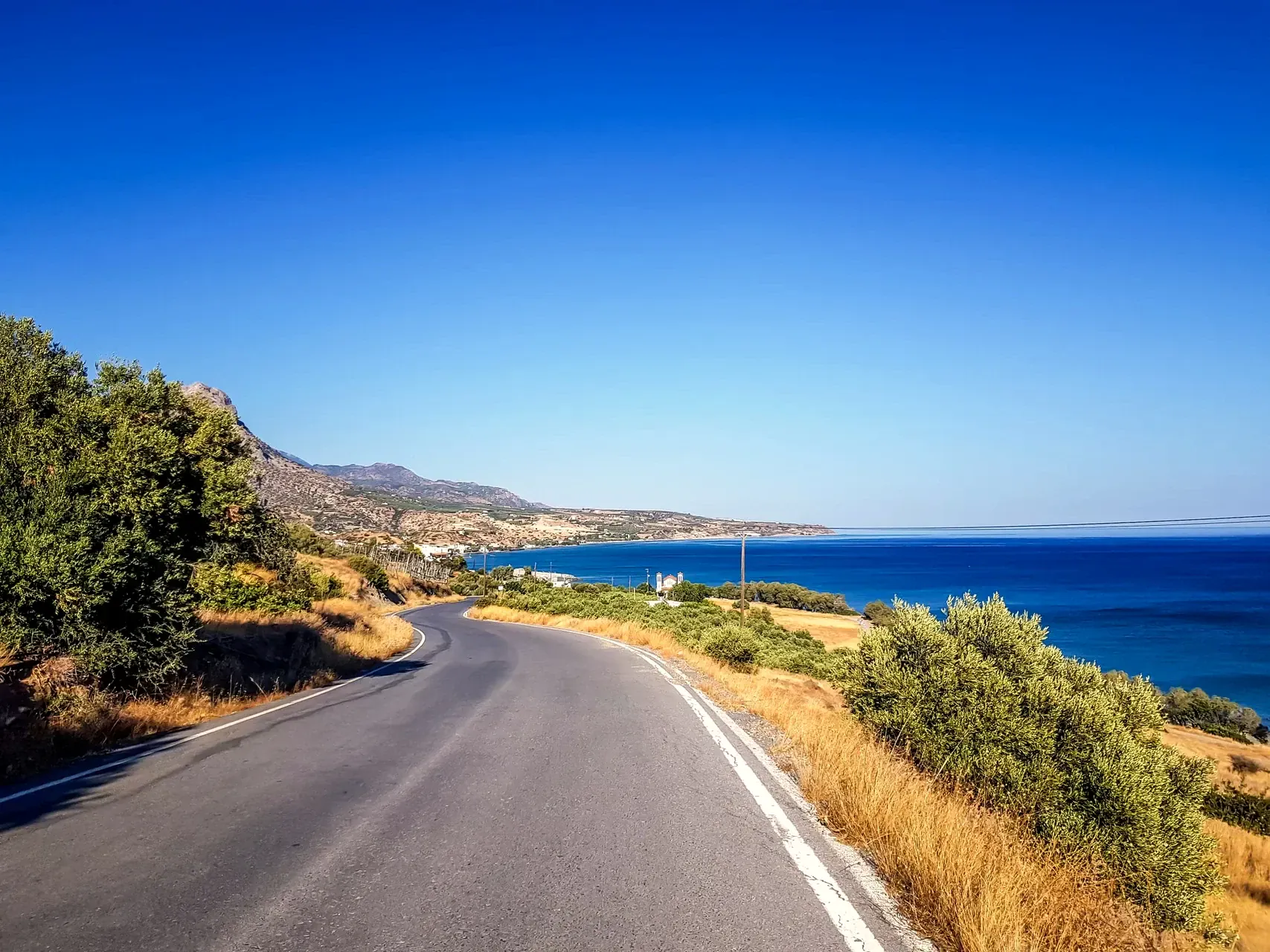
To get around the south coast, a car remains the most comfortable option. The mountain roads, winding but beautiful, open up villages the bus does not serve. The ferry links between Paleochora, Sougia, Loutro and Chora Sfakion also allow fine combinations, alternating a walk with a sea crossing.
Our trips in Crete
- Crete, between villages and the Libyan Sea: the south coast at your own pace, between gorges, fishing villages and secret coves.
- Crete, from the Lasithi plateau to the southern shores: from the mountains to the sea, a gentle traverse of the island.
- Authentic Crete, between mountains and sea: a guided trip to discover the island’s hidden treasures, from plateau to shore.
Article written by
Maria Papadopoulou (Μαρία Παπαδοπούλου)
Editorial lead
I hike, and Greece is the place I keep coming back to. My initial studies (a Master’s in Marketing and a degree in Applied Foreign Languages) taught me how to build an editorial project, and the trails taught me the… Read more