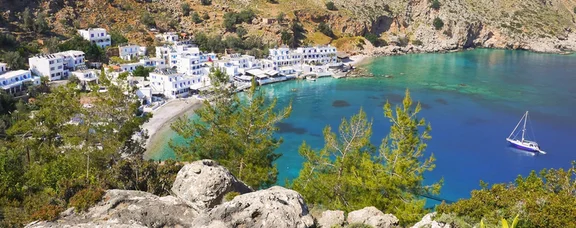


Crete is discovered on foot. On foot is even how it reveals itself best: in the silence of a gorge where only the cry of the swifts echoes, on a coastal path where the Libyan Sea appears at every bend, in the turn of a village where someone offers you a glass of raki before you have even asked the way. Here are our favourite walks for hiking in Crete at your own pace, ordered from the gentlest to the wildest, each with a taverna to end the day with your feet in the sand.
There is no need to be a strong walker: most of these paths are covered in half a day, at an easy pace, between two swims. And for anyone dreaming of the gorges without the Samaria crowds, we keep a few secrets a little further down this page.
Samaria Gorge: the classic
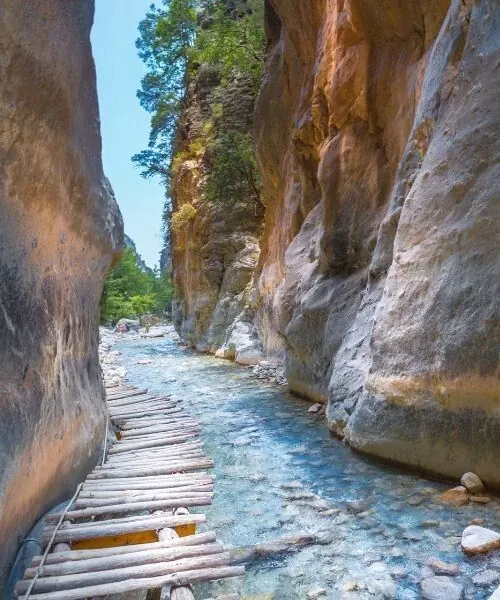
Samaria needs no introduction, and yet the emotion stays intact on every visit. From the first steps, the path plunges into a mineral world where limestone walls rise to vertiginous heights. The descent crosses a forest of Cretan cypress, follows a torrent playing hide-and-seek between the rocks, and ends where the cliffs close in until only a three-metre passage remains, the famous Iron Gates. You then emerge at the coastal village of Agia Roumeli, facing the Libyan Sea, with the feeling of having crossed a world. The final reward: feet in the water, a grilled fish on a taverna terrace. Samaria is a classic for good reasons.
Allow a full day all the same for its 16 km of descent, on ground that is sometimes stony: it is the longest walk on this page. The park is open from 1 May to 15 October. If you would prefer a gentler version or you are travelling out of season, read The easy gorges, an alternative to Samaria below. Our guided trips in fact offer Samaria as an out-and-back, without the full descent: see our Crete on foot with a guide.
The easy gorges, an alternative to Samaria
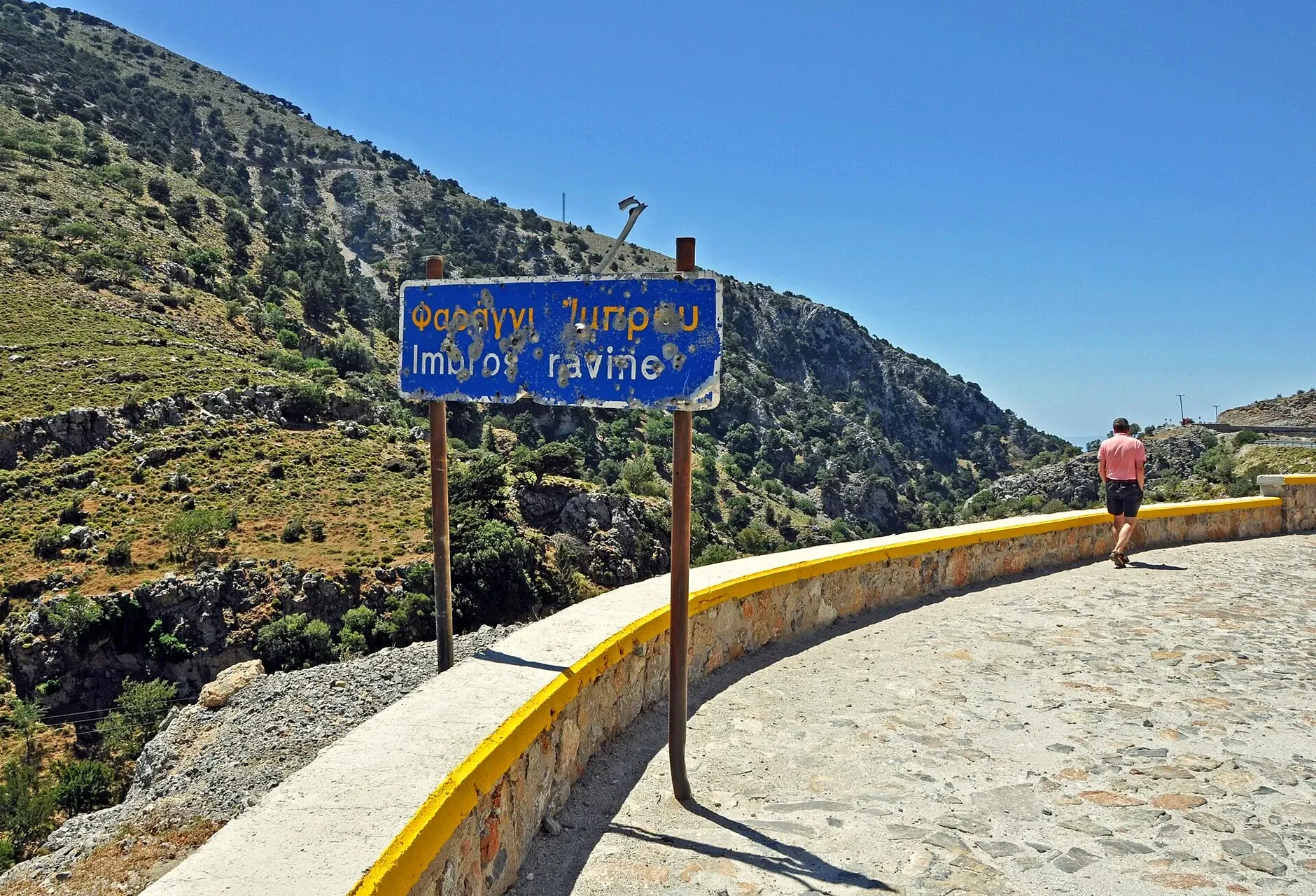
Samaria makes people dream, but you can taste the magic of the Cretan gorges without the crowd or the long day. Three names come up when you look for a shorter, shaded walk. The Imbros gorge descends quietly over 8 km, in 2 to 3 hours, between wild fig trees and dry-stone walls, to the village of Komitades and its shaded taverna. The Agia Irini gorge, open for a good part of the year, unfolds 7 km of plane trees and oaks to the outskirts of Sougia, facing the Libyan Sea. Further east, the Richtis gorge holds a rare surprise: a waterfall dropping into a cool pool, at the end of a green valley.
These three itineraries are walked at a gentle pace, a picnic in the bag, and suit even those who walk little. We tell them in detail, with access, durations and good tavernas, in our dedicated guide: the easy gorges of Crete, without the crowds of Samaria.
From Loutro to Marmara: the sea in your sights
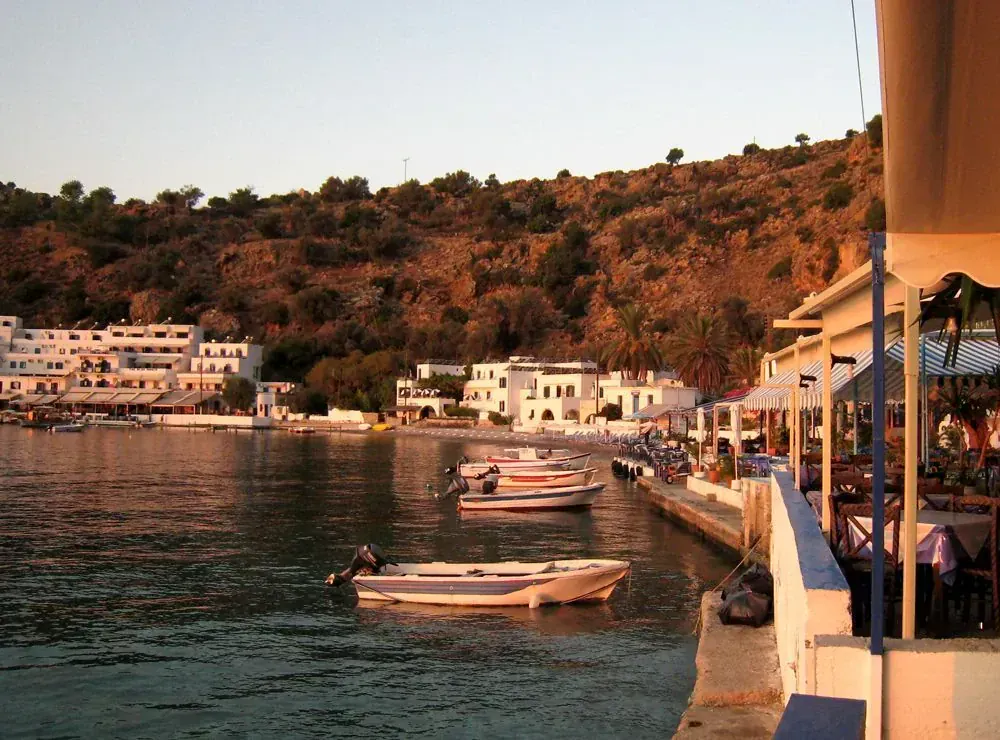
This coastal path is one of the finest in Crete. From Loutro, a small village reachable only by boat or on foot, the path climbs the cliff then follows the south coast, with a continuous panorama over the Libyan Sea. The blue is so deep it becomes almost unreal. You pass the beach of Marmara, often deserted, where golden sand invites a swimming stop. Allow around 2 hours of quiet walking on the way out, the return possible by boat, sitting at the bow of a caique, your face offered to the warm wind. For anyone wanting to extend it, the Aradena gorge comes out just above Marmara, after a vertiginous bridge suspended over the void. This is Crete at its purest. Loutro returns like a refuge in several of our walking holidays in Crete, always for a last swim before the boat back.
The Lasithi plateau: a pastoral walk
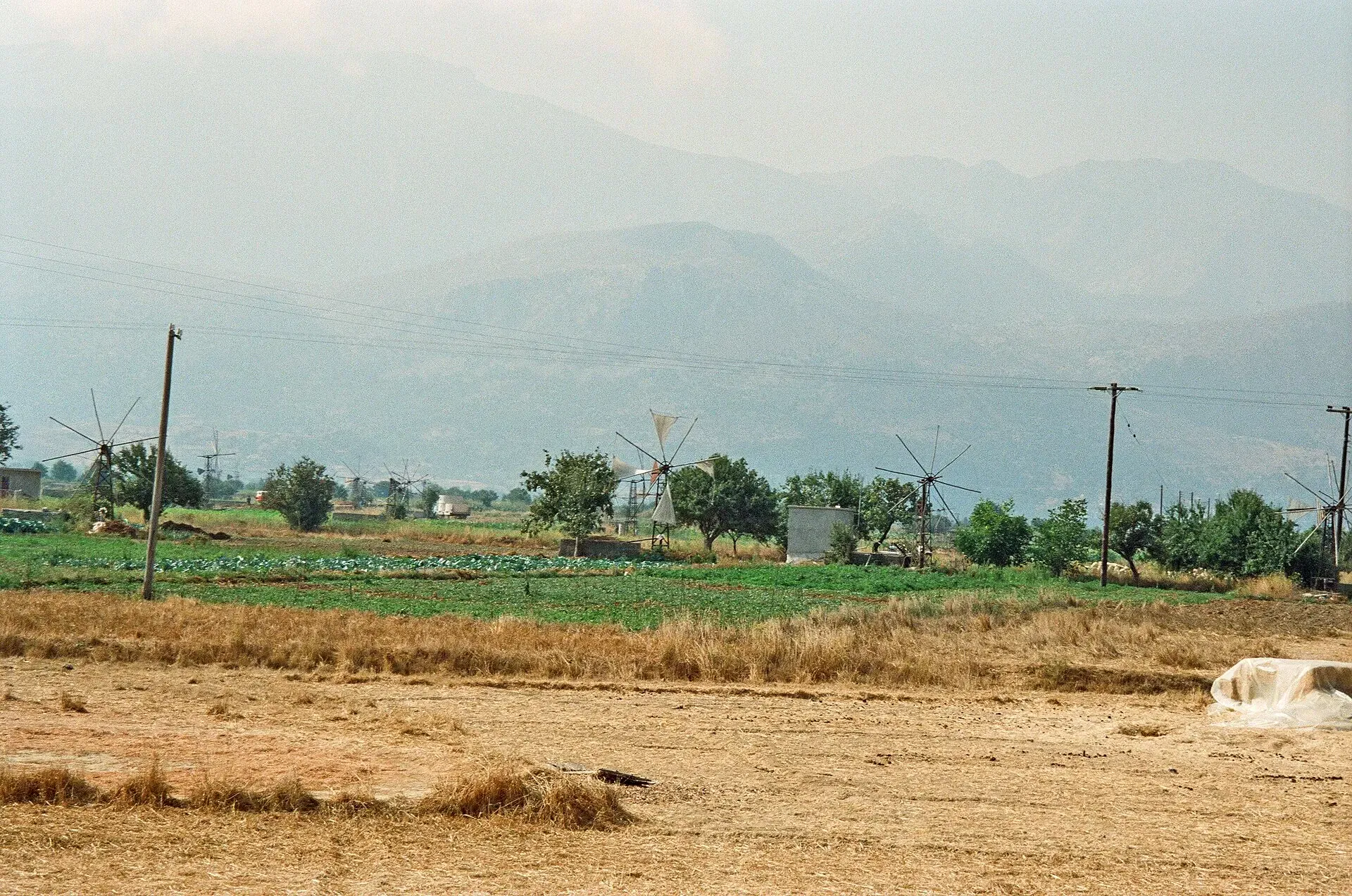
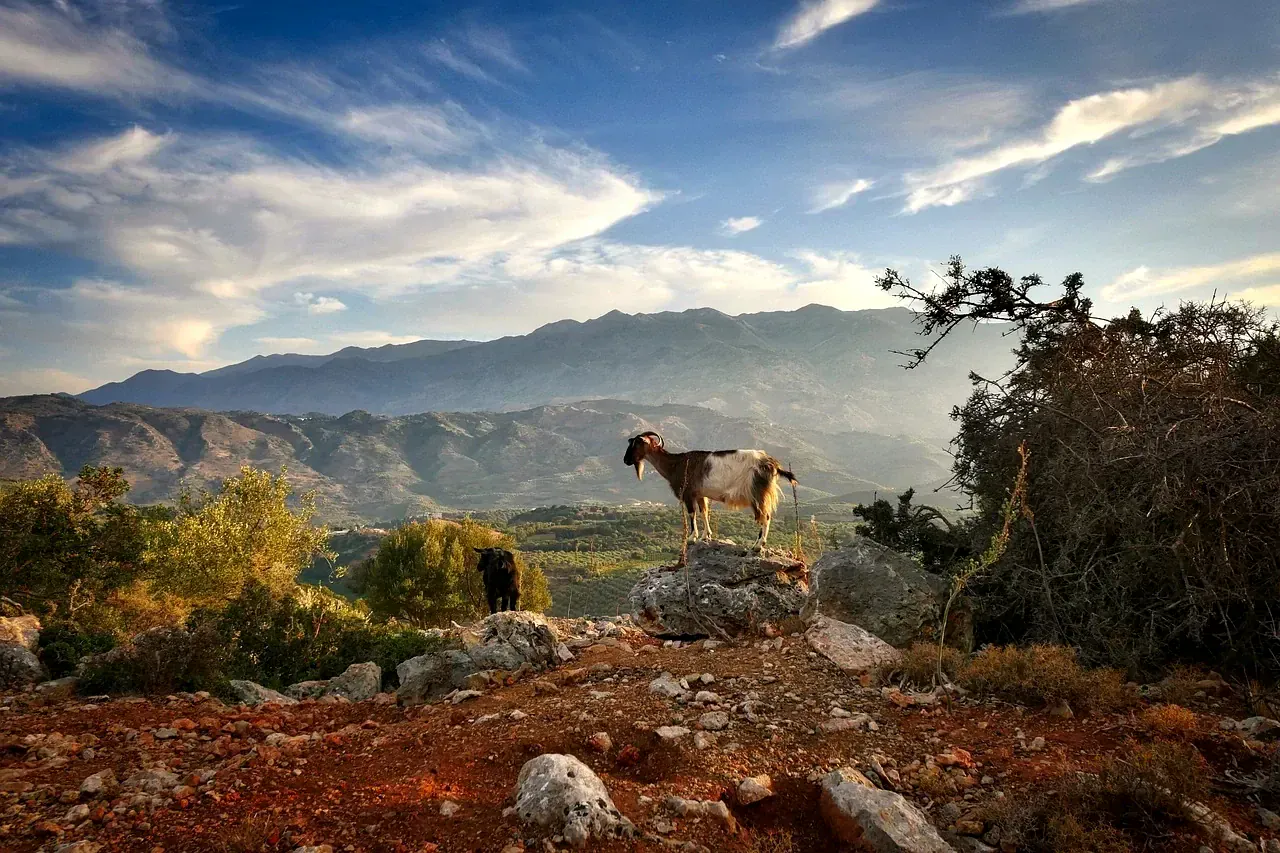
Far from the coasts and the seaside bustle, the Lasithi plateau is another face of Crete. Ringed by mountains, punctuated by windmills with white sails, this fertile plateau lives to the rhythm of the farming seasons. The walk is gentle and flat, 2 to 3 hours between apple orchards, potato fields and small villages where time seems suspended. You stop to taste a yoghurt with honey at a farm, to watch a shepherd and his goats on the slopes, simply to contemplate the quiet beauty of a landscape cultivated by people for millennia.
From Paleochora to Sougia: the southern coastal path
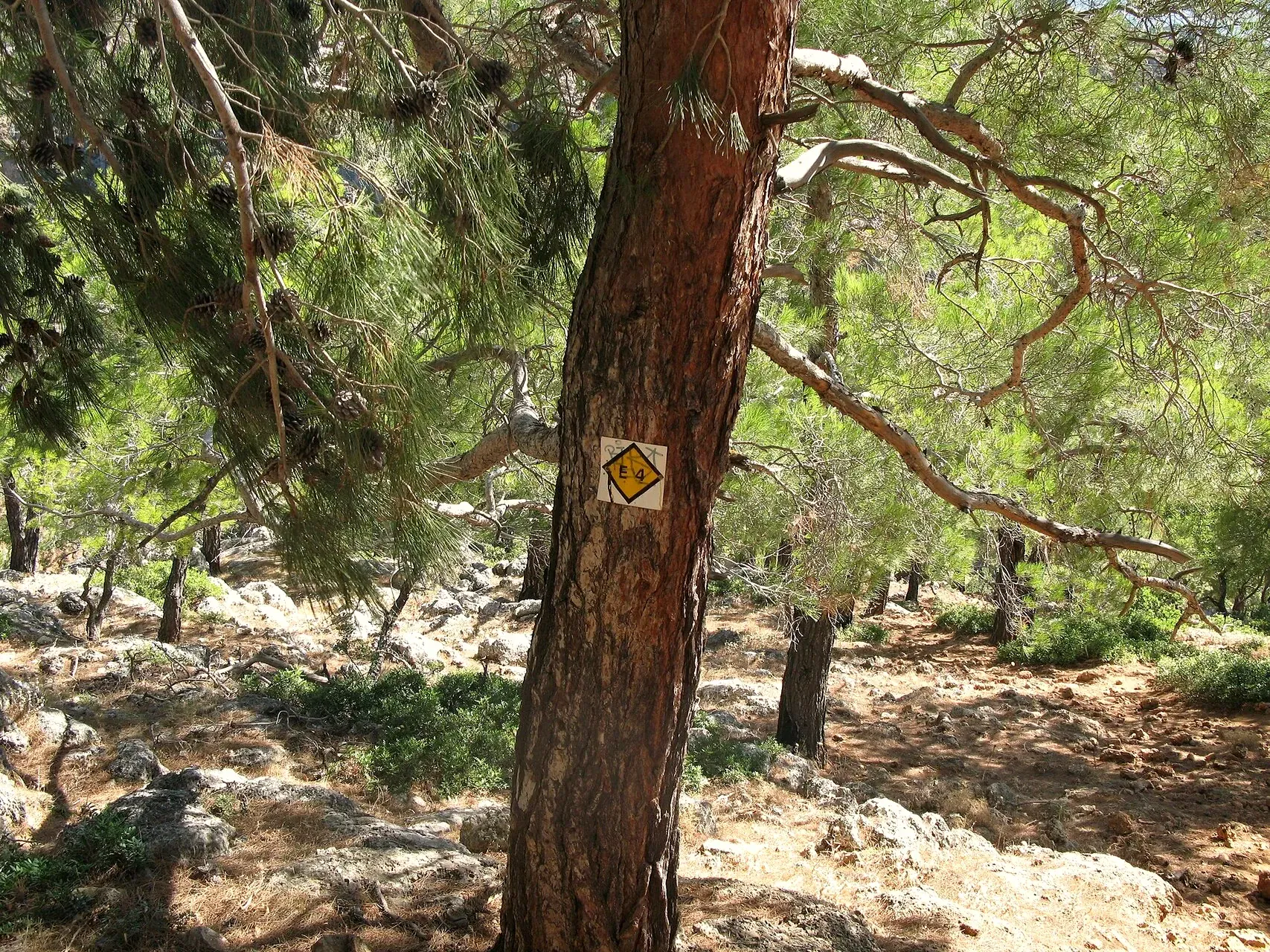
This walk follows the cliffs of the south-west coast over around 14 km, a fine day at an easy pace, swims included. The path alternates between high stretches, from which the eye carries far out to sea, and descents to isolated coves, often deserted, where you can swim in complete peace. In the last third of the route, a pine wood fragrant with resin offers welcome shade. You also cross the ancient site of Lissos, whose ruins span the 3rd century BC to the 9th century AD. A temple of Asclepius, mosaics, chapels: the place invites a contemplative pause, between history and nature. The arrival at Sougia, a quiet little fishing harbour, rewards the day with dinner with your feet in the sand. It is one of the key stages of our traverse of the Cretan south coast, luggage transferred from one charming address to the next.
Valley of the Dead: Zakros and its mysteries
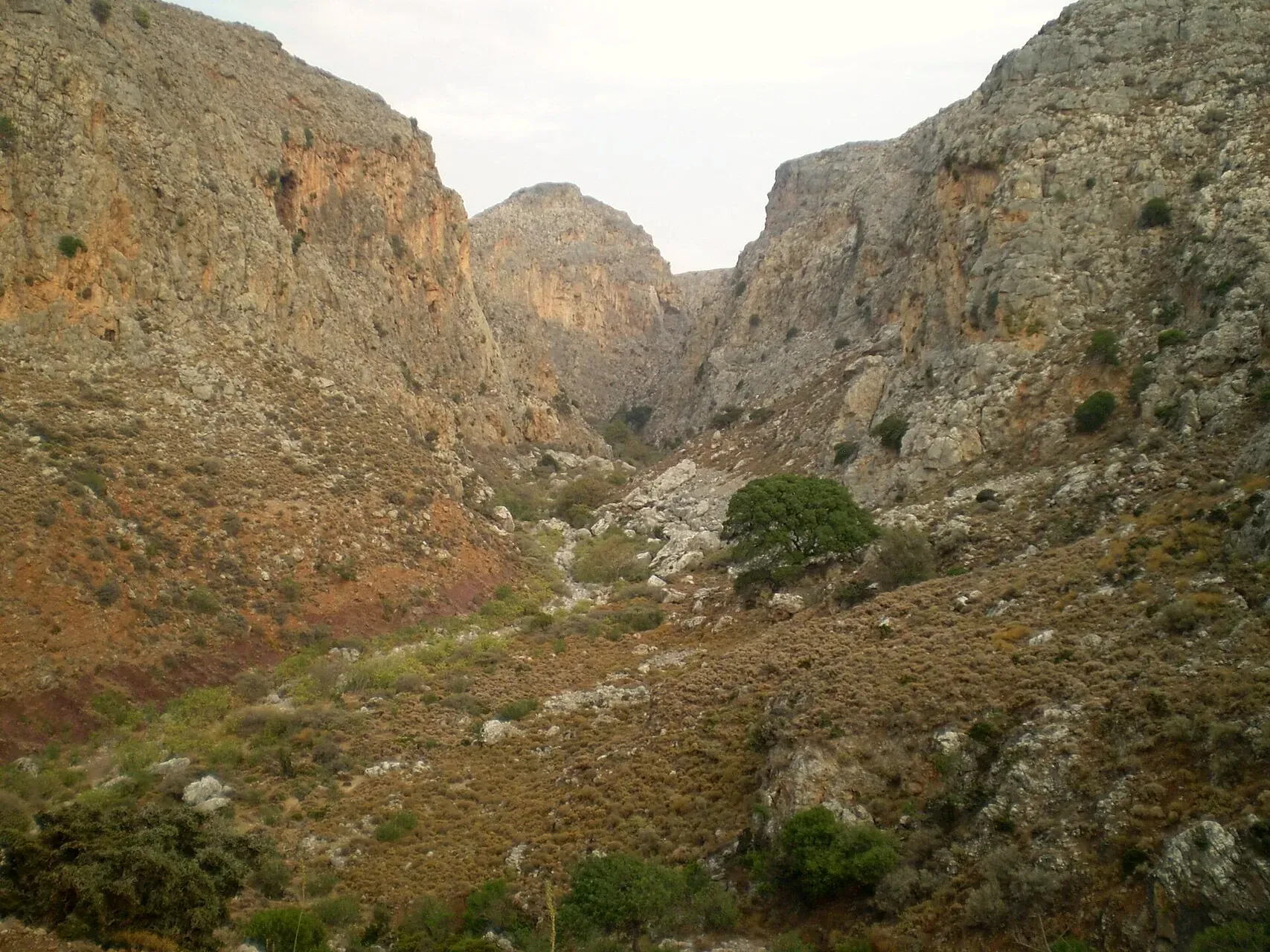
At the eastern tip of Crete, far from the busiest itineraries, the Valley of the Dead (Zakros Gorge) offers a walk charged with history. Its name, far from lugubrious, refers to the Minoan burial caves dotting its walls. The path winds for around 4 km through preserved Mediterranean vegetation, between oleanders and wild fig trees. You emerge at the coastal village of Kato Zakros, its pebble beach and the ruins of a Minoan palace, the smallest of Crete’s four great palaces, but perhaps the most moving for its wild setting. A walk for lovers of nature as much as for the curious about ancient history.
The Elafonissi peninsula: between land and water
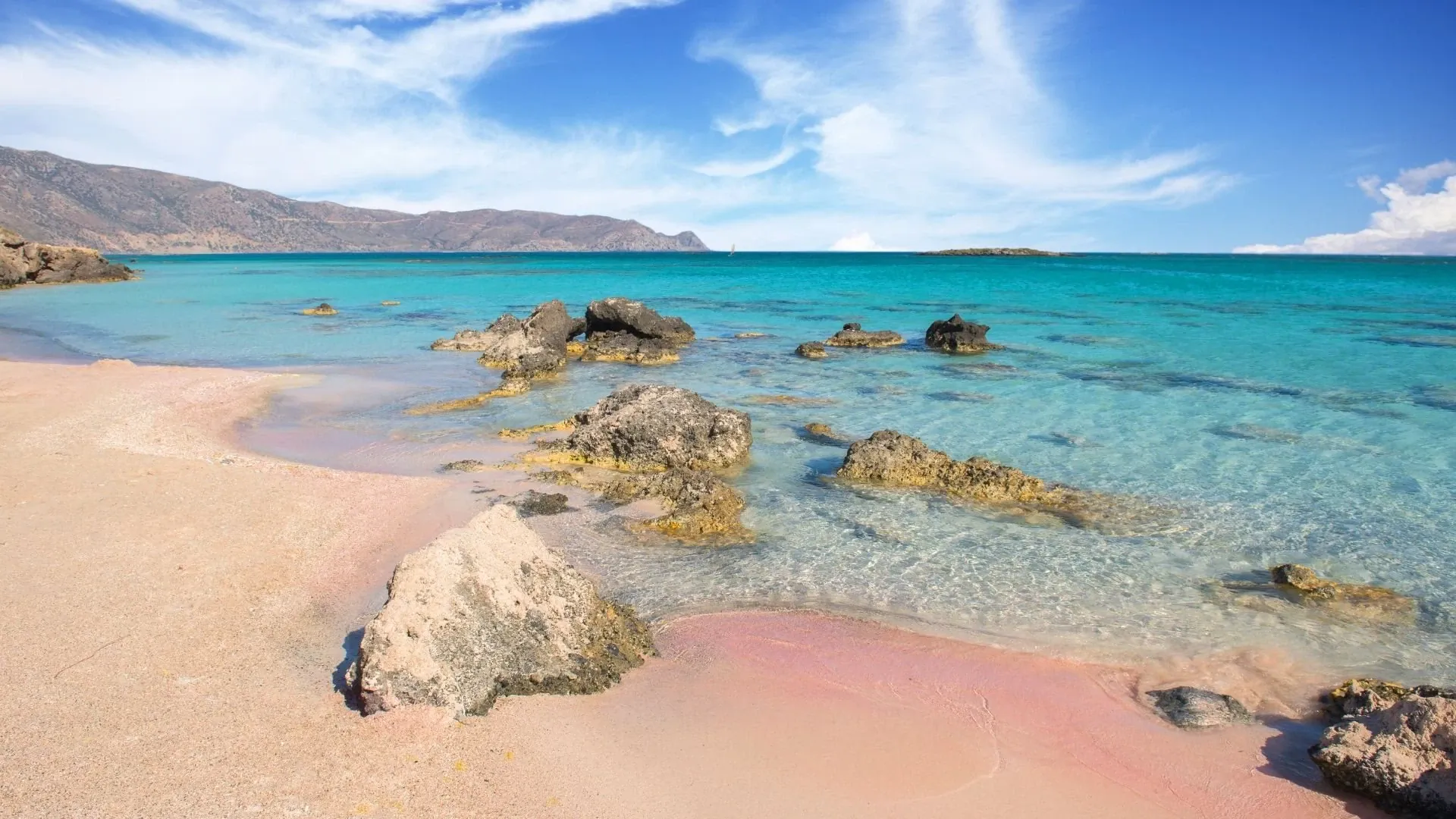
The path leading to the Elafonissi peninsula crosses a landscape of low maquis, scented with cistus and rosemary. Then the land crumbles away, the sand takes on pink tones, and suddenly you are walking between two waters: the lagoon on one side, the open sea on the other. At low tide you reach the islet on foot, in a few centimetres of warm, crystalline water. It is a place apart, almost tropical, where the colours look retouched and are not. The walk is not long, an hour or two depending on how much you want to laze, but the wonder lasts. The lagoon features in our holiday Crete, island of a thousand flavours, from Chania to the Libyan Sea.
Chania: wandering the old town
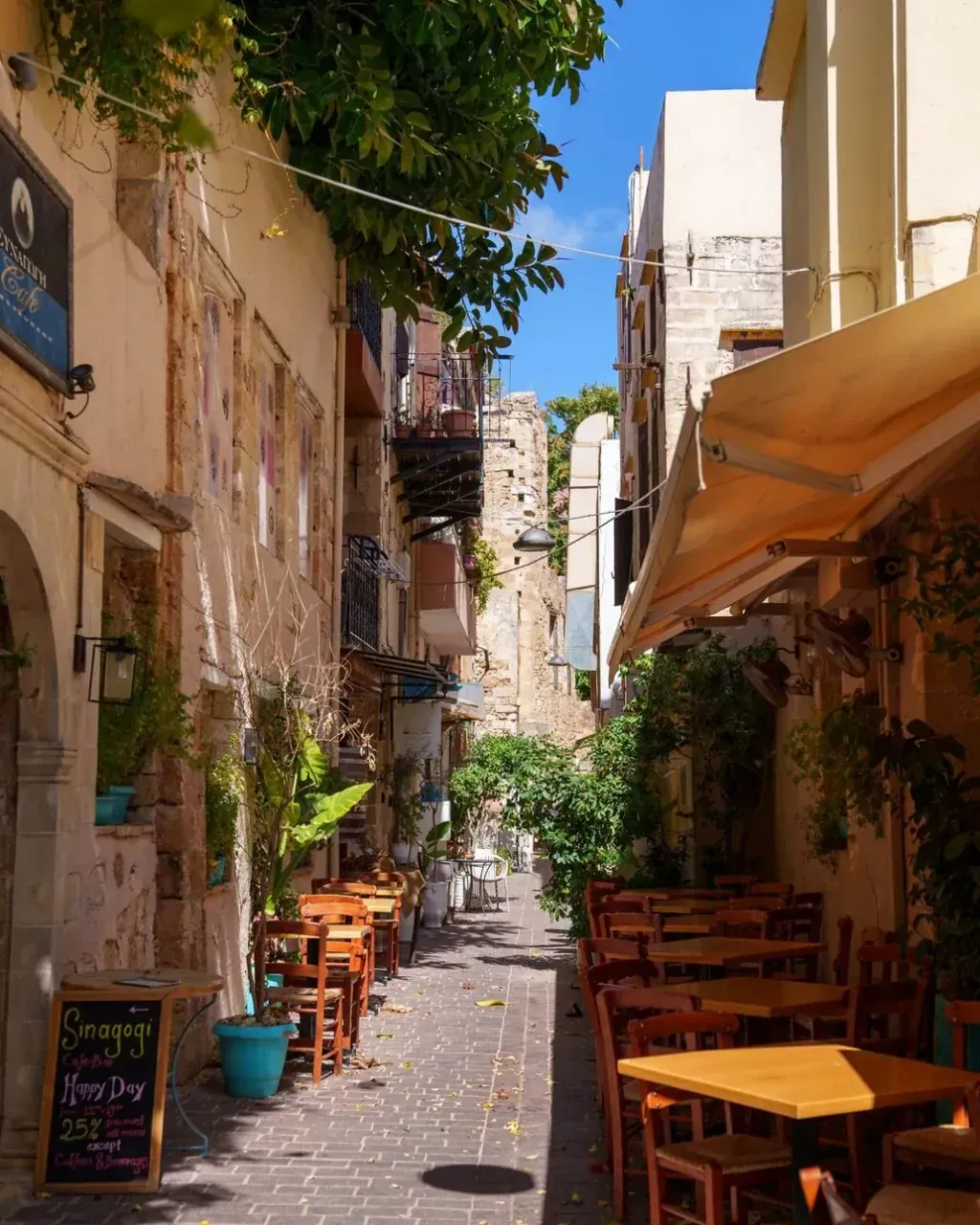
Not all fine walks go through the mountains. Chania offers one of the loveliest urban strolls in Greece. The old Venetian harbour, with its 16th-century lighthouse and its converted warehouses, has the grace of towns that have crossed the centuries without losing their soul. You lose yourself in the lanes of the Turkish quarter, discover a leather workshop in a dead end, taste a bougatsa (cream pastry) still warm from an artisan in the covered market. In the evening the harbour terraces come alive, and the sunset light on the Venetian façades composes a picture no postcard could render.
Advice for enjoying the Cretan paths
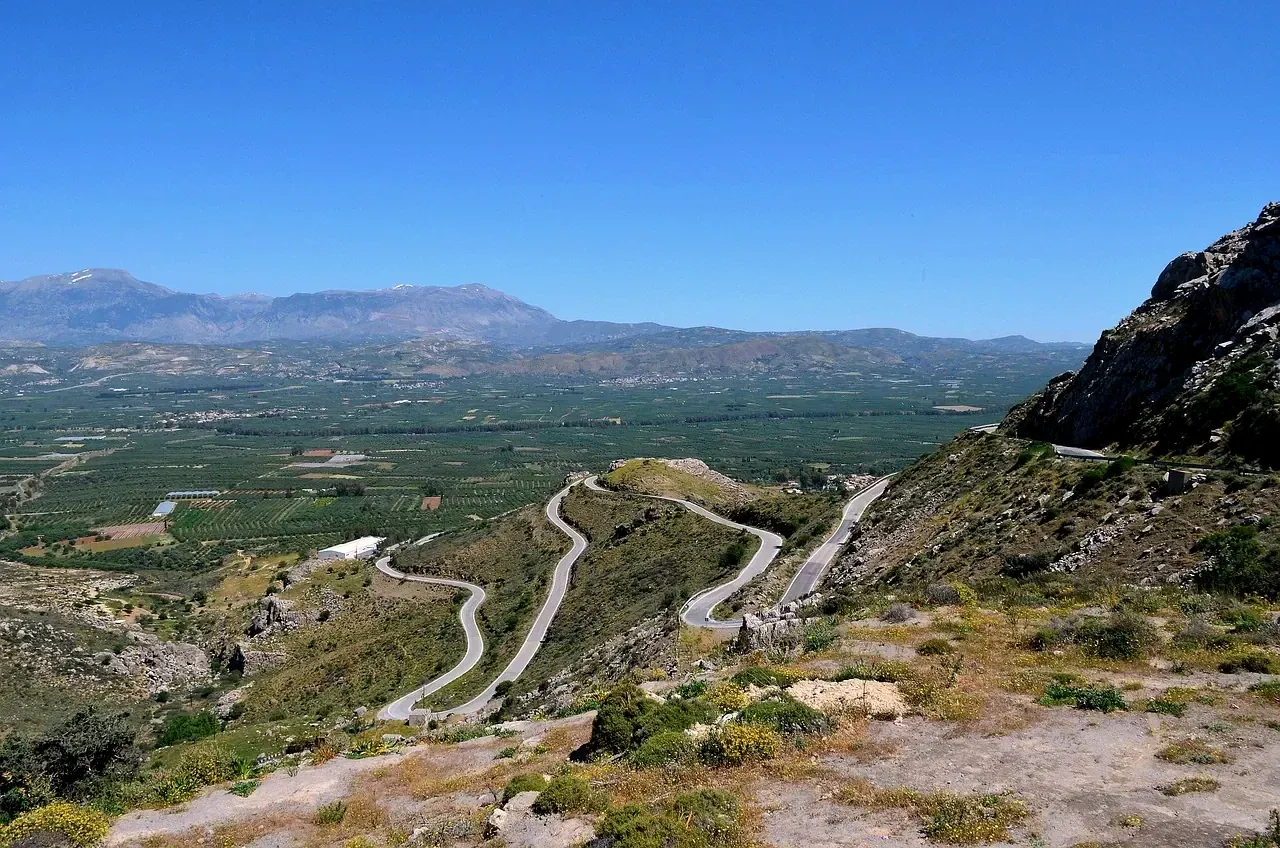
Crete is generous, but so is the sun. Remember to carry enough water, as most paths have no resupply point. A hat, sun cream and good walking shoes are essential: the tracks are often stony. Slip a swimsuit into your bag, because many walks end at a cove or a beach. And do not forget a snorkelling mask: the Cretan seabed is full of small marvels.
For the gorges, check the opening dates before setting off. Samaria generally closes in mid-October, and some gorges can be impassable after heavy rain. When in doubt, locals and hoteliers are valuable advisers: they know the paths better than anyone and will be delighted to point you the right way.
When to go walking in Crete
Crete lends itself to walking from spring to autumn, but two seasons stand out. Spring, from April to June, unfolds the wildflowers and a limpid light. Autumn remains our favourite: the sea keeps its warmth and the paths recover their calm. Crete in September offers a warm sea and quiet gorges; Crete in October adds the colours of autumn and the first olive harvests. To set your dates across the whole country, see our reference guide when to visit Greece.
Our walking holidays in Crete
Do you want to find these paths without organising a thing, your luggage carried from one charming address to the next? Here are our walking holidays in Crete, accessible to all walkers.
- Crete on foot with a guide: 8 days accompanied by an English-speaking leader, from Knossos to the gorges, with Samaria as an out-and-back rather than the full descent.
- Crete, White Mountains and azure sea: the traverse of the south coast self-guided, from Chania to Loutro, by way of Agia Irini and Samaria.
- Crete, island of a thousand flavours: 12 days from Chania to the Libyan Sea, the Elafonissi lagoon, the secret gorges and Loutro.
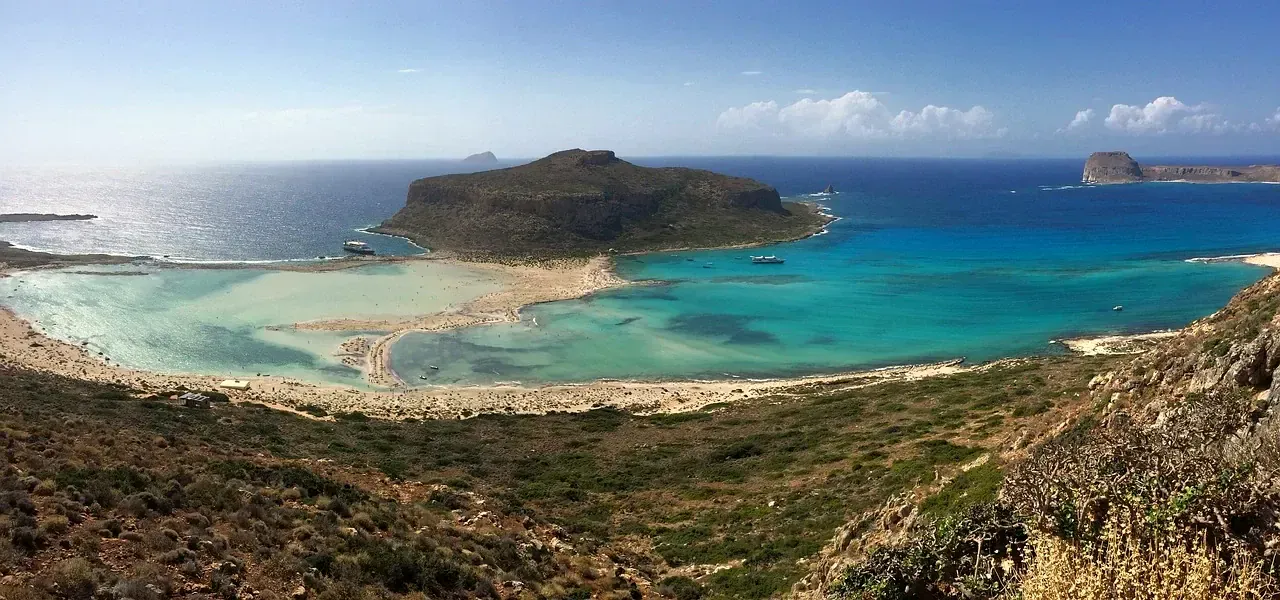
- Secret Crete, from Chania to turquoise lagoons: a single charming hotel, a car, and each day the walk that suits you, between Balos, monasteries and hinterland villages.
To widen the horizon, browse our other ideas for hiking in Greece, from the Cyclades to the Ionian Islands.
Frequently asked questions about hiking in Crete
What is the finest hike in Crete?
It all depends on what you are looking for. For grandeur, the Samaria gorge remains unequalled. For colour, the coastal path from Loutro to Marmara follows a Libyan Sea of unreal blue. And for gentleness, the Imbros or Agia Irini gorges offer the essence of Cretan feeling in half a day in the shade.
Is the Samaria gorge difficult?
Samaria is not technical, but it is a long day: 16 km of descent, on ground that is sometimes stony, calling for good shoes and plenty of water. If the idea intimidates you, our guided trips offer it as an out-and-back, without the full descent, and the Imbros gorge offers a much shorter version.
Can you walk in Crete without being athletic?
Yes, entirely. Most of the paths on this page are covered in half a day, at an easy pace, with swimming stops and a taverna at the end. The easy gorges, the Lasithi plateau or the Elafonissi peninsula suit even those who walk little. Our self-guided holidays are in fact designed for occasional walkers.
When should you hike in Crete?
Spring (April to June) and autumn (September to October) are the ideal periods: mild temperatures, magnificent light, quiet paths. The Samaria gorge is open from 1 May to 15 October. In high summer it is better to set off early in the morning and keep the afternoon for the sea.
Do you need a guide to hike in Crete?
Not necessarily. The main paths are well waymarked and are very manageable independently, route notes in hand. An English-speaking leader does bring the stories, the good addresses and the peace of mind, above all for a first discovery of the island. That is the spirit of our guided trip.
Where can I find a map or a walking route for Crete?
Two Greek publishers are the reference for walking cartography: Anavasi, with its Topo maps at 1:25,000 and an atlas dedicated to Crete, and Terrain. Both are found in travel bookshops and in digital versions. The waymarked European E4 path crosses the island from west to east, from Kissamos to Kato Zakros, and links several of the gorges and coastal paths mentioned here. On our self-guided holidays you have nothing to prepare: detailed route notes and the tracks for each stage are handed to you, and your luggage travels from one address to the next.
Should you choose Crete guided or self-guided?
Both formulas free you from all logistics — it is the atmosphere you choose. On a guided trip, an English-speaking leader takes you from Knossos to the gorges and you walk in a small group, in the spirit of our Crete on foot with a guide. Self-guided, you keep the same comfort, charming hotels booked and luggage transferred, but you set off at your own pace, alone or as a pair, as on the traverse of the White Mountains. In both cases the paths stay accessible and punctuated by swimming stops.
Your question is not on this list?
Write to us, and we will reply to you personally by email.
Article written by
Maria Papadopoulou (Μαρία Παπαδοπούλου)
Editorial lead
I hike, and Greece is the place I keep coming back to. My initial studies (a Master’s in Marketing and a degree in Applied Foreign Languages) taught me how to build an editorial project, and the trails taught me the… Read more