

Greece is not a summer destination. Or rather, it is not only a summer destination. Its finest hours are lived in the shoulder seasons, when the light turns golden, the paths fall silent and the taverna terraces are welcoming without being packed. For anyone travelling on foot or by bike, the calendar changes everything: here is our guide to choosing the right moment.
To see the year at a glance, here is our table of the seasons. The Ideal for walking column shows the months when the temperature stays mild from morning to evening, without the heat of high summer, a decisive criterion when you like to take your time on the paths.
| Month | Temperature | Sea | Visitors | Ideal for walking | Our verdict |
|---|---|---|---|---|---|
| March | 14-18 °C | 16 °C | Low | Good | Nature waking up, cool mornings |
| April | 17-21 °C | 17 °C | Low | Excellent | Ideal for walks among the flowers |
| May | 21-26 °C | 19 °C | Moderate | Excellent | The perfect month |
| June | 25-30 °C | 22 °C | Moderate to high | Very good | Still very pleasant |
| July | 28-33 °C | 24 °C | High | Mornings only | Hot, favour the windy islands |
| August | 30-35 °C | 26 °C | Very high | Mornings, at altitude or in the north | Heatwaves possible, aim for shade and wind |
| September | 25-29 °C | 24 °C | Moderate | Excellent | The perfect month |
| October | 20-25 °C | 22 °C | Low | Excellent | Mildness and authenticity |
| Nov. to Feb. | 10-16 °C | 14-18 °C | Very low | Limited (rain) | Quiet season, few ferries |
Spring: Greece in flower

April opens the ball. The hills are covered with poppies and asphodels, the air smells of wild thyme, and the villages come back to life after the torpor of winter. It is the season for walks in long sleeves in the morning and short sleeves in the afternoon, with that tender light that delights photographers.
May is probably the most generous month. The temperatures invite you to wander without ever overwhelming, the sea begins to warm for the braver among us, and the archaeological sites are visited in a precious calm. In June the heat settles in gently, the days lengthen, and the first swims after a walk become a delicious ritual.
It is also in spring that Greece celebrates Orthodox Easter, a high point of local life. In the villages, candlelit processions, communal meals and festivities create a unique atmosphere. If your dates coincide with this feast (generally in April or early May), you will experience a rare moment of sharing, as close as possible to local life.
Discover our suggestions for spring, and more precisely for April, May or June.
Summer: Greece in full sun
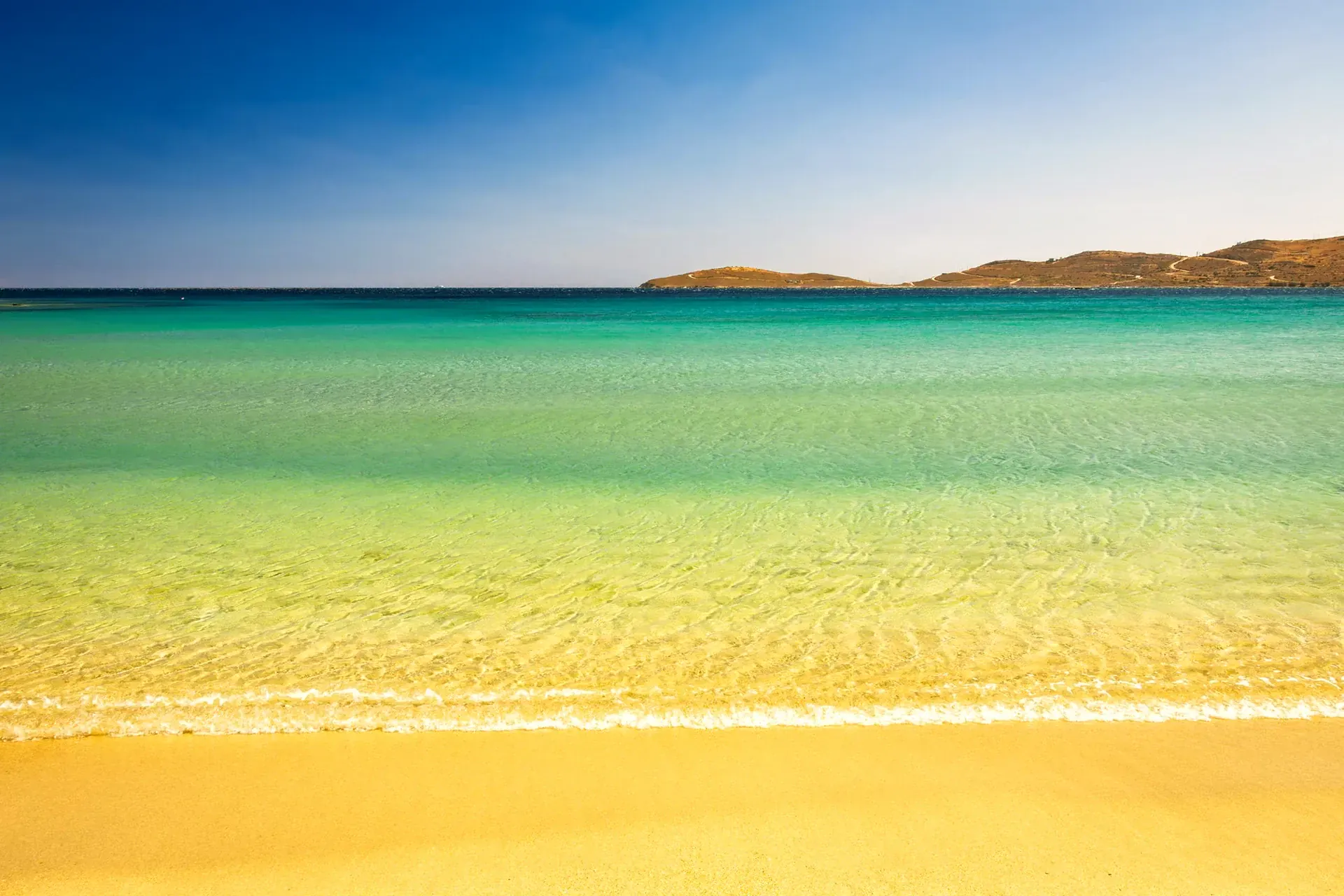
July marks the heart of the Greek summer. The heat is frank, the sun generous, the meltemi blows across the Cyclades and makes the air breathable. This is the time to favour the windy islands, morning walks, long pauses in the shade of a plane tree with a frappé. You walk early, you swim often, you dine late under the stars.
The meltemi deserves a word of explanation. This north wind, characteristic of summer in the Aegean, blows mainly from June to September, peaking in July and August. On the Cyclades it can be vigorous (above all on Mykonos, Tinos or Paros) and sometimes delays the ferries. But it has its virtues too: it tempers the heat and clears the sky. The ends of the day gain a limpid light from it. On the southern coasts of the islands, sheltered from the wind, you enjoy a calm sea and protected coves.
In August, Greece lives on holiday time. It is the period of heaviest crowds, notably on the best-known islands (Santorini, Mykonos). Temperatures regularly exceed 33 °C inland, and the sea reaches 26 °C, its annual maximum. For anyone who accepts the heat and the bustle, it is a festive season, punctuated by panigyria (village patron saint festivals), the most important being that of 15 August, the Assumption of the Virgin, celebrated throughout the country with processions, music and shared meals.
Where to go in Greece in August?
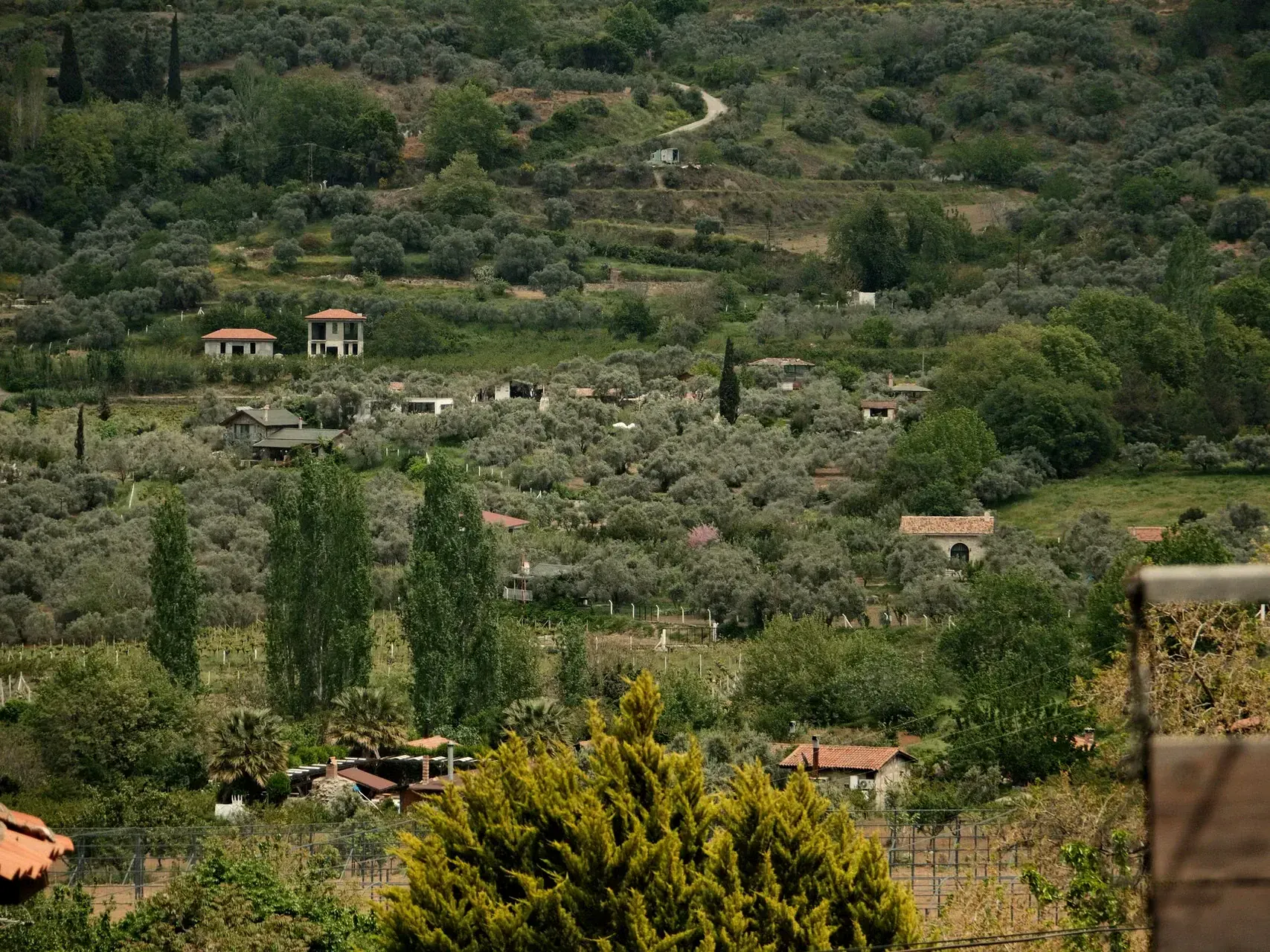
If your only travel window falls in high summer, all is not lost: you simply need to choose somewhere the air circulates and shade is not lacking, to walk early in the morning and keep the afternoon for swimming and the terrace. We set out the best regions for escaping the heat (the Cyclades swept by the meltemi, the Cretan mountains, the greener Ionian Islands) in our dedicated guide: where to go in Greece in August.
For travellers who love raw light and warm evenings, the Greek summer has its charm. Browse our ideas for July.
Autumn: Greece at its most intimate

September is a marvel. The sea is at its warmest, the light turns to gold, the crowds disperse, and the Greeks themselves seem more relaxed. The grape harvest begins, the first raisins dry on the terraces, and the tavernas recover their village rhythm. It is the month when Greece gives itself without artifice.
October extends this gentleness with a touch of happy melancholy. The gorges are deserted, the coastal paths bathed in low light, the olives begin to ripen. In Crete and the Peloponnese, temperatures stay ideal for walking. It is the season of curious travellers, those who prefer depth to effervescence.
Explore our suggestions for autumn, September and October.
Winter: the Greek pause
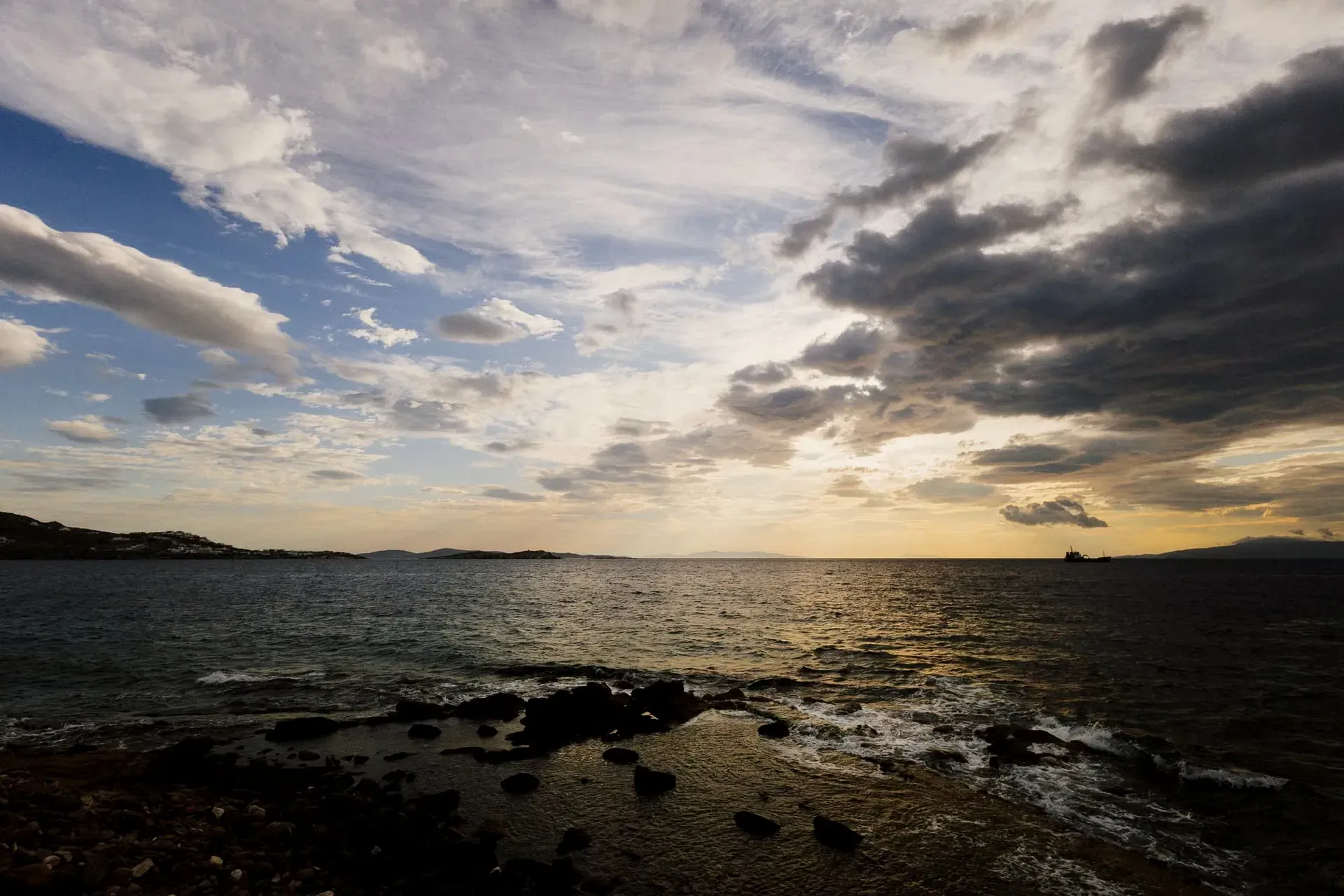
From November to March, Greece rests. The ferries become rare, accommodation closes, rain visits the islands. It is a season beautiful in its own way, but little suited to walking holidays. Kelifos takes a pause, while Greece catches its breath and prepares for the following spring.
Worth noting: the Greek winter is not uniform. On the islands, temperatures stay mild (10 to 15 °C), but rainfall increases markedly, above all in the Ionian Islands (Corfu receives more than a metre of rain a year). In the north of the country, around Thessaloniki, winters are colder, with nights close to 0 °C. Crete and the Dodecanese, on the other hand, enjoy a milder winter, and some travellers appreciate the absolute tranquillity of this season.
To find out more about this season, see our winter page.
Every region has its own calendar
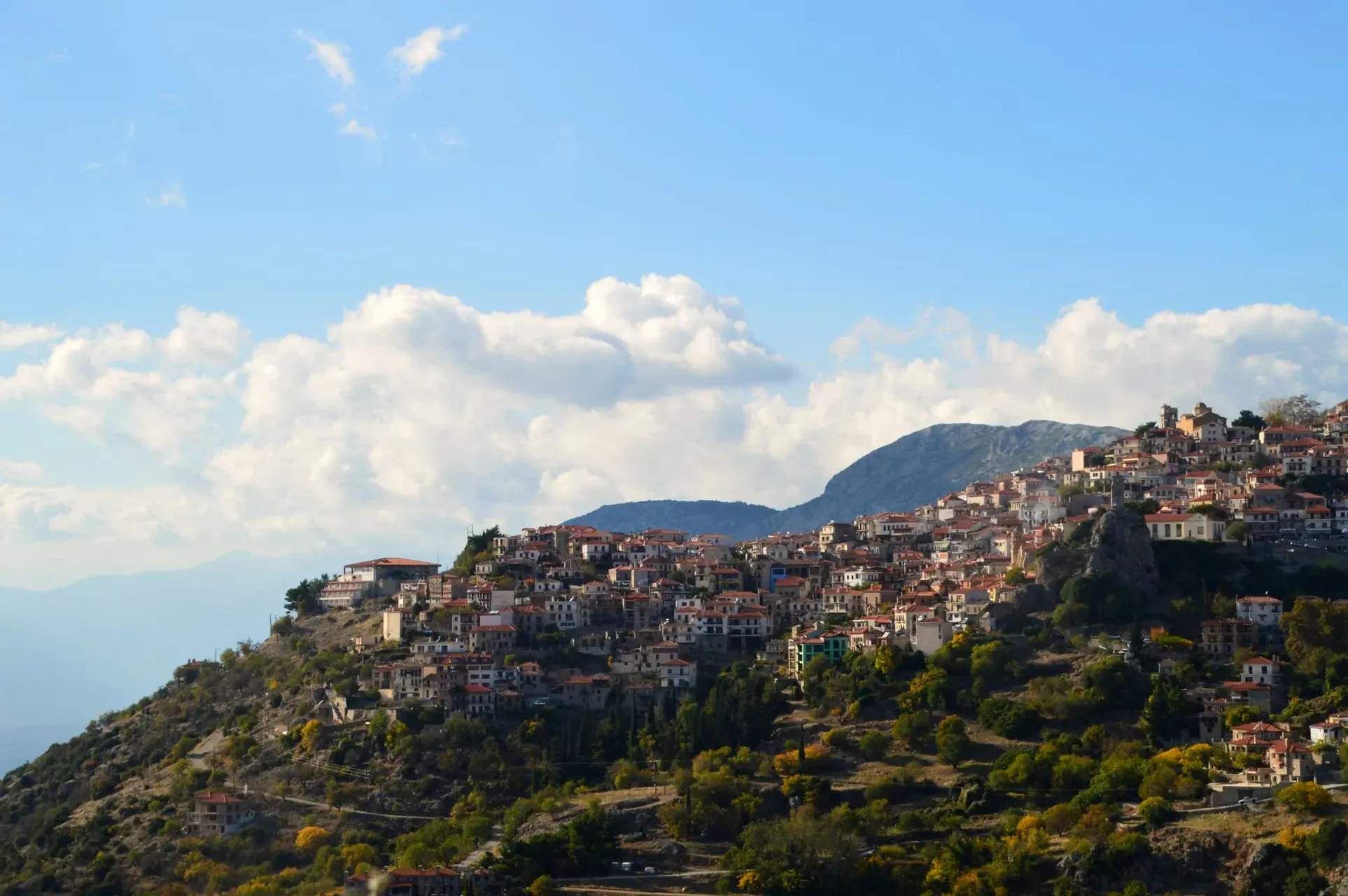
Greece is more diverse than you might imagine, and the best period varies by destination. The Cyclades, exposed to the meltemi, are ideally visited in spring or in September. Crete, further south, lends itself to walking from April and stays pleasant until November. The Ionian Islands (Corfu, Kefalonia, Zakynthos), greener and wetter, show their best face from May to October. The Peloponnese and mainland Greece, with their gorges, their ancient sites and their mountain villages, are ideally discovered in May, June, September and October, when temperatures allow long days of walking without excessive heat.
To help you match the island to the month, here are our favourite pairings:
- Cyclades in May or September. The paths are dry, the sea warm enough for swimming, and the white villages are not yet (or no longer) saturated. October in the Cyclades extends the mildness in a rare calm.
- Crete from April to June, then in September and October. The great southern island enjoys the longest season. Crete in September remains ideal for walking, and our journal on Crete in October explains why the late season there is so luminous.
- Ionian Islands from May to October. Corfu, Paxos and Kefalonia keep their greenery late in the season. June and September are particularly mild there.
- Peloponnese in spring and autumn. The gorges and stone villages are savoured on foot when the heat stays reasonable.
Our recommendation
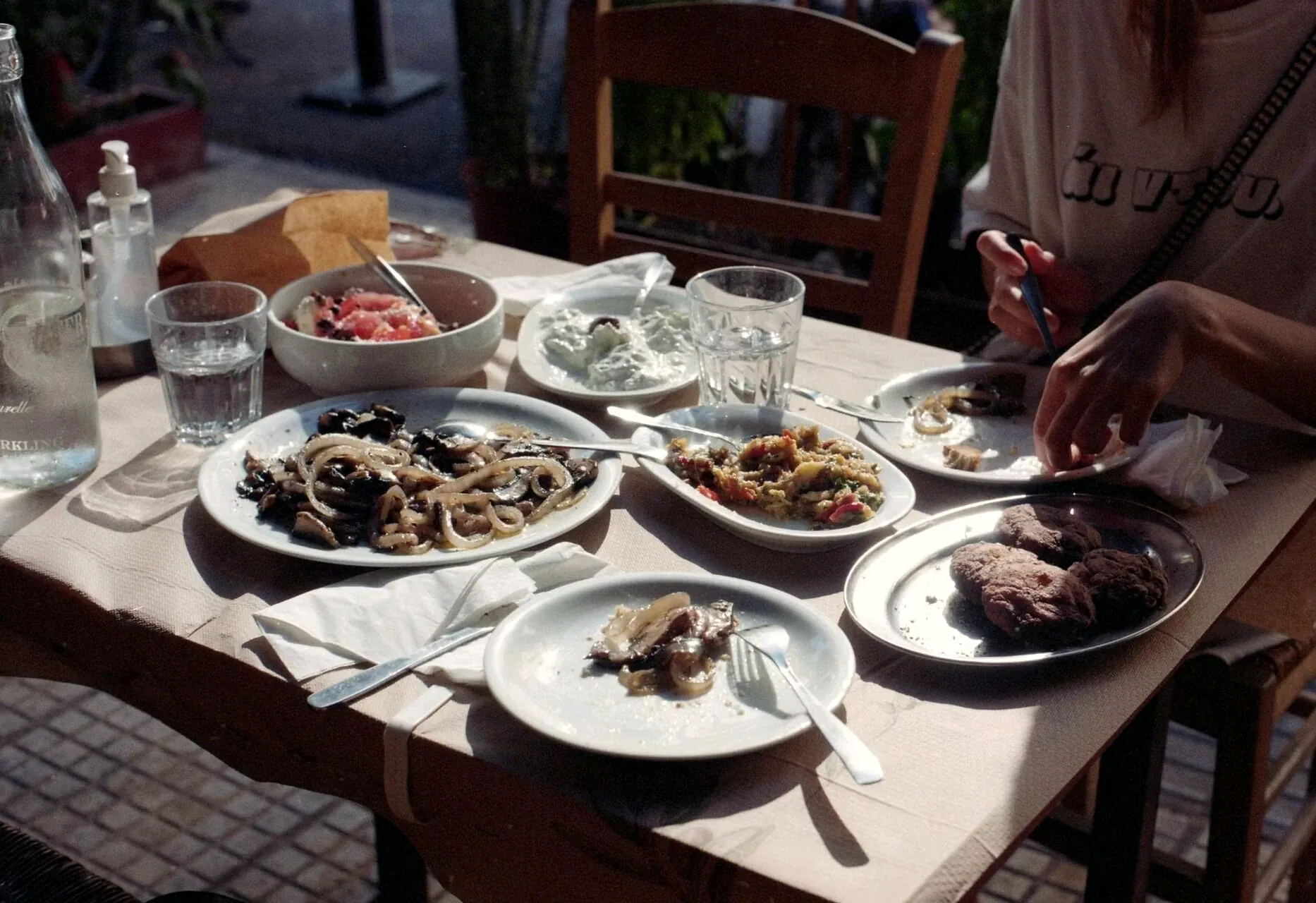
If we had to choose two months, they would be May and September. May for the freshness of the landscapes, the mildness of the temperatures and the pleasure of arriving before the crowds. September for the warmth of the sea, the autumn light and that precious sense of having Greece to yourself.
In both cases you will find peaceful paths, authentic villages, generous seasonal cooking, and that gentle rhythm which is the whole charm of a Kelifos journey.
One last piece of advice: accommodation and flight prices vary noticeably by season. In May and October, rates are often 20 to 30 % lower than in July and August, for a distinctly more comfortable trip. That is one of the advantages of travelling in the shoulder seasons, on top of the pleasure of having Greece almost to yourself.
Once the month is chosen, all that remains is to find the right path: browse our trails of Greece on foot for inspiration, and take a look at our guaranteed departures if you prefer travelling in a small group on fixed dates.
Frequently asked questions
What is the best month to visit Greece?
May and September come top. Temperatures are mild from morning to evening, the sea stays pleasant, the light is superb and the crowds far more measured than in high summer. April and October follow close behind, with even better rates and peaceful paths.
Is it too hot in Greece in August?
Inland, yes: the thermometer often passes 33 °C and heatwaves are frequent. You can nonetheless travel comfortably by favouring the islands cooled by the meltemi, higher ground or the more wooded Ionian Islands, walking early in the morning and keeping the afternoon for swimming and the shade of the terraces.
Can you go to Greece in winter?
From November to March, Greece enters its quiet season: ferries become scarce and many charming addresses close. The islands keep mild temperatures (10 to 15 °C), but rain is more present, above all on the Ionian Islands. Crete and the Dodecanese, milder, offer absolute tranquillity to anyone who likes towns and ancient sites without the crowds.
What is the best season for walking in Greece?
Spring (April to June) and autumn (September and October). These shoulder seasons bring together everything you want from a comfortable walking holiday: temperate air, bright days, villages that are lively without being crowded and welcoming tavernas. It is also the ideal period for travellers of 60 and over, who enjoy the paths at their own pace, without the crushing heat of July and August.
Your question is not on this list?
Write to us, and we will reply to you personally by email.
Extend the journey
- Crete, between villages and the Libyan Sea: southern Crete at your own pace, between secret gorges and turquoise coves.
- Sifnos, Milos and Kimolos, the enchanted Cyclades: three islands, three faces, one shared Cycladic art of living.
- Corfu, the Emerald Isle: the greenest of the Greek islands, between olive trees and the Ionian Sea.
Crete in October, a golden season
Feb 17, 2026 7 min read

Article written by
Maria Papadopoulou (Μαρία Παπαδοπούλου)
Editorial lead
I hike, and Greece is the place I keep coming back to. My initial studies (a Master’s in Marketing and a degree in Applied Foreign Languages) taught me how to build an editorial project, and the trails taught me the… Read more