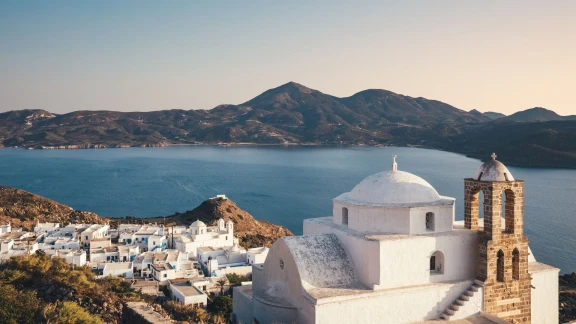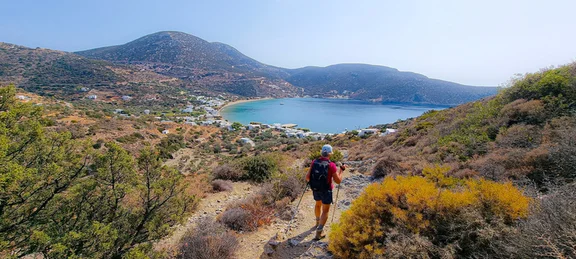


Santorini is known from photographs: the blue domes, the white houses, the Oia sunset. But the island has far more to offer than its postcards. It is on foot, on the paths that follow the caldera, that you discover its true face: that of a volcanic land shaped by fire and wind, where the vines coil low against the ground, where the cliffs plunge into a blue so deep it becomes vertiginous. To walk here is to travel back in time, to feel the warm earth underfoot and to understand why this crescent of rock suspended above the sea has fascinated for millennia.
From Fira to Oia: the caldera path
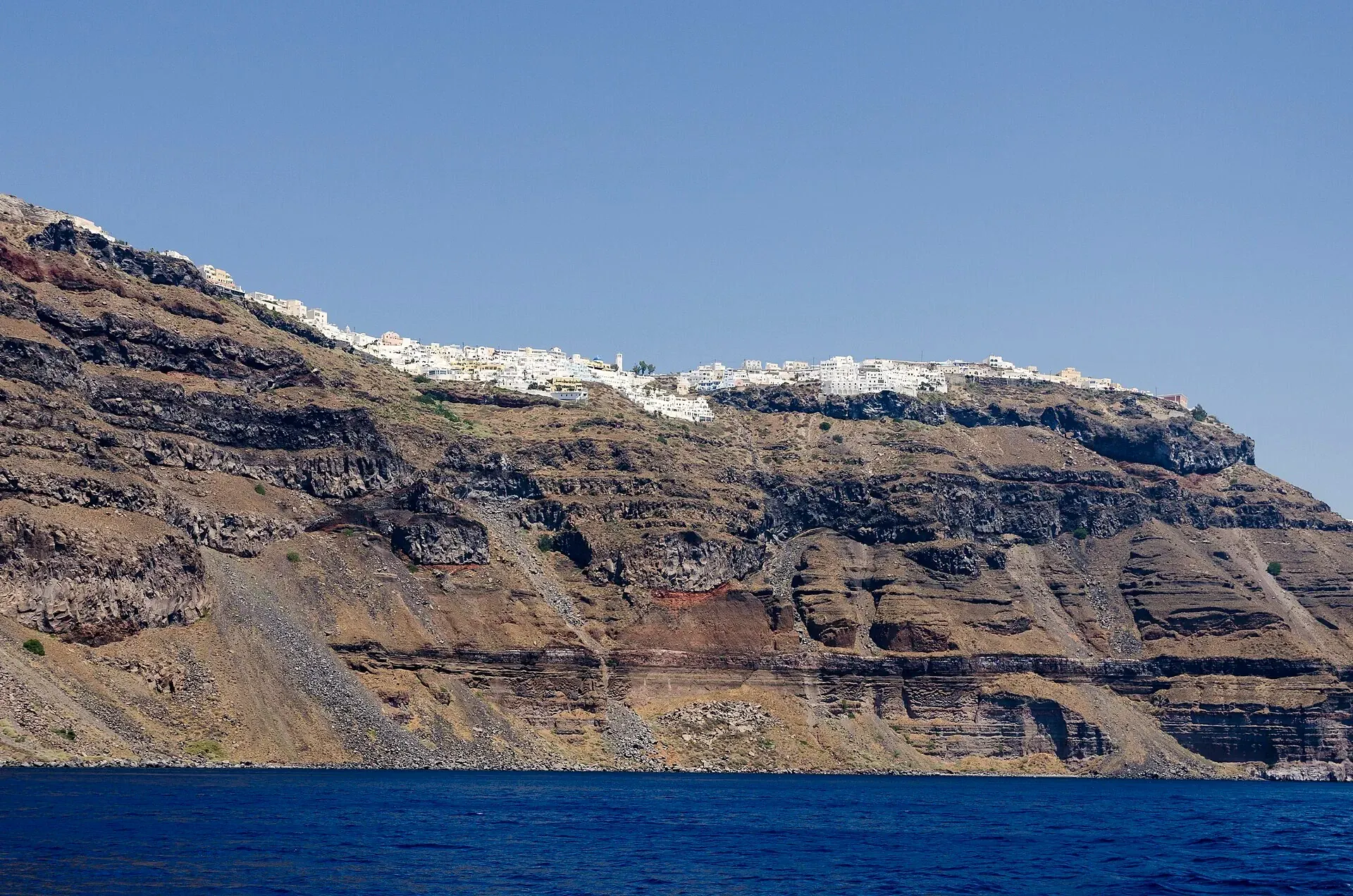
This is the emblematic path of Santorini, the one recommended to every traveller. Ten kilometres along the edge of the void, facing the caldera, with only the morning light and the immense blue of the Aegean for company.
You leave Fira early, when the sun still grazes the white façades and the lanes are almost deserted. The path climbs gently towards Firostefani, the “balcony of the caldera”, where the houses cling to the cliff like swallows' nests. The view opens all at once: the island of Nea Kameni, the slumbering volcano, floats in the middle of the caldera like a mineral dream.
You continue towards Imerovigli, the highest point of the path. Skaros Rock, a former Venetian fortress, juts out into the void. You can venture onto it by a short detour worth every step. Then the path undulates, drops and rises again, follows white chapels set at the edge of the precipice, crosses stretches where the eye no longer knows where to settle, so completely is beauty everywhere.
The arrival in Oia rewards the walk with its stone lanes, its art galleries and its shaded terraces. You sit down for a late lunch: a salad of Santorini cherry tomatoes (the famous tomataki), capers from the garden, a glass of cool white wine. The path is exposed to the sun, so set off early in the morning and carry enough water. Your feet will thank you, and so will your eyes.
What time to walk: Santorini before the crowds
The whole secret of Santorini comes down to one thing: the hour. The same caldera can offer you a moment of pure serenity or a scrum of selfies, depending on when you set foot on the path. The cruise ships unload their passengers in mid-morning, the buses and quad bikes follow, and by eleven o’clock the viewpoints of Fira and Oia are black with people. The remedy is simple: walk before them.
Leave Fira at daybreak, ideally around half past six or seven in summer, a little later in spring. At that hour the lanes of Firostefani are still asleep, the white façades turn pink under the first light, and the caldera path belongs to you and a few cats alone. The walk to Oia takes two to three good hours unhurried: setting off early, you arrive for morning coffee, well before the tourist tide. This is the serene version of Santorini, the one people dream of without always knowing how to find it.
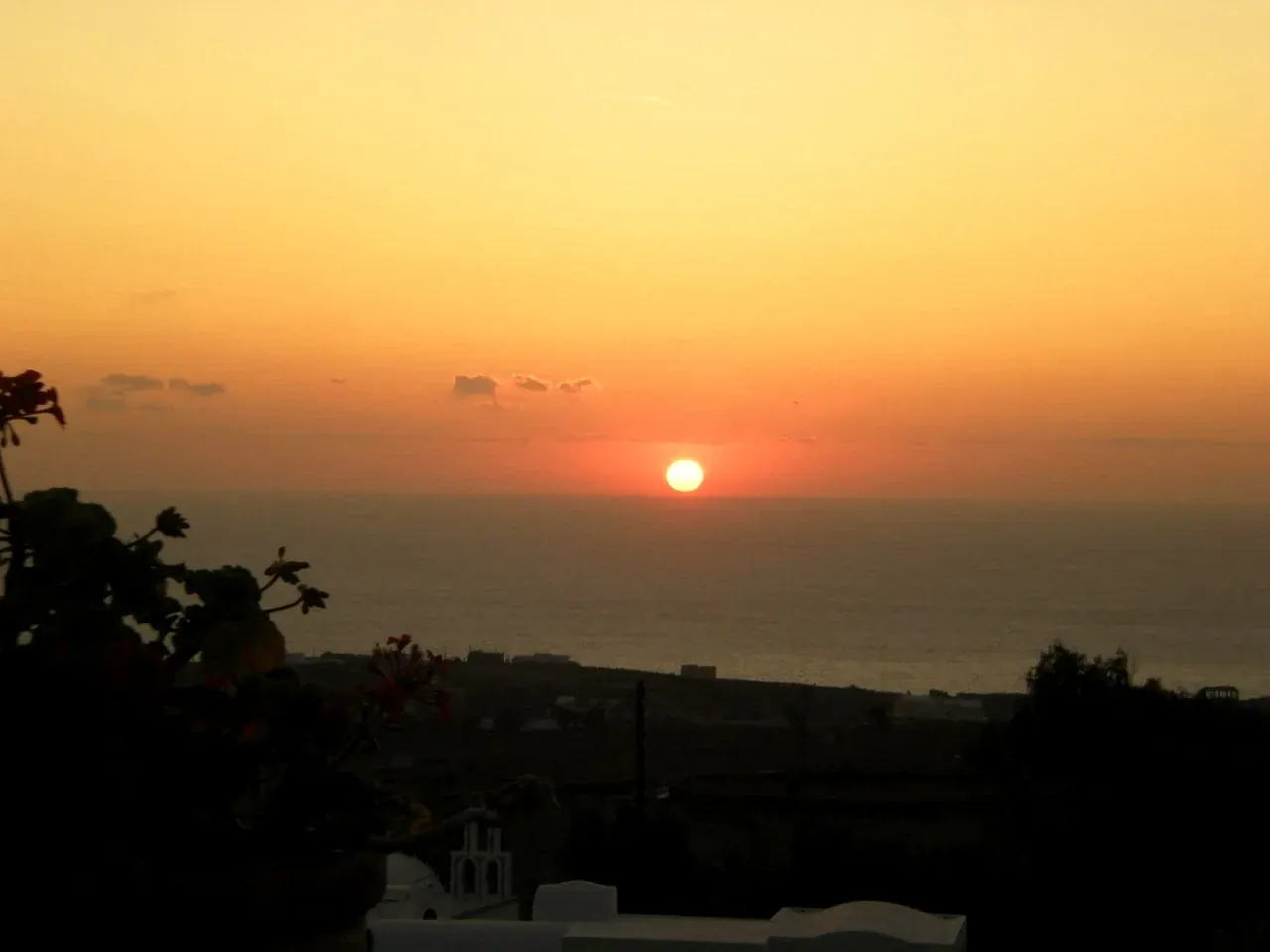
If daybreak is not your cup of tea, late afternoon offers another calm window. The groups ebb back towards their ships, the golden light wraps the rock, and you can time your arrival in Oia just before sunset, without enduring the midday crush. Whatever hour you choose, keep one rule in mind: on exposed paths, avoid the stretch from noon to four, when the sun beats down and the crowd is at its peak. Walking early or late is how you keep Santorini to yourself.
Ancient Thera: between archaeology and panorama
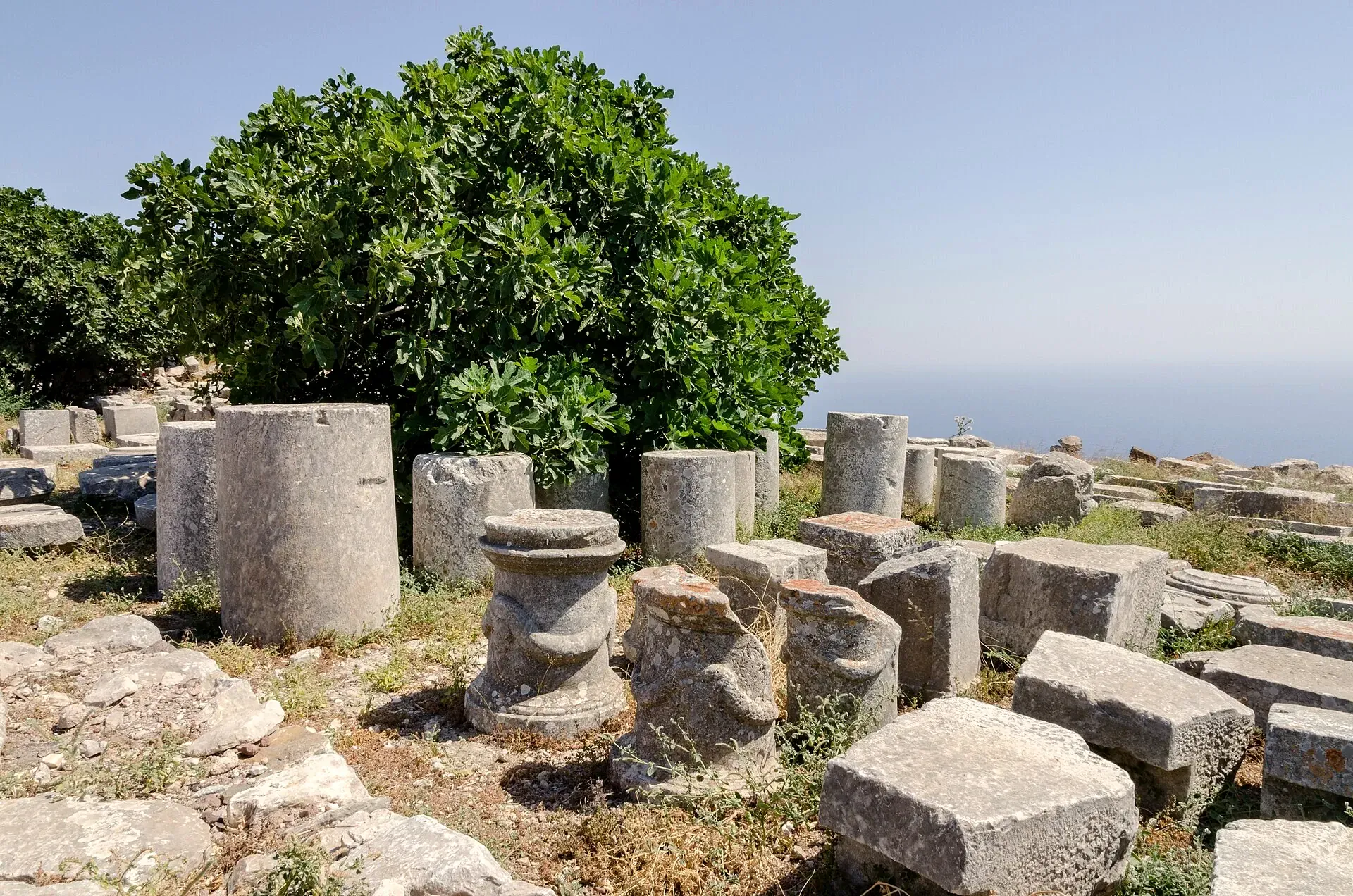
On the rocky ridge of Mesa Vouno, between the beaches of Kamari and Perissa, the ruins of ancient Thera have watched over the sea since the 9th century BC. The access path climbs in hairpins from Kamari, and every bend widens the panorama.
You climb through an arid landscape, punctuated by thyme bushes and wild caper plants. The air is fragrant, silence settles. Turning round, you discover the beach of Kamari stretching below, a fringe of black sand against the blue of the sea. On the other side of the ridge, Perissa appears, symmetrical and just as beautiful.
At the top, the archaeological site unfolds its remains on a natural terrace: an agora, a theatre cut into the rock, temples, houses whose walls still carry inscriptions engraved twenty-five centuries ago. The wind blows freely and carries centuries of history with it. You imagine the inhabitants of this perched city, their eyes on the same horizon and the same sea. It is a place where heritage and nature merge, where the walk becomes a journey through time.
Profitis Ilias: the summit of Santorini
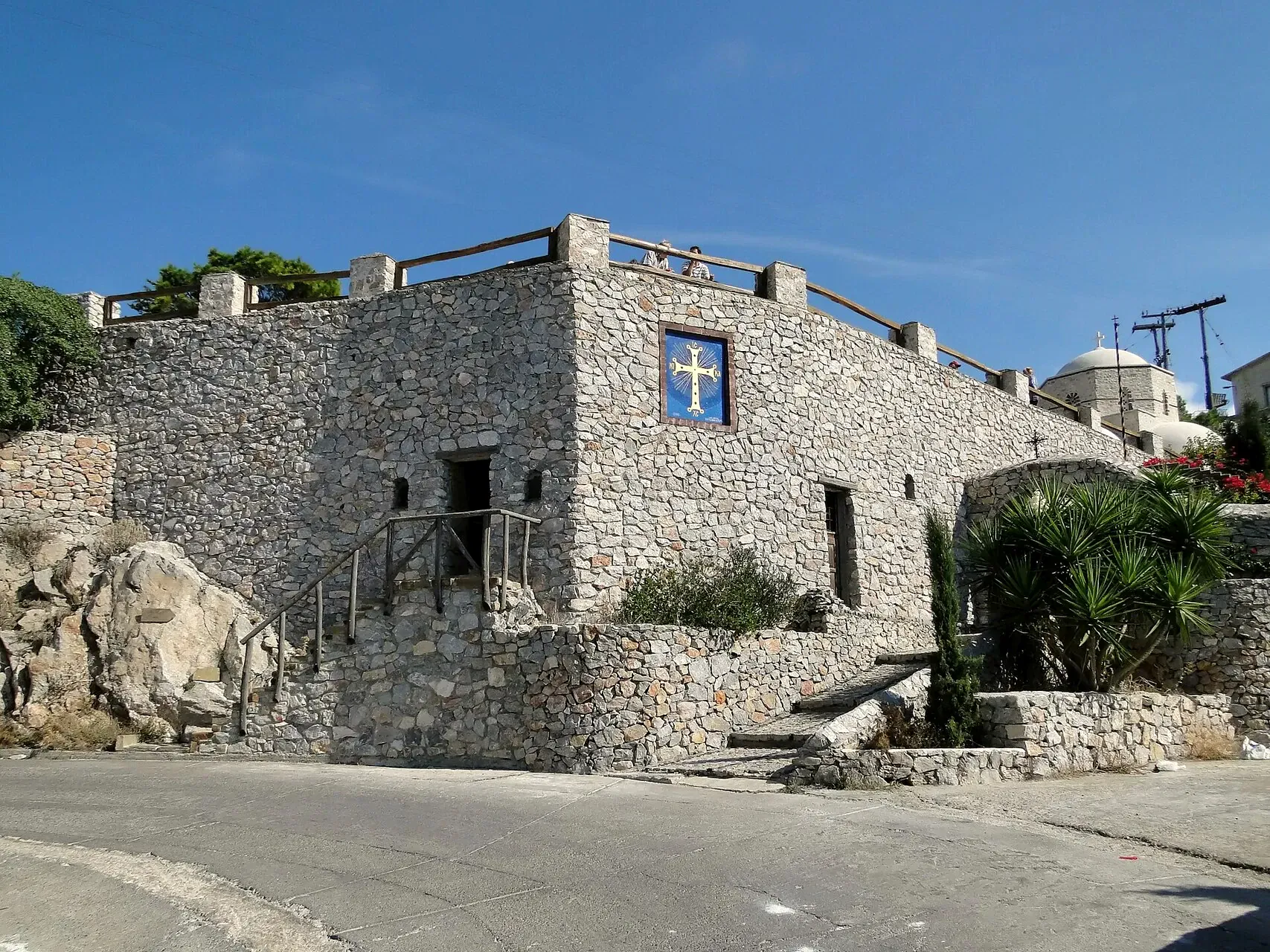
The highest point of Santorini rises to 567 metres, modest on paper but spectacular in reality. The path starts from the village of Pyrgos, one of the finest on the island, with its concentric lanes coiled around a medieval kasteli.
The climb crosses a landscape of low vines, those famous kouloura, baskets of stock woven at ground level to protect the grapes from the wind. The volcanic soil, dark and porous, crunches underfoot. Higher up, the vegetation thins and gives way to bare rock and wild grasses.
At the summit, the monastery of Profitis Ilias stands in the light. The panorama takes in the whole island: the caldera, the white villages clinging to the ridge, the black beaches of the south, and on a clear day the distant silhouettes of Ios, Sikinos and Folegandros. It is a place of absolute serenity, where the world below seems very far away. You sit, you contemplate, you let the silence do its work.
From Oia to Ammoudi: descent to the harbour
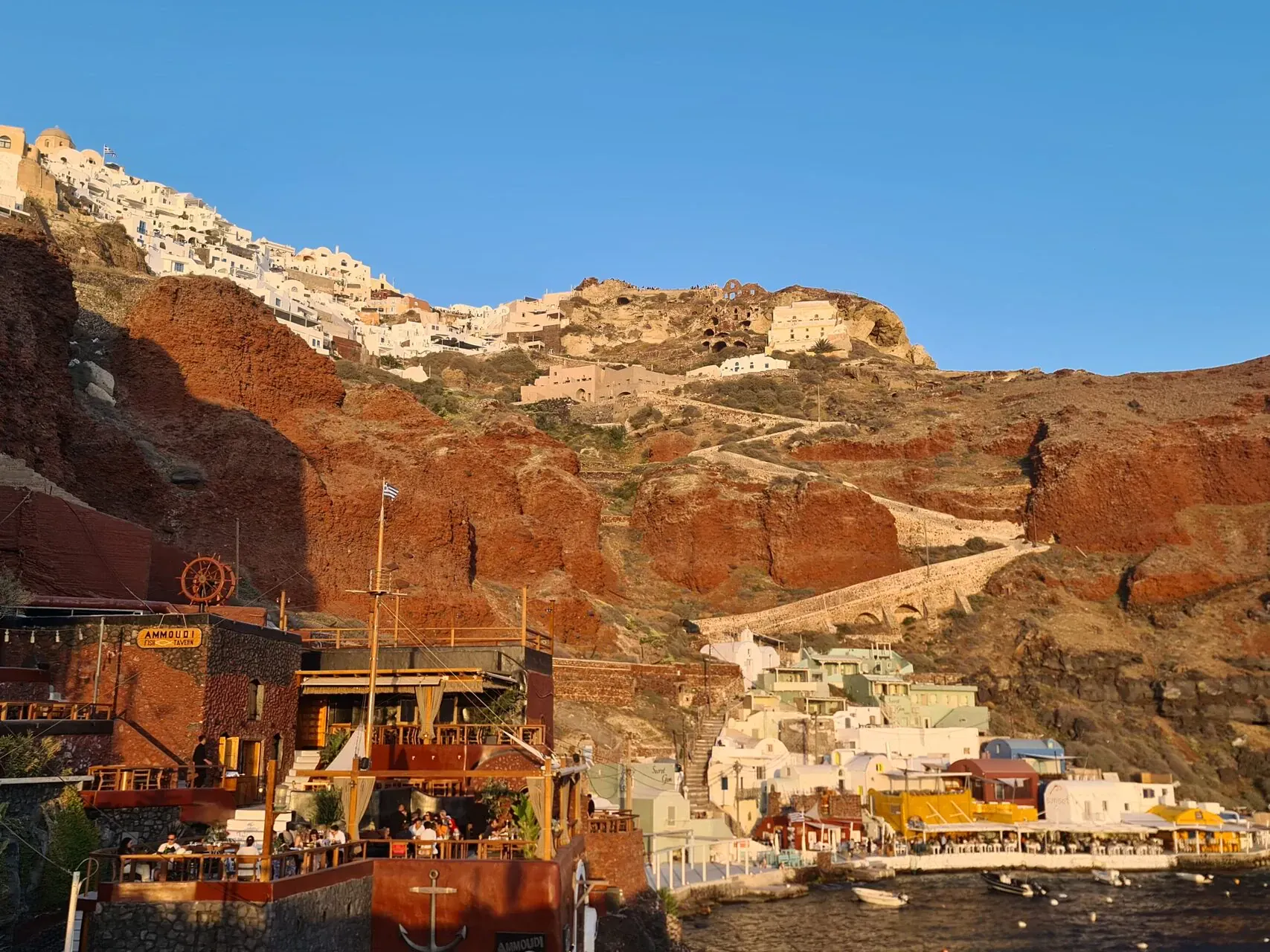
There is something of a ritual in this descent. From Oia, you take a stone stairway tumbling down the cliff in some three hundred steps, between ochre and rust-red rocks the volcano has sculpted.
At every landing the view changes. The blue of the sea draws nearer, the fishing boats grow larger, the smells of cooking rise to meet the walker. You descend towards another world: that of Ammoudi, a tiny harbour nestled at the foot of the cliff, where a few tavernas line their tables at the water’s edge.
You settle in, legs still warm from the descent, and order a fish grilled from that very morning, sea urchins if they are in season, a glass of cool Assyrtiko. In front of you, the rocks plunge into clear water where you can swim after the meal. It is the perfect end to a morning’s walk, the moment when walking turns into the art of living.
Akrotiri: the lighthouse and the volcanic beaches
The southern tip of Santorini has a character of its own, wilder, more mineral. The Akrotiri lighthouse, solitary at the end of a dirt track, overlooks cliffs falling straight into the sea. The sunset there is as beautiful as in Oia, and you are often alone.
A few minutes' walk away, the Red Beach reveals its natural theatre: a blood-red lava cliff overhanging a cove of dark pebbles, the whole encircled by intensely blue water. The contrast of colours is striking, almost unreal. You reach it by a short path along the volcanic wall, a passage between worlds.
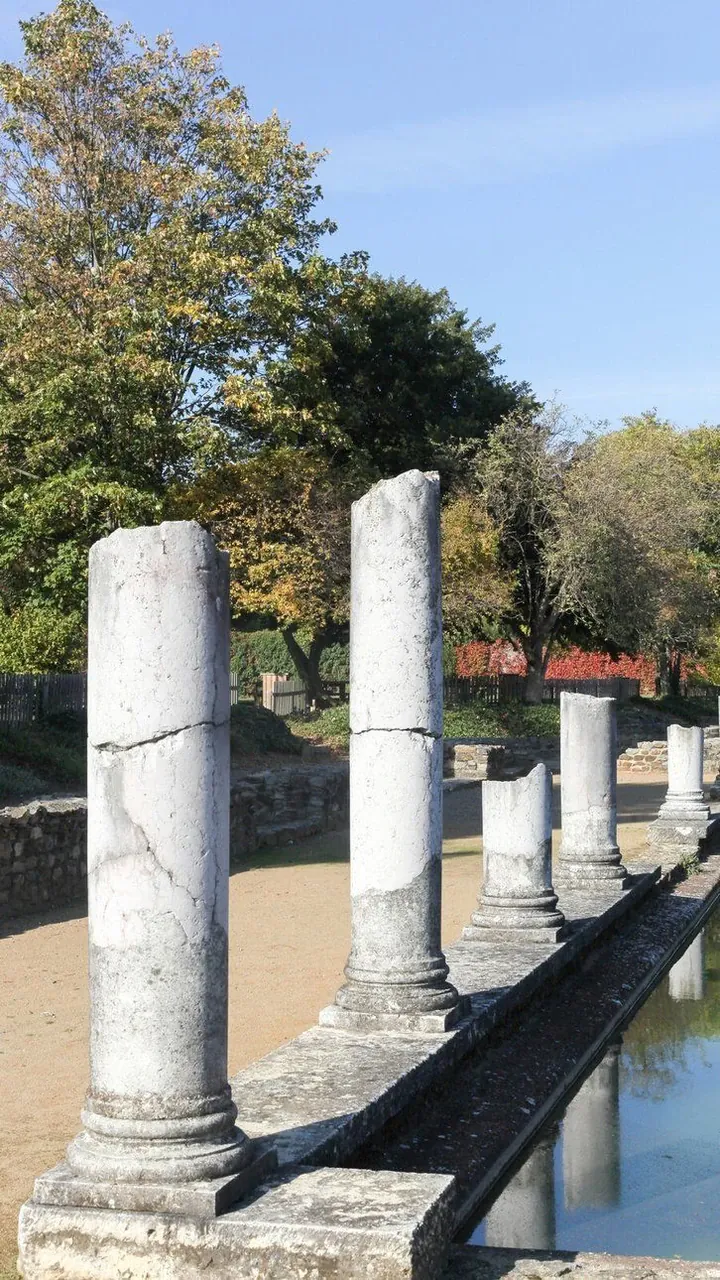
Not far from there, the archaeological site of Akrotiri reveals a Minoan city buried under volcanic ash 3,600 years ago. It is sometimes called the “Pompeii of the Aegean”. The paved streets, the multi-storey houses, the delicate frescoes bear witness to a refined civilisation, frozen at the instant of catastrophe. To walk in these covered ruins is to touch the deep history of this island, the one hidden beneath the whiteness of the villages and the beauty of the sunsets.
The wine villages: Megalochori and Pyrgos
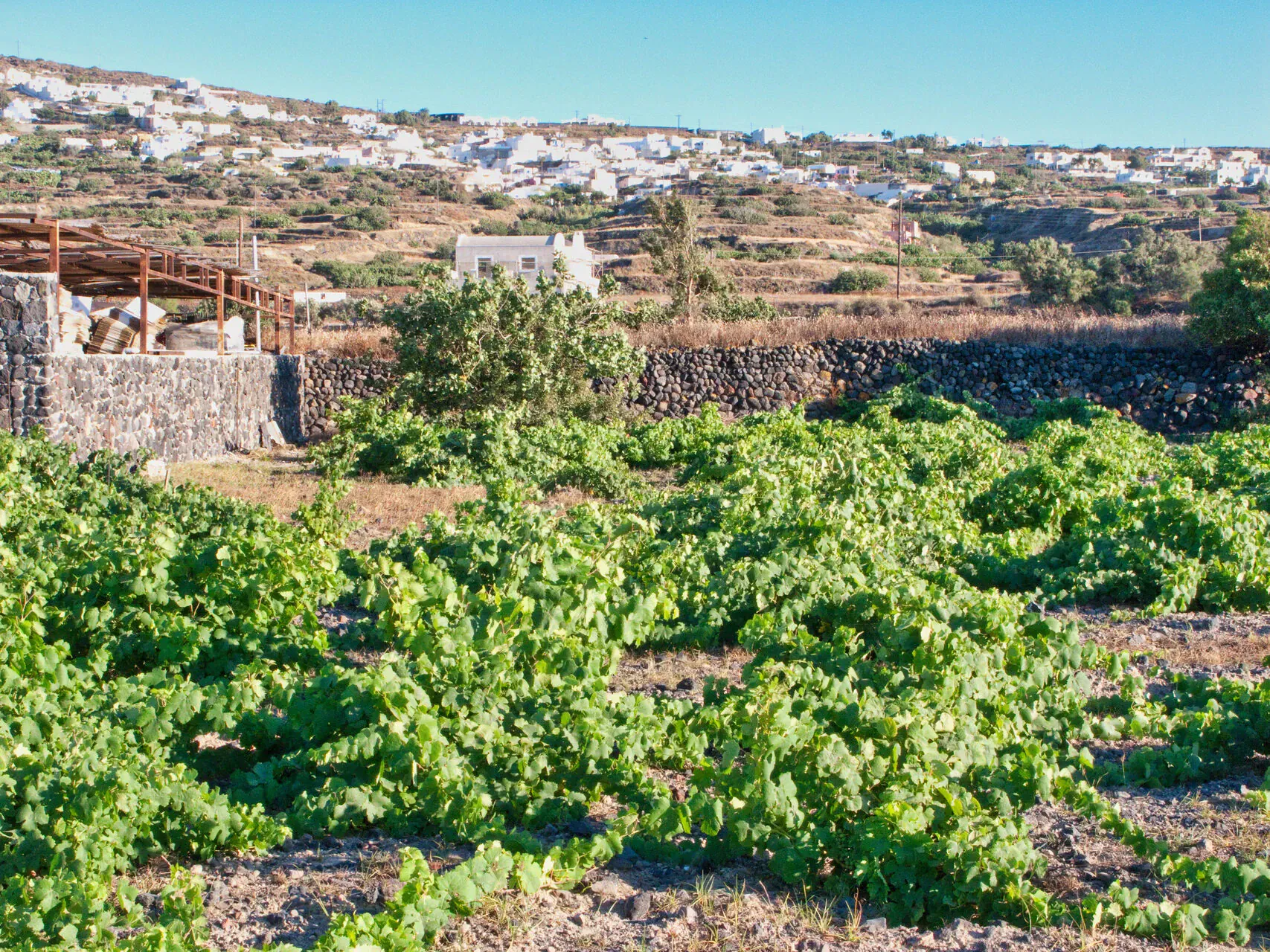
Santorini wine is a story of its own. Assyrtiko, the island’s king grape, has grown here for centuries in conditions no other vineyard in the world knows: volcanic soil, constant wind, almost no rain. To survive, the growers weave the stocks into baskets (kouloura), creating those round, low forms that dot the landscape like living sculptures.
A walk between Megalochori and Pyrgos crosses this unique wine heritage. Megalochori charms with its narrow lanes, its captains' houses with carved doors, its vaulted cellars where the wine rests in cool shadow. You push open the door of an estate, taste a dry Assyrtiko with notes of citrus and gunflint, and understand that this wine carries within it the whole minerality of the island.
Pyrgos, perched higher, offers from its medieval kasteli a complete panorama over Santorini. The lanes climb in a spiral, the cats doze on the steps, the air smells of thyme and warm stone. It is a village that has kept its authenticity, far from the tourist bustle of Fira and Oia. You linger there with pleasure, a glass of Vinsanto (the local sweet wine) in hand, watching the sun decline over the caldera.
When to walk on Santorini
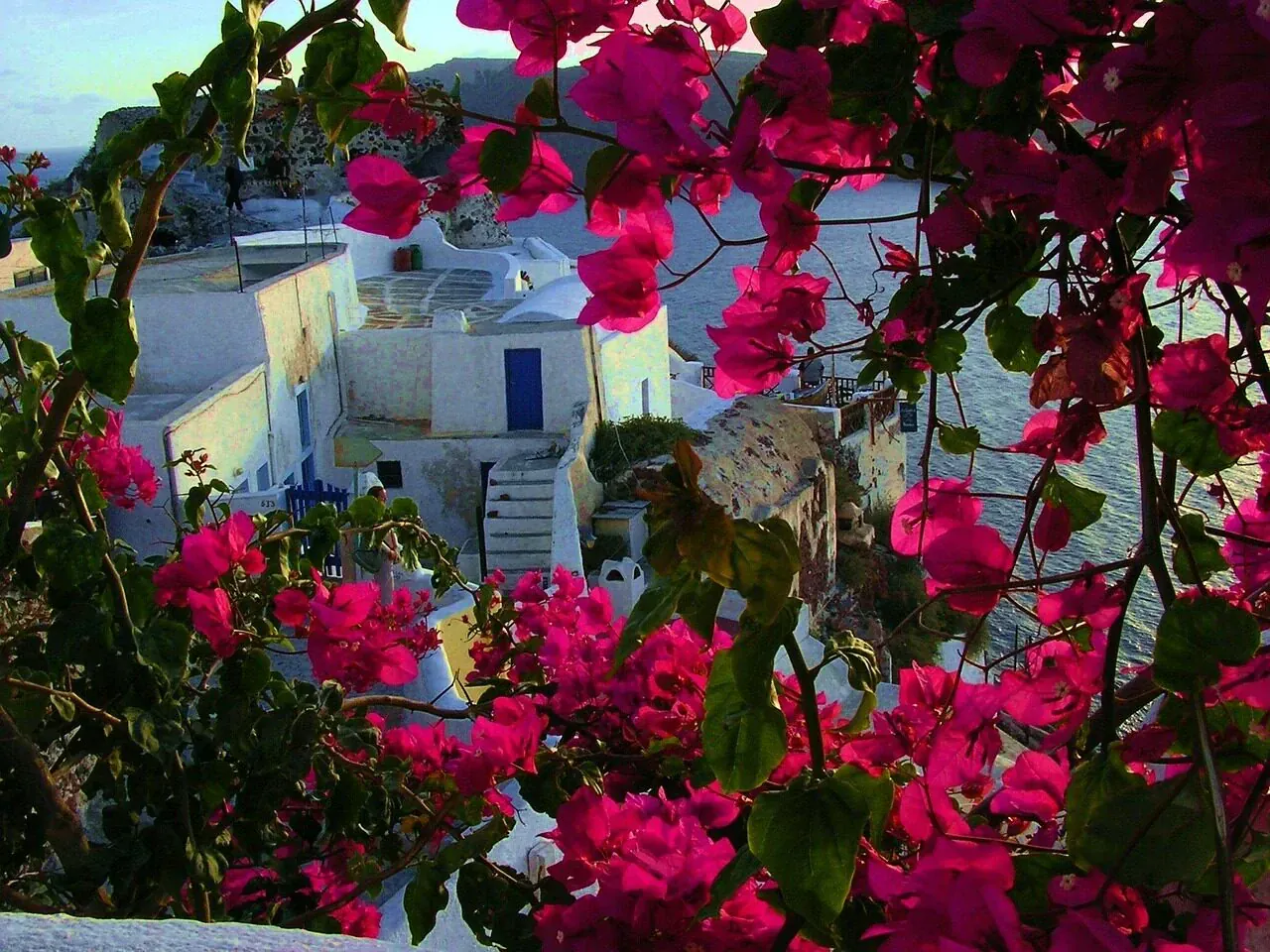
Santorini lends itself to walking from spring to autumn, but two windows stand out. From April to June the island is at its finest: temperatures are mild, the light is limpid, the paths are calm and the bougainvillea explodes with colour. From September to October the summer heat eases, the sea stays warm for swimming, and the island recovers a serenity that July and August had taken from it.
Avoid the height of summer: the heat is intense on exposed paths, and the crowd turns some routes into a procession. The shoulder seasons offer the best of Santorini, the one hurried travellers never know. To refine your choice of period, our month-by-month guide to visiting Greece details the weather and the mood of each season.
Combining Santorini with Naxos or Crete
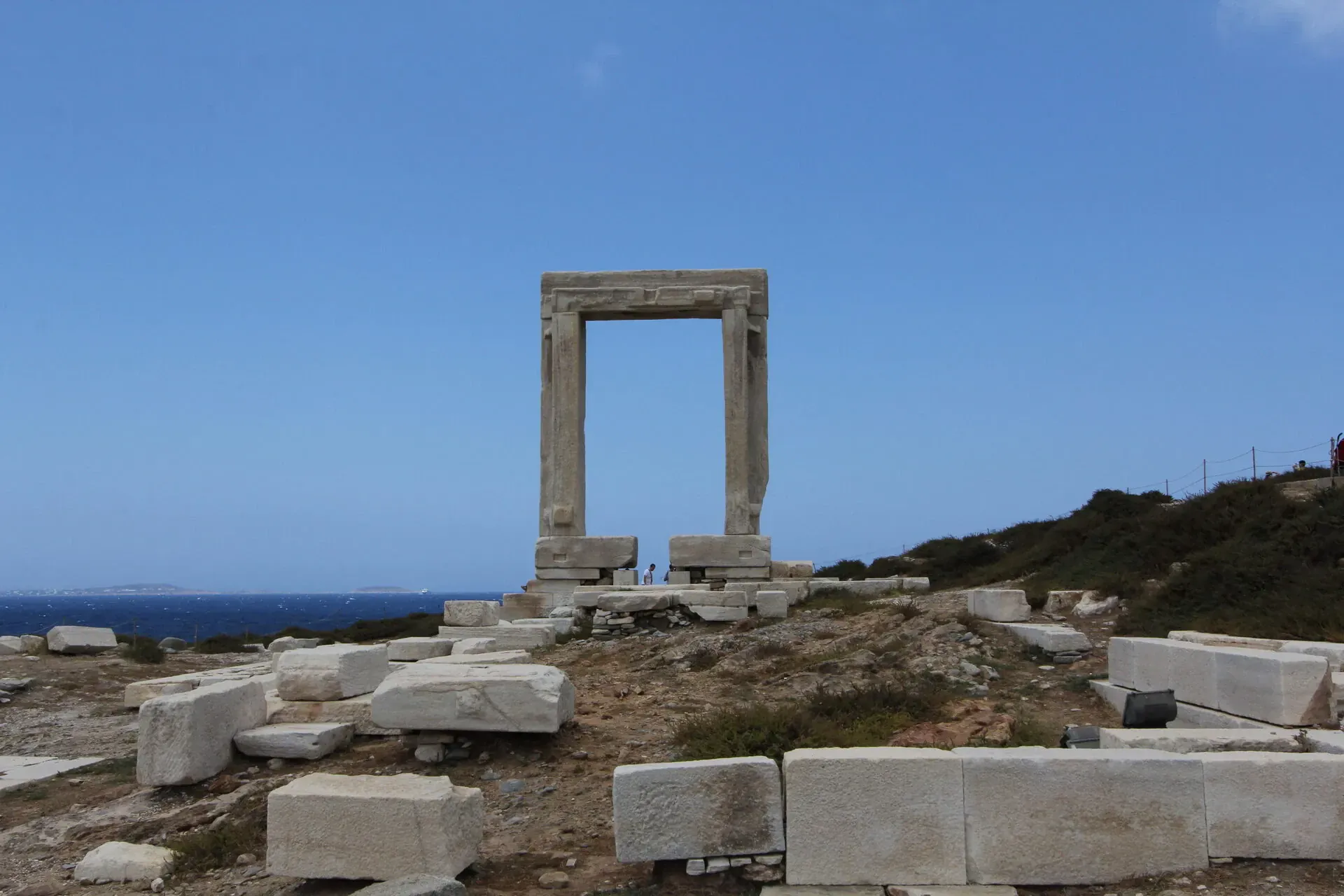
Santorini is all the better savoured when you give it time and company. The island is small, its paths are covered in a few days, and the ferries criss-crossing the Aegean naturally invite you to extend the journey to a neighbour. That is the whole art of island Greece: linking islands at your own pace, never rushing, letting the boat make the join from one setting to the next.
To the north, Naxos unfolds a quite different Greece: green valleys, marble villages perched in the mountains, olive groves and long golden beaches. Our trip Naxos, Amorgos and Santorini self-guided links these three islands in 12 days, with luggage carried and charming addresses at every stage. You pass from the flower-lined paths of Naxos to the cliffs of Amorgos, then to the caldera of Santorini, like a crescendo of Cycladic landscapes.
To the south, Crete changes everything: vaster, wilder, rich in gorges, plateaux and one of the most generous cuisines in the Mediterranean. Our Crete hiking trips are again entirely self-guided, at your own pace and with no logistics to worry about.
Santorini is one of the jewels of the Cyclades archipelago, and each neighbouring island holds its own paths and its own wonders.
Want to extend the escape? Browse all our trips in the Cyclades and explore our favourite trails in Greece.
Frequently asked questions about hiking in Santorini
Can you walk the path from Fira to Oia?
Yes, and it is the finest way to discover the caldera. The path links Fira to Oia over some ten kilometres, with no particular difficulty, following the edge of the cliff. It is walked in 2 to 3 hours at an easy pace, with viewpoints at every turn. Set off early to enjoy the calm and the soft light, and fill your bag with water, as the path is exposed to the sun.
How long does the caldera walk take?
Allow 2 to 3 hours to link Fira to Oia unhurried, more if you linger at Imerovigli, on Skaros Rock or around the chapels dotted along the route. Nothing obliges you to do it in one go: many choose to stop in a village, take a coffee facing the volcano, then set off again. It is a day to savour, not a stage to complete.
When should you walk on Santorini to avoid the crowds?
Two reflexes are enough. On season, favour spring (April to June) and autumn (September, October), when the island breathes and the heat stays kind. On timing, walk early in the morning or late in the afternoon, before or after the cruise passengers who fill the viewpoints in the middle of the day. That is how you discover the serene version of Santorini.
Is hiking on Santorini accessible to everyone?
On the whole, yes. The caldera paths and most of the island’s walks stay within reach of any walker in good form, provided you go at your own pace. A few stretches climb a little, such as the access to ancient Thera or Profitis Ilias, but nothing demanding. Good shoes, a hat and water are enough to enjoy the day fully.
Is Santorini worth it for walking, despite its touristy reputation?
Entirely. The crowd concentrates on a few viewpoints and at peak hours; as soon as you step away — on the vineyard paths, towards Akrotiri or at daybreak on the caldera — you find a surprisingly peaceful island. Walking on Santorini is precisely the way to escape the crush and taste its true face, between vines, perched villages and panoramas over the Aegean.
Where can I find a map or a walking route for Santorini?
The island’s main paths, starting with the caldera route between Fira and Oia, are well waymarked and easy to follow without elaborate preparation. For those who like to walk map in hand, the specialist Greek publishers Anavasi and Terrain publish maps of the Cyclades and Santorini, found in travel bookshops or on the spot. And if you would rather have nothing to organise, our self-guided trips such as Naxos, Amorgos and Santorini hand you detailed route notes and the GPS tracks for every stage: all that is left is to savour the path.
Do you need a guide to hike on Santorini?
The main paths are well marked and easy to follow alone. For anyone wanting to link several islands without worrying about ferries, accommodation and luggage, the self-guided formula remains the gentlest: the itinerary is prepared, the addresses booked, and all that is left is to walk. That is the spirit of our Cyclades trips, designed for moving at your own pace in complete peace of mind.
Your question is not on this list?
Write to us, and we will reply to you personally by email.
Article written by
Maria Papadopoulou (Μαρία Παπαδοπούλου)
Editorial lead
I hike, and Greece is the place I keep coming back to. My initial studies (a Master’s in Marketing and a degree in Applied Foreign Languages) taught me how to build an editorial project, and the trails taught me the… Read more