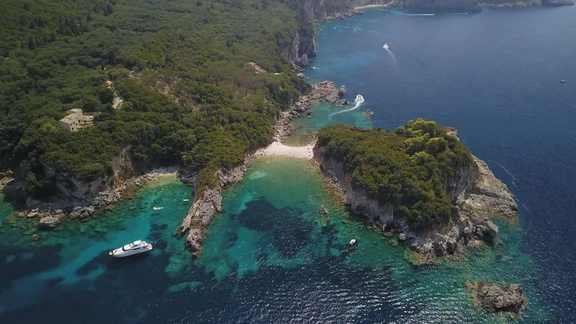


There are mornings when Greece takes hold of you before you have even finished your coffee. On Corfu, the light does the work: a golden light, almost liquid, that flows between the cypresses and settles on the Ionian Sea like a promise of gentleness. It is in that light that our walking journey between two islands begins.
Corfu, the green prologue
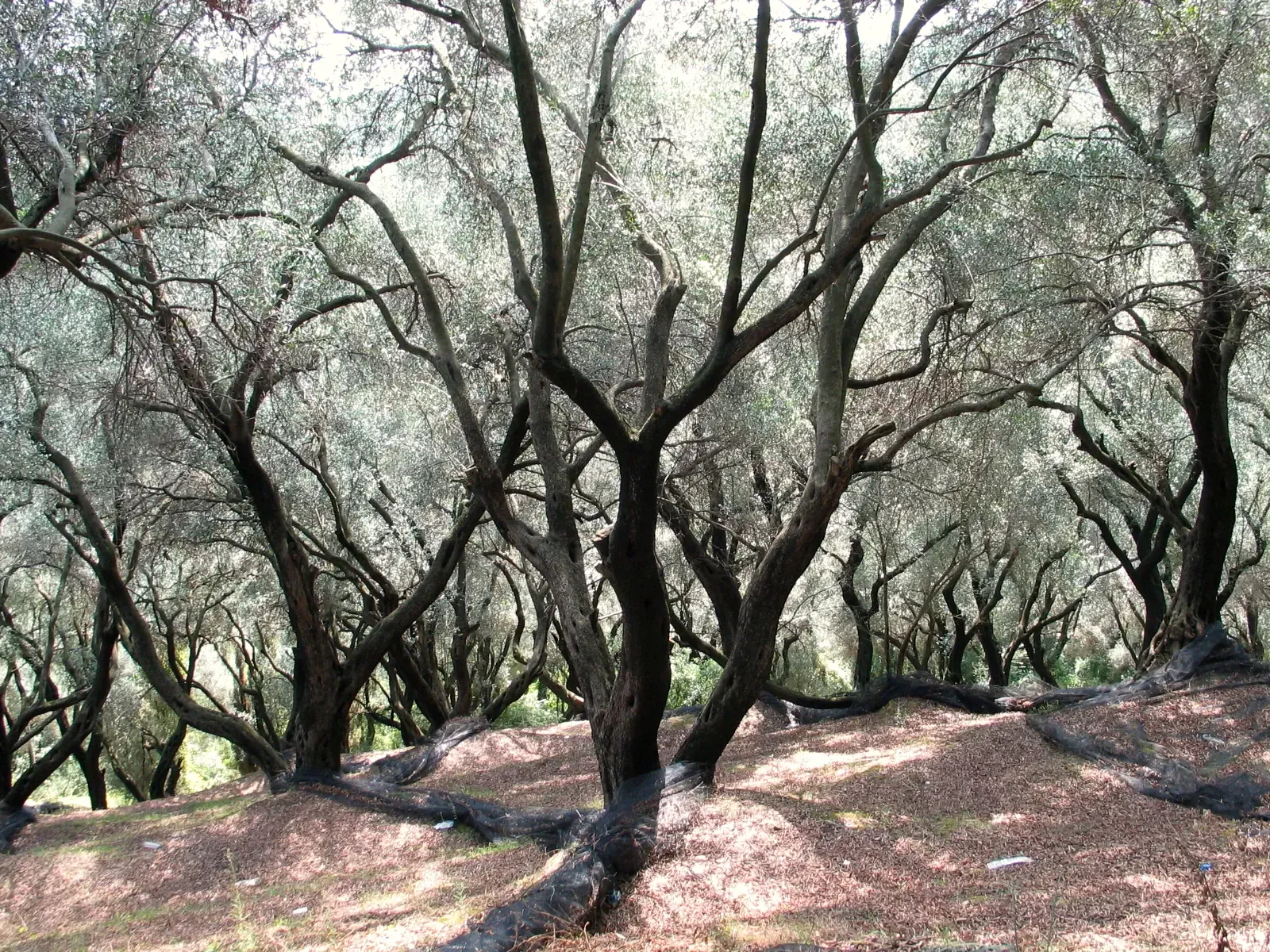
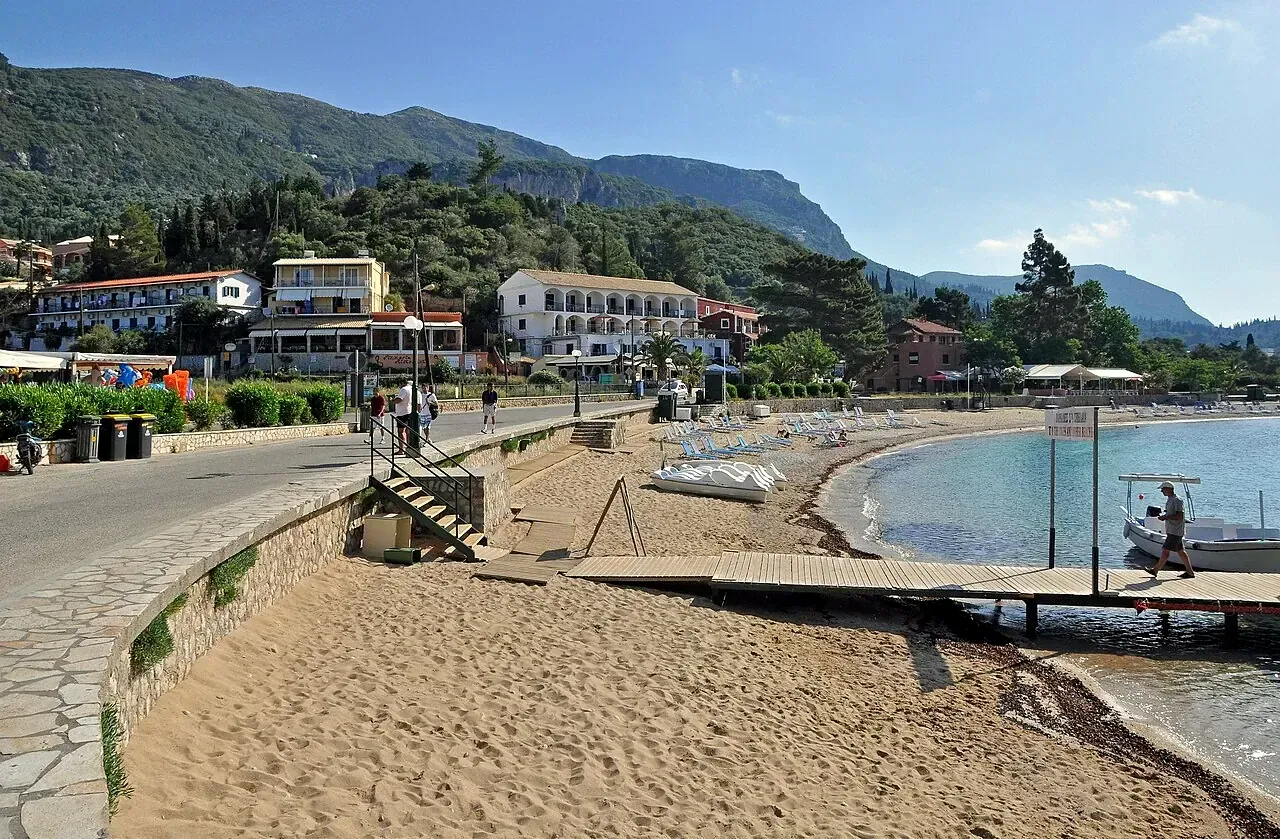
Corfu is said to be the greenest of the Greek islands. The first days of our stay confirm the reputation: beneath vaults of centuries-old olive trees, between gardens of kumquats and jasmine, the island’s byways unfold a landscape of rare gentleness. The Venetian influence is written in the ochre façades of Kerkyra, the old town listed as a UNESCO World Heritage Site, where you are happy to sit down to a meze with a glass of local wine.
It was this same Corfu that the writer Gerald Durrell chose as the setting for his celebrated trilogy: the account of a childhood cradled by the island’s lush nature. Walking between the olive trees, you understand why he described Corfu as a garden of Eden. At the table, Ionian flavours stand out for the sweetness lent them by Italian influence: a thread of new olive oil on fresh bread, a few olives, a sofrito scented with garlic, and happiness is there.
Corfu deserves time spent on its coastal paths and its perched villages. Walkers happily follow the Corfu Trail, the long waymarked route linking the south of the island to the north, of which simple day sections are just as enjoyable. If you would like to know more, our guide The Best Hikes in Corfu details each itinerary. But the charm of this journey lies precisely in what comes next: the crossing to Paxos.
The crossing: an hour that changes everything
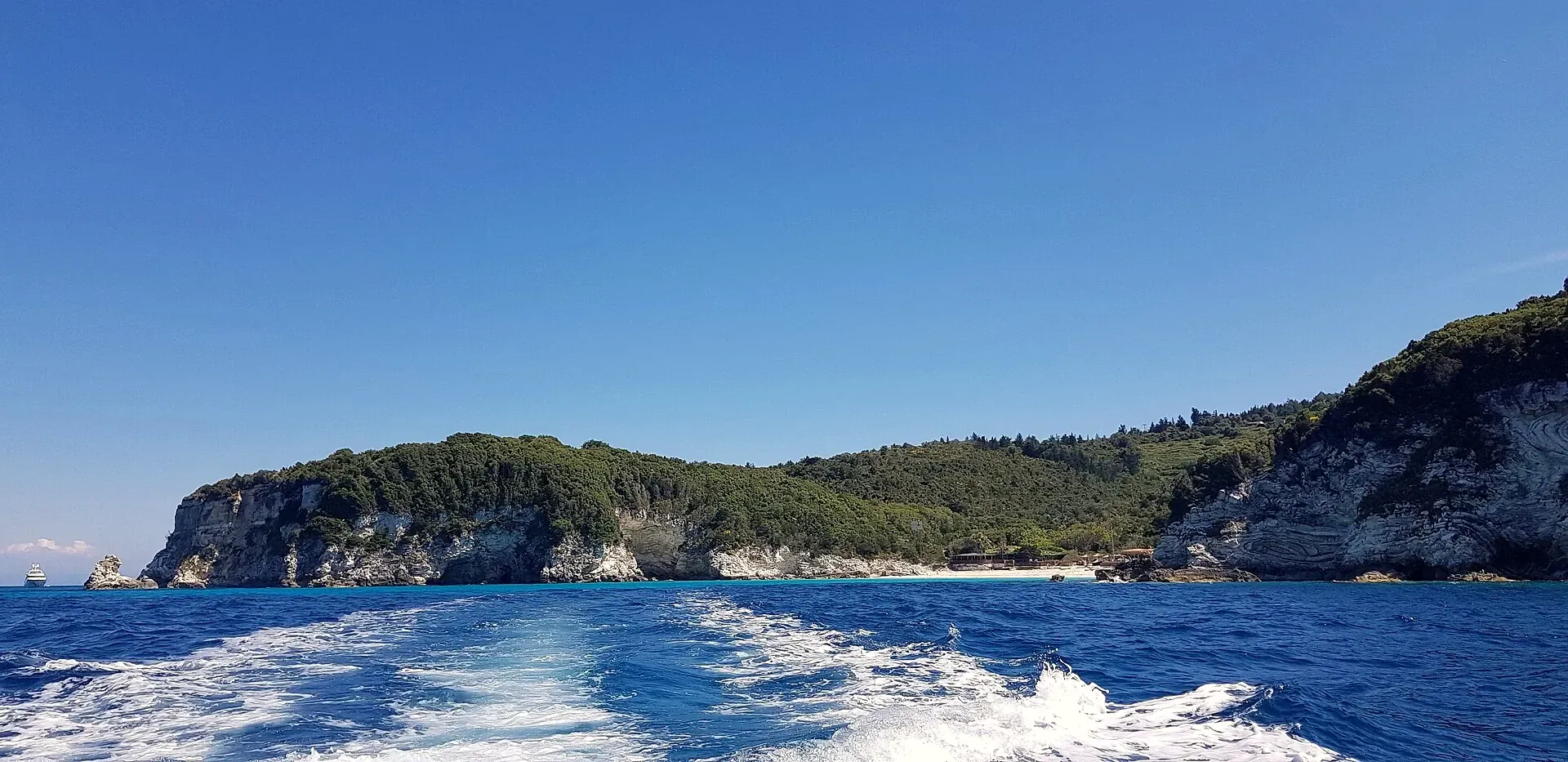
Taking the boat to Paxos is to change worlds. The ferry leaves the port of Corfu in the morning light, follows the island’s south coast, then heads out into the open Ionian. After an hour, a low green silhouette appears on the horizon. No spectacular cliffs on the approach, no imposing harbour: just a garden set on the water, barely 10 km long, covered with olive trees so ancient that their trunks, sculpted by time, look like works of art.
The contrast with Corfu is immediate. Here there is no busy road, no crowd. Just the song of the cicadas and the lapping of water against the hulls of the colourful caiques. You sense you have arrived somewhere different, more intimate, slower.
Paxos on foot: from village to village
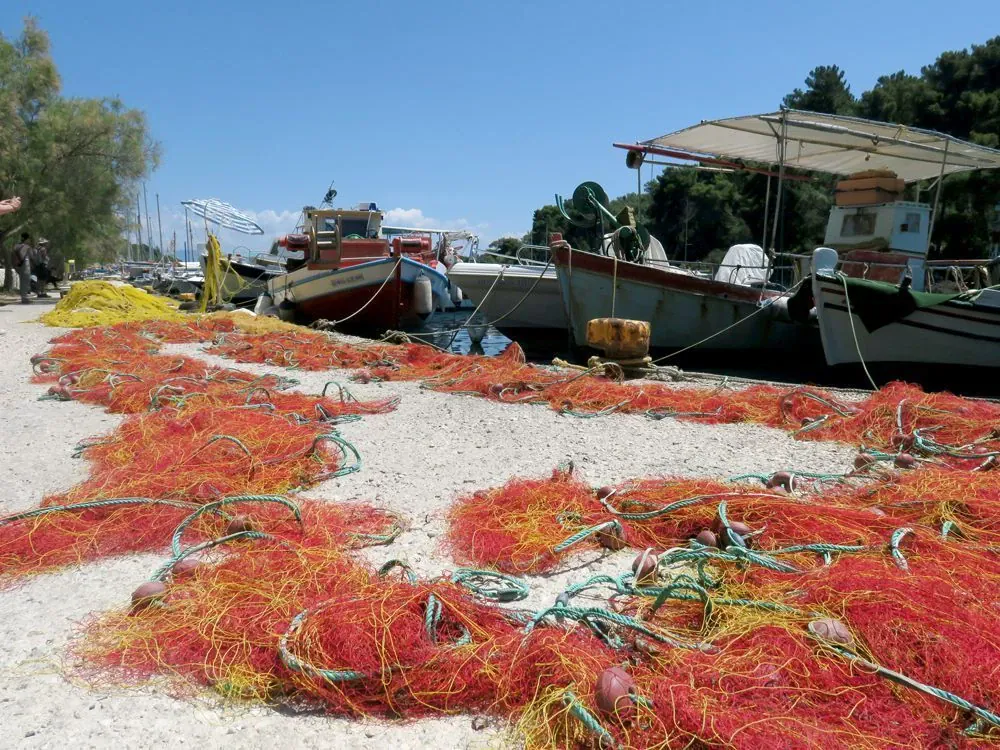
The island is discovered on foot in three natural stages, linked by shaded paths that cross the finest olive groves in Greece.
Gaios, the miniature capital, sets the tone. Pastel houses are reflected in the calm waters of the channel, sheltered by the islet of Saint Nicholas. You wander without aim, stop for a frappé, admire the fishing boats coming home at dusk. The path heading south follows the east coast for about 3 km, through the olive trees, to a promontory from which you can make out Antipaxos.
Loggos, curled into a cove on the east coast, is perhaps the most photogenic of the three villages. A few tavernas at the water’s edge, colourful boats, a centuries-old plane tree under which you lunch on grilled octopus and a salad of sun-filled tomatoes. The path linking Gaios to Loggos (around 5 km, 2 hours of quiet walking) crosses olive groves where some trees are more than five hundred years old. Their gnarled trunks draw natural sculptures you willingly stop to admire.
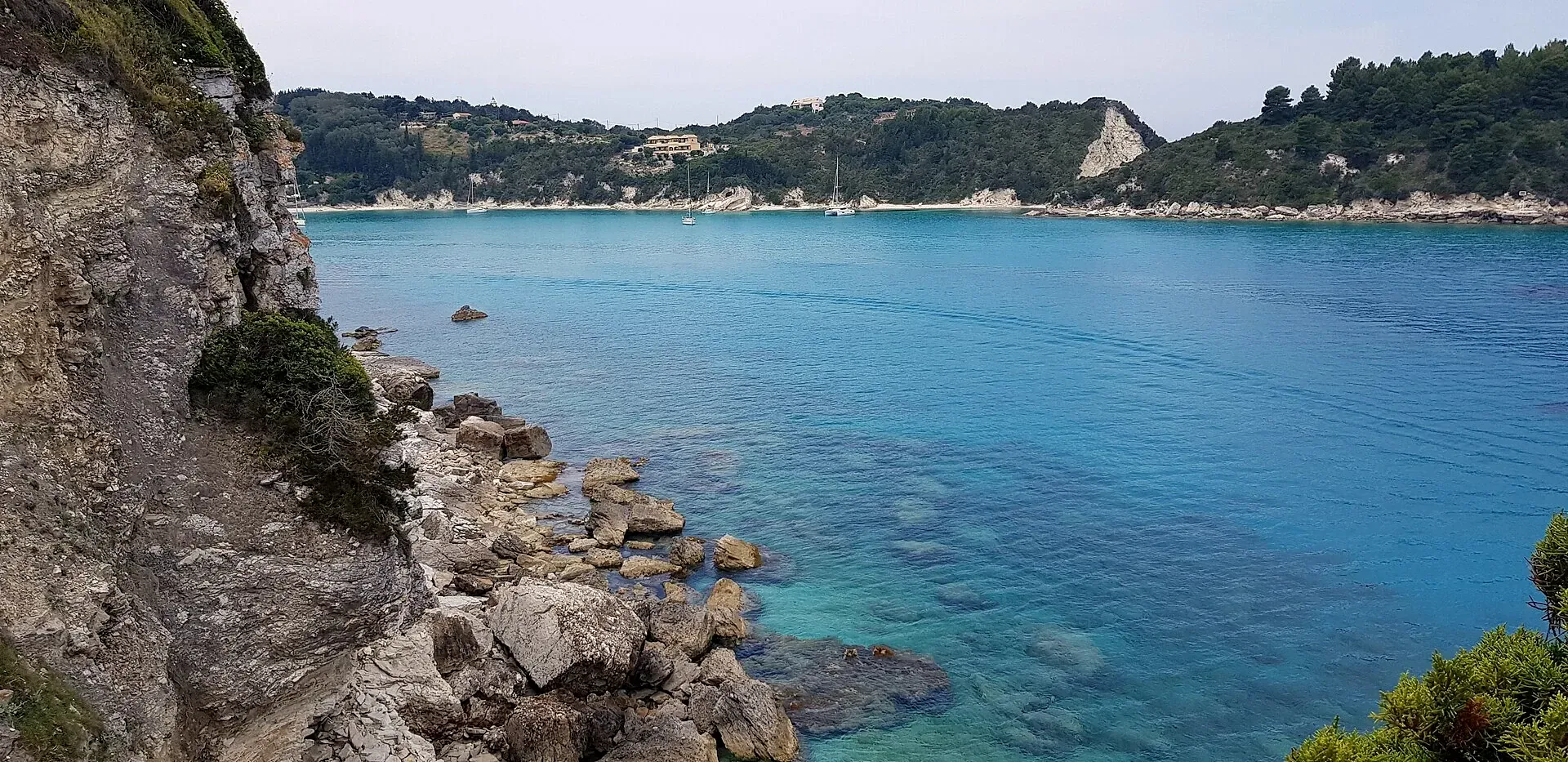
Lakka, at the northern tip, occupies the head of a circular bay with shallow water, ideal for swimming. From Loggos, allow about 4 km on a path alternating olive groves and views over the sea. Lakka has that particular serenity of the ends of the earth: you settle on a terrace facing the bay, watch the sailing boats come in to anchor, and let time do its work.
The western cliffs: the spectacle of Paxos
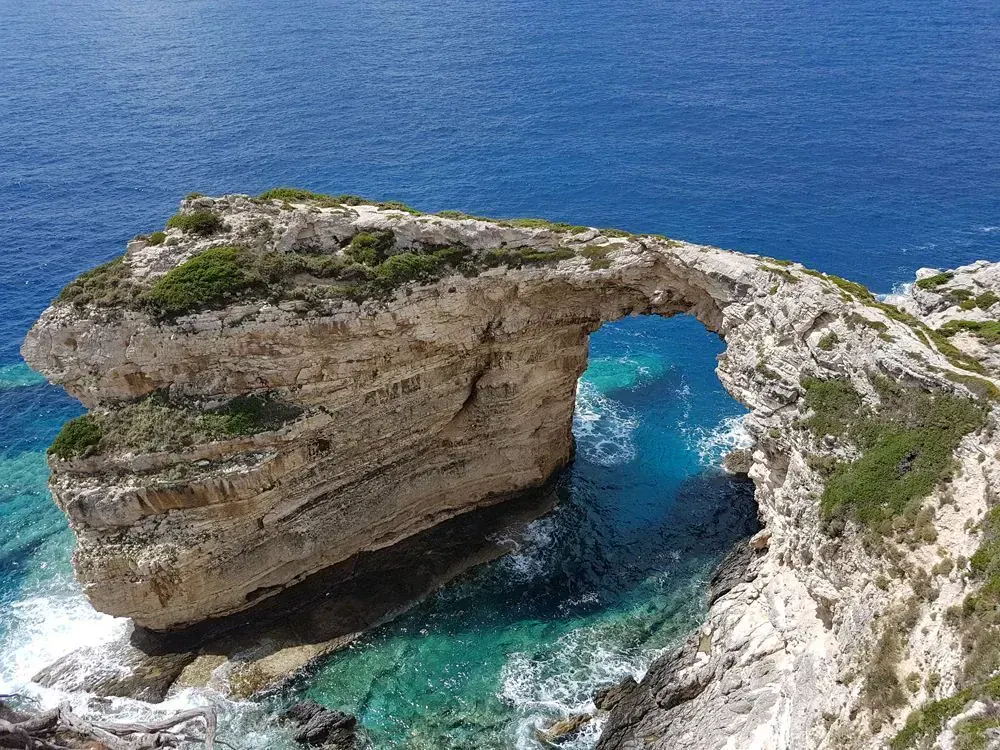
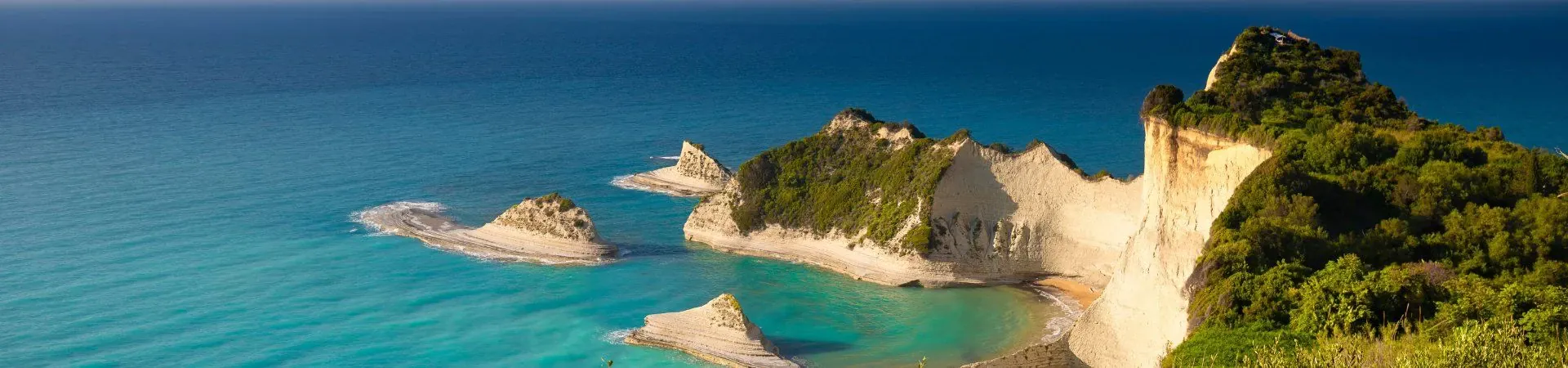
The west coast of Paxos holds the most striking moment of the journey. Limestone cliffs 60 m high plunge sheer into a sea of unreal blue. A path follows the top of these cliffs along the whole length of the island (around 8 km from south to north), the ground carpeted with thyme and wild sage. You meet more goats than walkers. At every turn, a new panorama, a new gentle vertigo.
The sea cave of Ipapanti and the standing rock of Ortholithos, sculpted by the waves, are visited by boat. You enter into a turquoise light that seems to come from another world. In the south of the island, near the village of Ozias, the Tripitos Arch opens a spectacular breach in the cliff, reached on foot before passing through it by kayak in calm weather. You understand why the ancient Greeks placed one of Poseidon’s dwellings here.
An excursion to Antipaxos
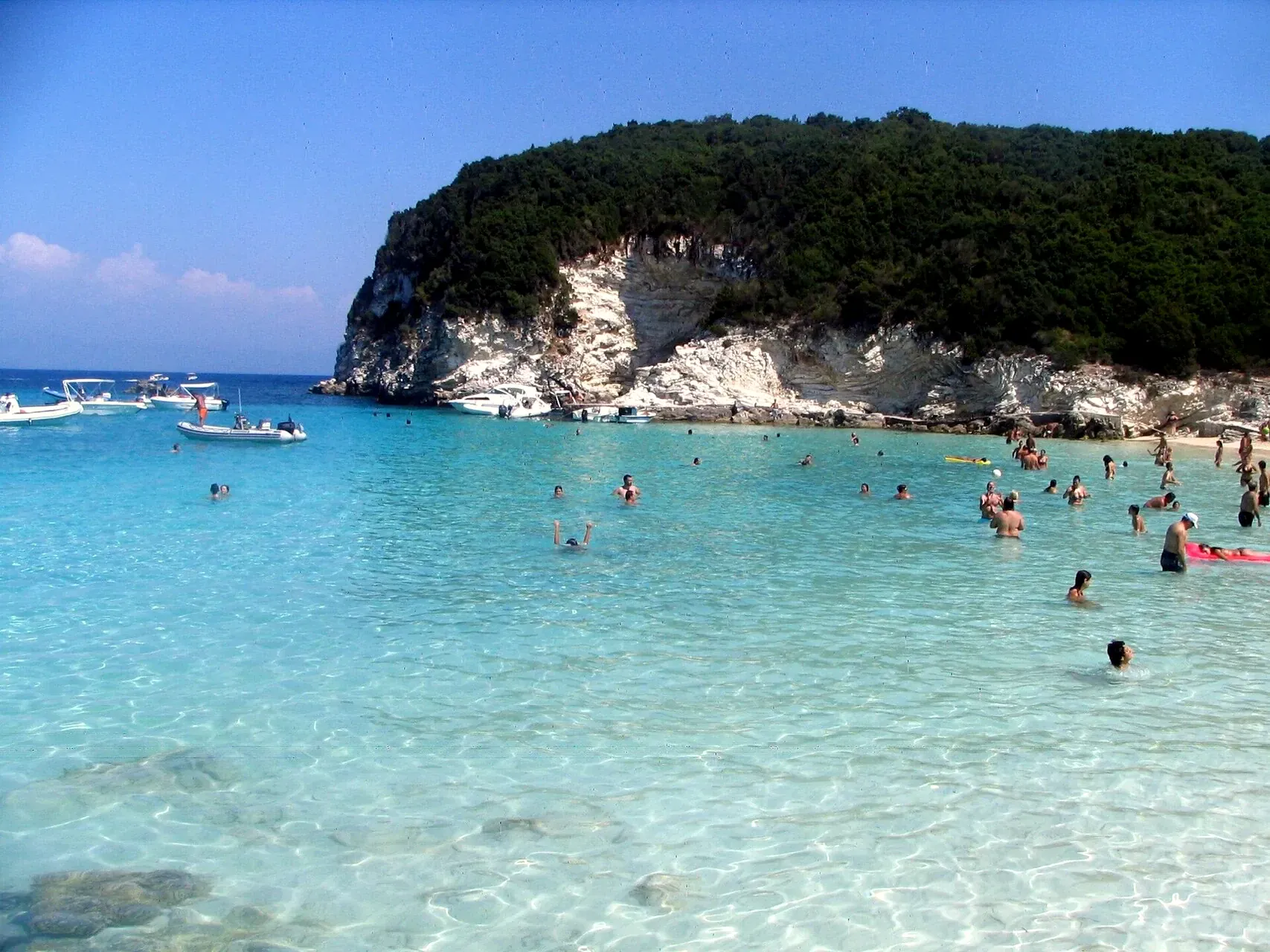
In fine weather, a caique excursion from Gaios to Antipaxos is a must. This tiny island, all but uninhabited, holds two beaches of almost unreal beauty: Vrika, with its white sand and turquoise water, and Voutoumi, edged with pale rocks. The waters of Antipaxos are among the clearest in the whole Mediterranean. You spend half a day there doing nothing and swimming, before returning to Paxos for dinner with your feet in the water.
When to go and how to combine the two islands
Spring (late April to early June) offers nature in flower, fields of poppies and broom, and a sea warming gently. Autumn (mid-September to late October) adds the softness of shortening days, the first rains that revive the greens, and above all the start of the olive harvest, a moment of conviviality in the villages. The sea temperature stays around 23 degrees in October, perfect for a swim after every walk.
The Corfu and Paxos combination is ideally lived over 8 to 10 days: a few days of walking on Corfu to absorb the Ionian atmosphere, then the crossing to Paxos for a more intimate immersion. Your luggage awaits you at each stage, the charming accommodation is booked, and all that is left is to walk and to savour.
Frequently asked questions about walking on Corfu and Paxos
Can you really go hiking on Corfu and Paxos?
Yes, and it is one of the finest walking grounds in Greece. Corfu is covered by the Corfu Trail, a waymarked route crossing the whole island from south to north, and by a multitude of coastal paths and trails between perched villages. Paxos, more intimate, is discovered on foot from Gaios to Lakka along old mule tracks winding through the finest olive groves of the Ionian Sea. Everywhere the walking stays gentle and accessible, punctuated by pauses in the shade and swims.
Where can I find a map or a walking route for Corfu and Paxos?
The specialist Greek publishers are the reference: Anavasi publishes a map of Corfu showing the line of the Corfu Trail, as well as a map dedicated to Paxos and Antipaxos detailing all the paths, and Terrain is another of Greece’s recognised cartographers. If you would rather prepare nothing, our self-guided holidays hand you detailed route notes, with the itineraries described step by step and the tracks to follow, so you can make your way from one village to the next without hesitating.
Is it better to travel guided or self-guided?
Both formulas exist and answer different wishes. Self-guided, you walk at your own pace with route notes, charming accommodation booked and luggage carried from stage to stage, as on our Corfu and Paxos self-guided holiday. On a guided trip, a leader who knows every path shares the history, the flora and the good tables, as on Corfu and Paxos guided. In both cases you enjoy it all with no organising to worry about.
How many days should you allow to discover Corfu and Paxos on foot?
Ideally allow 8 to 10 days to savour both islands without hurrying: a few days on Corfu to absorb the Ionian atmosphere, then the hour-long boat crossing to Paxos for a more peaceful immersion. On the ground, each day mixes 2 to 3 hours of quiet walking, long pauses at the table and time for a swim. It is a journey to be tasted slowly.
Your question is not on this list?
Write to us, and we will reply to you personally by email.
Our Corfu and Paxos trips
Kelifos offers several ways to live this Ionian experience:
- Corfu and Paxos, a journey in the Ionian Sea: the two islands combined self-guided, with the boat crossing and the finest paths on each island.
- Corfu, the Emerald Isle: a self-guided holiday to explore Corfu at your own pace, with charming accommodation and carefully prepared itineraries.
- Corfu and Paxos, a journey in the Ionian Islands: the same combination as a guided trip, with a leader who knows every path.
Whichever formula you choose, you will find that Ionian light which, once met, never quite leaves you.
Article written by
Maria Papadopoulou (Μαρία Παπαδοπούλου)
Editorial lead
I hike, and Greece is the place I keep coming back to. My initial studies (a Master’s in Marketing and a degree in Applied Foreign Languages) taught me how to build an editorial project, and the trails taught me the… Read more