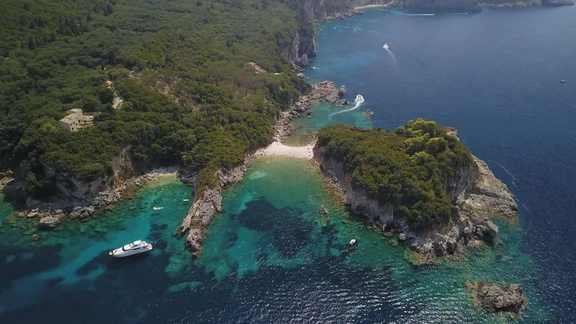


Corfu is the greenest of the Greek islands, the most Venetian too, and perhaps the most fragrant. Beneath its vaults of centuries-old olive trees, along its white cliffs hemmed with turquoise coves, the air carries the scent of jasmine, wild sage and warm earth. It is an island to be discovered on foot, slowly and with wonder. Walking here is a matter of pleasure more than effort: every walk on Corfu is savoured at your own pace, between a cove to swim in and a taverna to sit down at.
Paleokastritsa: cliffs and secret coves
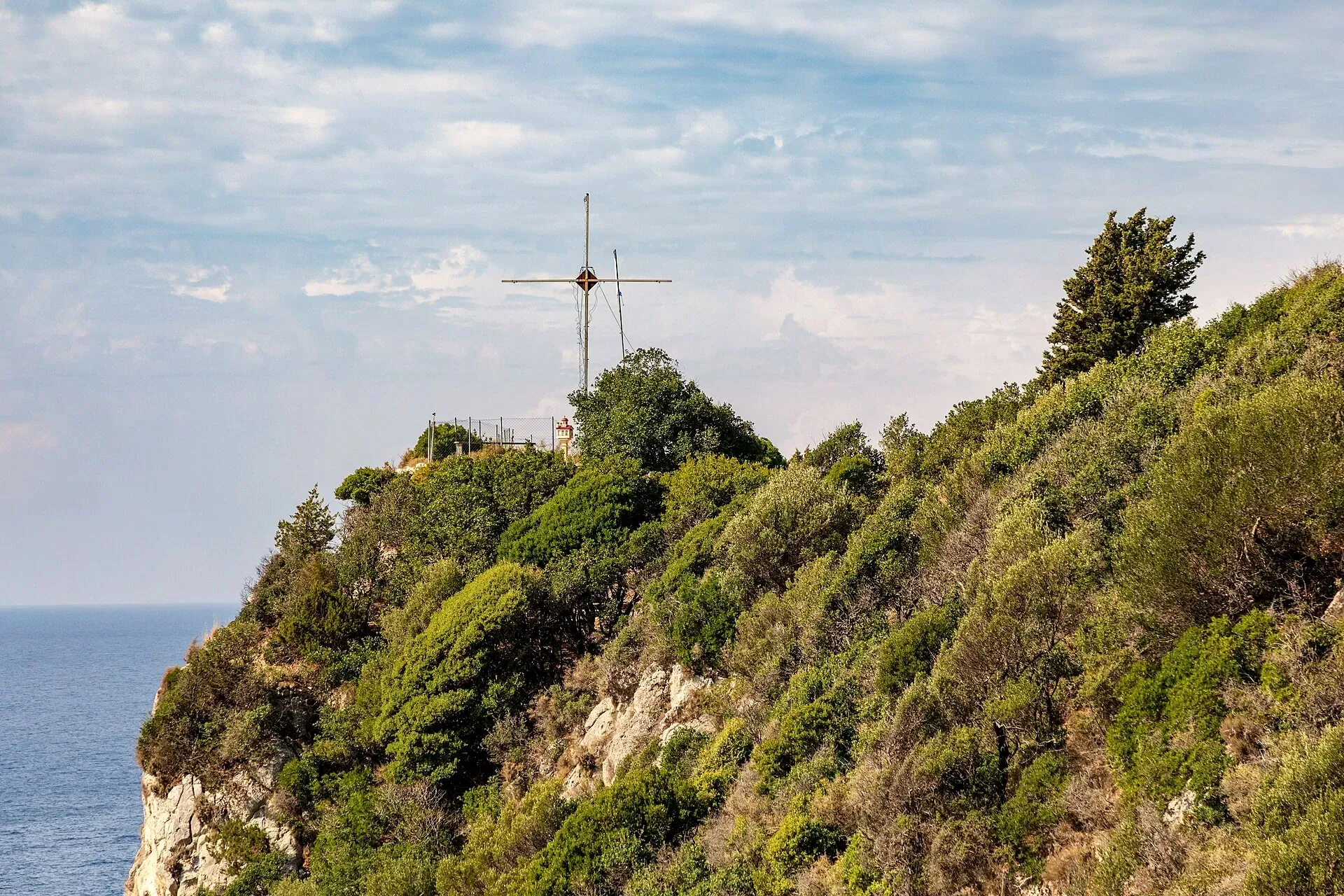
Allow a short hour of easy walking, largely in the shade: the path leading to the coves of Paleokastritsa first follows an olive grove before dropping gently towards the sea. Below, the water shifts between turquoise and deep blue, so clear that you can make out the pebbles on the bottom. The monastery of the Theotokos, set on the clifftop since the 13th century, watches over the bay with a contagious serenity. From its terrace, flowering with bougainvillea, the panorama takes in the whole west coast. You linger, you breathe, and you understand why the Venetians made this their favourite retreat.
From Kassiopi to Kouloura: the north-east coast
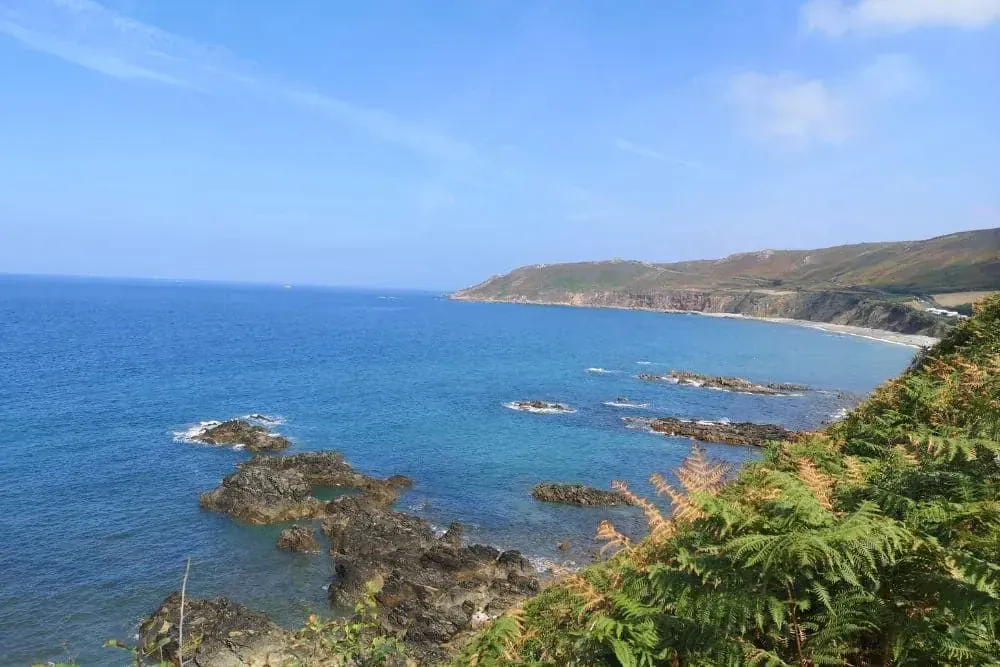
This coastal walk is one of the gentlest on the island, almost flat, to be savoured in 2 hours without hurrying. The path makes its way between maritime pines and small pebble beaches, linking fishing villages where time seems to have stopped. At Kouloura, the tiny horseshoe harbour, edged with cypresses, composes one of the most photographed scenes on Corfu. On the far side of the strait, the Albanian mountains draw a bluish line on the horizon. You lunch in a taverna almost with your feet in the water, on grilled octopus and a salad of tomatoes still warm from the sun.
Mount Pantokrator: the roof of the island
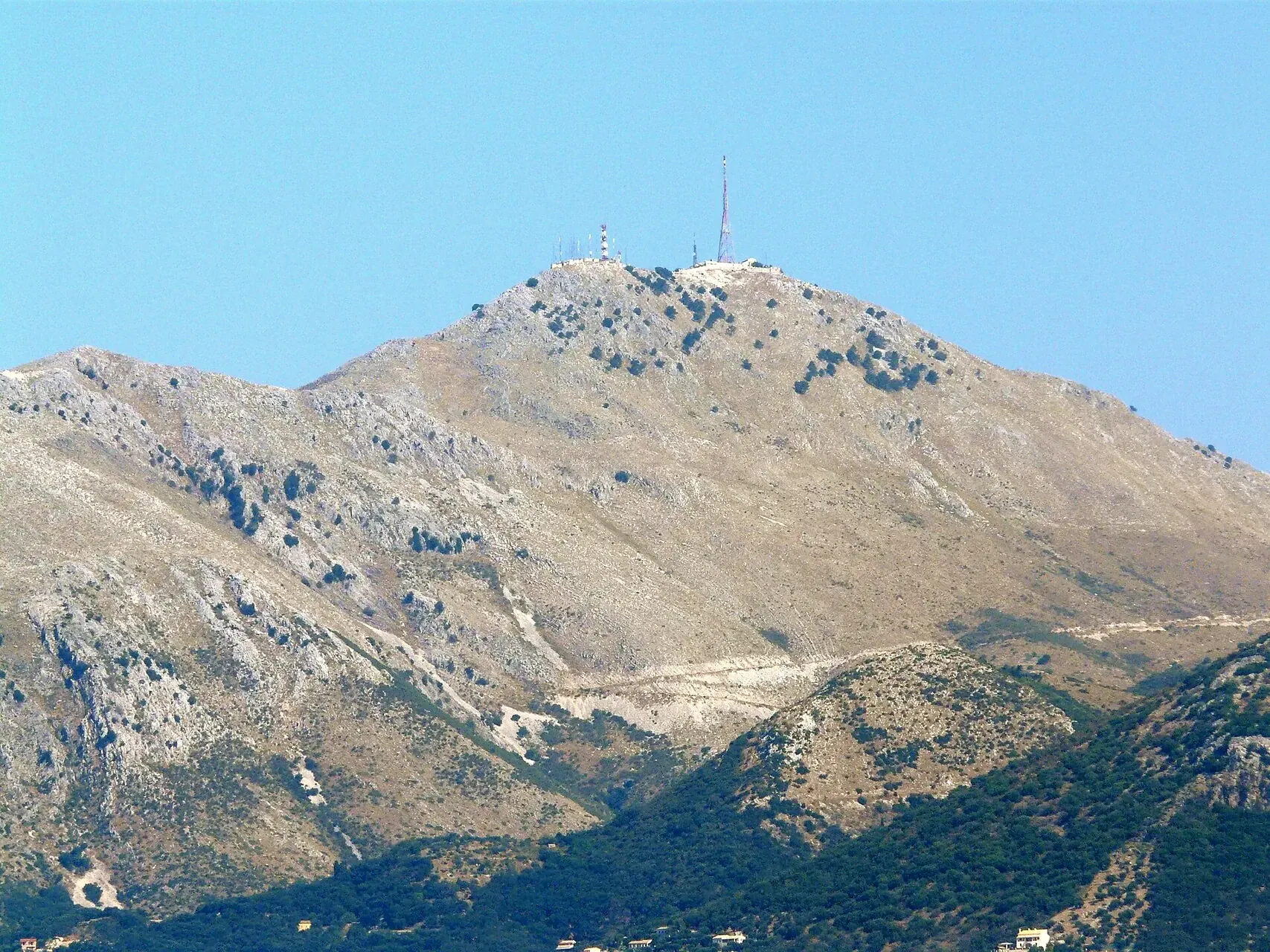
The highest point on Corfu, Pantokrator is earned by a gradual approach through villages clinging to the slopes: Strinylas, Petalia, with their shaded squares and stone fountains. The climb from Strinylas takes around 2 hours, at a quiet pace punctuated by pauses. The walking is steady, never abrupt, and the reward grows with every hairpin. At the summit, a 14th-century monastery and a panorama that carries far: the Ionian Sea on one side, Albania and Epirus on the other, and on a clear day the Italian coast in the distance. The silence up there has a particular quality.
Angelokastro: the fortress between sky and sea
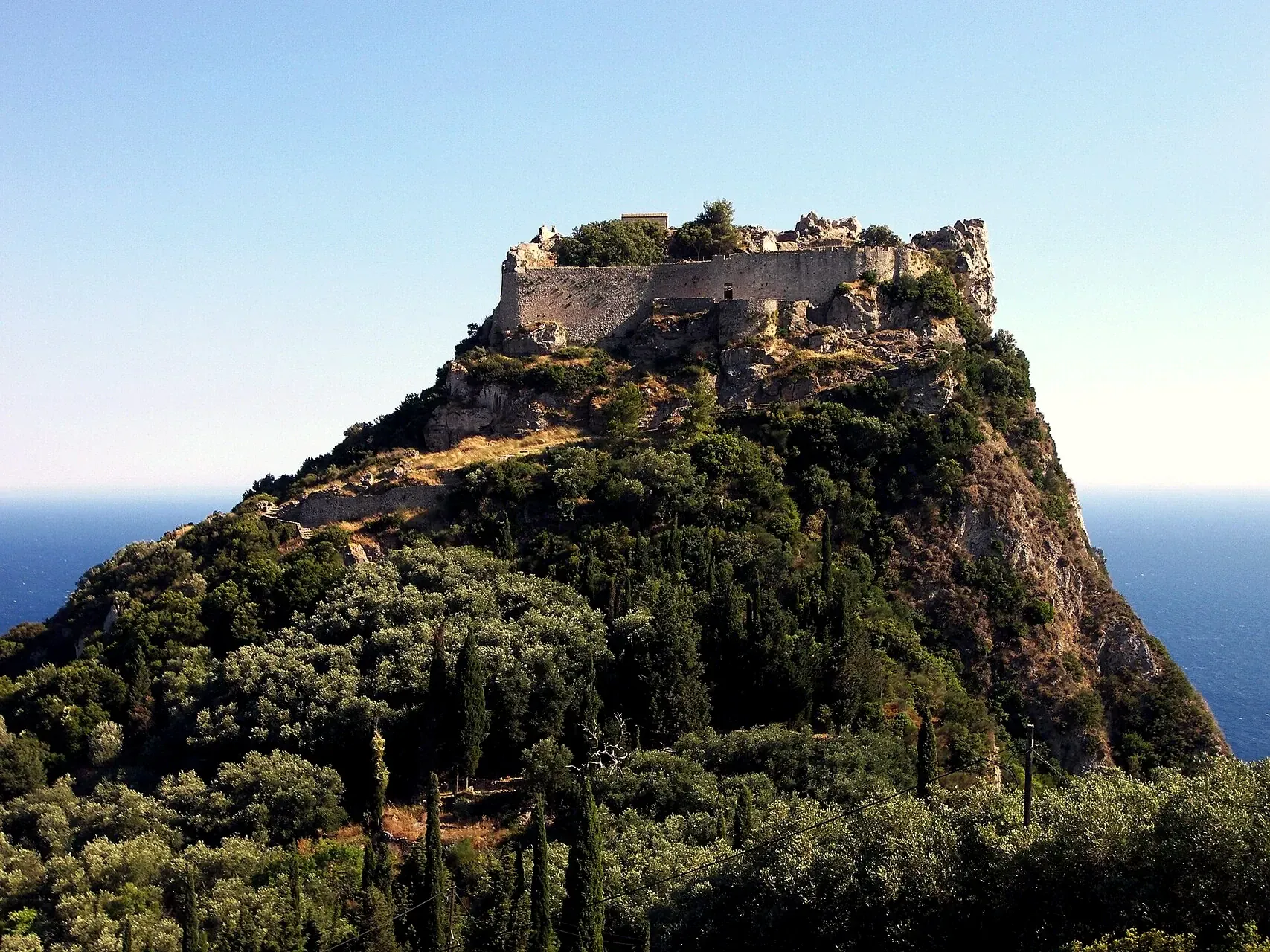
Perched on a rocky promontory above Paleokastritsa, Angelokastro is one of the most spectacular Byzantine fortresses in Greece. A short climb of around twenty minutes from the hamlet of Krini is enough to reach it. The path winds along the hillside, between olive trees and maquis, with the sea below changing colour at every turn. At the top, the ruins of the 13th-century citadel shelter a small chapel and a panorama opening over the whole north-west coast of the island. It is a place charged with history: for centuries the people of Corfu took refuge here during invasions. Today you come for the beauty of the place and the pleasure of a walk accessible to all.
Porto Timoni: the beach with two faces
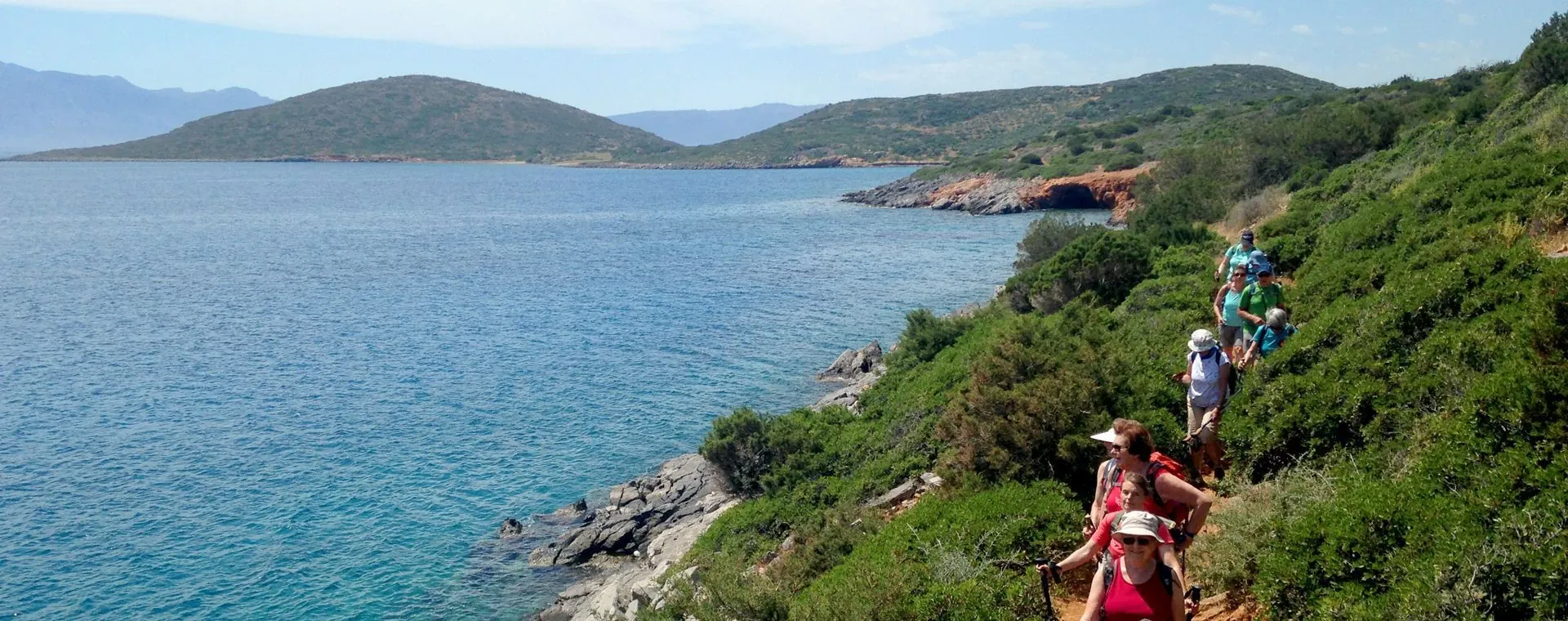
You have to walk around twenty minutes from the village of Afionas, on a stony path lined with fragrant maquis, to discover Porto Timoni. The surprise is complete: a narrow tongue of land separates two twin bays, one facing north, the other south. Depending on the wind, you choose your shore. The water is an almost unreal blue, the visitors few, the sense of discovery intact. It is the kind of place you hesitate to share, for fear it might change.
Old Perithia: the mountain ghost village
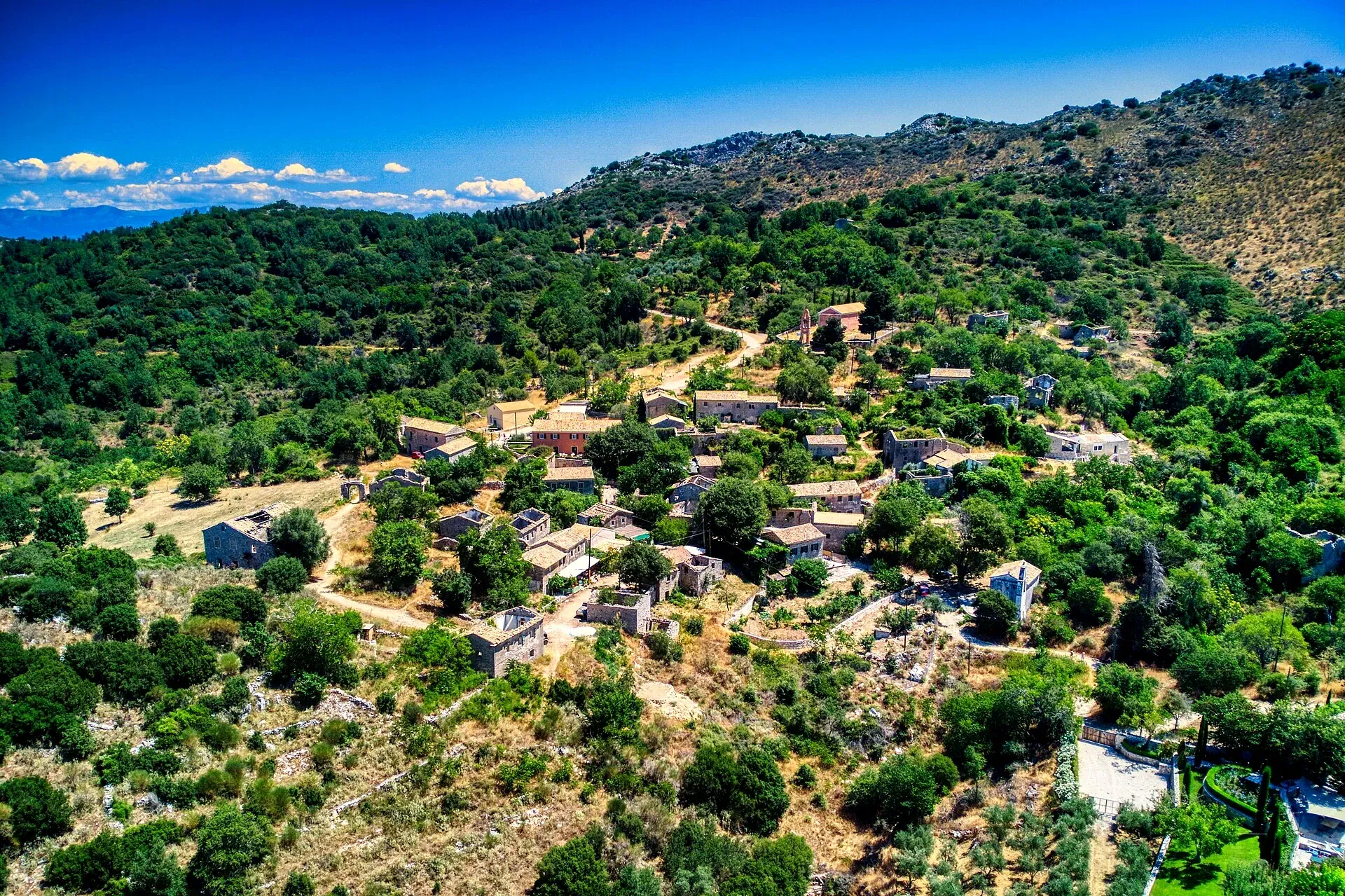
Tucked into the north-eastern heights, Old Perithia is an abandoned village that nature has slowly covered with ivy and wild fig trees. Founded in the 14th century, deserted in the 20th, it is now enjoying a discreet renaissance: a few houses have been carefully restored, two or three tavernas have reopened under the plane trees. You reach it by an easy path crossing silent olive groves, a short walk away from the road, and you discover a forgotten Corfu, rural and authentic, far from the tourist shores. The charm of patina, of time passing and coming back.
From the Achilleion to Benitses: in Sisi’s footsteps
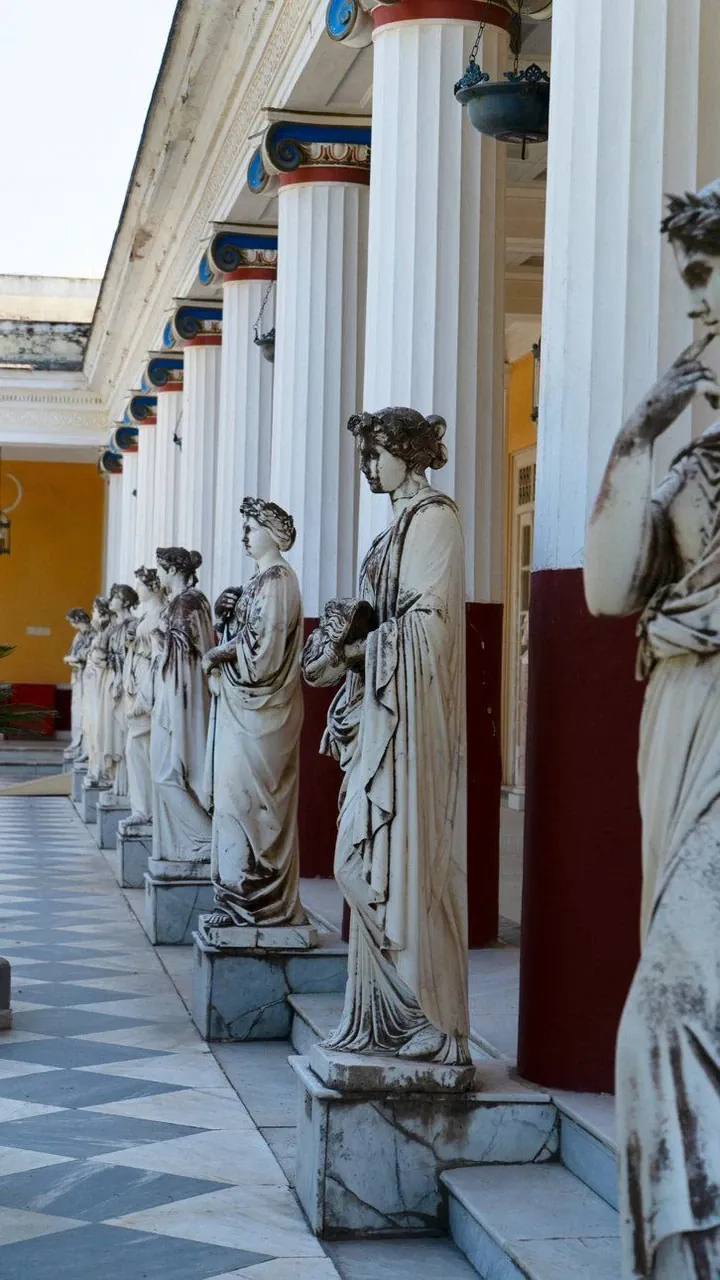
The Empress Elisabeth of Austria loved Corfu enough to have a palace built there. The Achilleion, with its terraced gardens peopled with mythological statues, offers a sumptuous view over the sea. The walk that then descends towards the village of Benitses, around an hour and a half on a gentle slope, follows shaded paths between lemon trees and dry-stone walls. Benitses has kept its character as a fishing harbour, with nets drying on the quay and small tavernas serving the catch of the day. A stroll that mixes imperial heritage with island ease.
The Corfu Trail: the great traverse of the island
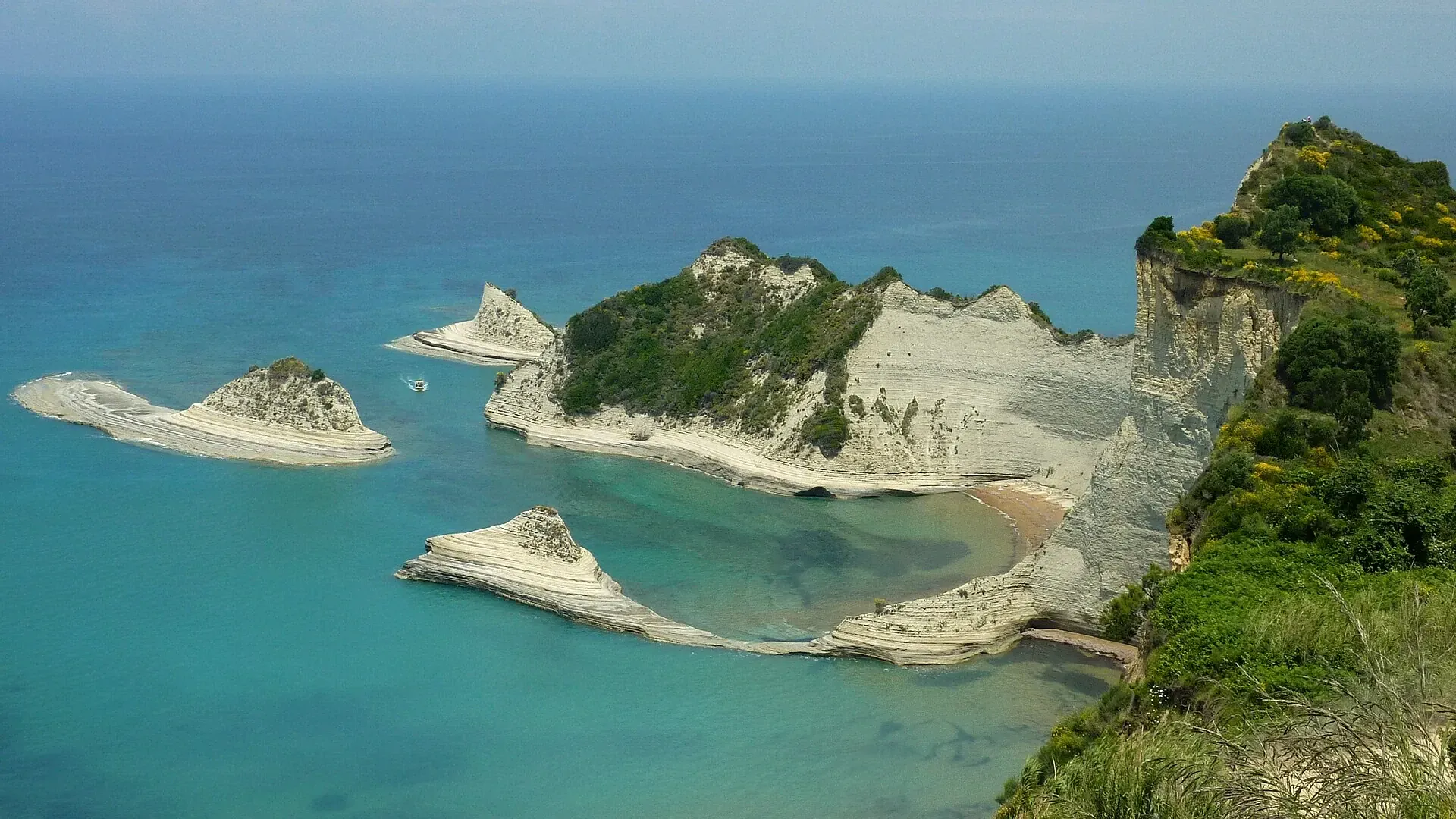
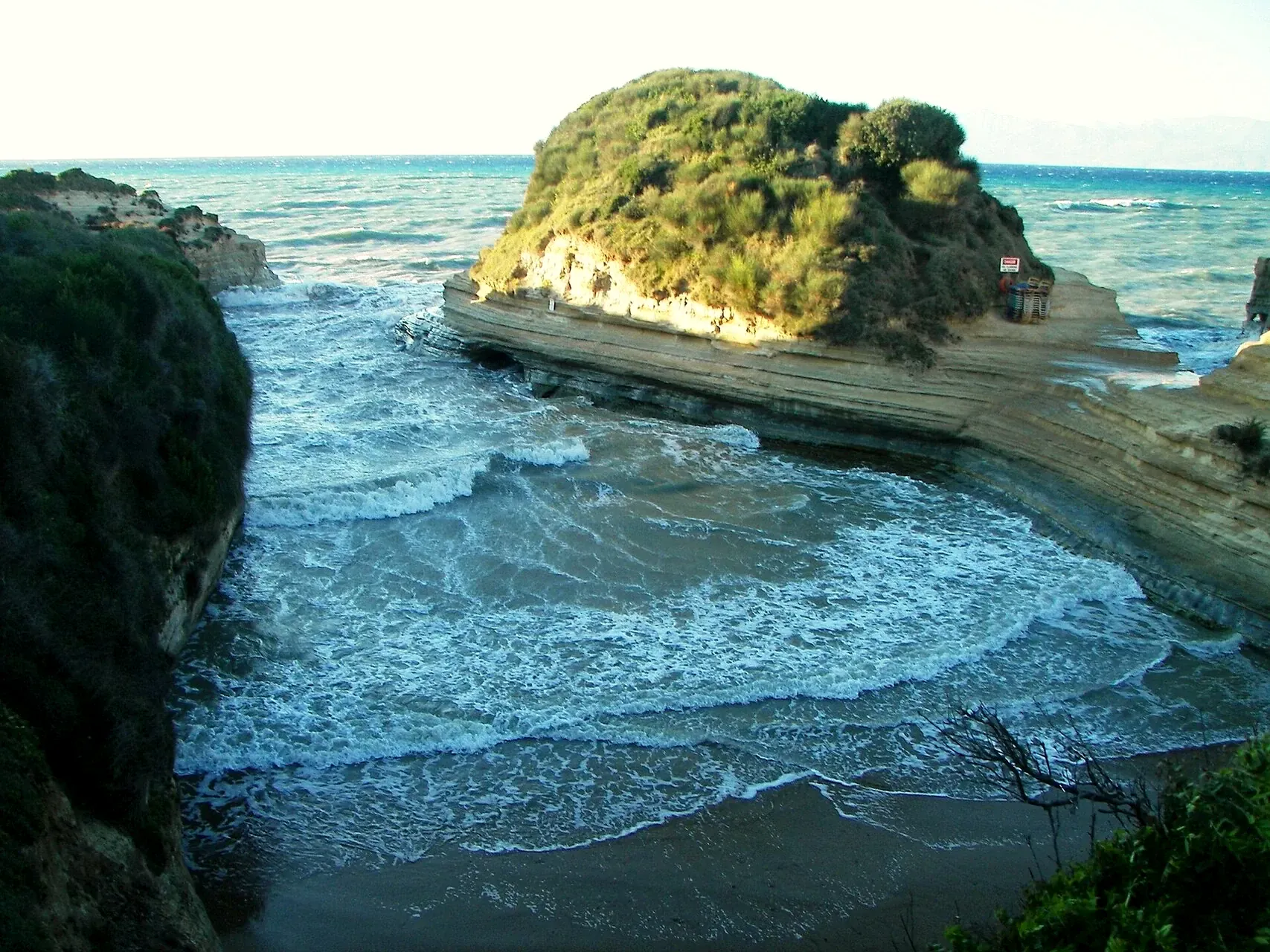
For travellers who want a longer immersion in the island’s landscapes, the Corfu Trail offers a great traverse from south to north over around 220 kilometres. This waymarked route, which can of course be walked in chosen sections, crosses the full diversity of Corfu: the gentle southern hills covered with olive trees, the wild beaches of the west coast, the oak and cypress forests of the interior, and the wilder landscapes of the north, where the path meets the sea near Agios Spyridon. Not far away, the white sandstone cliffs of Cape Drastis plunge into Ionian waters. Every walking day ends in a village where a charming address awaits you. It is the most complete way to discover the island on foot. To extend the journey to the neighbouring island, our journal Corfu and Paxos on Foot tells the story of these two Ionian stops along the paths.
Flavours of Corfu: what the paths offer along the way
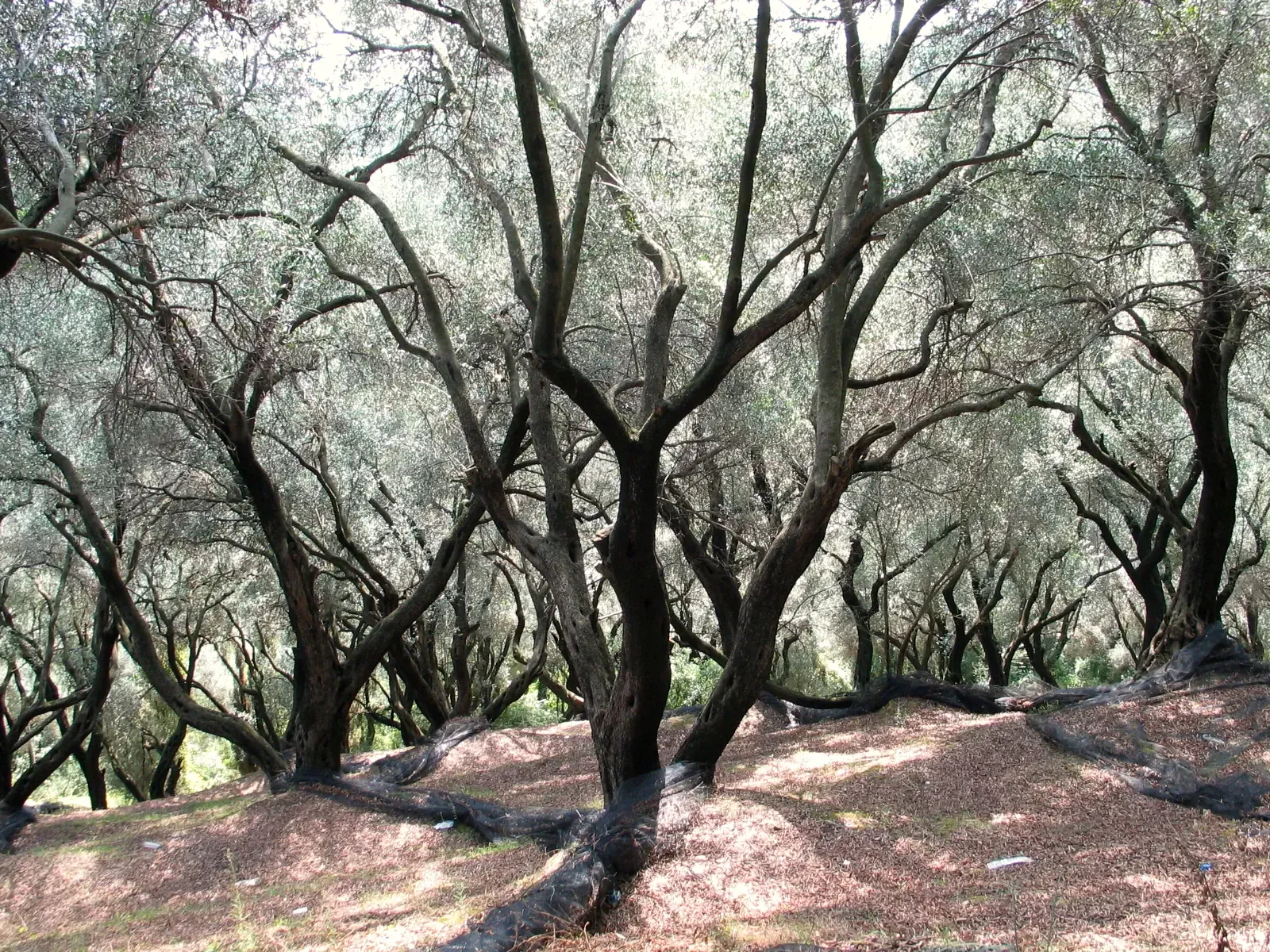
Walking on Corfu also means meeting a singular terroir. The island is the land of the kumquat, that small golden citrus turned into liqueur, jam or candied fruit. You find it in the shops of Kerkyra, but also in the villages of the interior where a few artisans keep the tradition alive. Corfu olive oil, produced from those millions of centuries-old trees you pass on every walk, has a characteristic gentleness. In the mountain tavernas you will be served sofrito, a veal stew scented with garlic and white vinegar, or pastitsada, a pasta dish in spiced tomato sauce inherited from the Venetians. Every path leads to a table, and every table tells a little of the island.
Practical advice for discovering Corfu on foot
The best season for the paths of Corfu runs from April to June and from September to the end of October. In spring, the island is a garden: wild orchids, poppies and jasmine line the paths, and the light has a particular clarity. In autumn, temperatures stay pleasant for walking, the sea is warm for a swim after the walk, and the vegetation takes on golden tones.
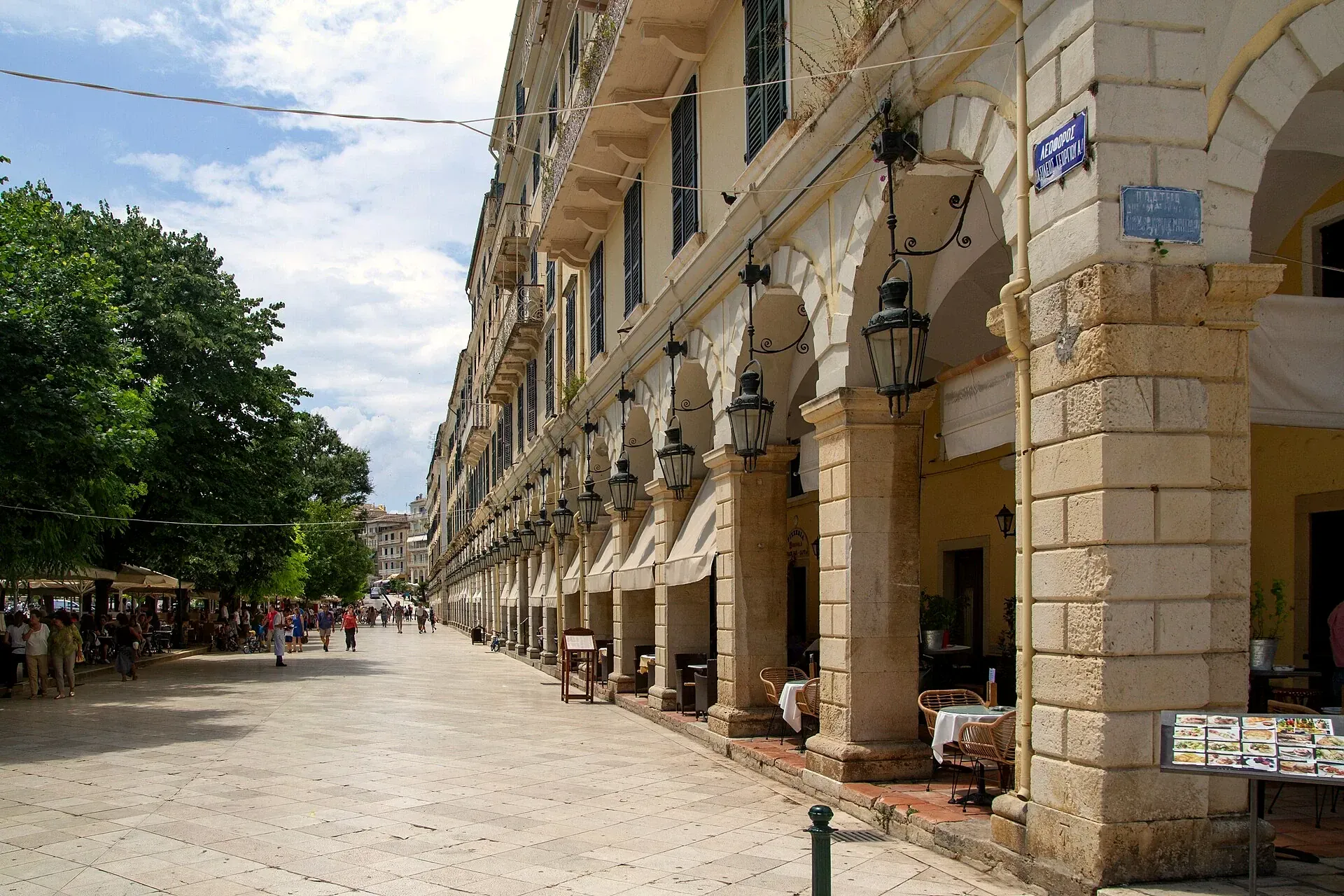
The old town of Kerkyra, a UNESCO World Heritage Site, deserves at least half a day of wandering. Its Venetian lanes, its Italianate arcades and the Spianada, one of the largest squares in Greece, compose a setting unique among the Greek islands. It is the ideal starting point for a stay alternating country paths and urban strolls.
Corfu lends itself well to a wider discovery of the archipelago: our page dedicated to the Ionian Islands brings together all our walking holidays in the region. And if Greece on foot appeals to you, our finest trails in Greece open the door to other islands, from the Peloponnese to the Cyclades.
Our Corfu holidays
Kelifos offers several ways to discover Corfu on foot, with charming accommodation and carefully prepared routes:
- Corfu, the Emerald Isle: a self-guided holiday to explore the green island at your own pace.
- Corfu and Paxos, a journey in the Ionian Sea: the two Ionian islands combined, between cliffs, olive trees and secret coves.
- Corfu and Paxos, Ionian lights: a guided trip to savour the best of the island with a leader who knows every path.
Frequently asked questions about hiking in Corfu
What is the finest walk on Corfu?
It all depends on what makes you dream. For turquoise coves and monasteries, nothing matches the Paleokastritsa walk. For fishing villages and tavernas at the water’s edge, choose the north-east coast, from Kassiopi to Kouloura. And for the great panorama over the Ionian Sea, Mount Pantokrator amply rewards the climb. None of them requires you to be a strong walker: each is savoured at your own pace.
Is the Corfu Trail accessible to beginners?
The Corfu Trail crosses the island over nearly 220 kilometres, but nobody is obliged to walk it all in one go. It is very well discovered in chosen sections, keeping the finest stretches and leaving the rest to transfers. That is exactly the spirit of our holidays: walking days cut to your measure, a charming address every evening, and your luggage waiting on arrival.
Where can I find a map or a walking route for Corfu?
To prepare your walks independently, the Corfu walking map from the Greek publisher Anavasi, at 1:40,000, is the reference: it shows the island’s paths, its villages and the complete line of the Corfu Trail, which is itself waymarked on the ground with small yellow “CT” marks followed from south to north. If you would rather have nothing to organise, that is the whole point of the self-guided formula: our holiday Corfu, the Emerald Isle hands you detailed route notes and the tracks to follow day after day. All that is left is to walk, a cove in your sights and a taverna for the stage.
When should you go walking on Corfu?
The two finest windows are spring, from April to June, and autumn, from September to the end of October. In spring the island is a garden of wild orchids and jasmine. In autumn the sea stays warm for a swim after the walk and the light takes on golden tones. In summer, the heat calls rather for morning walks and pauses in the shade of the olive trees.
Do you need a guide to hike on Corfu?
The paths of Corfu lend themselves as well to independence as to guiding. On your own, you follow detailed route notes and advance as you please. With a guide, you gain the island’s stories, the confidential paths and the good tables you would not find alone. Our guided trip Corfu and Paxos, Ionian lights brings these two pleasures together.
Is walking on Corfu tiring?
Not if you choose your routes. Most of the walks on this page are short and gentle, between 1 and 3 hours, on shaded or coastal paths. Climbs such as Pantokrator remain steady and are done quietly, with plenty of pauses. On Corfu, walking stays above all a pleasure: a cove at the end of the path, a terrace for lunch, time slowing down.
Your question is not on this list?
Write to us, and we will reply to you personally by email.
Article written by
Maria Papadopoulou (Μαρία Παπαδοπούλου)
Editorial lead
I hike, and Greece is the place I keep coming back to. My initial studies (a Master’s in Marketing and a degree in Applied Foreign Languages) taught me how to build an editorial project, and the trails taught me the… Read more