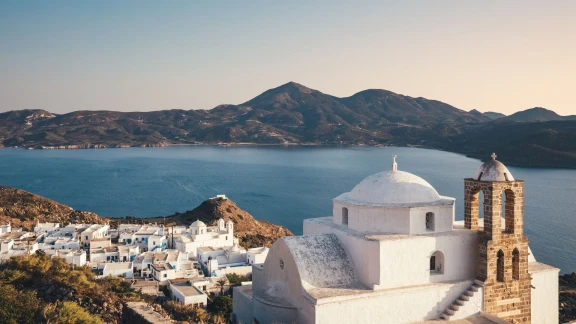


The Cyclades are not told, they are lived. You have to feel the meltemi wind in your hair, taste the salt on your lips as you climb out of a cove, watch the sun turn a white village to pure gold at sunset. This is an archipelago that speaks to the senses before it speaks to the mind, and that is exactly why you keep coming back.
| In brief | 10 days in the Cyclades: two or three islands, ferry crossings that are part of the pleasure, and all the time in the world to linger. |
| Ideal for | Travellers who like to walk at their own pace, savour local tables and change island without hurrying |
| Best season | April to June and September, October (mildness, light, peaceful tavernas) |
| Pace | Gentle, à la carte: villages linked on foot, swims along the way, dinner on a terrace |
| Our trip | Serifos, Sifnos and Milos self-guided, 10 days |
The ritual of the crossings
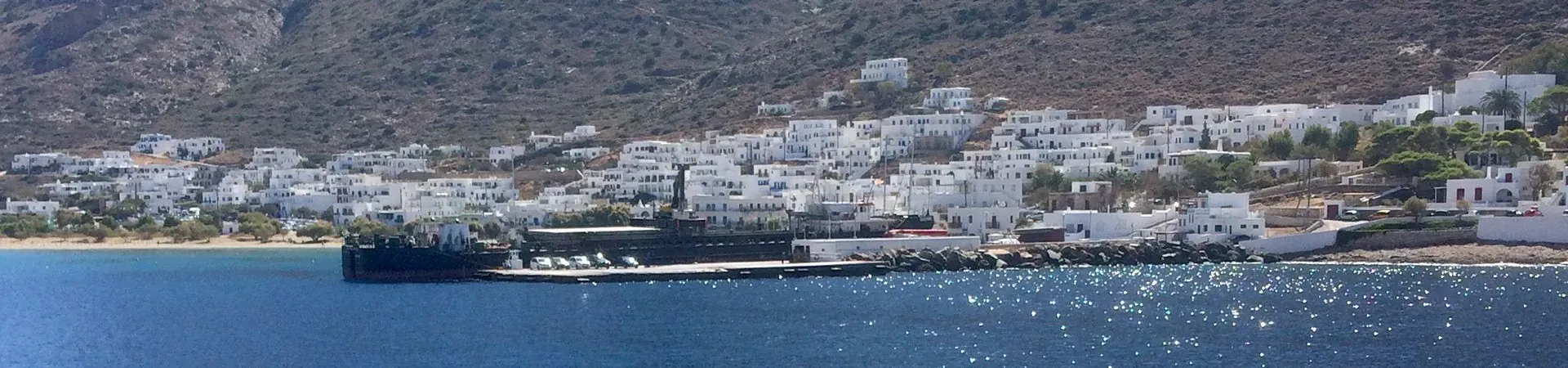
There is a particular pleasure in the Cyclades: passing from one island to the next. Every ferry crossing is a small journey within the journey. You leave a port, you watch the island recede, and already the next one is taking shape on the horizon: a rocky profile, a windmill, a white chapel set on a hilltop. That feeling of permanent discovery, that gentle excitement of never quite knowing what is waiting on the other side, is the salt of the Cyclades.
You arrive at Sifnos on a calm morning. The island reveals itself little by little: cultivated terraces, paved paths linking the villages, pottery drying in the sun outside the workshops. Sifnos is the island of flavours: here they cook revithada, a chickpea stew simmered all night in an earthenware oven, and the tavernas of Kastro, a village perched above the sea, serve perhaps the finest food in the Cyclades.
Ferry crossings give the trip its rhythm, with logistics simpler than you might imagine. From Piraeus, the port of Athens, regular lines serve the main islands in a few hours. Companies such as Blue Star Ferries and Seajets run daily departures in season, and it is easy to combine two or three islands over a week to ten days. To understand which lines connect which islands and how to set up your connections, our guide to ferries in the Greek islands details the companies, the durations and the seasons. And there is no need to organise it all yourself: Kelifos handles the bookings, the connections and the luggage transfers between stages.
Milos, the painter’s palette
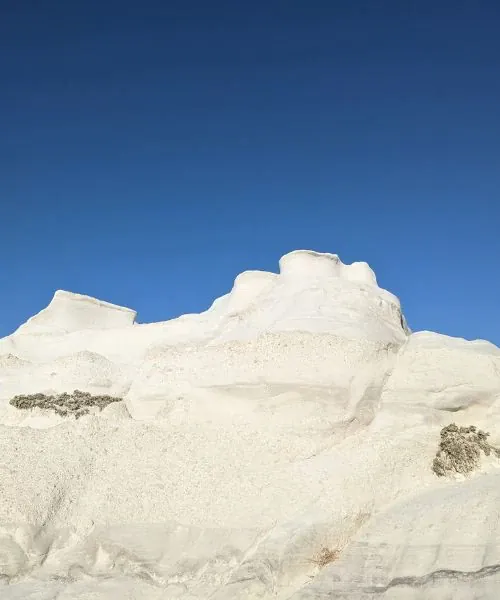
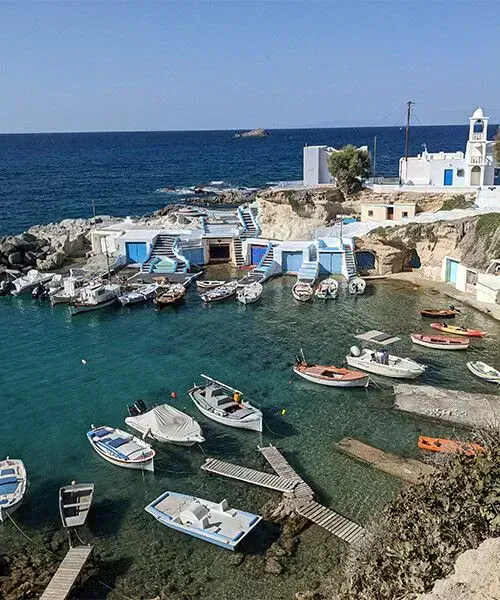
Milos surprises you with its colours. Where most Cycladic islands play on white and blue, Milos adds ochre, red, sulphurous green, volcanic black. Its coastline, carved by geological activity, offers landscapes that look painted: Sarakiniko and its white rocks sculpted by the wind, Kleftiko and its natural arches reachable only from the sea, Firopotamos and its syrmata, those multicoloured boat garages hollowed into the rock at the water’s edge.
Walks on Milos have the scent of the end of the world. You make your way between abandoned mines and deserted coves, you pass a fisherman hauling in his nets, you stop to watch a sunset set the caldera ablaze. When evening comes, Adamas or Plaka offer their terraces and their local wines, in that atmosphere of quiet conviviality that gives small islands their charm.
Kimolos, the well-kept secret

Half an hour from Milos, Kimolos is the island few travellers know, and that is precisely what makes it charming. A single village, Chorio, its white houses pressed around a medieval kastro. Beaches reachable on foot, often deserted. Paths crossing a landscape of gentle hills scattered with chapels. You live at the island’s rhythm here, which is to say slowly, deliciously.
In the morning, you have breakfast facing the sea in a silence broken only by the wind. In the afternoon, you swim at Prassa, whose white sand would put many a Caribbean beach to shame. In the evening, you dine in one of the village’s three or four tavernas, where the owner serves you what he caught that morning. It is simple, it is true. Greece as you imagine it.
Naxos, Paros, Santorini: other Cycladic faces
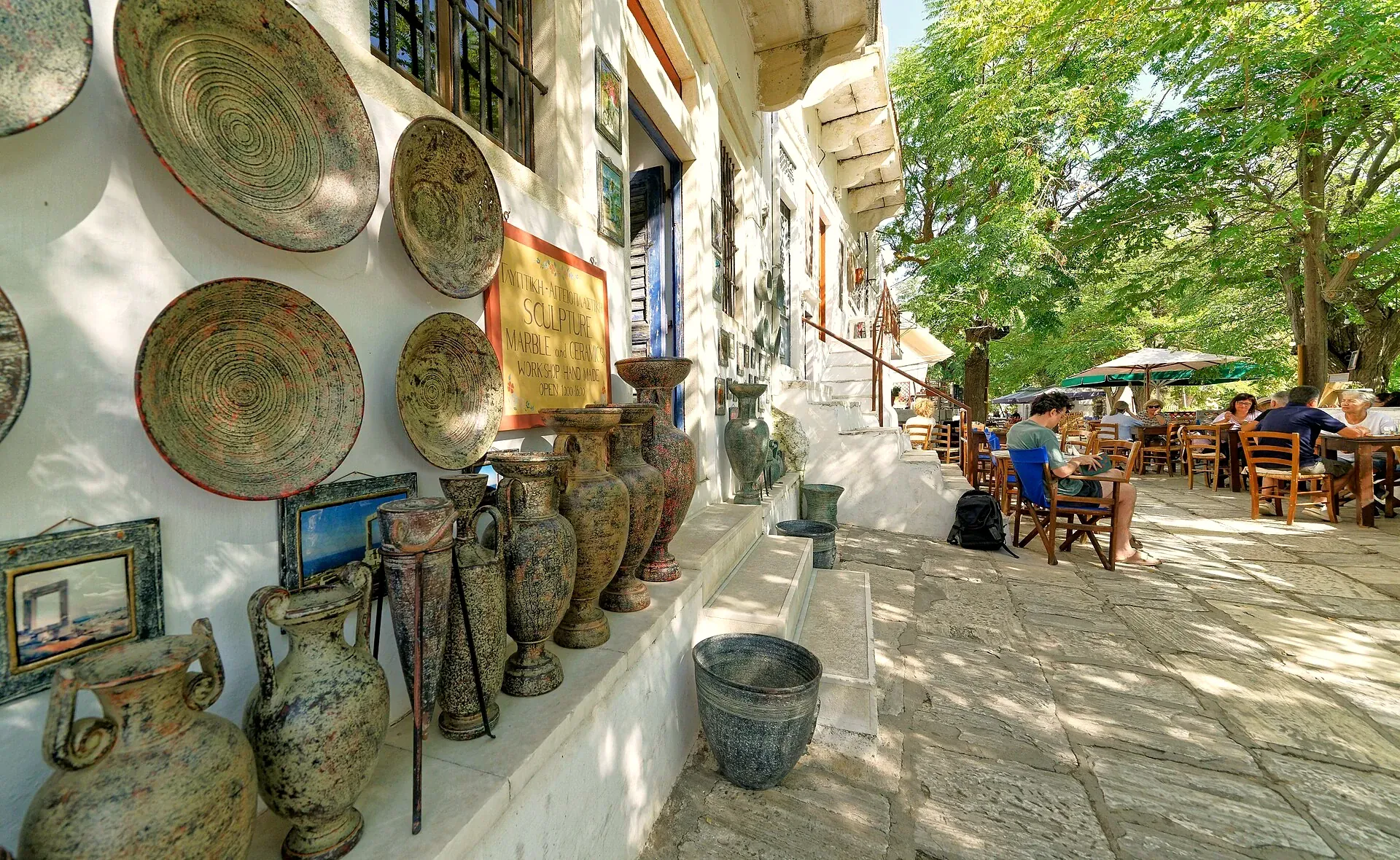
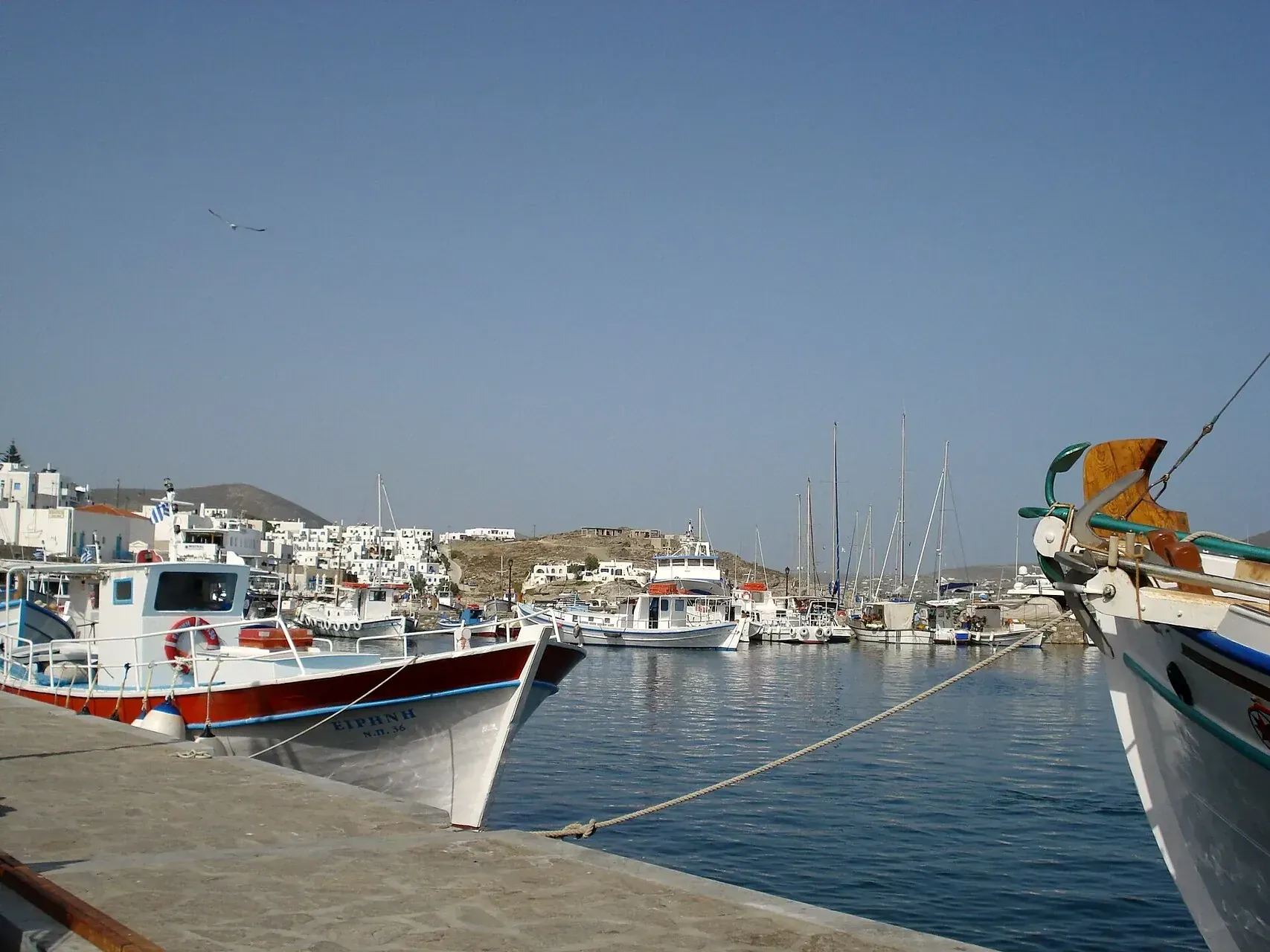
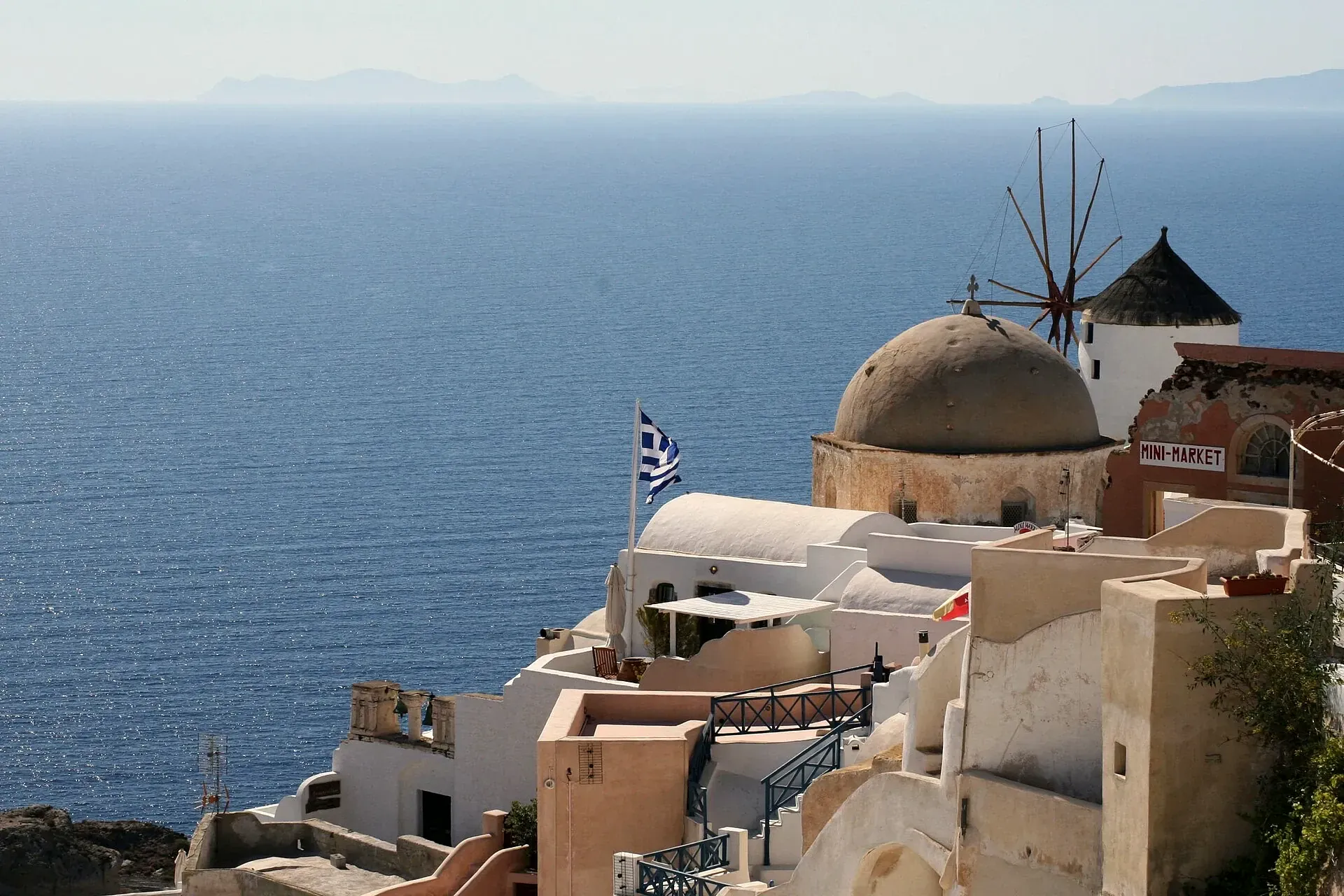
The Cyclades archipelago numbers more than 150 islands, and each has its own character. Naxos, the largest, surprises with its greenery and its mountain villages tucked into fertile valleys, between lemon orchards and terraced fields. Paros wins you over with its colourful fishing harbours and golden sand beaches, while the village of Naoussa offers one of the finest evening atmospheres in the Cyclades. Santorini, finally, with its spectacular caldera and the villages of Oia and Fira set along the ridge, remains a spectacle that words struggle to describe, above all at sunset. If you love these mazes of white lanes and blue chapels, our selection of the most beautiful villages in the Cyclades will give you a few places to set your feet.
For travellers in search of absolute quiet, the Small Cyclades (Iraklia, Schinoussa, Koufonissia) offer the Greek island experience in its purest form: a few houses, a taverna, a deserted beach, and blue everywhere.
When to visit the Cyclades
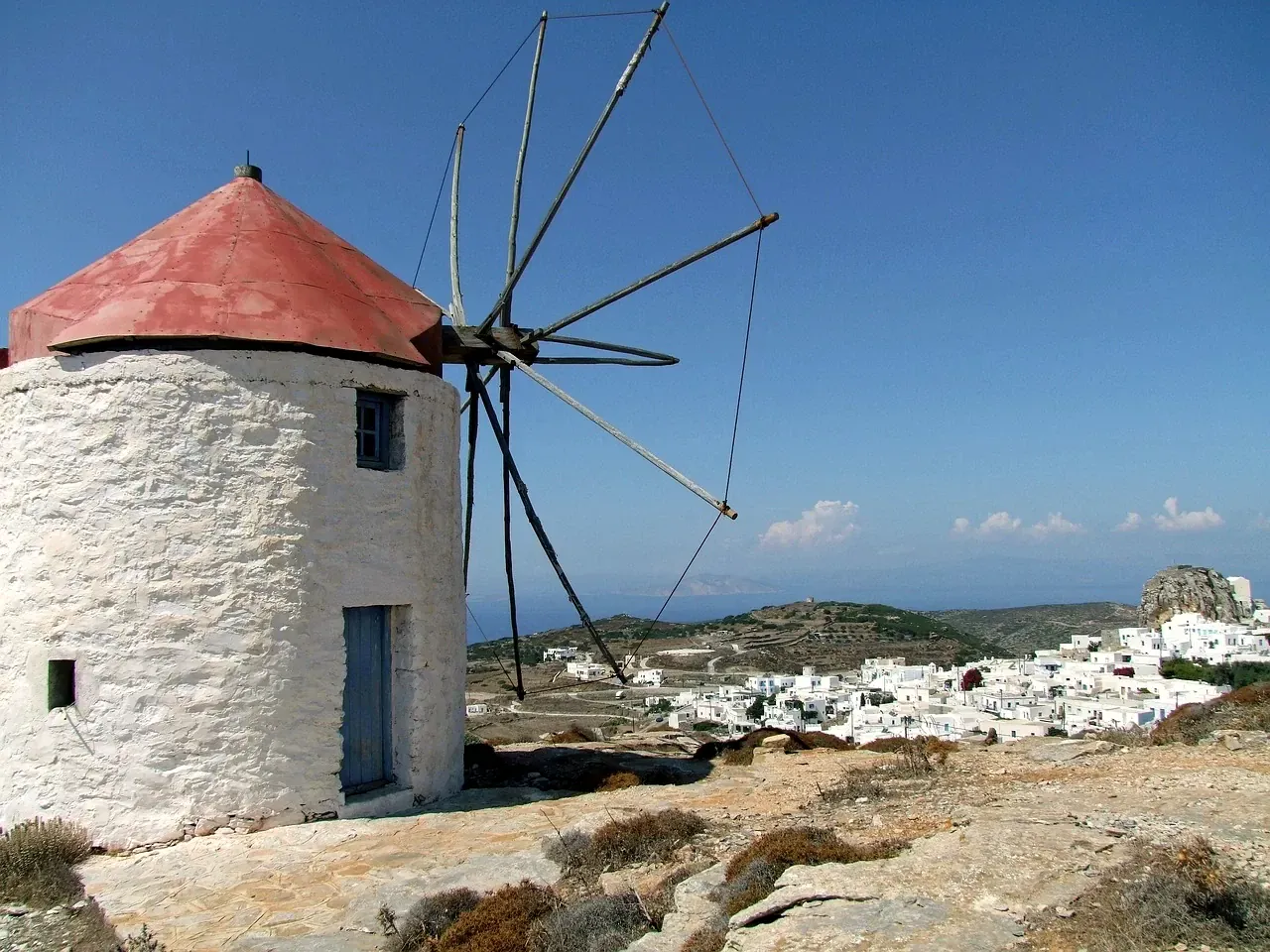
Spring (April to June) and autumn (September, October) are the ideal seasons for a Cyclades getaway. In spring, the hills are covered with wildflowers, the paths are peaceful and the light has that particular softness that enchants photographers. In autumn, the sea stays warm (24 to 25 °C in September), the crowds disperse and the tavernas recover their village atmosphere. In July and August the meltemi, that north wind characteristic of the Aegean, sometimes blows hard across the islands. It cools the air but can disrupt ferry crossings.
Composing your Cycladic journey
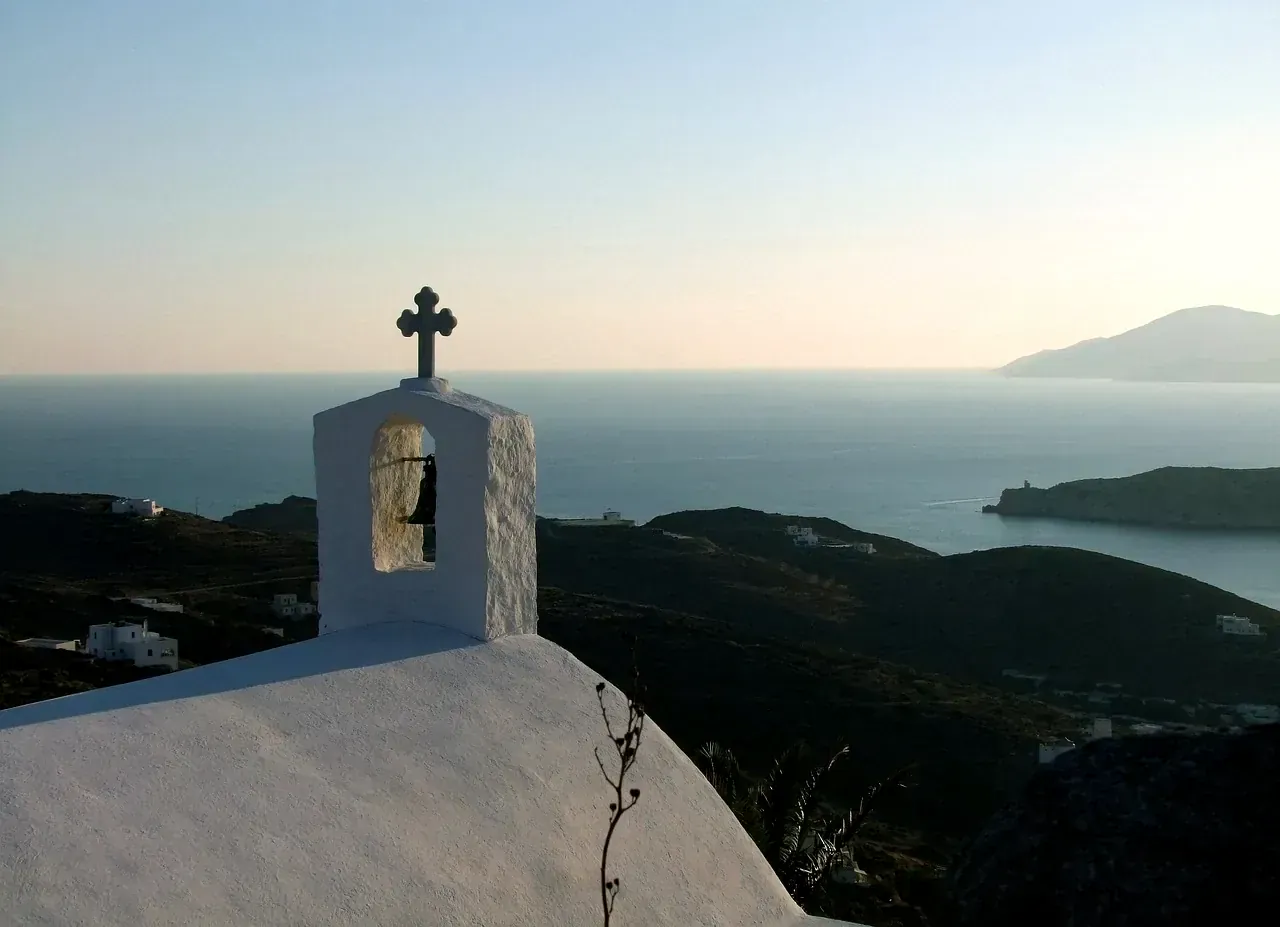
Every traveller composes their own archipelago. Some dream of Naxos and its mountain villages, others of Amorgos and its monasteries suspended above the void. What does not change is that unique sense of belonging, for a few days, to a world where beauty is everywhere and time no longer matters. If you are still hesitating over the starting point, our comparison to know which Cycladic island to choose will help you pin down the island that suits you.
A week is enough to savour two or three islands without hurrying. In 10 days you can plan a fine Cycladic tour, combining for example a secret island like Sifnos with a better-known one like Naxos. The essential thing is not to try to see everything: the Cyclades reward those who take the time to linger, to return to the same taverna, to find the same bench facing the sunset.
Kelifos offers several ways to discover the Cyclades:
- Sifnos, Milos and Kimolos, the enchanted Cyclades: a guided trip in a small group to savour the best of these three islands, with a leader who knows every path and every good address.
- Naxos and Amorgos, destination Cyclades: a 10-day self-guided holiday to explore these two islands of character at your own pace, between perched villages and secret coves.
- Serifos, Sifnos and Milos self-guided: 10 days in the western Cyclades, from wild Serifos to volcanic Milos by way of gourmet Sifnos, with route notes and charming addresses booked for you.
The Cyclades take a little earning, and give a great deal of savouring. You need only set foot there to understand why so many travellers leave a piece of their heart behind.
Frequently asked questions about a 10-day Cyclades getaway
How many islands can you see in 10 days?
Two or three, without rushing. Ten days leave you time to settle in for three or four nights per island, to vary the walks and the beaches, and to avoid spending your holiday on the quaysides. You always gain by seeing less, but better.
How do you get from one island to another?
By ferry. From Piraeus, the port of Athens, daily departures reach the main islands in a few hours (around 4 h for Milos, 5 h for Naxos). Between neighbouring islands the connections are often shorter: Milos and Kimolos are only half an hour’s crossing apart. On a self-guided holiday with Kelifos, the tickets and connections are booked for you.
What is the best time to go?
April to June and September to October offer the softest light, peaceful paths and tavernas that have recovered their calm. The sea stays warm into the autumn. In July and August the meltemi, that north wind of the Aegean, can blow hard and disrupt a few crossings.
Do you need to be a strong walker to enjoy the Cyclades?
No. The paths are walked at your own pace, in stages of 2 to 4 hours, with the chance everywhere to sit down, swim or linger in the shade of a vine. It is walking for pleasure, never a matter of performance.
Which island should you choose to start with?
It all depends on what you are looking for: gastronomy and pottery on Sifnos, volcanic landscapes on Milos, mountain villages on Naxos, absolute silence on Kimolos. Our guide to choosing your Cycladic island helps you settle it, and our advisers know each of them first-hand.
Your question is not on this list?
Write to us, and we will reply to you personally by email.
Continue reading
- The most beautiful villages in the Cyclades, savoured without the crowds
- Taking the ferry to the Greek islands, with peace of mind
- Which Cyclades island to choose for the trip you have in mind?
- Hiking in Greece: the best trails island by island
Article written by
Maria Papadopoulou (Μαρία Παπαδοπούλου)
Editorial lead
I hike, and Greece is the place I keep coming back to. My initial studies (a Master’s in Marketing and a degree in Applied Foreign Languages) taught me how to build an editorial project, and the trails taught me the… Read more