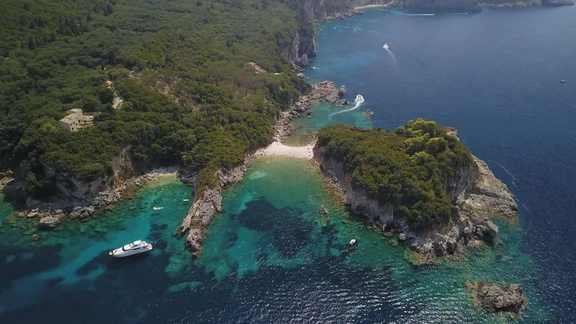


Kythira floats between the Peloponnese and Crete, neither quite Ionian nor Cycladic, inhabited by a singular personality that centuries have patiently shaped. It is the island of Aphrodite, born from the foam at its shores, but also the island the tourist circuits forgot, the one that few travellers reach. Those who do come back changed, touched by a charm that is hard to name.
| In brief | Aphrodite’s island, between the Peloponnese and Crete: villages out of time, secret coves and gentle paths, far from the crowds. |
| Ideal for | Travellers looking for authenticity, Byzantine heritage and quiet swimming |
| Best season | Spring (April to June) and autumn (September to October) |
| Pace | Gentle, at your own rhythm, walks of 2 to 3 hours accessible to all |
| Our trip | Kythira the marvellous, 10 days self-guided with a hire car |
Why Kythira has fascinated since antiquity
Mythology tells that Aphrodite was born from the foam of the sea, carried by the winds to the shores of Kythira. The Phoenicians built there the first temple dedicated to the goddess of love, long before the Greeks took the cult as their own. This position between three seas (Ionian, Aegean, Cretan) made the island a coveted crossroads: Venetians, Ottomans and British followed one another and each left a trace. More than three hundred Byzantine and post-Byzantine chapels punctuate this modest island, tucked into ravines or set on ridges, small sentinels of stone and faith.
The expression “to set sail for Cythera”, meaning to depart on a journey of love, was born of this mythological aura. The painter Antoine Watteau made it the subject of his masterpiece, The Embarkation for Cythera, hanging in the Louvre. Baudelaire devoted a poem to it in Les Fleurs du mal, Victor Hugo evoked “Cythera of the charming nests, Cythera of the green myrtles”, and Verlaine, Debussy and Ravel drew inspiration from it in turn. Few islands in the world can claim to have fed the imagination of artists so richly. Even today it is this aura that makes Kythira so singular: you come for the emotion of a place charged with meaning, even more than for its beaches.
The villages of Kythira: Chora, Paleochora, Avlemonas
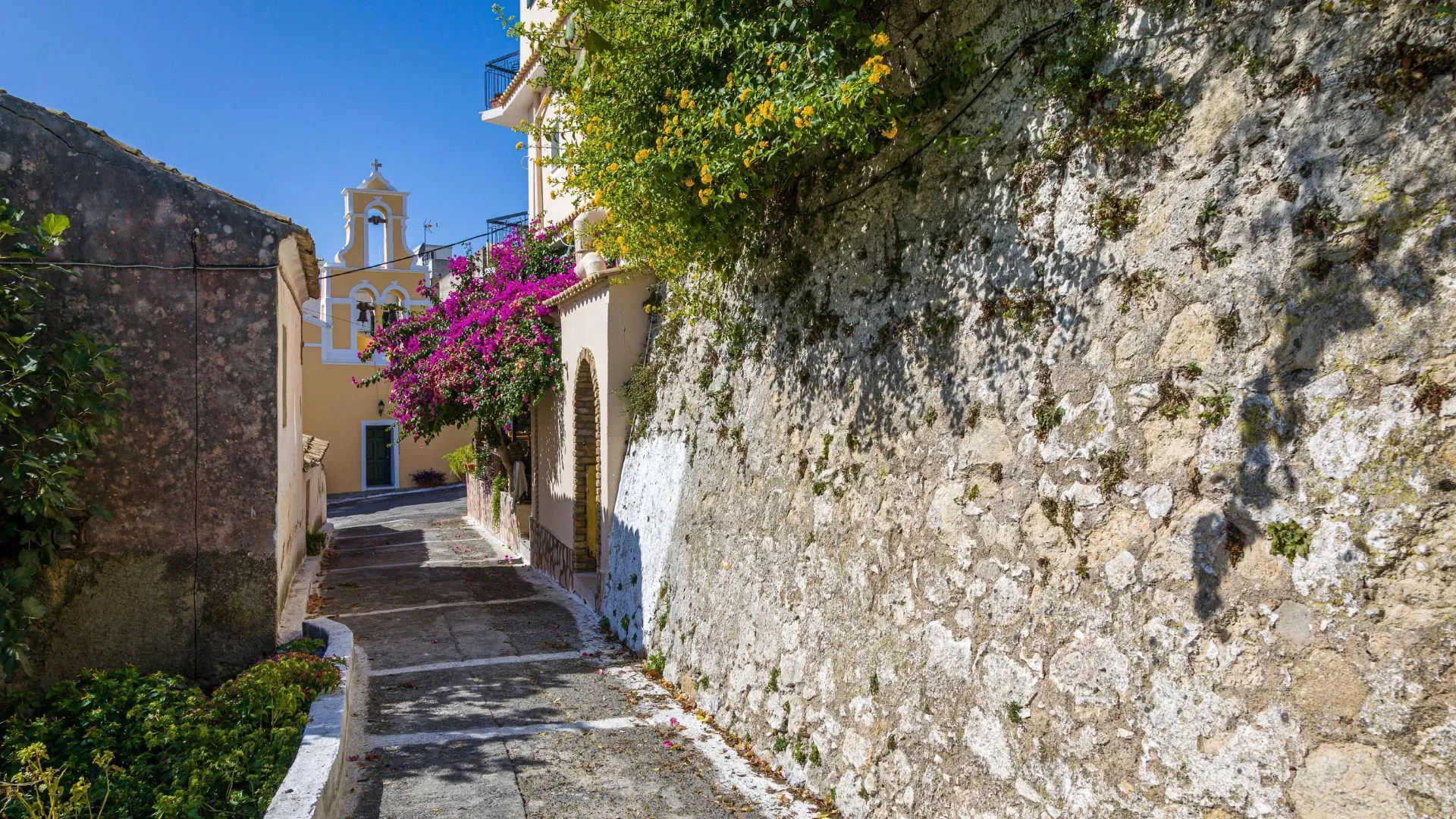
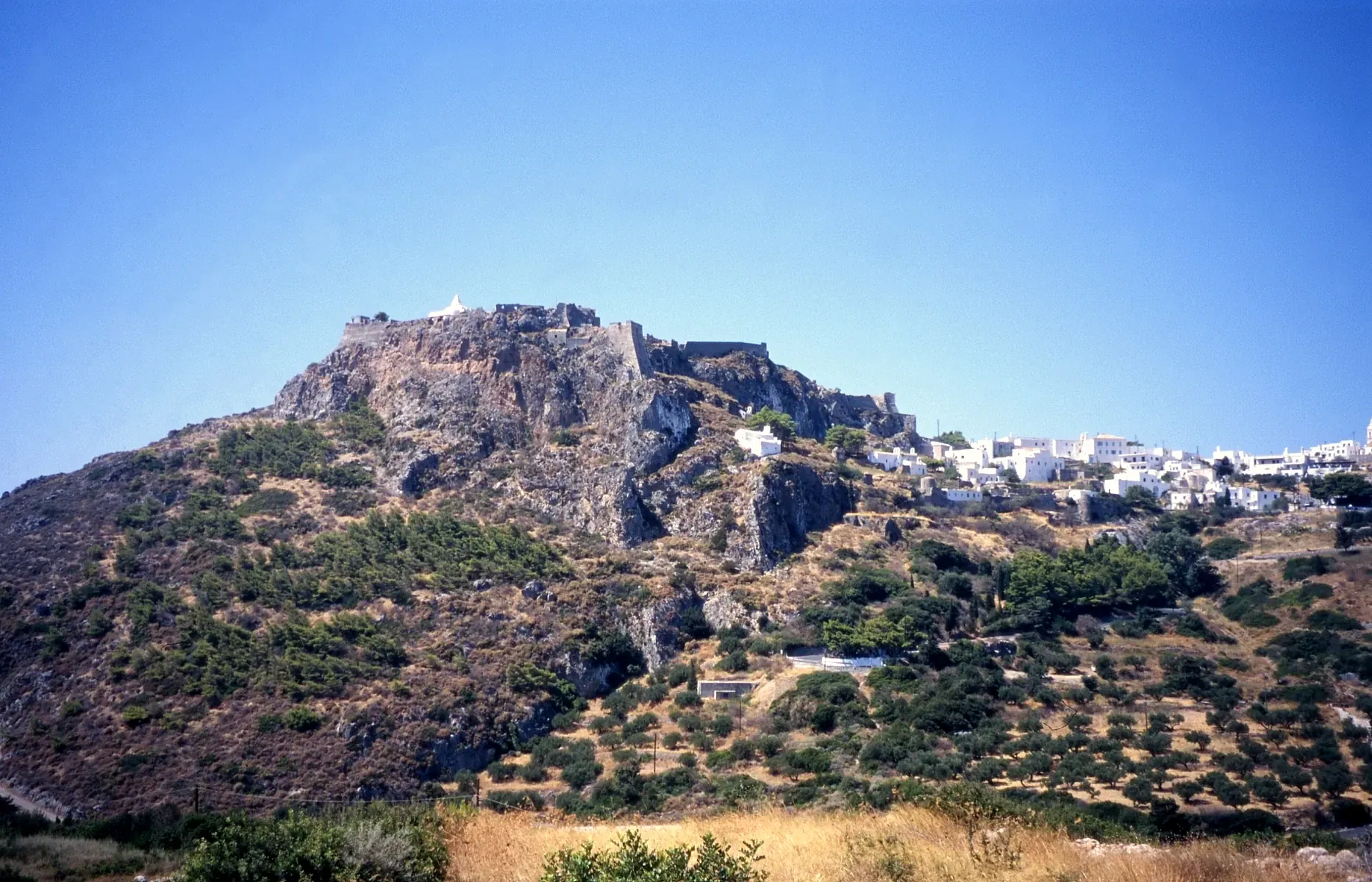
Chora, the capital, is perched on a cliff falling sheer into the Cretan Sea. The Venetian kastro crowns the rock. Its walls enclose a maze of silent lanes lined with white and blue houses. You climb up by a paved path, between bougainvillea and sleeping cats, and emerge onto a vertiginous panorama. Below, the sea glitters. In the distance, on a clear day, you can make out Crete. The few cafés set at the edge of the void serve a slowly prepared Greek coffee, in that suspended atmosphere which is Kythira’s signature.
Paleochora, the old Byzantine capital, has to be earned. You must push into a wooded ravine to find it. Founded in the 12th century, the city was destroyed by the pirate Barbarossa in 1537 and never rebuilt. Today its ruins emerge from the wild vegetation: stone walls overrun with ivy, chapels whose frescoes are gently fading, a deep silence crossed only by the wind. It is one of the most moving sites in Greece, a place where the past is almost within reach of your hand.
Avlemonas, on the east coast, is a small fishing village that time seems to have forgotten. Its colourful houses line a tiny harbour where a few boats rock gently. It was here, in what Xenophon called the “Phoenician bay”, that the first navigators landed three thousand years ago. Today you come for the late-afternoon light, for grilled fish served almost with your feet in the water, and for that quality of silence only small, preserved islands know how to offer.
The finest beaches on Kythira
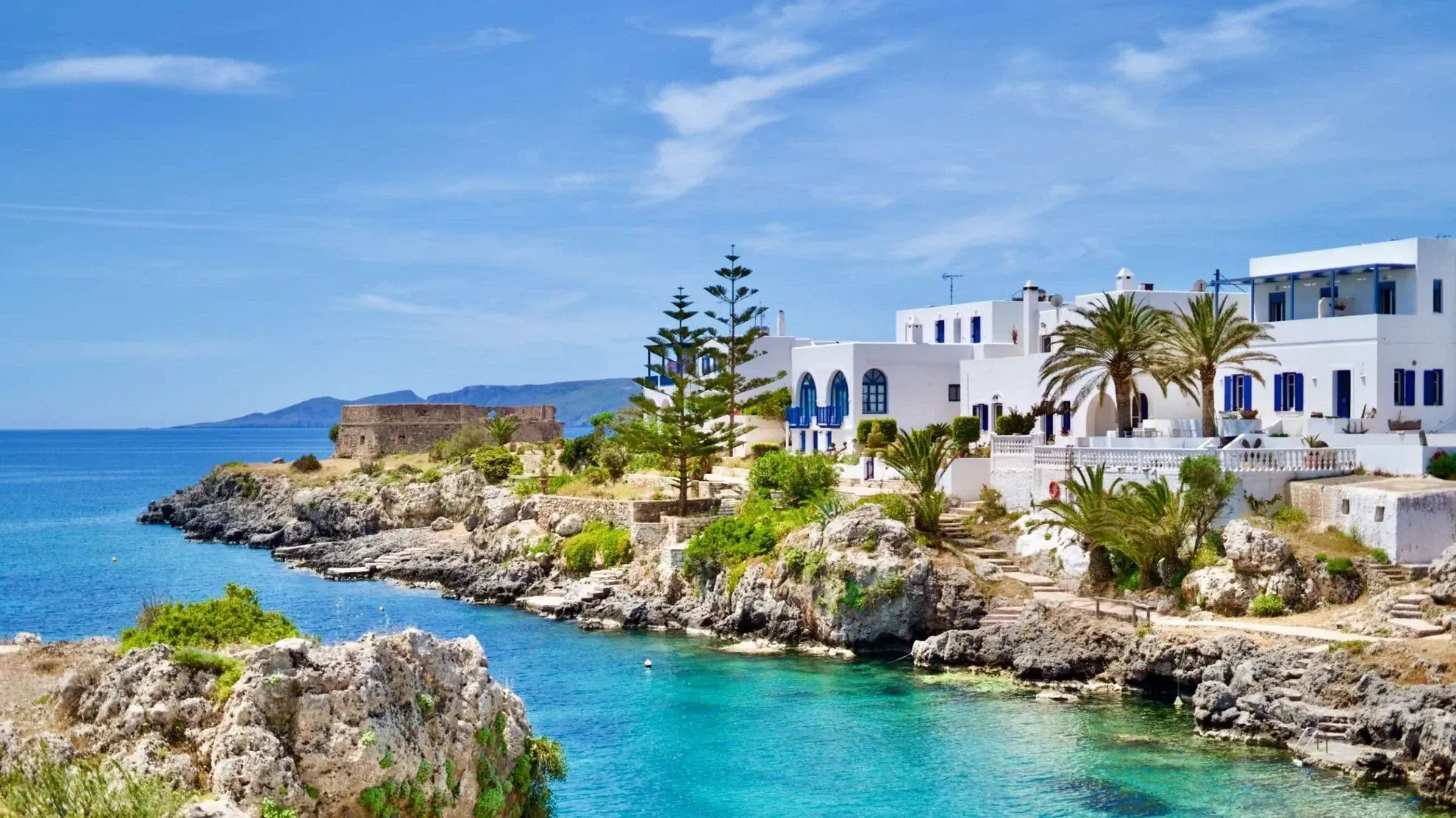
Kythira does not have the crowded beaches of the tourist islands. It offers something else: coves that must be earned, shores you often have entirely to yourself.
- Kaladi: reached by a staircase cut into the rock, it reveals sea caves and water of an intense blue. It is probably the most beautiful beach on the island.
- Melidoni: tiny and hidden, reached by a short path through the maquis. You are almost always alone there.
- Komponada: wild, wind-swept, magnificent in its harshness. For lovers of raw landscapes.
- Diakofti: the island’s port. The white sand beach contrasts with the rusting wreck of the cargo ship Nordland, run aground a few metres from the shore, a poetic and slightly melancholy image that sums up the spirit of Kythira well.
Kythira on foot: paths between gorges and chapels
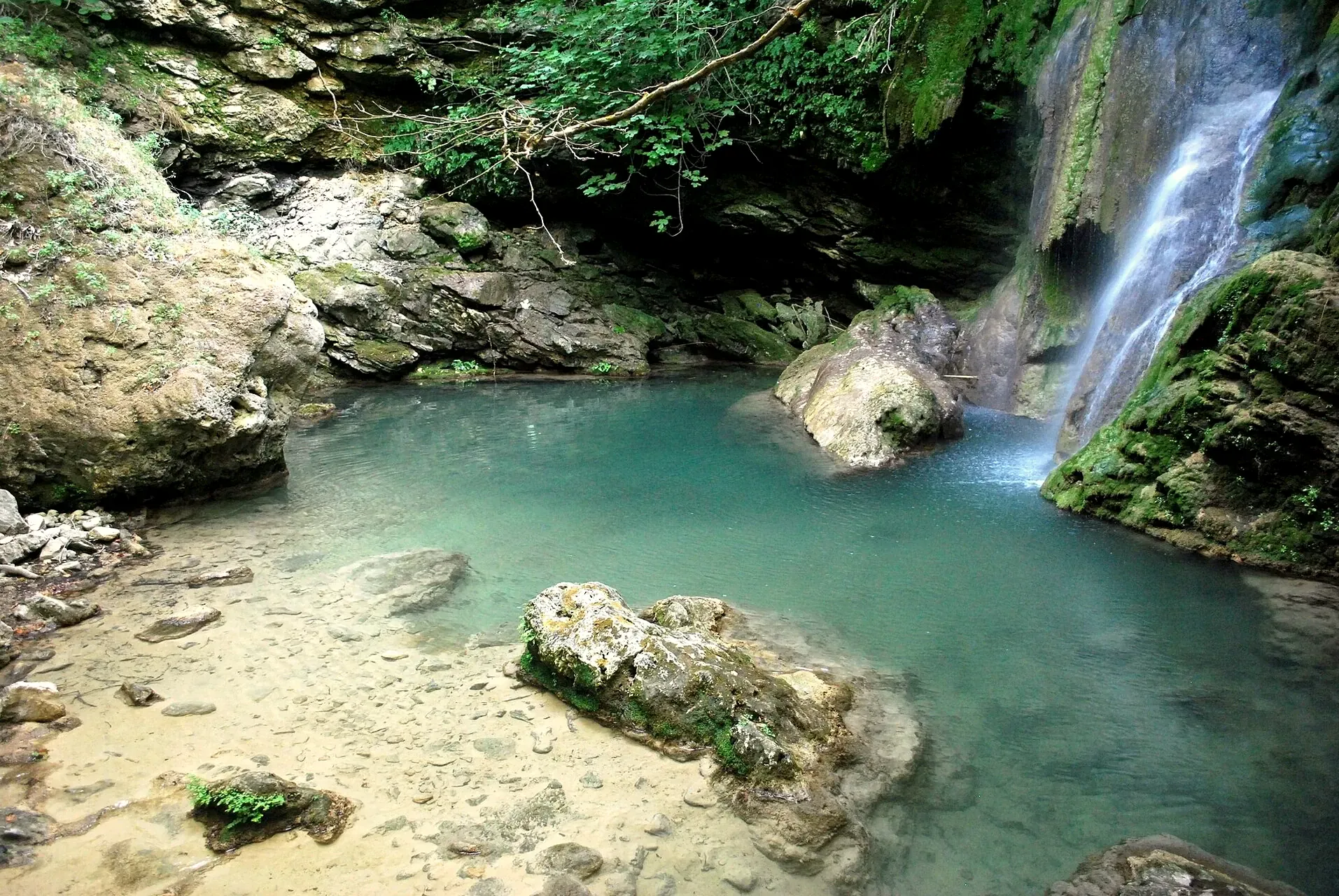
The island’s gorges and paths lend themselves naturally to discovery on foot. Kythira has a network of old trails linking the villages to one another, across landscapes of pines, olive trees and fragrant maquis. You walk unhurried, passing isolated chapels, stone wells and views over the three seas that surround the island. It is a contemplative walk, with no constraint of time, where every pause turns into a discovery.
Among the most memorable walks: the descent to the Mylopotamos waterfalls through a wooded gorge and its restored old mills, the ridge path between Chora and Kapsali facing the turquoise bay, or the crossing of the olive groves towards the cave of Agia Sophia and its centuries-old icons. Allow 2 to 3 hours per walk, on paths accessible to all.
Flavours of Kythira: thyme honey, olive oil and village tavernas

Kythira’s thyme honey is among the best in Greece. The bees forage hills covered with wild thyme, savory and oregano, and produce a golden honey, intense and slightly balsamic. The olive oil, pressed in the island’s last mills, has that fruity gentleness of small, carefully tended production.
In the tavernas of Kythira there is often no menu: they bring you what is ready, according to the season and the cook’s mood. Fresh cheeses, wild herbs sautéed in olive oil, fish grilled over embers. The art of living in its simplest, truest form.
When to visit Kythira and how to get there
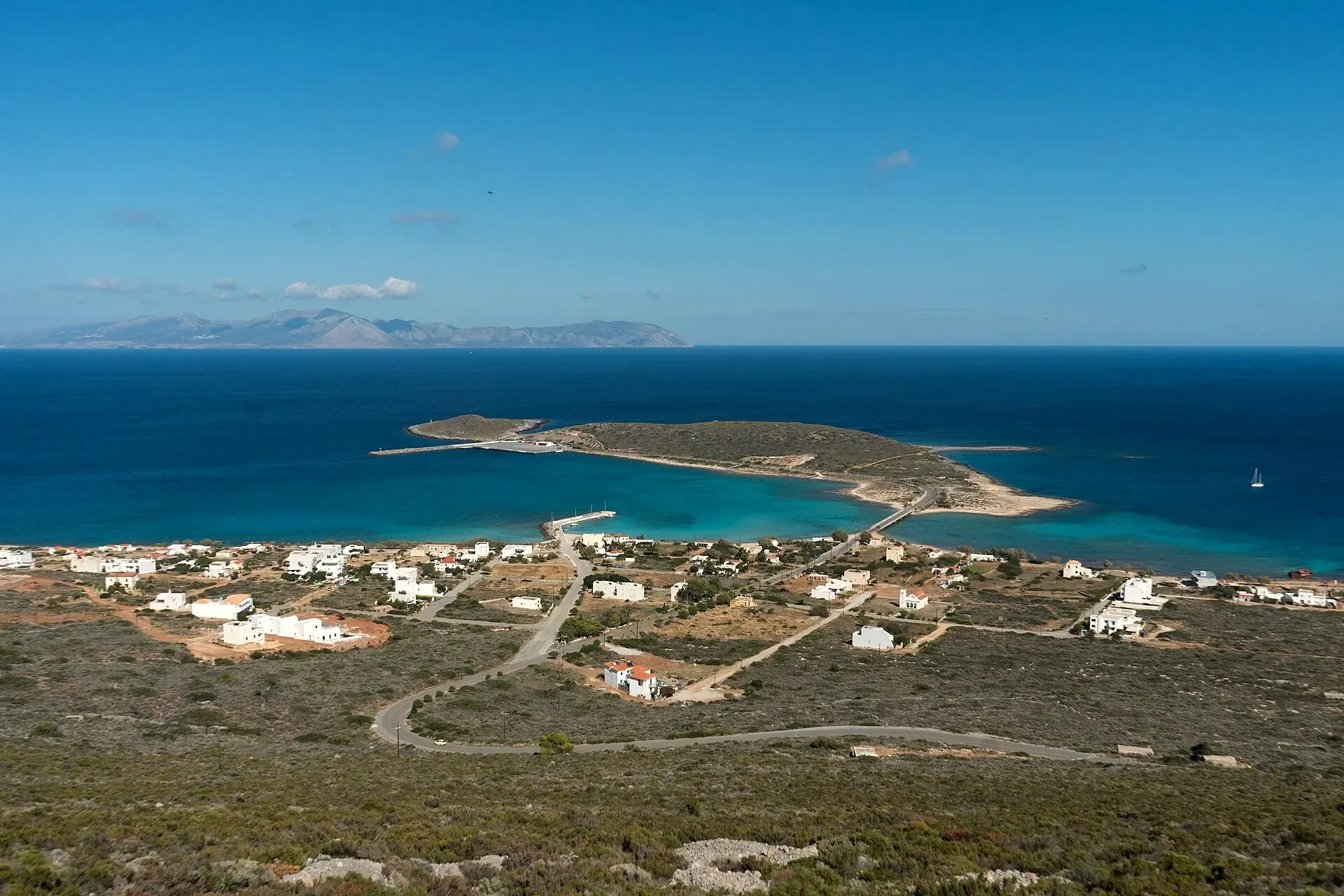
The island is best savoured in spring (April to June) or autumn (September to October). In spring, the hills are covered with wildflowers, thyme perfumes the paths and the temperatures invite you to wander. In autumn, the light takes on that golden softness particular to the end of season, the sea stays warm for swimming and the tavernas welcome travellers with redoubled generosity. Even in summer, Kythira remains surprisingly peaceful: the island has around 4,000 permanent inhabitants and neither a hotel complex nor a cruise ship.
You reach Kythira by sea, from Neapoli in the Peloponnese (an hour’s crossing) or from Piraeus. In summer, flights link Athens to the island in 45 minutes. On the island, distances stay modest: some thirty kilometres from north to south. This relative difficulty of access is not an obstacle: it is a filter, the one that preserves Kythira from the crowds and keeps its authenticity intact.
If you are hesitating between Kythira and other Greek destinations, our guide to choosing the Greek island that suits you will help you see more clearly, and our selection of the most beautiful Greek islands places Kythira in the wider picture of the archipelago.
Our trip to Kythira
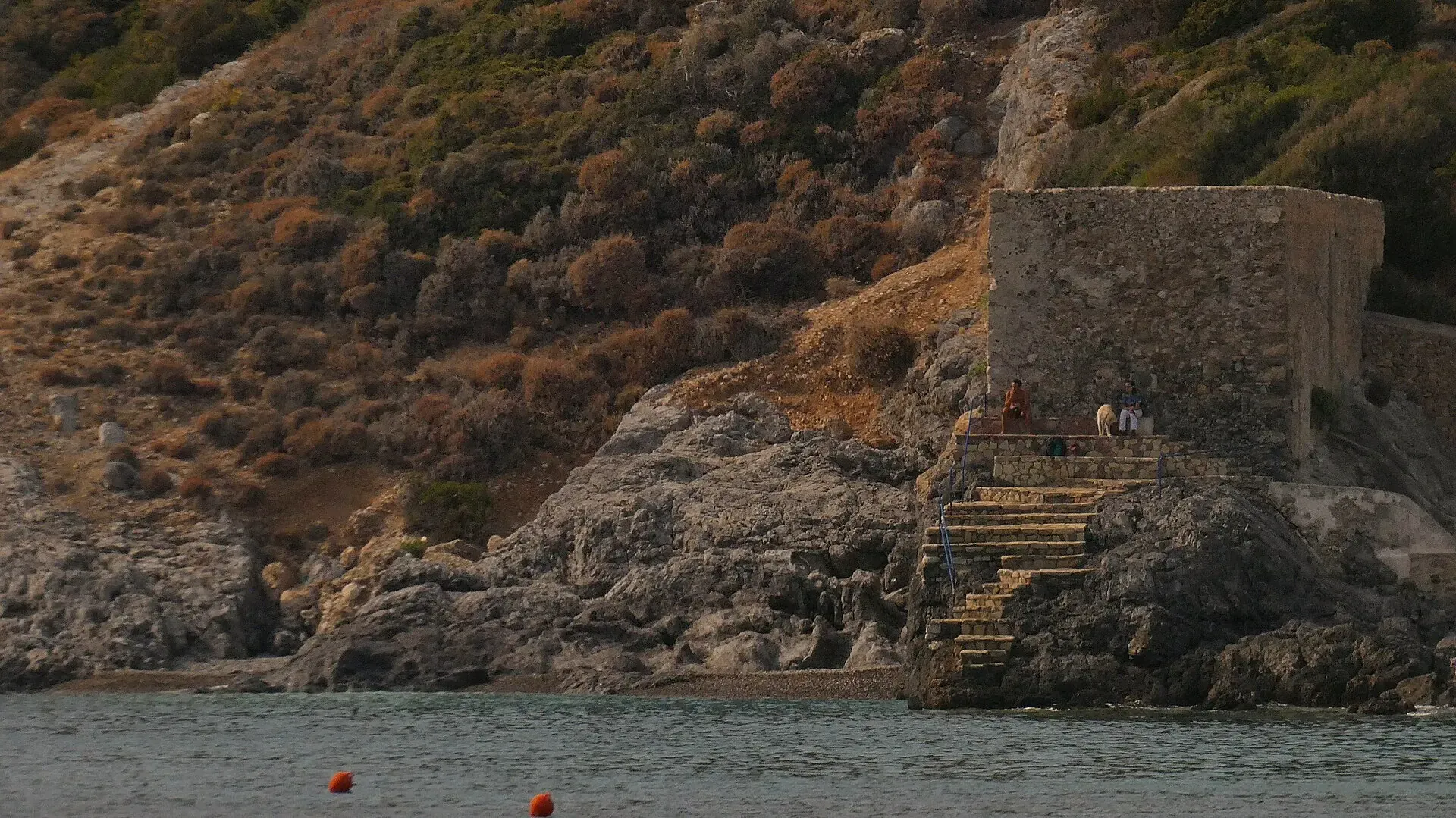
To discover this confidential island with nothing to organise, Kelifos has put together a holiday thought through in every detail: Kythira the marvellous. Ten self-guided days, hire car included, charming accommodation booked for you and carefully chosen walks. From Avlemonas to Chora, from the Mylopotamos waterfalls to Agia Pelagia, you explore the island at your own pace, free each morning to choose the walk that tempts you. It is, to our mind, the finest way to set sail for Kythira.
Travellers won over by Kythira’s charm often extend the escape towards the Ionian Islands and their olive groves, Crete and its millennia of heritage, or the Peloponnese and its wild paths.
Frequently asked questions about Kythira
Where is the island of Kythira?
Kythira lies off the southern tip of the Peloponnese, halfway between the peninsula and Crete. Geographically attached to the Ionian Islands, it in fact bathes between three seas: Ionian, Aegean and Cretan. This isolated position explains its preserved, confidential character.
Why is Kythira called the island of Aphrodite?
Mythology tells that Aphrodite, goddess of love, was born from the foam of the sea near the shores of Kythira. The island held one of her very first sanctuaries. From this comes the expression “to set sail for Cythera”, evoking a journey of love, immortalised by Watteau’s painting in the Louvre.
What is the best time to visit Kythira?
Spring (April to June) and autumn (September to October) are ideal: mild temperatures, hills in flower in spring, a sea still warm in autumn and welcoming tavernas. Summer remains surprisingly peaceful, the island having neither a large hotel complex nor a cruise ship.
How do you get to Kythira?
You reach Kythira by ferry from Neapoli, in the Peloponnese (around an hour’s crossing), or from Piraeus. In summer, flights also link Athens to the island in 45 minutes. On the island a car is useful: it measures some thirty kilometres from north to south.
What must you see on Kythira?
Do not miss Chora and its Venetian kastro suspended above the sea, the moving ruins of Paleochora, the fishing harbour of Avlemonas, the Mylopotamos waterfalls at the bottom of their wooded gorge, and the cove of Kaladi, often named the most beautiful beach on the island.
Your question is not on this list?
Write to us, and we will reply to you personally by email.
Continue reading
- Which Greek island is right for you? The complete guide
- The Best Hikes in Corfu
- Hiking in Greece: the best trails island by island
- The Most Beautiful Greek Islands, one for every wish
Article written by
Maria Papadopoulou (Μαρία Παπαδοπούλου)
Editorial lead
I hike, and Greece is the place I keep coming back to. My initial studies (a Master’s in Marketing and a degree in Applied Foreign Languages) taught me how to build an editorial project, and the trails taught me the… Read more