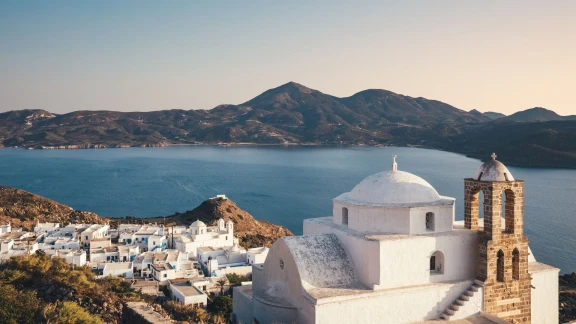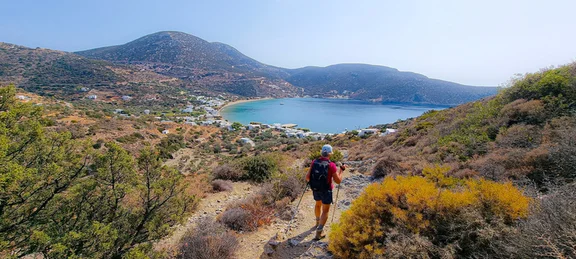


Two hundred inhabited islands, thousands of possibilities, and the question that always comes back: which one to start with? The answer depends less on geography than on what you are after. To each their own: you come for the light or for the greenery, for the flavours of a good table or the easy living of a lively little harbour. Here is our selection, put together for travellers who like to walk, to taste and to take their time.
| In brief | Not a single “most beautiful island”, but the one that answers what you feel like right now: light, greenery, flavours or silence. |
| Ideal for | Travellers who like quiet walking, tasting and wandering through villages |
| Best season | April to June (flowers, empty paths) and September to October (warm sea, golden light) |
| Pace | Gentle, at your own speed, the ferry as part of the journey |
| Our trips | Cyclades (Naxos, Amorgos, Sifnos, Milos), Corfu and Crete, à la carte or guided |
Santorini: the living postcard
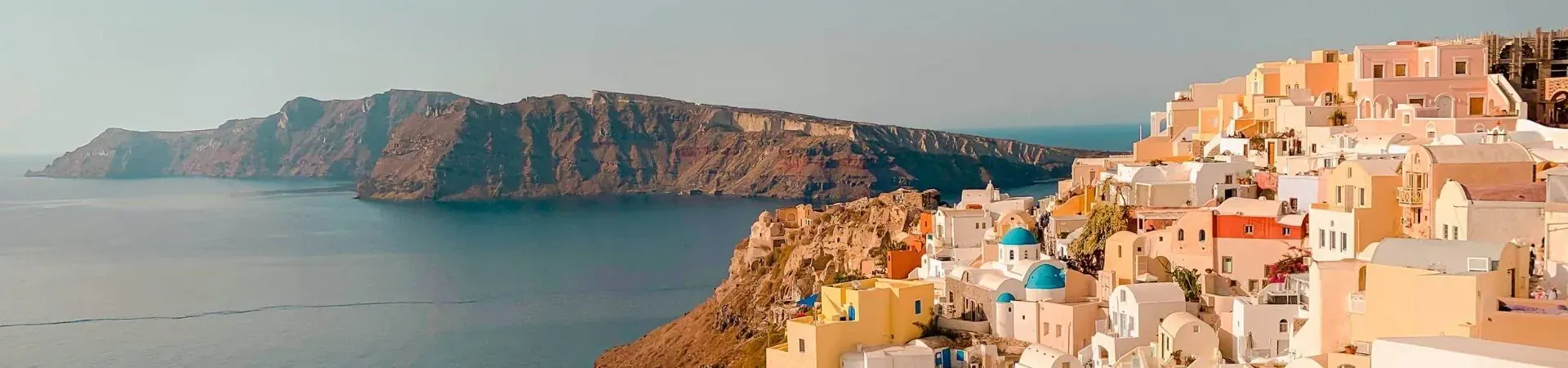
Yes, Santorini is famous. Yes, the sunsets at Oia draw the crowds. But there is another Santorini, that of terraced vineyards, of paths linking the villages perched on the caldera, of silent mornings when the pink light settles on the blue domes before the visitors arrive. The path from Fira to Oia, walked at dawn rather than at sunset, reveals panoramas of striking beauty. And in the inland villages, Pyrgos or Megalochori, you discover a preserved art of living, between wine cellars cut into the rock and small shaded squares.
Naxos: the generous island
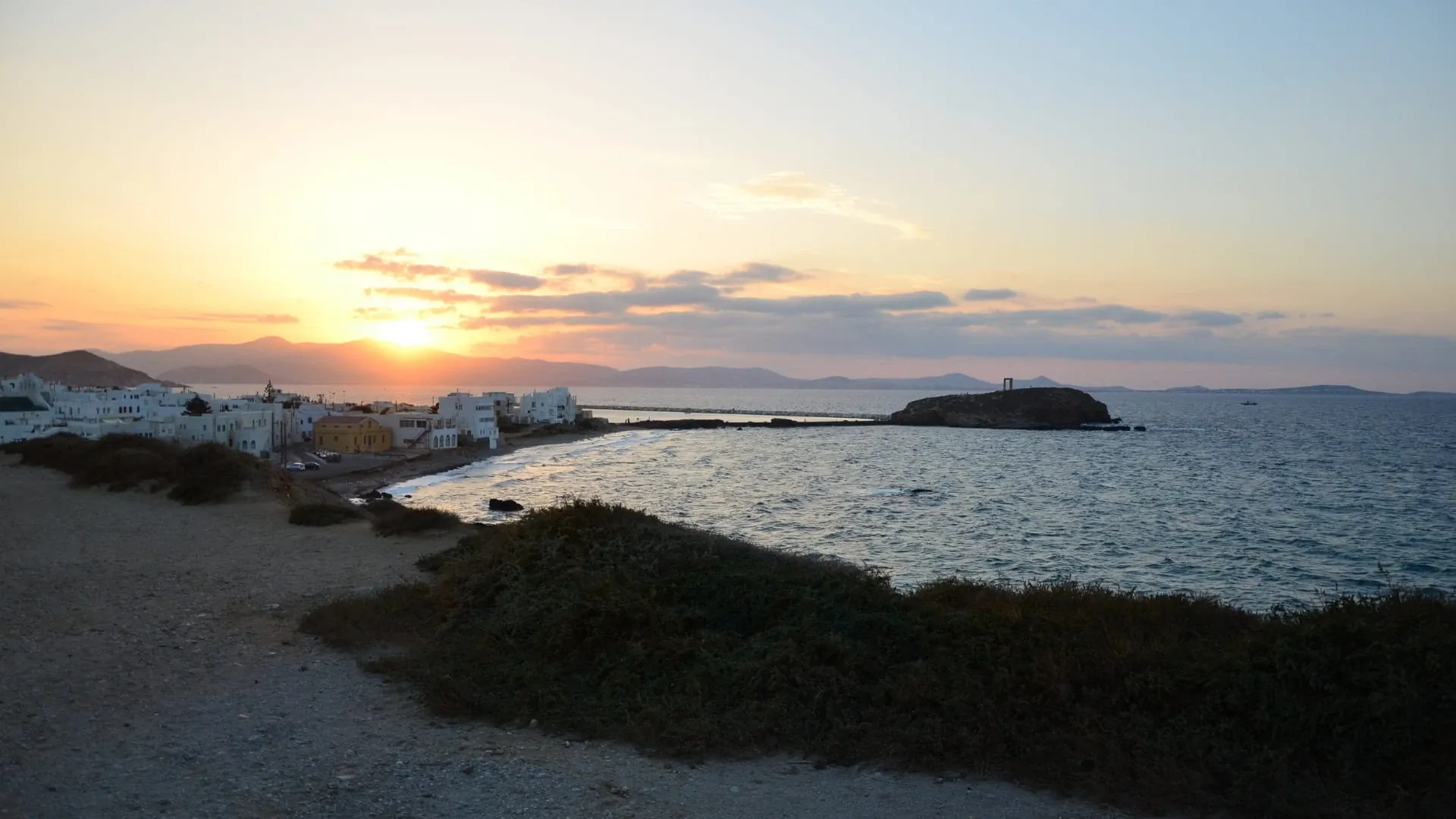
Naxos is the island that gives without counting. The largest of the Cyclades is also the greenest and the most delicious. Its mountain villages — Apiranthos, Filoti, Halki — perched in a setting of terraces and olive trees, are linked by ancient paths lined with stone walls. Apiranthos and Halki are in fact among the most beautiful villages in the Cyclades, to be walked slowly, lane after lane. There you taste graviera, the local cheese aged in the mountains, and drink kitron, a citron liqueur. And on the harbour of Chora, the Portara, that ancient temple gateway standing against the sea, offers at sunset one of the finest spectacles in the Aegean. Mount Zas, the highest point of the Cyclades, is climbed gently by a shaded path leading to a view embracing the whole archipelago. Naxos is also the island of the kouroi, those unfinished statues left in the marble quarries since antiquity, silent witnesses to a sculptural past.
Sifnos: the gourmet island
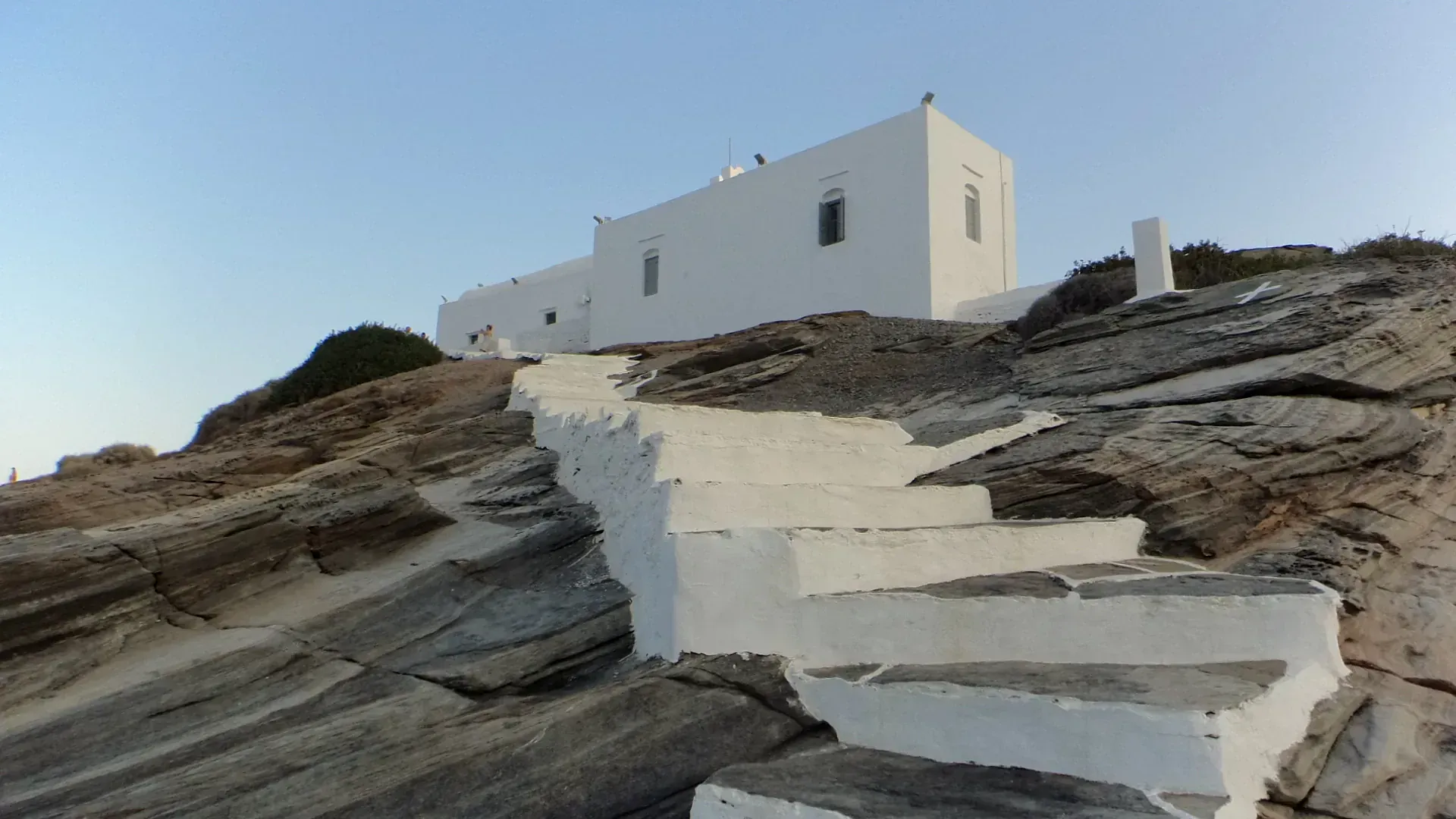
Sifnos is the island Greek food lovers recommend first. The culinary capital of the Cyclades, it has raised country cooking to the rank of art. Revithada, a chickpea stew simmered all night in an earthenware oven, is a dish of patience and flavour. But Sifnos is also a network of kalderimia, those paved paths linking the villages across a landscape of gentle hills, pottery workshops and white chapels set at the sea’s edge. Every step leads to a discovery, every village to a charming address. Explore the Cyclades.
Milos: the painter’s palette
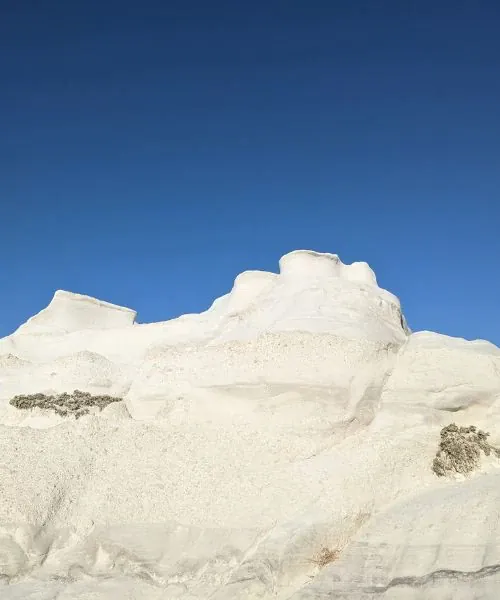
Milos is the island that surprises. Where the Cyclades cultivate white and blue, Milos bursts into ochre, red, sulphurous green, volcanic black. Sarakiniko, with its chalk rocks sculpted by the wind, looks like a lunar landscape set on a turquoise sea. Kleftiko, with its natural arches reachable from the sea, is visited by boat in a light that changes by the hour. The syrmata of Firopotamos, those multicoloured boat garages hollowed into the rock, compose one of the most photogenic scenes in Greece. In the evening you dine at Plaka facing the sunset, a glass of volcanic wine in hand.
Corfu: the Venetian island
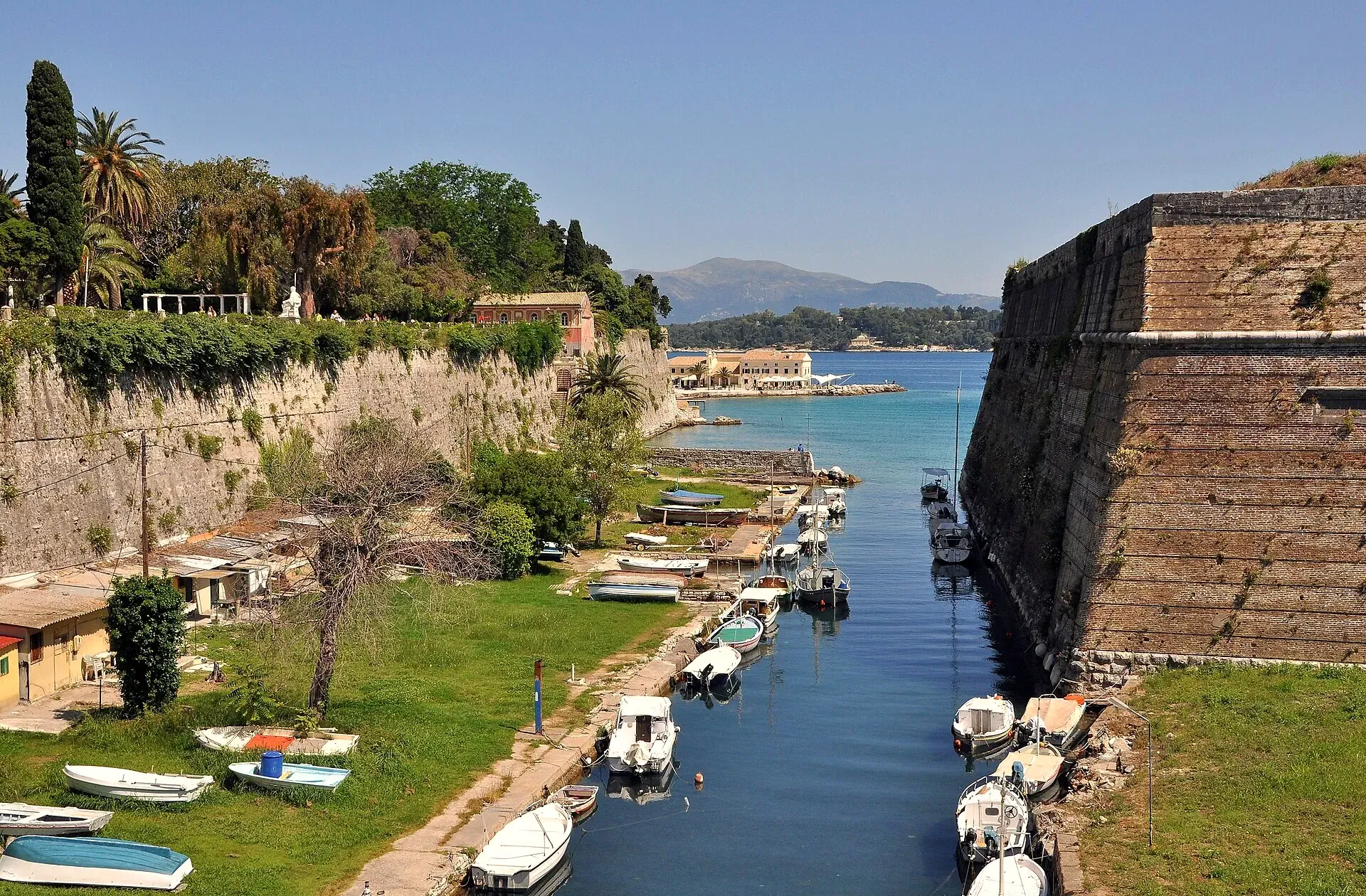
Corfu resembles no other Greek island. It is the greenest, the most wooded, the one where three million olive trees cover the hills with a silver mantle. The Venetian influence is legible everywhere: in the ochre façades of Kerkyra, in the paved alleys of the old town, in that discreet elegance running through every village. The old town, a UNESCO World Heritage Site, is walked like an open-air history book. The paths cross landscapes of cypresses and kumquat trees, follow secret coves, climb towards perched monasteries from which the view takes in the Ionian Sea and the mountains of Albania. Do not miss tasting the kumquat liqueur, a speciality found nowhere else in Greece. Discover Corfu.
Crete: a world in itself
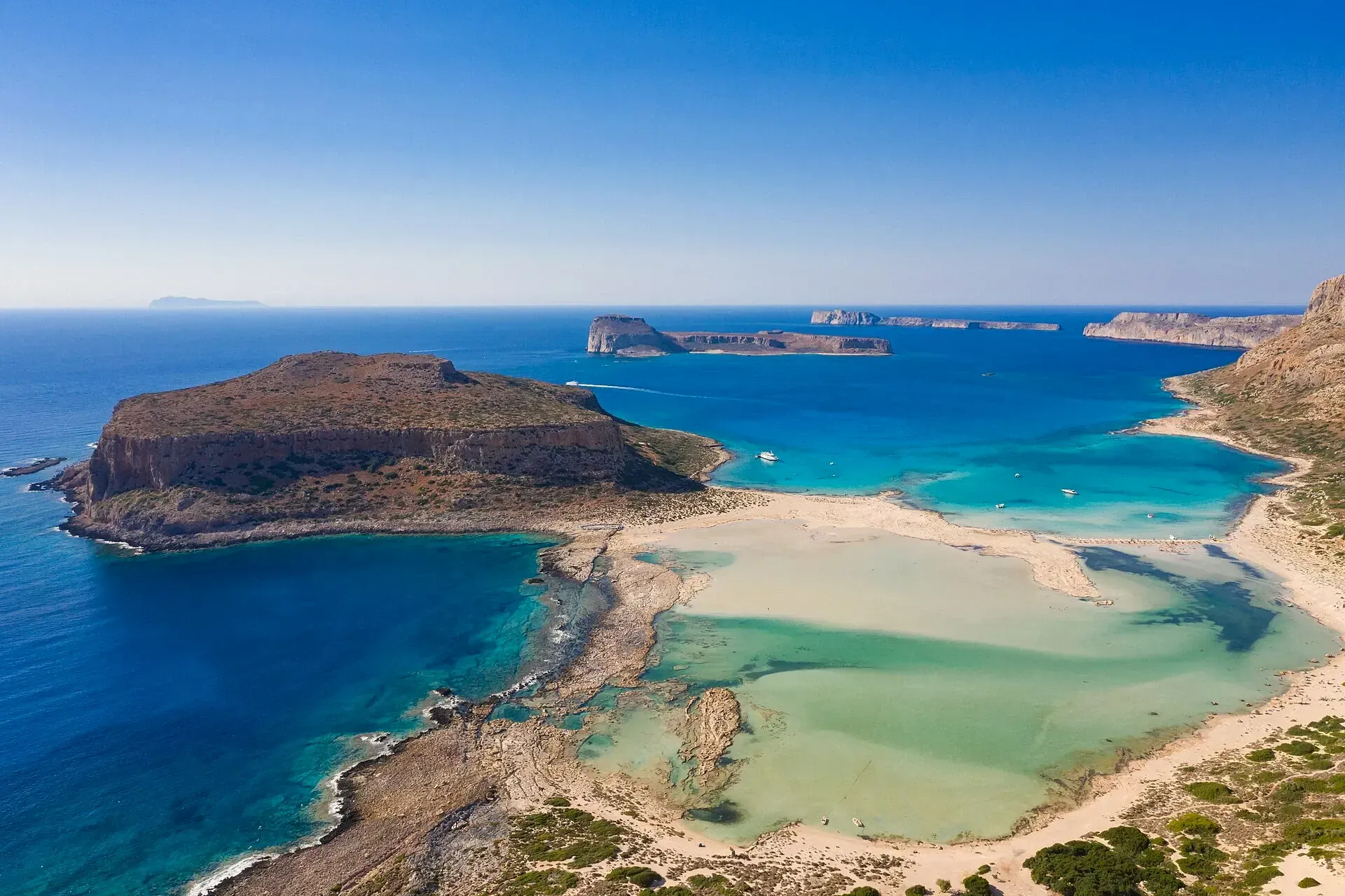
Crete is not an island, it is a continent in miniature. Too vast for a single trip, it is discovered in pieces, and every piece is a wonder. The south coast, wild and unspoilt, lines up fishing villages reachable by boat or on foot. The gorges carve cathedrals of stone into the mountains. If you are hesitating between this great island and the Cycladic archipelago, our comparison Crete or the Cyclades will help you decide according to your temperament. And Cretan cooking, with its wild herbs, its olive oil and its sheep’s cheeses, is perhaps the most generous in the whole Mediterranean. You come back, always, with the feeling of having seen only a fraction of it. Discover Crete.
Kythira: the secret island
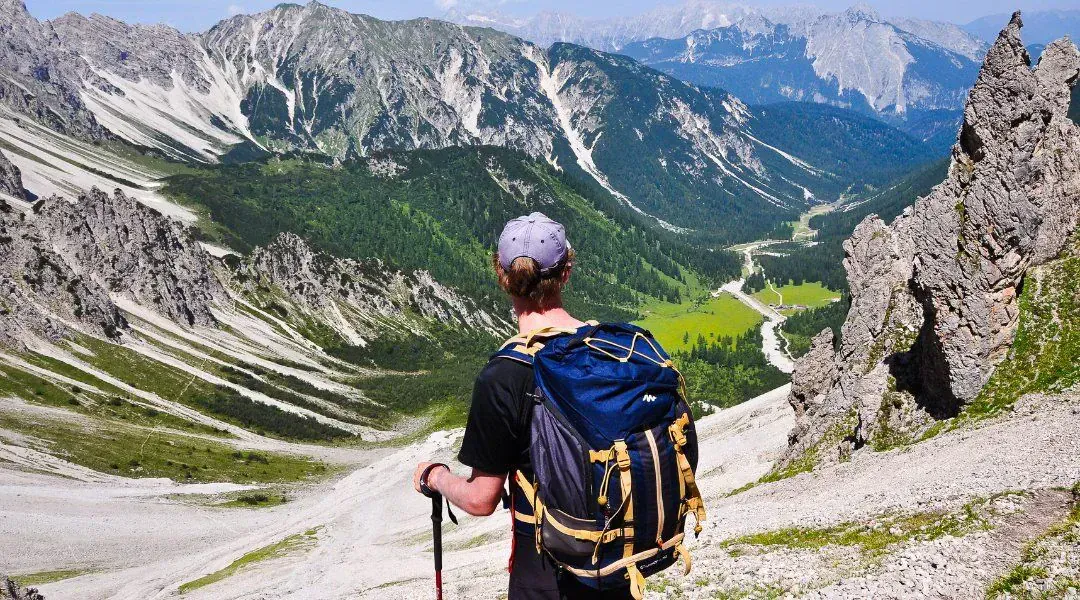
Kythira floats between the Peloponnese and Crete, far from the usual circuits. The island of Aphrodite, say the ancients. Today it is an island of silence and austere beauty: deep gorges, Byzantine villages clinging to the rock, beaches reached by paths lined with wildflowers. Kapsali, the small harbour, is a jewel of serenity. Here time has another quality, slower, deeper. It is the island of travellers who have already seen the others and are looking for something else. Discover Kythira the marvellous.
Amorgos: the contemplative island

Amorgos is the island of The Big Blue, but it is far more than a film set. Its abrupt silhouette, its monastery of Panagia Hozoviotissa clinging to a vertiginous cliff above the sea, its villages of Chora and Langada linked by mule tracks: everything here invites contemplation. You walk in an inhabited silence, between sky and sea, with that rare feeling of being at the end of the world without being nowhere.
Tinos: the spiritual island
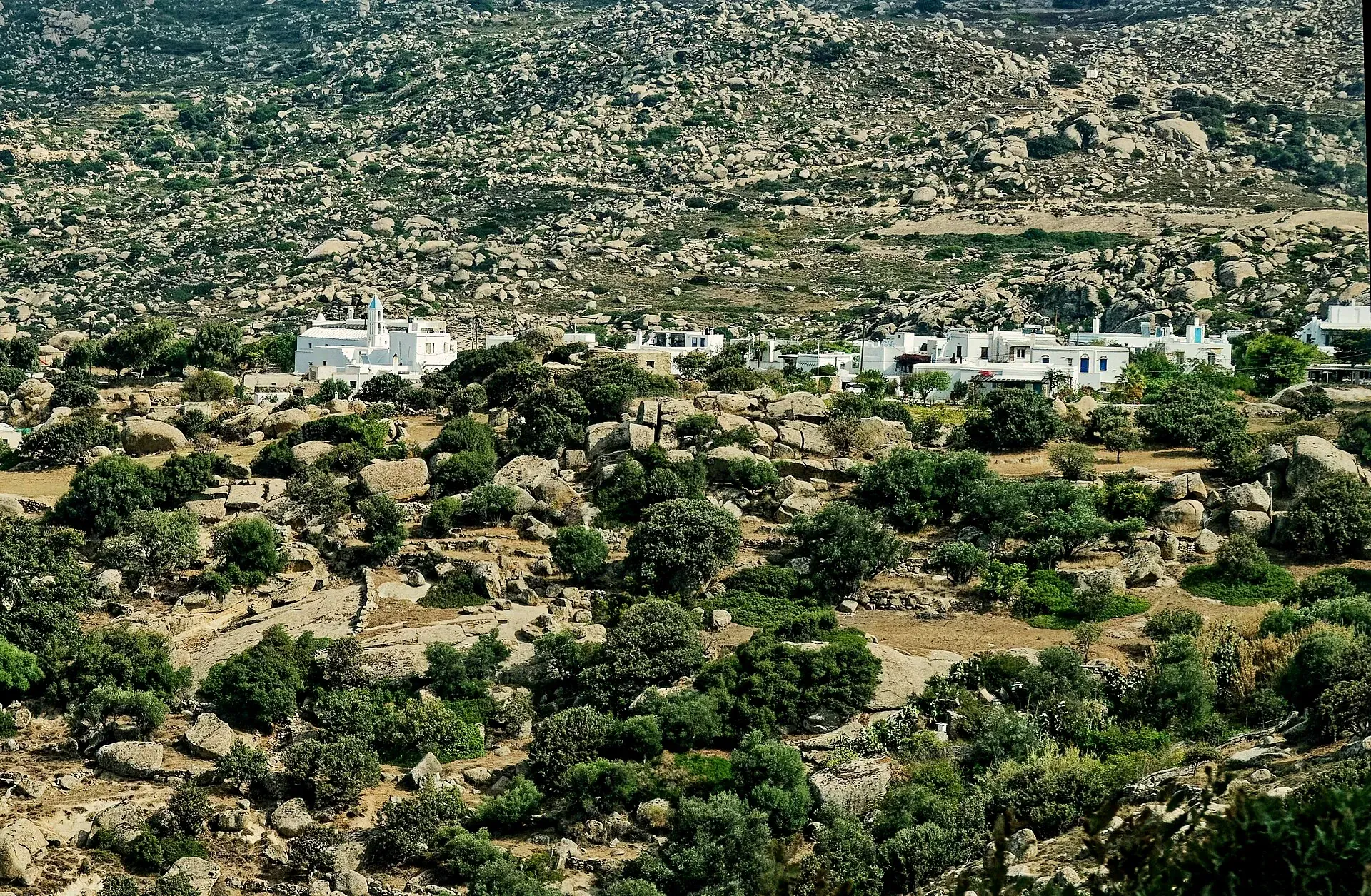
Tinos is the island Greeks know best and foreign travellers are only beginning to discover. Famous for its church of the Panagia, a major place of pilgrimage, it holds many other treasures: Pyrgos, the marble village, the strange Volax set among its granite boulders, Venetian dovecotes scattered through the countryside, a fast-growing food scene. The inland paths cross a landscape of gentle hills and cultivated terraces, in a serenity that invites you to slow your step.
Paros: the elegant island
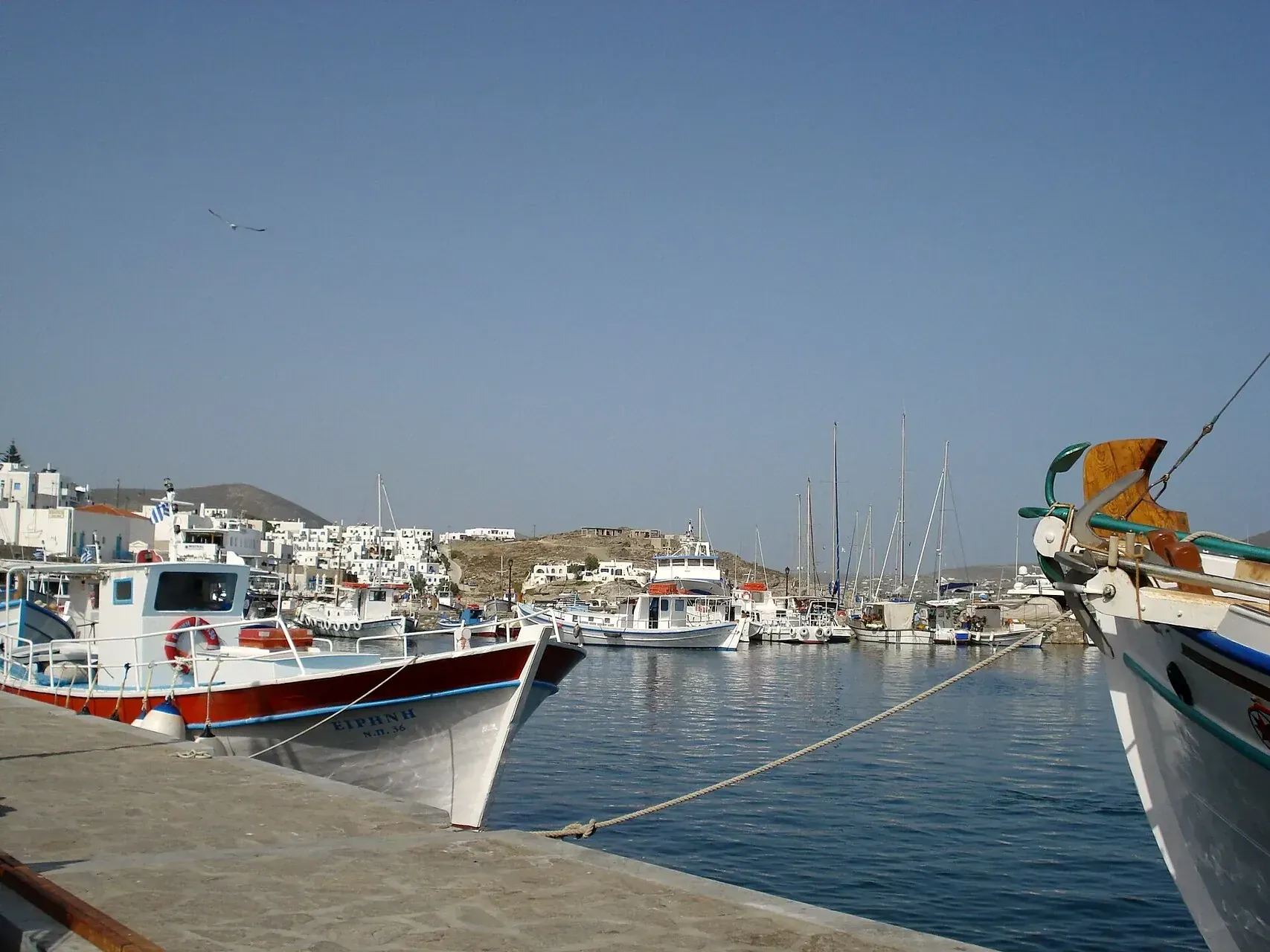
Paros has a gift for balance. Lively enough never to bore, peaceful enough to offer real moments of calm. The harbour of Naoussa, with its white lanes and its fish tavernas, is one of the most charming in the Cyclades. Inland, the village of Lefkes, linked to the coast by a Byzantine path paved with marble, offers a walk of simple, perfect beauty. You pass tiny chapels, secret gardens, viewpoints over the neighbouring islands. Paros is the island for those who do not want to give anything up: neither the bustle of a harbour, nor the calm of an inland village.
Sailing between the islands: the art of ferry travel
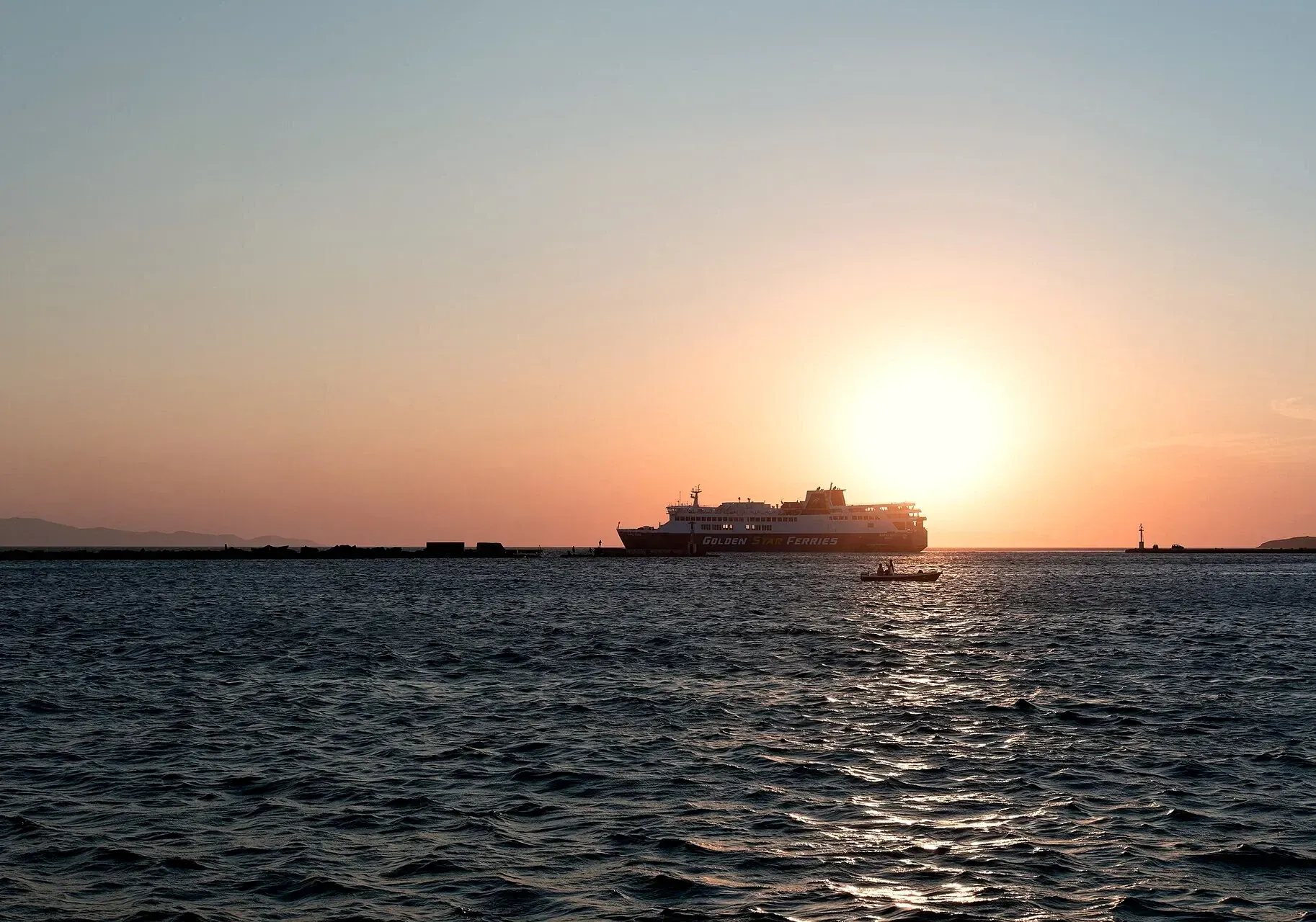
One of the great joys of a trip in the Greek islands is the passage from one island to the next. The ferries link the Cyclades to one another with reassuring regularity, and simply settling on deck, facing the blue, is already a moment of the journey. From Piraeus, Naxos and Paros are reachable in 4 to 5 hours of crossing. Sifnos, Milos and Amorgos ask for a little more patience, but the slowness is part of the charm. For the Ionian Islands, Corfu is reached by direct flight or via the west coast of the mainland, while Kythira has to be earned by sea from the Peloponnese. We arrange these connections for you, so that every crossing is a pleasure and not a logistical exercise.
How to choose your island
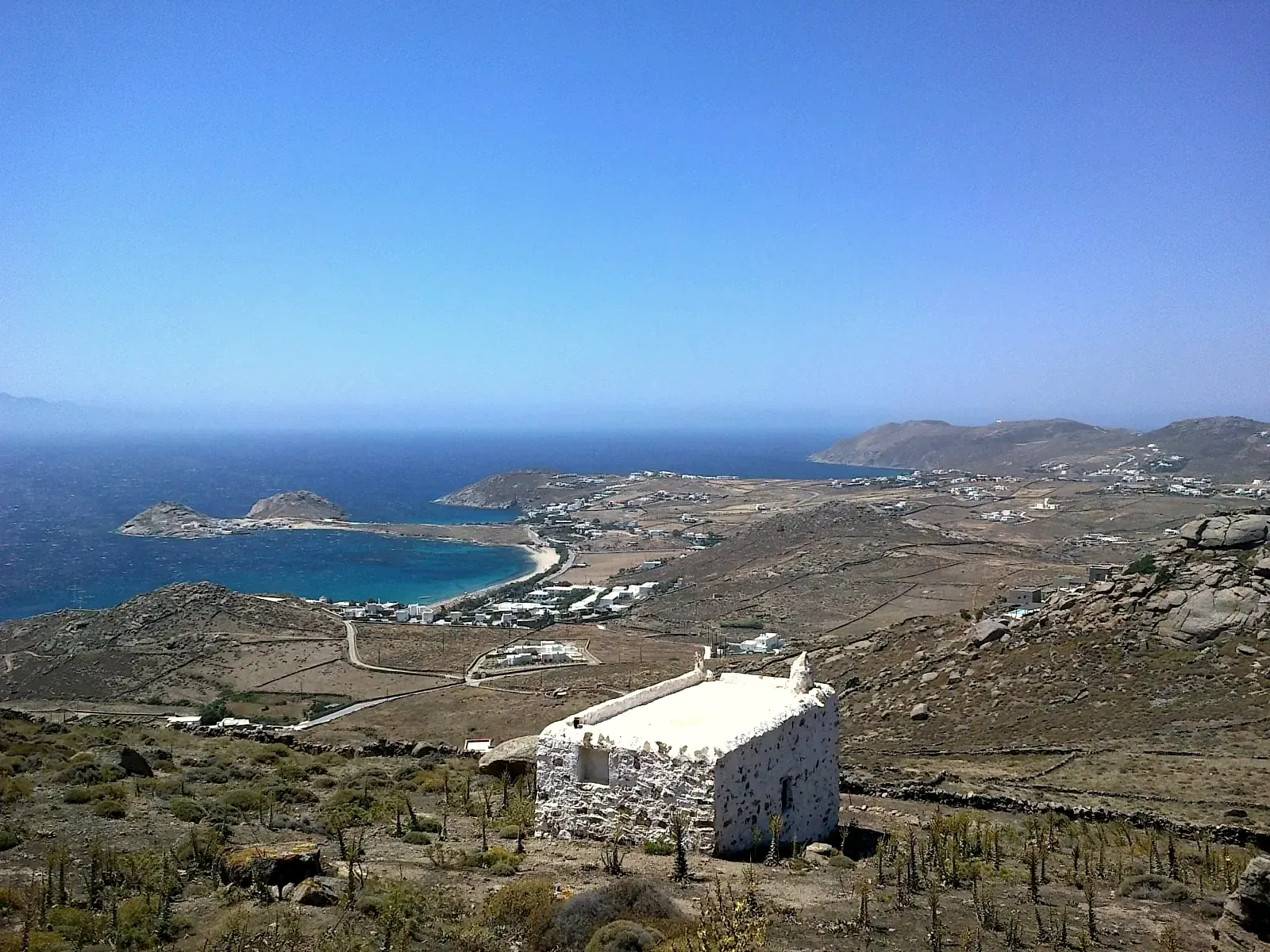
It all depends on what you are looking for. For a first discovery of the Cyclades, Naxos and Paros offer a fine balance between authenticity and comfort. For gastronomy, Sifnos and Crete are without rivals. For walking in unspoilt landscapes, Amorgos and Kythira satisfy the lovers of secret paths. For greenery and gentleness, Corfu is an obvious choice. If the question is still turning over in your mind, we have dug into it in a dedicated guide: which Greek island to choose according to your traveller profile. Our advisers know each of these islands first-hand and will help you settle it.
In spring, the islands are covered with flowers and the paths are deserted. In autumn, the sea is warm and the light incomparable. Both seasons have their devotees, and we understand why.
What is the best season to visit the Greek islands?
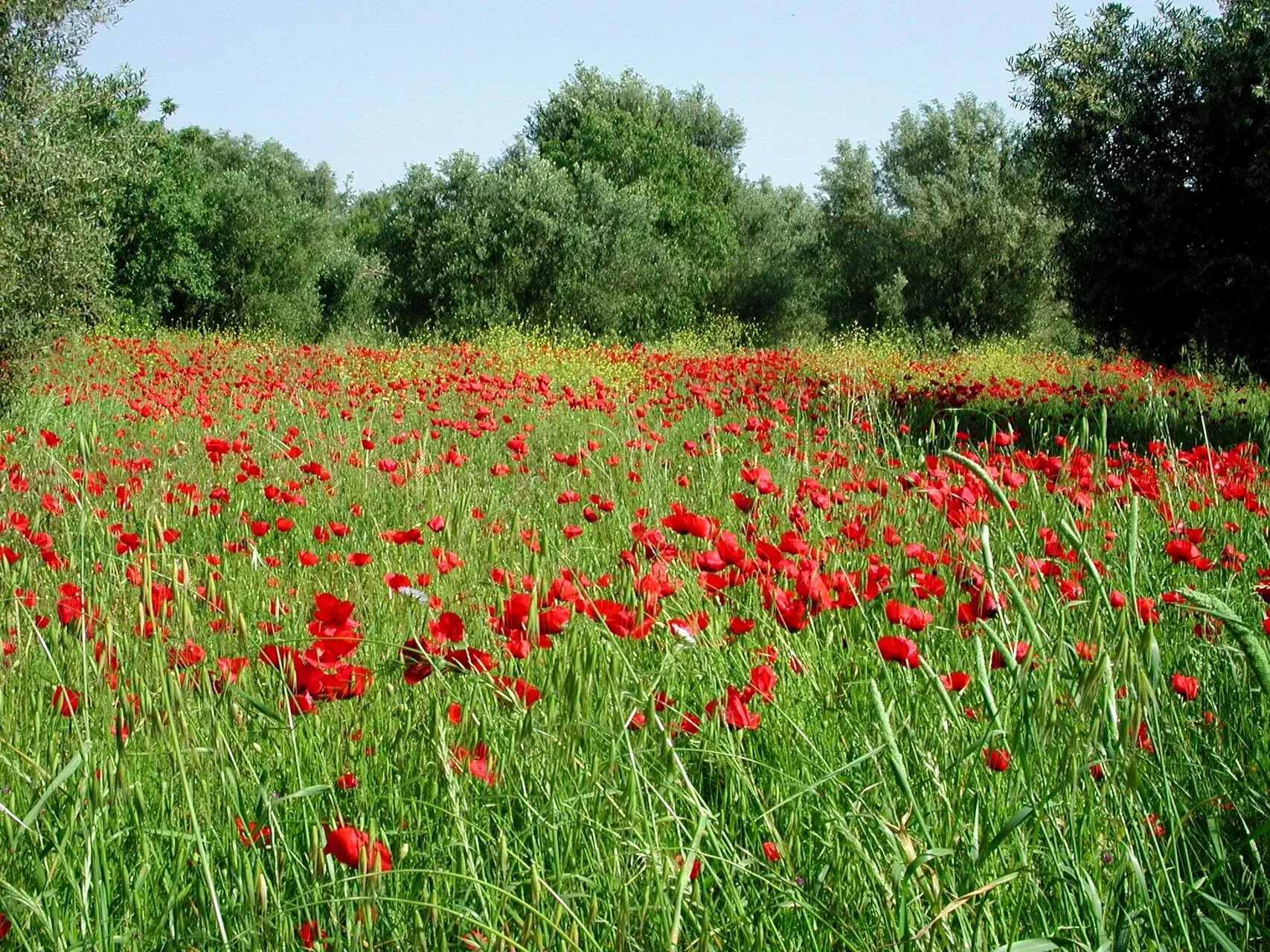
Spring, from April to June, is the favourite season of travellers who like to walk. Temperatures are mild, nature explodes with colour, poppies and asphodels carpet the hills, and the paths are almost deserted. It is also the season when the tavernas reopen with the enthusiasm of the first days, when you eat fresh broad beans and artichokes from the garden.
Autumn, from September to the end of October, offers an incomparable golden light and the warmest sea of the year. The vines take on red and gold, the villages recover their rhythm after the summer, and the sunsets take on that particular intensity that belongs only to Greece. It is the ideal season to combine walking and swimming, with the certainty of finding a cove to yourself. To know where to lay your towel, take a look at our selection of the most beautiful beaches in Greece.
Winter, finally, has its followers. Crete and Corfu, thanks to their mild climate, welcome travellers even in December or January. The Cretan mountains are sometimes covered in snow while the south coast stays warm, a striking contrast.
Our island holidays
- Sifnos, Milos and Kimolos, the enchanted Cyclades: three islands, three faces, one shared Cycladic art of living.
- Naxos and Amorgos, destination Cyclades: two islands of character at your own pace, between perched villages and secret coves.
- Corfu, the Emerald Isle: the greenest of the Greek islands, between centuries-old olive trees and the Ionian Sea.
- Crete, the fantastic voyage: a guided trip to discover the island’s hidden treasures.
Frequently asked questions
What is the most beautiful Greek island?
There is not just one, and so much the better. Naxos wins you over with its generosity and its mountain villages, Sifnos with its table, Amorgos with its silence, Milos with its volcanic landscapes, Corfu with its greenery. The most beautiful remains the one that matches what you feel like right now.
How many Greek islands should you visit in a single trip?
Two or three are plenty for 1 to 2 weeks. Multiplying the stops means spending more time on ferries than on paths. It is better to linger on a few neighbouring islands, such as Naxos and Amorgos or the trio of Sifnos, Milos and Kimolos, and give each the time to reveal itself.
Do you need to be a good walker to discover the islands on foot?
No. The paths we take often follow old mule tracks or paved kalderimia, over reasonable distances and at your own pace. Pauses in a taverna or facing a cove are part of the day. The idea is not performance, but the pleasure of linking two villages while taking the time to look.
Your question is not on this list?
Write to us, and we will reply to you personally by email.
Continue reading
- Crete or the Cyclades: which one is right for you?
- Which Greek island is right for you? The complete guide
- The Most Beautiful Beaches in Greece, our favourite coves far from the crowds
- Hiking in Greece: the best trails island by island
Article written by
Maria Papadopoulou (Μαρία Παπαδοπούλου)
Editorial lead
I hike, and Greece is the place I keep coming back to. My initial studies (a Master’s in Marketing and a degree in Applied Foreign Languages) taught me how to build an editorial project, and the trails taught me the… Read more