



The most beautiful beaches in Greece are not always the ones you see in magazines. They are the ones you reach after a short walk between the olive trees, the ones where you lay your towel on warm sand feeling alone in the world, the ones where a seafront taverna waits for you with tomatoes still warm from the sun and a glass of cool wine. Greece has thousands of beaches, but we have kept a handful, those that offer beauty, accessibility and that extra touch of soul you only find when you take the time to look. Here is our selection, region by region, for epicurean travellers.
| In brief | A selection of beaches in Greece, from the Cyclades to Crete and from the Ionian Islands to the Peloponnese, chosen for their beauty and their easy access. |
| Ideal for | Epicurean travellers who like to alternate swimming, a short walk and a seafront taverna. |
| Best season | May-June (empty beaches, water at 20-23°C) and September-October (warmest sea, 24-26°C). |
| Pace | Gentle: 15 to 30 minutes of walking at most for the finest coves. |
| To help you choose | See also the most beautiful Greek islands. |
The most beautiful beaches in Greece, our selection:
- Sarakiniko, Milos
- Prassa, Kimolos
- Plaka, Naxos
- Vathy, Sifnos
- Kolitsani, Ios
- Rovinia, Corfu
- Myrtiotissa, Corfu
- Porto Katsiki, Lefkada
- Voutoumi, Antipaxos
- Myrtos, Kefalonia
- Elafonissi
- Balos
- Sougia
- Preveli
- Voidokilia, Messenia
- Foneas, Mani
- Kalogria, Achaea
- Simos, Elafonisos
The Cyclades, dream beaches between white and blue
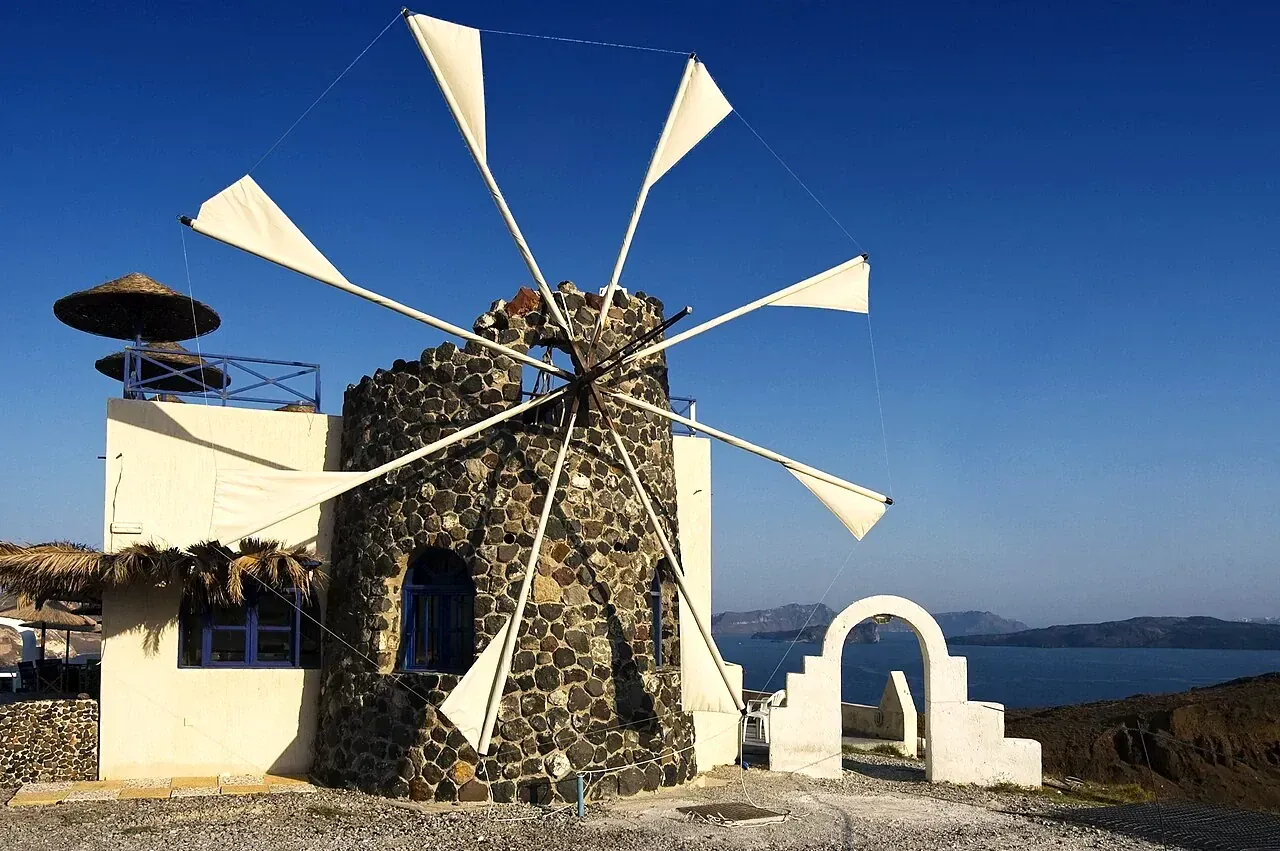
The Cyclades are synonymous with light. You come for the white of the villages, the blue of the sea, and that quality of air that makes every colour more intense. But the Cyclades also hold beaches of striking beauty, often a few minutes' walk from a village or a harbour. If you are still hesitating over your destination, our guide to which Greek island to choose will help you find the one that suits you.
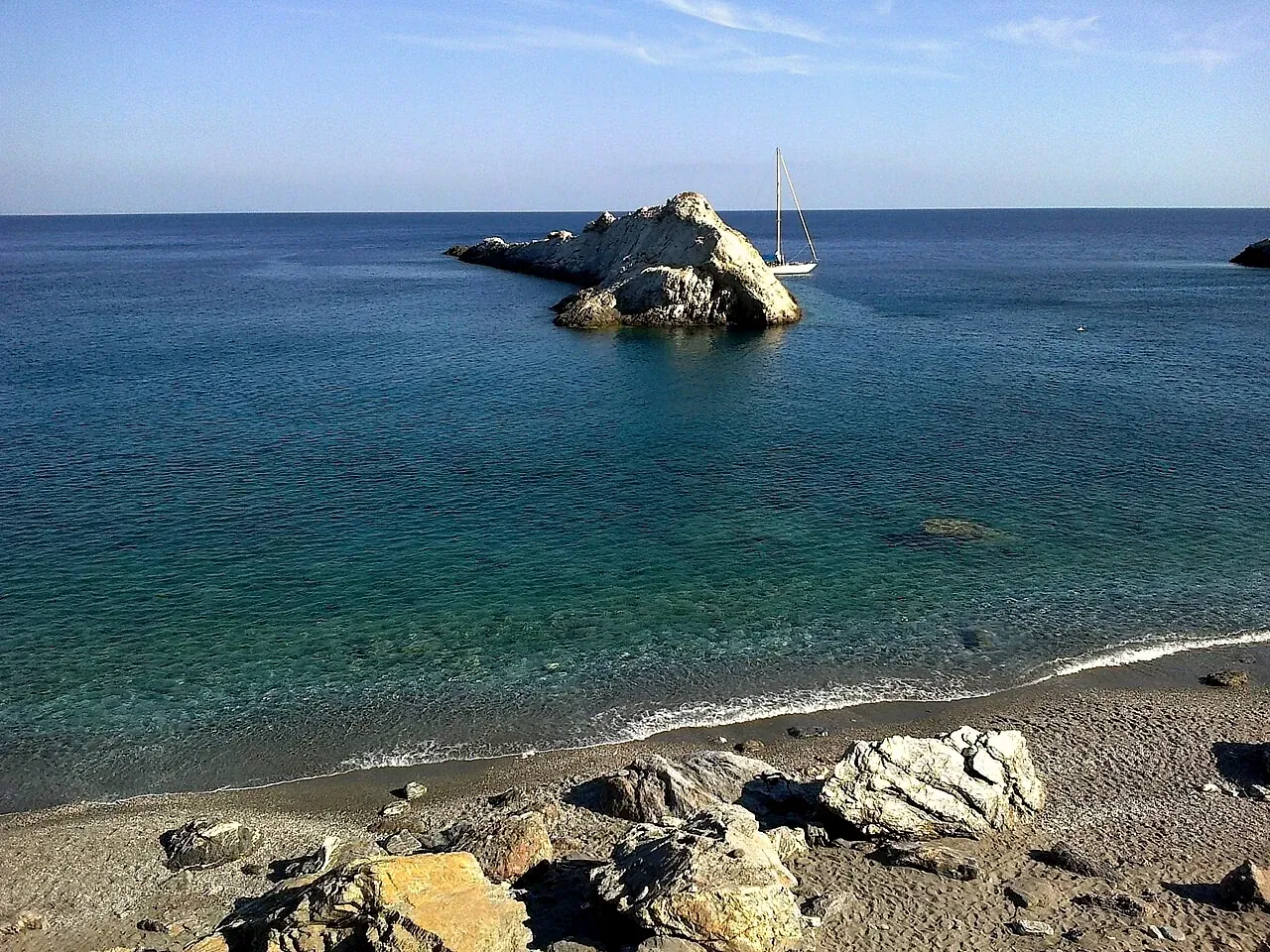
Sarakiniko, Milos

You no longer know whether you are on the Moon or in Greece. The white chalk rocks, sculpted by wind and sea over millennia, draw an unreal landscape above water so transparent you can see the bottom at 5 m. You settle on the smooth, warm rocks, slip into the water, and the outside world ceases to exist. No sand here, but a mineral gentleness unique in the world. Discover Milos.
Prassa, Kimolos
The discreet neighbour of Milos hides one of the finest surprises in the Cyclades. Prassa is a crescent of almost Caribbean white sand, water of a milky blue owed to the volcanic seabed, and a handful of tamarisks for shade. You reach it easily from the village of Kimolos, and you stay far longer than planned, lulled by the silence and the gentle warmth of sand between your toes.
Plaka, Naxos
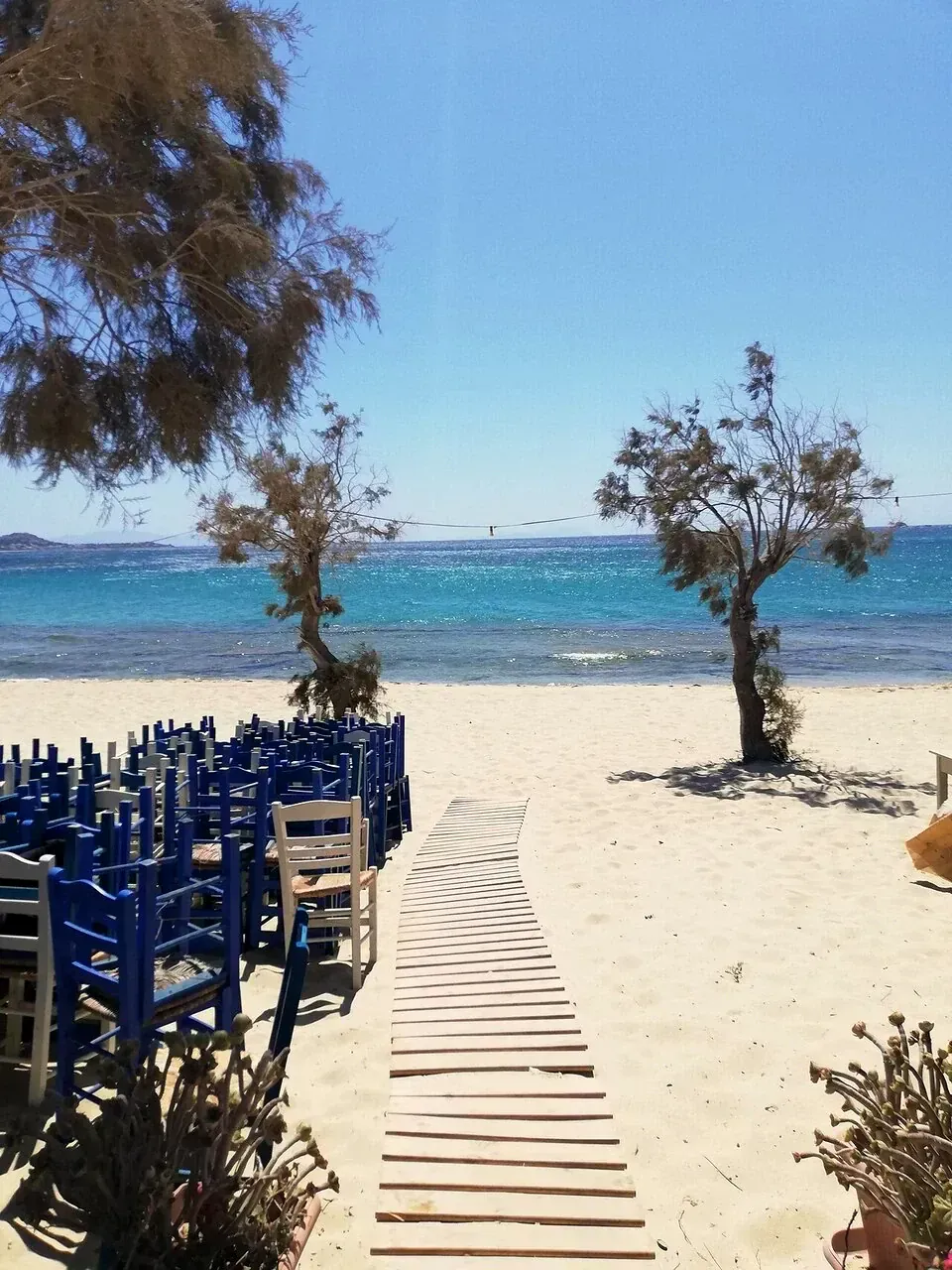
One of the longest beaches in the Cyclades stretches over several kilometres, edged with low dunes and cedars that give welcome shade in the hot hours. Plaka has that generosity which characterises Naxos: space for everyone, even in season, shallow water ideal for swimming, and in the background the silhouette of Mount Zas watching over the island. In the evening you dine with your feet in the sand in one of the neighbouring tavernas.
Vathy, Sifnos
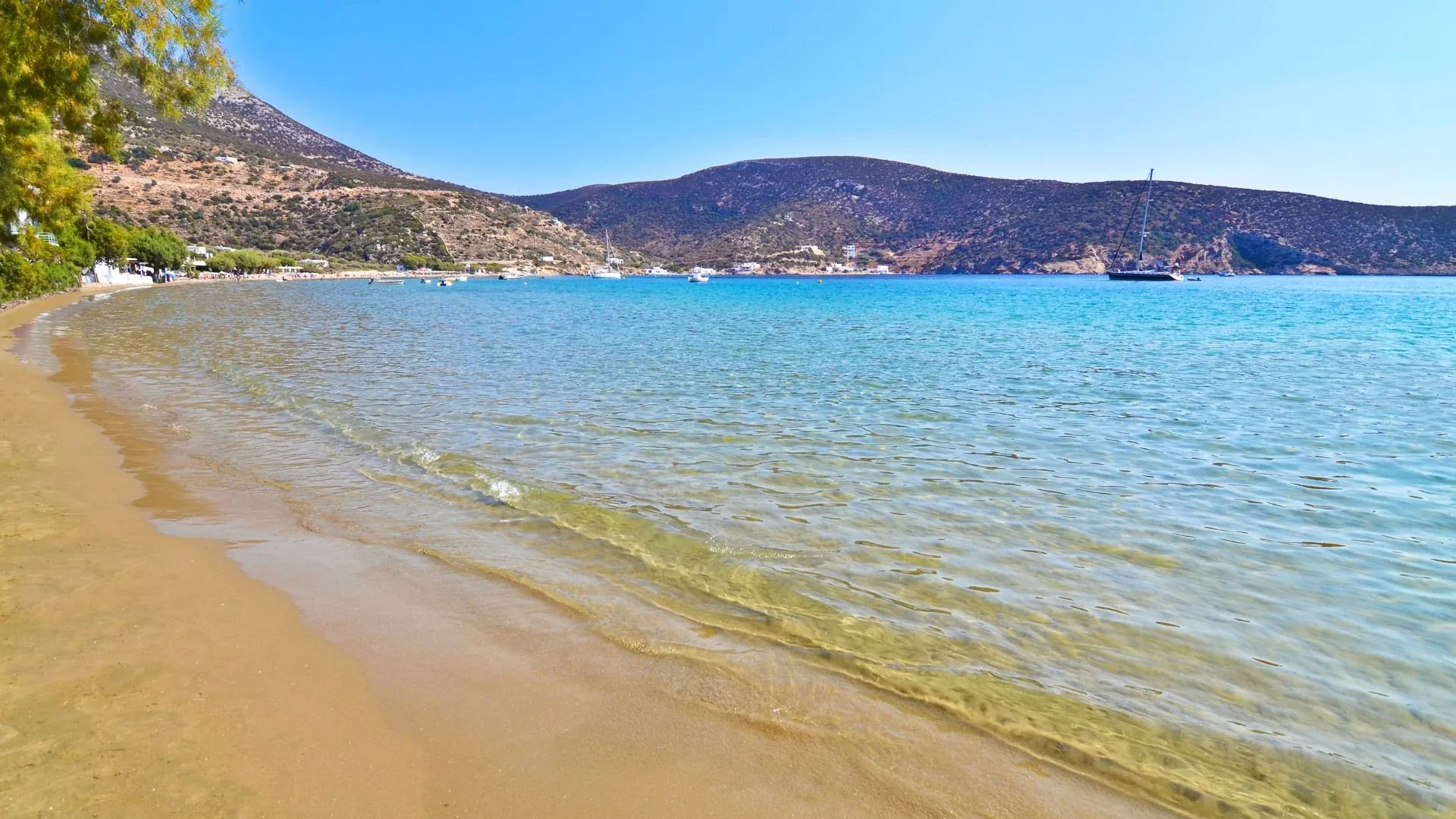
A sheltered bay, closed like a lake, where the water takes on shades of jade. You reach Vathy by a paved path crossing the Sifnos countryside, between white chapels and dry-stone walls. The reward, after this short walk, is the beach, of course, but also the seafront taverna serving revithada, that chickpea stew simmered all night in an earthenware oven. A simple, perfect dish, to be eaten with your feet in the sand.
Kolitsani, Ios
Kolitsani is on the island of Ios, south of Chora. This small sheltered cove has a sandy beach and clear water. You can reach it on foot along a path; bring water and sun protection to enjoy your swim.
To discover beaches in the Cyclades on a walking holiday, we offer Cycladic enchantment: Serifos, Sifnos and Milos self-guided, or the guided trip Sifnos, Milos and Kimolos.
The Ionian Islands, emerald coves beneath the olive trees
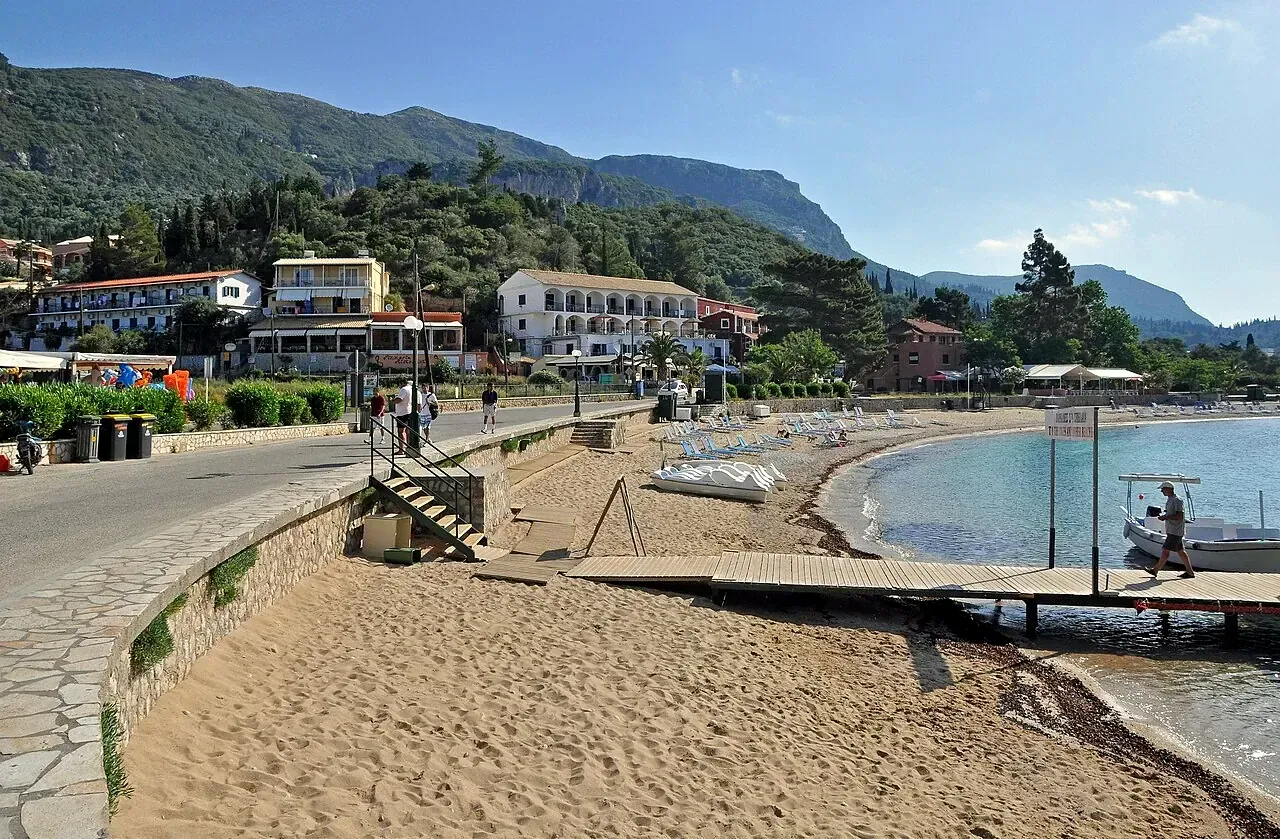
If the Cyclades are white and blue, the Ionian Islands are green and turquoise. Here, three million olive trees cover the hills, cypresses stand guard along the paths, and the beaches hide in the hollows of coves fringed with lush vegetation. The water takes on shades of emerald found nowhere else in Greece.
Rovinia, Corfu

Here is a beach you earn. From the village of Liapades, a path descends for 20 minutes through centuries-old olive trees, in a light filtered by the silver foliage. You hear the sea before you see it. And when the cove appears, framed by rocks and greenery, with its emerald green water, you understand why the regulars of Corfu keep this address to themselves.
Myrtiotissa, Corfu
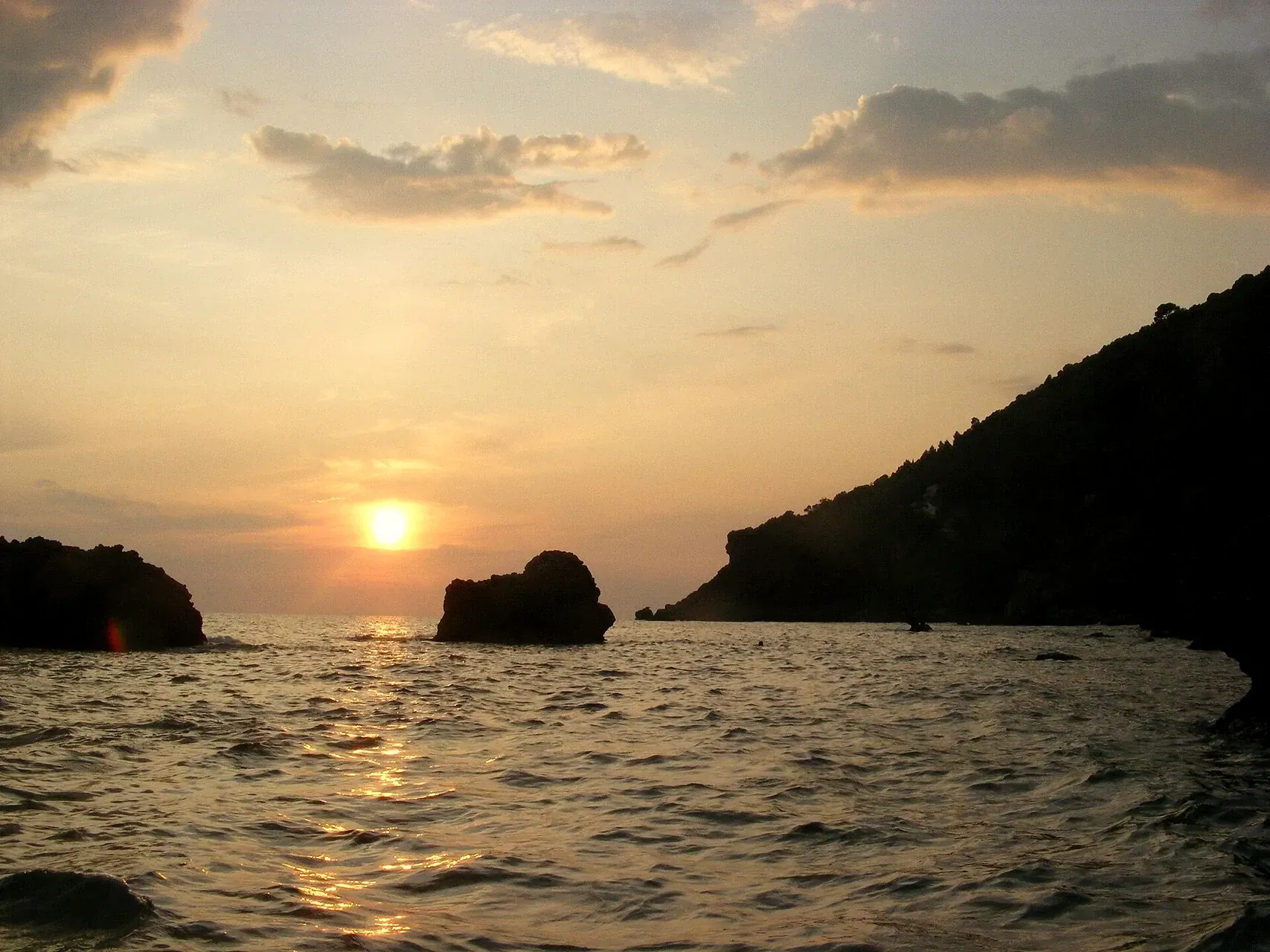
Lawrence Durrell considered it the most beautiful beach on Corfu, and he was not wrong. You go down by a narrow path between the cypresses, the golden cliffs fall into clear water, and the setting is so unspoilt that you feel you have arrived before everyone else. Myrtiotissa rewards those who accept a small effort: the climb back at the end of the day, legs still salted, hair dried by the sun.
Porto Katsiki, Lefkada
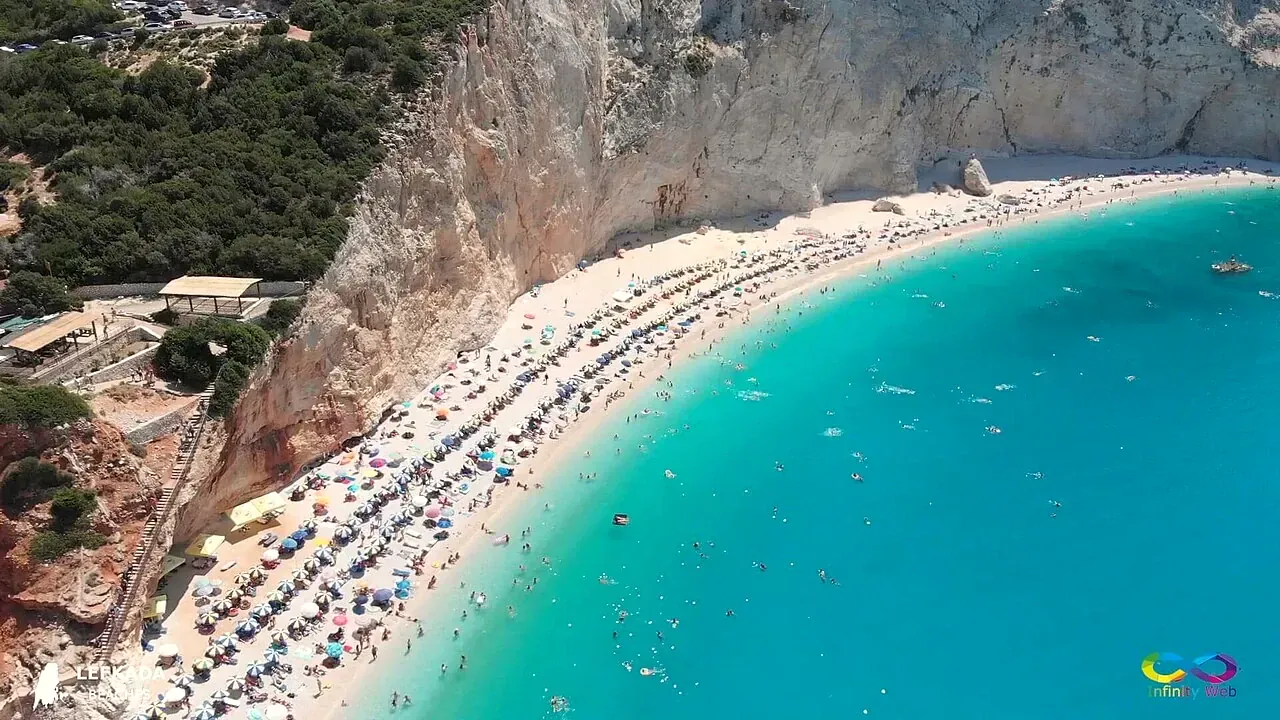
White limestone cliffs plunge into a sea of deep, almost unreal blue. Porto Katsiki is one of the most photographed beaches in Greece, and yet it never disappoints. You reach it by a stairway cut into the rock, and every step brings you a little closer to a panorama you thought was reserved for postcards. The late-afternoon light there is particularly beautiful.
Voutoumi, Antipaxos
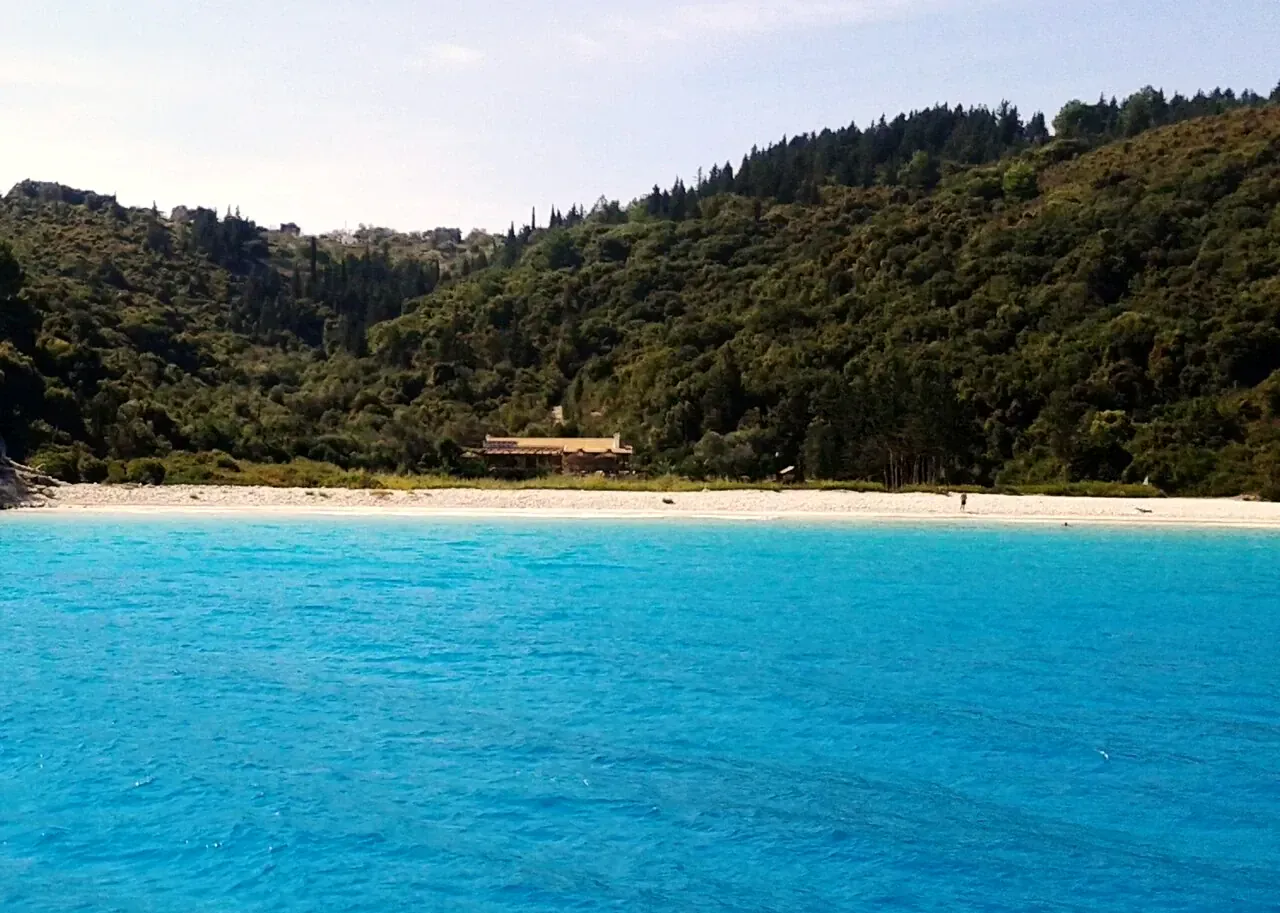
This is the beach you reach by boat from Paxos, and that crossing is part of the pleasure. Antipaxos, a tiny island of vines and pines, holds some of the clearest water in the whole Mediterranean. Voutoumi, with its fine sand and translucent seabed, looks like a tropical lagoon mislaid in the Ionian Sea. You spend the day there swimming, reading, letting yourself drift, before taking the boat back in the evening light.
Myrtos, Kefalonia

The legendary crescent of Kefalonia. Seen from above, from the road overlooking the bay, Myrtos takes your breath away: white cliffs frame a beach of pale pebbles, and the water passes from cobalt blue to turquoise in a few metres. You drive down, lay your towel, and stay there, hypnotised by the play of colours that changes with every hour of the day.
To experience the Ionian Islands on foot, discover Corfu, the Emerald Isle self-guided or the guided trip Corfu and Paxos.
Crete, between wild beaches and spectacular gorges
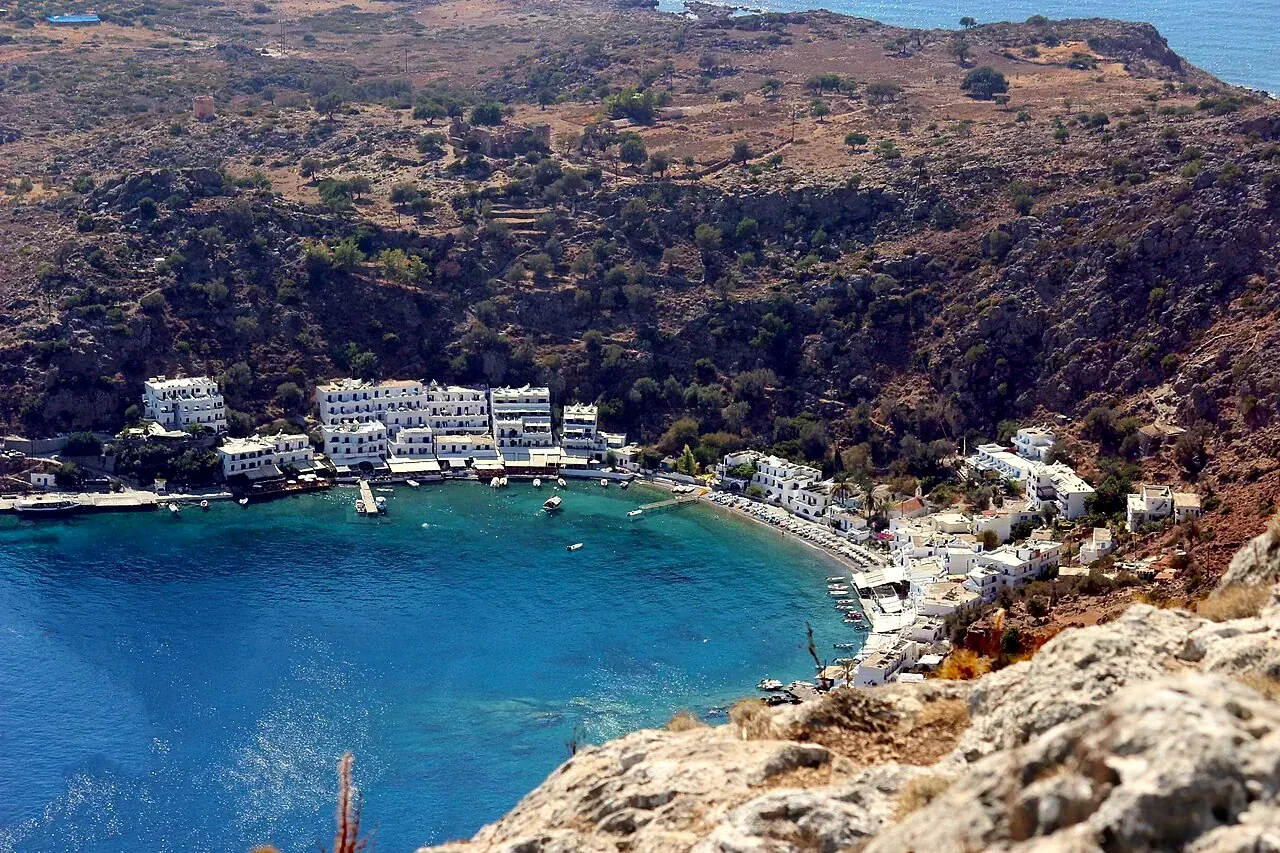
Crete is a world apart. Too vast for a single visit, it concentrates on its south coast and its western tip beaches that are among the finest in the Mediterranean. Here, every beach tells a geological story: lagoons formed by the wind, sand coloured by minerals, palm groves fed by the gorges.
Elafonissi
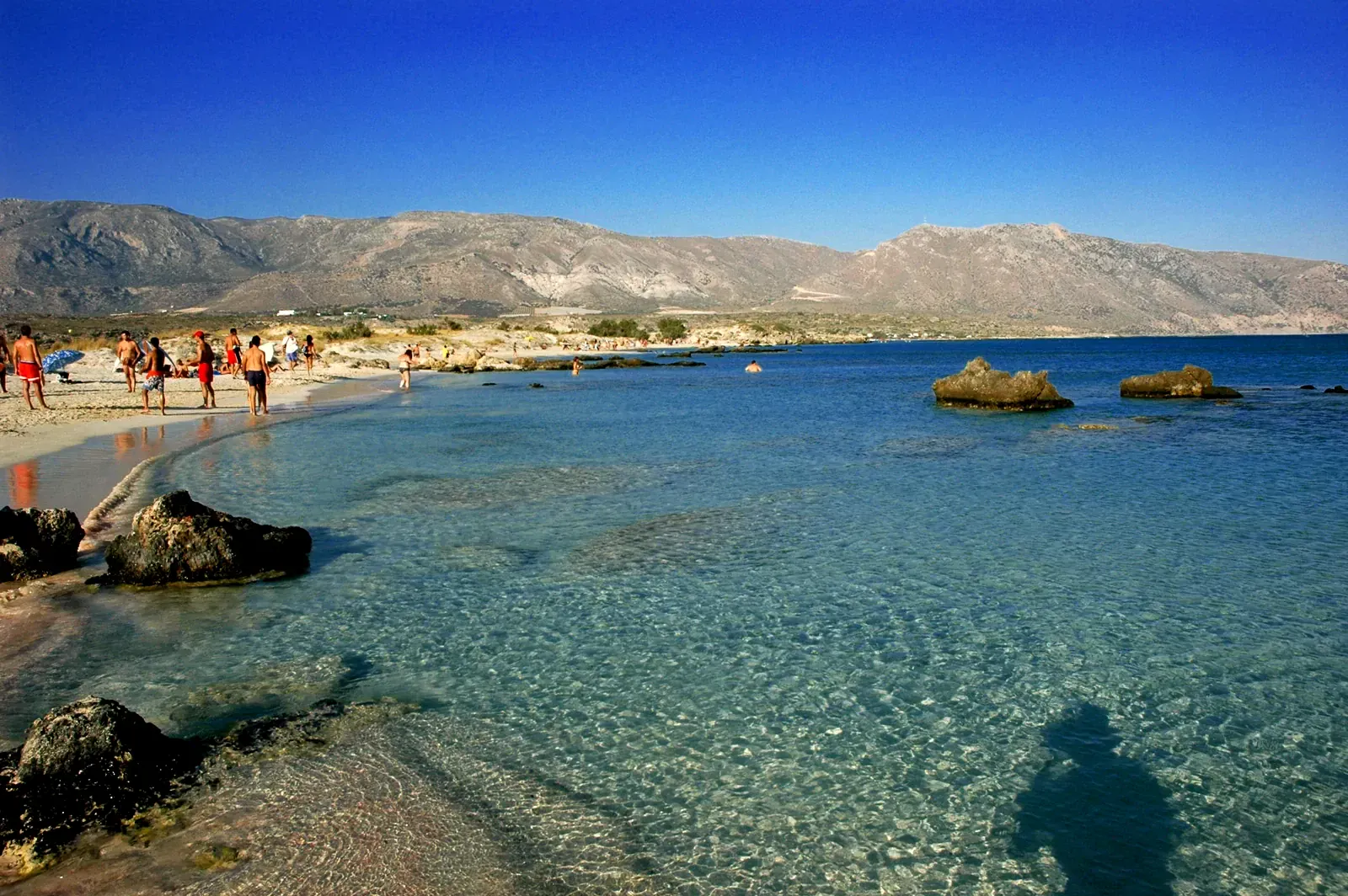
The pink sand of Elafonissi is not a legend. Tinted by crushed shells, it composes with the turquoise water of the lagoon a picture you thought was reserved for the tropics. The water is shallow, warm, almost motionless. You cross on foot the sandbank linking the peninsula to the coast, and settle into this improbable setting with the feeling of having discovered a secret. Come early in the morning or in the late season to have the lagoon almost to yourself.
Balos
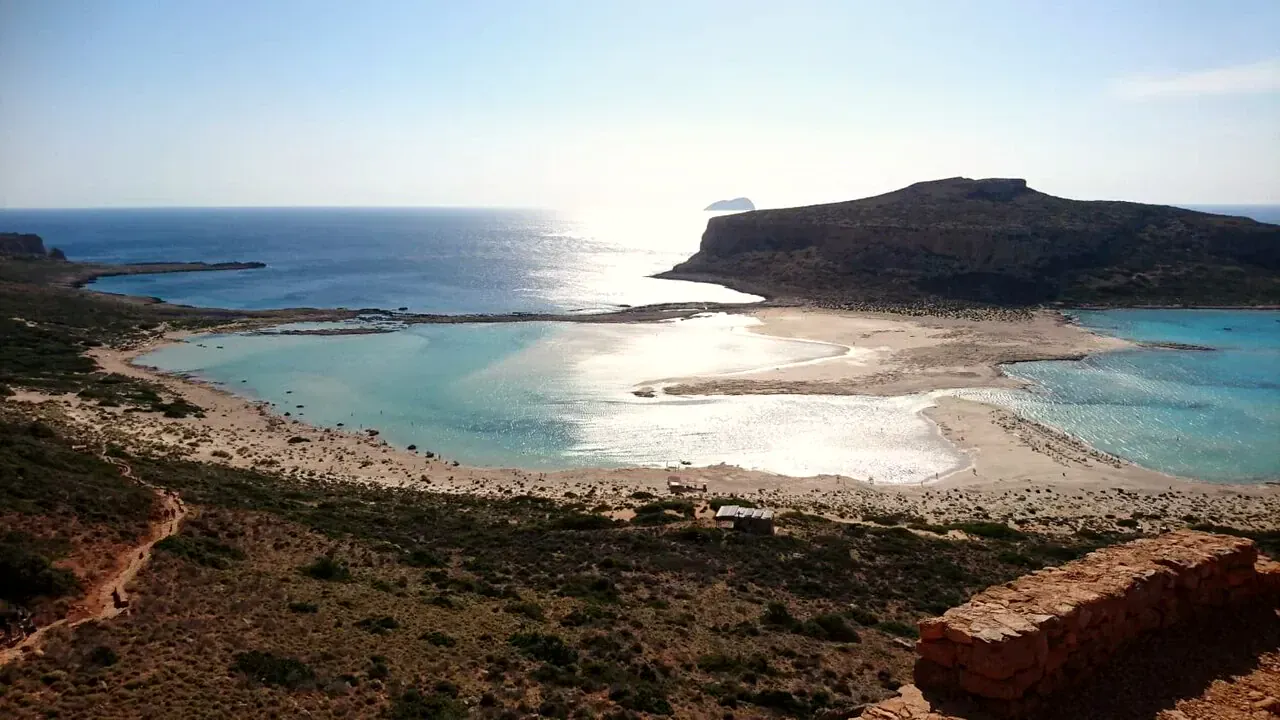
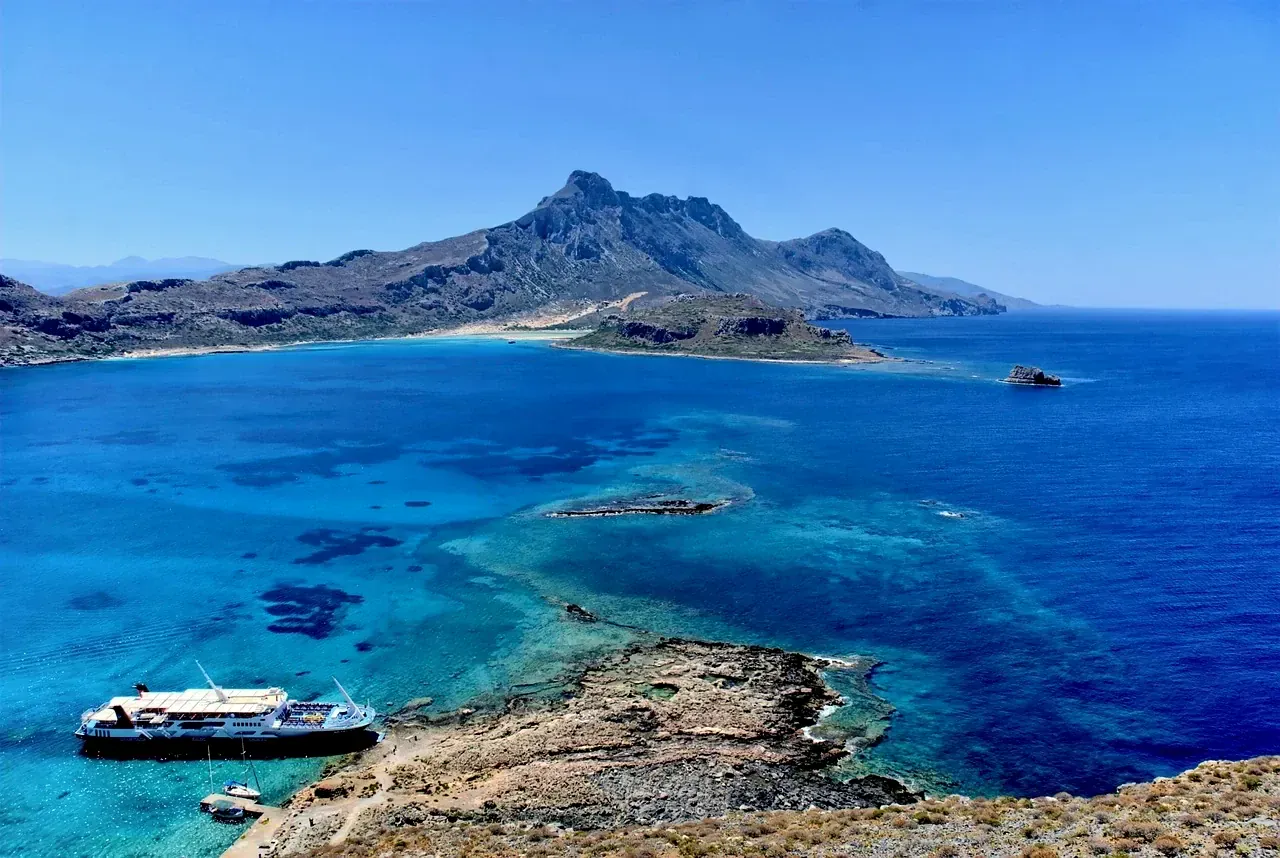
In the north-west of Crete, the Gramvousa peninsula shelters a lagoon of turquoise water earned by a short walk on a dirt track or by boat from Kissamos. The descent towards Balos offers a grand panorama: below, the lagoon spreads out in gradations of blue and green, with the arid mountains of Gramvousa and the islet of the Venetian fortress in the background. Swimming there is a simple happiness, in warm, shallow water.
Sougia
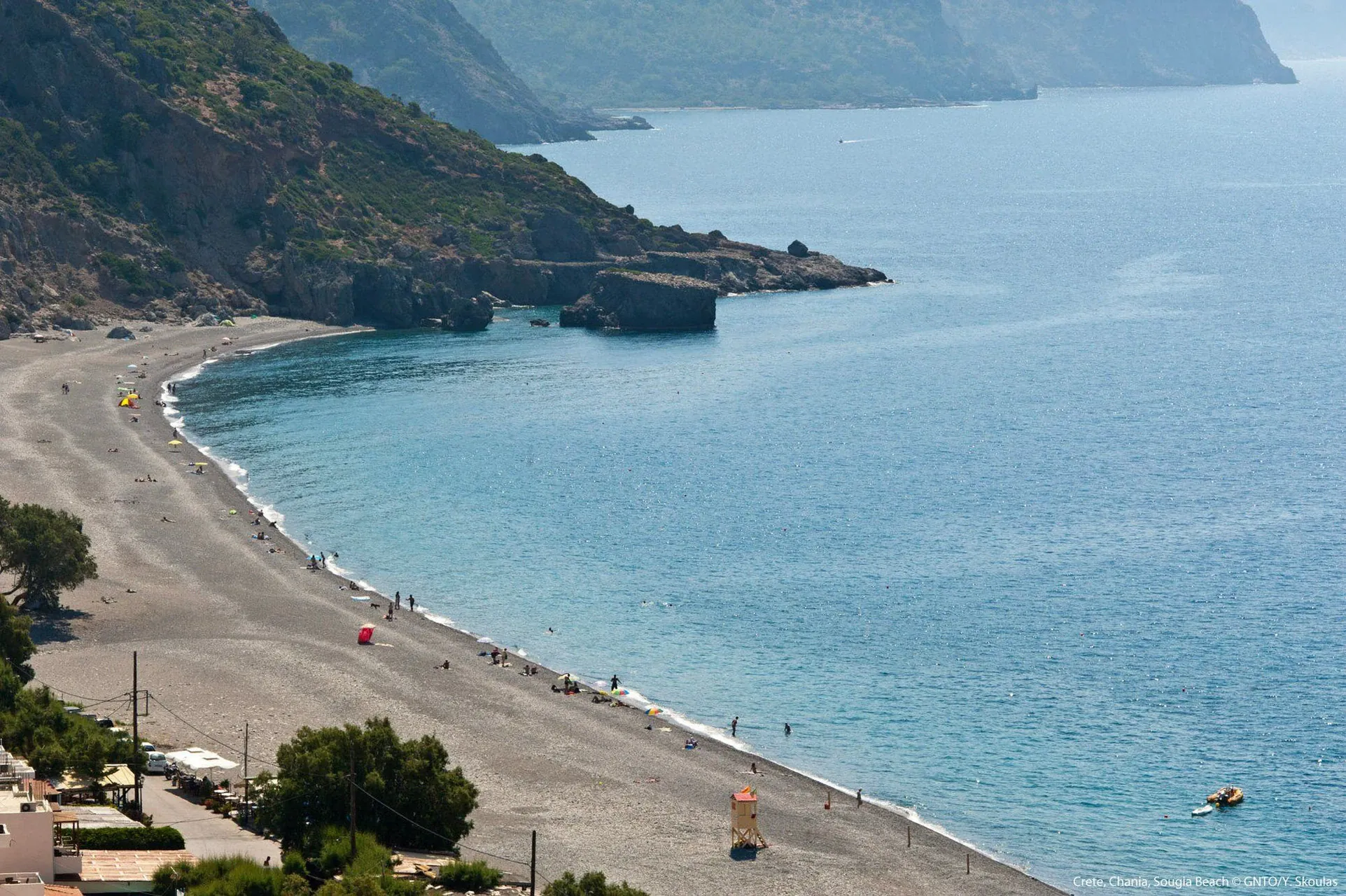
On the south coast, where the Agia Irini gorge opens onto the Libyan Sea, Sougia is the beach of those in the know. A long ribbon of pebbles, deep waters of a dark blue, and behind it the tiny village with its fish tavernas where you dine watching the sun go down over the sea. Less photogenic than Balos or Elafonissi, Sougia keeps something rarer: an intact authenticity, lulled by the sound of the waves and the scent of wild thyme.
Preveli
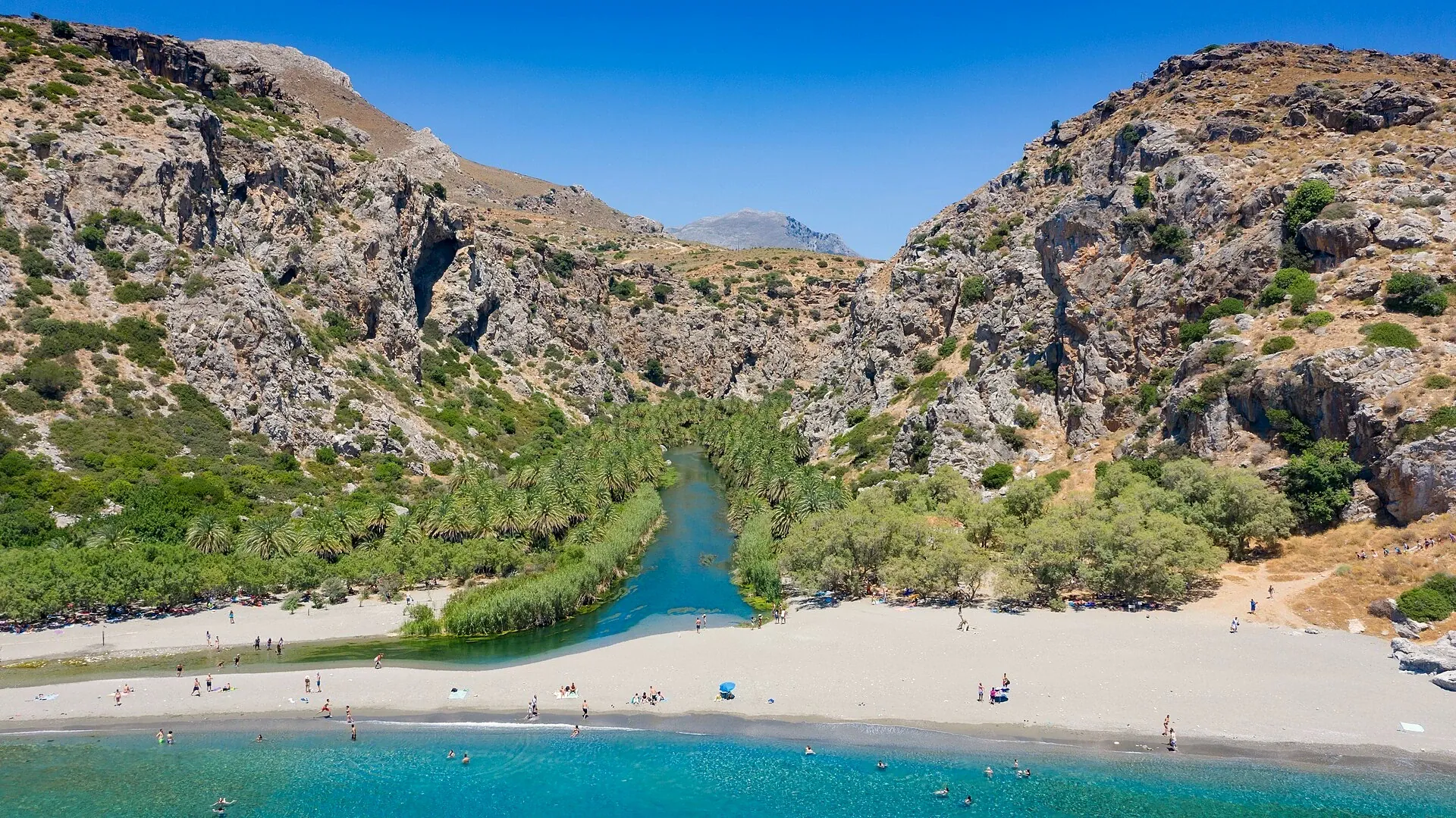
A river descends from the Kourtaliotiko gorge, crosses a palm grove, and flows into the sea. Preveli is that improbable meeting of mountain and coast, a landscape where Theophrastus palms frame a beach of fine sand edged with clear water. You reach it by a path descending from the monastery, and you quickly understand why the monks chose this place: the beauty here has something sacred about it.
To explore Crete on foot, we offer Crete, the fantastic voyage in a small guided group, or Secret Crete self-guided.
The Peloponnese, secret beaches of mainland Greece
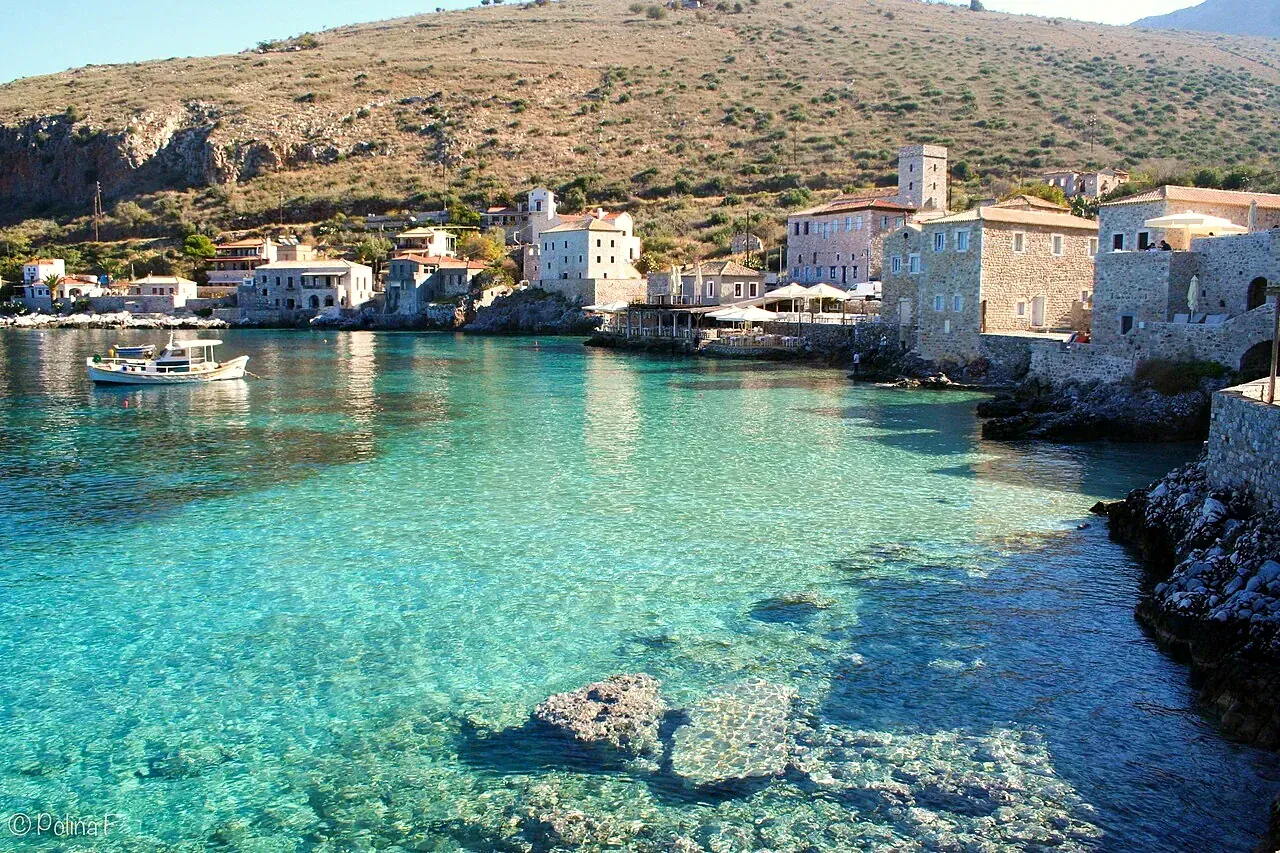
When people talk about beaches in Greece, they think immediately of the islands. That is to forget the Peloponnese, this monumental near-island that plunges into three seas and hides beaches as beautiful as those of the Cyclades, most often without a single ferry crossing. For travellers looking for authenticity far from the classic circuits, the Peloponnese is a revelation.
Voidokilia, Messenia
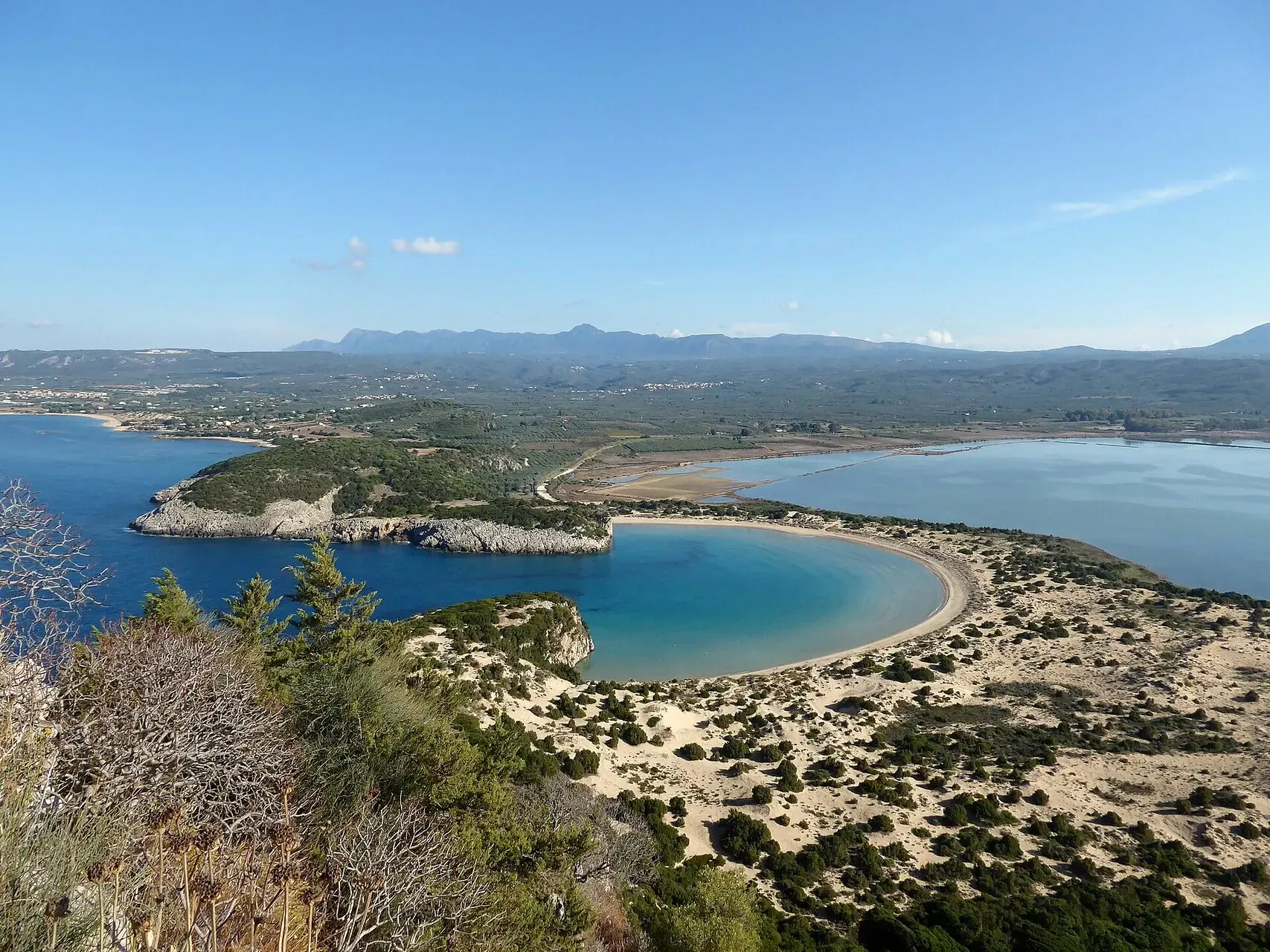
Seen from the sky, Voidokilia draws a perfect omega: a half-circle of golden sand framed by dunes, a lagoon on one side, the sea on the other. You reach it by a path skirting the Gialova lagoon, a refuge for flamingos, and emerge onto this beach of almost unreal symmetry. Above, Nestor’s cave, linked to the Homeric Pylos of the Odyssey, adds a layer of history to a place already charged with beauty. After the swim, the tavernas of Pylos are a few minutes away.
Foneas, Mani
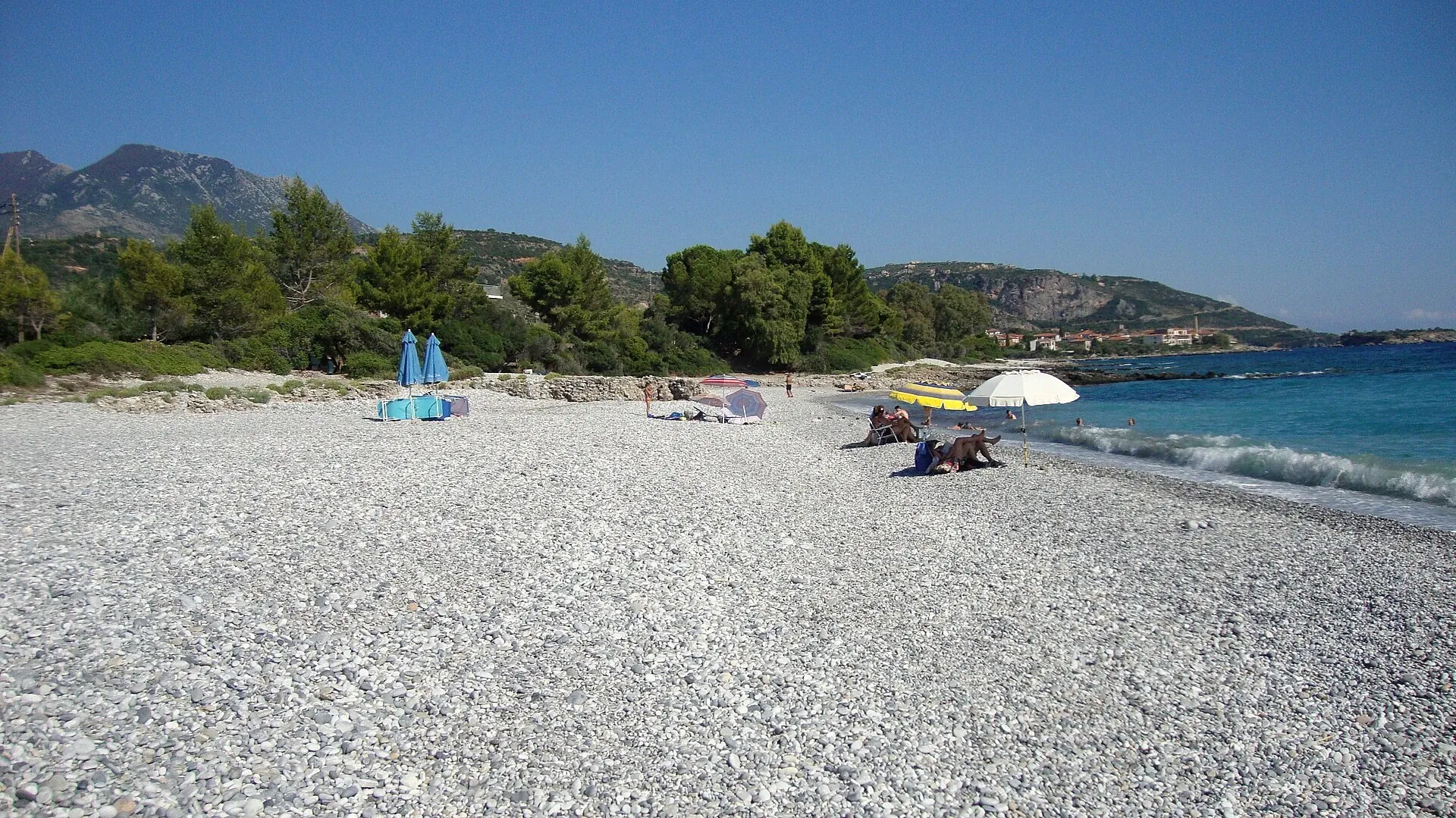
The deep Mani, that austere peninsula bristling with stone towers and fortified villages, holds a few coves of raw beauty. Foneas is the most accessible: a small beach of pebbles and sand wedged between ochre rocks, water of a deep blue, and the silence of the Mani as your only company. You go down from the coast road south of Kardamyli by a short path, and find yourself alone facing the sea, in one of the most intense landscapes in Greece.
Kalogria, Achaea
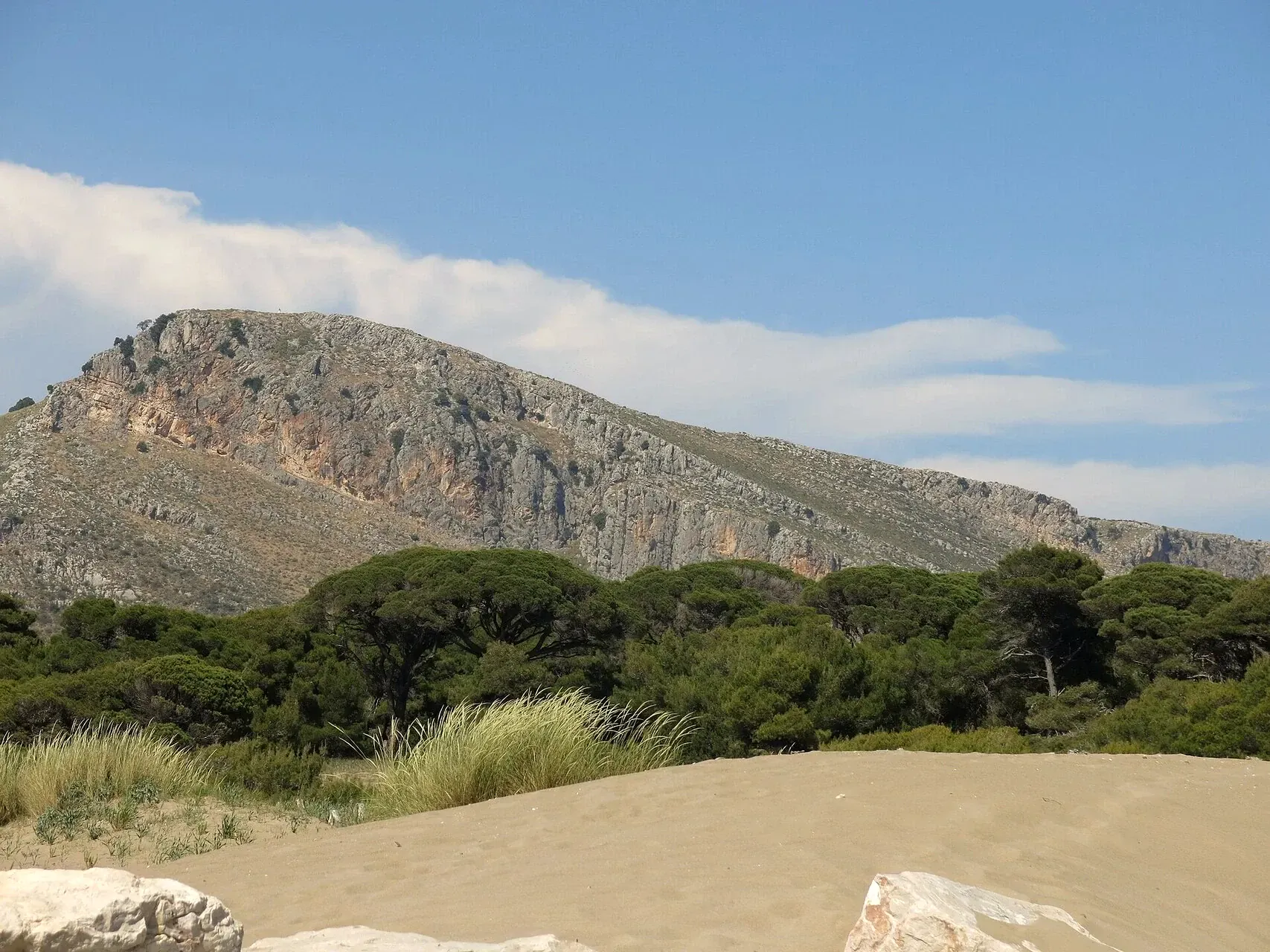
Where the Peloponnese becomes almost tropical. Kalogria is a long beach of fine sand edged by a fragrant pine wood running down to the sea. Behind the forest, the Strofylia lagoon shelters a protected wetland, rich in birdlife. It is the kind of beach where you walk barefoot for an hour without meeting anyone, where you lie down in the shade of an umbrella pine, where time slows down for good.
Simos, Elafonisos
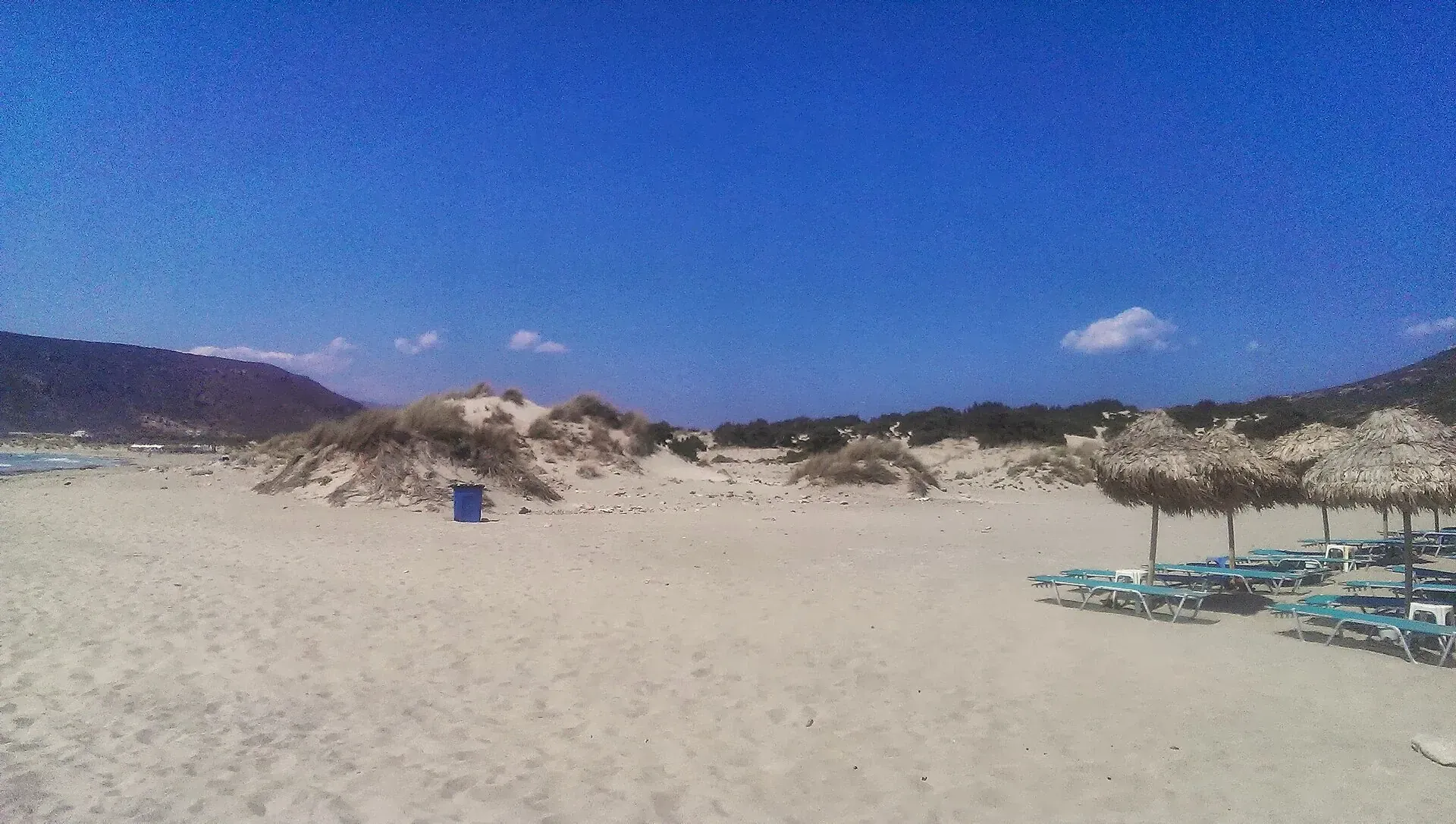
Elafonisos is a tiny island, a short ferry crossing from Pounta (less than 10 minutes), off the southern tip of the Peloponnese. Simos, its emblematic beach, is in fact a double crescent of white sand framing a low peninsula, with turquoise water worthy of the Caribbean on either side. You hesitate between the two faces, swim on one side, dry on the other, and wonder how such a place has stayed so little known.
To discover the Peloponnese on foot, we offer Ancient beauties of the Peloponnese self-guided or Treasures of the Peloponnese as a guided trip.
What is the best season for beaches in Greece?
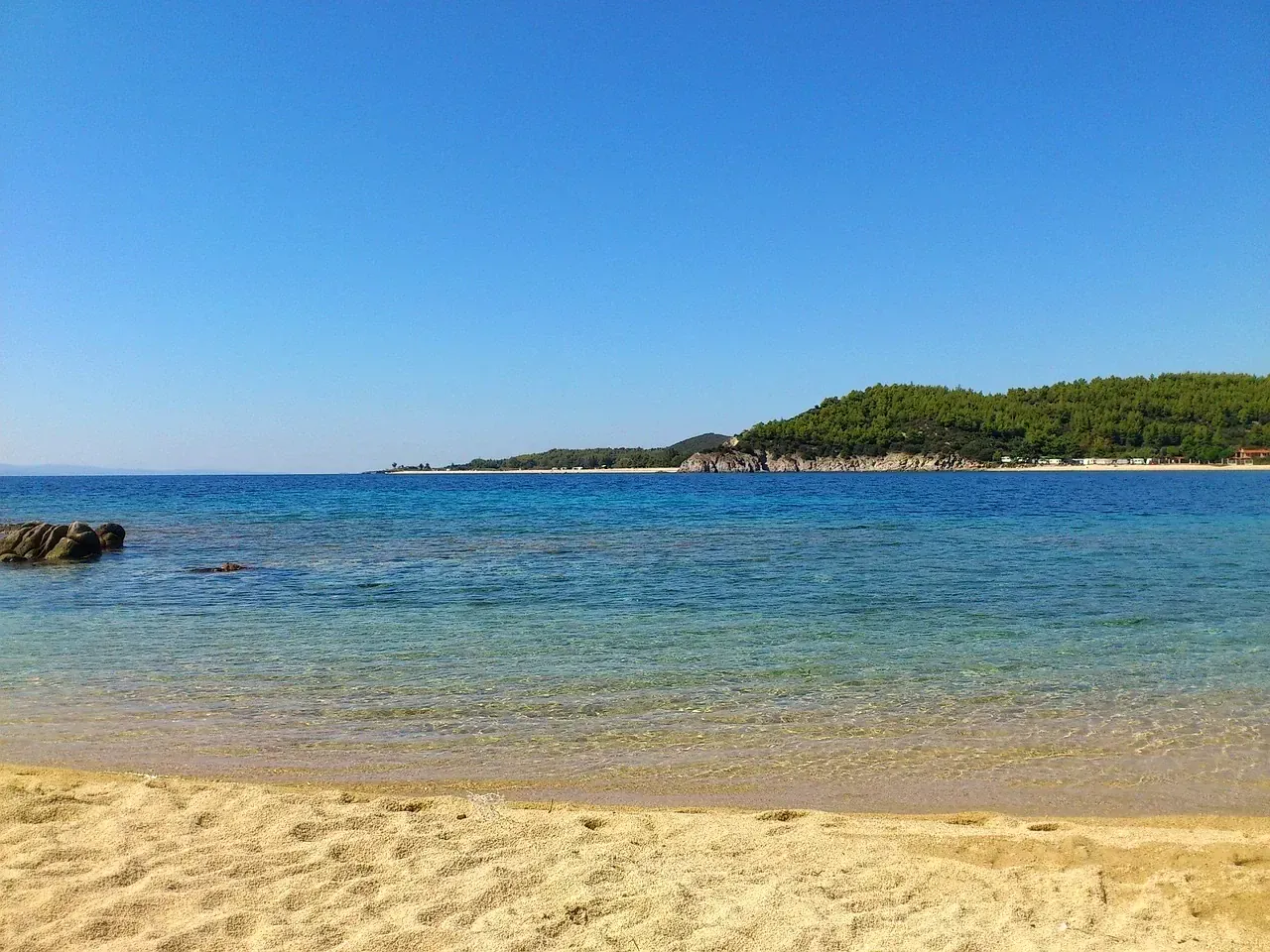
Greece is not a summer country. Or rather, it is not only that. Travellers who discover its beaches in May, June or September rarely come back in August.
Going to Greece in May or June promises you the mildest months. The water is 20-23°C (enough to swim pleasantly, above all in Crete and the Ionian Islands), the beaches are almost empty, wildflowers carpet the hills, and the light has that spring clarity that makes the colours sing. It is the season when the tavernas reopen with enthusiasm, when you eat fresh broad beans and artichokes from the garden, when every day ends with a sunset you have to yourself.
September and October offer the warmest sea of the year (24-26°C), an incomparable golden light, and beaches that recover their calm after the summer. The vines take on red, the figs ripen, the evenings are long and warm. It is our advisers' favourite period: Greece reaches a form of quiet perfection.
July and August are the hottest and busiest months (35°C in the shade). The best-known beaches are packed, prices rise, the ferries are full. If you travel at this time, favour the lesser-known islands (Kimolos, Folegandros, the Mani) and the beaches that ask for a small effort to reach: they always stay the quietest. To go further, read our advice on where to go in Greece in August without enduring the crowds.
To help you choose, see our complete guide When to visit Greece?.
How do you reach these beaches?
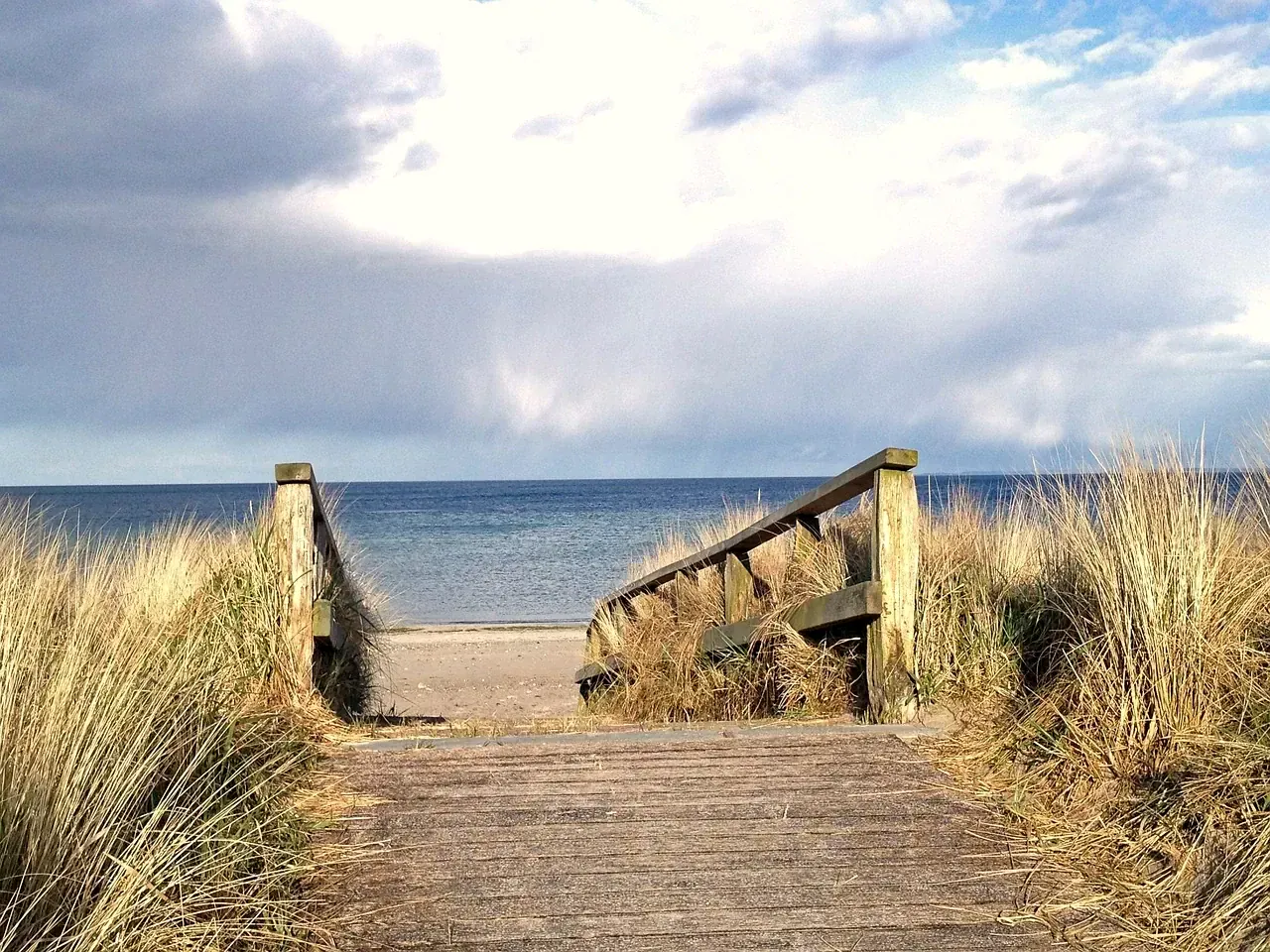
One of the questions we hear most often: “are these beaches easy to reach?” The answer is yes. Every beach in our selection is reachable in 15 to 30 minutes of walking on well-marked paths, or directly by car or boat. The ground stays gentle and well marked, with no difficult passage. Just a shaded path, often scented with thyme and sage, leading you to your reward.
For travellers who prefer to organise nothing, our holidays include the transfers, the connections between islands, and all the practical information for reaching each beach with complete peace of mind. Your luggage awaits you at each charming address, and our local partners are reachable if needed. You have only to slip on your sandals and follow the path. And if it is the spirit of a whole island you are after rather than one particular beach, browse our overview of the most beautiful Greek islands.
Our holidays that pass by the finest beaches
Each region in our selection corresponds to one or more trips we have designed for you. Here are those that will take you to the most beautiful beaches in Greece.
- Cycladic enchantment: Serifos, Sifnos and Milos: three islands in the western Cyclades, between volcanic coves, white villages and country gastronomy.
- Sifnos, Milos and Kimolos guided: the same magic in a small guided group, for those who prefer to be led.
- Corfu, the Emerald Isle: the greenest of the Greek islands on foot, between centuries-old olive trees and secret coves.
- Corfu and Paxos guided: two islands, one Ionian art of living, with a leader who knows every path.
- Crete, the fantastic voyage: gorges, lagoons and Minoan palaces, accompanied by an enthusiastic leader.
- Secret Crete: from Chania to the turquoise lagoons, at your own pace.
- Ancient beauties of the Peloponnese: 10 days between ancient sites and turquoise coves, self-guided.
- Treasures of the Peloponnese: ancient heritage and Greek gentleness on a guided trip.
Frequently asked questions about beaches in Greece
What is the most beautiful beach in Greece?
It all depends on what you are looking for. For the postcard setting, Balos and Elafonissi in Crete, or Voutoumi on Antipaxos, are hard to beat. For calm and authenticity, we often prefer the discreet coves such as Vathy on Sifnos or Foneas in the Mani. The most beautiful beach is almost always the one where you feel alone in the world, a glass of cool wine within reach.
Are the finest beaches in Greece on the islands or on the mainland?
Both. The islands hold the most famous beaches, but the Peloponnese, on mainland Greece, hides marvels such as Voidokilia, in its perfect omega shape, or Foneas in the Mani, without a single ferry crossing. That is the advantage of the mainland: you can link several beaches by car over a few days.
In which season should you enjoy the Greek beaches?
May and June offer almost empty beaches and water that is already pleasant (20 to 23°C). September and October give the warmest sea of the year (24 to 26°C) and a golden light. July and August remain the hottest and busiest months: if you come at that time, arrive early in the morning at the well-known beaches such as Elafonissi, which fill up from 10 am.
Are these beaches easy to reach for travellers who like to take their time?
Yes. Every beach in our selection is reached in 15 to 30 minutes of walking at most, on gentle, well-marked paths, or directly by car or boat. Voidokilia, for example, is reached by a short path of 10 to 15 minutes through the dunes. No particular equipment is needed, just good sandals and the wish to wander.
Your question is not on this list?
Write to us, and we will reply to you personally by email.
Continue reading
- Which Greek island is right for you? The complete guide
- Hiking in Greece: the best trails island by island
- The Most Beautiful Greek Islands, one for every wish
- When to Visit Greece: Our Month-by-Month Guide
Article written by
Maria Papadopoulou (Μαρία Παπαδοπούλου)
Editorial lead
I hike, and Greece is the place I keep coming back to. My initial studies (a Master’s in Marketing and a degree in Applied Foreign Languages) taught me how to build an editorial project, and the trails taught me the… Read more


