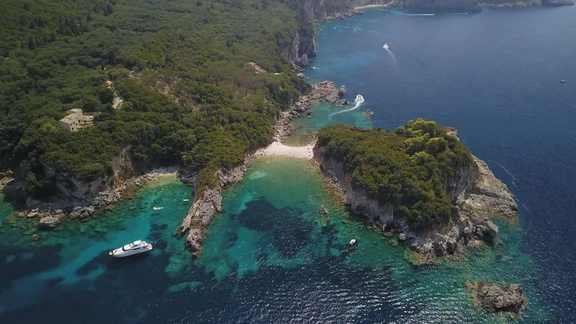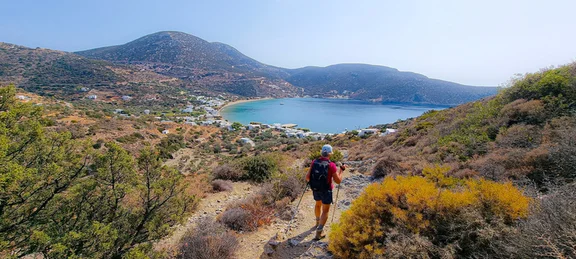


Picture the end of the day at Nafplio: the stone of the neoclassical houses turns pink, the terraces fill up slowly, and offshore the Venetian islet of the Bourtzi floats on a glassy sea. You have just spent the morning wandering through a Byzantine city clinging to a mountainside, the afternoon tasting an olive oil pressed a step away, and nobody has hurried you. That is the spirit of walking in the Peloponnese: a great peninsula south of Athens where you walk at a quiet pace to link ancient temples, stone villages and coves where the water stays mild until October. Far from the bustle of the Cyclades, this mainland Greece is savoured at your own rhythm.
| In brief | The Greece of legends on foot: ancient sites, hanging monasteries and stone villages, without the crowds of the islands. |
|---|---|
| Ideal for | Lovers of heritage and good food who like to walk quietly |
| Best season | May to June and September to October, soft light and bearable heat |
| Pace | Gentle: short cultural walks between two discoveries and two meals |
| Our trips | Treasures of the Peloponnese (guided) or Ancient beauties of the Peloponnese (self-guided) |
The Peloponnese is that great four-fingered peninsula which extends Greece towards the south, joined to the mainland by the isthmus of Corinth alone. People come for the names that have stirred the imagination since school, Mycenae, Epidaurus, Olympia, Sparta, and stay for something else: a particular light, a gentleness of living, villages where the baker slips a loukoum into your hand. Here the distances are short and the roads peaceful, so that you pass easily from mountain to sea within a single day. Here are seven discoveries we particularly love, from the Byzantine heights of Mystras to the stone towers of the Mani, all to be covered on foot without ever forcing the pace.
Mystras, the Byzantine city above Sparta
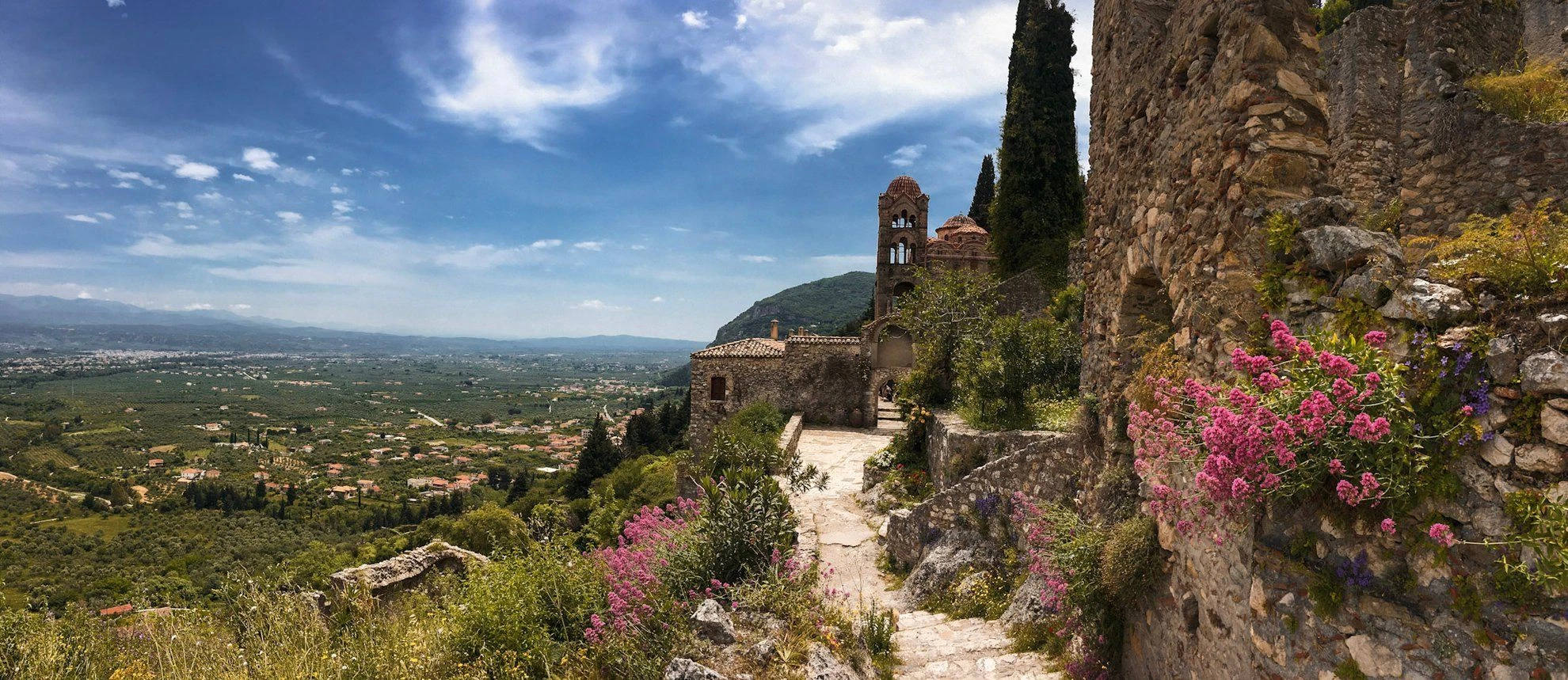
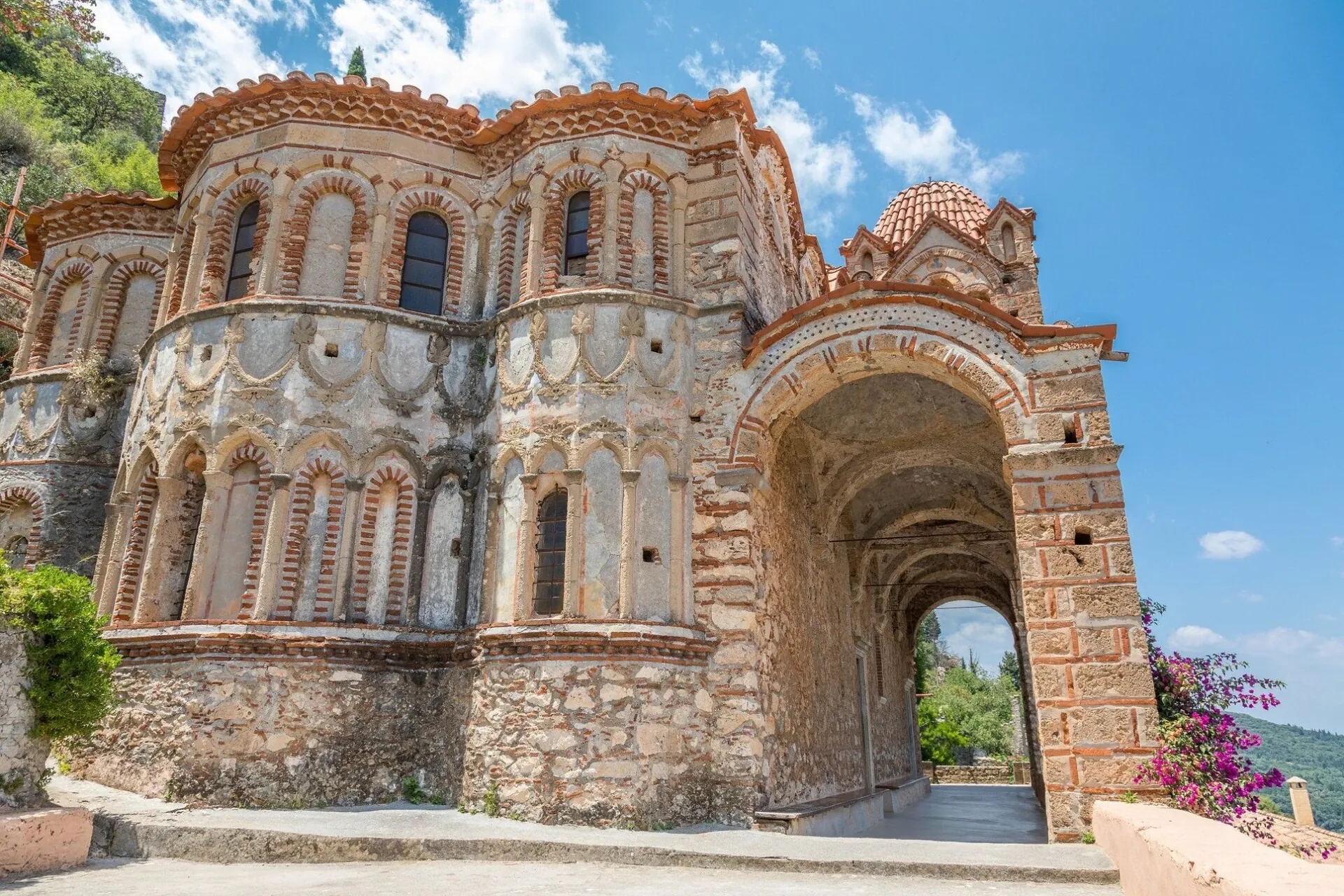
On the first slopes of Mount Taygetus, just above Sparta, an entire town of golden stone cascades down the hill. Mystras was, in the Middle Ages, one of the great centres of the Byzantine world, and its UNESCO-listed site is discovered while walking along its ancient paths. You pass from a frescoed church to a ruined palace, from a courtyard shaded by bougainvillea to the convent of the Pantanassa, still inhabited by a few nuns who watch over the place. Reckon on a good half-day to wander from one level to another: the stone stairways are numerous, but nothing obliges you to climb as far as the fortress at the top. The reward, at every landing, is the view opening over the plain of Laconia and its olive groves as far as the eye can see. You then go back down to the modern village for a lunch in the shade, stuffed peppers and a yoghurt with honey, before taking to the road again.
The Lousios gorges and their hanging monasteries
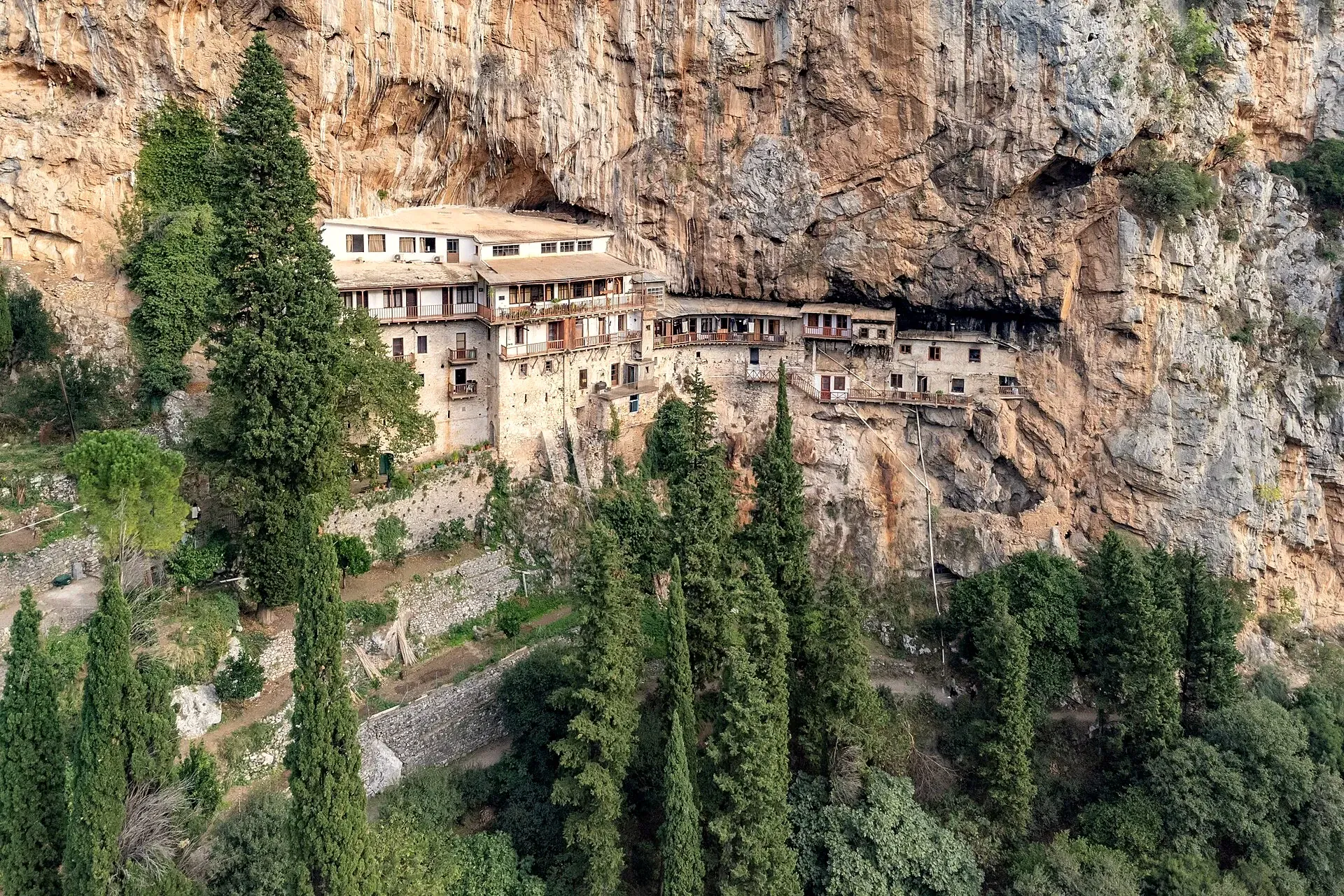
In the centre of Arcadia, the river Lousios has carved a deep gorge where monasteries seem to defy gravity. The most spectacular, the monastery of Prodromos, appears glued to the wall, as though set on a narrow ledge. Higher up, the old monastery of Philosophou, one of the oldest in Greece, almost merges with the rock. The path linking these places follows the river beneath the trees, on forest tracks and a few steps cut into the stone. It is a walk of shade and coolness, punctuated by chapels and viewpoints, where you meet more tortoises than visitors. The monks of Prodromos, still present, sometimes offer a coffee and a loukoum to those who climb up to them, in a silence broken only by the sound of the water.
The villages of Arcadia: Dimitsana and Stemnitsa
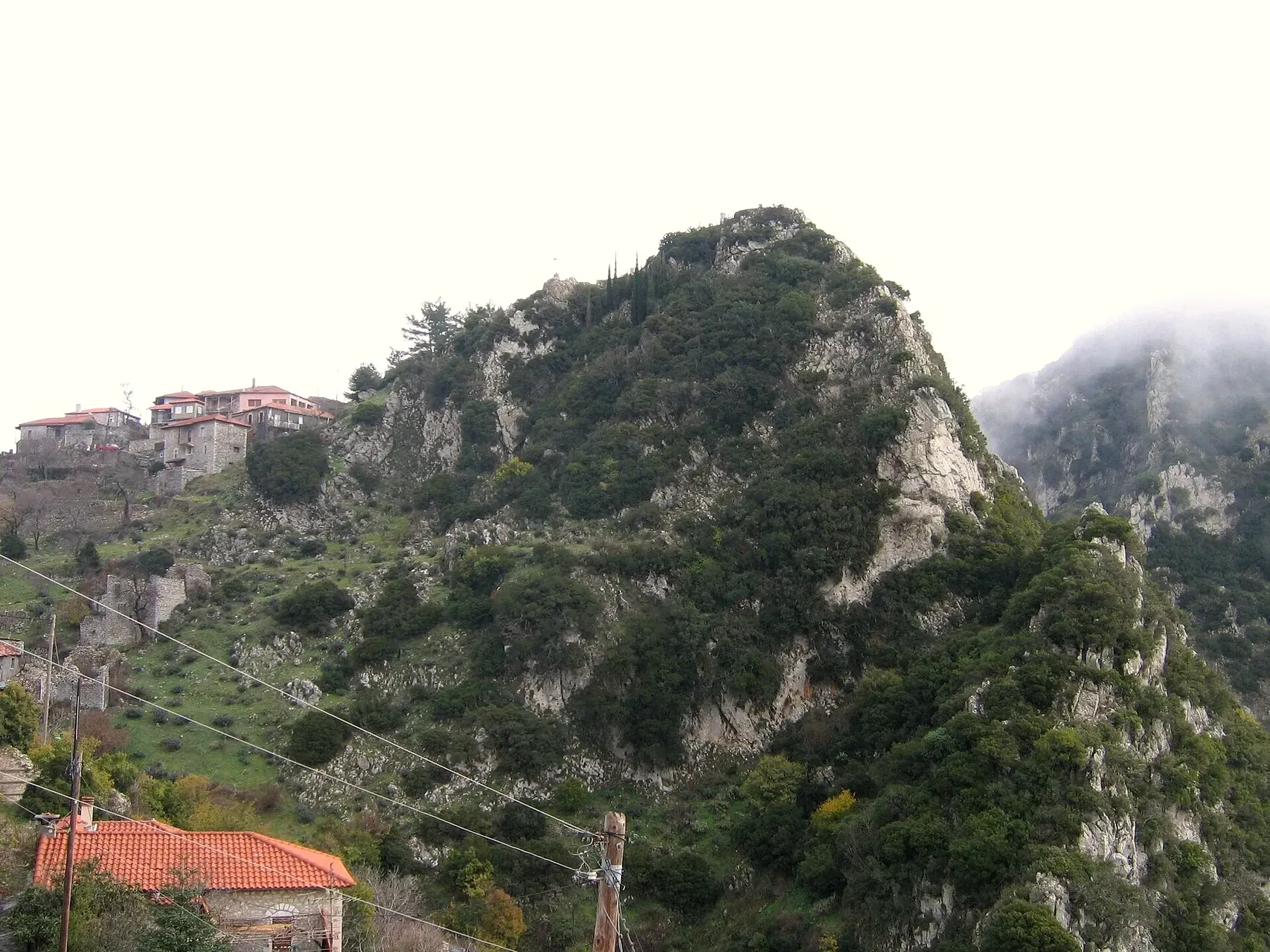
A few hairpins away, two stone villages watch over the gorge from their mountain balconies. Stemnitsa, a former town of goldsmiths, lines up its grey houses and its Byzantine bell towers on a wooded slope. Dimitsana, its neighbour, unrolls its cobbled lanes above the Lousios valley. Between the two runs a section of the Menalon Trail, a waymarked path that European walkers often cite for its quality, and which crosses fir forests and old water mills. You are not obliged to do all of it: a morning of gentle walking between the two villages, followed by a lunch on a terrace, is enough to understand why Arcadia has inspired so many poets. In the evening, in an inn with character, you will very likely be served a long-simmered lamb and a glass of country wine.
The Mani peninsula and its stone towers
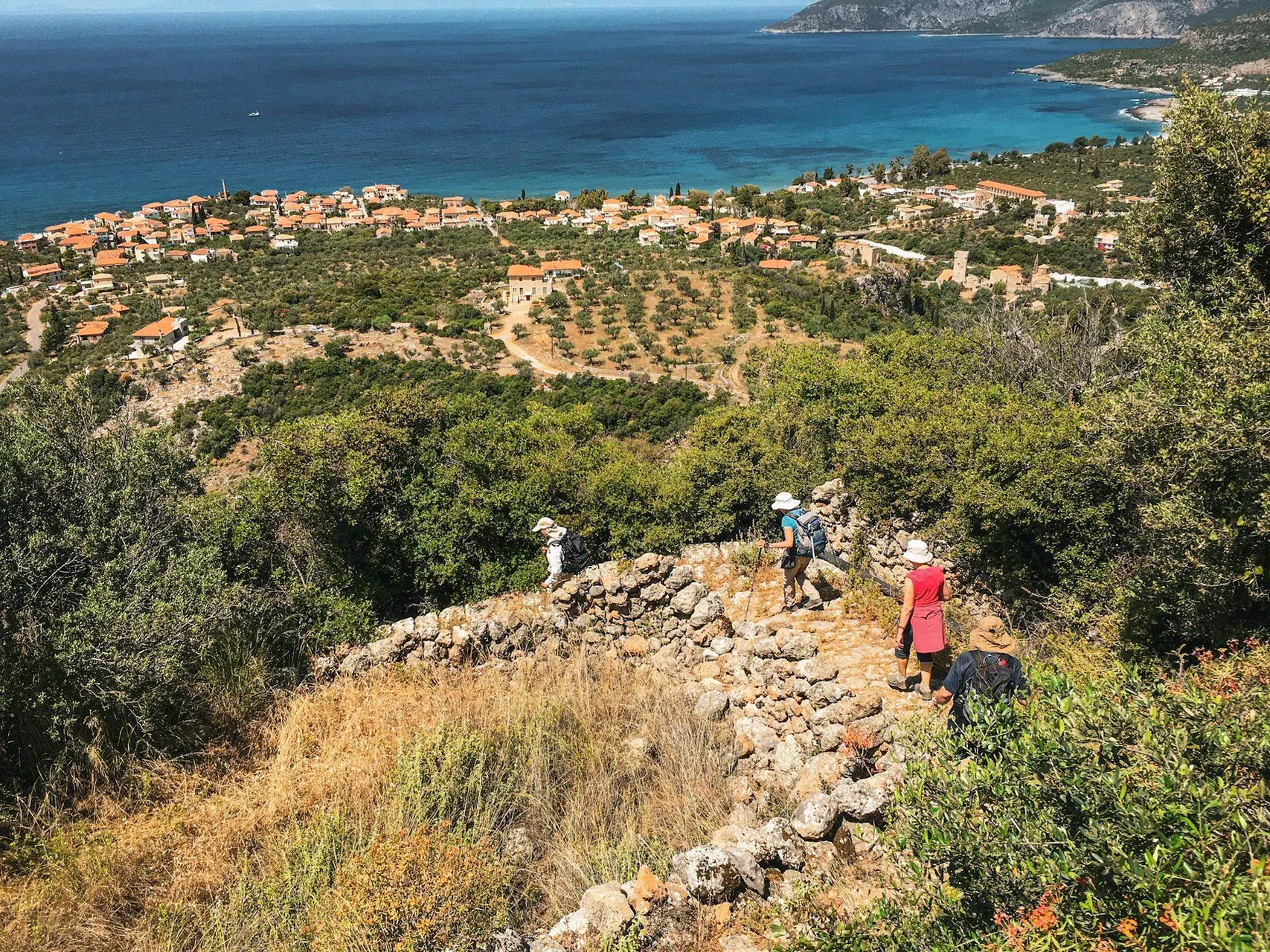
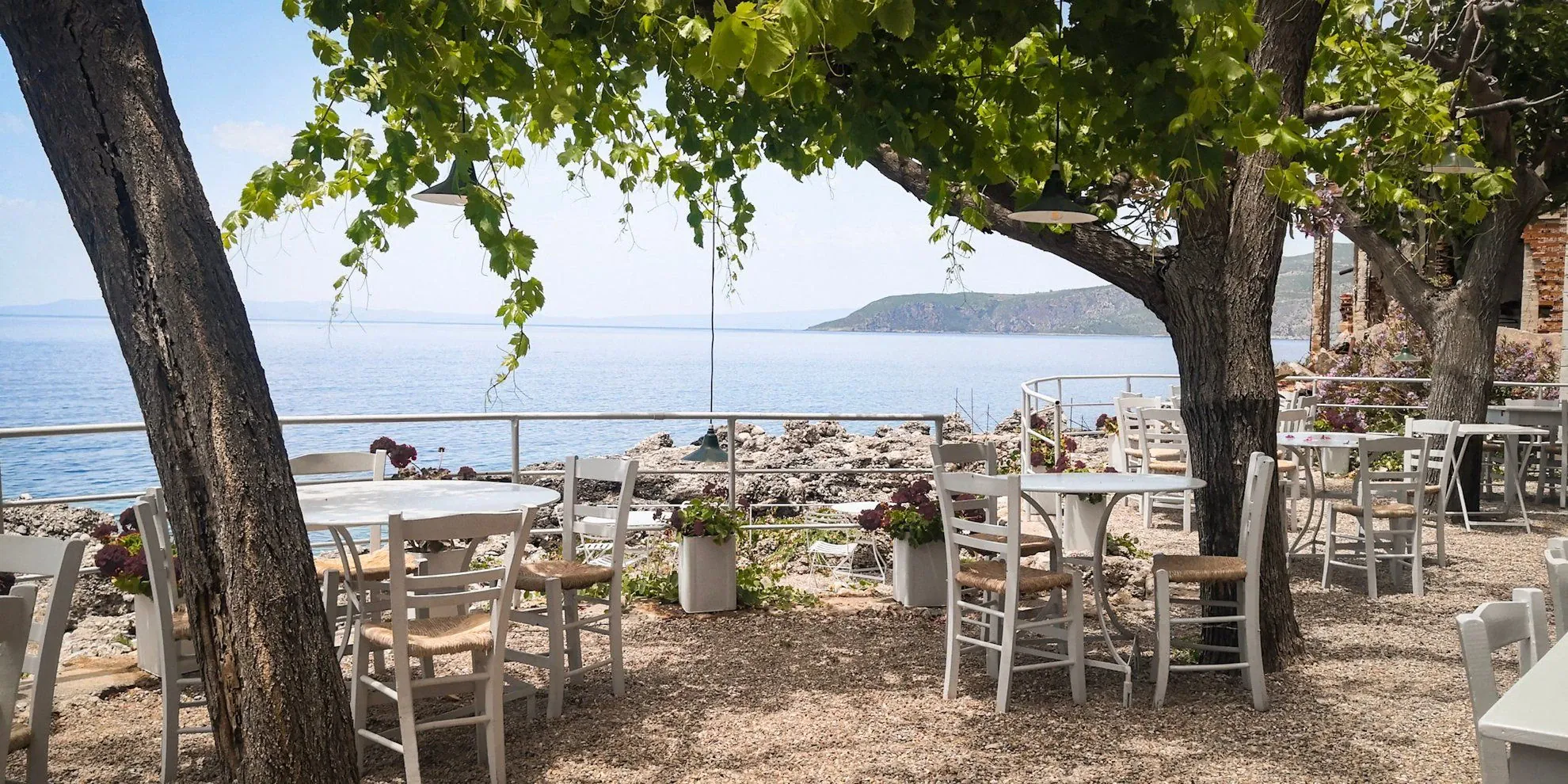
Right in the south, the central finger of the Peloponnese plunges into the sea like a land at the world's end. The Mani is a proud, mineral region, bristling with tower-houses built from the 17th to the 19th century, in the days when each clan protected itself behind its walls. The village of Vathia, perched on its hill, lines up dozens of them, today partly restored as guest houses. Further north, around Kardamyli, the village loved by the travel writer Patrick Leigh Fermor, old mule tracks descend towards the sea between the olive trees. The Vyros gorge, for instance, leads to a pebble beach following stone bridges and old mills. Here it is the beauty of the setting that makes you want to walk: you stop for a swim in transparent water, you set off again in the shade of the trees. In the evening, Kardamyli lines up a few tavernas at the water's edge where you taste the fish of the day almost with your feet in the sand.
Cape Tainaron, at the tip of mainland Greece
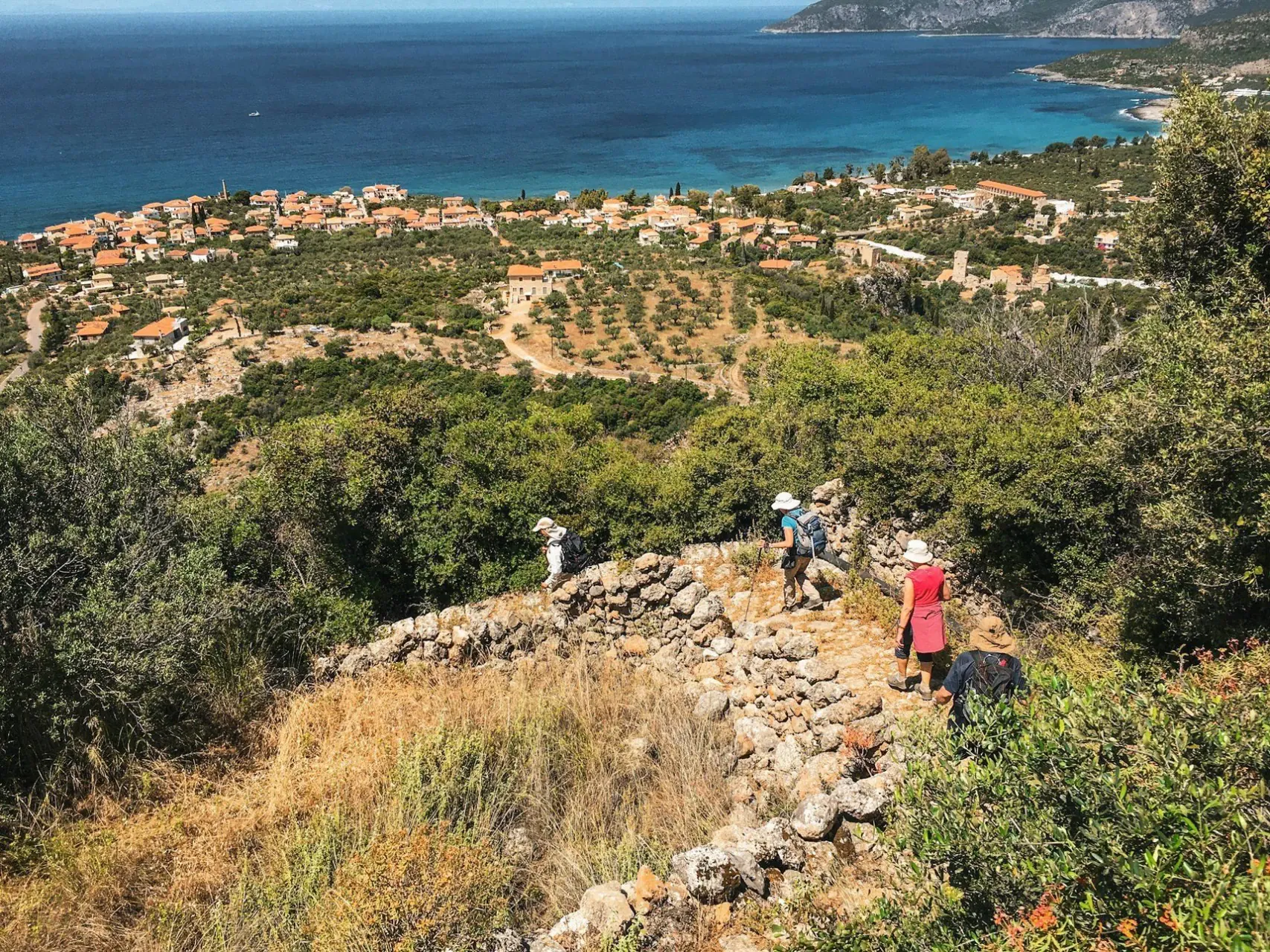
At the end of the Mani, where the land truly finishes, Cape Tainaron marks the southernmost point of mainland Greece. The Ancients placed one of the gates of the Underworld there, and you feel all its mystery as soon as you arrive. From the car park, a stony path of about 2 kilometres, that is three quarters of an hour of quiet walking with photo stops, leads to the lighthouse built by French engineers in 1882. On the way you pass a small Byzantine chapel set on the remains of a sanctuary of Poseidon, and a Roman mosaic shows through among the stones. All around, nothing but the sea and the sky. It is one of the finest walks in the Peloponnese, simple and striking, best done at the end of the day when the light softens.
The Vouraikos rack railway
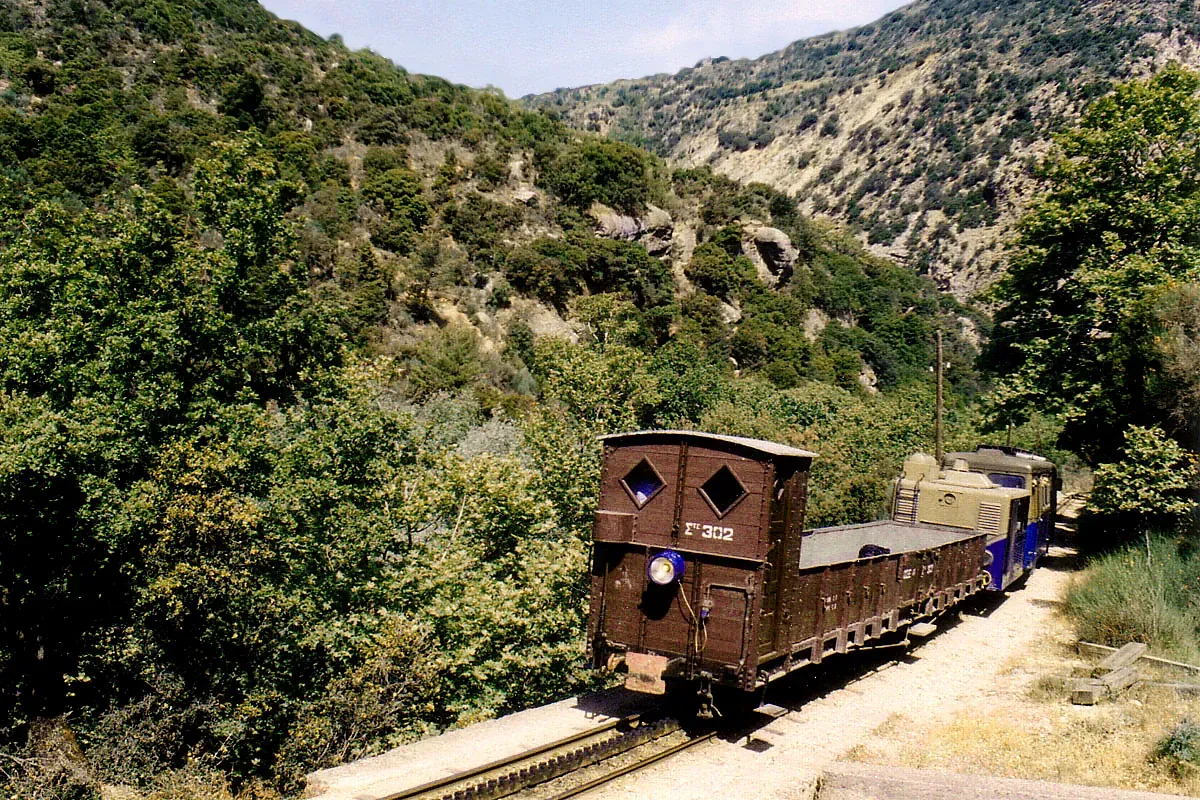
In the north of the peninsula, another way of entering a gorge presents itself, without having to walk at all. The little rack railway links Diakofto, on the Gulf of Corinth, to the village of Kalavryta, climbing 22 kilometres through the defiles of the Vouraikos. The track hugs the river, crosses tunnels and bridges just above the water, and the train slows at the steepest sections. Built by a French company at the end of the 19th century, this line remains one of the most picturesque in Europe. Be aware, however, that this train runs seasonally and is subject to service interruptions: check carefully before setting off, or cover the same route on foot, along the path that follows the gorge, to enjoy this cinematic setting another way.
Nafplio, the most elegant of the stages
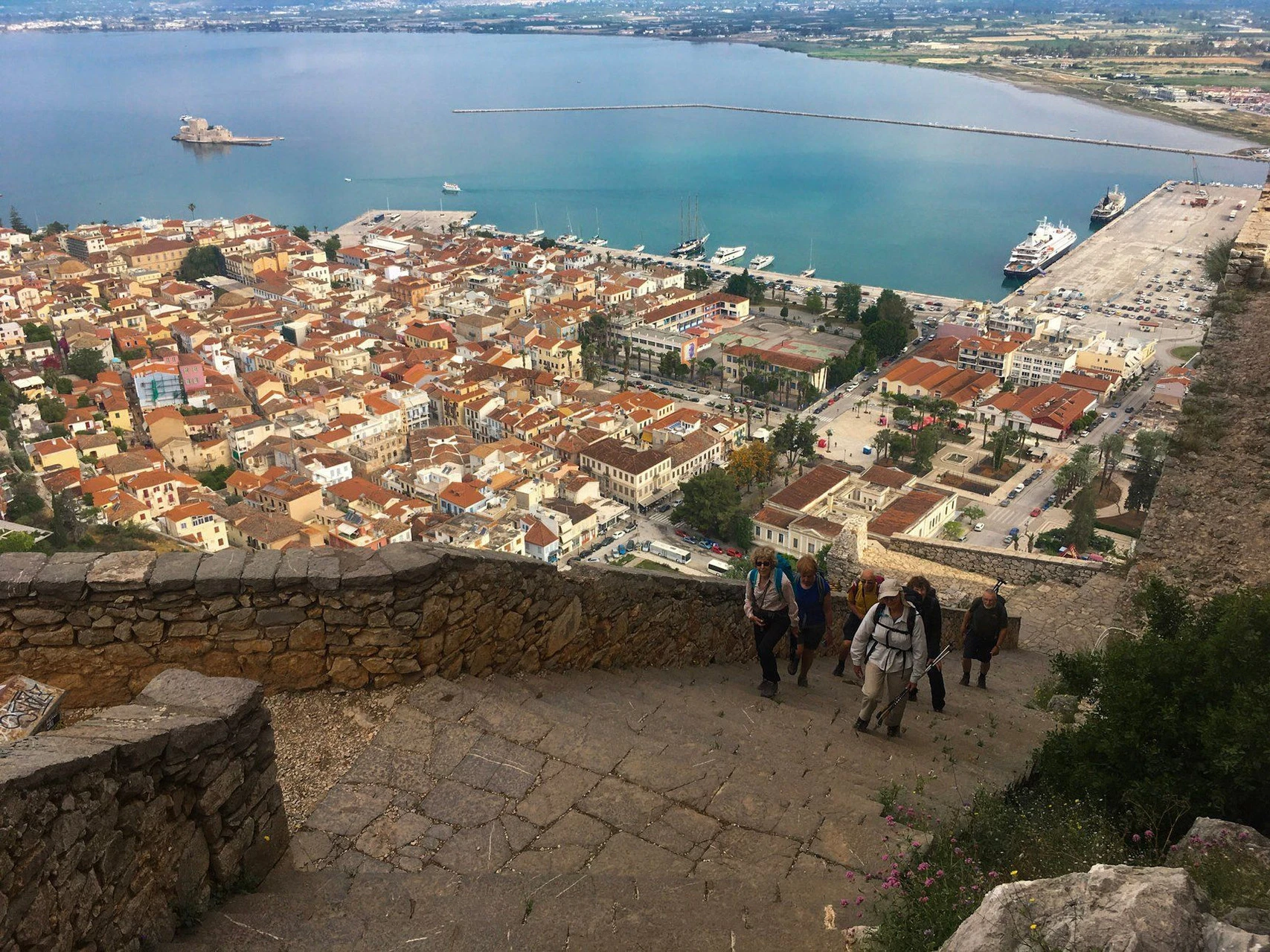
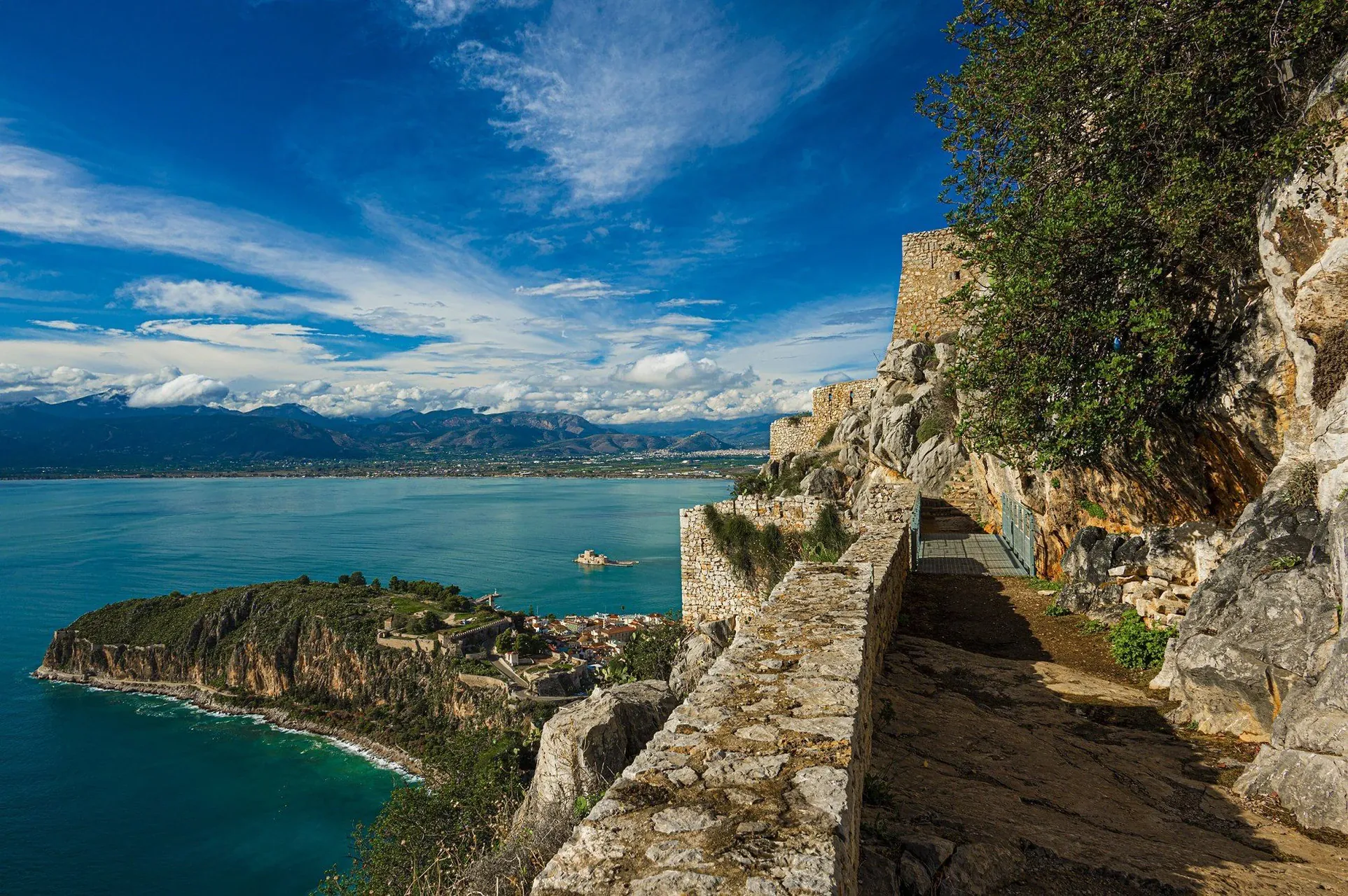
No stay in the Peloponnese would be complete without Nafplio. The first capital of modern Greece, this seaside town lines up Venetian houses, flower-filled balconies and shaded little squares. You walk there without aim, from a terrace to a church, from the market to the lanes climbing towards the citadel of Acronauplia. Above the town, the Venetian fortress of Palamidi keeps watch from its hill. Offshore, the fortified islet of the Bourtzi seems set upon the water. When evening comes, you sit at a table facing the harbour for a plate of grilled fish and a glass of local wine, and you tell yourself that this gentleness on its own sums up the art of living in the Peloponnese. Nafplio also makes an ideal base from which to range out to Epidaurus and its ancient theatre with prodigious acoustics, where a murmur from the stage carries to the topmost tier, and to Mycenae, the city of Agamemnon.
When to go and how to make the most of it
The Peloponnese is ideally visited in spring, from May to June, when the countryside is green and in flower, and in autumn, from September to October, when the sea stays warm and the light golden. Summer is very hot inland, which invites you to favour morning walks and afternoon swims. To link all these treasures without the slightest organisational worry, two Kelifos formulas await you. In the guided version, the trip Treasures of the Peloponnese has you discover the great sites and the stone villages in 10 days, English-speaking guide and luggage carried included. For those who prefer their own tempo, Ancient beauties of the Peloponnese offers the same thread in full freedom, hire car and route notes in hand, charming accommodation booked in advance. In both cases, you have only to enjoy yourself.
Frequently asked questions about walking in the Peloponnese
Where can you walk in the Peloponnese?
The finest walks are concentrated in three areas. In Arcadia, the Menalon Trail links the stone villages of Stemnitsa and Dimitsana and descends into the Lousios gorges, in the shade of the monasteries. In the south, the Mani peninsula unrolls old mule tracks around Kardamyli, the Vyros gorge and the Cape Tainaron path. Further north, the slopes of Taygetus above Mystras and the Vouraikos gorge complete the picture, always at a quiet pace.
Where can you find a walking map or itinerary for the Peloponnese?
To prepare your walks, the walking maps from the Greek publishers Anavasi and Terrain cover the Peloponnese well, particularly Arcadia and the Menalon Trail; they can be found in specialist bookshops or online. If you would rather have nothing to organise, our self-guided trip Ancient beauties of the Peloponnese gives you detailed route notes, with the day-by-day itineraries and the tracks to follow, as well as accommodation already booked. You have only to walk and savour.
Is it better to walk guided or self-guided?
It all depends on the atmosphere you are after. In the guided version, Treasures of the Peloponnese has you travel for 10 days in a small group, with an English-speaking guide who shares the history of the places and chooses the good tables, luggage carried included. Self-guided, Ancient beauties of the Peloponnese follows the same thread over 10 days, but at your own tempo alone, hire car and route notes in hand. In both cases, the organisation is taken care of entirely.
How many days should you allow to cover the Peloponnese on foot?
Reckon on about ten days to link the great sites without rushing, from the Byzantine heights of Mystras to the stone towers of the Mani. That is the length of both our trips, designed to leave room each day for a swim, an ancient site and a long lunch. A week is enough if you would rather concentrate on a single area, Arcadia and the Mani for example, without multiplying the drives.
Your question is not on this list?
Write to us, and we will reply to you personally by email.
Continue reading
- What to see in mainland Greece? The highlights of a tour
- Which Greek island is right for you? The complete guide
- Hiking in Greece: the best trails island by island
- When to Visit Greece: Our Month-by-Month Guide
Article written by
Maria Papadopoulou (Μαρία Παπαδοπούλου)
Editorial lead
I hike, and Greece is the place I keep coming back to. My initial studies (a Master’s in Marketing and a degree in Applied Foreign Languages) taught me how to build an editorial project, and the trails taught me the… Read more