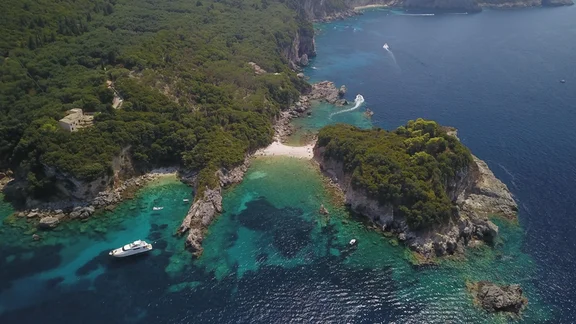
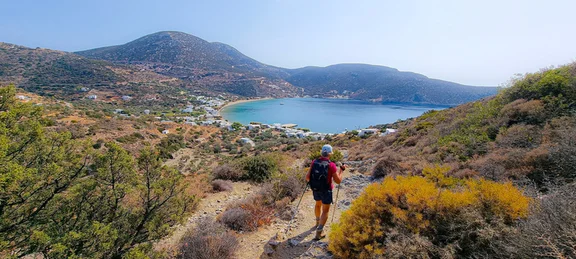
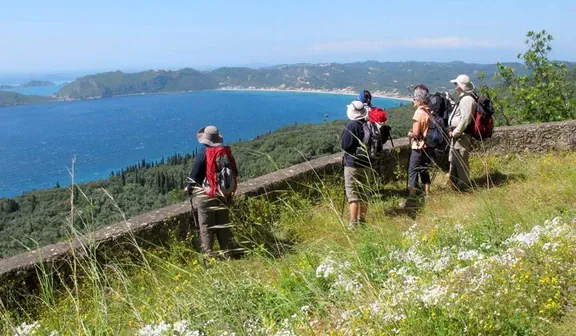
There is in mainland Greece a mountain that runs down to the sea, covered in beech and chestnut, punctuated by stone villages with slate roofs. This is Pelion, in Thessaly, the mythical land of the Centaurs. You come for the coolness of the century-old plane trees, for the coffee drunk on a shaded square facing the gulf, for the paved paths that lead from one hamlet to the next and open out, lower down, onto a cove of golden sand. Pelion, in Greece, is the art of taking your time between forest and Aegean Sea.
| In brief | A mountainous peninsula of Thessaly where the forest runs down to the sea: stone villages, paved paths, hidden beaches and a little train of long ago. |
| Ideal for | Lovers of authentic villages, of local gastronomy and of gentle walks in the shade of the plane trees |
| Best season | Spring (April-June) and autumn (September-October) |
| Pace | Gentle, at your own rhythm, from village to village and from coves to tavernas |
| Our trip | Free inspiration: no dedicated Kelifos trip yet, but a region that goes wonderfully with a tour of mainland Greece |
Pelion, the mountain of the Centaurs
Before being a destination, Pelion is a name that has echoed since antiquity. The mountain takes its name from Peleus, legendary king and father of Achilles. It was here, mythology says, that the Centaurs lived, and among them the wise Chiron, tutor of the greatest Greek heroes: Jason, Achilles, Theseus, Heracles. It is told that the wedding of Peleus and the nymph Thetis was celebrated there, in the presence of the gods.
That ancient memory is not only a matter of books. When you walk the stone paths of Pelion, beneath the beeches and the strawberry trees, you tread the same tracks that legend attributes to those mythical figures. It is an inhabited mountain, in the gentlest sense of the word: deep forests, springs welling up round a bend, and that persistent impression that time there flows differently.
The stone villages, suspended on the mountainside
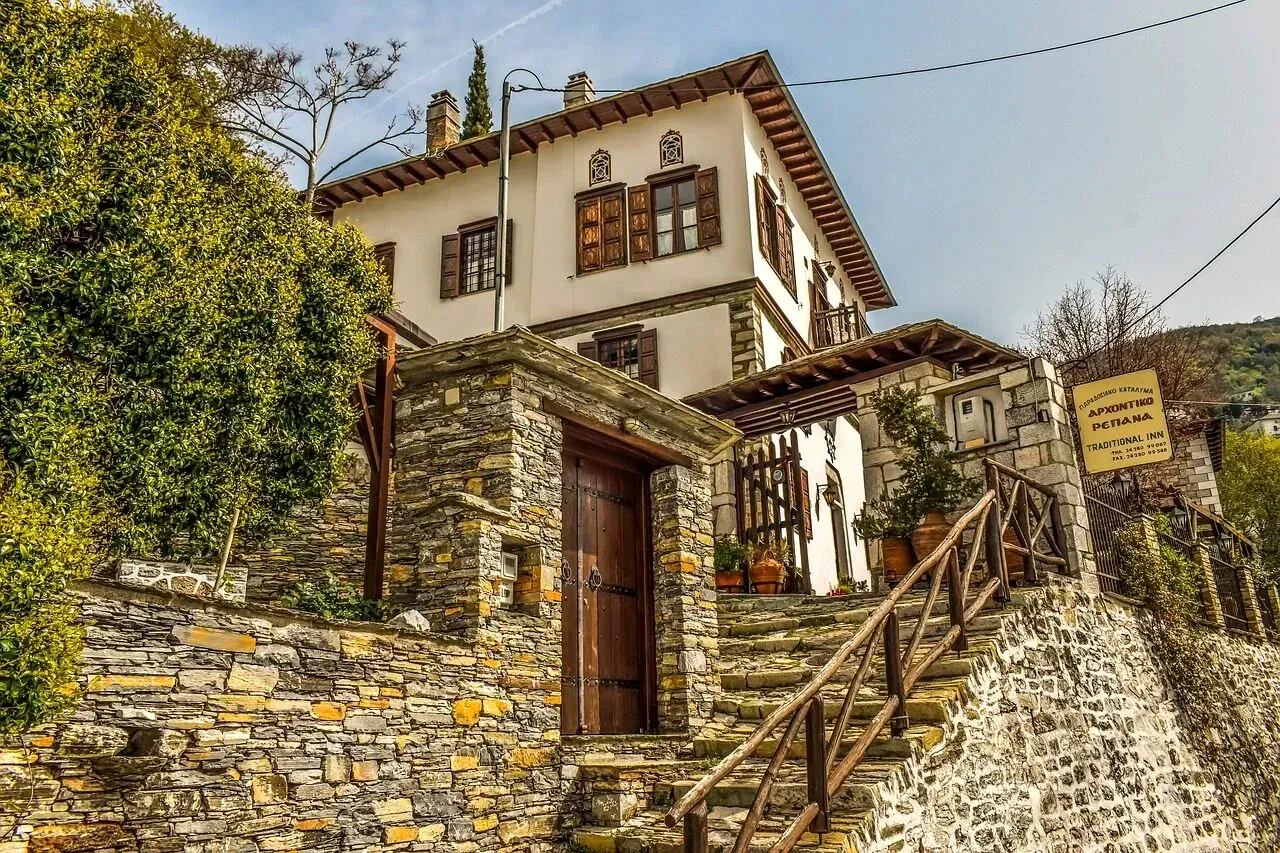
The great joy of Pelion is its traditional villages, built on the hillside, their stone houses capped with heavy grey slates. Each has its character, and you pass from one to the next as you turn the pages of a single book.
Makrinitsa is nicknamed the balcony of Pelion, and the nickname is deserved. The village clings to the slope above the Pagasetic Gulf, its cobbled lanes climb between the old façades, and its central square, shaded by immense plane trees, offers one of the finest views in mainland Greece. You settle there for a Greek coffee, your eyes resting on Volos and the sea below.
Portaria, its neighbour, stands a little higher, at some six hundred metres of altitude, about fifteen kilometres from Volos. Its houses rise in tiers like an amphitheatre, its sculpted fountains sing at the street corners, and its tavernas serve a generous mountain cuisine, far from the bustle of the coasts.
Tsagarada, on the eastern slope turned towards the Aegean, hides in a dense forest, about five hundred metres above the waves. The village is organised around four quarters linked by paths, and there you can admire a plane tree several centuries old, one of the oldest in Greece, whose shade covers an entire square.
Milies and Vyzitsa close the picture, towards the south. Milies, perched among the orchards, is the terminus of the historic little train. Vyzitsa, listed and magnificently preserved, appeals through its multi-storey houses and its hanging terraced gardens, linked by narrow cobbled lanes. You will gladly sleep there in a restored manor house, to taste the Pelion of long ago.
The kalderimia, those paved paths from one village to the next
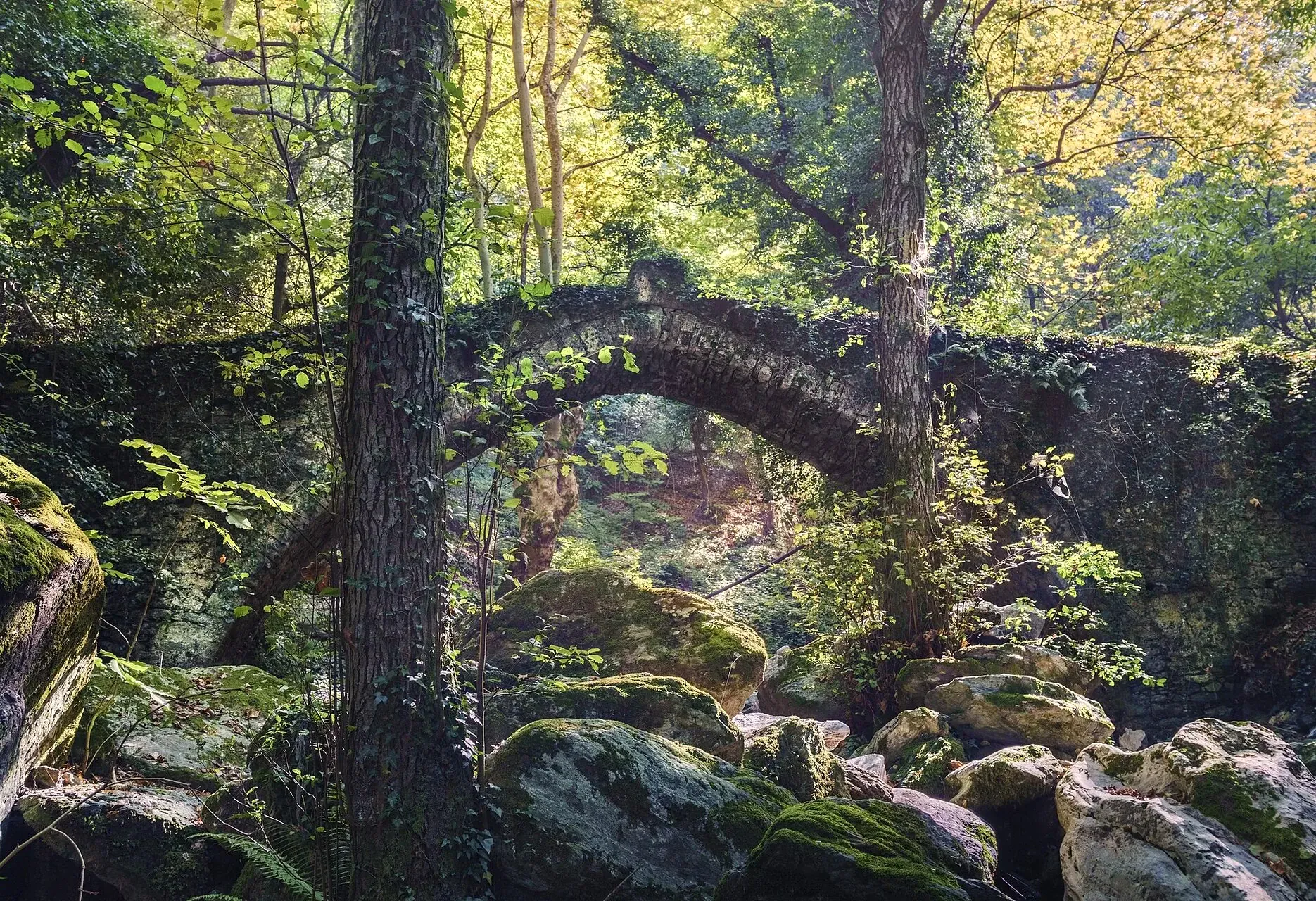
Before the road, people moved about Pelion by the kalderimia, those mule tracks patiently paved with flat stones that link the villages to one another. Many have been restored, and this is probably the finest way to discover the region: on foot, at your own pace, in the shade of the broadleaves.
The best-known walk links Tsagarada to the beach of Mylopotamos, or goes down from Vyzitsa towards the coast. You walk on slabs polished by the centuries, cross old stone bridges, come upon springs and isolated chapels. Nothing taxing: gentle, shaded paths that suddenly open onto the sea or onto a sleeping hamlet. It is a contemplative walk, punctuated by halts, where every turn holds a surprise.
The beaches of the east coast, after the forest
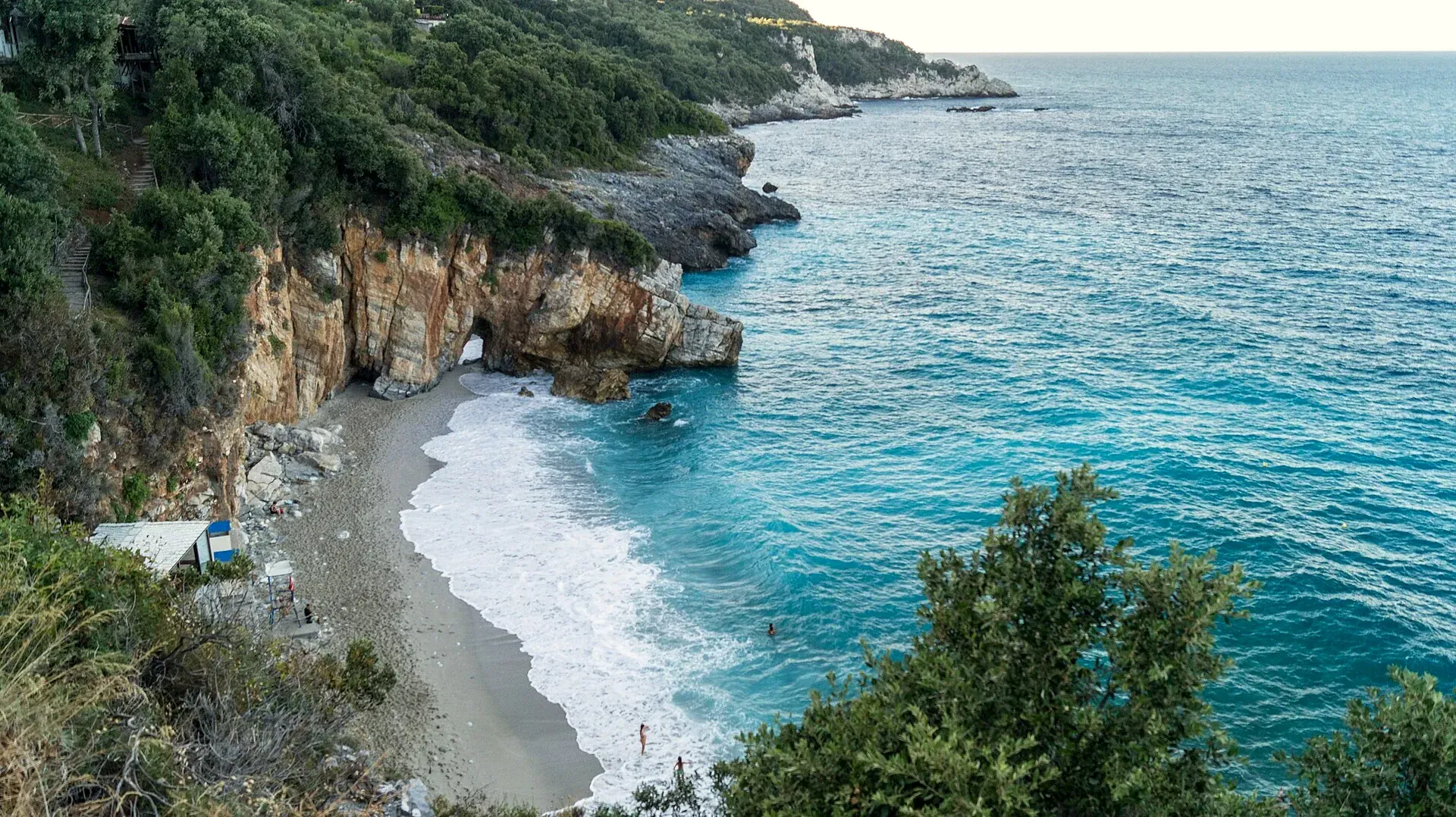
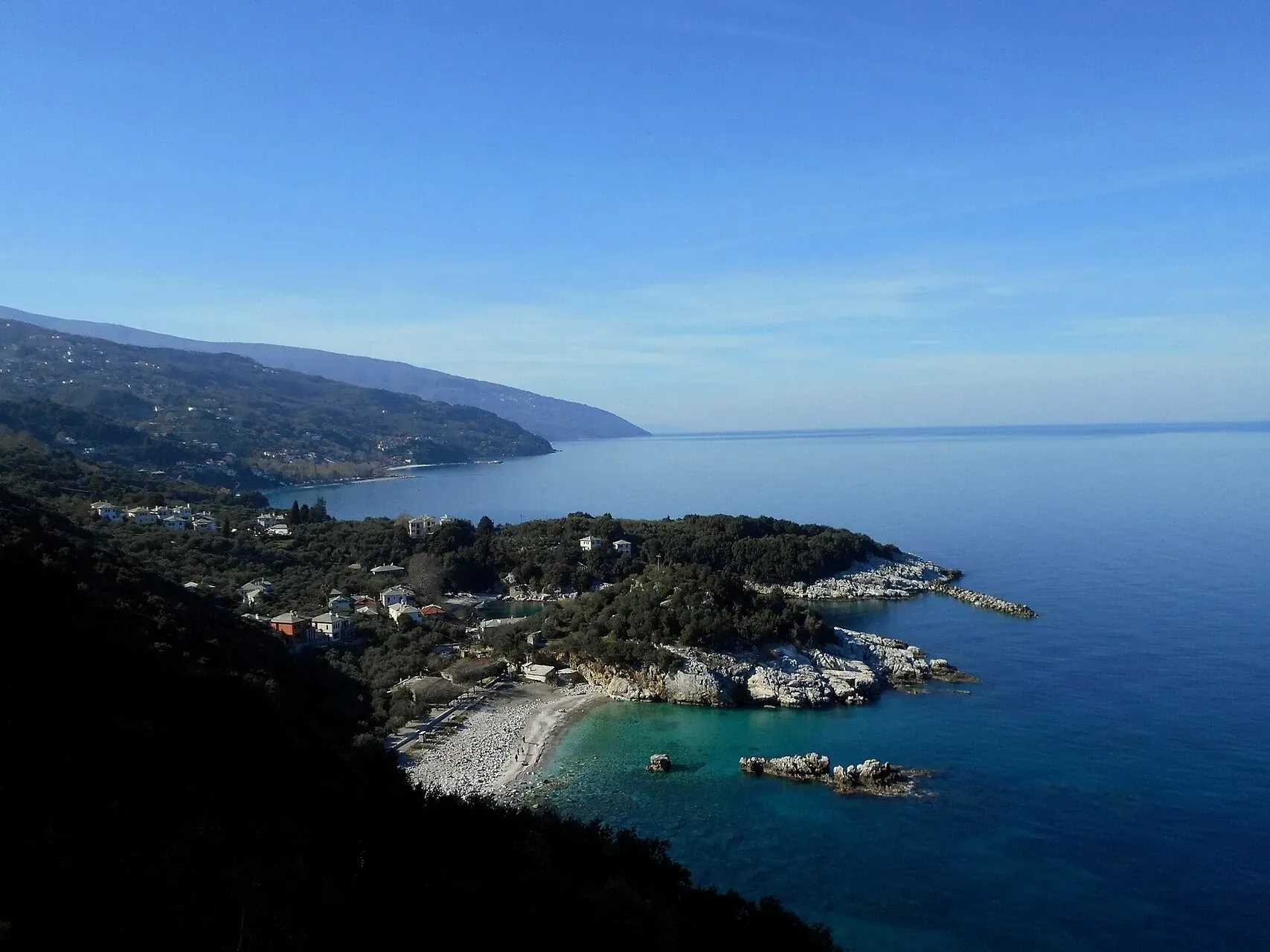
Pelion has this rare peculiarity: the mountain plunges straight into the Aegean. After the shade of the forests, you come out onto beaches that are among the finest in mainland Greece, most often in the hollows of the east coast.
Mylopotamos is the postcard of Pelion: golden sand framed by wooded cliffs, an arch of rock separating two coves. It is reached by a short path from Tsagarada, and the reward below is well worth the few minutes of walking.
Damouchari is the other jewel, a former small harbour nestled among the rocks, with no tarmac road to spoil it. Film lovers will recognise it: it was here, in this preserved setting, that several scenes of the film Mamma Mia were shot. The place has kept its atmosphere of long ago, between stone houses and limpid waters.
Further north, Agios Ioannis, Papa Nero and Plaka line up their pebbles and their sand facing the open sea, with a few tavernas at the water’s edge for lunch. The swimming there is fine, the water of a transparency that surprises those who expected so little of mainland shores.
The little train of Pelion, a journey out of time
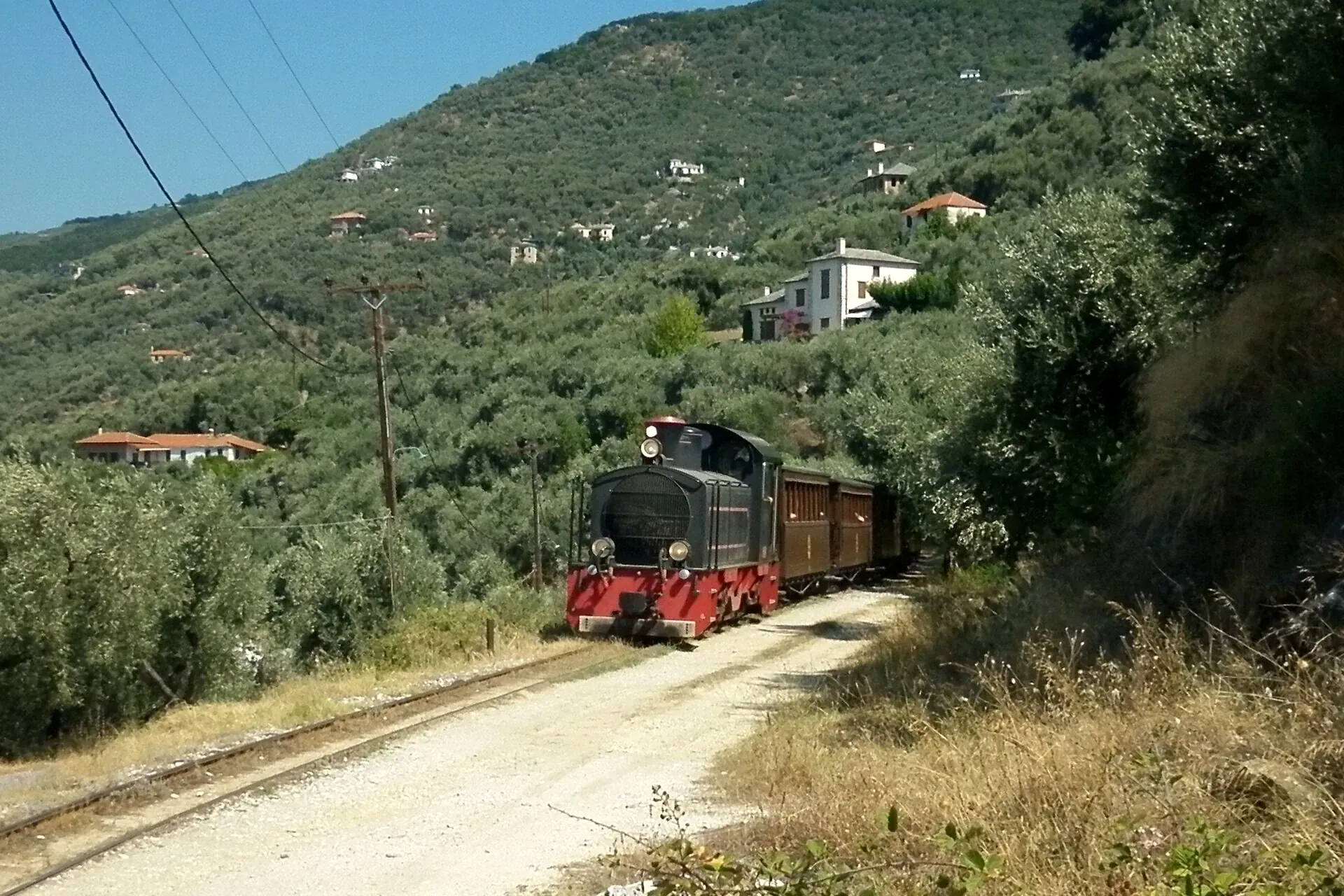
It is impossible to speak of Pelion without its legendary narrow-gauge little train, nicknamed the Moutzouris (the smudged one, in memory of the steam locomotive’s smoke). Brought into service at the end of the 19th century, around 1896, it linked Volos to the mountain villages and was long the economic lung of the region.
Today devoted to tourism, the historic convoy links Ano Lechonia to Milies on a panoramic line of delicious slowness. You wind along the mountainside, cross the viaduct designed by the engineer Evaristo de Chirico, father of the painter, and then orchards and forests follow one another past the windows. An hour and a half at the speed of long ago, where the landscape unrolls without haste.
The flavours of Pelion: apples, herbs and the gentleness of living
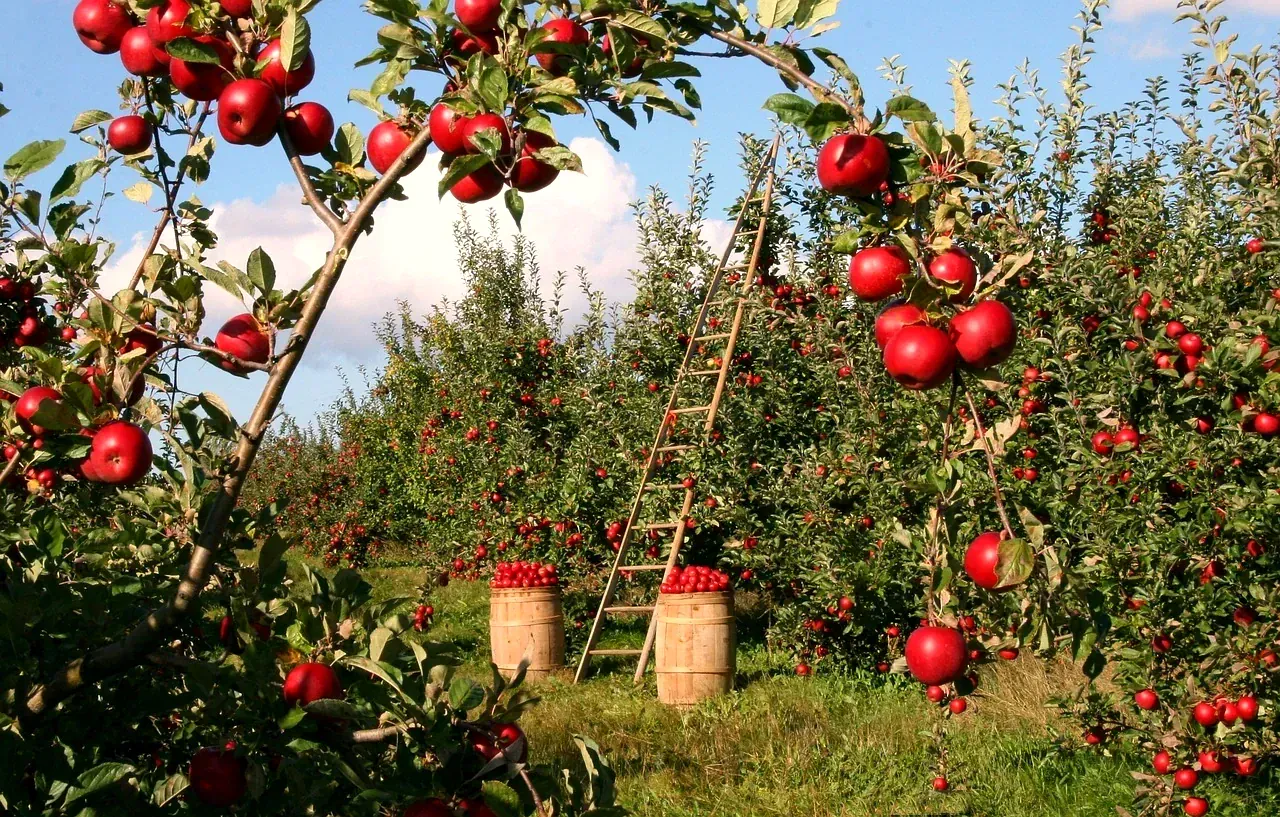
Pelion is an orchard as much as a mountain. Renowned fruit has always been grown there, and in particular the firiki, a small elongated apple, fragrant and crisp, eaten fresh or as confectionery in the shops of Portaria and Makrinitsa. The orchards run down as far as the villages, and autumn there takes on festive colours.
The table here tells of the mountain: wild herbs gathered on the slopes, mushrooms, honey, cheeses, smoked charcuterie, all washed down with a local tsipouro readily served with small plates to share. Add the shade of the century-old plane trees, the murmur of the village fountains, and you have the essence of Pelion: a green, gourmet Greece, where people take the time to live.
Extending the journey through mainland Greece
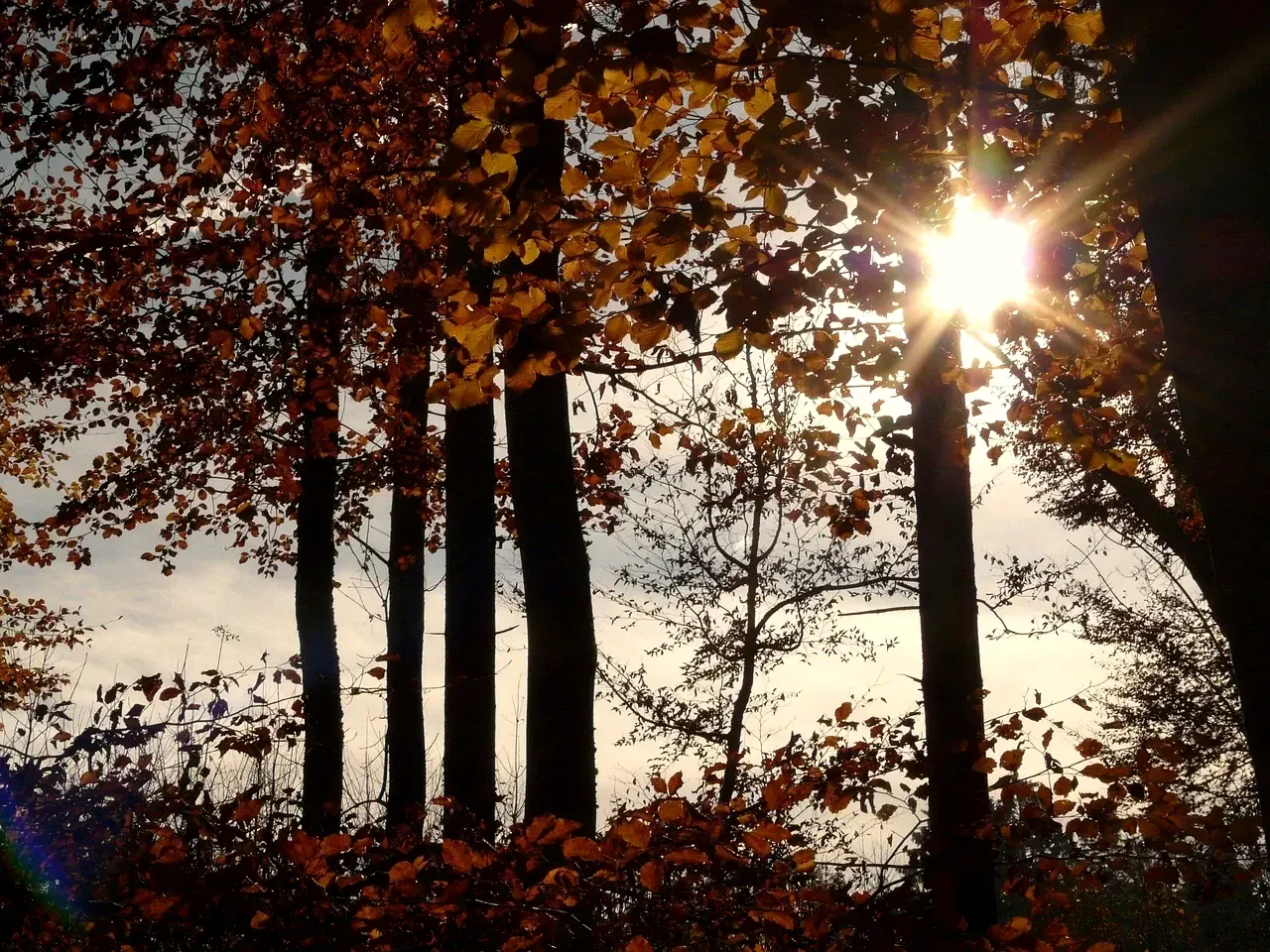
Pelion is savoured preferably in spring, when the mountain covers itself in flowers and the sea begins to invite you to swim, or in autumn, for the golden light, the orchards in full harvest and the mildness of the season’s end. Summer stays pleasant at altitude, sheltered by the forests, when the neighbouring coasts come alive.
This mountain fits naturally into a wider picture. If you like the idea of a Greece far from the crowds, our ideas for a tour of mainland Greece place Pelion among the treasures of the north. Lovers of stone villages and ancient paths will find the same charm, wilder still, in the mountains of the Zagori and their stone bridges. And to prepare for the ideal season, our guide to when to visit Greece will help you choose the right moment.
To discover Greece on foot, on gentle paths and at your own pace, our itineraries are designed for the pleasure of discovery, luggage carried and charming addresses included.
Frequently asked questions about Pelion
How do you get around Pelion?
A hire car remains the freest way to move from one village to another and to go down to the coves, on these mountain roads that wind along the hillside. In summer you can also take the historic little train, the Moutzouris, which links Ano Lechonia to Milies through orchards and forests. It runs every day in high season and at weekends in spring as in autumn, for a panoramic interlude of about an hour and a half along the mountain.
Which villages should you see in Pelion?
Begin with Makrinitsa, the balcony of Pelion, whose shaded square overlooks the gulf and the town of Volos. Then climb to Portaria, very close by, for its sculpted fountains and its mountain tavernas. On the slope turned towards the Aegean, Tsagarada nestles in the forest around its plane tree several centuries old, while Zagora, further north, tiers its quarters of stone houses facing the open sea. Four stone villages on the mountainside, with slate roofs and cobbled lanes, which on their own sum up the charm of the region.
Where can you swim in Pelion?
The finest beaches hide on the east coast, where the forest runs down to the water. Mylopotamos, with its rock arch and its golden sand, is the postcard of the massif. Very close by, Damouchari, a former small stone harbour where several scenes of the film Mamma Mia were shot, has kept its timeless atmosphere. Between the two curls the wild cove of Fakistra, at the foot of the cliffs, which rewards with turquoise water those who take its shaded path down from Tsagarada.
Your question is not on this list?
Write to us, and we will reply to you personally by email.
Article written by
Maria Papadopoulou (Μαρία Παπαδοπούλου)
Editorial lead
I hike, and Greece is the place I keep coming back to. My initial studies (a Master’s in Marketing and a degree in Applied Foreign Languages) taught me how to build an editorial project, and the trails taught me the… Read more