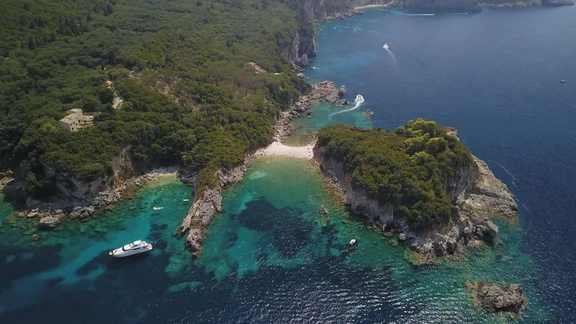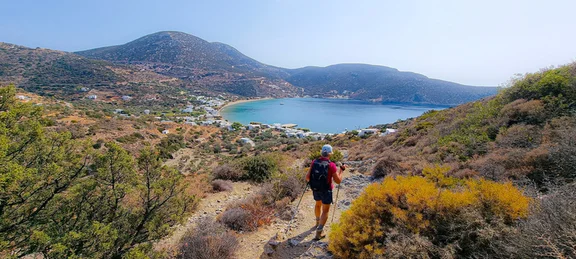


Rhodes tells itself first through its light. A golden, generous light that strokes the medieval ramparts in the morning and sets the turquoise coves ablaze at sunset. You come here for the sun, of course, but you stay for something else: those quiet paths that lead from a white village to a suspended acropolis, from a cool valley to a peninsula beaten by two seas. Walking in Rhodes is in no way a sporting feat. It is a succession of gentle strolls, at your own pace, punctuated by shaded tavernas and swims. Here are the walks we liked best, the ones that reveal the true face of the largest island in the Dodecanese.
| In brief | Rhodes is walked gently, between acropolises, cool forests and coves bathed in light. |
|---|---|
| Ideal for | Epicurean travellers of 60+ who like to mix heritage, swimming and good tables, without hurrying their step. |
| Best season | Spring (April to June) and autumn (September, October): mildness, paths in flower or gold, calmer crowds. |
| Pace | Gentle, à la carte: short walks, plenty of pauses, never a race. |
| Our holiday | No Kelifos holiday on Rhodes yet: let yourself be inspired by our neighbouring islands. |
The old town of Rhodes, on foot through the Middle Ages
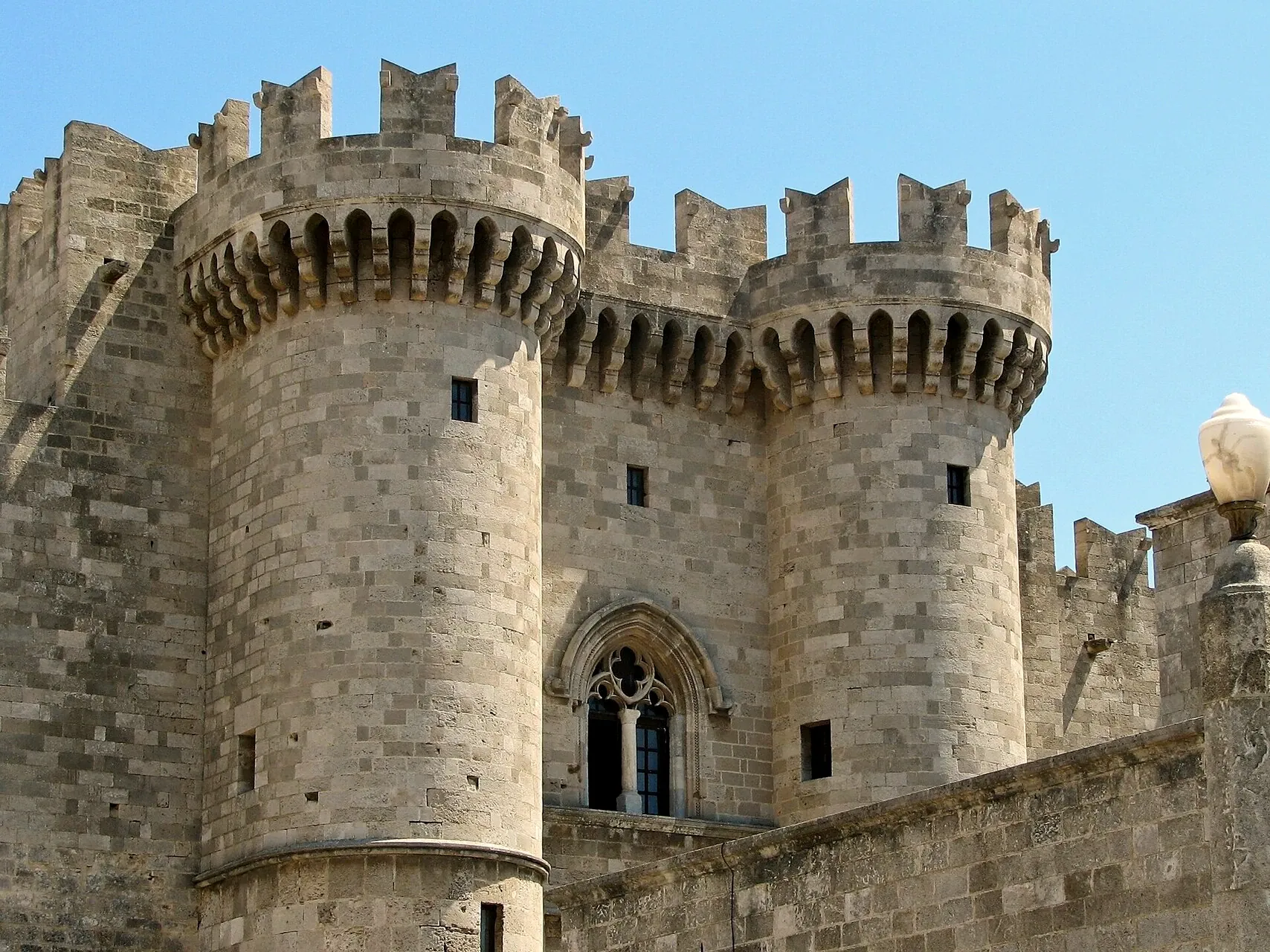
It is probably the finest way to begin. The old town of Rhodes, UNESCO World Heritage listed, is the largest inhabited medieval city in Europe. You enter by one of its massive gates, and time hangs suspended. The cobbles ring underfoot, bougainvillea spills from the courtyards, cats doze in the shade of the arcades.
The great walk is the Street of the Knights (Odos Ippoton). 200 straight, cobbled metres, lined with the inns of the tongues of Italy, France, Spain and Provence, linking the palace of the Grand Masters to the old hospital. Built by the Knights of the Order of Saint John, established here in 1310, this Gothic thoroughfare is one of the best preserved in Europe. You wander, you look up, you linger before a carved coat of arms.
For anyone wanting to gain height, the walkway of the ramparts, raised and reworked between the 14th and 16th centuries, offers a clear view over the tiled roofs and the sea. The route is level and easy. When the sun drops, you come back down to a terrace for a glass of local wine and a few mezze, watching the stone turn ochre.
The acropolis of Lindos and its mosaic path
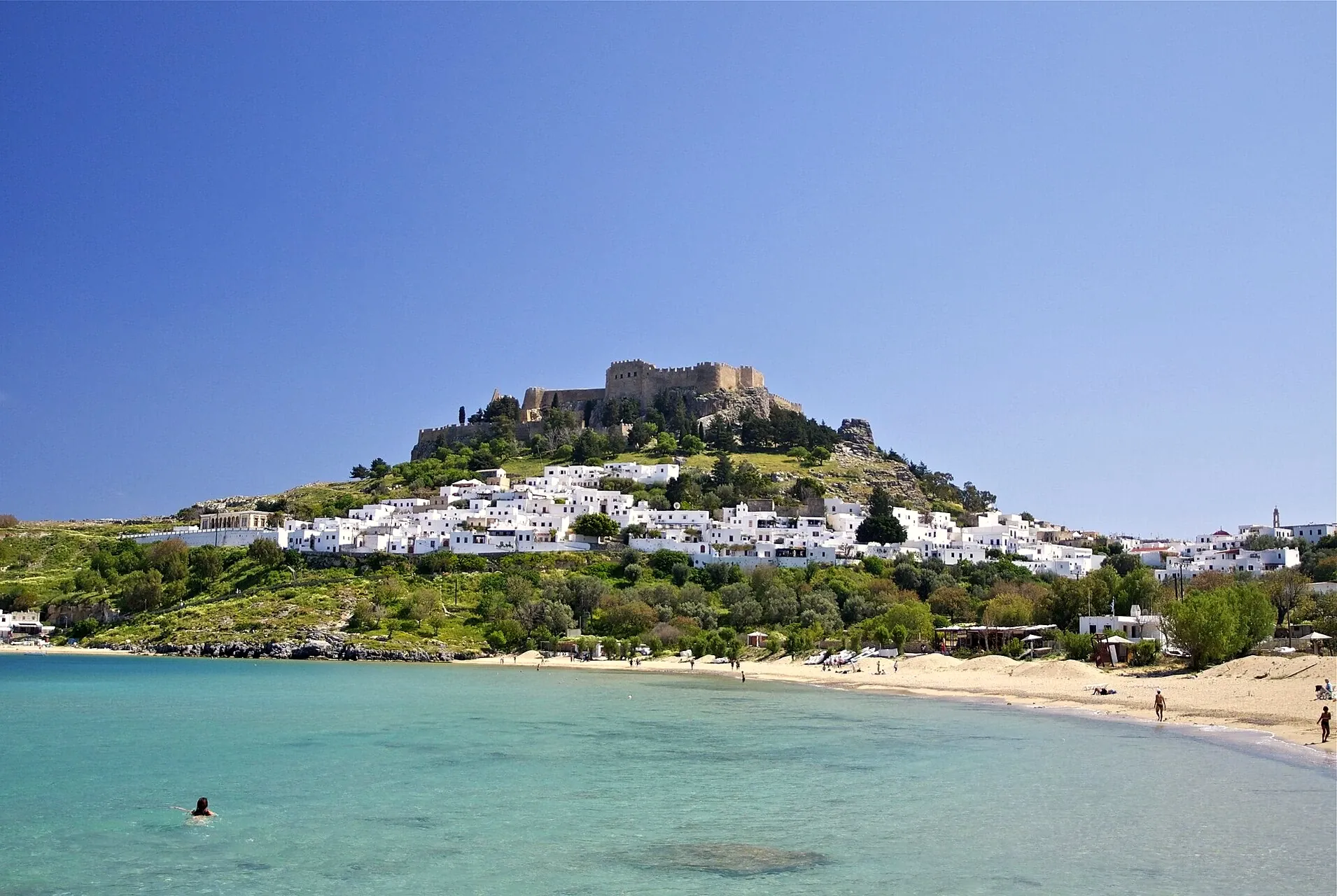
An hour's drive to the south, Lindos is the image you keep of Rhodes: an entirely pedestrian village, whitewashed, clinging below a rocky peak crowned by an ancient acropolis. The lanes are paved with black and white pebbles set in mosaics (the famous choklakia), and every captain's courtyard hides a welcome coolness.
The climb to the acropolis is made by a paved path that winds through the village, some twenty minutes of steady ascent. You climb slowly, with a halt in the shade of a porch. At the top, 116 metres above the sea, the columns of the temple of Athena Lindia stand out against the blue, and the eye takes in the whole coast.
From up there you can see Saint Paul's bay, a heart-shaped cove curled at the foot of the rock. Legend has it that the apostle Paul cast anchor there in the year 57. You go down on foot from the village, by an easy path, for a swim in calm, limpid water, with the acropolis as a backdrop. It is hard to imagine a finer setting for a late-morning bathe.
The Valley of the Butterflies, an oasis of coolness
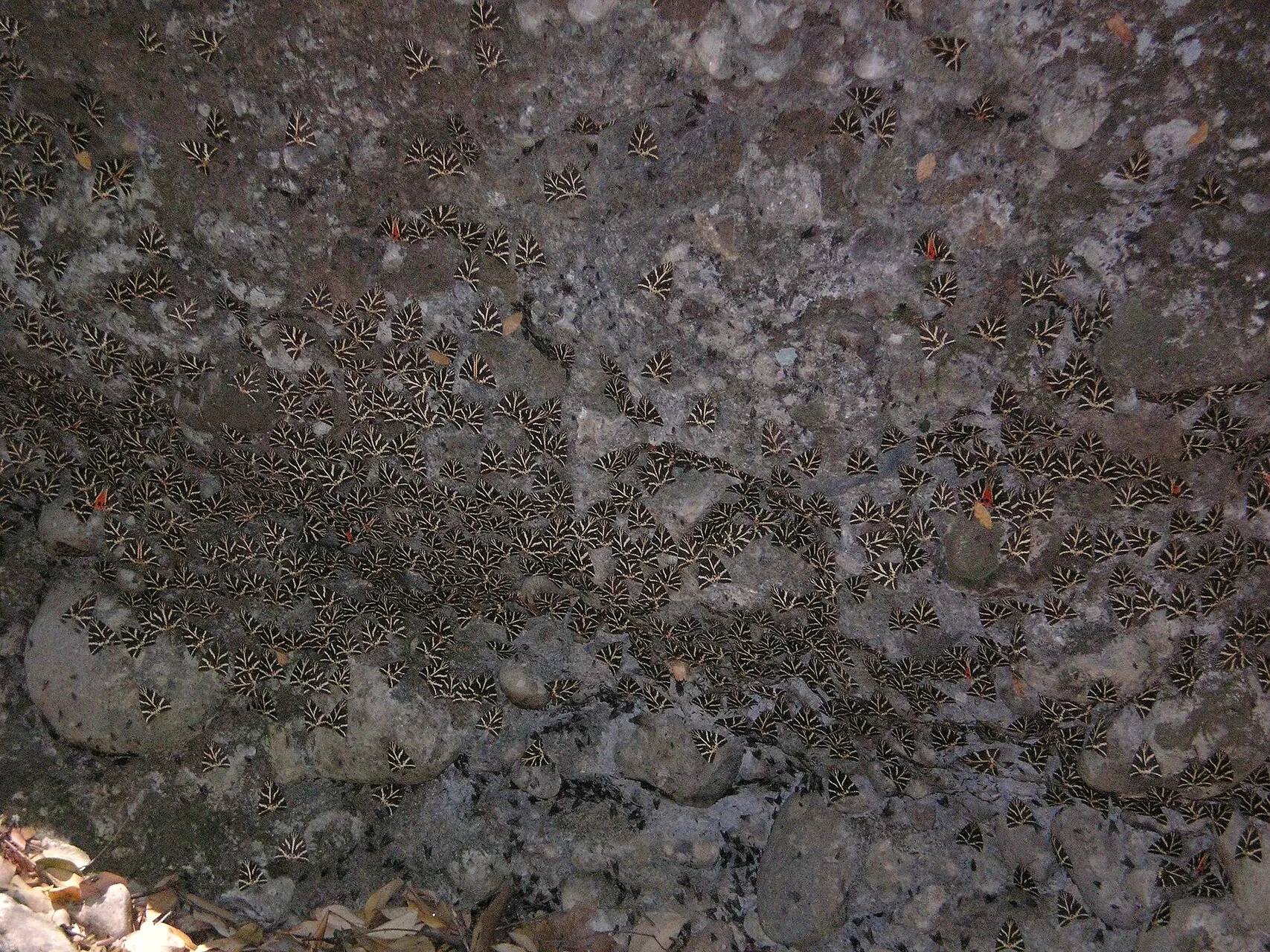
When the heat rises, Petaloudes, the Valley of the Butterflies, offers a shaded refuge 25 kilometres south-west of Rhodes town. A small enclosed valley, crossed by a stream and covered with rare trees, oriental sweetgums, whose resin scents the air.
The laid-out path climbs the valley for a little over a kilometre, alongside waterfalls and wooden footbridges, in constant shade. The walk lasts about an hour, on a gentle, well-traced path. In early summer, the valley fills with Jersey tiger moths, which settle in their thousands on the trunks. The spectacle peaks in July and August, but the place is worth the detour in any season for its coolness alone. One piece of advice: come early in the morning, when the calm still reigns and the light filters between the branches.
Epta Piges, the Seven Springs and their hidden lake
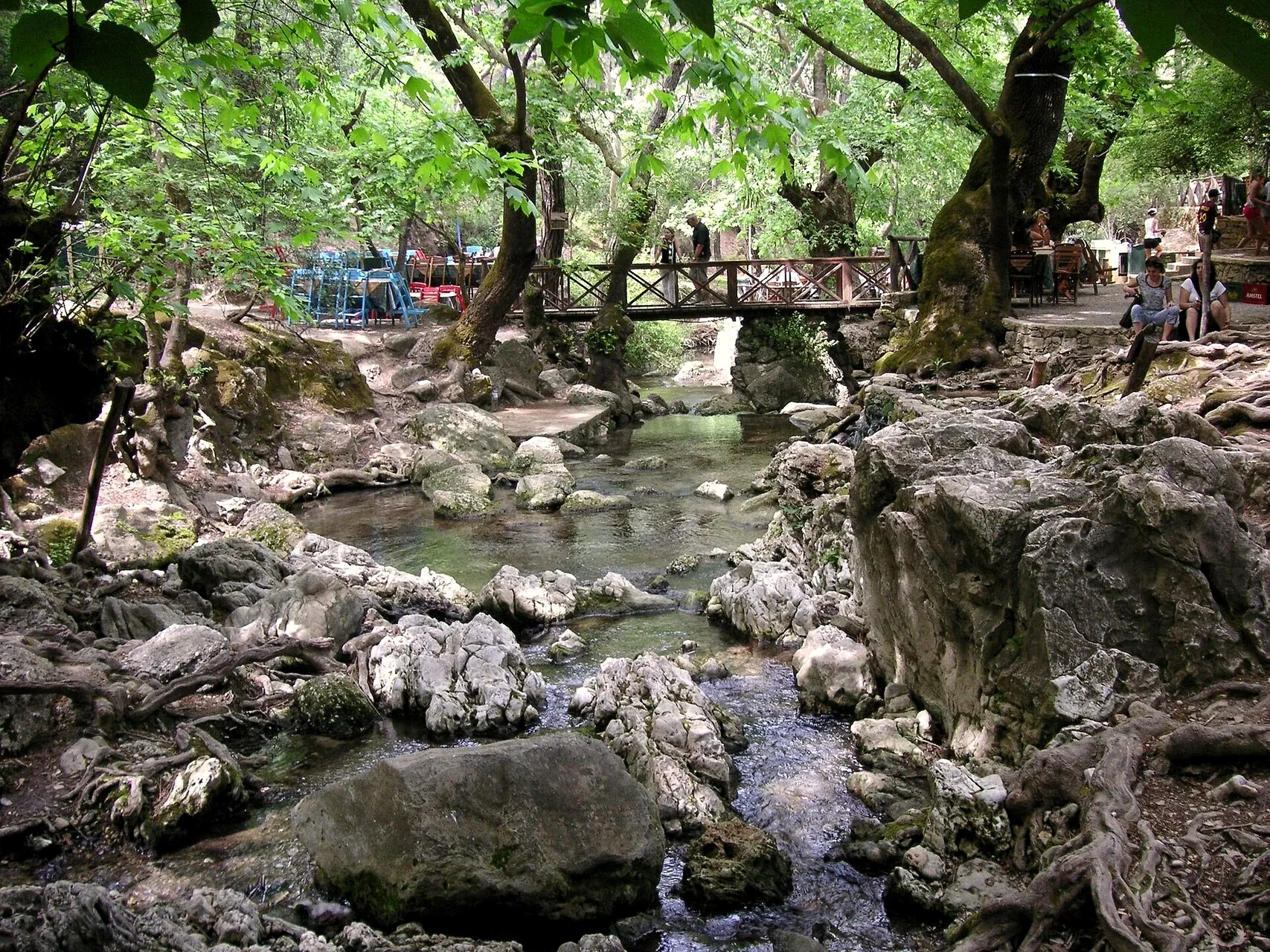
Inland, near Kolymbia, Epta Piges (the Seven Springs) is one of those places you leave with regret. Water running all year, great plane trees and pines, a cool river: an oasis that holds out even at the height of summer. You walk beneath the foliage, lulled by the lapping of the water and the smell of leaf mould.
The springs feed a small lake, held back by a dam built by the Italians in the 1930s. To reach it, two options are open to you. The more adventurous take a tunnel of about 180 metres, narrow and dark, with their feet in the water. If the idea puts you off, no cause for worry: a peaceful path skirts the tunnel above ground and reaches the same lake, through the woods. Entry to the site is free, and a taverna set under the trees serves coffee and the dishes of the day.
Mount Profitis Ilias and its forests from Salakos
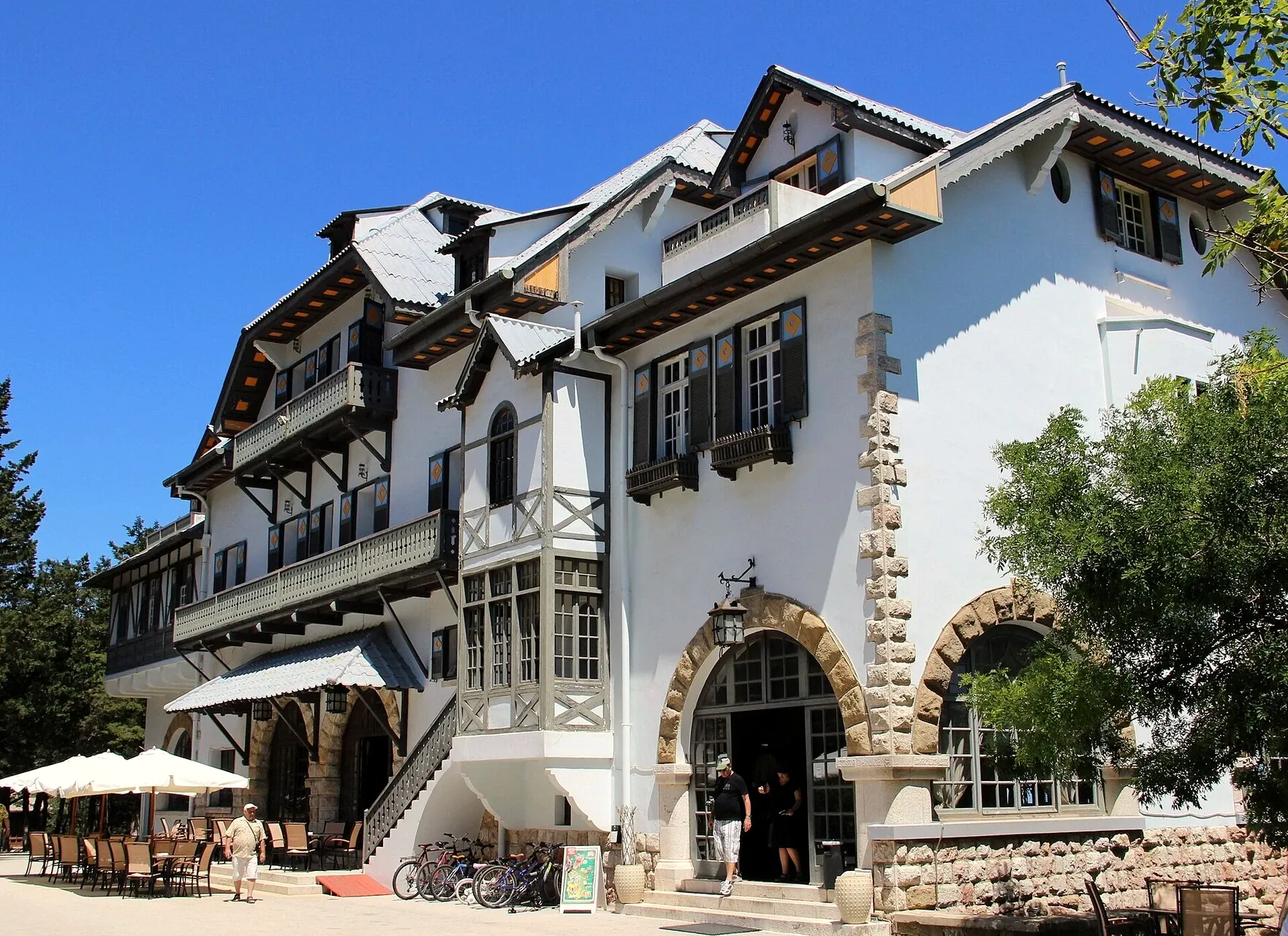
For anyone who prefers the forest to the sea for a morning, Mount Profitis Ilias is a green and cool interlude. The start is from Salakos, a pretty farming village nestled at the foot of the mountain. The path climbs on a gentle gradient, in the shade of pines, holm oaks and cypresses, on a well-traced earth track that remains accessible to all.
As you climb towards the heights (the summit rises to 798 metres, the third on the island), the air freshens and the silence settles. You pass sheepfolds, you hear the bells of a flock in the distance. The sea is glimpsed between the trunks. The setting surprises: you would almost forget you are on a sun-drenched island. On the way back, Salakos and its renowned spring invite a pause in the cool, a glass of mountain water in hand.
The castle of Monolithos, perched on its rock
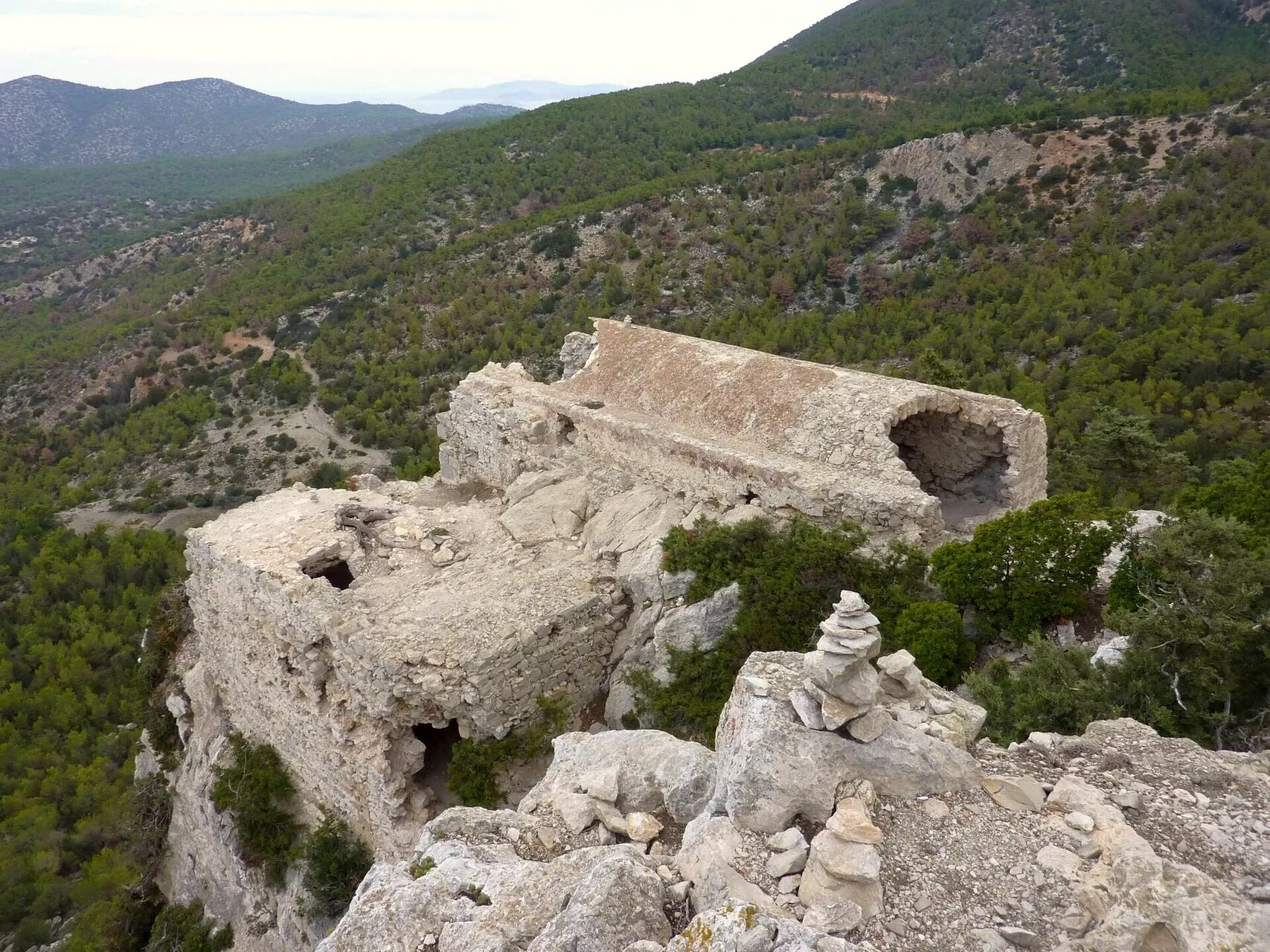
At the south-western tip of the island, far from the bustle of the seaside resorts, the castle of Monolithos crowns a rocky spur that drops straight into the sea. The Knights of Saint John built it in the 15th century on the remains of a Byzantine fortress, to watch for pirates. Today only part of the walls remains, and a small restored chapel dedicated to Agios Panteleimon.
You reach it by a stairway cut in the rock, on the eastern flank. The climb is short. At the top, 236 metres above the waves, the panorama takes your breath away: the pine forest unrolls its green carpet to the coast, and the islets of Halki and Alimia float on a deep blue sea. Access is free. It is an ideal place for the end of the afternoon, when the light gilds the stone and the wind drops.
Prasonisi, the peninsula of two seas

Right at the south of Rhodes, at the far point, Prasonisi is a geographical curiosity as much as a superb setting. This rocky islet is joined to the main island by a tongue of sand about 500 metres long, which you cross on foot in summer. At this spot, the Aegean comes to die on one side, the Mediterranean on the other: they call it the kiss of the two seas.
The contrast is striking. On the Aegean side, the wind blows and the waves get up, which delights windsurfers. On the Mediterranean side, the water stays calm and warm, perfect for a quiet swim. You wander on this ribbon of sand between two horizons, before lunching on grilled fish in one of the beach canteens, at the foot of the lighthouse. In winter, the crossing is covered by the water: it is very much a fine-season affair.
When to walk in Rhodes

Rhodes is savoured above all in spring and autumn. From April to June, the island is at its finest: mild temperatures, paths in flower, limpid light and still moderate numbers. From September to October, the summer heat eases, the sea stays warm for swimming, and the sites recover their calm. The height of summer remains pleasant by the water, but on exposed paths the morning hours are preferable. To refine your choice, our month-by-month guide to travelling in Greece details the weather and the atmosphere of each season.
Good shoes, a hat, water and the wish to take your time are enough. The walks of Rhodes are short, well signposted, and always rewarded by a view, a swim or a taverna.
And what if you paired Rhodes with a neighbouring island

Kelifos does not yet offer a walking holiday on Rhodes. The island is nonetheless a fine source of inspiration, and it lends itself wonderfully to a free discovery, at your own pace. To give shape to your trip to Greece, we invite you to explore our neighbouring destinations.
If you are hesitating over the next island to set foot on, our guide to choosing your Greek island points you by mood and by pace. To dream more widely, our survey of the most beautiful Greek islands reviews the pearls of the Aegean and the Ionian. And to pass from the dream to the paths, our holidays are designed for the pleasure of discovery: your luggage awaits you each evening in a charming hotel, and all that is left is to enjoy the way.
Frequently asked questions about walking in Rhodes
Where can you find a map or a walking itinerary on Rhodes?
The reference map is the one from the Greek publisher Anavasi, at 1:75,000 (Rhodes and Symi), water-resistant and GPS-compatible. Terrain also publishes a fine walking map of the island. On the spot, the tourist offices and the booksellers of the old town keep them in stock. On our self-guided walking trips in the Greek islands, you additionally receive detailed route notes with the tracks of the route, enough to make your way calmly without preparing anything yourself.
Can you walk in the wild hinterland of Rhodes, towards Mount Attavyros?
Yes, and it is quite another face of the island. Above the wine village of Embonas rises Mount Attavyros, the highest point of Rhodes at 1,215 m, a bare massif listed as Natura 2000 from which the eye carries, they say, as far as Crete. The climb is long and exposed to the sun: keep it for the cool mornings of spring or autumn, and many of our travellers prefer the shaded forests of Profitis Ilias. For nature that is more discreet and more accessible, the castle of Monolithos and the Prasonisi peninsula, in the south, offer the same sense of the world's end in complete quiet.
How many days do you need to discover Rhodes on foot?
A week is enough to taste the essentials without ever rushing. The island's walks are short, often 1 to 2 h, which leaves all the time for a swim, a long lunch in a taverna or a nap in the shade. In 7 to 8 days you string together the old town, Lindos, the Valley of the Butterflies and an escape into the forests of the centre, with every afternoon free for the sea.
Are the walks of Rhodes accessible to everyone?
In the great majority, yes. The finest walks, such as the Valley of the Butterflies or the paved climb to the acropolis of Lindos, are short, well waymarked and walked at your own pace, with as many pauses as you wish. They suit anyone in good health who likes to wander unhurriedly. Only Mount Attavyros, longer and wilder, falls outside that gentleness.
Your question is not on this list?
Write to us, and we will reply to you personally by email.
Continue reading
- Which Greek island is right for you? The complete guide
- Hiking in Greece: the best trails island by island
- The Most Beautiful Greek Islands, one for every wish
- When to Visit Greece: Our Month-by-Month Guide
Article written by
Maria Papadopoulou (Μαρία Παπαδοπούλου)
Editorial lead
I hike, and Greece is the place I keep coming back to. My initial studies (a Master’s in Marketing and a degree in Applied Foreign Languages) taught me how to build an editorial project, and the trails taught me the… Read more