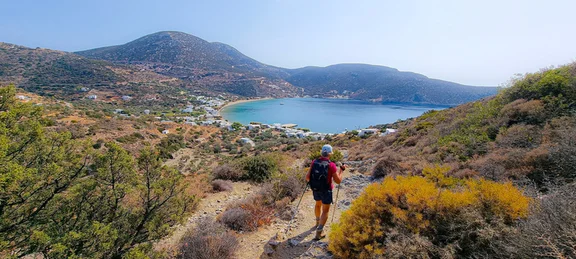
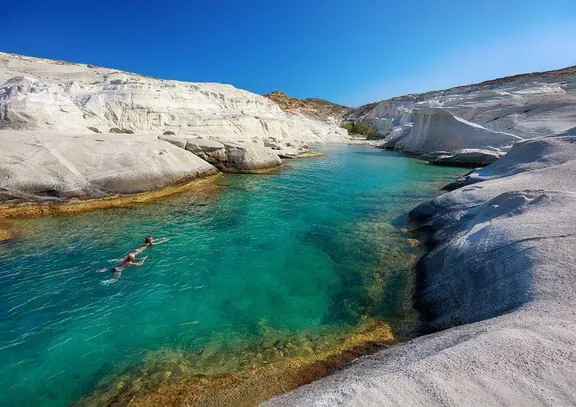
The ferry has barely pulled away from Piraeus when the coast of Aegina already takes shape, low and golden beneath the pines. Forty minutes of crossing is all it takes, and there you are on an island where time slows: stalls of pistachios along the quay, translucent water at the foot of the terraces, and up above, on its wooded hill, an ancient temple keeping watch. Aegina, in Greece, has that rare quality of being both very close to Athens and deliciously apart. You come for a day, and often leave promising yourself you will come back.
| In brief | The Greek island closest to Athens: a remarkable ancient temple, quiet villages and the best pistachio in Greece, for the length of an escape. |
| Ideal for | A day trip from Athens or a short, calm stay |
| Best season | Spring (April-June) and autumn (September-October) |
| Pace | Gentle, easy walks, at your own rhythm |
| Getting there | Ferry from Piraeus, about 40 minutes on the fast boat |
The Saronic Gulf, Greece 40 minutes from Athens
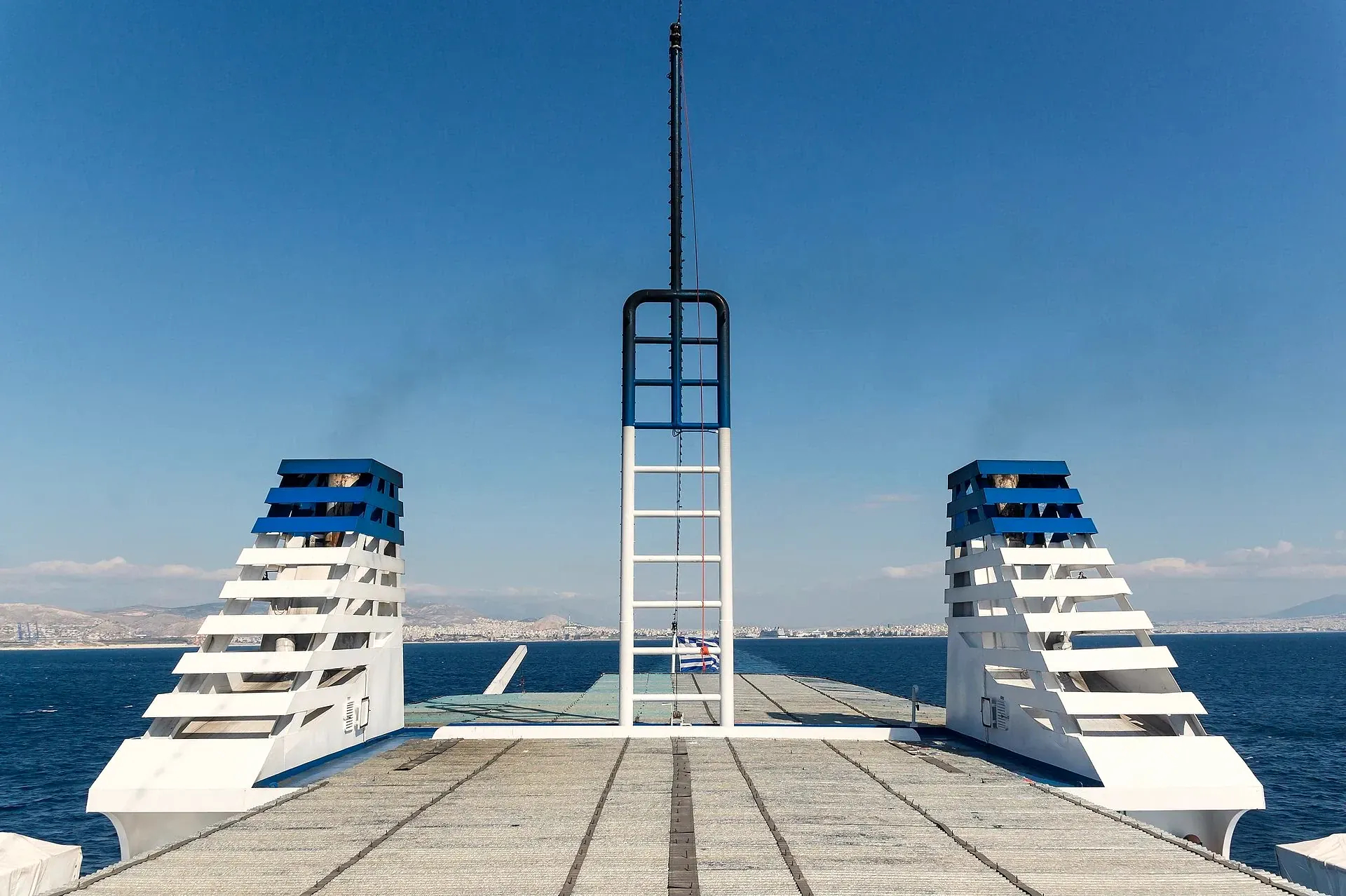
Aegina lies in the Saronic Gulf, that peaceful arm of sea stretching just south of Athens. It is the Greek island closest to the capital: ferries leave Piraeus throughout the day and reach the port of Aegina in 40 minutes on the fast boat, a little over an hour on the classic one. That proximity changes everything. You can leave in the morning, lunch with your feet in the water and come back in the evening, or set down your bags for 2 or 3 nights to taste the island’s calm once the day trippers have left.
On the spot, everything stays on a human scale. A bus follows the coast to the southern villages, taxis are easily found, and many visitors hire a scooter or a small car for a day. Nothing obliges you to rush: Aegina is savoured slowly, according to where you stop.
The temple of Aphaia, at the summit of the sacred triangle
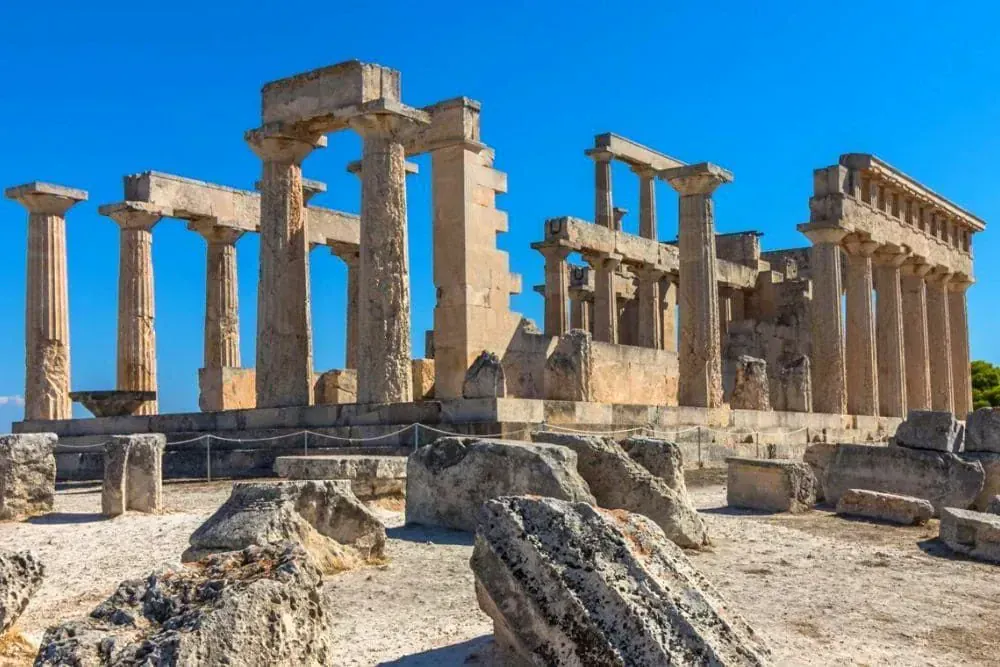
On a pine-covered hill, in the east of the island above the bay of Agia Marina, stands the temple of Aphaia. Built around 500 BC, it is one of the best-preserved Doric sanctuaries in all Greece, with a good part of its columns still standing facing the sea. It is owed to Aphaia, a local divinity long honoured by the island’s sailors.
The Ancients gave it a singular place. The temple of Aphaia, the Parthenon in Athens and the temple of Poseidon at Cape Sounion draw on the map an almost perfect triangle, known as the sacred triangle. From the forecourt, in clear weather, the eye takes in the gulf and makes out Attica in the distance. The late-afternoon light there is particularly beautiful, when the golden stone stands out against the blue of the sea.
Aegina town, its quays and the queen pistachio
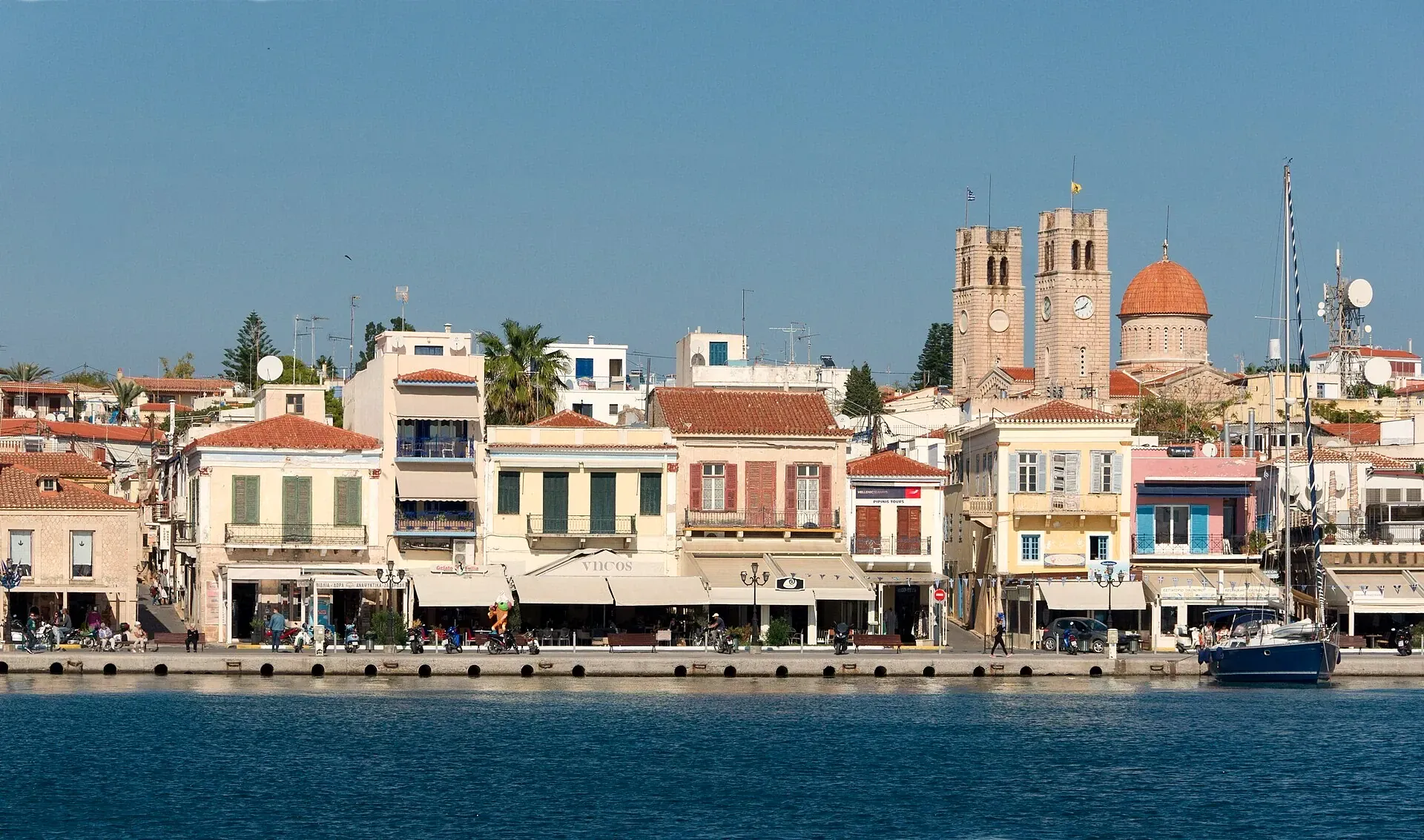
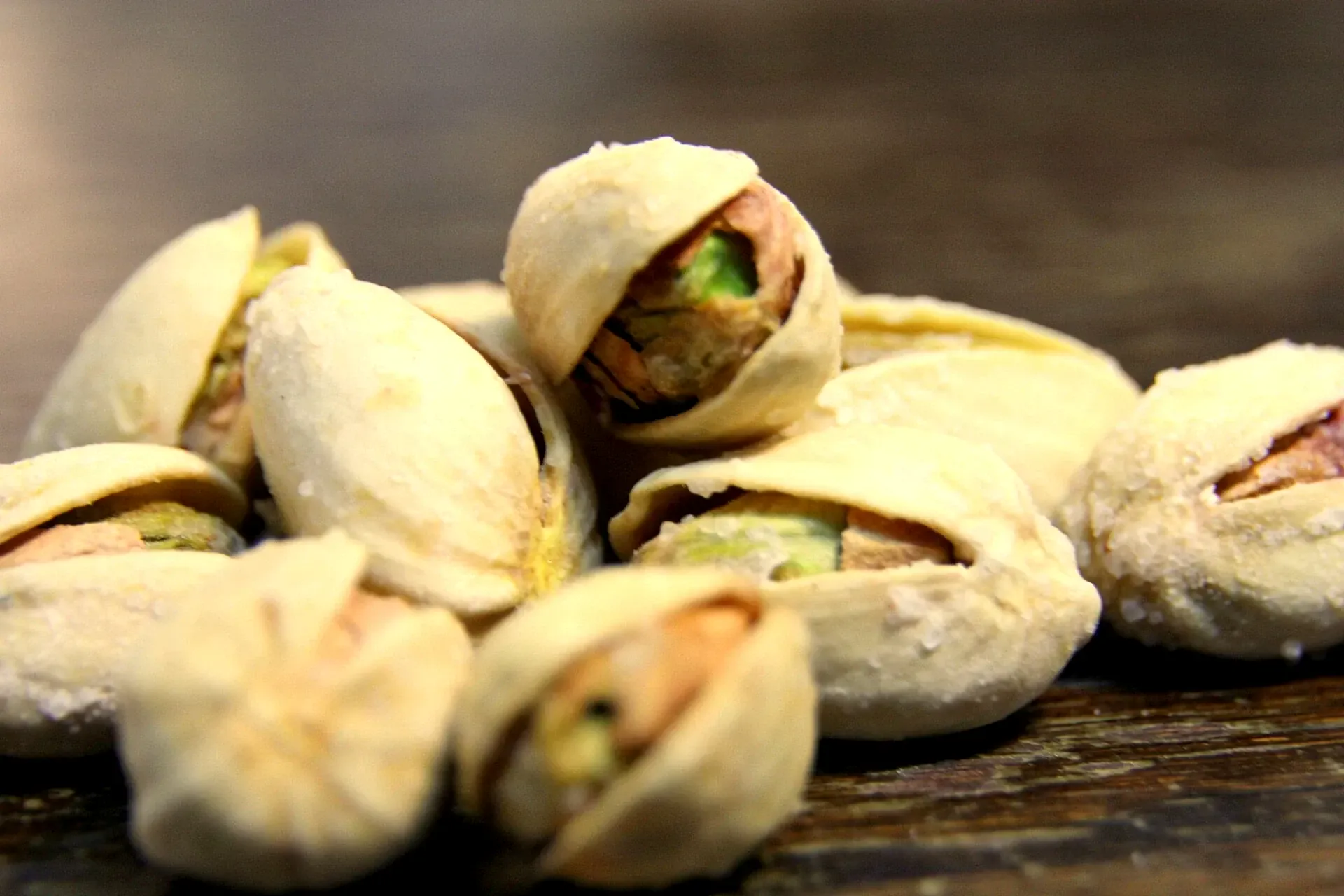
The port of Aegina lines up its neoclassical houses along a lively quay, where fishermen’s boats sit alongside caiques loaded with fruit and vegetables. The island was, from 1828 to 1829, the first capital of modern Greece: it was here that Ioannis Kapodistrias set up his government and that the first coins of the young state were struck. That past can still be sensed in the discreet elegance of the town and its cathedral.
But Aegina is first of all the pistachio. The volcanic soil and the dry climate give a small, fragrant nut, recognised under the name Fistiki Aeginas (PDO). You find it everywhere: plain, roasted, as a spread, in ice cream or in pastries. Every autumn, in mid-September, the island celebrates its harvest with a dedicated festival, a fine chance to taste the best of the local production. Leave with a few bags: it is the tastiest souvenir there is.
Paleochora, the Byzantine city of forgotten chapels
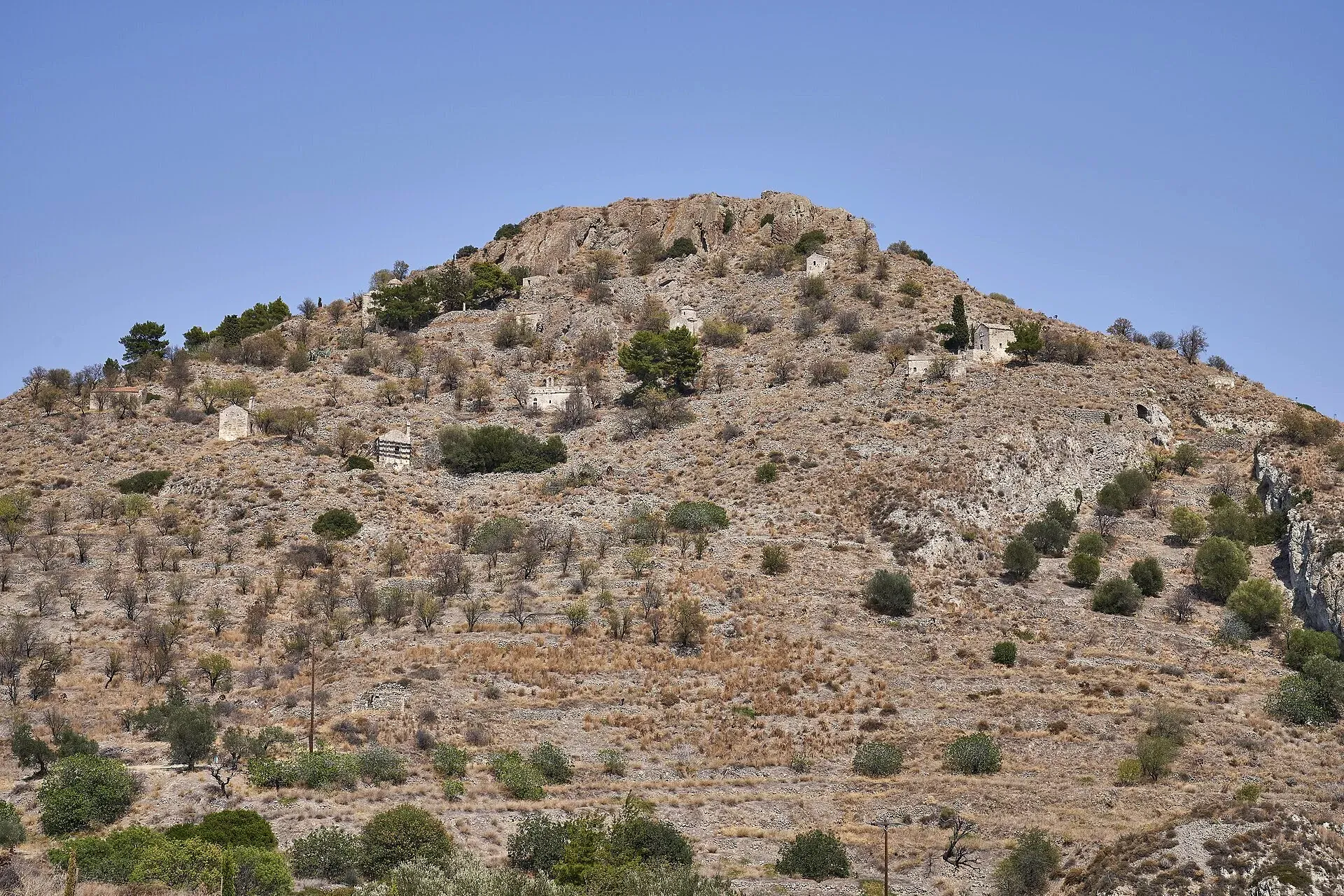
Inland, on a rocky slope, Paleochora keeps its silence. This former medieval capital, sometimes nicknamed the Mystras of Aegina, was built far from the coast to escape the pirates and stayed inhabited until the early 19th century. Today its houses have disappeared, but some thirty small chapels have crossed the centuries, scattered over the hill.
You pass from one to the next by gentle paths, sometimes pushing open a low door to discover Byzantine frescoes slowly fading. The place breathes serenity. Few visitors venture there, which adds still more to its slightly otherworldly charm.
The monastery of Agios Nektarios, a haven of contemplation
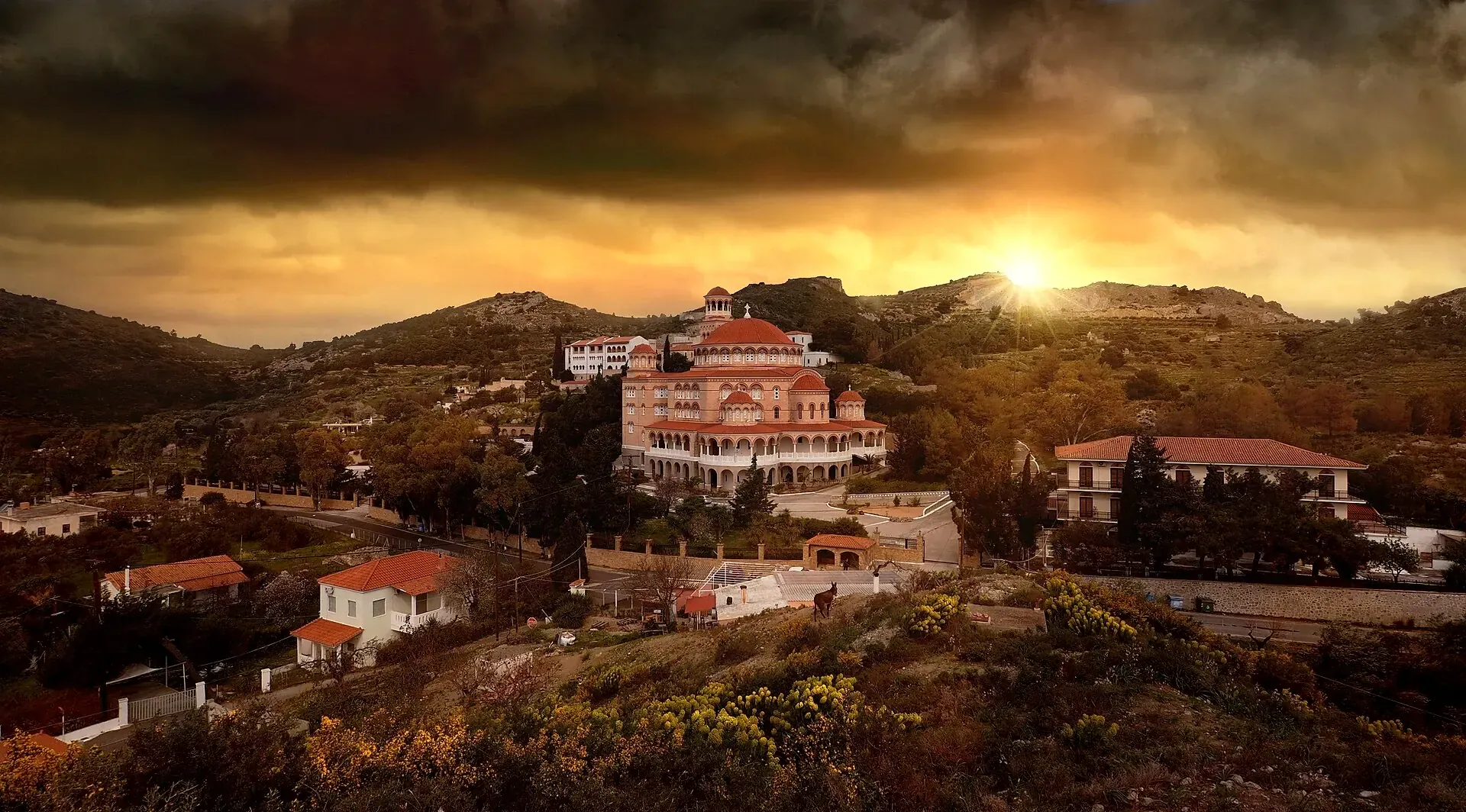
Very close to Paleochora rises the monastery of Agios Nektarios, one of the largest in the Balkans. Founded in 1904 by Saint Nectarios, one of the best-loved figures of Greek Orthodoxy, it draws many pilgrims each year. Its great domed church, light and calming, is worth the halt even for those who are not believers: you feel there a particular gentleness, an invitation to quiet.
Perdika, Moni and Marathonas, the peaceful south
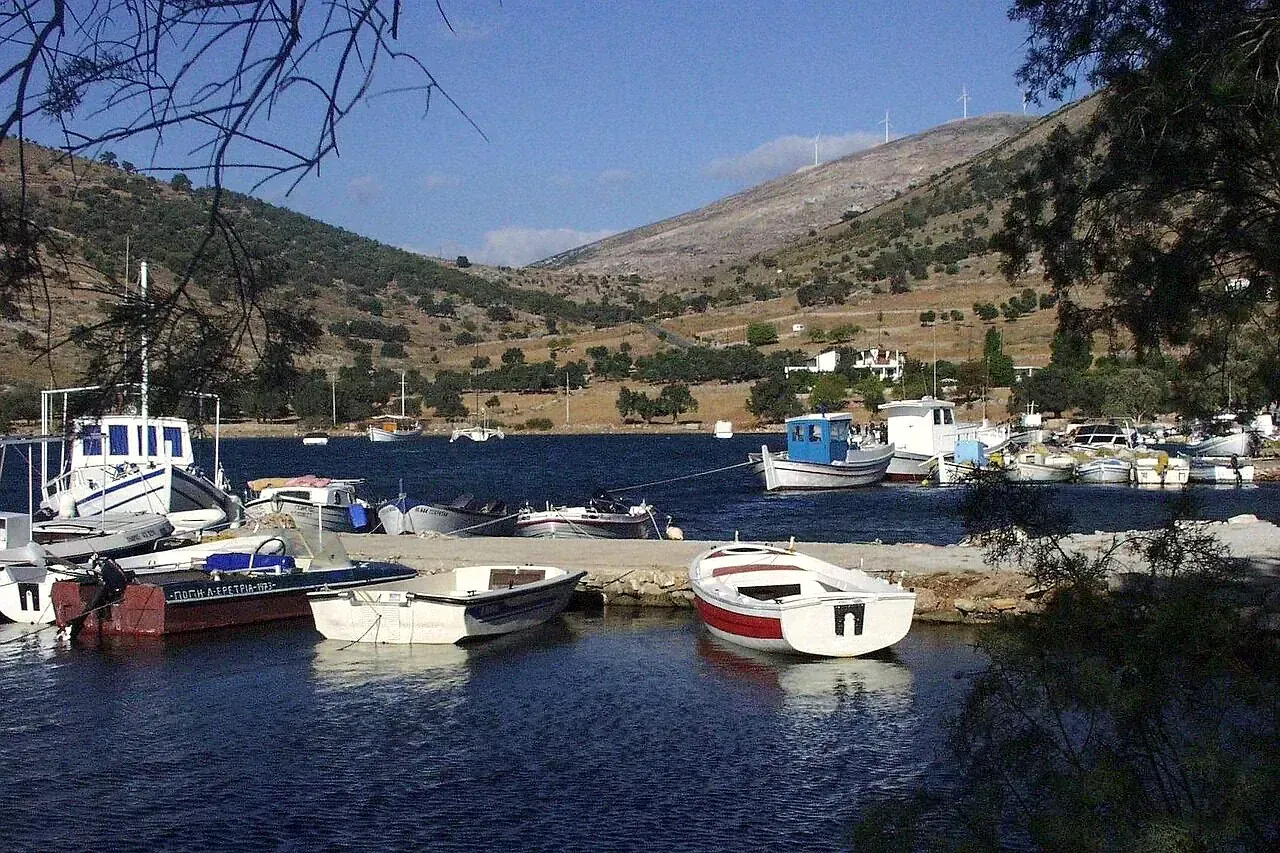
At the southern tip, the fishing village of Perdika unrolls its tavernas facing the sea. You come for the fish of the day, served on the terraces of the small harbour at sunset. It is one of the prettiest places on the island to linger. From Perdika, a boat takes you in about ten minutes to the islet of Moni, a nature reserve where peacocks and deer live free, and whose limpid coves invite a swim.
On the way back towards town, the beach of Marathonas stretches its soft sand and shallow waters, ideal for a pause in the sun. Aegina does not have the long beaches of the Cyclades, but its quiet coves amply satisfy the pleasure of an end-of-day bathe.
When to come and how to organise your escape
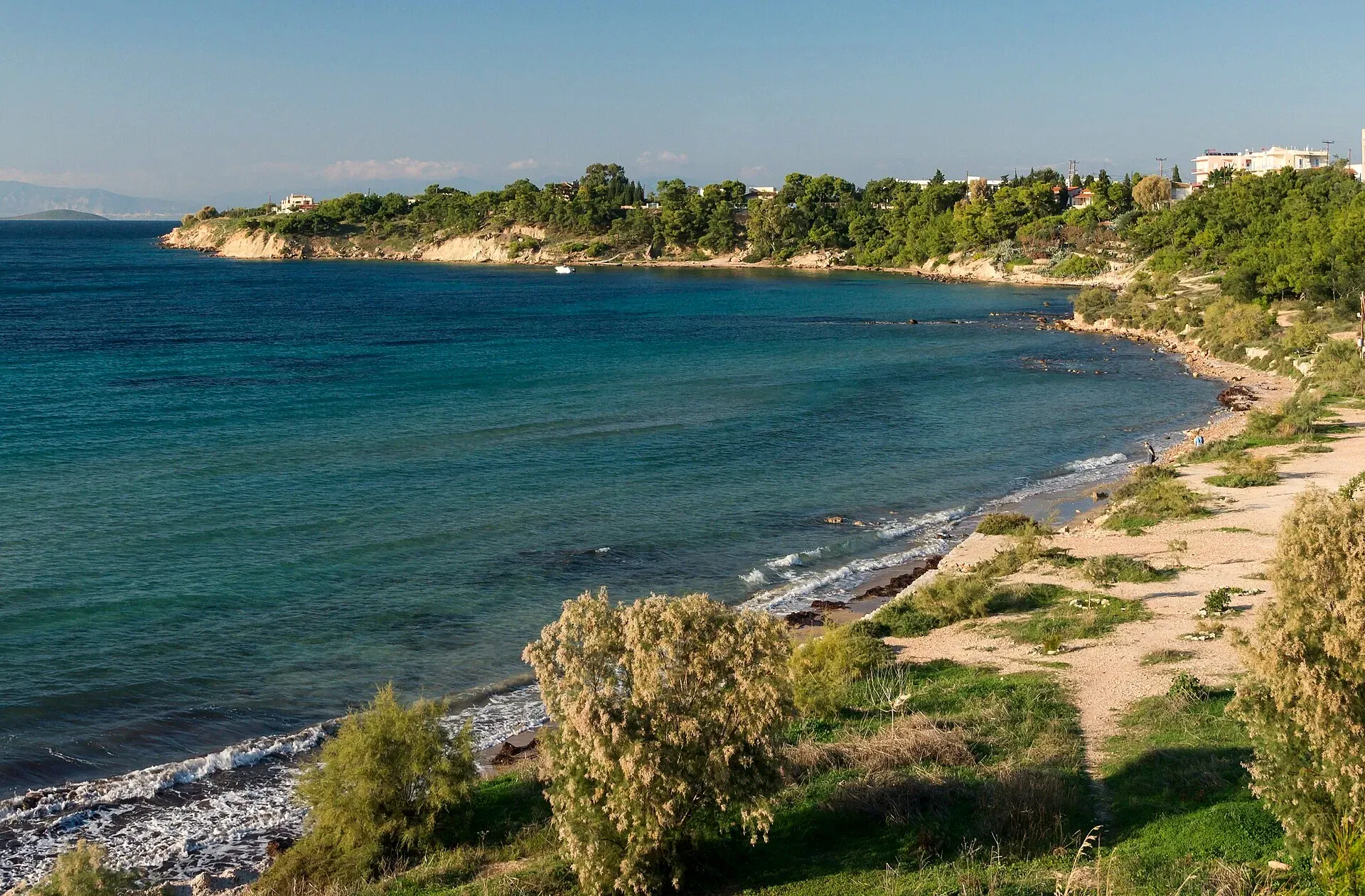
Aegina can be visited almost all year thanks to its mild climate, but spring (April to June) and autumn (September and October) remain the most agreeable seasons: the light is fine, the sea still good in autumn, and the summer crowds have dispersed. In September, the pistachio harvest adds one more reason to come.
A day is enough to discover the essentials, but 2 or 3 nights let you really slow down, see the temple of Aphaia in peace and savour the evenings at Perdika. If the idea of an island close to Athens and spared mass tourism appeals to you, its neighbour Hydra, where cars are banned, extends the experience in the same Saronic Gulf. To place Aegina among the other Greek destinations, our guide to choosing the Greek island that suits you and our selection of the most beautiful Greek islands will help you put your trip together. And if you like discovering Greece on foot, at your own pace, our ideas for gentle walks in Greece open other horizons.
Frequently asked questions about Aegina
How do you get to Aegina from Athens?
Ferries leave Piraeus several times a day. Reckon on about 40 minutes on the fast boat, a little over an hour on the classic one. Outside high season, there is no need to book far in advance.
How long do you need to visit Aegina?
A day already lets you see the temple of Aphaia, wander in town and taste the pistachio. To enjoy the island fully, its quiet south and its evenings, 2 to 3 days are ideal.
How do you get around the island?
A bus serves the coast and the main sites. Many visitors hire a scooter or a small car for a day, and taxis are easily found at the port.
What should you bring back from Aegina?
The pistachio, in all its forms: plain, roasted, as a spread or as confectionery. It is the island’s speciality, protected by a designation of origin.
Where can you swim on Aegina?
Aegina appeals less through long beaches than through its coves and small stretches of sand. On the east coast, the large sandy beach of Agia Marina, gently shelving, delights families. On the west side, Marathonas lines up fine sand and shallow waters, edged with tavernas at the water’s edge. In the south, near Perdika, the cove of Aeginitissa shelters beneath the eucalyptus, while the islet of Moni offers its limpid waters about ten minutes away by boat.
Can you discover Aegina on foot?
Gladly, and it is a fine way to take the island’s pulse. Gentle paths link the chapels of Paleochora, climb to the temple of Aphaia or slip through the pine forests of the interior. A network of waymarked paths covers the island, and Anavasi publishes a walking map of Aegina at 1:25,000, available on the spot as well as in bookshops. Between two swims, walking reveals the most secret Aegina, at your own pace.
Your question is not on this list?
Write to us, and we will reply to you personally by email.
Article written by
Maria Papadopoulou (Μαρία Παπαδοπούλου)
Editorial lead
I hike, and Greece is the place I keep coming back to. My initial studies (a Master’s in Marketing and a degree in Applied Foreign Languages) taught me how to build an editorial project, and the trails taught me the… Read more