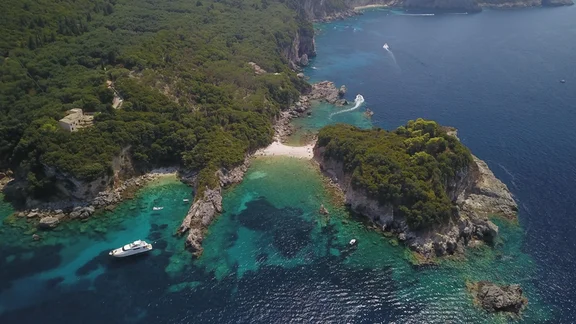
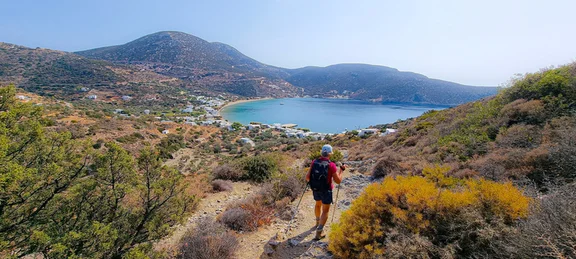
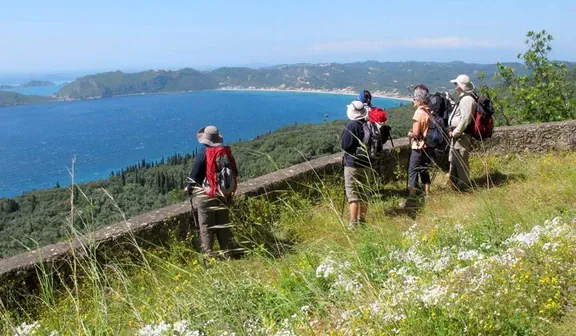
At Christos Raches, do not go looking for the grocer’s at lunchtime. The shutters stay closed, the village is taking its siesta, and it is only when the sun goes down that life resumes, sometimes until dawn. Ikaria, in Greece, does not live like the other islands. Set in the north-east of the Aegean, some fifty kilometres from the Turkish coast, it has that reputation, well deserved, of making you forget the time, the stress and even your age. The island owes its name to Icarus who, in the legend, plunged into these waters, the Icarian Sea, after flying too close to the sun. You come for the light, the sea and the paths. You stay for a gentleness of living that researchers eventually came to study at close quarters.
| In brief | A Greek island outside time, one of the world’s “blue zones” of longevity, where people eat well, walk slowly and dance late. |
| Ideal for | Epicurean travellers who love calm, hot baths, tavernas and authentic villages |
| Best season | Late May to June and September (mildness, warm sea, quiet paths); August for the village festivals |
| Pace | Very gentle, out of step, at your own speed |
| Our trip | Free inspiration: no Kelifos trip on the spot yet, just the wish to give you a taste of the island |
Ikaria does not always feature in selections of the most beautiful Greek islands, and that is probably what makes it precious. No saturated harbour, no sunset to photograph in single file. Here you trade the postcard for a slower, warmer way of being, which ends up rubbing off on you.
An island that lives by its own clock
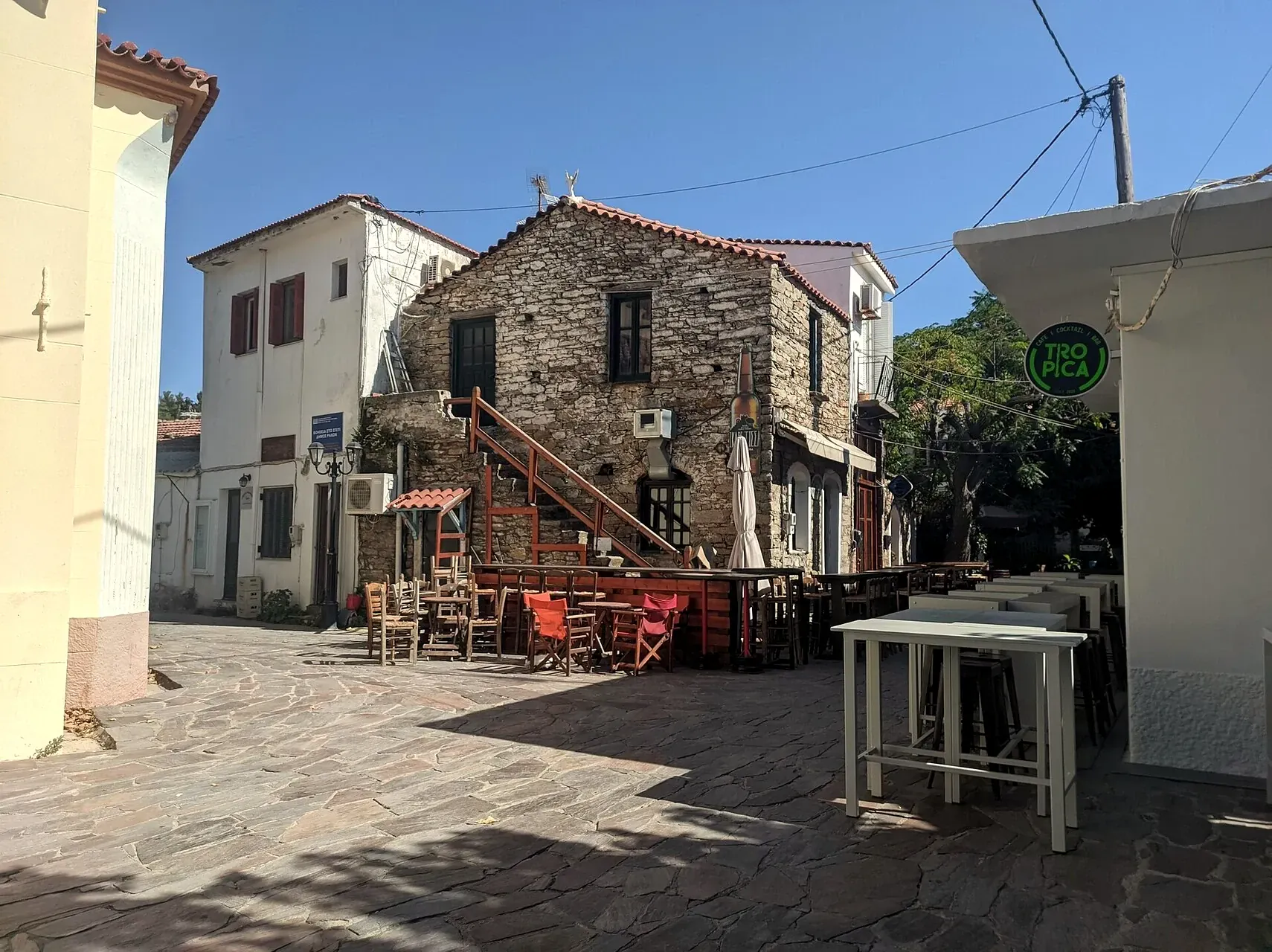
The first surprise of Ikaria is its relationship with time. In the mountain villages, and at Christos Raches in particular, the shops open in the morning, close in the afternoon for the siesta, then reopen at nightfall. In high summer, some raise their shutters only around eight in the evening and stay busy for a good part of the night. It is said that the Ikarians live back to front, and there is truth in it. The meal is taken late, the conversation stretches out, nobody looks at their watch.
This nonchalance is not laziness, it is an art of living. You sleep when the body asks for it, you work in the garden in the cool hours, you sit at table at length among neighbours. For a traveller looking to slow down, the island offers a gentle lesson: sometimes it is enough to set down your case and let yourself be carried by the local rhythm.
The blue zone, or the art of growing old happily
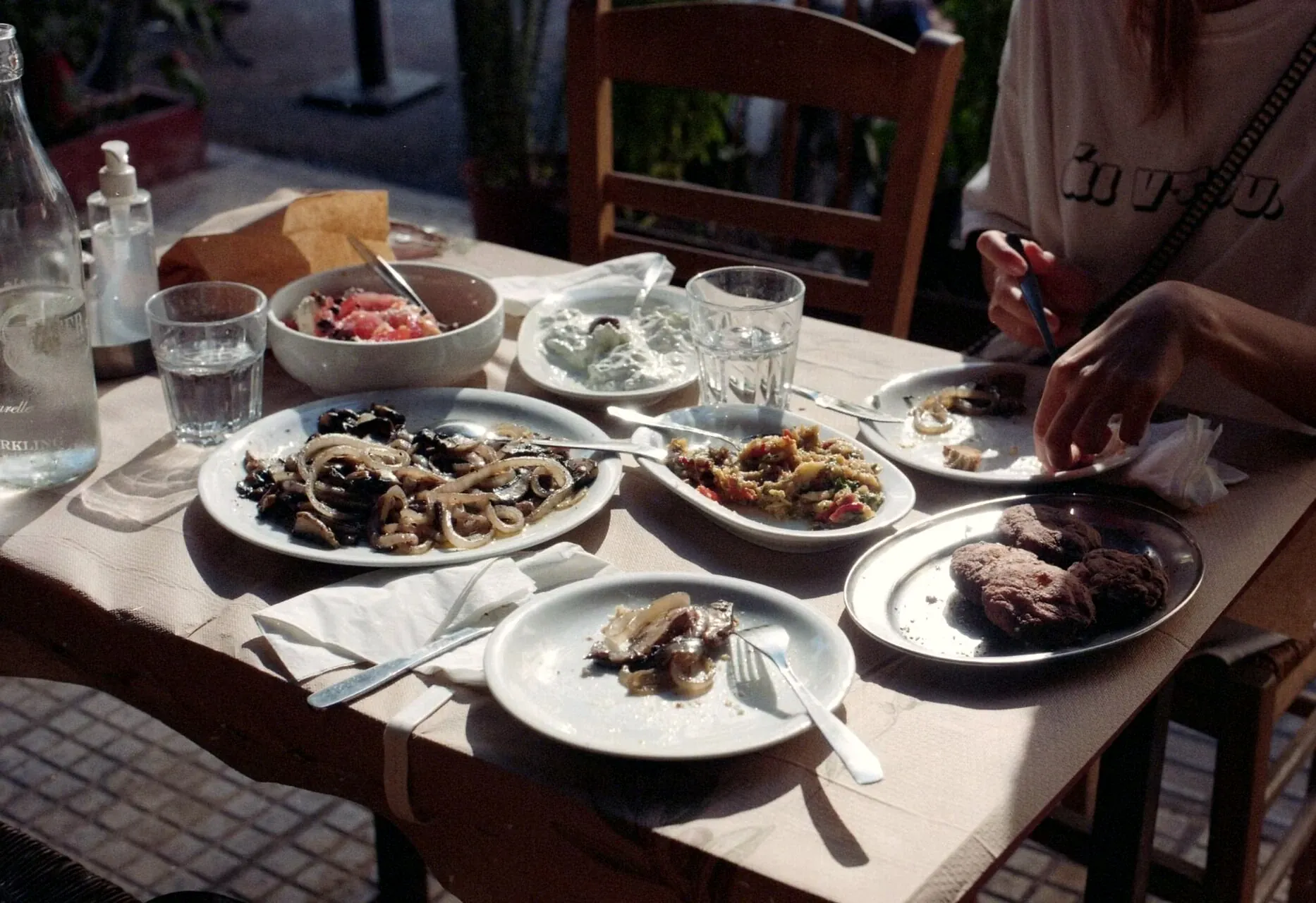
Ikaria belongs to the very select club of the “blue zones”, those rare places on the globe where the inhabitants live exceptionally long and in good health. The investigation carried out by Dan Buettner and National Geographic made it famous: on this island, close to one person in three reaches their nineties, often without the chronic illnesses that weigh on old age elsewhere.
The reasons have less to do with a secret than with a balance. The Ikarian plate is largely plant-based: wild herbs gathered on the hills, pulses, local olive oil, honey, mountain herbal teas and a little local red wine shared among friends. To that are added the daily walk on ancient paths, the afternoon siesta and, above all, social bonds of rare solidity. Nobody grows old alone on Ikaria.
For a traveller of sixty and over, the island has something self-evident about it. Everything medicine recommends today — eat simply, move without forcing, sleep to your own rhythm, cultivate friendship — is lived here naturally, as it always has been, with a smile into the bargain.
Therma and its hot baths
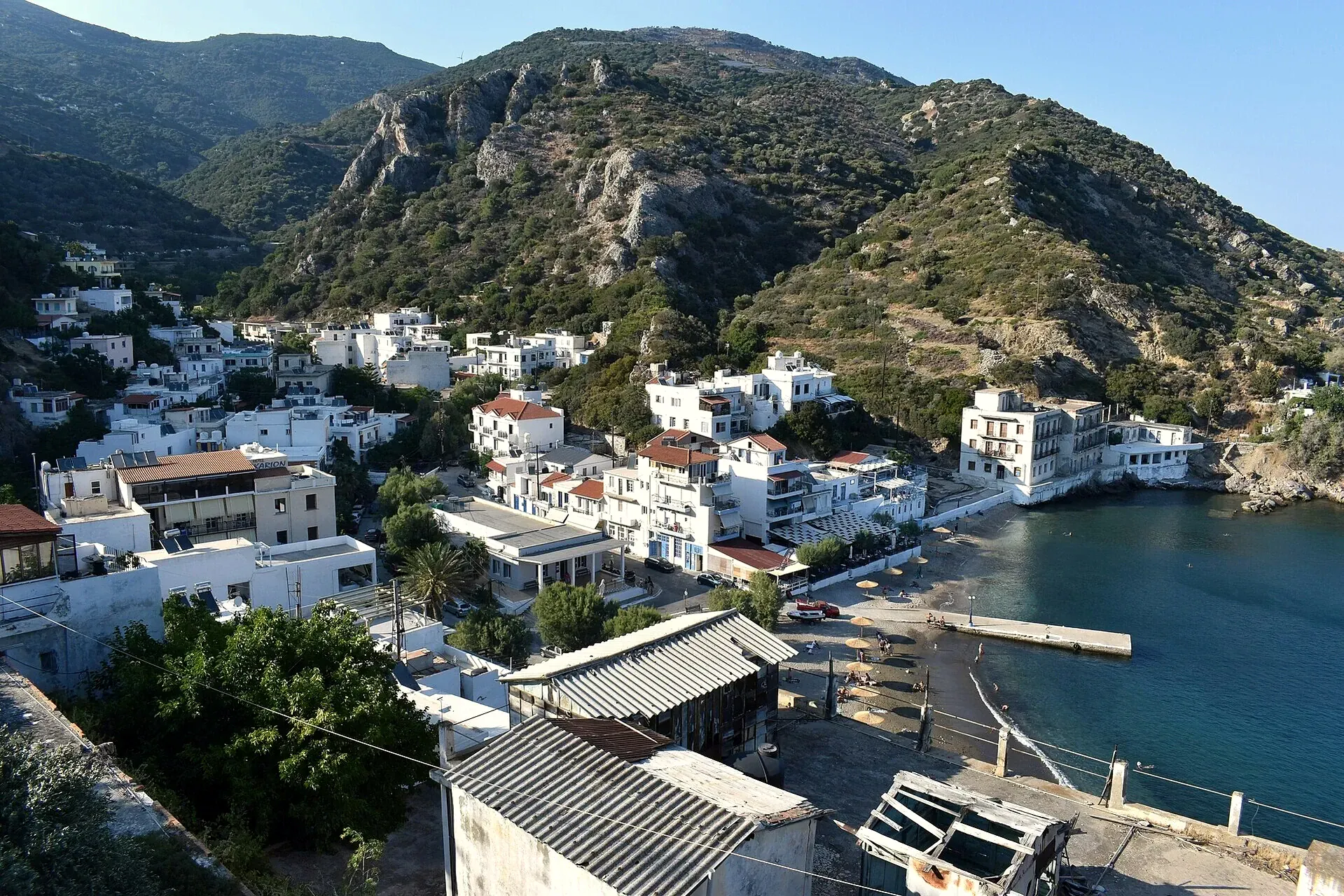
On the south coast, the village of Therma is well named. Thermal springs rise along the shore there, among the most mineral-rich in Europe, at temperatures ranging from about thirty degrees to nearly sixty. Greeks have come since antiquity to treat rheumatism and fatigue, and some of these radon-bearing waters were even prescribed by doctors.
The experience is nothing like a glossy spa. You slip into a natural basin cut into the rock, sometimes half open to the sea, and let yourself be enveloped by the heat while the waves come to cool the whole. Free and unadorned, this bath remains one of the most memorable pleasures on the island.
Nas, Armenistis and the northern shore
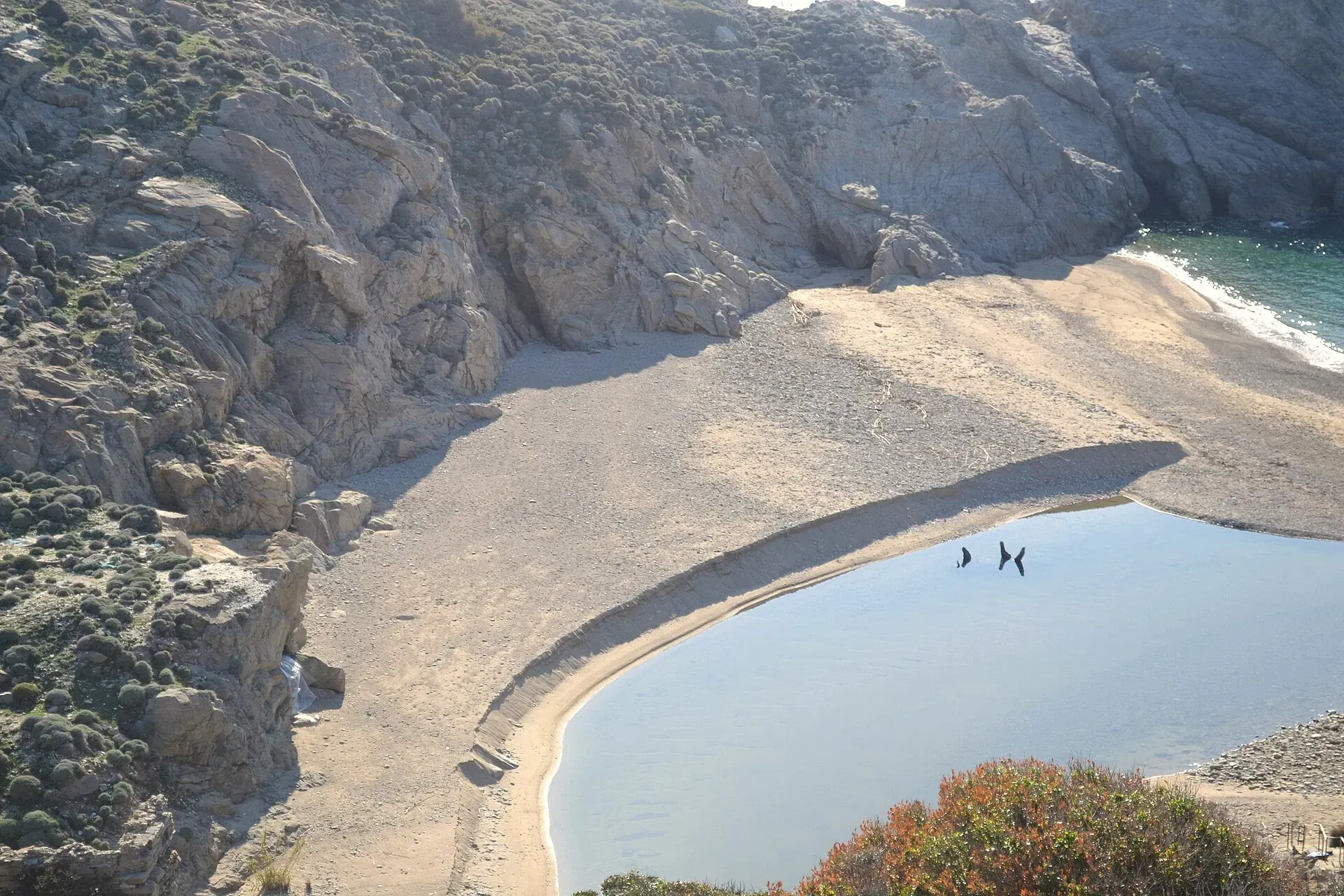
The north coast holds the villages most loved by travellers. Armenistis, a former fishing harbour, remains the ideal starting point for ranging out: on foot towards the interior, swimming along the neighbouring beaches, or simply sitting in front of a grilled octopus. Very close by, the long beaches of Livadi and Mesakti unroll their sand facing a sea that is often lively and playful.
A little further on, Nas holds a place apart. The Chalaris river joins the sea there in the hollow of a small enclosed cove, and on the heights above survive the ruins of a temple dedicated to Artemis, ancient guardian of sailors. The setting, between wooded gorge, pebbles and limpid waters, invites you to swim as much as to wander. Higher still, the oak forests and shaded paths recall that Ikaria is not only an island of the seaside: its green interior lends itself wonderfully to gentle walking, unhurried, from one village to the next.
The hidden villages of the interior
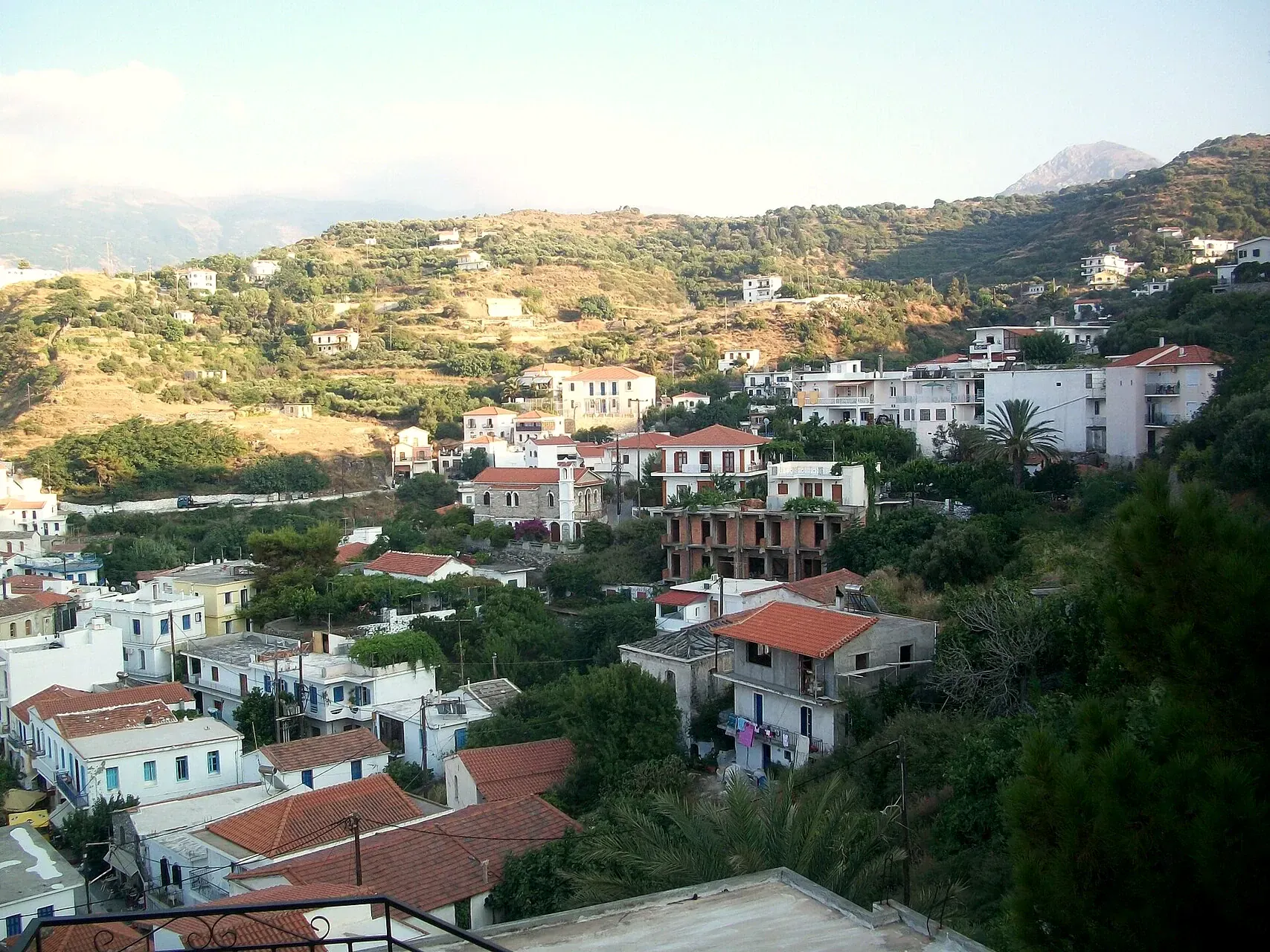
To understand Ikaria, you have to leave the coast and climb inland. The old villages do not stand proudly on the ridges there, they conceal themselves. For centuries the island was prey to pirates, and its inhabitants learned to make themselves invisible: low houses drowned in vegetation, scattered hamlets, discreet night-time life so as not to betray a presence from out at sea. This memory of clandestinity partly explains the independent spirit and the secret conviviality of the Ikarians.
Today, to travel through these perched villages is to trace the thread of a history of resistance and self-reliance. You come across tiny chapels, fountains, squares where you linger, and always somebody to offer you a coffee or a glass of home-made wine.
The panigiria, those nights that never end
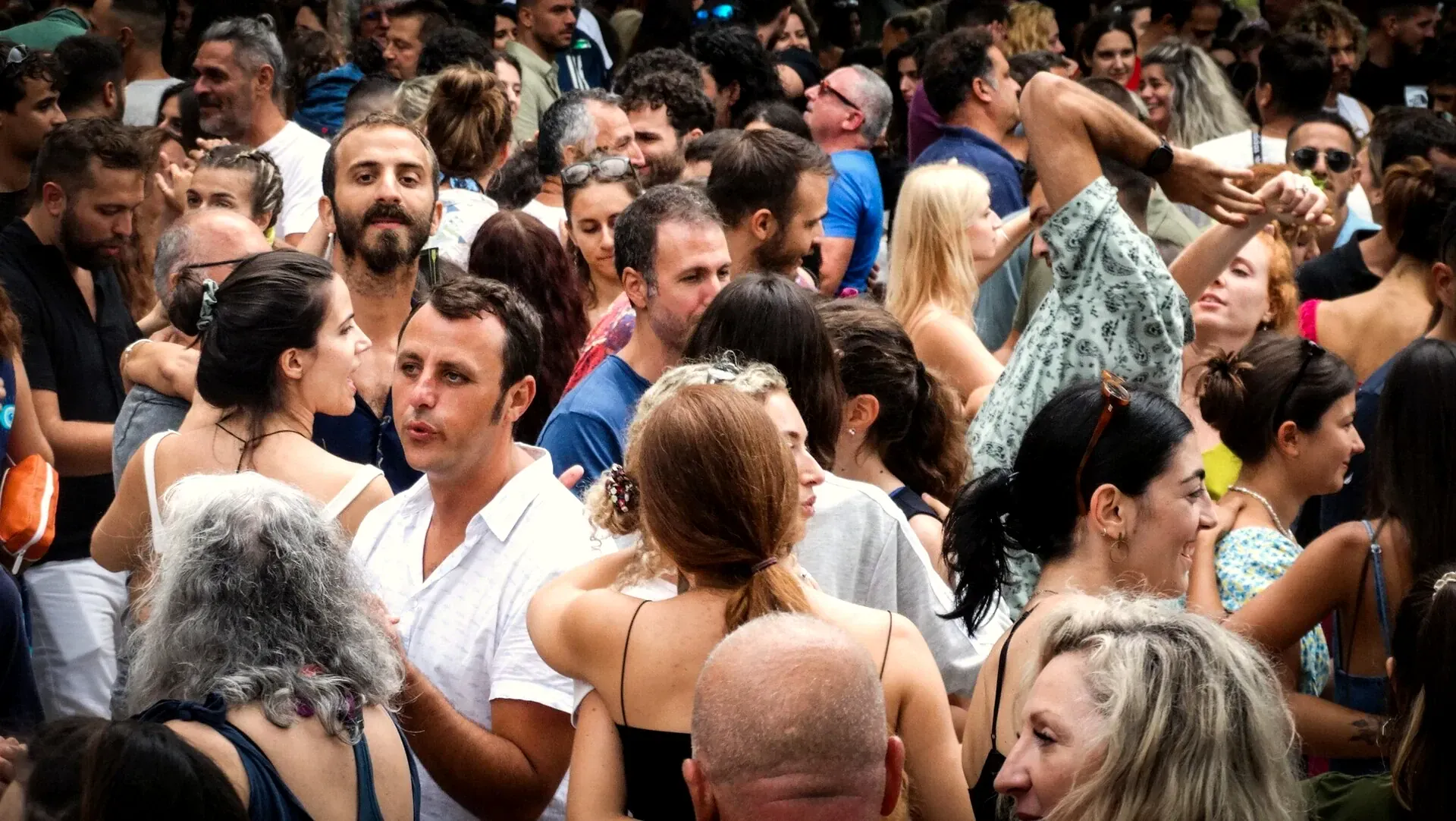
In summer, the island blazes with festivals. The panigiria are village banquets celebrating a saint and gathering neighbours, cousins and passing visitors around great long tables. There you share spit-roasted meat, wine, and dance the ikariotiko in a farandole until the small hours. Far from folklore for tourists, these festivals still belong to the community: the proceeds fund the school, the chapel or the village road.
The most intense is held around 15 August, the day of the Dormition, notably at Christos Raches and Lagada. But all summer, from June to September, a panigiri is being prepared somewhere. Ask your host: they will be able to tell you where the dancing will be that evening.
When to come, and how to make the most of it
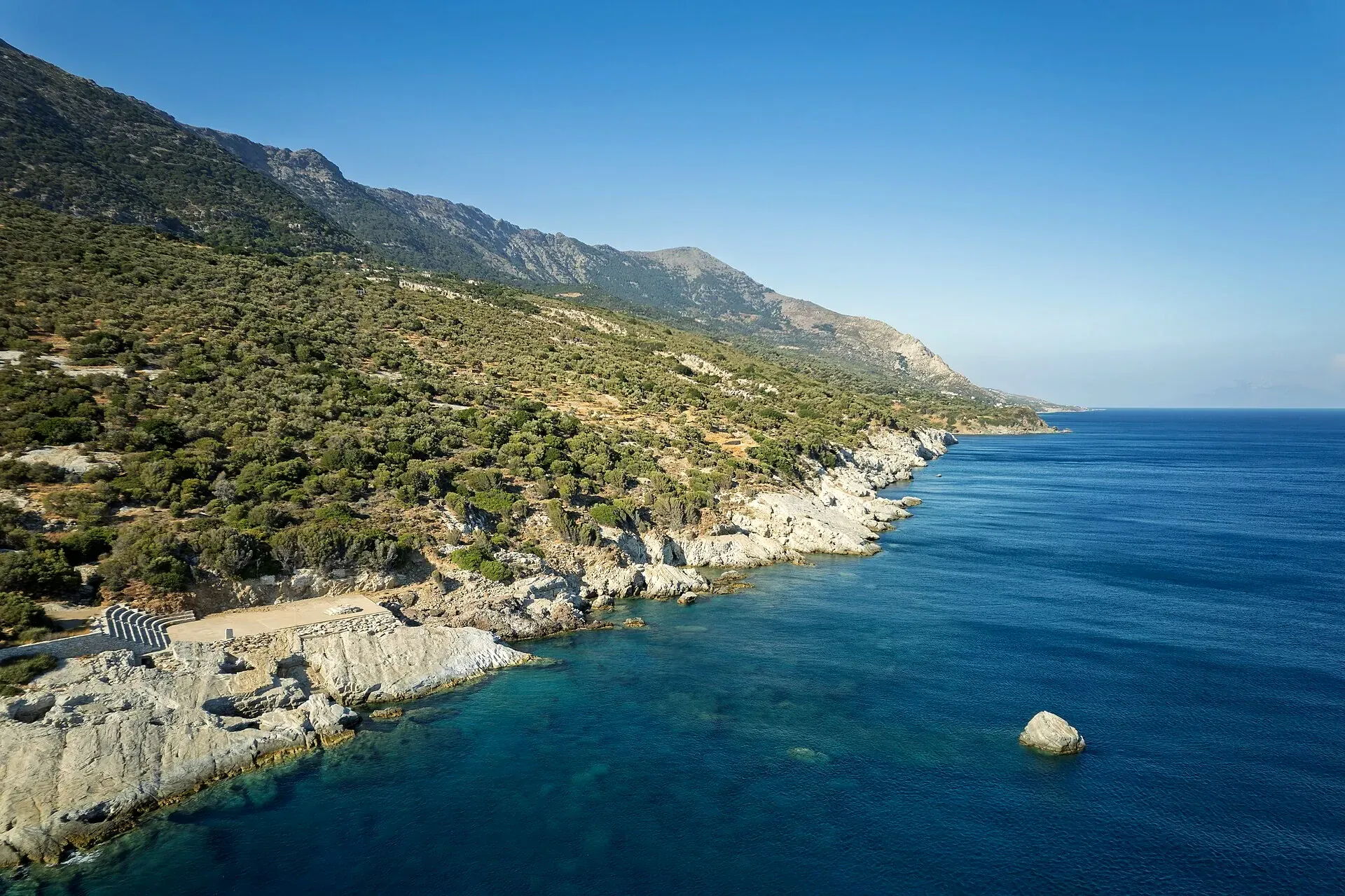
Ikaria is savoured away from the great heat. Late spring, from mid-May to June, offers hills in flower, a sea that is warming up and paths still quiet. September extends summer more gently, with water at an ideal temperature and villages recovering their calm. If you absolutely want to experience a panigiri, aim for August, accepting a few more people and a little more heat. To refine your dates according to your wishes, our guide to when to visit Greece reviews the seasons.
As for the spirit, it is better to come without too tight a programme. Ikaria rewards those who agree to wander, to change their mind, to extend a lunch. If you are still hesitating between several destinations, our guide to choosing your Greek island will help you see whether this philosophy of the long hour resembles you. And to blend swimming, tavernas and paths, take a look at our ideas for walking trips in Greece.
Frequently asked questions about Ikaria
Why is Ikaria a blue zone?
Ikaria is one of the five blue zones on the planet, those rare regions identified by Dan Buettner and National Geographic (with Okinawa in Japan, Sardinia, Nicoya in Costa Rica and Loma Linda in California) where people often live beyond ninety, and in good health. It is explained less by a secret than by a bundle of habits: a largely plant-based, Mediterranean diet, wild herbs gathered on the hills, daily walking, the afternoon siesta, a little shared wine and social bonds of rare solidity. Nothing miraculous, simply a slow rhythm that has always been lived here.
How do you get to Ikaria?
The simplest way remains the ferry from Piraeus, the port of Athens, with a crossing of 7 to 8 h and one or two daily departures in high season. In summer, sailings also link the island to Mykonos and to Samos, its neighbour, in barely 2 h. To save time, a small airport receives domestic flights from Athens, in about an hour’s flying. On arrival, be aware that Ikaria has two harbours, Agios Kirikos in the south and Evdilos in the north.
When can you attend a panigiri on Ikaria?
The panigiria enliven the villages all summer, from late June to mid-September. They are night-time festivals given in honour of a saint, around great long tables where spit-roasted meat, local wine and dancing until the small hours are shared. The most popular are held around 15 August, the day of the Dormition, notably at Christos Raches and Lagada. They remain open to all: you need only ask your host where the dancing will be that evening.
Your question is not on this list?
Write to us, and we will reply to you personally by email.
Article written by
Maria Papadopoulou (Μαρία Παπαδοπούλου)
Editorial lead
I hike, and Greece is the place I keep coming back to. My initial studies (a Master’s in Marketing and a degree in Applied Foreign Languages) taught me how to build an editorial project, and the trails taught me the… Read more