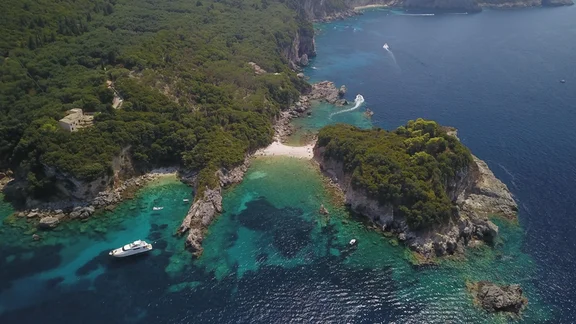
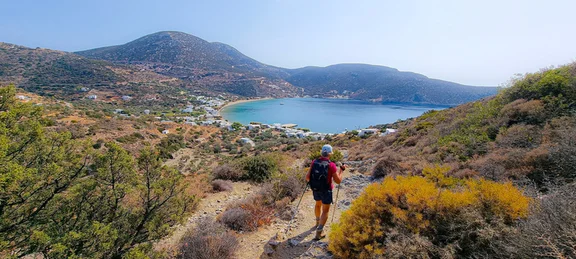
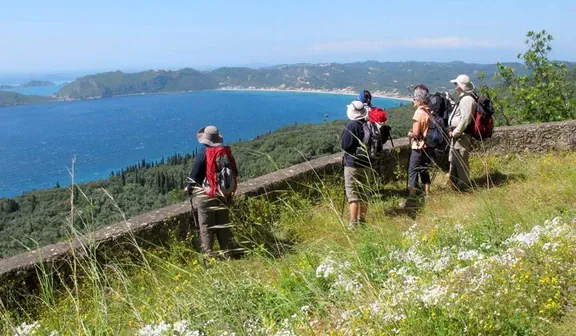
Picture an evening arrival at Skala. The ferry glides into the bay, the harbour lights come on one by one, and right at the top of the hill a fortified monastery watches over the island as it has done for nearly a thousand years. Patmos, in Greece, resembles no other island in the Dodecanese. You do not come to tick off a list of sites, but to slow down, breathe and let the calm do its work. It is an island of light and of contemplation, where even the most hurried travellers end up sitting on a terrace to look at the sea.
| In brief | The most peaceful of the Dodecanese islands, guarded by a thousand-year-old UNESCO-listed monastery. |
| Ideal for | Travellers in search of calm, history and spirituality, who like to wander and to swim |
| Best season | May and June, then September and October: mildness, a sea still warm, few people |
| Pace | Gentle, at your own speed, the ferry as part of the journey |
| Our trip | No Kelifos trip on Patmos to date: a free inspiration page |
An island apart, at the tip of the Dodecanese
Patmos keeps watch at the northern extremity of the Dodecanese, that archipelago of the south-eastern Aegean dominated by Rhodes and Kos. Smaller and more secret than its large neighbours, it shares with them that dense light and that scent of the East which set the region apart from the rest of Greece. If you like that spirit, our guide to the finest walks in Rhodes and our walking trips in Greece will open other horizons in the same vein, towards Rhodes or Karpathos.
The island has no airport, and that is probably what has preserved it. You arrive by sea: from Piraeus, by a long crossing that is already part of the journey, or more simply by reaching Kos, Samos or Leros by plane before a short ferry trip. This slight difficulty of access keeps the crowds at a distance and gives Patmos its very particular rhythm, slow and peaceful.
The cave of the Apocalypse, where it all began
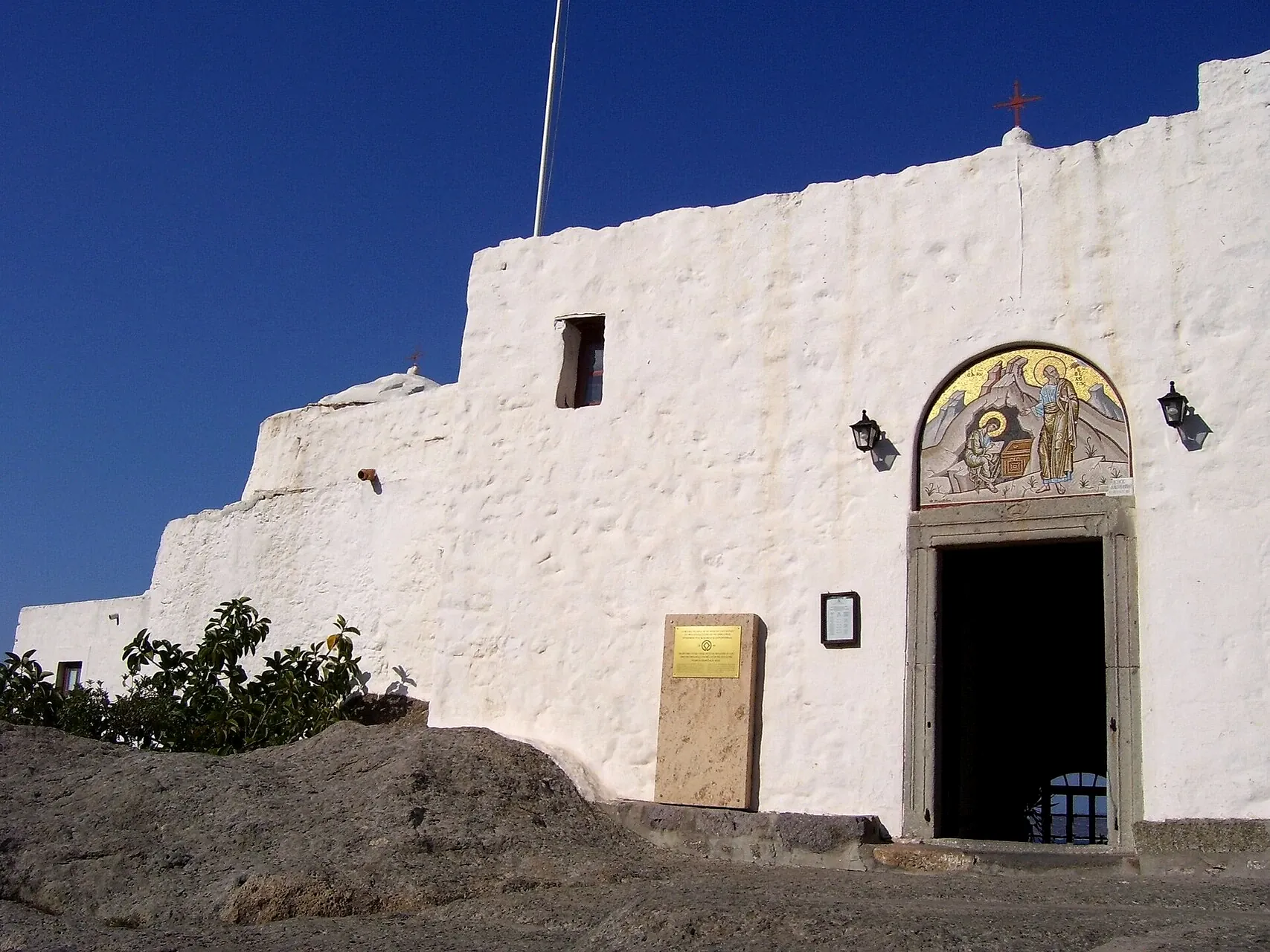
Halfway between the harbour of Skala and the village of Chora, a small cave hollowed into the mountainside draws visitors from all over the world. It was here, according to tradition, that Saint John received the visions of the Apocalypse, the last book of the New Testament, at the end of the first century. You go down a few steps, lower your head beneath the low vault, and enter a tiny space, dark and cool, where time seems suspended. A fissure in the rock, which tradition associates with the moment of the Revelation, still marks the stone. Believer or simply curious, you speak softly. With the monastery and the historic centre of Chora, the cave forms an ensemble inscribed on the UNESCO World Heritage list since 1999.
The monastery of Saint John the Theologian
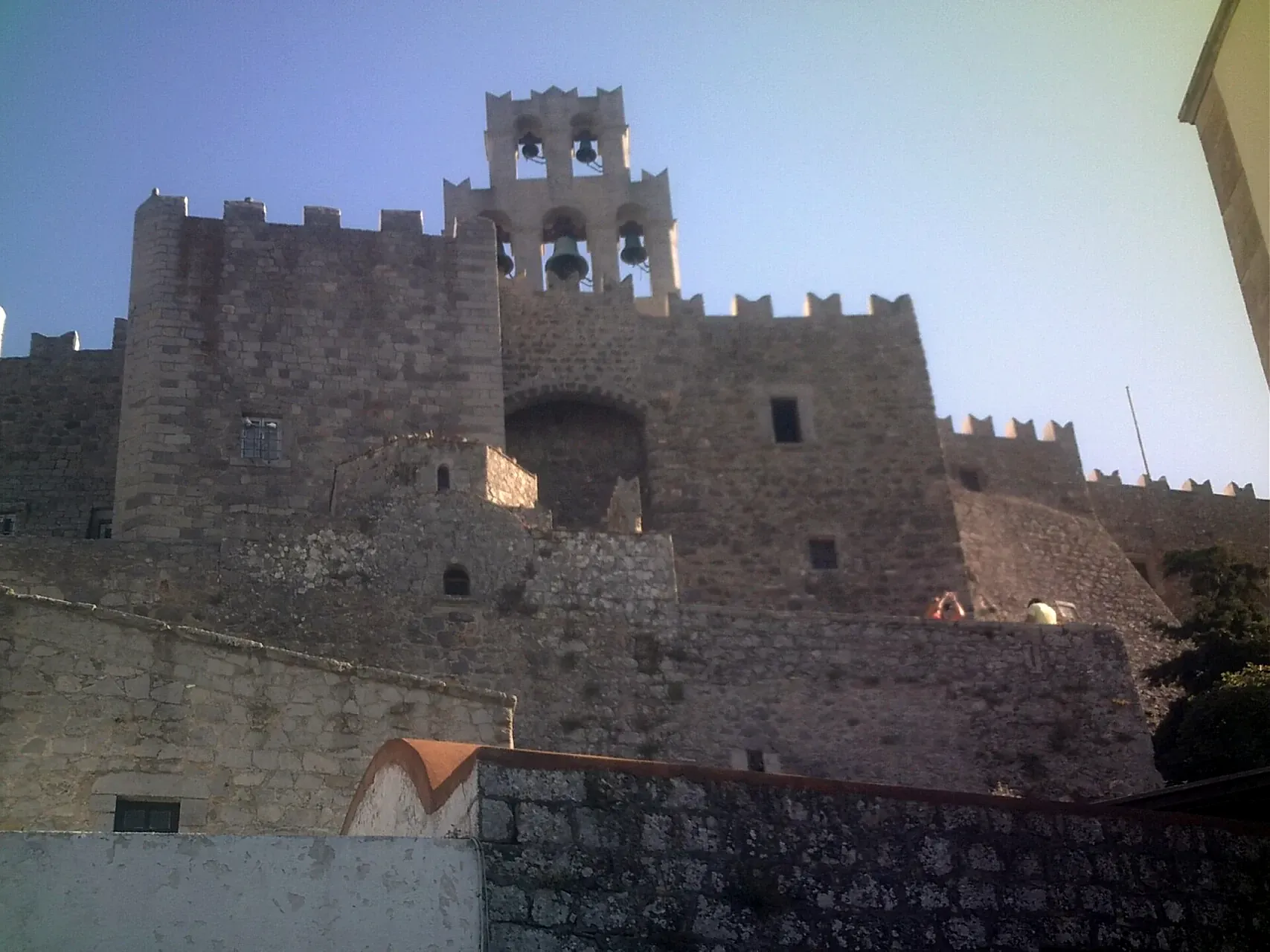
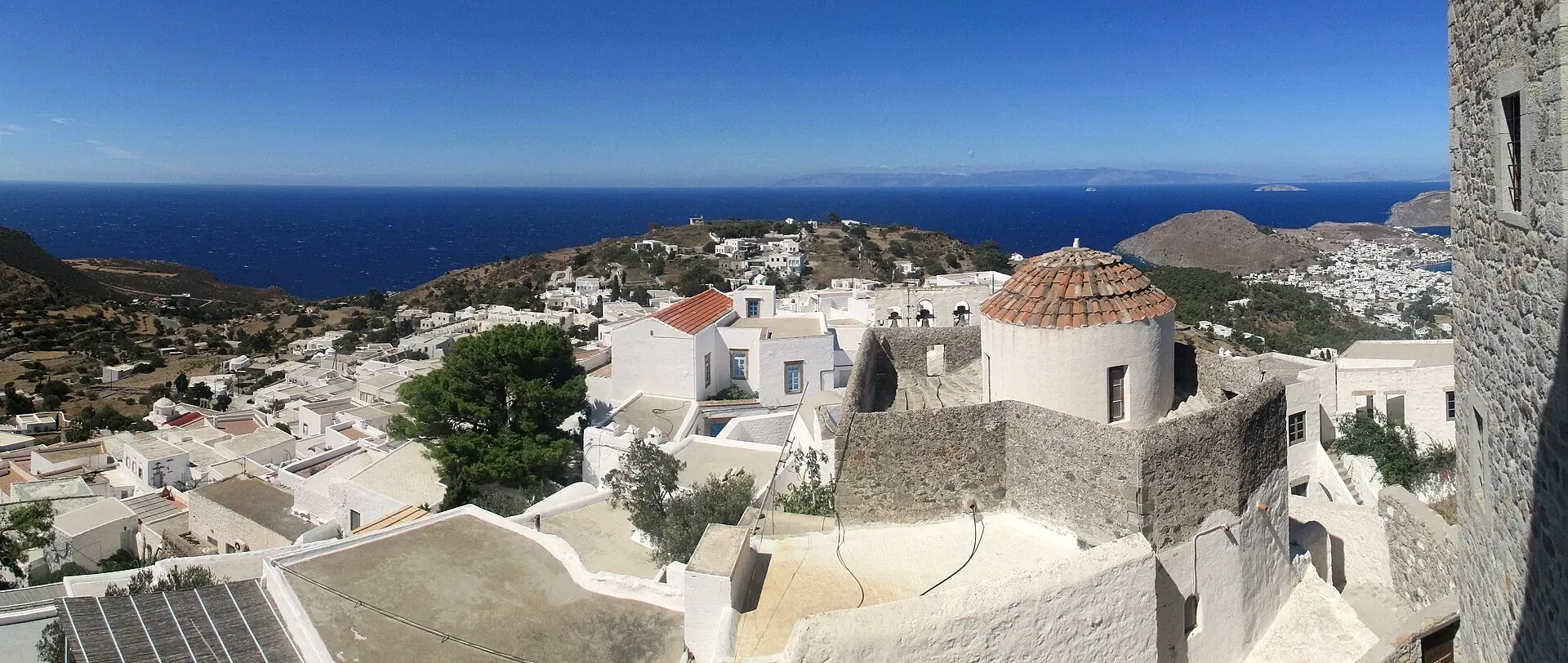
At the summit of the island, the monastery of Saint John the Theologian resembles a fortress more than a place of prayer. Its high walls, its towers and its battlements were raised from 1088 onwards by the monk Christodoulos, at a time when pirates scoured the Aegean. Behind these walls hide flower-filled courtyards, chapels adorned with Byzantine frescoes and a library that is among the most precious in Orthodox Greece. The finest thing, perhaps, is the climb: you make your way gently up the lanes of Chora to the entrance, and from the terrace the eye takes in the whole island, its indented bays, its islets set upon the water and, in clear weather, the silhouette of the neighbouring islands. Bring clothing that covers shoulders and knees: the monastery remains a very much living place of worship.
Chora, the suspended village
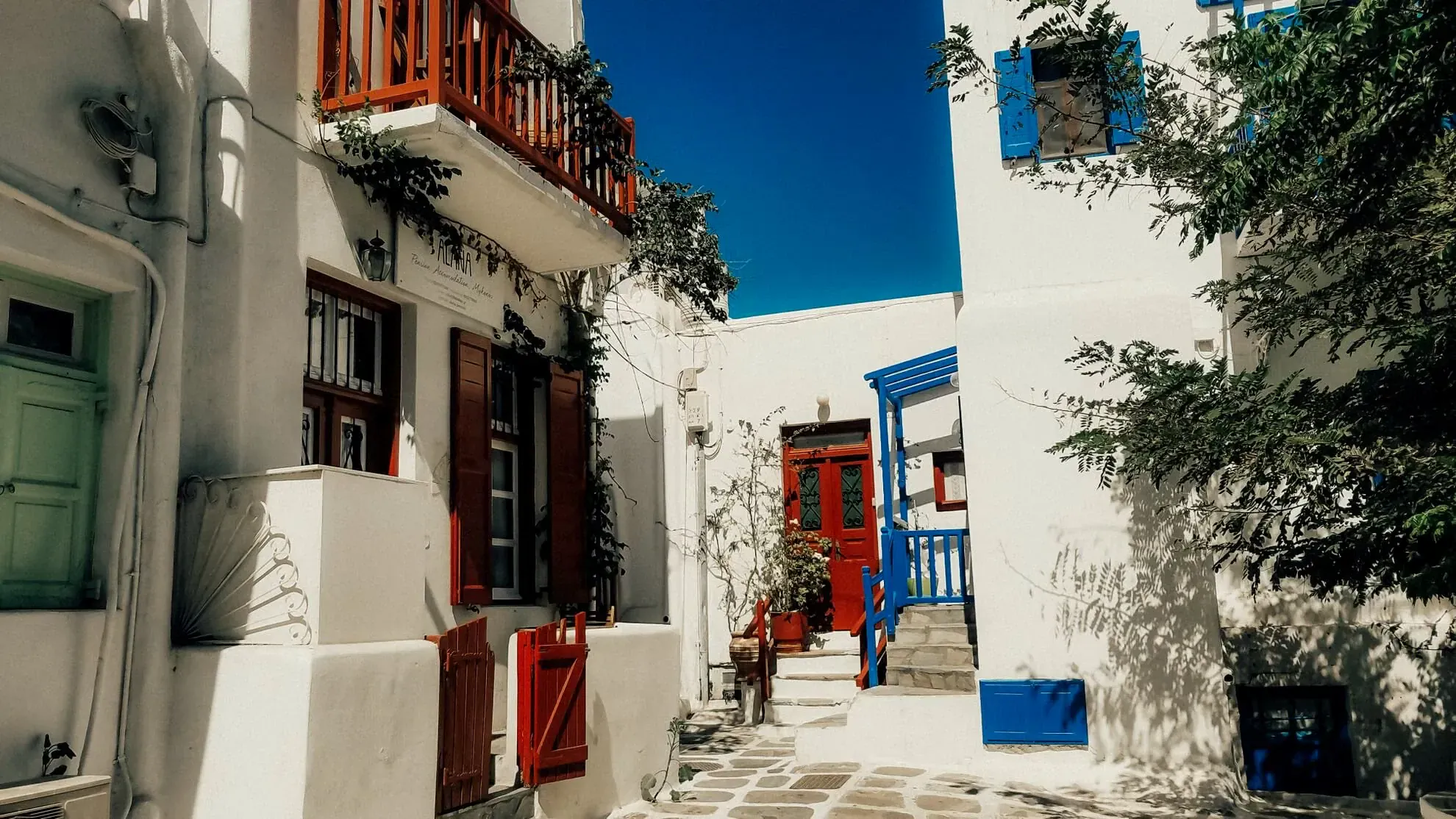
Around the monastery, Chora unrolls a labyrinth of cobbled lanes, whitewashed walls and lordly houses with studded doors. The village has been built without interruption since the twelfth century, and you feel it: every vaulted passage, every inner courtyard seems to keep a story. Some of these old captains' and shipowners' houses have been tastefully restored, others sleep behind their closed shutters. You wander without aim, get a little lost, find the light again at the turn of a small square, and often end up sitting at a terrace for a Greek coffee facing the blue. In the evening, when the day visitors have taken their boat back, Chora recovers its silence and its gentleness.
Skala, the beating heart of the harbour
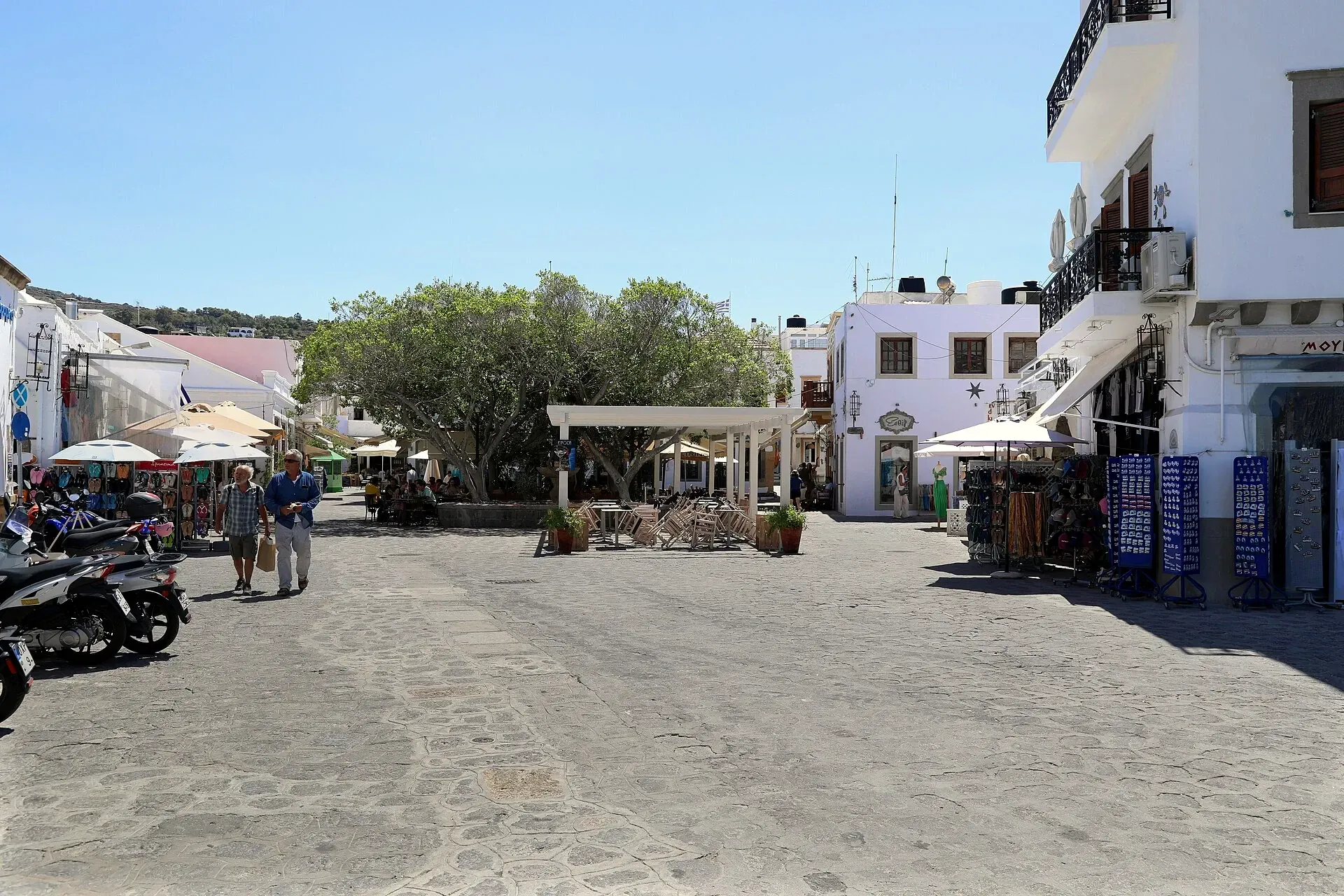
Below, Skala is the island’s only real harbour and its centre of life. It is there that the ferries dock, there that the fishermen unload their crates in the early morning, there that you do your shopping and find, when evening comes, the quiet animation of the terraces. Cafés and bakeries line the quay, yachts rock beside colourful boats, and it is good to settle there, an ouzo within reach, to watch the ballet of the boats. Skala is also the ideal starting point for ranging out, since on this small island everything is a few minutes away.
The finest beaches of Patmos
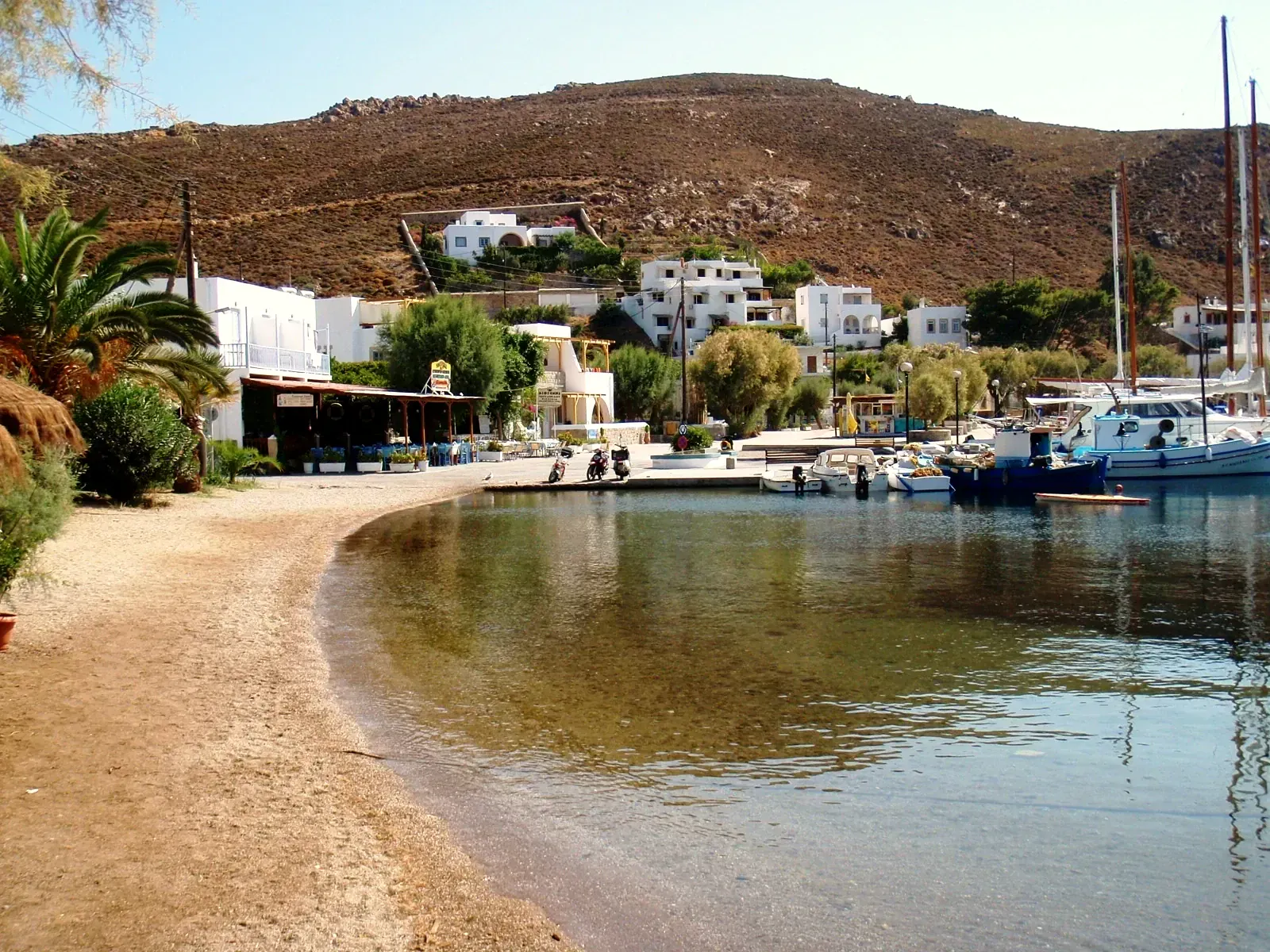
Patmos is not an island of long sandy beaches, but its coves have character. In the south, Psili Ammos is the most coveted: a crescent of fine sand and turquoise water, sheltered by tamarisks that offer their shade. You reach it by about thirty minutes' walking on a gentle path, or by small boat from Skala, which adds to the pleasure of arriving. Grikos, closer to the harbour and far easier to reach, stretches the island’s longest beach in a calm bay lined with tavernas, perfect for a peaceful day alternating swimming and a lunch that goes on and on. In the north, Lambi astonishes with its multicoloured pebbles, polished by the sea, which shine in the sun and give the shore the look of a mosaic. The taverna set right at the edge serves fish of impeccable freshness, almost with your feet in the water.
An atmosphere that soothes
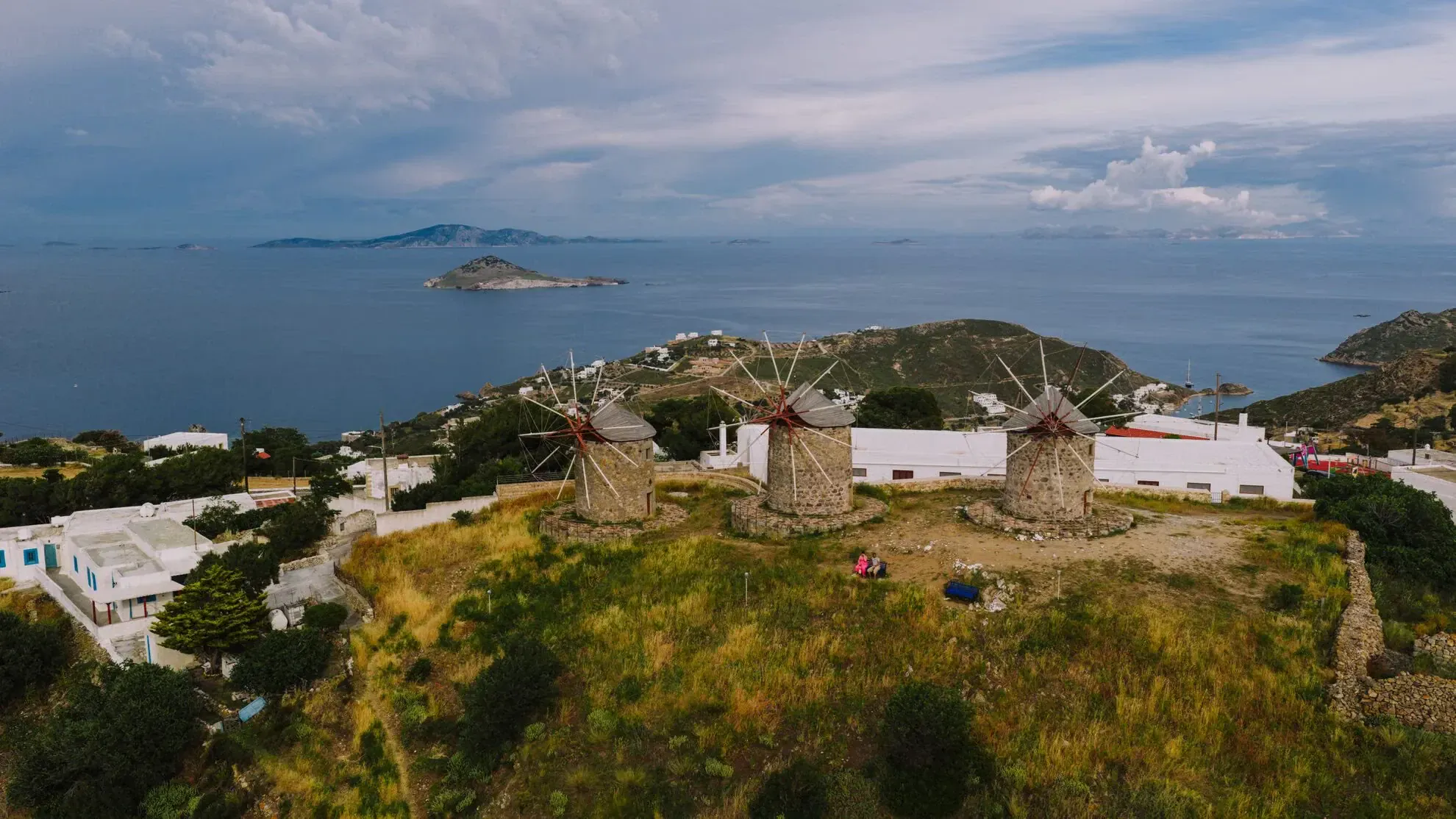
What strikes you on Patmos is the atmosphere. The island attracts pilgrims, artists and lovers of calm, and a discreet elegance floats there without ever tipping into ostentation. People speak more softly than elsewhere. The chapel bells give rhythm to the days, incense sometimes mingles with the scent of jasmine, and even in high season you need only move a few hundred metres away to find silence again. Patmos is not an island where you rush. It is an island where you take the time to read, to walk without aim, to dine at length and to watch the sun fall behind the sea. For anyone seeking serenity rather than bustle, it is an obvious answer.
When to go and how to organise it
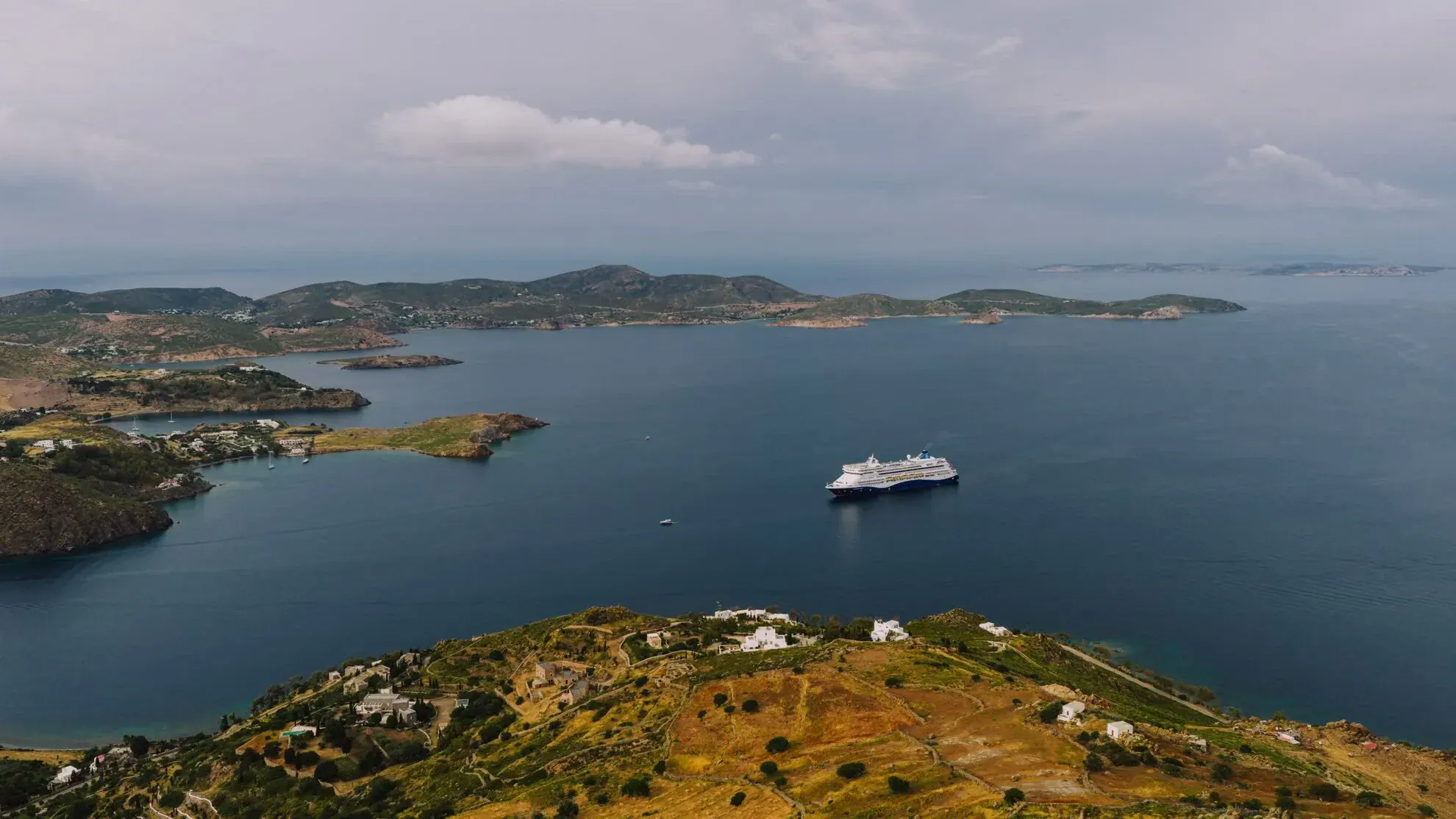
The fine season for discovering Patmos runs from spring to autumn. May and June offer nature still green, hills in flower and mild days, perfect for walking quietly from one cove to another. September and October extend summer more peacefully: the sea stays warm until late in the season, the light turns golden and visitors grow scarce. The heart of summer is livelier and hotter, to be kept for those who love the life of harbours in full swing.
On the organisational side, the simplest thing is often to combine Patmos with one or two neighbouring islands, as the ferries regularly link Leros, Kos, Kalymnos or tiny Lipsi. If you are still hesitating over your Greek destination, our guide to choosing the Greek island that suits you and our overview of the most beautiful Greek islands will help you put together the trip that fits. And to walk in Greece at your own pace, browse our finest paths, island by island.
Frequently asked questions about Patmos
How do you get to Patmos?
Patmos has no airport, and it is reached only by sea. From Piraeus, the ferry takes 7 to 8 h, a crossing that is already part of the journey. To save time, many first reach Samos, Kos or Leros by plane, then Patmos by fast boat, sometimes only a little over an hour.
What must you see on Patmos?
Three places sum up the soul of the island: the cave of the Apocalypse, where Saint John is said to have received his visions, the fortified monastery of Saint John the Theologian and the suspended village of Chora, with its whitewashed lanes. Also keep time for the coves, from Psili Ammos to the multicoloured pebbles of Lambi, and an evening on the harbour at Skala, an ouzo within reach.
Why is Patmos on the UNESCO World Heritage list?
Since 1999, UNESCO has protected a unique ensemble: the historic centre of Chora, the monastery of Saint John the Theologian founded in 1088 and the cave of the Apocalypse. This trio illustrates a rare example of an Orthodox pilgrimage centre that has remained living and preserved down the centuries. It is this sacred dimension, as much as the beauty of the place, that sets Patmos apart from its Dodecanese neighbours.
Can you go walking on Patmos?
The island is small and lends itself above all to fine strolls, such as the paved climb from Skala to Chora or the gentle path down to the beach of Psili Ammos. You will not find long waymarked itineraries there, but the pleasure of moving at your own pace from a cove to a monastery. If you dream of walking more in Greece, our walking trips island by island take you towards Rhodes, Karpathos and other horizons in the same spirit.
Your question is not on this list?
Write to us, and we will reply to you personally by email.
Article written by
Maria Papadopoulou (Μαρία Παπαδοπούλου)
Editorial lead
I hike, and Greece is the place I keep coming back to. My initial studies (a Master’s in Marketing and a degree in Applied Foreign Languages) taught me how to build an editorial project, and the trails taught me the… Read more