

You are hesitating between Santorini and Naxos for your next escape to the Cyclades, and you are right to ask the question: these two islands have almost nothing in common except the blue of the Aegean. Santorini is the spectacle, the caldera, the blue domes and the sunsets the whole world comes to photograph. Naxos is the other side of the postcard: the largest of the Cyclades, green, secret, made of marble villages, olive valleys and tables where you linger without watching the clock. If you like to walk quietly and to savour rather than tick boxes, this comparison is written for you. We are going to be honest, including about what grates: the crowds, the prices and the real joy of setting your steps somewhere.
| In brief | Santorini for short, spectacular wonder, Naxos for walking and savouring at your own pace. |
| Choose Santorini if… | you are coming for the setting, the caldera and a legendary sunset, over a few days, without looking for long quiet walks. |
| Choose Naxos if… | you want to wander from village to village, walk gentle paths, and eat well and truly, far from the crowds. |
| Best season | Spring (May-June) and early autumn (September-October), for the mildness and the calm. |
| Pace | Gentle, adaptable, at your own rhythm; luggage carried for you. |
| Our trip | Naxos and Amorgos self-guided (the ideal way in on the Naxos side; Santorini is discovered as a stage, never as a trip of its own). |
Santorini or Naxos: two islands, two promises
Before going into detail, let us set the scene. A table is no substitute for a terrace facing the sea, but it helps you see clearly when you are hesitating.
| Criterion | Santorini | Naxos |
|---|---|---|
| Atmosphere | Spectacular, romantic, very touristy | Authentic, rural, peaceful |
| Setting | Volcanic caldera, blue domes, cliffs | Green valleys, marble villages, mountains |
| Walking | One great path, along the caldera, often busy | A network of gentle paths between perched villages |
| Crowds | Dense in summer, especially at Oia at sunset | Moderate, even in high season |
| Budget | Among the highest in Greece | Reasonable, good pleasure-to-price ratio |
| The table | Unbeatable view, bill to match | Local produce, village prices |
Santorini: the spectacle, but short of breath
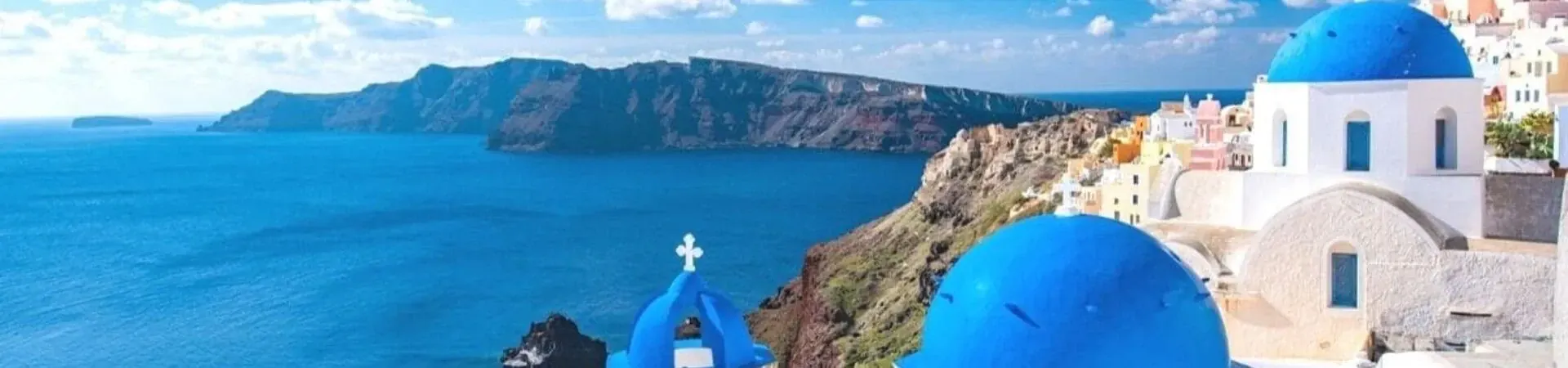
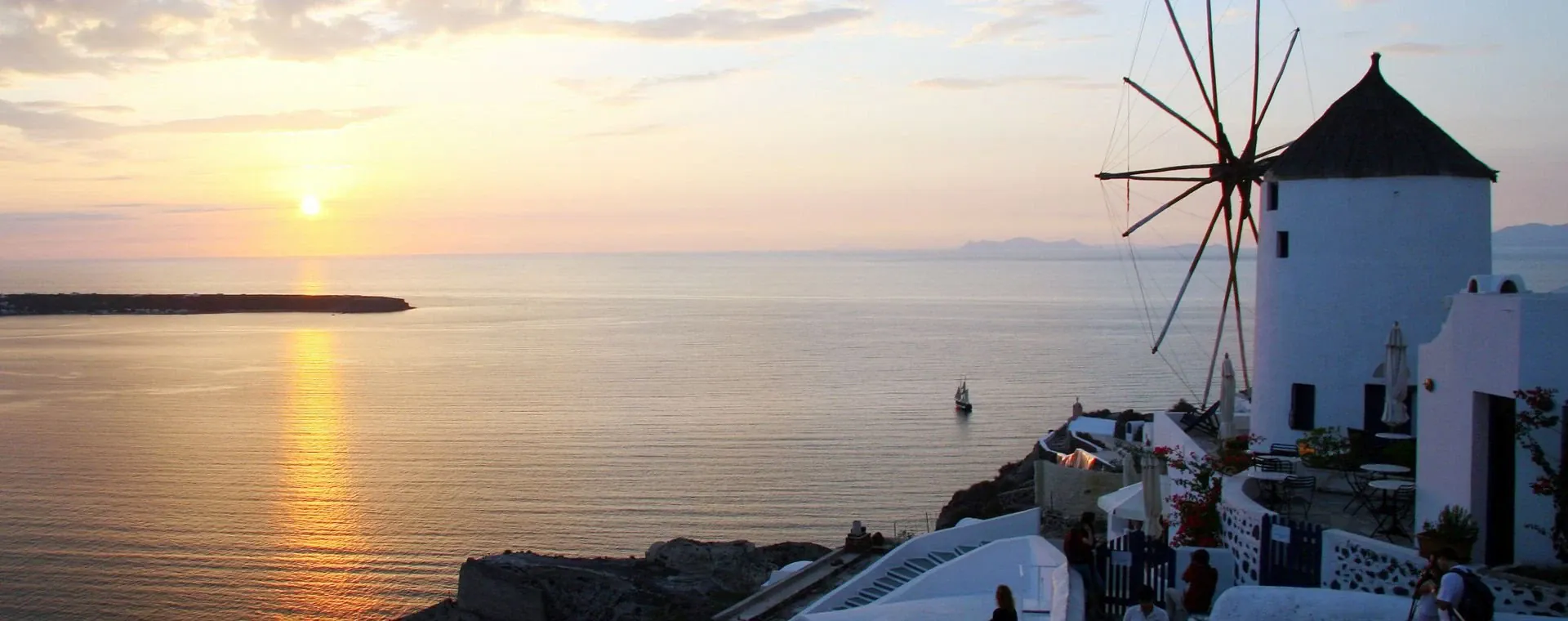
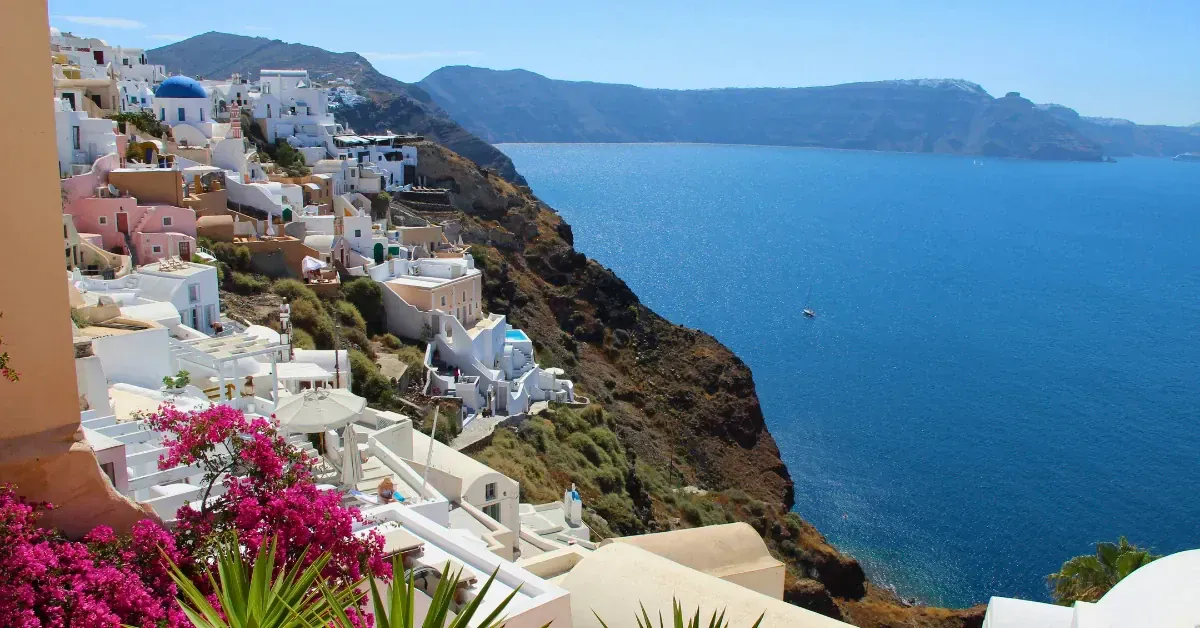
Let us say it frankly: Santorini deserves its reputation. Few places in the world offer so striking a setting. The caldera is the collapse of a volcano whose eruption, nearly 3,600 years ago, shaped this crescent of rock suspended above the blue. The white villages of Fira and Oia cling to the cliff, the blue domes stand out against the sea, and the Oia sunset remains, in spite of everything, a moment you do not forget.
Walking exists here, and it is beautiful. The caldera path, from Fira to Oia, unrolls some ten kilometres along the edge of the void, by way of Firostefani, Imerovigli and the rock of Skaros. It is a magnificent itinerary, but it is more or less the only one on the island, and you have to do it early in the morning to escape the sun and the flow of visitors.
For here is the other side of the setting. Santorini is one of the busiest islands in Greece. In summer the cruise ships pour out thousands of people in a few hours, the lanes of Oia turn into a queue at sunset, and the terraces with a view display prices that no longer have much that is Greek about them. For anyone seeking calm, long quiet walks and the authenticity of a village, Santorini can disappoint. You come for the setting, you leave dazzled, but often a little rushed.
Our advice: Santorini is savoured in small doses. Two or three days are enough to take its full measure, ideally out of season, in spring or autumn, when the light is soft and the lanes breathable.
Naxos: the real island of walkers and food lovers
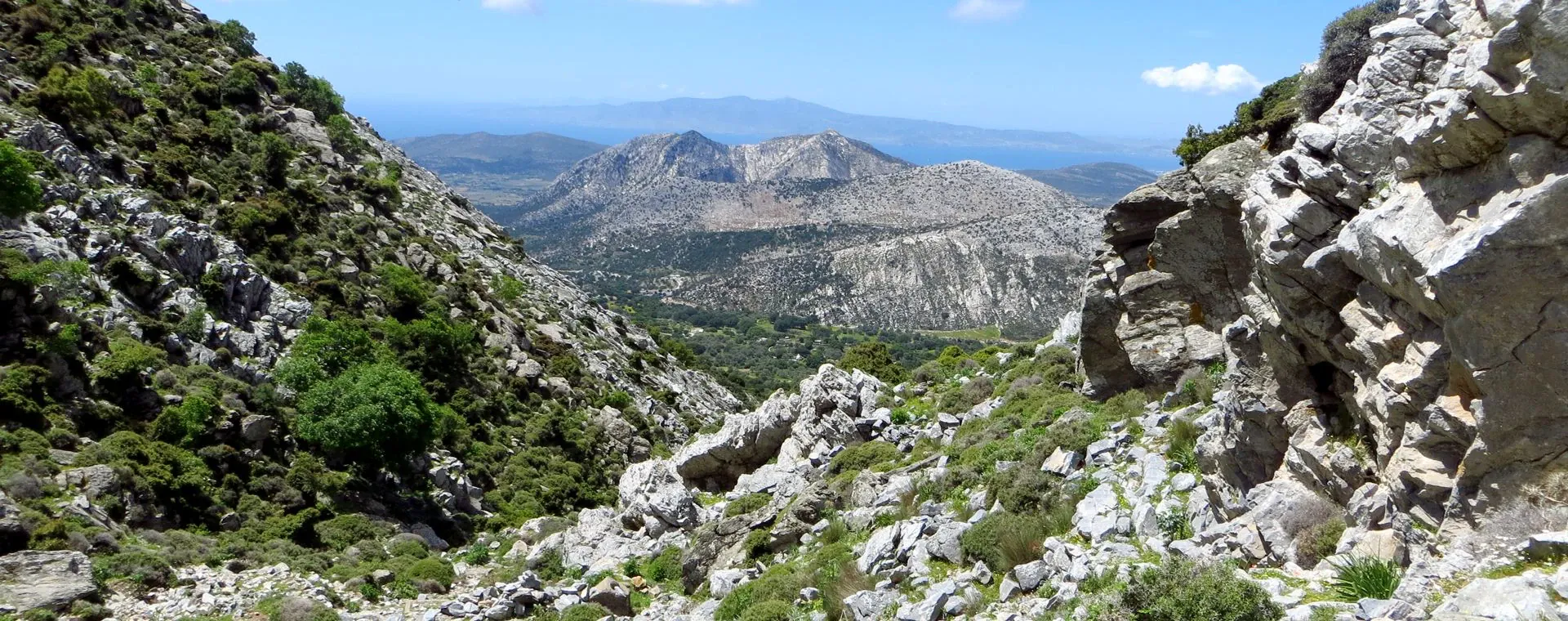
Change island, change era. Naxos is the largest of the Cyclades, and the most generous. Here water is never lacking: springs feed olive valleys, citrus orchards and fields that turn green as early as spring. It is an island where people farm, raise animals, and cook what they harvest. The contrast with the spectacular aridity of Santorini is total, and that is precisely what makes its charm.
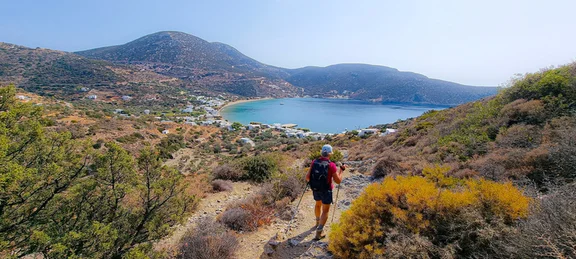
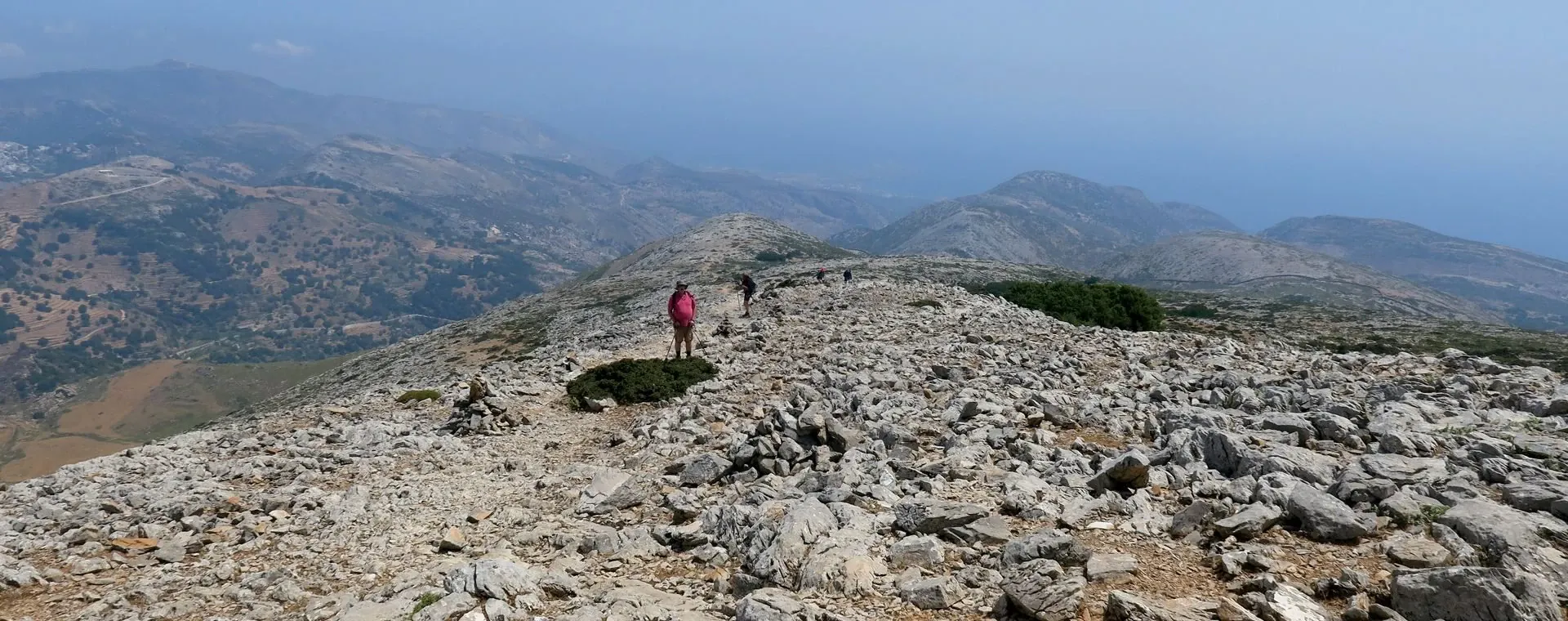
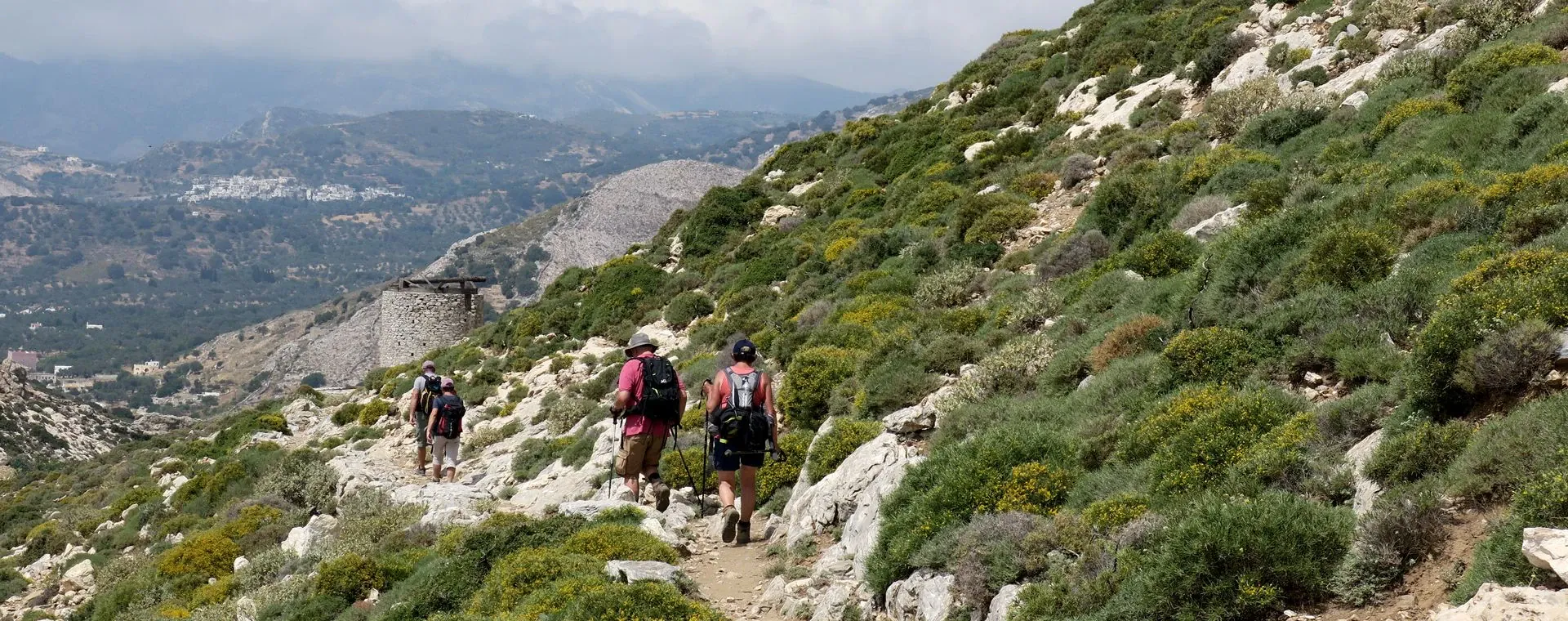
You can walk everywhere on Naxos, and always at your own pace. Old mule tracks, often paved with local marble, link the villages of the interior. You set off from Chalki, the old town of neoclassical houses where kitron is distilled, that citrus liqueur particular to the island. You climb gently towards Filoti, clinging to the flank of Mount Zas, the highest summit in the Cyclades, then on towards Apiranthos, the marble village where every lane is a small open-air museum. Between two villages you come across Byzantine chapels, cool springs, shepherds, and you take the time to sit down.
And then there is the table, which on its own justifies the journey. The graviera cheese of Naxos, the island's renowned potatoes, thyme honey, candied citrus, all washed down with a local wine and finished with a glass of kitron: you eat here as nowhere else in the Cyclades, and for the price of a village, not that of a view. Not forgetting the beaches: long stretches of golden sand on the west coast, easy to reach, perfect for a swim after walking.
Naxos asks that you give it time. A week is not too much to taste its villages, its paths and its terraces. It is an island you come back to, and one you always regret having left too soon.
Do you really have to choose?
Good news: the two islands are linked by ferry. The crossing between Naxos and Santorini takes from 1 h 30 on the fast boat to about 2 h 30 on the classic ferry, with many departures each day in season. Nothing therefore stops you combining the two, keeping Santorini for the wonder and Naxos for the stay.
That is exactly the spirit of our walking trip linking Naxos, Amorgos and Santorini: 12 days to taste the best of the archipelago, placing Santorini as a final flourish rather than as a trip in its own right. If you would rather linger over the greenery and the villages, Naxos and Amorgos self-guided remains the finest way in to walk and savour at your own pace. And for anyone who still wants to see the caldera, Crete offers another approach by sea in our trip between Crete and Santorini, on the paths of King Minos.
One honest point: we do not offer a trip devoted solely to Santorini. The island lends itself poorly to an extended walking stay, and we prefer to have you discover it as a stage, within an itinerary that breathes, rather than shutting you in there for several days.
In practice: season, comfort and budget
Whichever island your heart chooses, a few markers help you prepare the trip well.
The season makes all the difference. Summer, July and August, concentrates the heat and the crowds, particularly on Santorini. To walk in the cool, enjoy the terraces without booking weeks ahead and meet locals rather than groups, aim for spring, from May to June, or early autumn, in September and October. The light gains in softness and the sea stays good for swimming, in villages that have recovered their calm.
The budget deserves to be anticipated. Santorini is among the most expensive destinations in Greece: accommodation with a caldera view, panoramic tables and transfers all have a cost. Naxos remains distinctly more affordable, with charming addresses on a human scale and village tavernas where you eat well for the price of a simple meal. For equal pleasure, the wallet breathes more easily on the Naxos side.
On the comfort side, our trips are designed so that there is nothing to carry and nothing to organise. Your luggage travels from one address to the next while you walk light, the hotels are chosen for their charm and their welcome, and you keep the freedom to adapt each day as you please: a walk in the morning, a nap in the shade of a plane tree, a swim at the end of the afternoon. No group constraint, no timetable to keep, just the pleasure of discovering at your own pace.
Our verdict
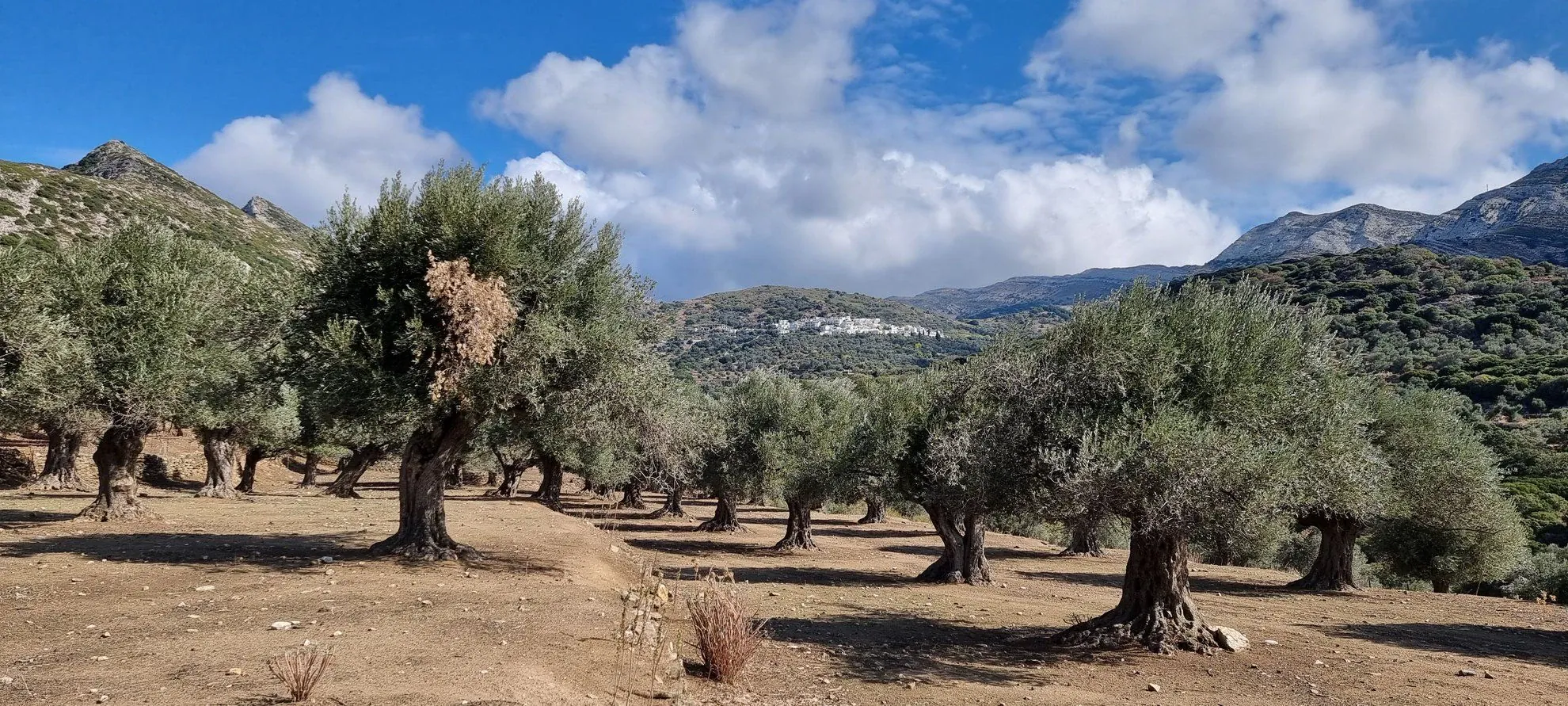
If you were to keep only one thing: Santorini for the wonder, Naxos for the life. Come to Santorini for the setting, the thrill of the caldera and a sunset you will not forget, knowing that you will share the view with a great many people and that the bill will match the panorama. Choose Naxos to walk from village to village, for the marble paths, the green valleys, the generous tables and the feeling, rare today, of having found an island that still lives at its own pace.
For a traveller who likes to take their time, to wander rather than perform and to savour as much as to look, the heart leans without hesitation towards Naxos. But the finest thing, perhaps, is not having to decide once and for all: one ferry is enough to pass from one to the other.
Frequently asked questions about Santorini and Naxos
Santorini or Naxos for a first time in the Cyclades?
It all depends on what you are coming for. If you have few days and dream of the postcard setting, the caldera and the Oia sunset, Santorini offers immediate wonder. For a first real encounter with the Cyclades, Naxos proves more complete: the largest island in the archipelago brings together marble villages, green valleys, gentle paths and long sandy beaches, all at a village pace and a village price.
Naxos or Santorini for calm and authenticity?
Naxos, without hesitation. Its inland villages, Chalki, Filoti and Apiranthos, keep a peaceful rural life even in high season, where Oia fills up every evening at sunset. There you savour local produce, graviera cheese and thyme honey, for the price of a village meal rather than that of a panoramic terrace.
Where can you find a walking map or itinerary for Naxos?
The Anavasi (no. 10.28, at 1:40,000) and Terrain walking maps cover the island with its waymarked paths, the Byzantine chapels of the Tragaia valley and the gentle climb towards Mount Zas, the highest summit in the Cyclades. If you would rather prepare nothing yourself, our self-guided trips such as Naxos and Amorgos self-guided give you detailed route notes and the GPS tracks, to go from village to village at your own pace and without worrying about navigation.
Can you combine Santorini and Naxos in a single trip?
Yes, and it is even a fine idea. The two islands are linked by ferry, from 1 h 30 on the fast boat to a little over 2 h on the classic vessel, with several sailings a day in season. That is the whole spirit of our Naxos, Amorgos and Santorini itinerary, which keeps Santorini for the final flourish, once the villages and paths of Naxos have been savoured.
Your question is not on this list?
Write to us, and we will reply to you personally by email.
Continue reading
- Which Cyclades island to choose for the trip you have in mind?
- Naxos or Paros: which Cycladic island suits the trip you want?
- The Best Hikes in Naxos
- The Best Hikes in Santorini
Article written by
Maria Papadopoulou (Μαρία Παπαδοπούλου)
Editorial lead
I hike, and Greece is the place I keep coming back to. My initial studies (a Master’s in Marketing and a degree in Applied Foreign Languages) taught me how to build an editorial project, and the trails taught me the… Read more