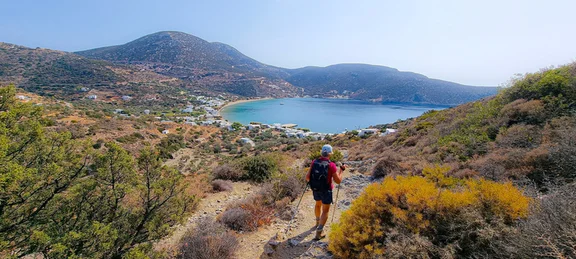
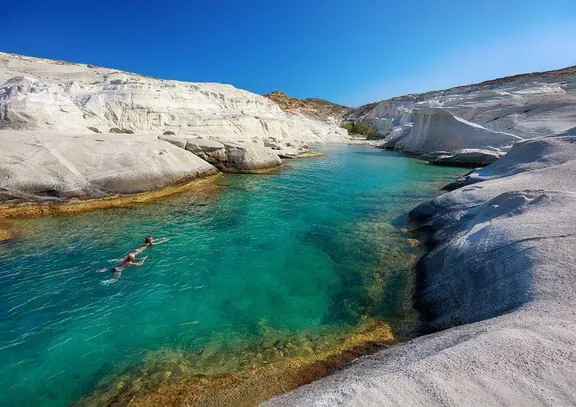
Picture a stone path descending gently between two low walls, the shade of a plane tree beside a stream, and lower down the glittering sea. Andros is that Greece you do not expect: green, cool, crossed by springs and threaded with old mule tracks where you walk alone or nearly so. The most northerly of the large Cyclades keeps its wooded valleys and its stone villages far from the bustle of the neighbouring islands. Here, walking in Andros is savoured at a stroll, nose to the wind, with a taverna at the end of the path.
| In brief | The greenest of the northern Cyclades, threaded with an award-winning network of stone paths and still spared the crowds. |
| Ideal for | Curious walkers who like to alternate shaded valleys, stone villages and quiet swims. |
| Best season | Spring (April to June) and early autumn (September to October). |
| Pace | Gentle, à la carte: walks of 2 to 4 h, never athletic. |
| Our trip | Grand tour of the Cyclades on foot, Andros included, 14 days |
Andros, the green surprise of the Cyclades
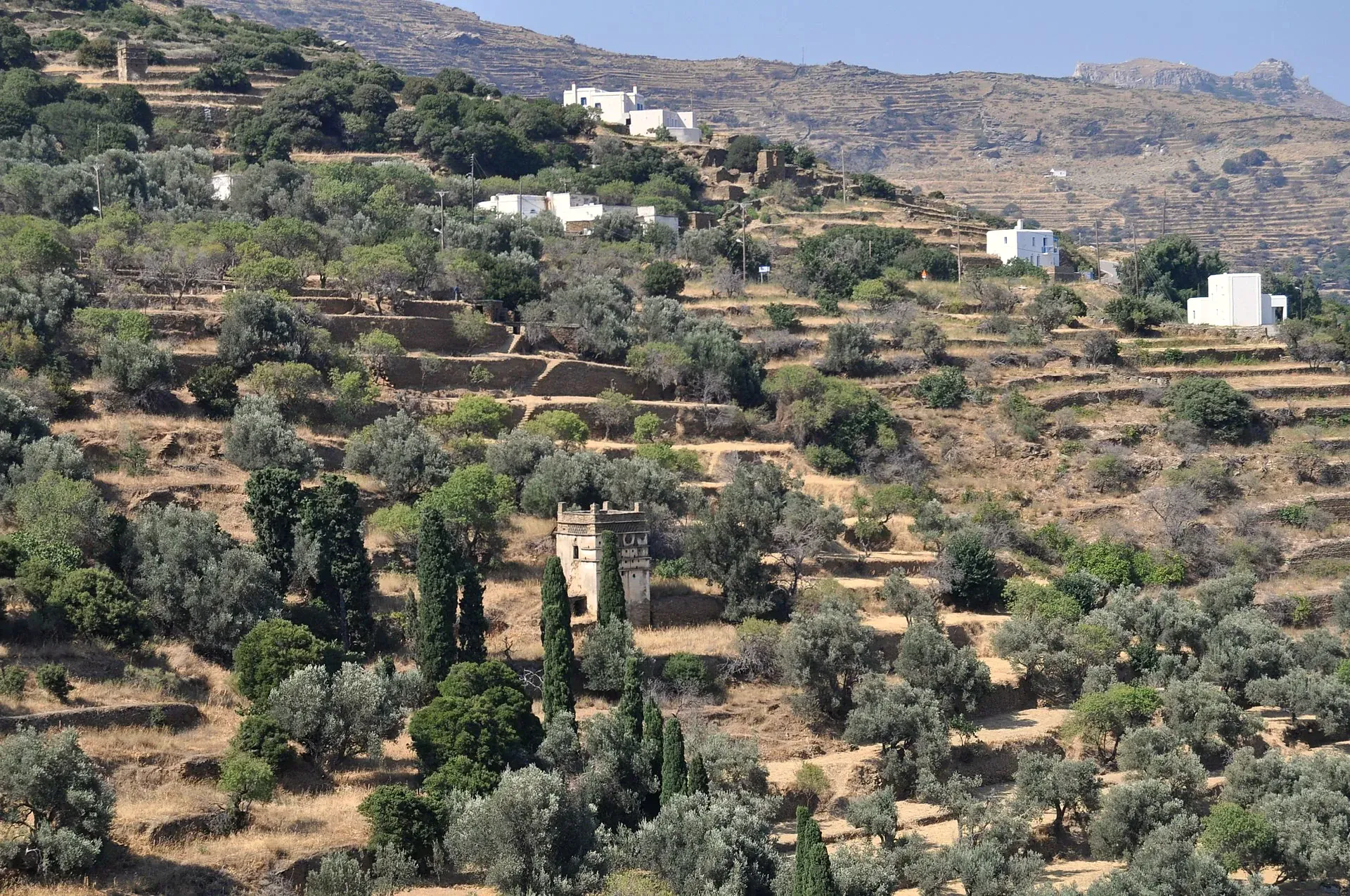
When people think of the Cyclades, they picture white houses on bare rock and the deep blue of the Aegean. Andros tells another story. Its mountains rise to nearly 1,000 metres, hold back the clouds and feed rivers that flow all year round. The result borders on a small miracle: valleys carpeted with olive, fig and oleander, cultivated terraces, water mills beside the torrents. It is the greenest of the northern Cyclades, and one of the least visited. You will come across more goats and chapels than groups of travellers.
The island owes much to its maritime past. Its great shipowning families were long among the most powerful in Greece, and their fortune can still be read in the fine houses of Chora. That double identity, of the land and of the sea, gives Andros a character all its own: you breathe at once the scent of hills covered in holm oak and the salt air of the coves. Among all the islands of the Cyclades, it is probably the most surprising for anyone who likes putting one foot in front of the other without hurrying, and one of the few where walking stays possible from one season to the next.
The Andros Routes, an award-winning path network
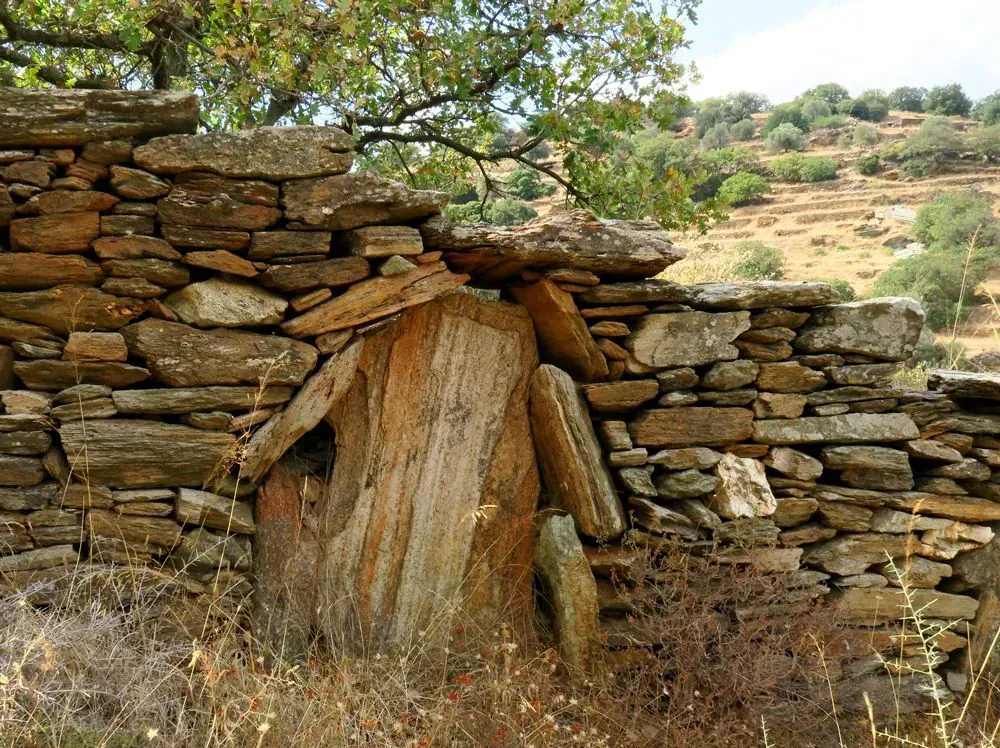
The great asset of Andros comes down to two words: Andros Routes. A local association has restored, waymarked and now maintains more than 180 km of old paths, those famous paved kalderimia that the muleteers once used from village to village. The backbone of the network, the Andros Route, links the north of the island to the south over about a hundred kilometres. It is the first island trail in Europe to receive the Leading Quality Trails - Best of Europe label, awarded by the European Ramblers' Association. A rare recognition, which says a great deal about the care given to these paths.
In practice, that changes everything for the walker. The paths are signposted, the maps are reliable (the androsroutes.gr site offers routes and descriptions to download), and you choose loops of 2 to 4 h according to the mood of the day. There is no need to be a great athlete: most of the itineraries are walked quietly, with water and something to eat in your bag. One detail that counts: shade is frequent, which makes walking agreeable even when the Greek sun turns generous. You set off in the cool of the morning, lunch in a village, and keep the afternoon for a cove or a terrace.
Chora, neoclassical elegance facing the sea
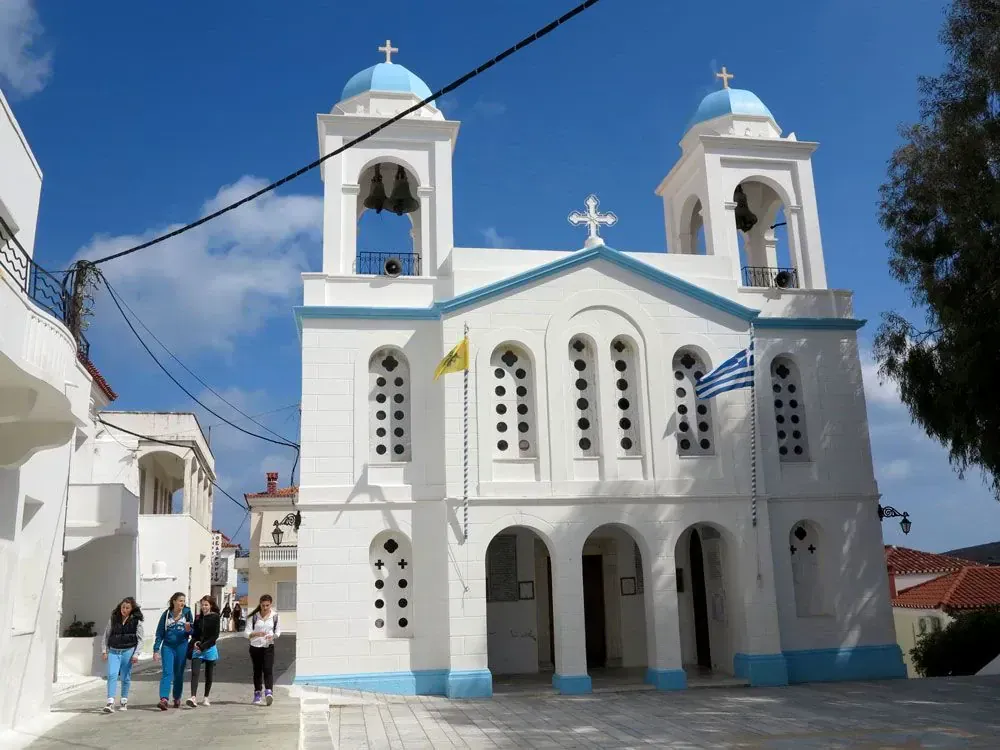
The capital, Chora, stretches along a tongue of land reaching out into the sea. It is one of the finest towns in the Cyclades, and it resembles no other. Here there are no white cubes but tall neoclassical houses with wrought-iron balconies, inherited from the great shipowning families. A long street paved with marble, lined with vaulted passages, leads to the square of the Unknown Sailor, where a bronze statue turned towards the open sea pays tribute to the sailors who left and never came back.
Chora also cultivates the arts, which makes it an ideal halt on days without walking. The museum of modern art, created thanks to the Goulandris foundation, presents sculpture and painting by Greek and international artists in a luminous setting, while the archaeological museum houses the famous Hermes of Andros, an elegant marble statue. Enough to alternate the morning’s walk with an afternoon’s cultural wandering, before a coffee on a terrace facing the harbour.
Apikia, its springs and the Pythara waterfalls

A few kilometres above Chora, the village of Apikia (also written Apoikia) is known throughout Greece for its Sariza spring, whose mineral water flows from a stone fountain and is bottled on the spot. People come to fill their bottles before continuing towards the Pythara waterfalls, a shaded corner where water tumbles between plane trees and moss-covered rocks. In spring, the murmur of the water and the song of the frogs compose an interlude of coolness you would hardly suspect in the Cyclades.
A little lower down, the hamlet of Menites lines up its lion-head fountains beneath a vault of plane trees, another refreshing halt on the paths of the island’s interior. These villages of water, linked by short paths, make you want to wander from one fountain to the next, at your own pace.
Wild valleys and stone villages

Andros rewards those who take the time to move away from the coast. The Dipotamata gorge, south of Chora, unrolls an ancient path punctuated by old water mills, close to forty of them, down to the bay of Syneti. Further south still, the region of Korthi and the bay of Ormos Korthiou offer peaceful walks between terraced fields and quiet coves. To the north, the stone village of Stenies, clinging to the green of the hills, deserves a halt for its cool lanes and its captains' houses.
On the west coast, Batsi unrolls its bay and its seaside tavernas: it is an agreeable base from which to range out, a step away from the port of Gavrio where the ferries from Rafina dock. From one end to the other, these paths link monasteries, such as Panachrantou clinging to the mountain, isolated chapels and viewpoints where the Aegean spreads out as far as the eye can see. It is this meeting of mountain and sea, with culture at the end of the path, that makes the charm of Andros.
And then there are the encounters. A shepherd who greets you with a gesture, an old lady who offers a loukoum on her doorstep, a fisherman coming back into the harbour at Korthi as night falls. Andros lends itself to these simple moments, because people take their time there. The villages are not playing a set for visitors: they live slowly, and that is precisely what moves you.
When to come, and at what pace
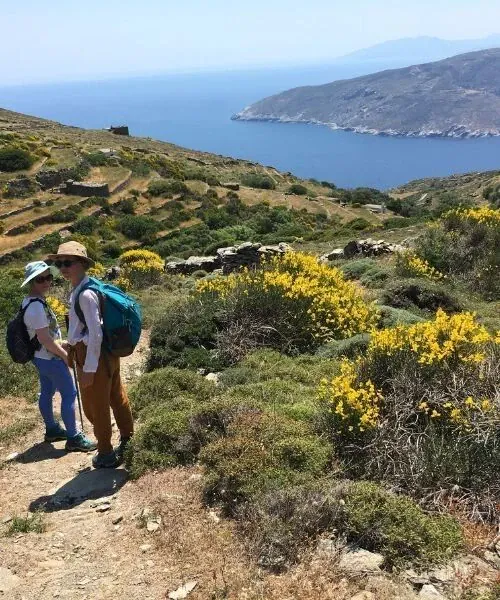
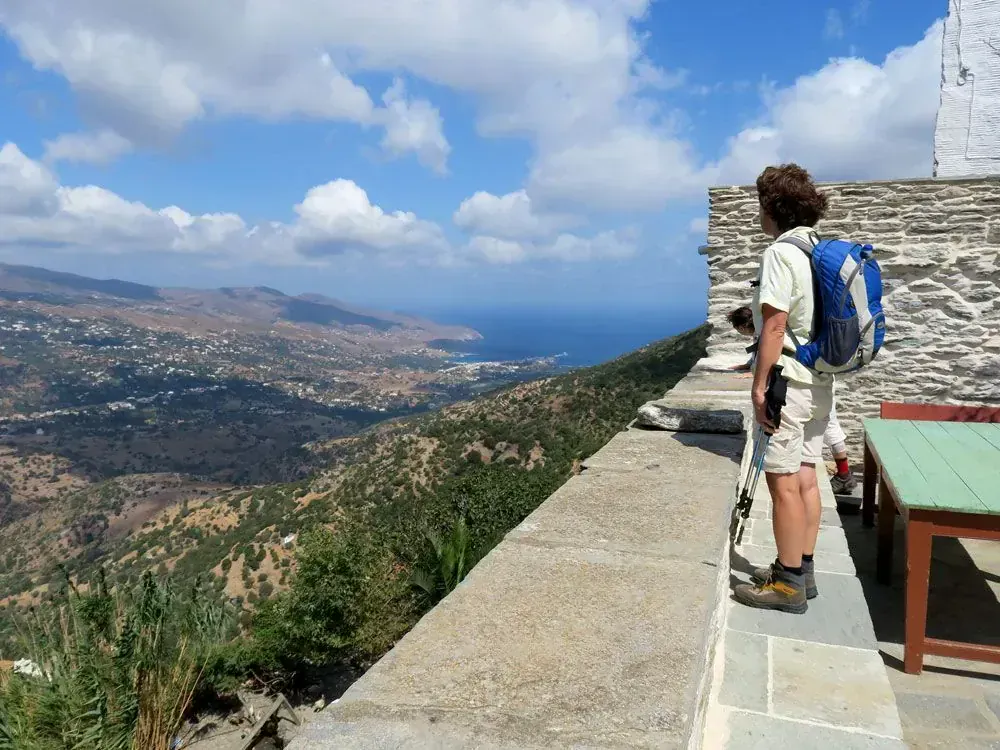

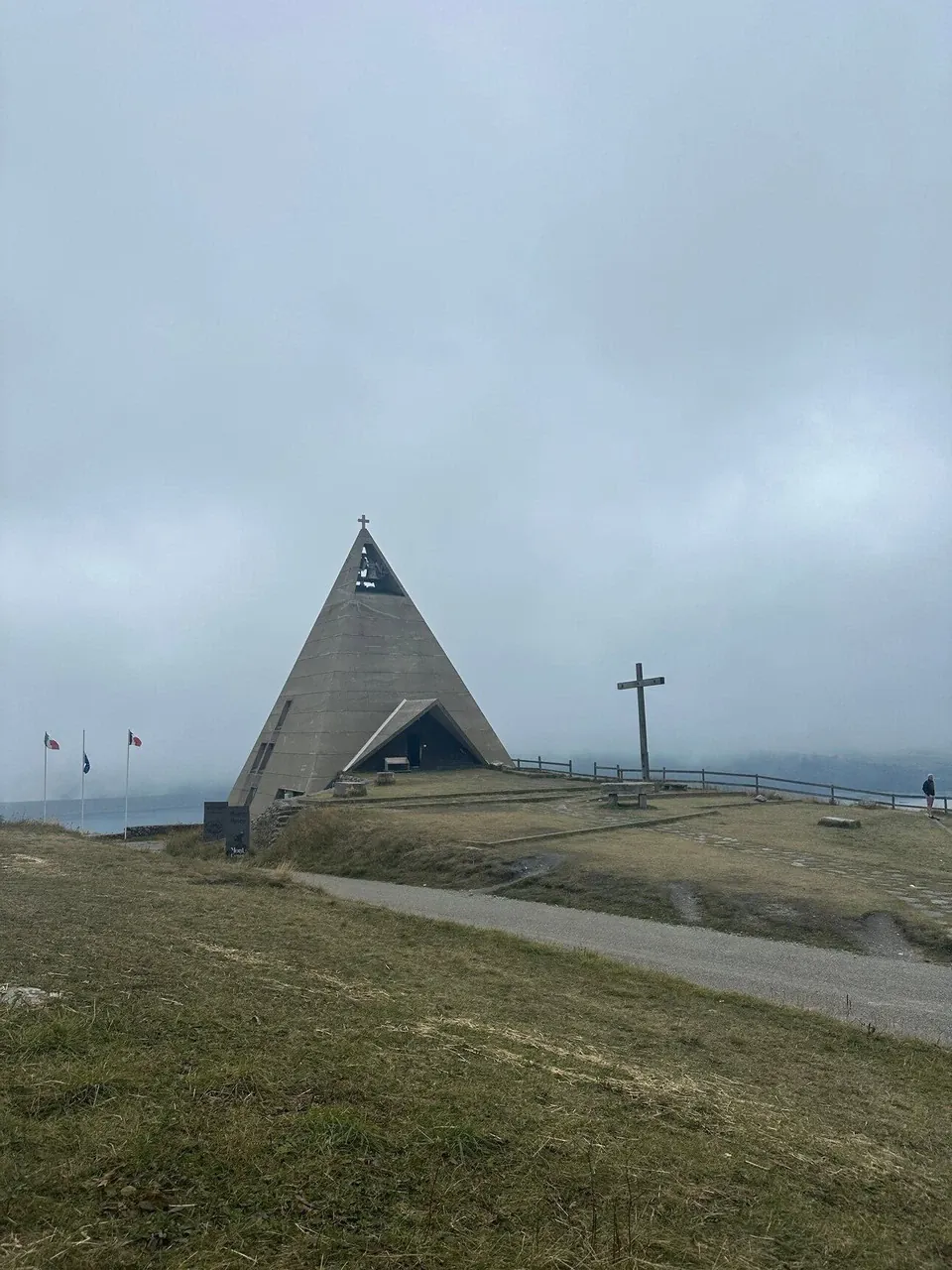
Andros is savoured in spring (April to June), when the valleys are green and in flower, and in early autumn (September to October), when the sea stays mild and the light turns golden. Summer suits too, provided you walk early and keep the afternoon for the beach. The island is easy to reach: 1 to 2 h by ferry from Rafina, very close to Athens, sets you down at Gavrio.
On the practical side, nothing complicated. Good supple shoes, a hat, water, and you will manage most of the paths without difficulty. Distances are chosen à la carte, and you can always shorten a loop or linger at a fountain without feeling guilty. That is the whole spirit of Andros: walking there is a pleasure, never a trial, and the path almost always leads to a view, a village or a table where you want to sit down.
To walk with a light heart, let yourself be carried: Andros features in our grand tour of the Cyclades on foot, which links Andros, Tinos, Mykonos, Delos and Amorgos in the company of an English-speaking leader, with charming hotels and your luggage transferred from island to island. You spend several nights in Chora, time enough to get to know its valleys and its paths. And if you are still hesitating over your destination, our guide to choosing your Cycladic island and our selection of the most beautiful Greek islands will help you put together the trip that suits you.
Frequently asked questions about walking in Andros
How do you get to Andros?
Andros is reached by ferry from the port of Rafina, close to Athens and its airport. The crossing takes 1 to 2 h depending on the boat and sets you down at Gavrio, on the west coast of the island. Sailings are daily all year round, more frequent from June to September. Once there, you can perfectly well visit Andros without a car: buses link the main villages, and on our guided trips your luggage travels for you.
Can you really go walking in Andros?
Yes, and it is even one of the finest Greek islands for walking. The Andros Routes association maintains and waymarks a vast network of old stone paths, including the Andros Route, a continuous 100 km itinerary linking north to south. It is the first island trail in Europe to receive the Leading Quality Trails - Best of Europe label from the European Ramblers' Association. Walks are chosen à la carte, in loops of 2 to 4 h accessible to any regular walker.
Where can you find a walking map or itinerary for Andros?
The androsroutes.gr site makes the routes and descriptions of the waymarked paths freely available. For a paper map, the Anavasi walking map of Andros (1:27,000), designed with the local association, remains the reference. And if you would rather walk free of care, our grand tour of the Cyclades on foot spares you any preparation: an English-speaking leader knows the paths, and you have only to savour the landscape.
What is there to do in Andros away from the paths?
Chora, the neoclassical capital, deserves a wander for its shipowners' houses, its Goulandris museum of modern art and its archaeological museum, which houses the Hermes of Andros. Lovers of running water will enjoy the Sariza spring at Apikia and the lion-head fountains of Menites. Between two walks, the coves of the west coast and the tavernas of Batsi invite you to swim and to sit at a table facing the sea.
Your question is not on this list?
Write to us, and we will reply to you personally by email.
Article written by
Maria Papadopoulou (Μαρία Παπαδοπούλου)
Editorial lead
I hike, and Greece is the place I keep coming back to. My initial studies (a Master’s in Marketing and a degree in Applied Foreign Languages) taught me how to build an editorial project, and the trails taught me the… Read more