

Picture a rock of lunar white sloping gently down towards turquoise water, and you, sitting on that warm stone at sunset, with nobody around. That is Sarakiniko, and it is one of the images that stay with you long after a trip to Milos. A small volcanic island in the south-west of the Cyclades, Milos is discovered quietly, through short walks between the fishing villages, the hidden coves and the ancient remains. Walking in Milos is nothing like a trial: it is a succession of rewards, the blue of a bay, the taste of a grilled fish on a terrace, the golden light on the white houses.
| In brief | A volcanic island of spectacular landscapes, to be covered on foot at the rhythm of its villages and its coves |
| Ideal for | Lovers of fine light, of swimming and of heritage, who like to walk without hurrying |
| Best season | From May to June and from September to early October: mildness, a sea still warm, few people |
| Pace | Gentle, at your own rhythm: short walks linking the sites, punctuated by pauses and swims |
| Our trips | Milos features in two trips through the western Cyclades, self-guided or guided |
Sarakiniko, the lunar setting that made Milos famous
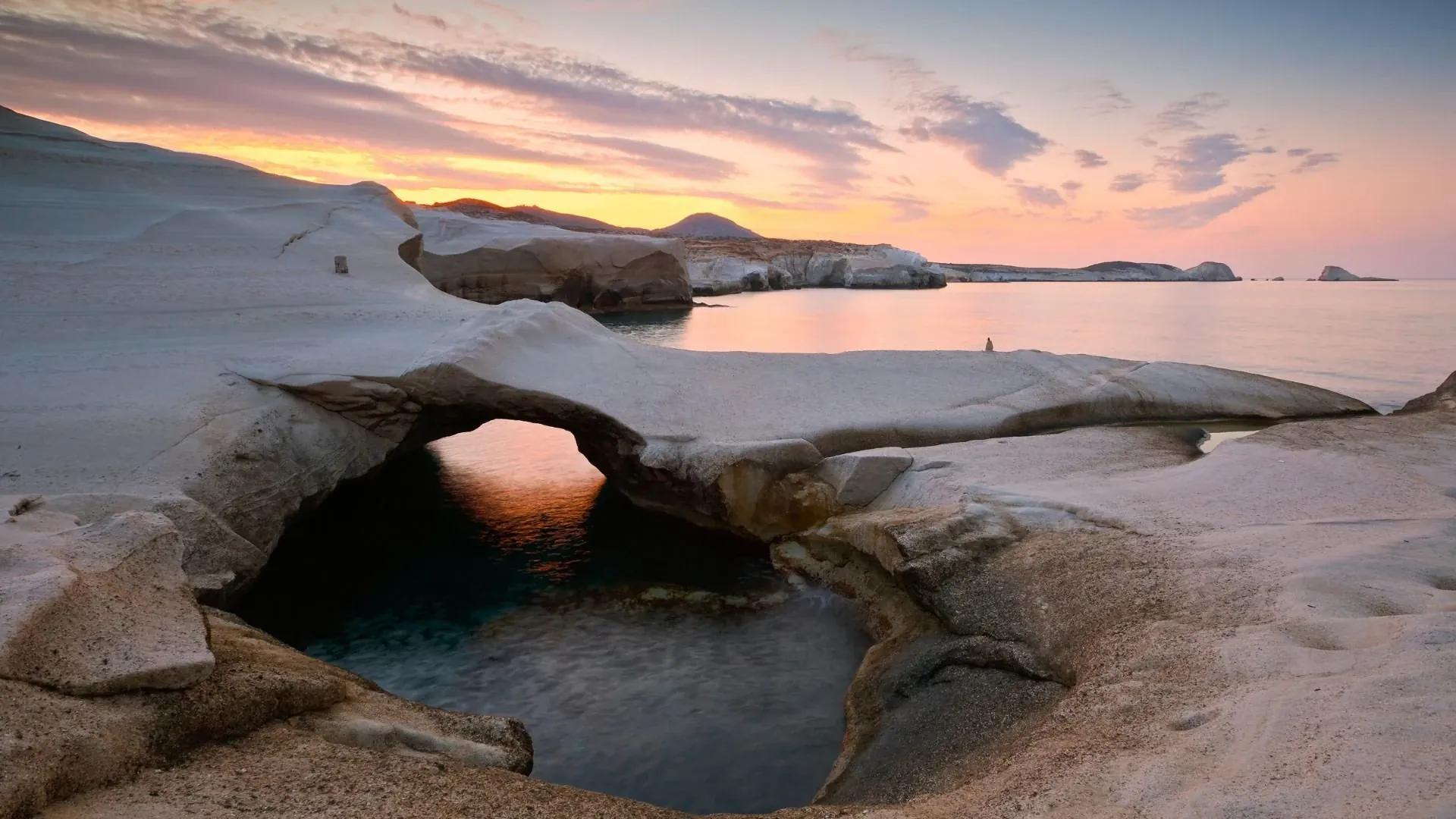
We all have a first time at Sarakiniko, and it rarely leaves anyone indifferent. Here the white volcanic tuff has been polished by wind and sea until it draws a landscape that seems to come from elsewhere. Pale curves, small fissures into which a deep blue water rushes, and in the middle a discreet cove where you can swim. The walk to reach it is short and accessible to all. The good piece of advice we would have liked to know before setting off: come early in the morning or at the end of the day. The light there is finer, the heat gentler, and the rock takes on golden tones that the midday crowd does not let you see.
Sarakiniko lies on the north coast of the island, a few minutes from the port of Adamas. It is a place where you gladly linger, a towel laid on the warm stone, watching the swimmers leap from the low ledges.
Kleftiko, the sea caves reached by boat
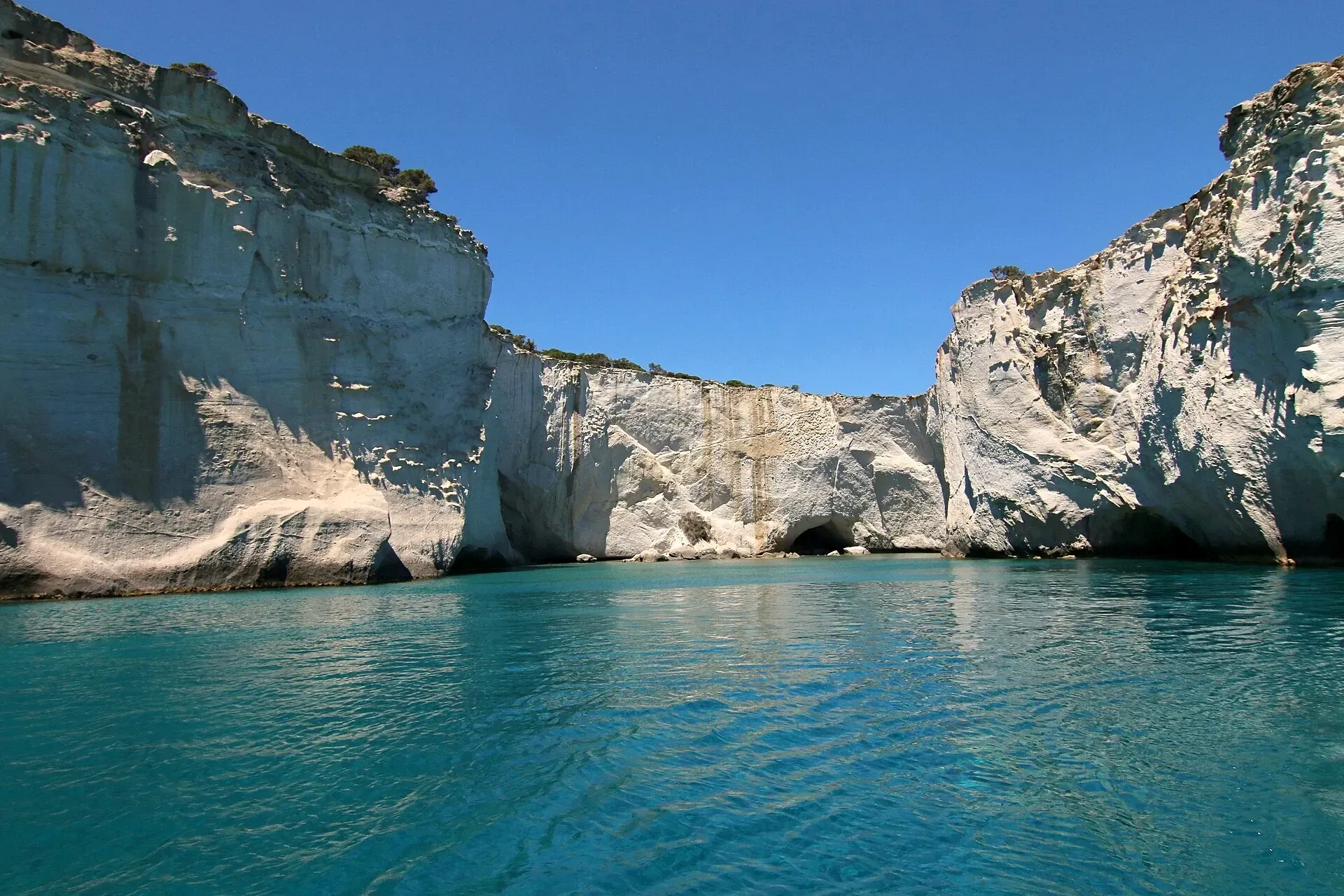
In the south-west of Milos, Kleftiko is accessible only from the sea, and so much the better. You arrive by boat, on a day excursion that skirts high pale cliffs before reaching a maze of white arches, caves and rock pillars plunging into translucent water. The place once served as a lair for pirates, who hid their boats there out of sight. Today you swim there in an almost unreal calm, before picnicking on board.
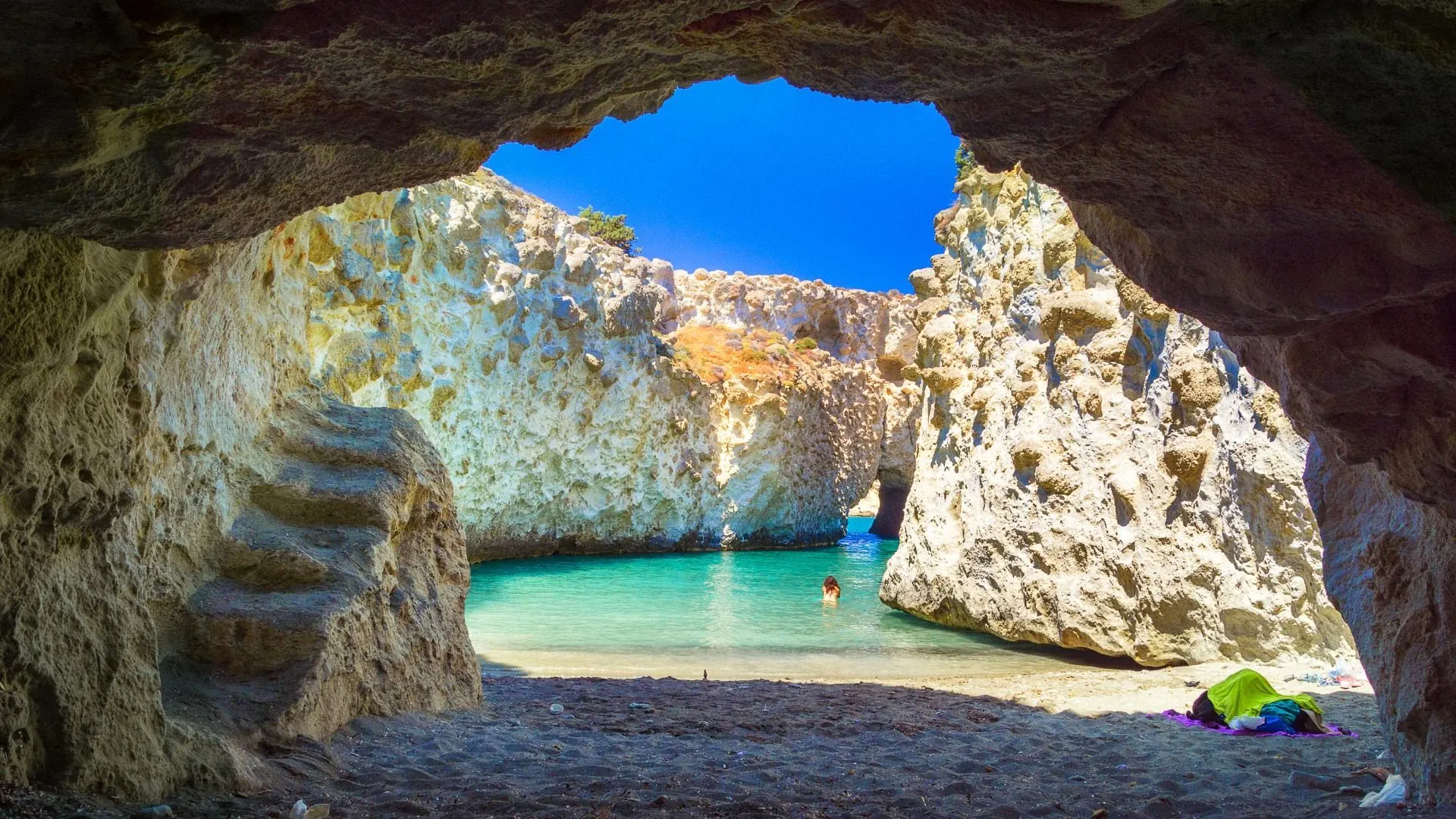
It is one of the finest ways to take the measure of Milos: from the water, you better understand the volcanic character of this island, its mineral colours, its secret inlets. Depending on the sea, the same excursion reveals the cave of Sykia, whose collapsed vault lets the light of the sky fall on deep blue water. Booking a trip from Adamas remains the simplest solution, and the most restful.
Plaka and its kastro, the island's balcony
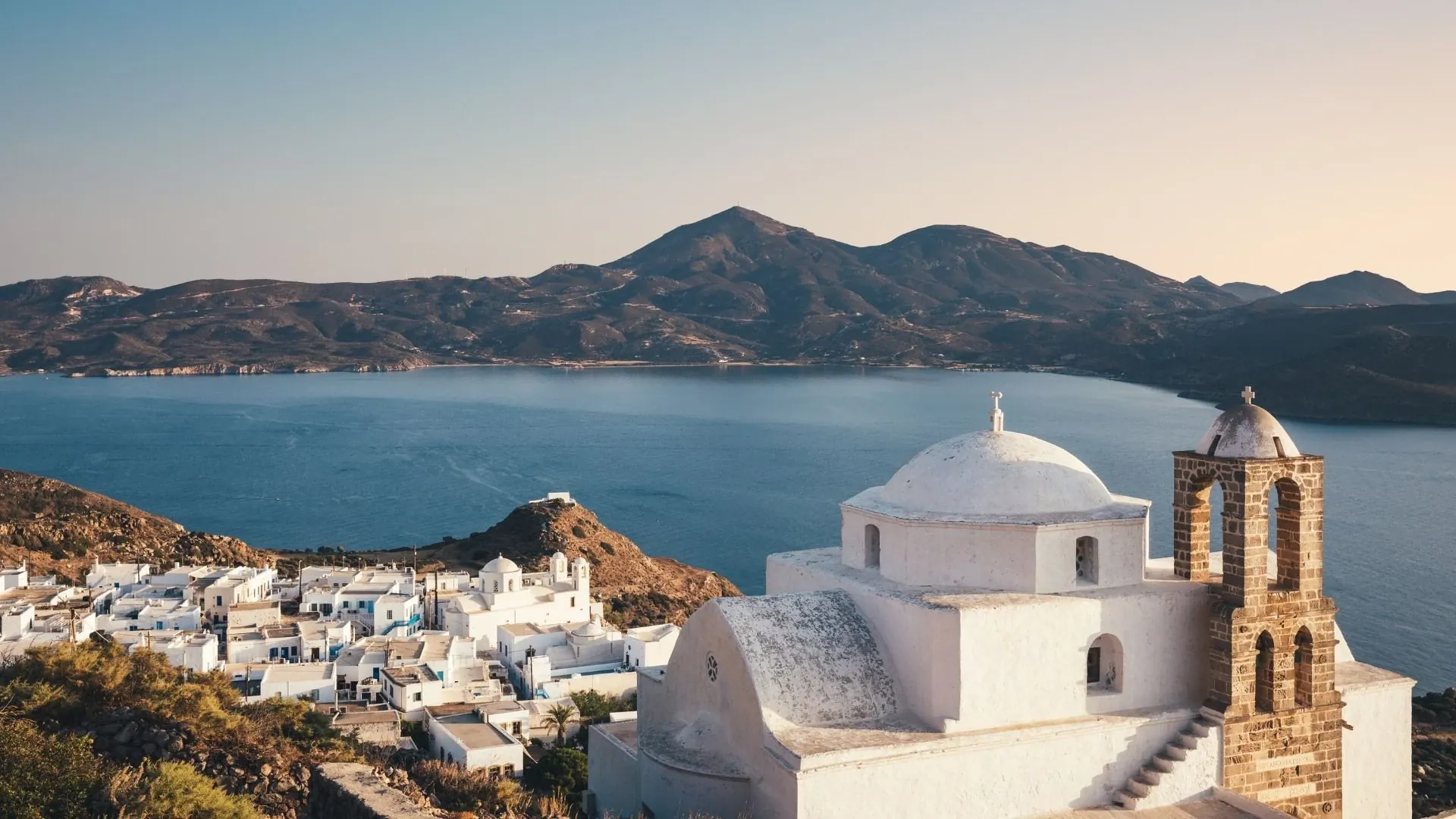
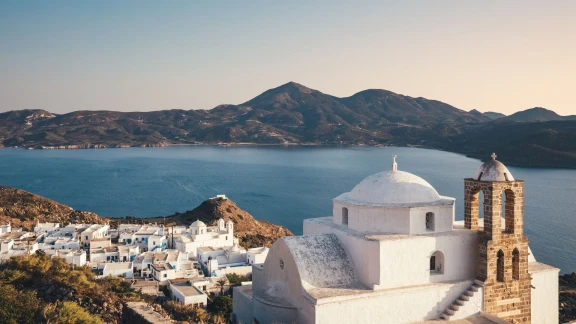
Perched on the heights, the village of Plaka is the historic capital of Milos. You wander there through a tangle of white, flower-filled lanes, up to the kastro, the old Venetian fortress built in the 13th century at the highest point of the village. The climb is gentle, in stages, and the reward at the top is worth every step: a view taking in the whole bay of Adamas, one of the largest in the Mediterranean.
It is also at Plaka that we love to sit at the end of the afternoon. The west-facing terraces offer one of the finest sunsets in the Cyclades, a glass of ouzo in hand and the sky catching fire above the sea. You linger in front of the Orthodox church that overlooks the bay, you push open the door of a craftsman's workshop: here, nothing is pressing.
The early Christian catacombs, a discreet treasure
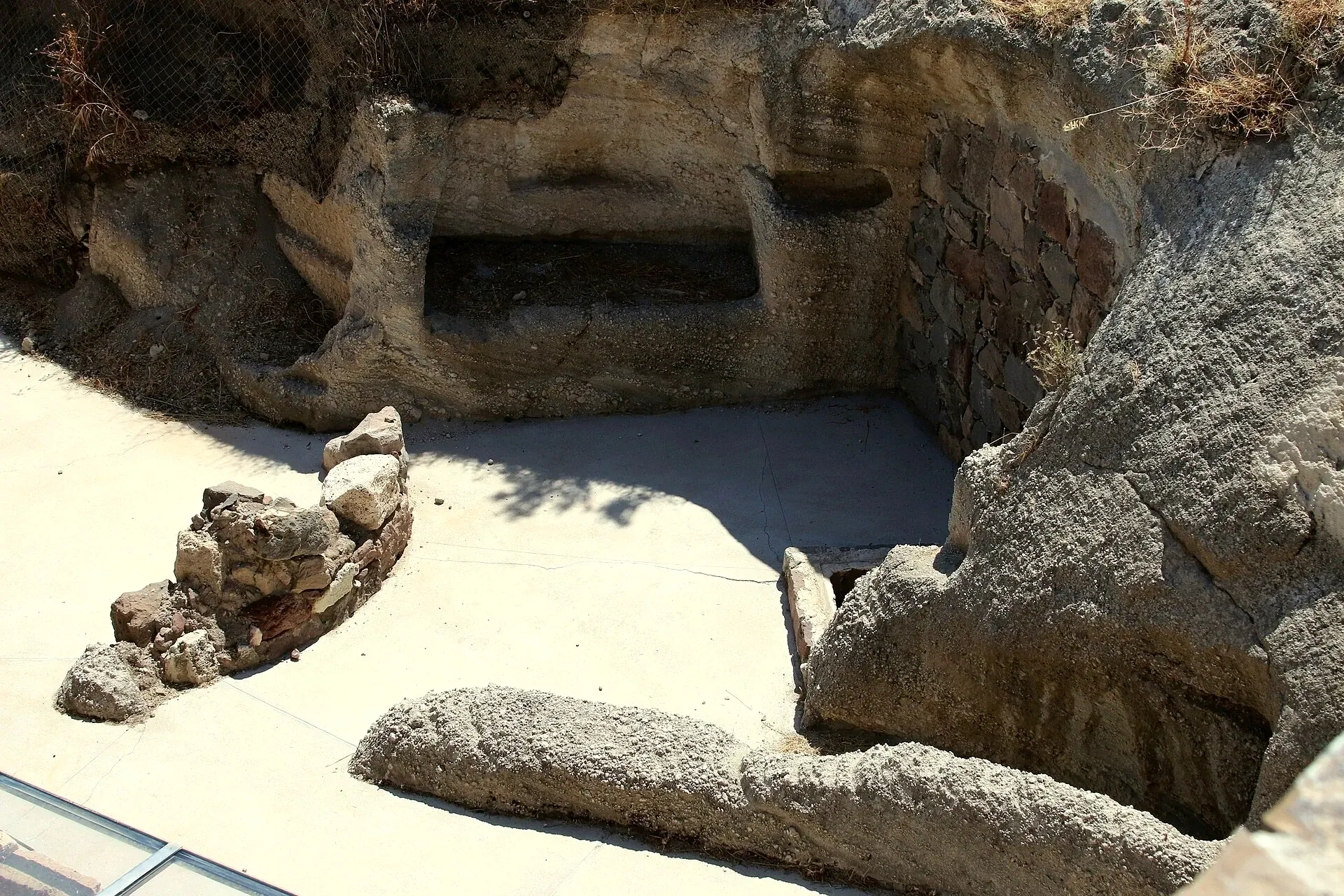
A step from Plaka, near the village of Tripiti, hide the catacombs of Milos. Cut into the volcanic rock between the 1st and the 5th century, they are among the most important Christian necropolises in the world, cited alongside those of Rome and the Holy Land. You go down for a short and striking visit, in the coolness of galleries where the island's first Christian communities were laid to rest.
The place lends itself well to a quiet morning, far from the bustle of the beaches. Check the opening times before going, as they vary with the season.
The ancient theatre and the Venus de Milo
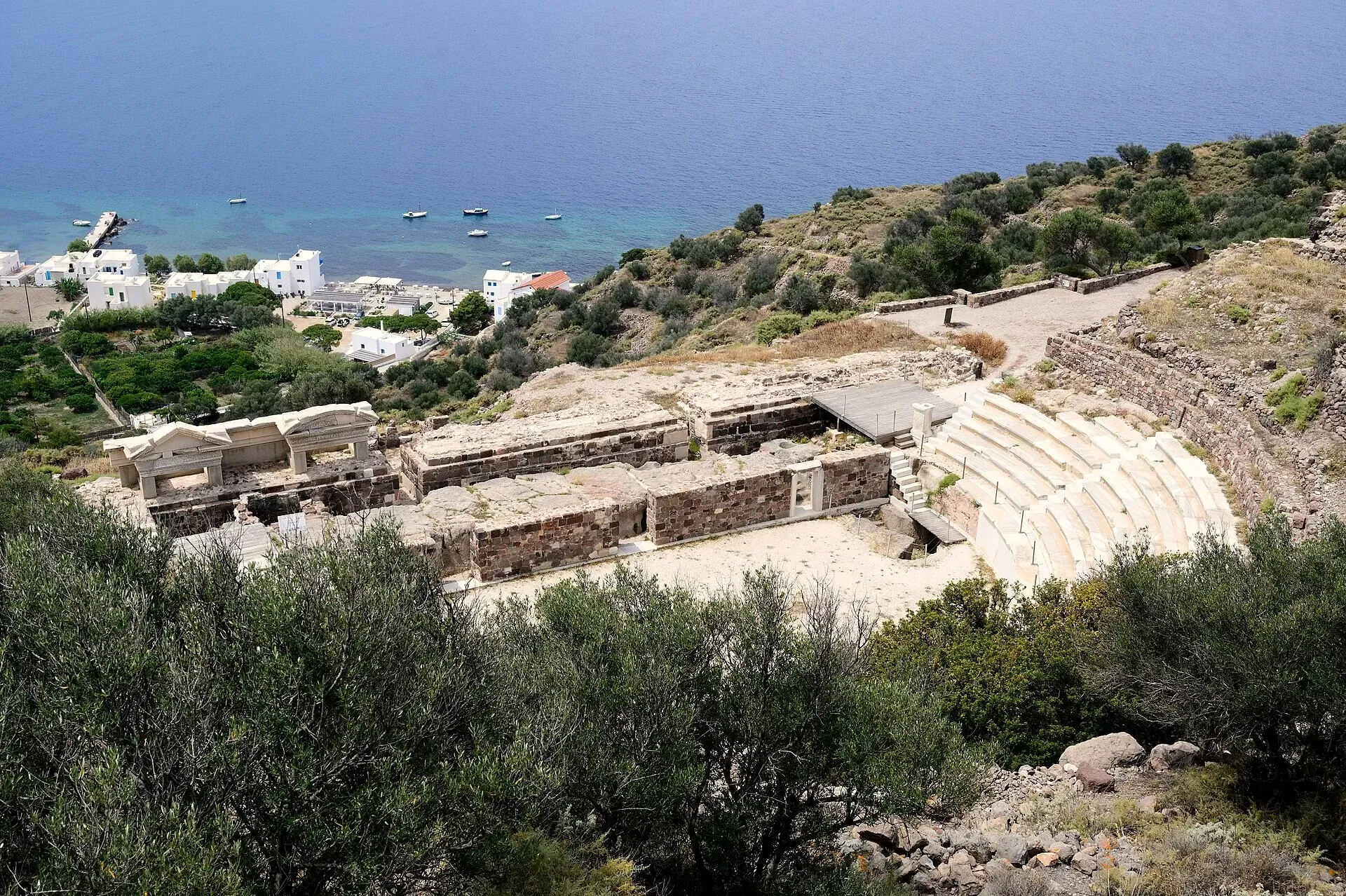
Still on the slope of Tripiti, the ancient theatre of Milos watches over the sea. Cut into the marble in the Hellenistic period and then remodelled by the Romans, it keeps a few tiers facing a superb maritime panorama. It is a place where you linger, simply for the beauty of the setting.
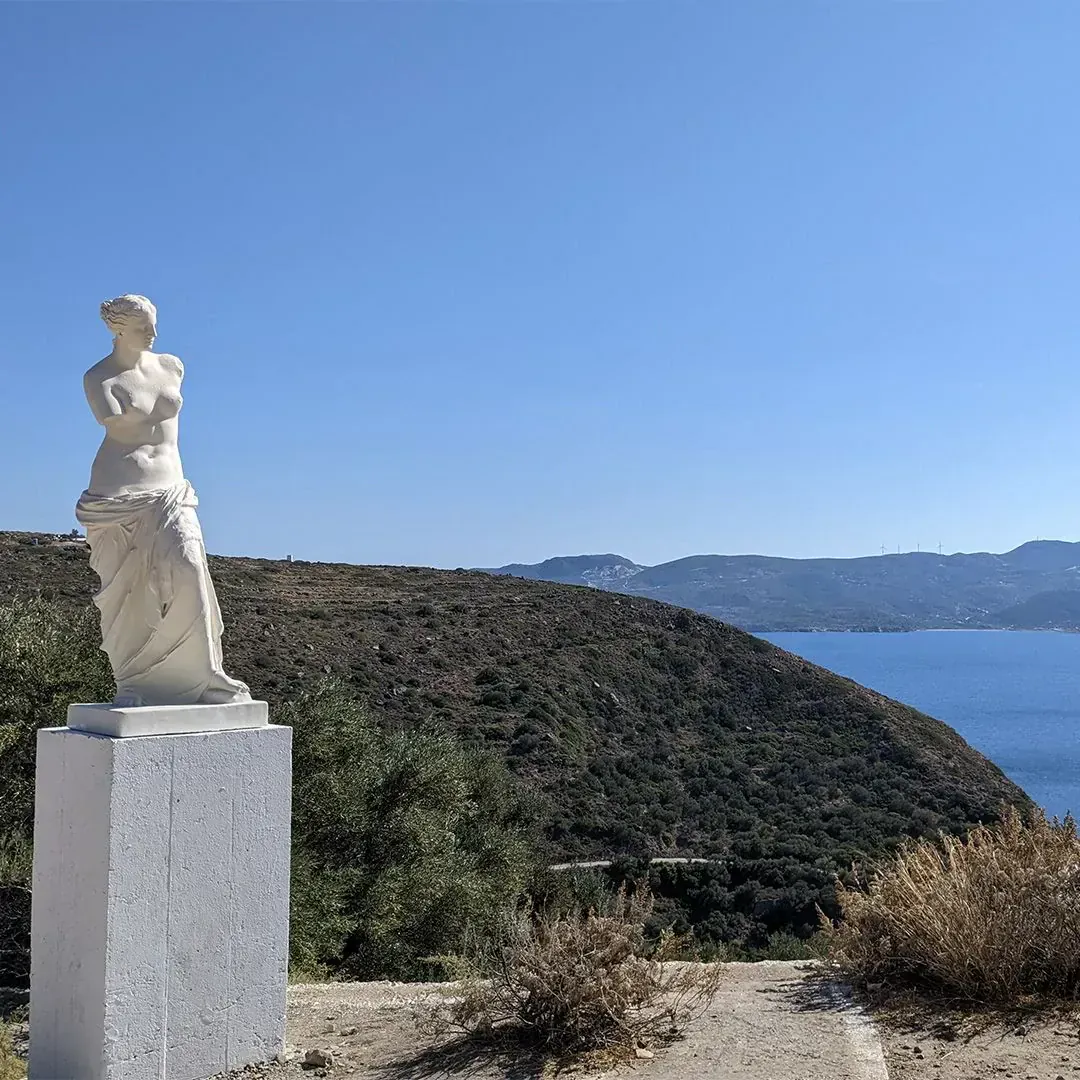
Very close to here, in 1820, a farmer named Yorgos Kentrotas brought to light the statue that would travel the world: the Venus de Milo. The famous Aphrodite now rests in the Louvre, but the place of her discovery, marked on site, remains a fine excuse for a walk laden with history. Below, the ancient city of Klima recalls that Milos was inhabited long before our era.
Klima, Mandrakia, Firopotamos: the fishing villages and their syrmata
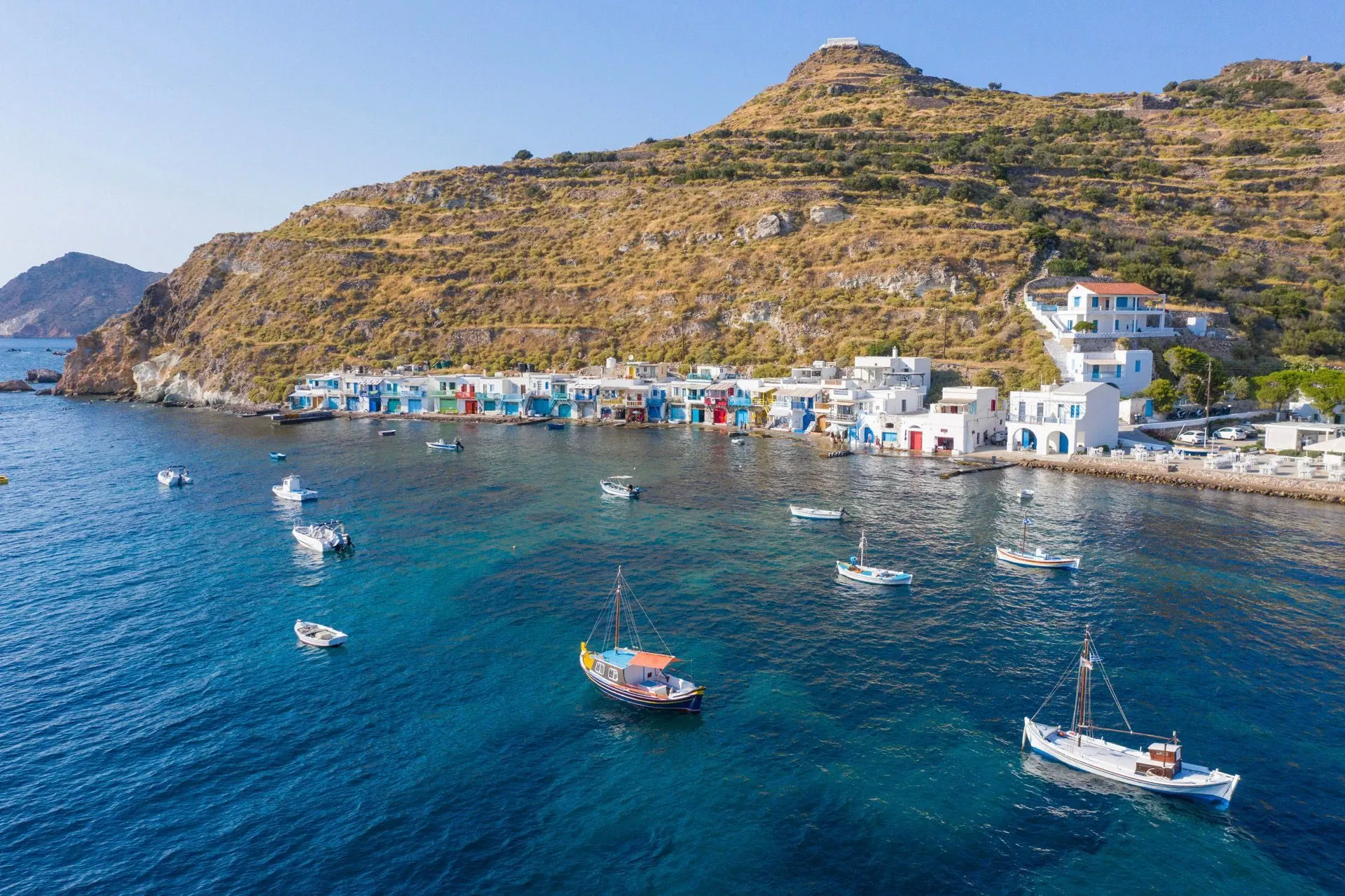
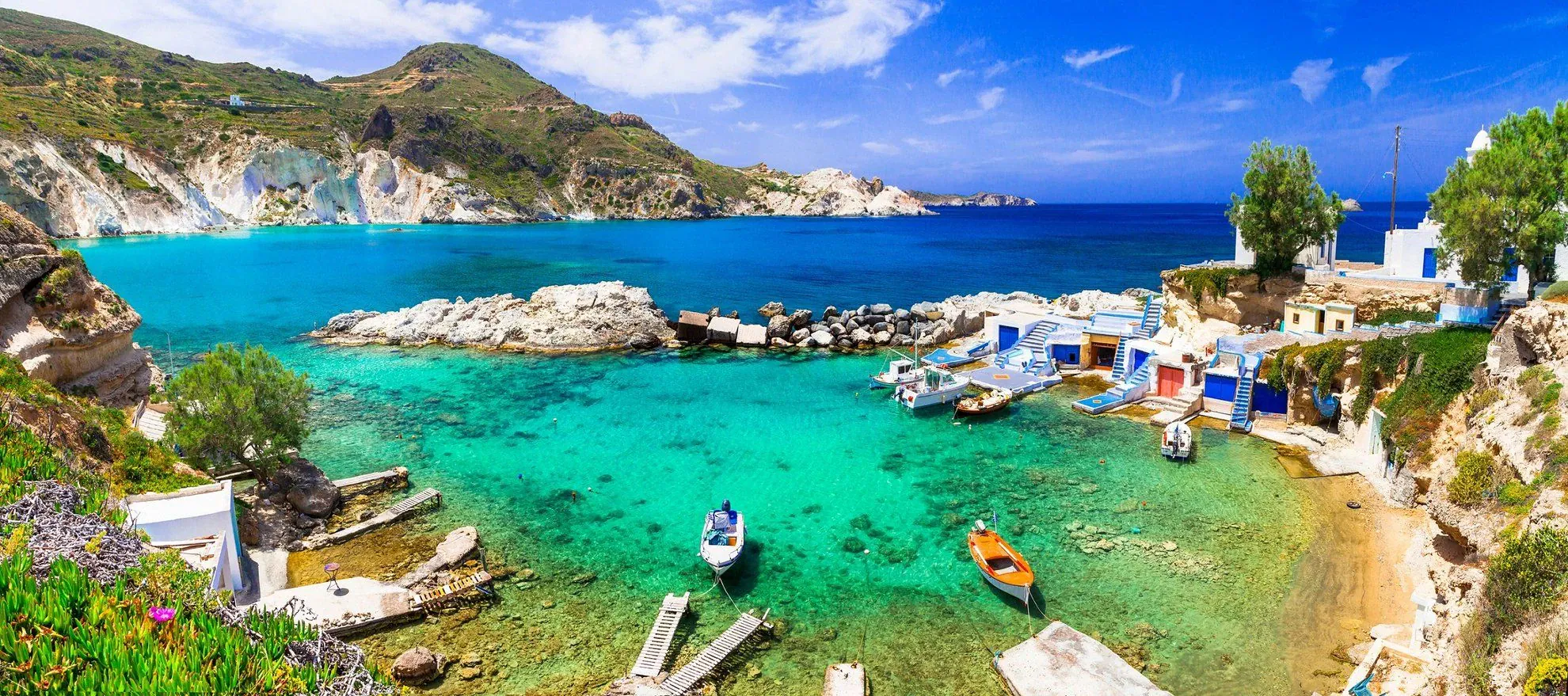
The charm of Milos owes much to its small colourful harbours. At Klima, at the foot of Tripiti, stand the syrmata, those fishermen's houses with doors painted red, blue or green, built into the rock itself to shelter the boats on the ground floor. The hamlet reflects in the water as the sun sets, and you dine there almost with your feet in the sea.
Mandrakia and Firopotamos, on the north coast, offer the same setting in miniature: a few syrmata, a white chapel, a taverna serving the fish of the day. They are perfect halts in the course of a day's walking, time for an iced coffee in the shade or a swim in clear water.
Pollonia and the beaches of the east
At the north-eastern tip of the island, Pollonia is a fishing village that has become a seaside resort on a human scale, appreciated for its seafront tavernas and its peaceful atmosphere. It is also the departure point for boats to the small neighbouring island of Kimolos, about twenty minutes' crossing away.
Not far from there, do not miss Papafragas, a narrow cove wedged between two walls of pale rock, linked to the sea by a natural tunnel. The water there takes on a striking turquoise colour. You admire it first from above, from the path, before going carefully down for a swim in an almost secret setting.
The flavours of Milos, between sea and vines
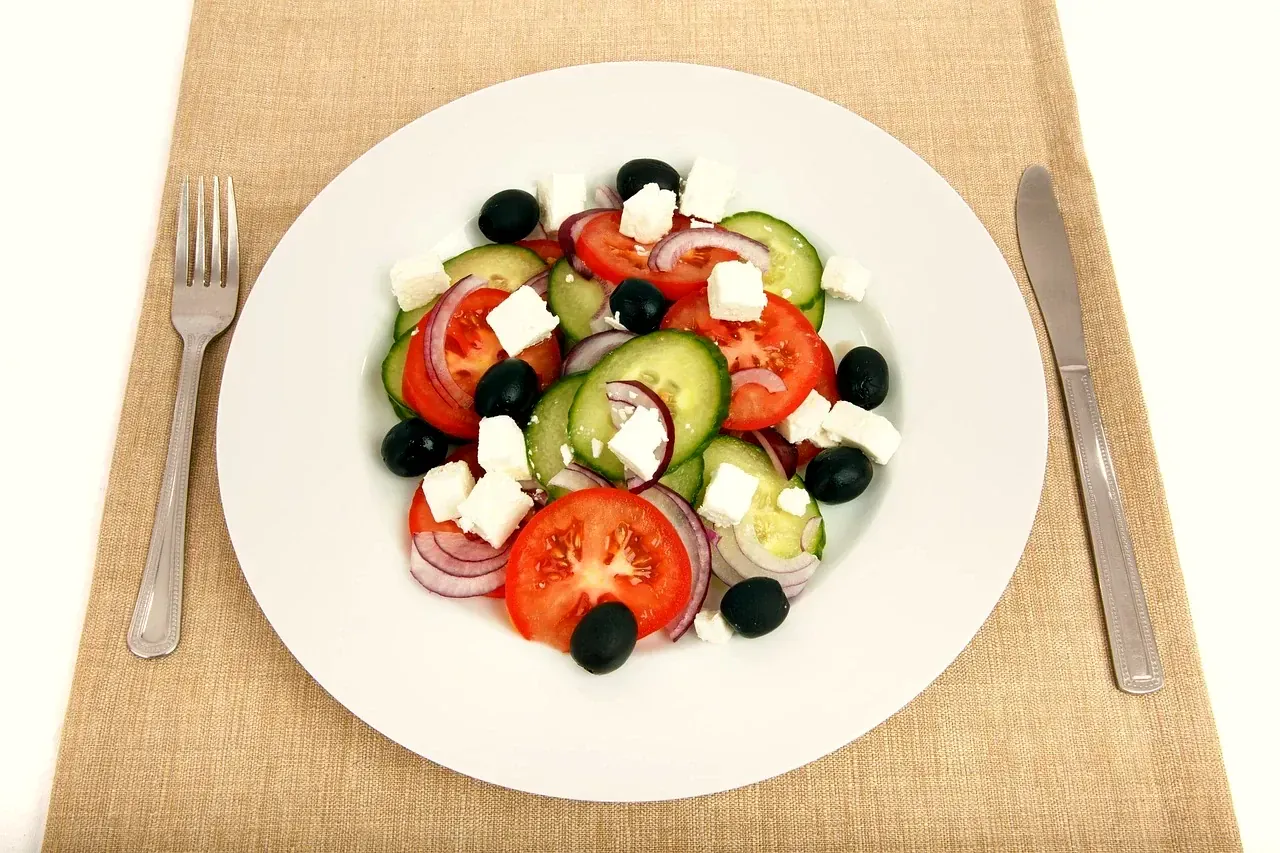
Walking in Milos gives you an appetite, and the island knows how to receive. In the tavernas of the small harbours you taste the fresh fish of the day, sun-dried octopus, and the famous pitarakia, those fresh-cheese fritters found more or less everywhere. The volcanic soil also feeds a few vines, and it is not unusual to see, at a bend in a path, low stocks clinging to the pale earth. A glass of local wine, a plate of sun-filled tomatoes, a little goat's cheese: the table of Milos has that Mediterranean simplicity savoured without ceremony, in the shade of a vine.
Adamas, the main port, holds most of the good addresses, but it is often in a fishing hamlet, off to one side, that you keep the best memory of a meal. Take your time: here, dinner is not a pause between two activities, it is a moment of the day in its own right.
How to discover Milos on foot, at your own pace
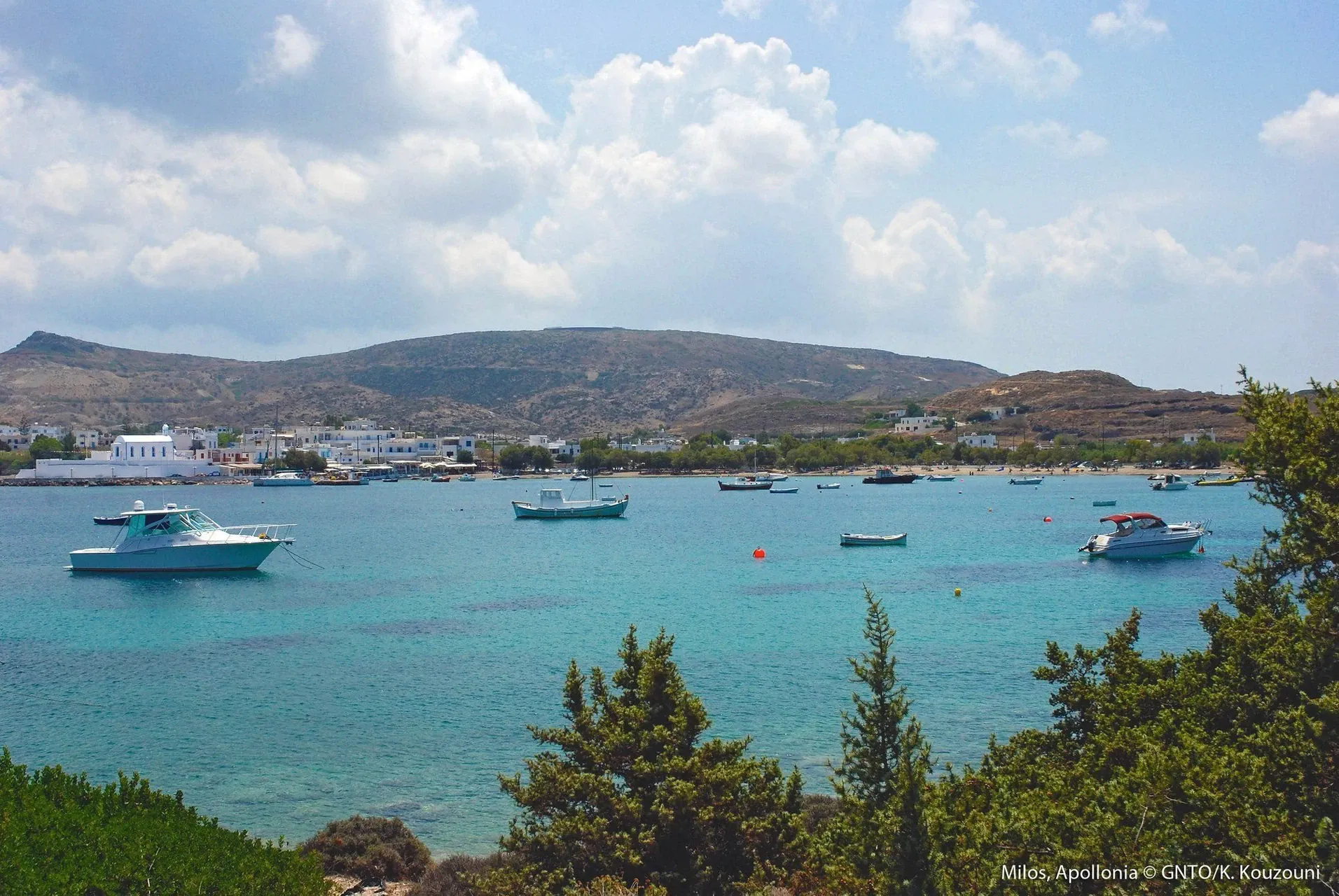
Milos is not an island you cover at a forced march. The distances between the sites are short, the paths gentle, and the whole art consists in stringing discoveries together without ever pushing: a walk in the morning towards a cove, a cultural visit in the cool, a sunny terrace for lunch, a swim in the afternoon. A hire car or boat trips gladly complete the finest walks.
Milos is savoured all the better by linking it to its neighbours in the western Cyclades. At Kelifos, two trips combine the island with Serifos, Sifnos or Kimolos. The trip Serifos, Sifnos and Milos self-guided leaves you free to set your own tempo, with your luggage transported and your charming addresses booked in advance. To enjoy a leader's insight and the conviviality of a small group, the trip Sifnos, Milos and Kimolos guided weaves the same thread between three secret islands. To place Milos within the archipelago as a whole, our Cyclades page gathers all our walking trips in the region.
Frequently asked questions about walking in Milos
Can you really discover Milos on foot?
Yes, provided you forget the idea of a great network of waymarked paths as on Sifnos. On Milos, the pleasure lies in short accessible walks linking the coves, the fishing villages and the ancient sites, always at your own pace. A hire car or a boat trip completes the finest walks, for a gentle and unconstrained discovery.
Where can you find a walking map or itinerary for Milos?
The Greek topographic maps from the Anavasi and Terrain publishers cover the Cycladic islands and remain the reference for locating paths on the ground. You will find them in travel bookshops or in the shops of Adamas. On our self-guided trips, however, you have nothing to prepare: detailed route notes and the itinerary tracks are given to you, day after day, so you can walk with an easy mind.
Can you reach Kleftiko on foot?
No, Kleftiko is reached only from the sea. This maze of caves and white arches is discovered in the course of a boat excursion from Adamas, which skirts the south-west coast of the island. It is the simplest and most restful way to see this wild part of Milos, with a swim in translucent water into the bargain.
Which Kelifos trip passes through Milos?
Two of our trips in the western Cyclades call at Milos. In full independence, the trip Serifos, Sifnos and Milos self-guided leaves you free to set your own tempo, luggage transported and charming accommodation booked. For the conviviality of a small group and a leader's insight, the trip Sifnos, Milos and Kimolos guided links the same secret islands.
Your question is not on this list?
Write to us, and we will reply to you personally by email.
Continue reading
- Which Cyclades island to choose for the trip you have in mind?
- Which Greek island is right for you? The complete guide
- Hiking in Sifnos: the island of flavours on foot
- Hiking in Greece: the best trails island by island
Article written by
Maria Papadopoulou (Μαρία Παπαδοπούλου)
Editorial lead
I hike, and Greece is the place I keep coming back to. My initial studies (a Master’s in Marketing and a degree in Applied Foreign Languages) taught me how to build an editorial project, and the trails taught me the… Read more