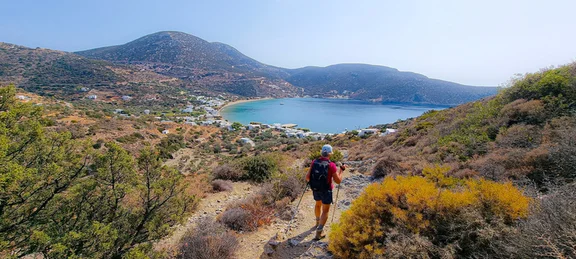


You dream of a Cycladic island where you can walk quietly, linger on a terrace over an iced kitron, stroll from one marble village to the next without ever forcing the pace. Naxos or Paros: these two neighbours in the archipelago resemble one another in their whiteness and their blue, and yet each has its own temperament. One is green, generous, made of valleys and mountains. The other is gentle, luminous, turned towards its harbours and its marble lanes. For a traveller who likes to take their time, to savour a table in the shade of a plane tree and to wander rather than perform, the choice deserves a pause. Here is our comparison, written for those who walk at their own pace and know that the finest part of a journey is often found at the table as much as on the paths.
| In brief | Two Cycladic neighbours, easy to walk and to savour: Naxos the green and generous, Paros the gentle and luminous. |
|---|---|
| Ideal for | Epicurean travellers who like to wander from one village to the next and let the day run on at a terrace |
| Best season | Spring (May-June) and early autumn (September-October), for mildness and calm |
| Pace | Gentle, adjustable, at your own rhythm; luggage carried for you |
| Our trip | Naxos and Amorgos self-guided (the way in on the Naxos side; no Paros-only holiday) |
Naxos or Paros at a glance
Before going into detail, here is the essential picture to place the two islands side by side. A table is no substitute for a terrace at sunset, but it helps to see clearly.
| Criterion | Naxos | Paros |
|---|---|---|
| Size | The largest of the Cyclades, valleys and mountains | Smaller, gentle and rolling |
| Atmosphere | Authentic, rural, mountain villages | Lively on the harbours, peaceful inland |
| Walking | Green valleys, marble paths, perched villages | Paved Byzantine path, short harbour-to-harbour walks |
| Beaches | Long sandy beaches in the west, wild coves in the south | Coves and family beaches, shallow water |
| Tavernas | Generous terroir: potato, graviera, kitron | Fish, Naoussa ouzo, terraces at the water's edge |
| Ferry access | From Piraeus, 3 hr 15 to 5 hr depending on the boat | From Piraeus, 2 hr 40 to 4 hr depending on the boat |
The two islands are less than an hour apart by ferry, which makes the question less final than it seems. We will come back to that.
Naxos, the green island: walking the valleys and marble villages
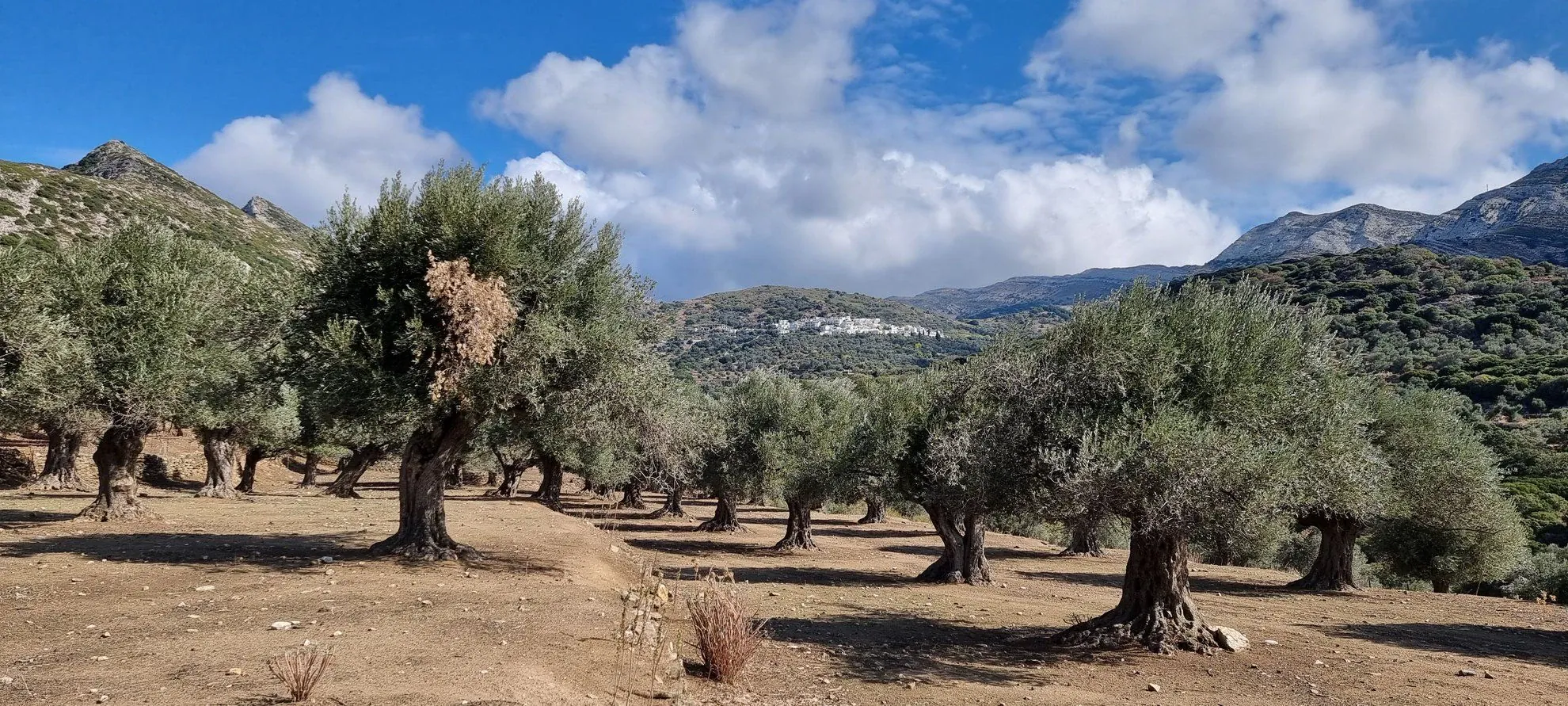
Naxos is the most generous of the Cyclades, and the greenest. At the centre of the island, the Tragea valley unfolds an olive grove said to be a thousand years old, scattered with Byzantine chapels hidden beneath the trees. You pass from one village to the next along shaded paths, at a pace that lets your gaze settle. It is gentle walking, never hurried, punctuated by pauses in the shade.
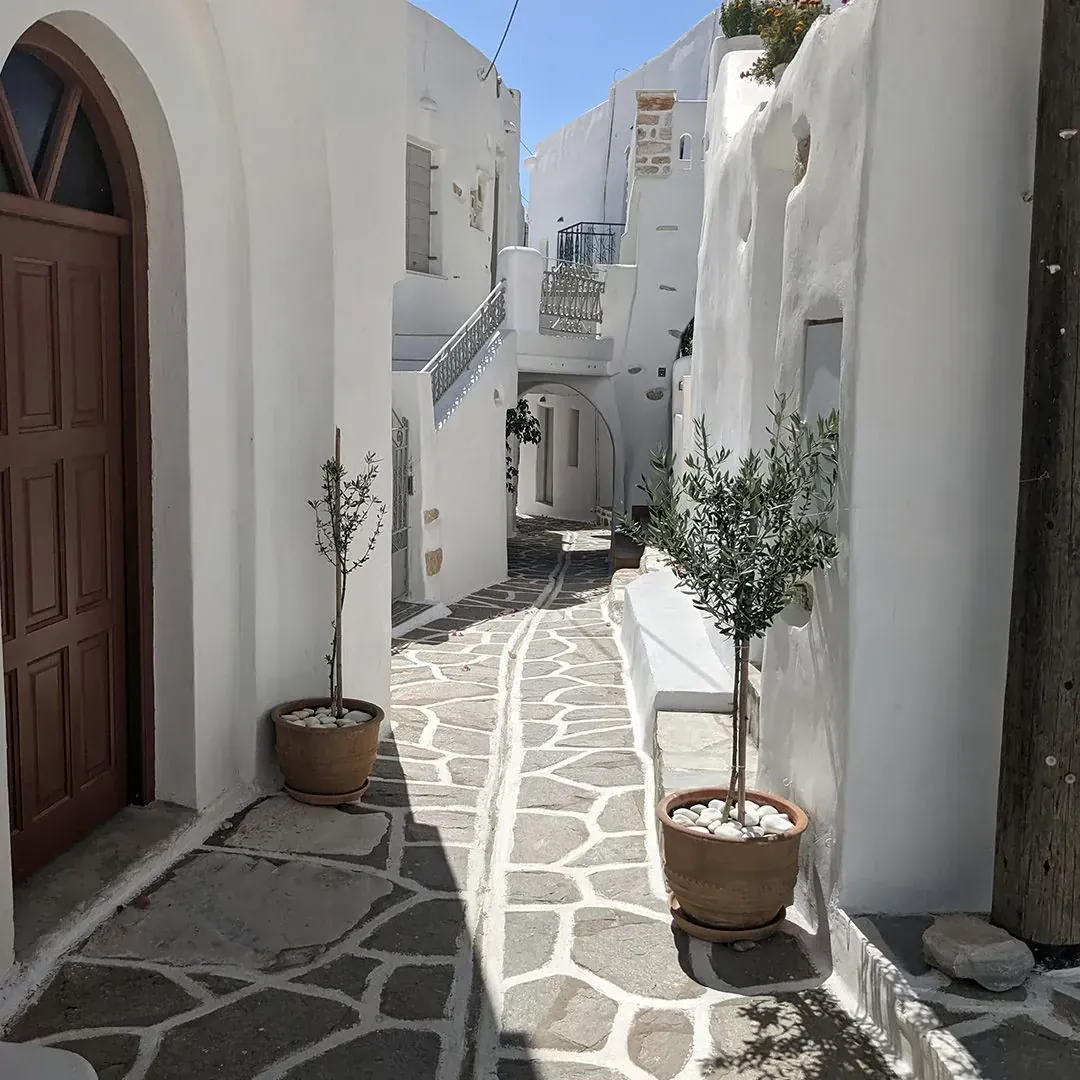
The village of Apiranthos alone is worth the detour. Nicknamed the marble village, this perched town lines up lanes entirely paved with white marble, its small museums and its cafés where the old men play tavli. Lower down, Filoti, the island's largest village, invites you to stop on its square shaded by centuries-old plane trees. And at Halki, the Vallindras distillery has kept the secret of kitron since 1896, that golden citrus liqueur produced nowhere else in Greece.
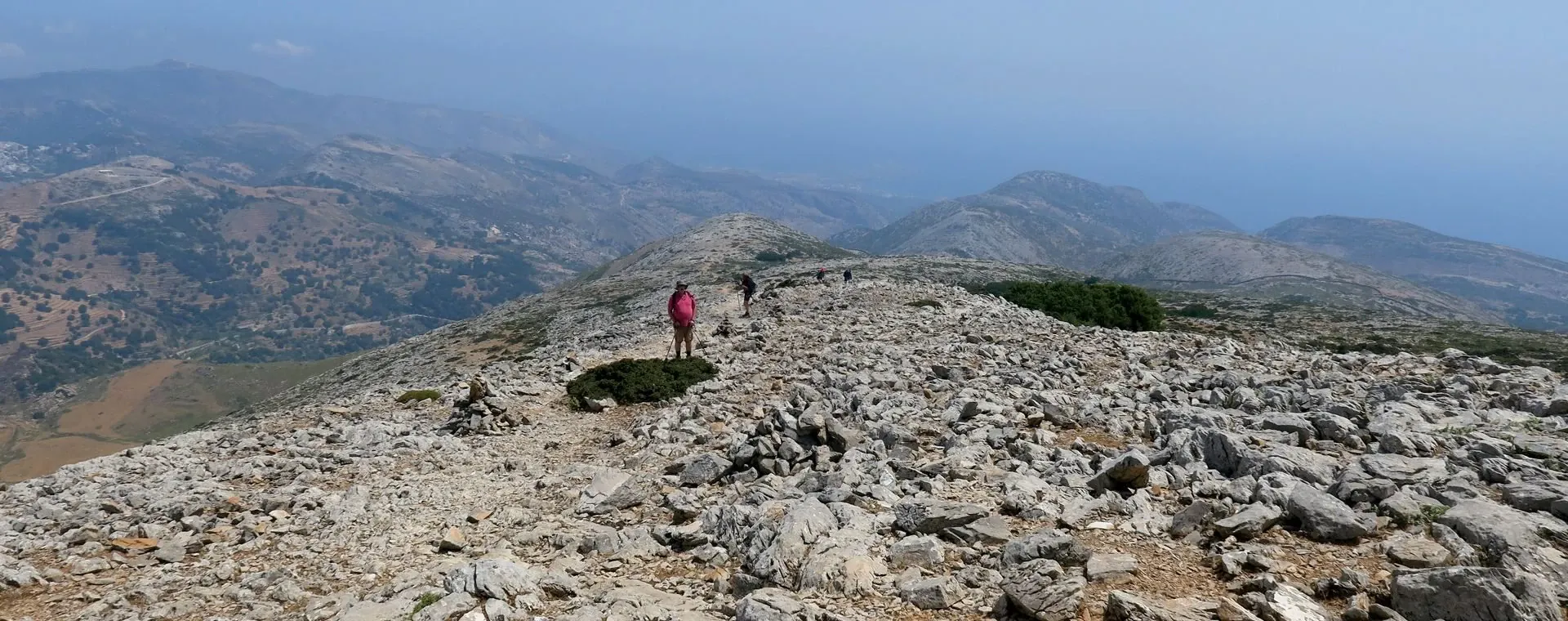
For those who wish, Mount Zas, the highest point in the Cyclades at 1,004 metres, offers from the village of Filoti a panoramic walk of around 3 hours there and back. It is not a feat: it is a steady climb savoured in stages, with a circular panorama at the top over the whole archipelago, Paros included. To discover the paths in detail, our journal on the best hikes in Naxos takes you from the Tragea valley to the southern coves.
Paros, the gentle island: wandering from harbour to harbour
Paros is smaller, gentler in its relief, and turned towards the sea. Its capital, Parikia, receives the ferries in the west, while Naoussa, in the north, charms with its small fishing harbour edged with terraces where you dine almost with your feet in the water. Between the two, the island's interior keeps a village calm that few visitors take the time to discover.
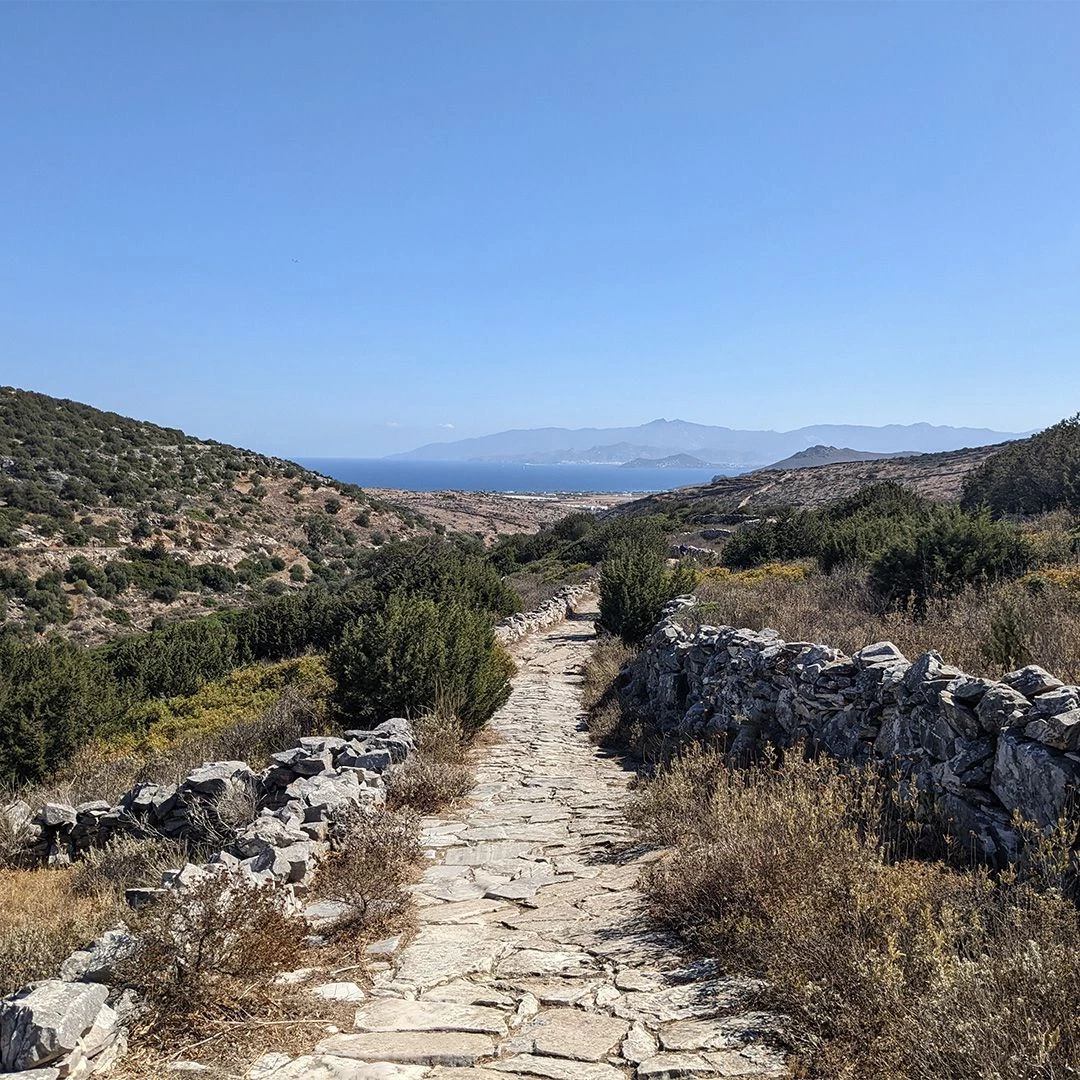
The finest walk on Paros is the Byzantine path linking Lefkes to Prodromos. Around 3.5 km long, this path paved with Parian marble was laid in Byzantine times to link the island's monasteries. It is one of the oldest paths in the Cyclades, and one of the most accessible: it descends on a gentle slope over a little more than an hour, through countryside scented with thyme and oregano, with the mountains of Naxos closing the horizon in the background. Lefkes, a perched village of white houses and flower-filled lanes, makes an enchanting starting point.
Marble is the soul of Paros. The quarries of Marathi, a few kilometres from Parikia, supplied in antiquity the purest Parian marble in the world, the marble that sculpted the Venus de Milo and so many other masterpieces. To walk on Paros is to tread that luminous stone at every step, from the village lanes to the slabs of the Byzantine path.
For easy walking: which one?
If your priority is genuinely accessible walking, where each day stays a pleasure rather than a trial, both islands answer, but differently.
Paros is the island of the short, gentle walk. The Byzantine path from Lefkes to Prodromos is covered in a little over an hour, downhill, on even ground. The distances between villages are modest, the relief kind. It is ideal for anyone who wants to walk in the morning and enjoy the beach in the afternoon, without ever imposing a long day.
Naxos offers more variety, and therefore more choice. You can stay with the gentle paths of the Tragea valley, flat and shaded, or treat yourself to a steadier climb towards the perched villages and Mount Zas. It is the island that adapts best to the mood of the day. Our verdict, and we stand by it: for absolute simplicity and the shortest distances, Paros wins by a length. For the richness of the paths and the chance to vary the pleasures at your own pace, Naxos has the advantage.
For gastronomy and the art of living: which one?
This is probably the question that matters most to an epicurean traveller. And here again, both islands have plenty to offer.
Naxos is a land of terroir. Its potato is so well regarded that Athens restaurants list it on their menus. Its graviera, a mountain cheese aged in cellars, accompanies every meal, shaved over a salad or drizzled with thyme honey. And the kitron of Halki, tasted in three versions in a vaulted room, remains a fragrant souvenir you carry home at the bottom of your bag. On Naxos, the path always leads to a table, and the table always leads back to the path.
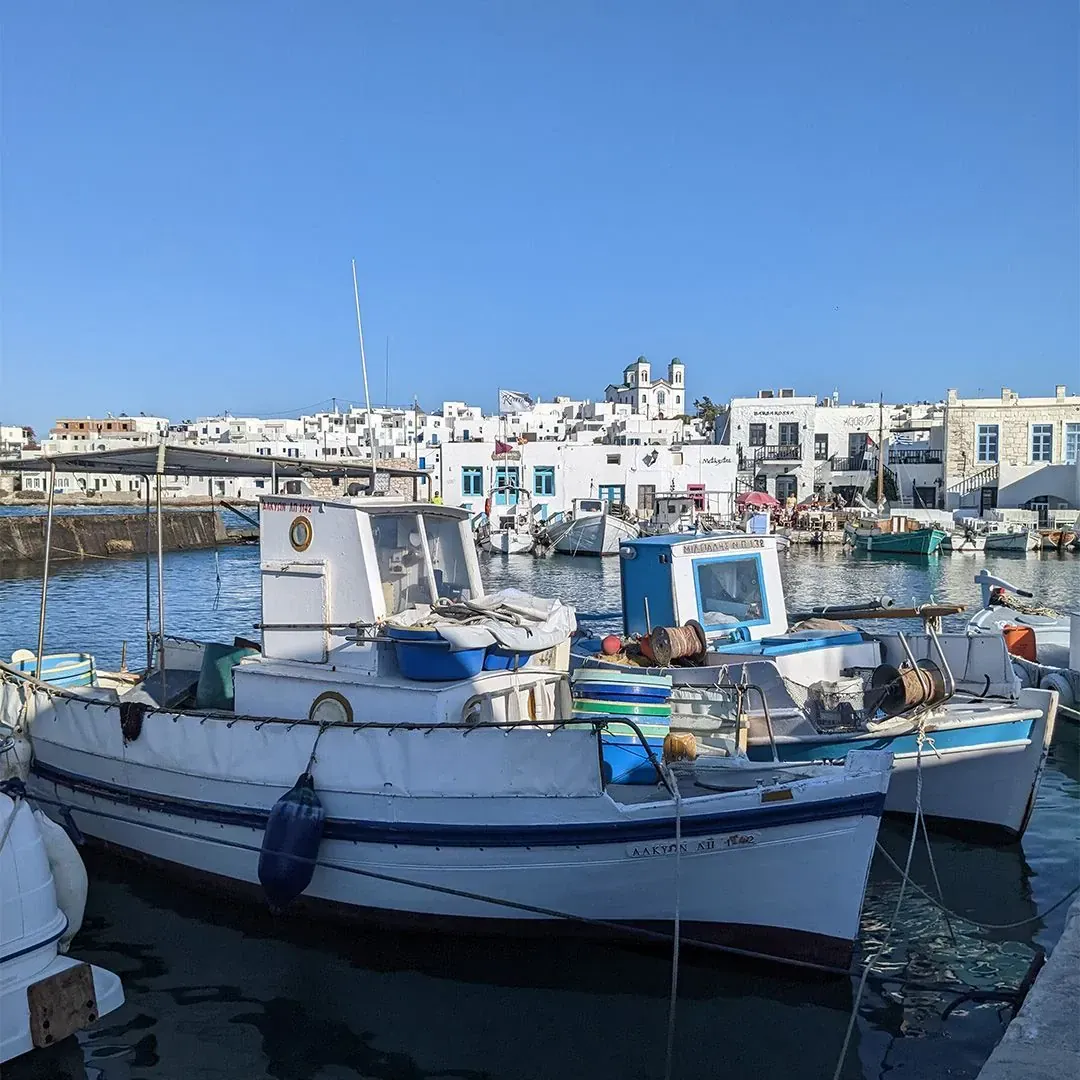
Paros plays a different tune, more maritime, more festive on its harbours. At Naoussa, the tavernas of the old port serve the catch of the day and the local ouzo facing the colourful boats. The terraces of Parikia come alive at sunset. The art of living there is turned towards the sea and the conviviality of the evenings. Our verdict: for terroir, rural authenticity and the discovery of rare products, Naxos takes the advantage. For harbour atmosphere and dinners at the water's edge, Paros has an irresistible charm.
Combining them: Naxos and Paros in a single trip
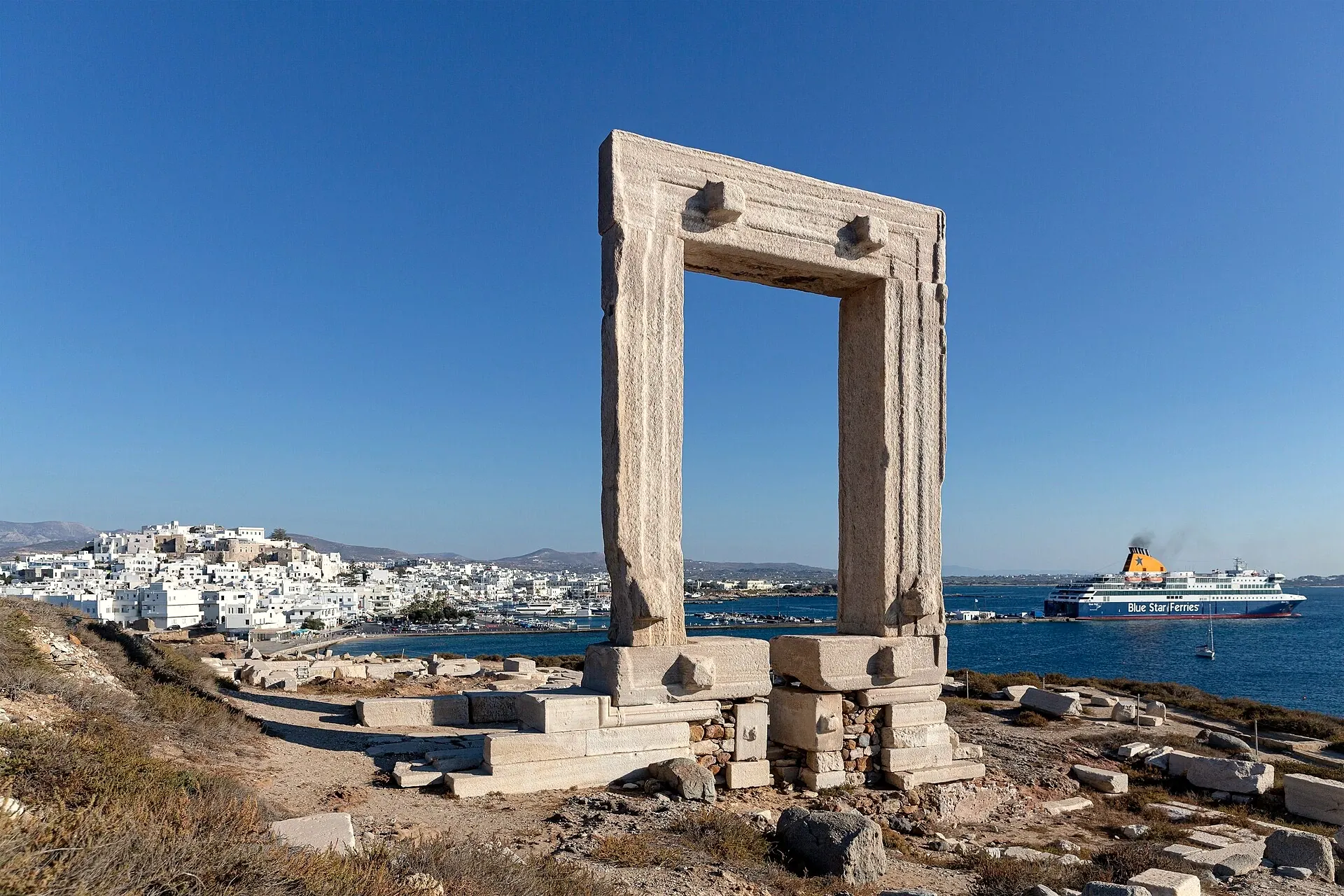
And what if the real answer were not to choose. The two islands are separated only by a short crossing: the ferry links Naxos to Paros in 20 to 50 minutes depending on the boat, with numerous daily departures, all year round. In practice, you can savour the green generosity of Naxos then shift to the luminous gentleness of Paros without ever losing a day to transport.
Kelifos has not designed a trip bringing precisely these two islands together, but two of our holidays are the ideal way in. To discover Naxos in depth, at your own pace, Naxos and Amorgos self-guided settles you into charming addresses and arranges your ferry crossings and transfers: you have only to walk and savour. And for those who prefer to be accompanied by an English-speaking leader who knows every path and every taverna, our grand tour of the Cyclades travels the archipelago island by island in the same spirit of gentleness.
To explore all our formulas in the archipelago, visit our page dedicated to the Cyclades, and to widen the horizon to the whole of Greece, browse our finest trails in Greece.
Frequently asked questions
Naxos or Paros with the family?
Both islands suit a trip with family or friends very well. Paros appeals with its shallow-water beaches and its short walks, easy for all ages. Naxos offers more space, long sandy beaches in the west and mountain villages full of character. If you are looking for simplicity and quiet swimming, lean towards Paros. If you want to vary between beach, villages and nature, Naxos is more complete.
Which island is the less touristy?
Naxos remains on the whole more authentic and rural, above all as soon as you leave the harbour for the interior, the Tragea valley and perched villages such as Apiranthos. Paros is livelier, particularly around Naoussa and Parikia in high season, but its interior and the Byzantine path from Lefkes keep a preserved calm. In spring and early autumn, both islands recover their serenity.
How many days for Naxos and Paros?
To taste each island properly without hurrying, allow around 3 to 4 days per island, so a week to 10 days to combine the two. That rhythm leaves time to walk in the morning, enjoy the beaches and tavernas in the afternoon, and linger in the villages. Our self-guided holidays in the Cyclades are calibrated on this philosophy of chosen time.
How do you get from Naxos to Paros?
By ferry, and it is very simple. The crossing takes 20 to 50 minutes depending on whether you take a fast or a conventional boat, with numerous daily departures and a year-round service. The two main ports, Chora on Naxos and Parikia on Paros, are directly linked. It is one of the most practical connections in the whole archipelago.
Do you need to be a good walker to discover Naxos or Paros on foot?
Not at all. The finest walks on both islands stay accessible, short and even, to be savoured at your own pace. The Byzantine path on Paros descends on a gentle slope, the paths of the Tragea valley on Naxos are flat and shaded. On our holidays, each day is adjustable and your luggage awaits you on arrival: you carry only a small daypack.
Which has the finest beaches, Naxos or Paros?
Both islands know how to reward the swimmer, each in its own way. Naxos unfolds long beaches of golden sand on its west coast, such as Agios Prokopios, often named among the finest in Greece, and above all Plaka, one of the longest stretches of sand in the Cyclades, not forgetting the wild coves of the south around Alyko. Paros plays the card of turquoise, sheltered water, with Kolymbithres and its sculpted granite rocks in the hollow of Naoussa bay, or the vast Golden Beach. For long sandy beaches and the open sea, Naxos wins; for gentle turquoise coves close to the villages, Paros charms.
Naxos or Paros for a romantic trip?
Both islands have their romantic charm, in different registers. Paros lends itself to dinners almost with your feet in the water on the old harbour of Naoussa and to the terraces of Parikia at sunset. Naxos offers a more rural intimacy, with its mountain villages and its famous Portara, the marble gateway of the temple of Apollo, where the sun sets over the sea facing the archipelago. For the convivial bustle of the harbours, choose Paros; for authentic calm and sunsets on marble, Naxos.
Naxos or Paros for walking?
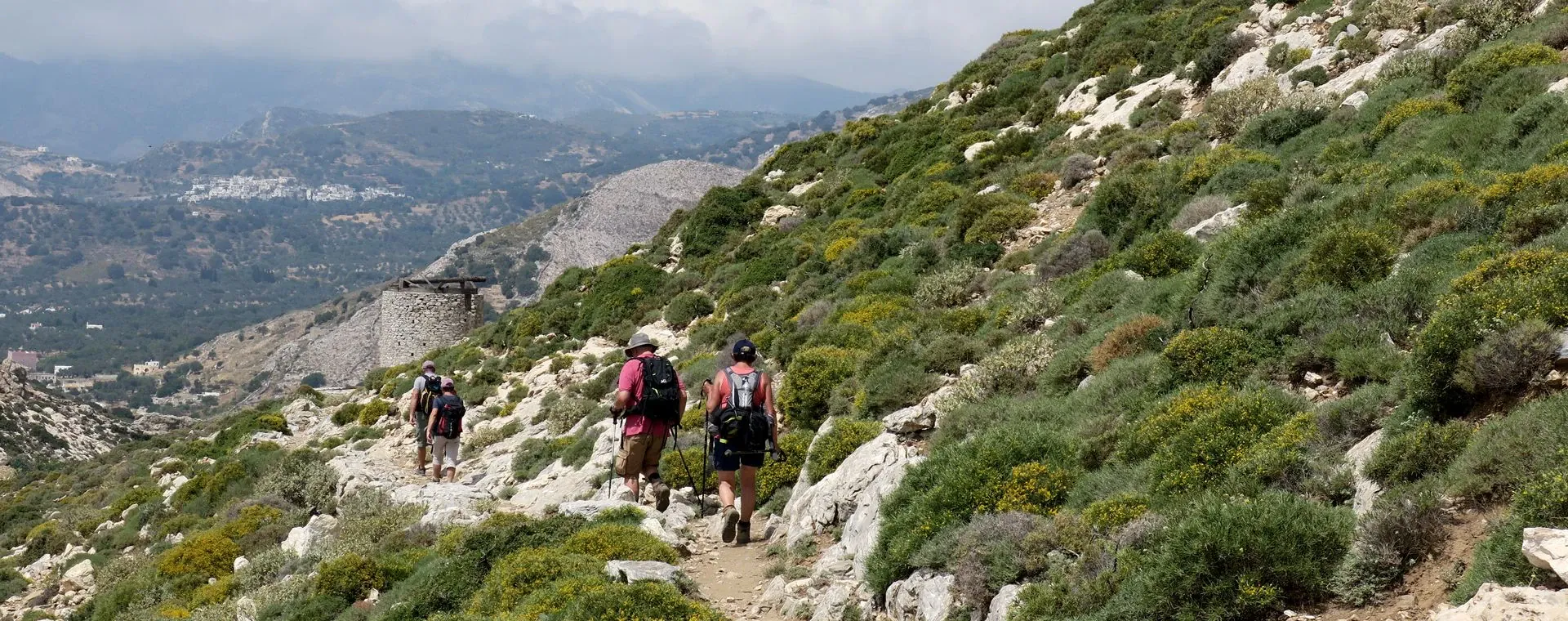
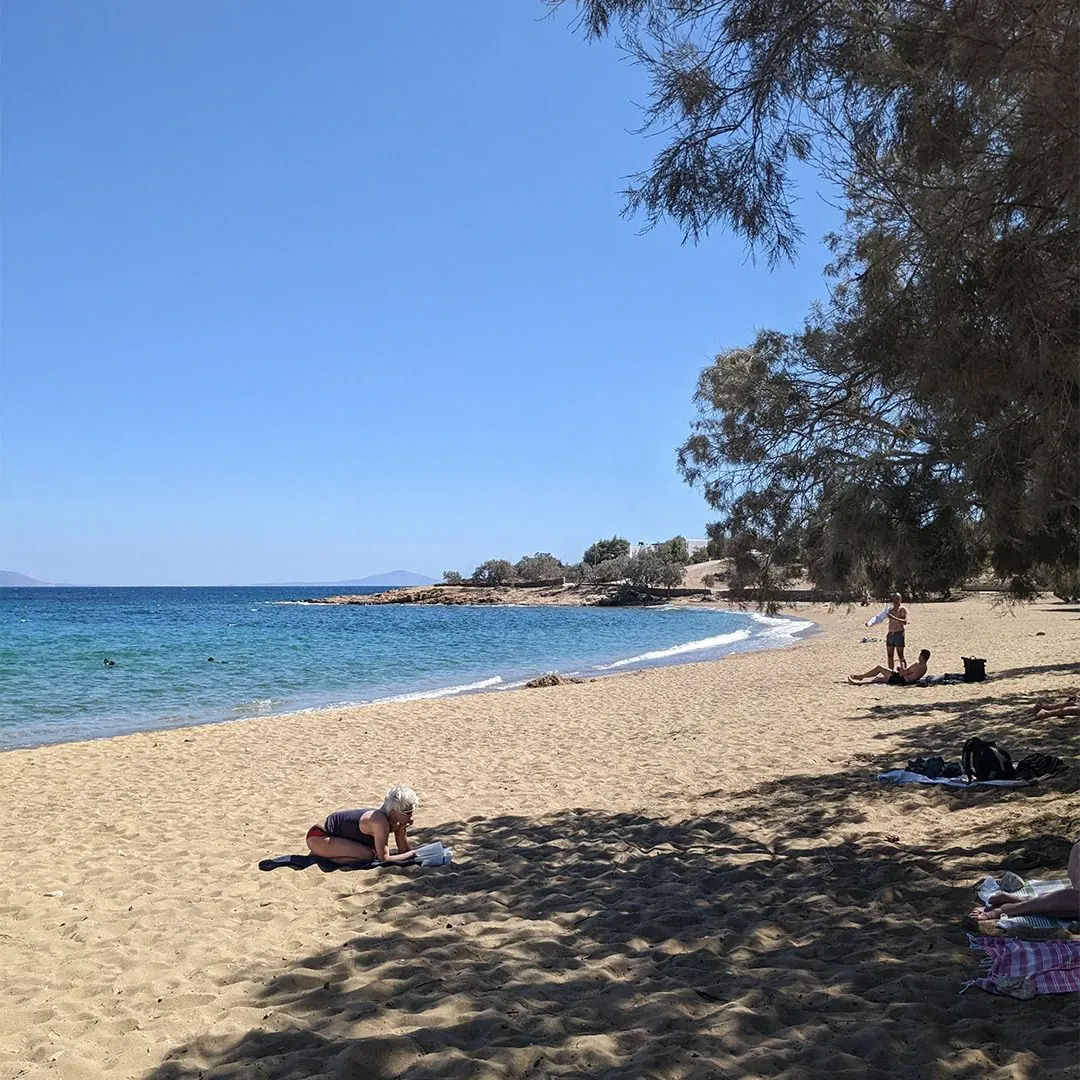
If walking is your first motivation, Naxos is the obvious island: its paths are more numerous and more varied, from the Tragea valley to the marble villages, while Paros is savoured above all on its lovely Byzantine path. And Naxos is the only one of the two to carry a genuine Kelifos holiday: Naxos and Amorgos self-guided has you making your way at your own pace, luggage carried and stages arranged, with no preparation on your part.
Your question is not on this list?
Write to us, and we will reply to you personally by email.
Continue reading
- Which Cyclades island to choose for the trip you have in mind?
- Paros on foot: marble, white villages and fishing harbours
- Which Greek island is right for you? The complete guide
- The Best Hikes in Naxos
- Hiking in Greece: the best trails island by island
Article written by
Maria Papadopoulou (Μαρία Παπαδοπούλου)
Editorial lead
I hike, and Greece is the place I keep coming back to. My initial studies (a Master’s in Marketing and a degree in Applied Foreign Languages) taught me how to build an editorial project, and the trails taught me the… Read more