Picture a terrace of white marble in the hollow of a perched village, a Greek coffee gently steaming, and all around hills dotted with little towers carved like jewels: the famous dovecotes of Tinos. In Greece, this Cycladic neighbour of Mykonos remains surprisingly spared by the crowds. You come for the marble, for the light of the Aegean, for the tavernas where you linger without watching the clock, and for those gentle paths that link one village to the next. Here is what we would have liked to know before discovering Tinos, and everything that makes it, in our eyes, one of the most endearing of the Greek islands.
| In brief | An authentic Cycladic island, made of marble, dovecotes and perched villages, still far from mass tourism |
| Ideal for | Lovers of villages with character, of heritage and of quiet walking far from the crush |
| Best season | Late April to June, then September and October |
| Pace | Gentle, at your own rhythm, from village to village |
| Our trip | Tinos is a stage of the guided grand tour of the Cyclades |
More than six hundred dovecotes, the signature of Tinos
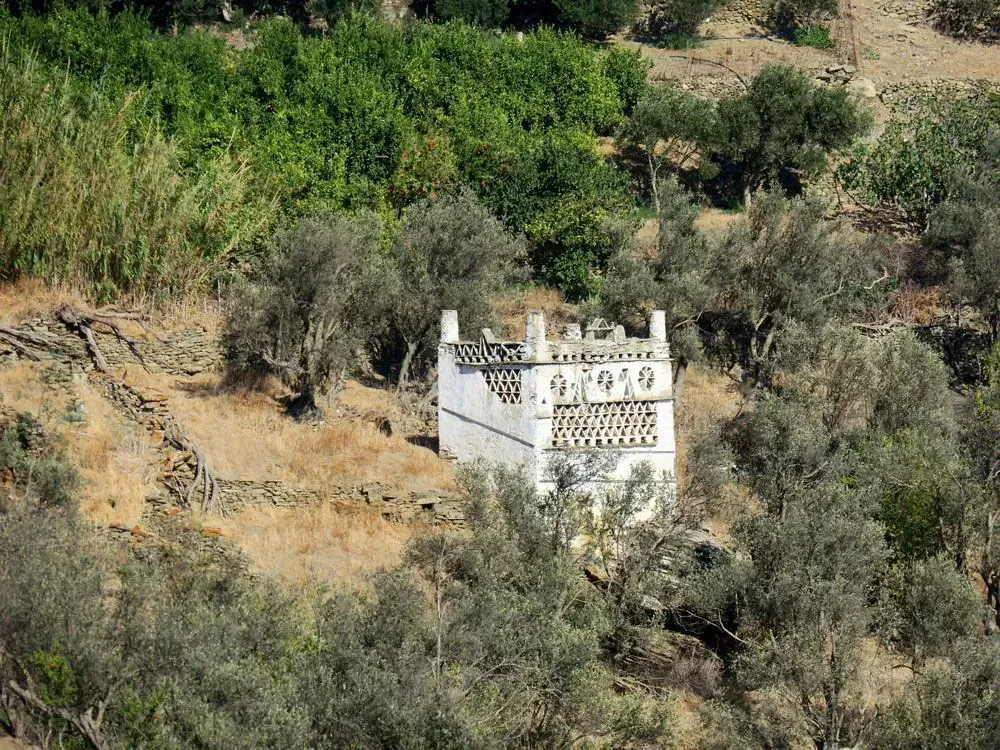
Tinos counts more than six hundred dovecotes, and some sources record close to a thousand. These peristerionas (the Greek word for dovecote) date mostly from the 18th and 19th centuries, a legacy of the Venetian period, when raising pigeons was at once a sought-after dish and a mark of prestige. Each tower is a lacework of stone: the inhabitants assembled thin plates of local schist into geometric patterns, suns, cypresses, birds. You come upon them at a bend in a valley, often near a vegetable garden or a stream. Take the time to stop in the Tarambados valley, which gathers one of the finest concentrations on the island: the morning light there picks out every relief, and you quickly understand why these small buildings have become the emblem of Tinos.
Pyrgos and the marble villages, where the sculptors are born
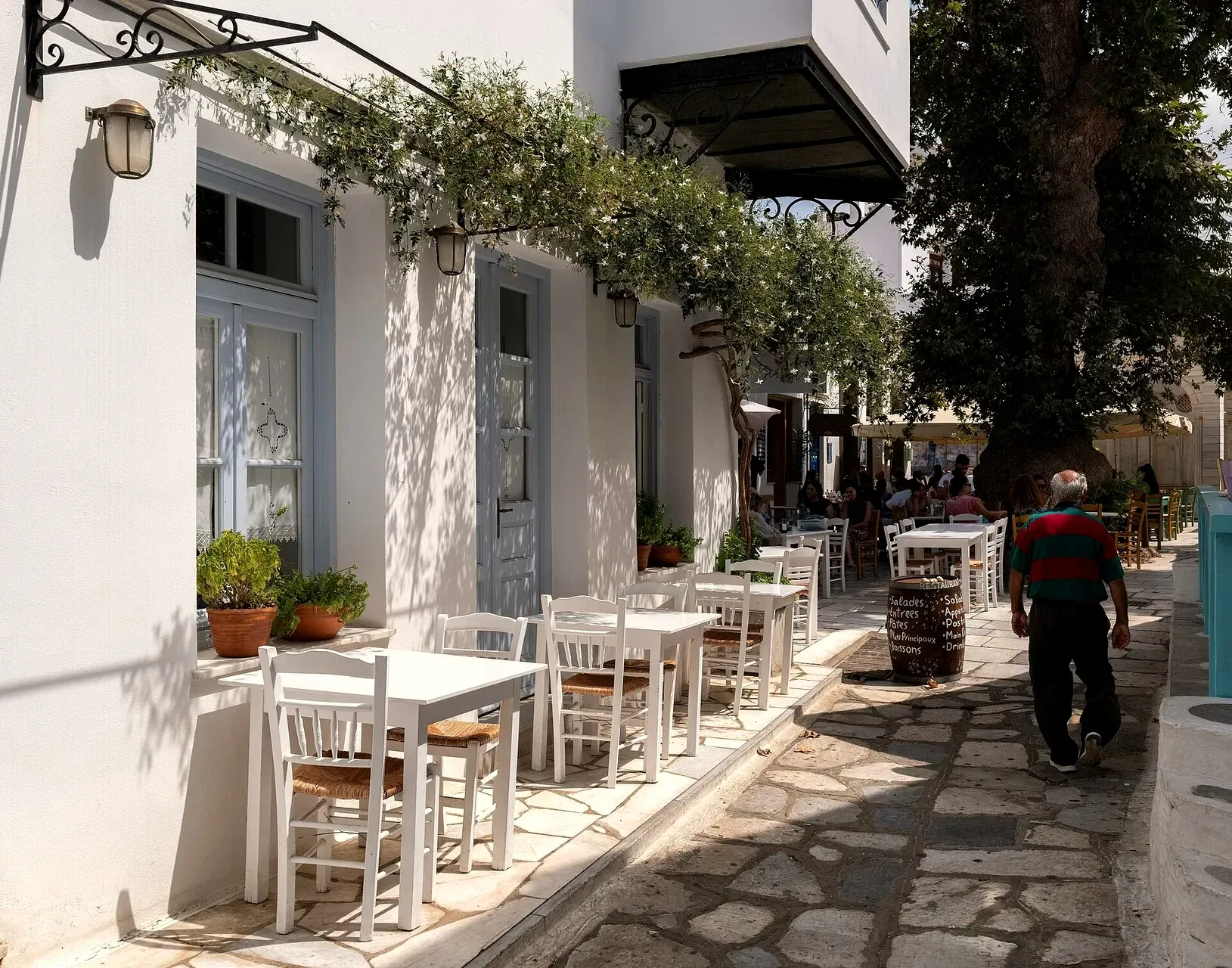
In the north of the island, Pyrgos is probably the finest village on Tinos, and it is the kingdom of marble. Here everything is carved: the door lintels, the fountains, the street plaques, right down to the headstones of the cemetery, considered an open-air museum. Pyrgos is the homeland of the great Greek sculptors, beginning with Yannoulis Halepas, and its school of fine arts still trains stonecutters today. The Marble Museum, the first of its kind in Greece, tells the whole craft, from the extraction of the rock to the finished work. This know-how of the marble carvers of Tinos has in fact been inscribed since 2015 on UNESCO’s list of the intangible cultural heritage of humanity. Once the visit is done, settle on the small shaded square beneath the great plane tree, for a coffee and a slice of galaktoboureko, that semolina cake glazed with syrup which the Greeks adore.
Volax and its round boulders, a landscape from elsewhere

In the centre of the island, the Volax plateau disconcerts everyone who discovers it. Hundreds of perfectly rounded granite boulders, some several metres high, sit there like a giant’s marbles. Geologists explain these shapes by millions of years of erosion, wind and temperature swings, which have gradually polished the rock. The small village of Volax, nestled among these balls of stone, still lives to the rhythm of the basket-makers who weave their wicker. An easy walk takes you around the plateau, and several tavernas there serve a simple, generous cuisine, from local cheese to tomatoes from the garden. It is the perfect place to understand just how much Tinos is an island apart.
Ancient paths for walking at your own pace
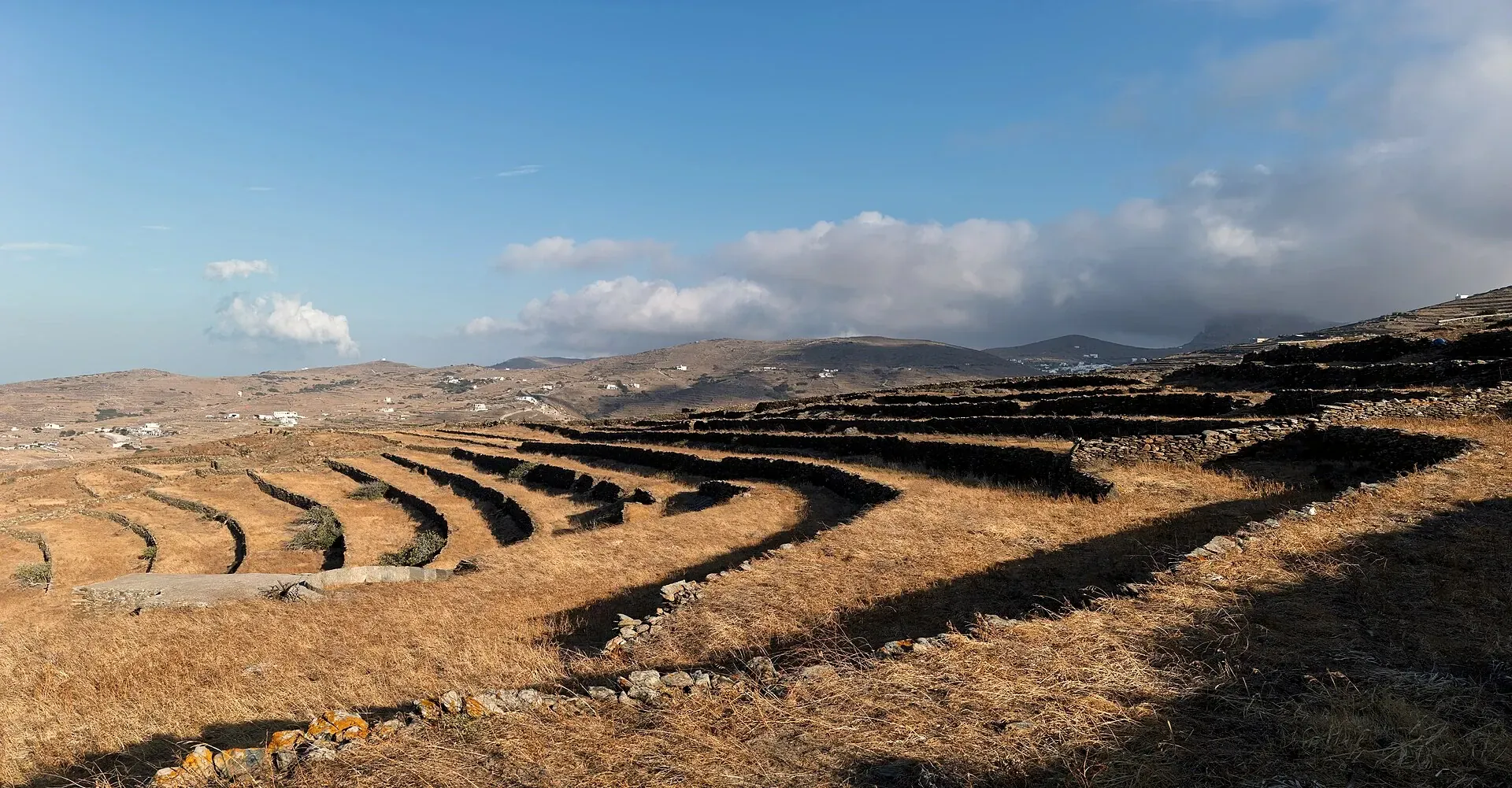
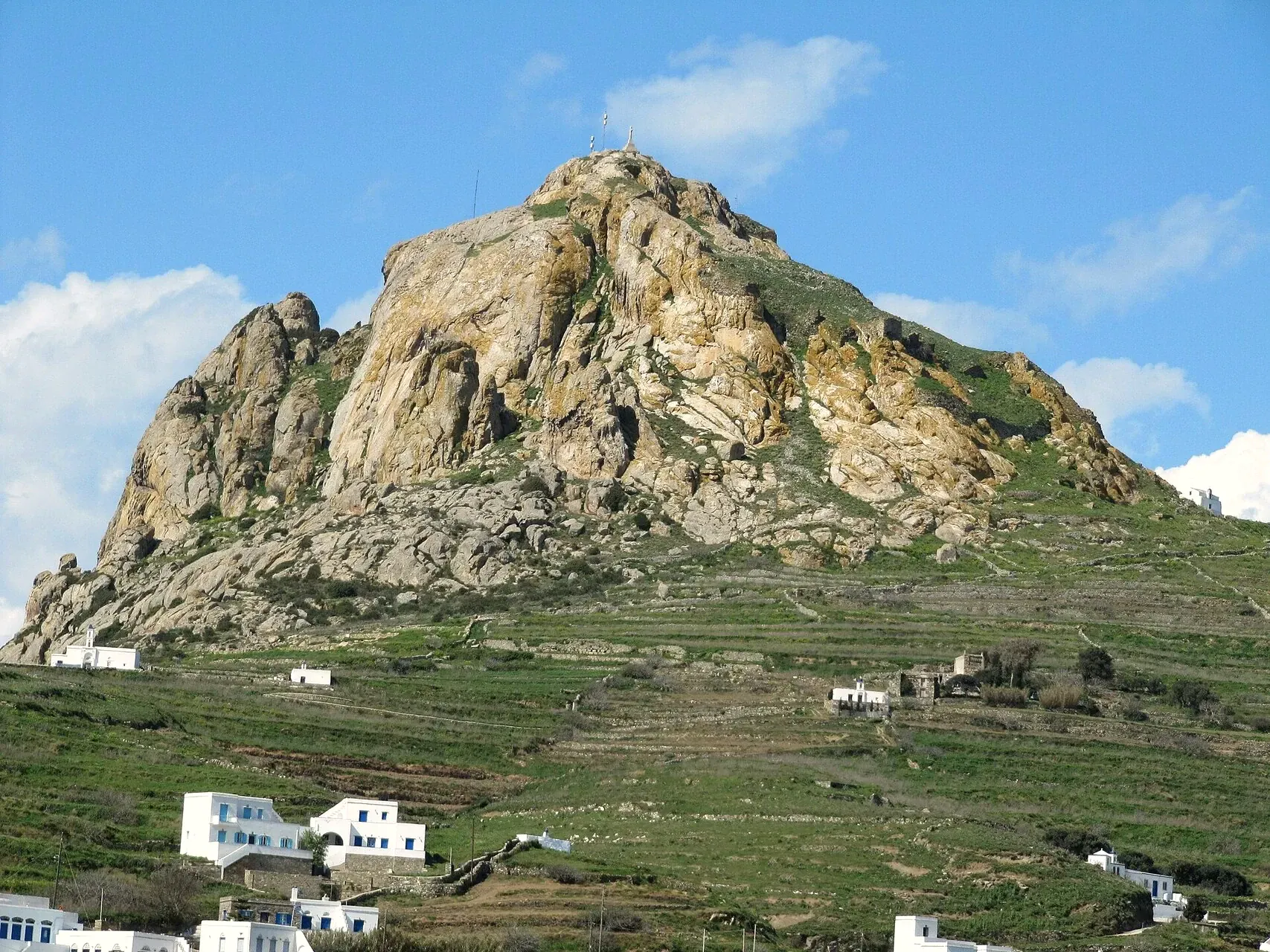
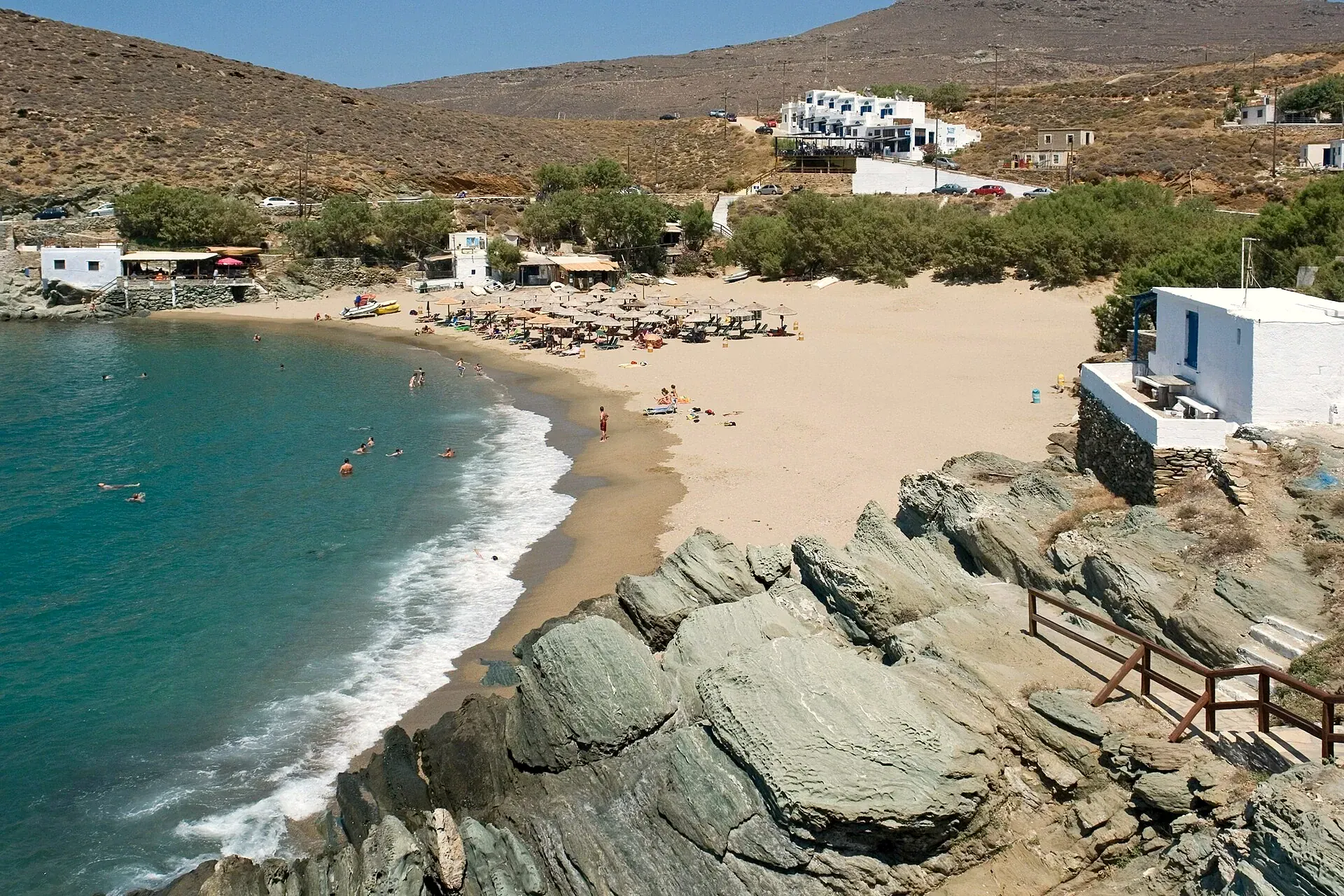
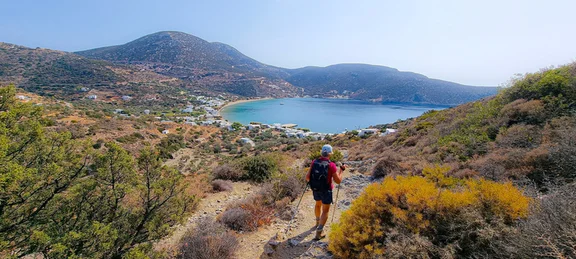
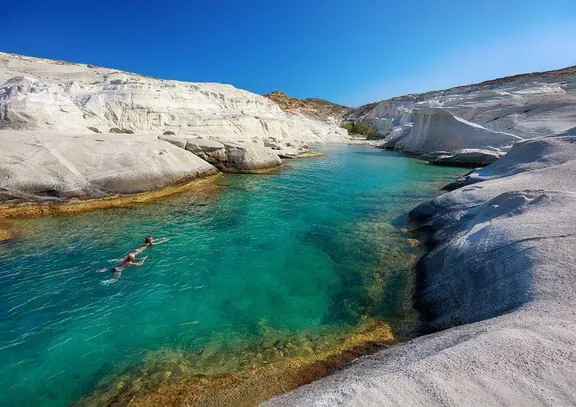
Tinos has one of the finest path networks in Greece. Old mule tracks, often paved and well waymarked, link the villages to one another across the terraces and the olive trees. You can walk for an hour or for a morning, always at your own pace, without ever feeling far from a fountain or a chapel where you can halt. The rock of Exombourgo, a former Venetian fortress perched at more than 600 metres, deserves a quiet climb: from the top, the view takes in almost the whole island and the neighbouring Cyclades. Most of these paths are walked without a car, which makes Tinos particularly agreeable for anyone who likes to take their time and let the walking shape the day. Some of these paths in fact drop down towards quiet coves, such as the bay of Kolimbithra in the north or the small beach of Apigania reached on foot, enough to finish the morning with a swim far from the crowds.
Kardiani and Isternia, balconies over the Aegean
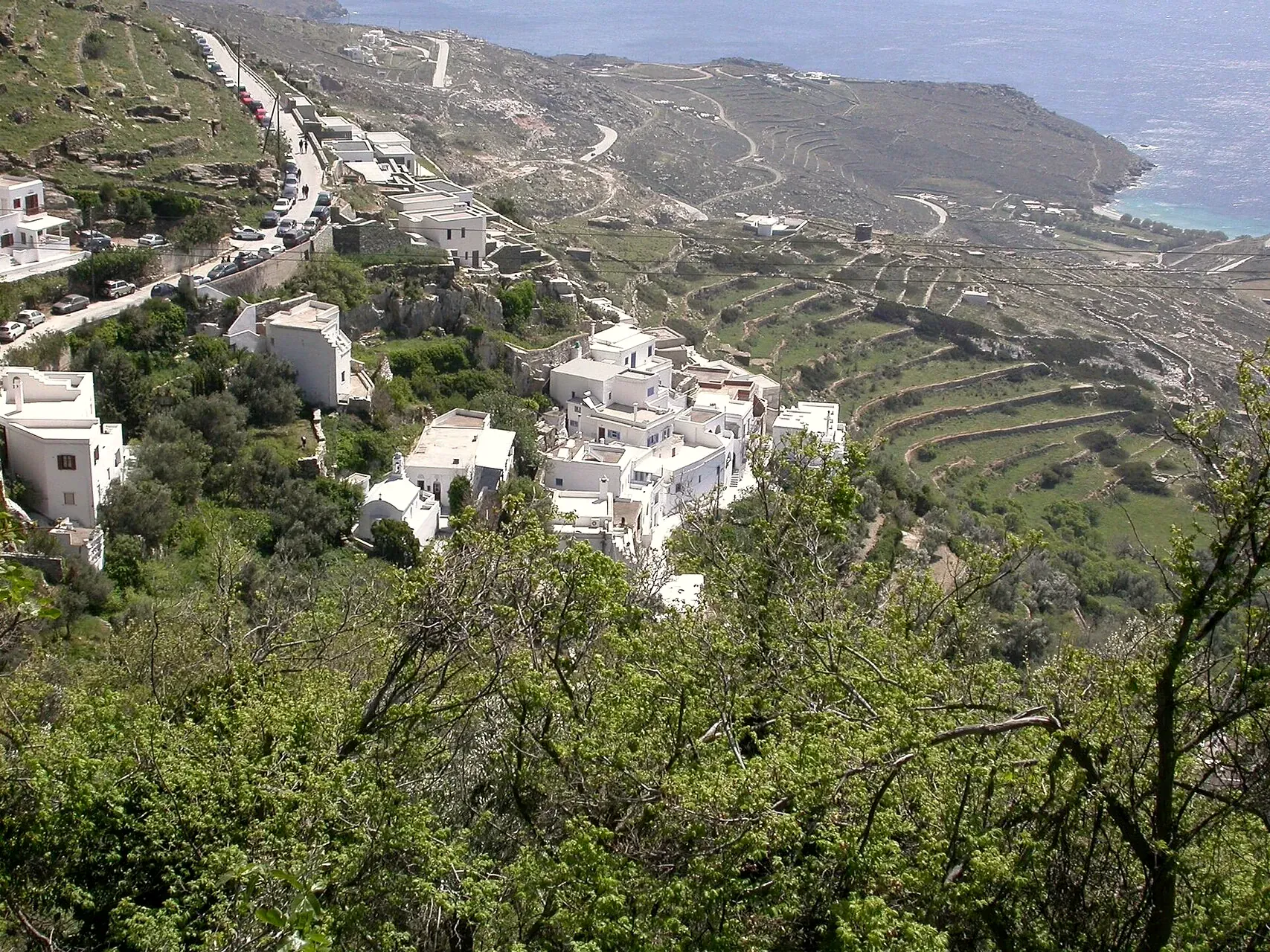
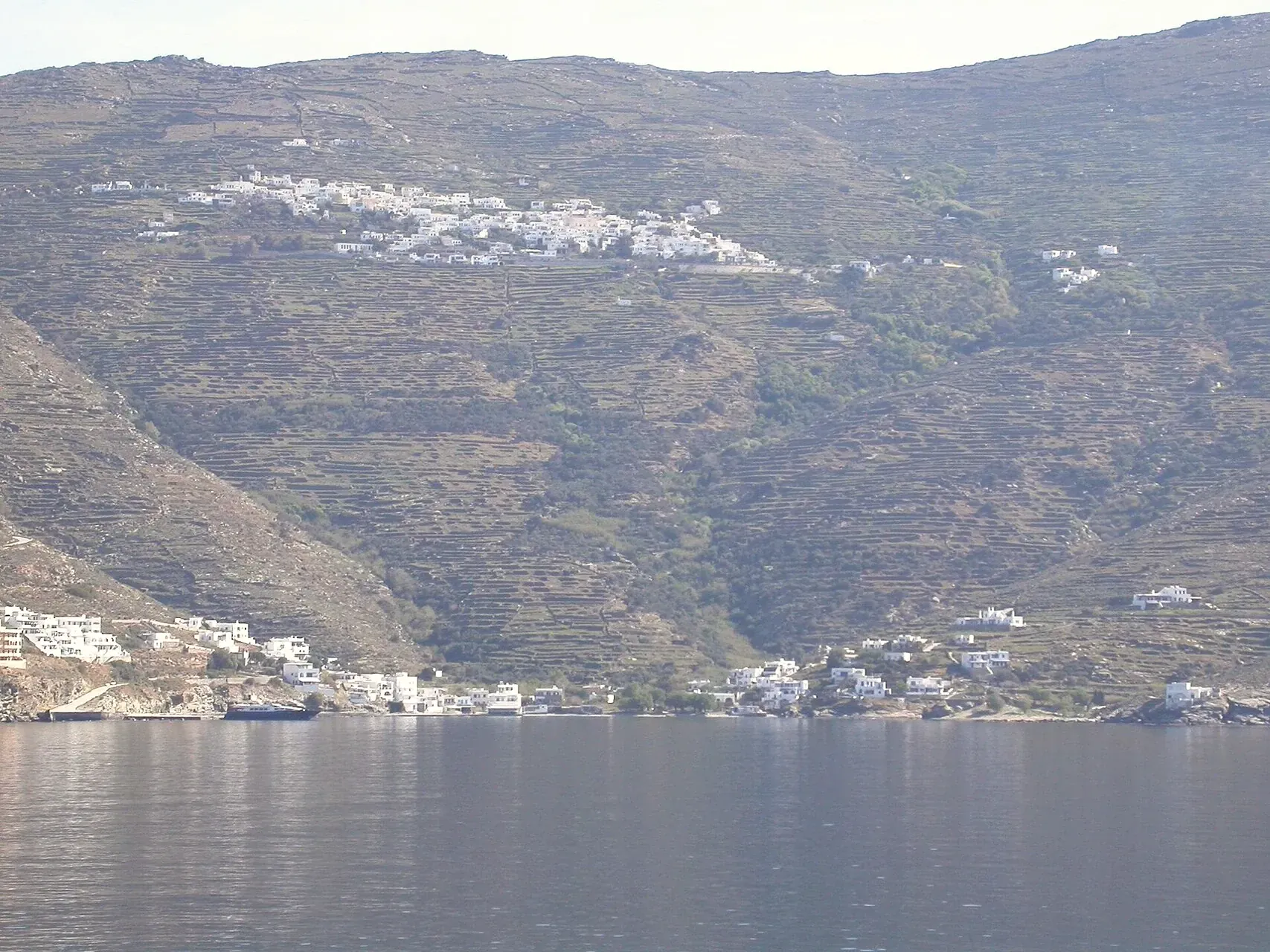
On the west coast, Kardiani and Isternia cling to the mountainside, facing the sea. Kardiani hides in the greenery, crossed by cool lanes and springs: it is one of the most photogenic villages on the island. A little further north, Isternia spreads its houses in an amphitheatre above the blue, with a café terrace renowned for its sunsets. If you feel like it, go down to the small harbour of Ormos Isternion for a fish lunch, almost with your feet in the water. These perched villages sum up the art of living on Tinos: you linger in them rather than visit them.
Flavours of Tinos, a gourmet island
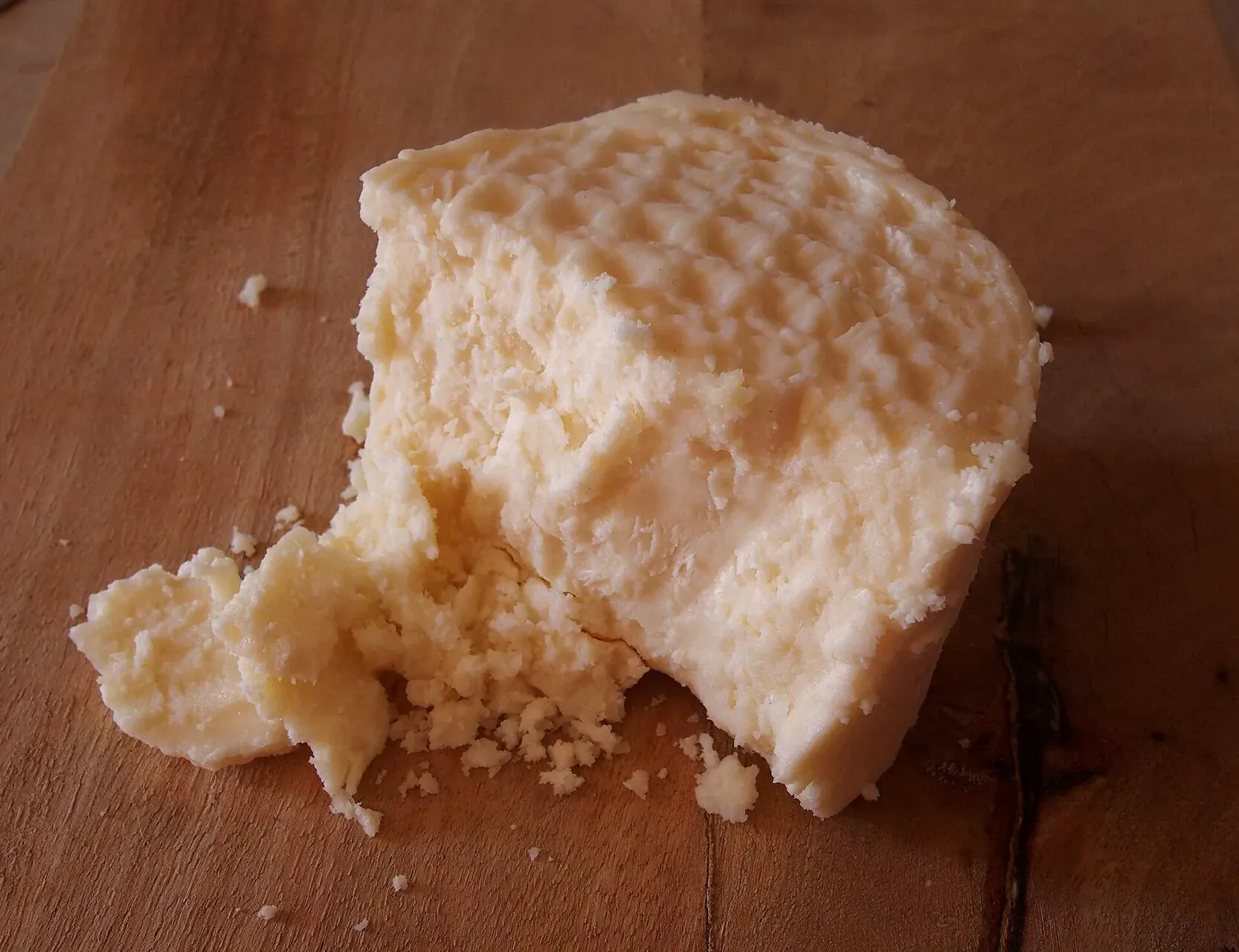
It is little known, but Tinos is one of the finest tables in the Cyclades. The island grows a renowned artichoke, celebrated each spring in the village of Komi, and produces a dried charcuterie, louza, scented with pepper and spices. On the cheese side, taste the kopanisti, a sharp paste with an agreeable bite, and the mild volaki. All of it goes readily with a glass of raki and a plate of capers and sun-filled tomatoes. In the inland villages as in the small harbours, the cooking stays homely and generous, served without ceremony: exactly what you are after following a morning’s walk.
Panagia Evangelistria, the great pilgrimage of 15 August
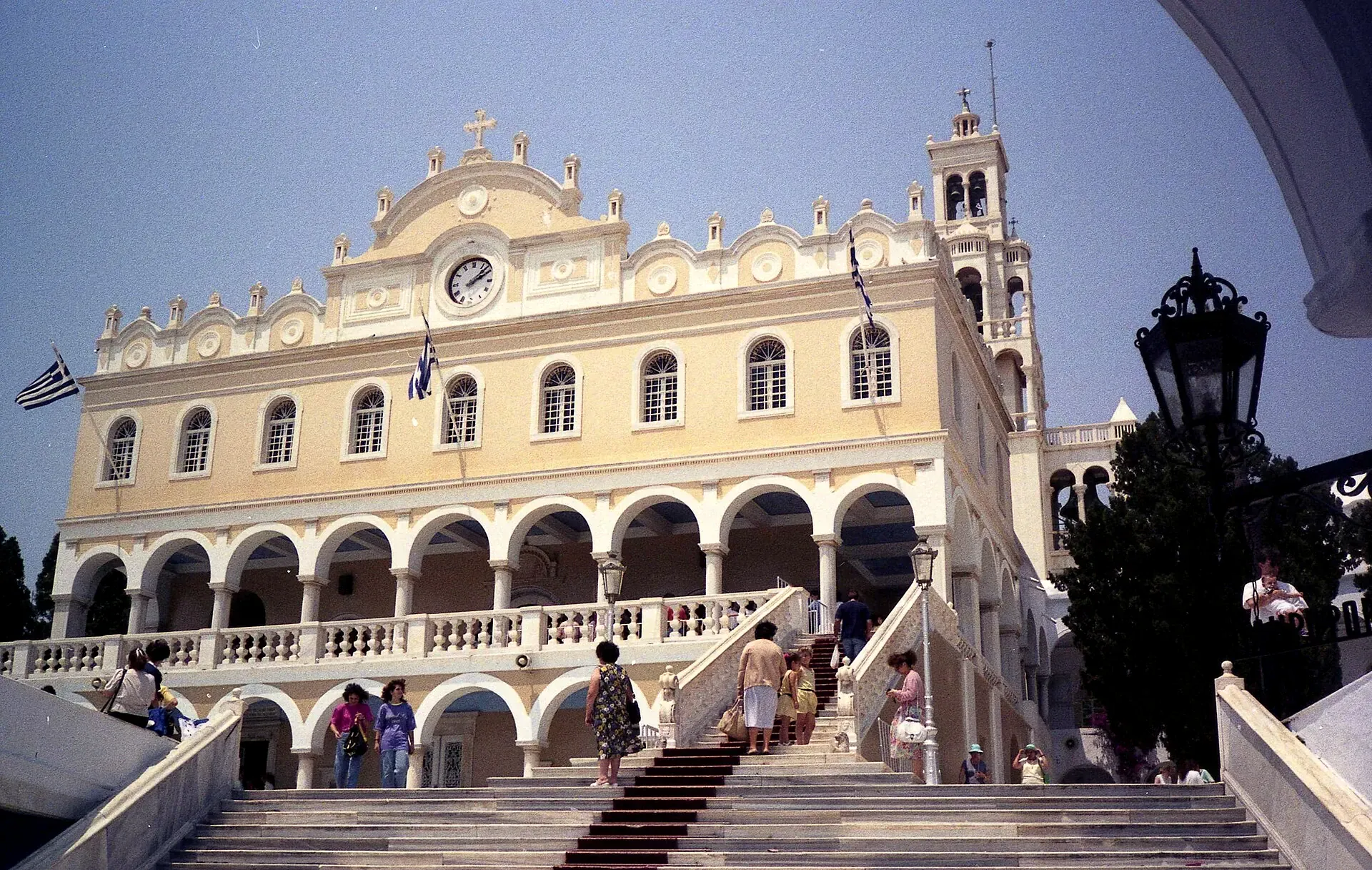
A step from the harbour of Chora, the great church of the Panagia Evangelistria watches over the island. It is the most important Marian sanctuary in Greece. According to tradition, the nun Saint Pelagia had a vision of the place where a miraculous icon of the Virgin lay buried, found again in 1823. Every 15 August, the day of the Dormition, thousands of pilgrims flock there, and some climb on their knees the avenue that rises from the harbour to the church, on a red carpet unrolled for them. If you are seeking calm, it is better to avoid that particular week. The rest of the year, the building, all in marble, can be visited in serenity, and the fervour that emanates from it touches even travellers simply passing through.
When to come, and how to savour Tinos
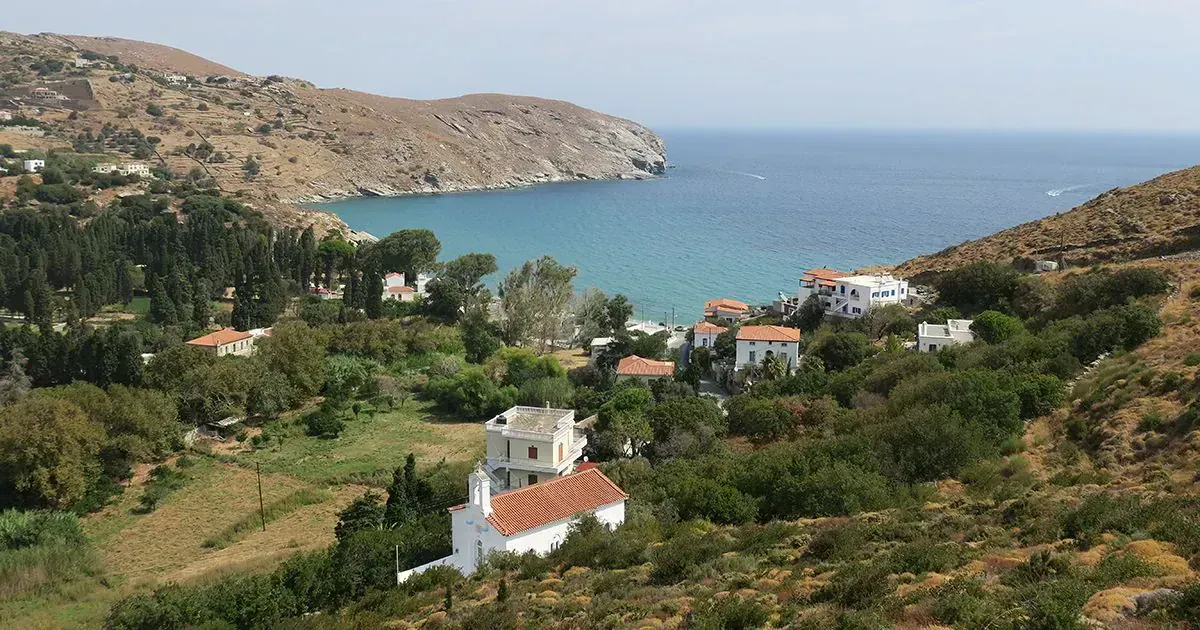
Tinos is ideally discovered from late April to June, then in September and October: the light is soft, the paths in flower or golden, and the tavernas open without the crush. Summer stays agreeable, but the meltemi, that north wind particular to the Cyclades, sometimes blows hard in July and August. Three to four days are enough to taste the essentials of the island; a week lets you feel almost at home there.
And if you would rather not worry about anything, Kelifos calls at Tinos on its guided grand tour of the Cyclades, alongside Andros, Mykonos and Delos: charming hotels booked, luggage transferred from island to island and an English-speaking leader who knows the finest paths. To compare Tinos with its neighbours before deciding, our guides to which Cycladic island to choose and the most beautiful villages of the Cyclades will give you plenty with which to put your trip together. And to place Tinos within the archipelago as a whole, find all our ideas on the Cyclades page.
Frequently asked questions about Tinos
How do you get to Tinos?
Tinos has no airport: the island is reached by ferry, most often from Rafina, the port east of Athens which a shuttle links to the airport in about forty minutes. The crossing takes about 2 h, with many departures from April to October. The island is also very easily reached from Mykonos close by, as well as from Andros and Syros, which makes it a natural stage on a tour of the Cyclades.
Can you discover Tinos on foot?
Yes, and it is one of the finest ways to experience the island. Tinos unfolds a network of more than 150 km of old mule tracks, waymarked today, which link the villages across the terraces and the olive groves. Most are walked without a car and at your own pace, from a fountain to a chapel, from a dovecote to a taverna. On our guided grand tour of the Cyclades, an English-speaking leader takes you along the finest of these paths, without your having to worry about navigation.
Where can you find a map of the Tinos paths?
The official network, named Tinos Trails, is waymarked on the ground and signposted at the start of each village since 2019. To prepare your walks, the Tinos walking map published by the Greek house Anavasi, at 1:25,000, GPS-compatible and water-resistant, is the reference and can be found locally or in specialist bookshops. And if you would rather organise nothing, the leader on our tour of the Cyclades knows these paths by heart and sets the day’s route for you.
When does the great pilgrimage of the Panagia Evangelistria take place?
The great pilgrimage culminates on 15 August, the day of the Dormition of the Virgin: thousands of the faithful then converge on the sanctuary of the Panagia Evangelistria, in Chora, and some climb on their knees the avenue that rises from the harbour. It is the busiest week of the year, and therefore to be avoided if you are seeking calm. The rest of the time, this marble church, the foremost Marian sanctuary in Greece, can be visited peacefully, and the miraculous icon found in 1823 draws visitors in every season.
Your question is not on this list?
Write to us, and we will reply to you personally by email.
Article written by
Maria Papadopoulou (Μαρία Παπαδοπούλου)
Editorial lead
I hike, and Greece is the place I keep coming back to. My initial studies (a Master’s in Marketing and a degree in Applied Foreign Languages) taught me how to build an editorial project, and the trails taught me the… Read more