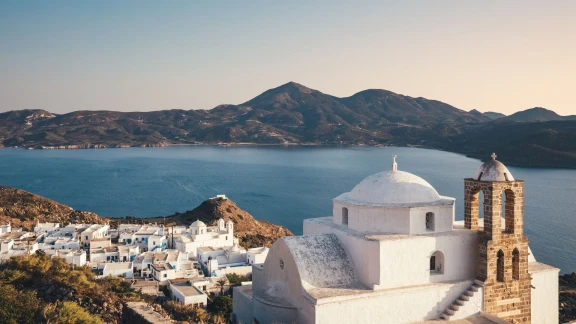


There is an hour, in the late afternoon, when the villages of the Cyclades seem to hold their breath. The stone gives back the heat stored through the day, the white lanes turn ochre, and the terraces fill gently with people expecting nothing more than the sunset. It is in these moments that you understand why the most beautiful villages in the Cyclades need no monuments to win you over: a cobbled lane, a blue-and-white chapel and a coffee set on a wrought-iron table are enough. Here are the ones we like best, on the islands we walk at your own pace, far from the crowds of Santorini.
| In brief | The white villages of the Cyclades, chosen on the islands we explore on foot |
| Ideal for | Lovers of authenticity, quiet lanes and terraces facing the Aegean |
| Best season | May to June, then September to mid-October (mildness, light, few people) |
| Pace | Gentle, from village to village, on foot and à la carte |
| Our trips | Cycladic enchantment: Serifos, Sifnos and Milos |
The Cyclades hold dozens of perched villages, and you could spend weeks wandering them. Rather than a fixed ranking, we offer you a subjective stroll, island by island, favouring those that Kelifos takes you to discover on foot. If you are still hesitating over the destination, our guide to which Cyclades island to choose will help you put your itinerary together.
On Sifnos: Apollonia, Kastro and Artemonas, the gourmet trio

Sifnos alone brings together three of the finest villages in the archipelago, all linked by old paved paths called kalderimia. Apollonia, the small capital, stretches its flower-filled lanes along a ridge: you wander from craft shop to patisserie, sit down on a café terrace, and when evening comes the pedestrian street comes alive without ever losing its gentleness. A few minutes away, Artemonas unfolds handsome neoclassical houses with worked balconies, the legacy of the shipowners of former days. It is the most elegant village on the island, peaceful, shaded by tamarisks, ideal for a quiet end to the day.
The jewel is Kastro. Clinging to a cliff above the sea, this former medieval capital forms a maze where the houses themselves served as a rampart against pirates. You walk beneath archways, between tiny chapels and terraces suspended in the blue. Sifnos is also known as the gastronomic capital of the Cyclades: its potters still shape the earthenware dishes in which revithada (oven-baked chickpeas) and mastelo (lamb with wine and dill) are simmered. Walking from one village to the next, here, also means passing from one flavour to another.
To link these villages along the kalderimia, without carrying your luggage and at your own pace, our self-guided trip Cycladic enchantment: Serifos, Sifnos and Milos is an ideal way in. And if you would rather travel with a leader, the guided holiday Sifnos, Milos and Kimolos: the enchanted Cyclades takes you from one to the other in a small group.
On Naxos: Apeiranthos and Halki, the breath of the mountain
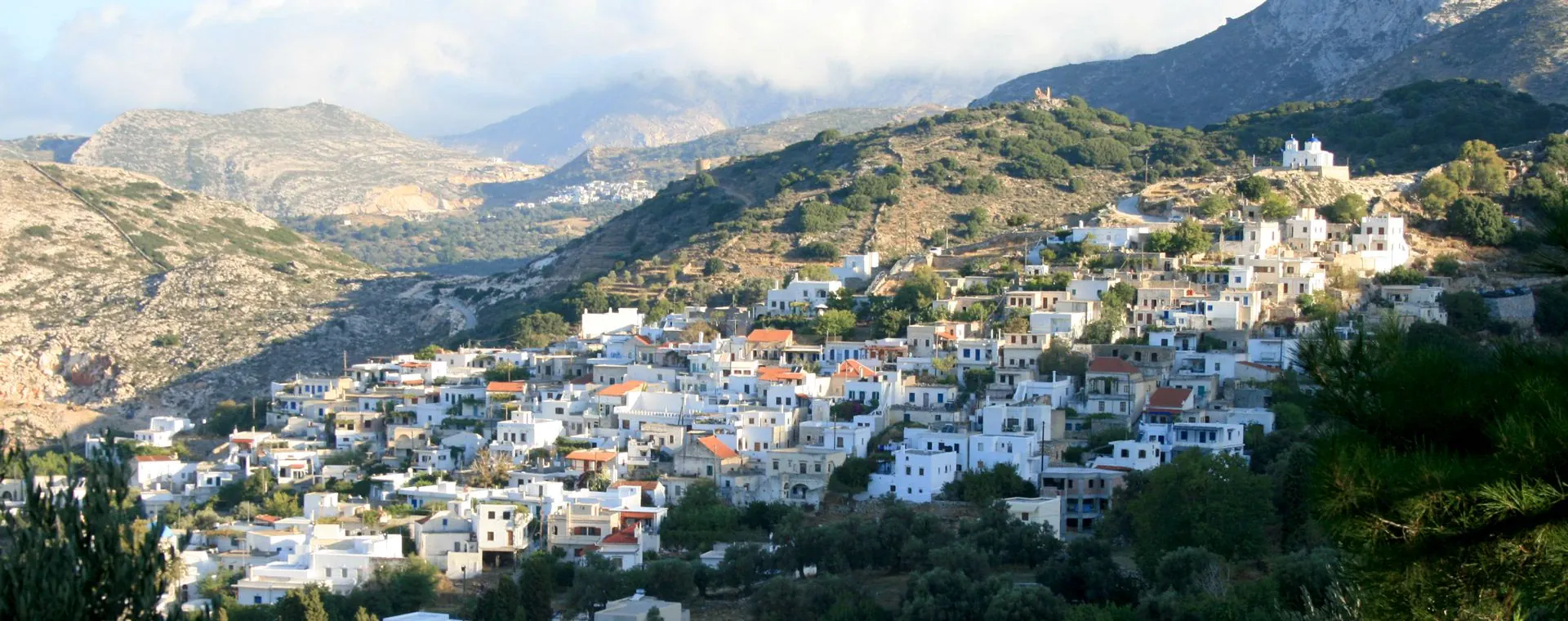
Naxos is the largest and greenest of the Cyclades, and its finest villages hide inland, on the slopes of Mount Zas. Apeiranthos is probably the most moving: its lanes are entirely paved with marble, quarried nearby, and glow softly in the sun. The village, set at some six hundred metres, keeps a slightly proud character, almost Cretan in its traditions. There are several small museums, but the real pleasure is to lose yourself in the tangle of alleys, then to sit on a terrace overlooking the inland valleys.
Lower down, Halki was the island's former capital. Ringed by olive groves, it lives today at a slow tempo, among art shops, galleries and the Vallindras distillery, which has produced kitron, a fragrant citron liqueur, since 1896. The Chora of Naxos, finally, deserves your time: its Venetian Kastro crowns the old town, and you climb between the houses up to the ramparts, from where the view takes in the harbour and the famous Portara, the remains of a temple of Apollo planted on its islet.
To taste this inland Naxos and carry it on to bewitching Amorgos, our self-guided itinerary Naxos and Amorgos, destination Cyclades links the two islands by way of the paths and the boats.
On Amorgos: the Chora and Langada, suspended between sky and sea
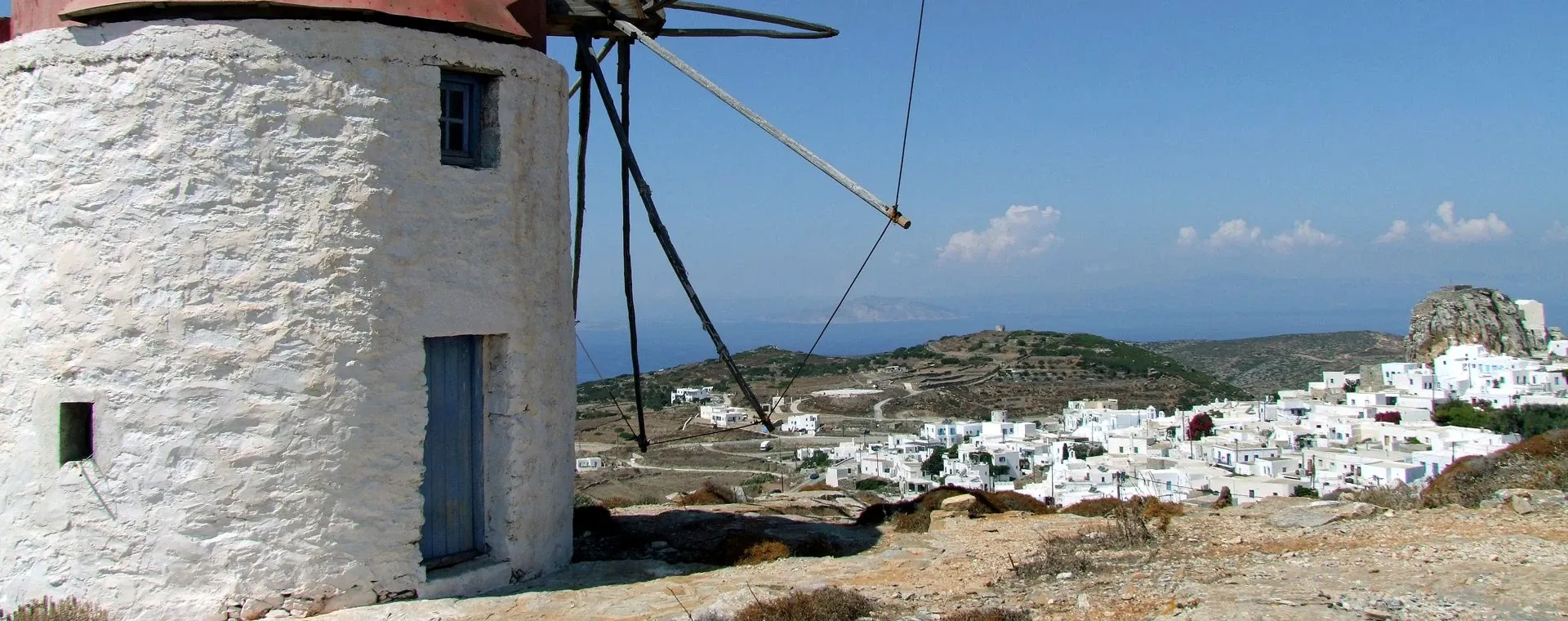
Amorgos is a long, wild island, swept by the wind, where the villages seem to defy the slope. The Chora of Amorgos, counted among the most beautiful in the Cyclades, spreads its cubic houses around a rock topped by a Venetian castle. No cars circulate there. You wander between chapels, windmills and vaulted passages, and you inevitably stop at a terrace for a frappé, your gaze caught by the sea.
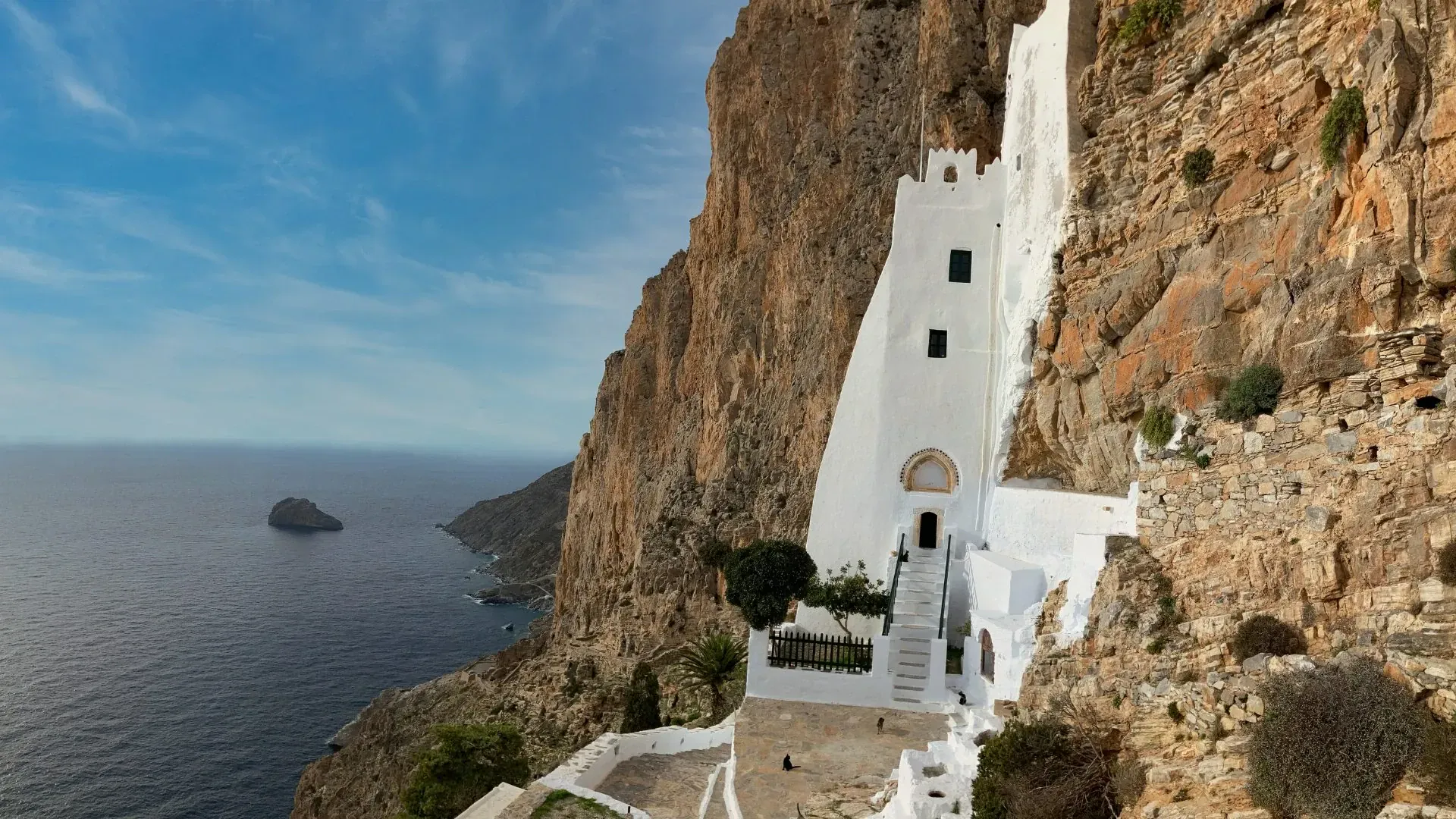
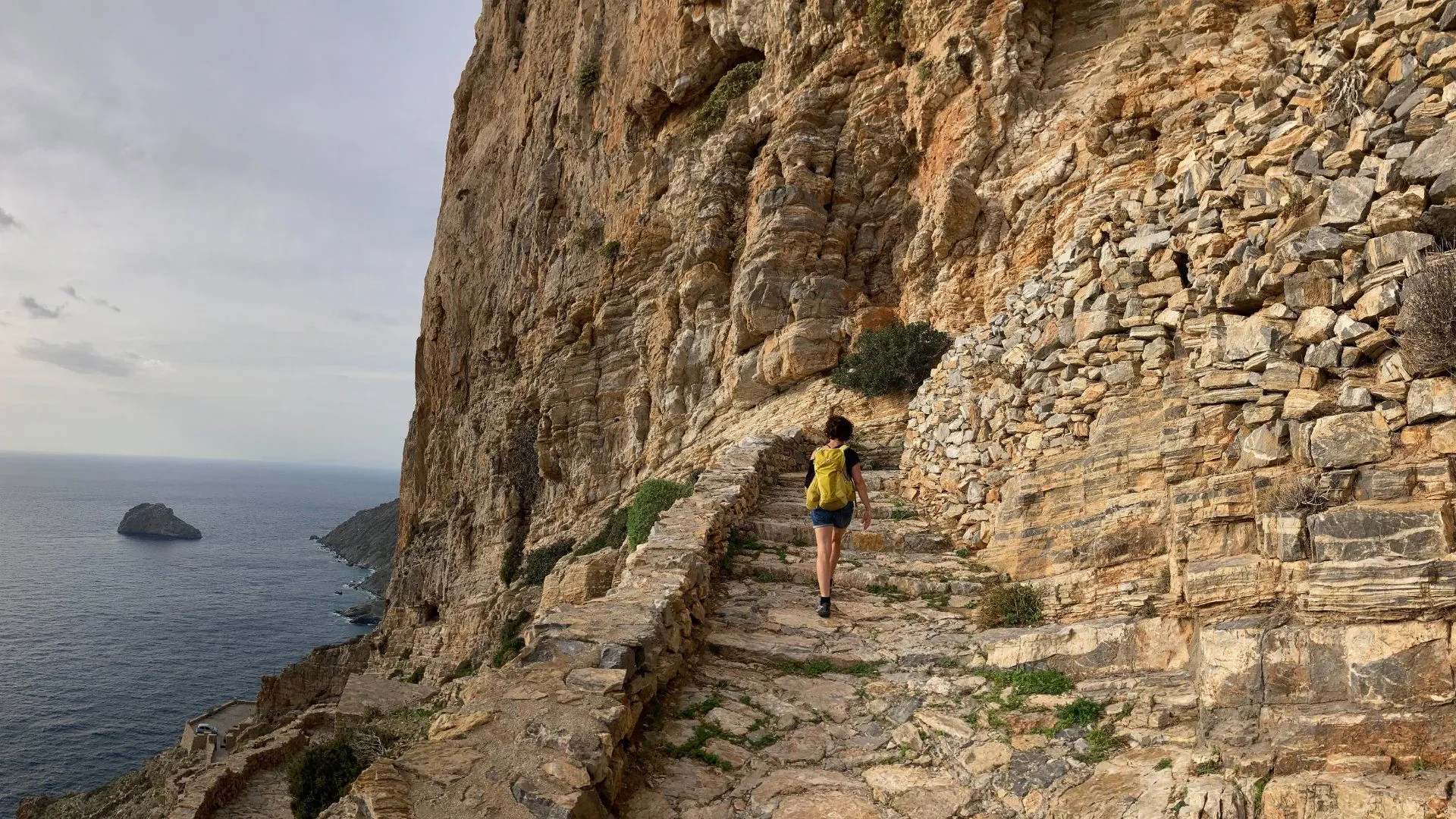
To the north, Langada clings to the mountainside, its white houses tumbling in steps above a green valley. It is one of the finest starting points for walking to the monastery of Panagia Hozoviotissa, fixed to a vertiginous cliff above the Aegean. The old kalderimi that leads there asks a good day's walk, but the arrival is striking, and the monks willingly offer visitors a small glass of psimeni raki.
On Serifos, Milos and Kimolos: the perched villages of the south-west
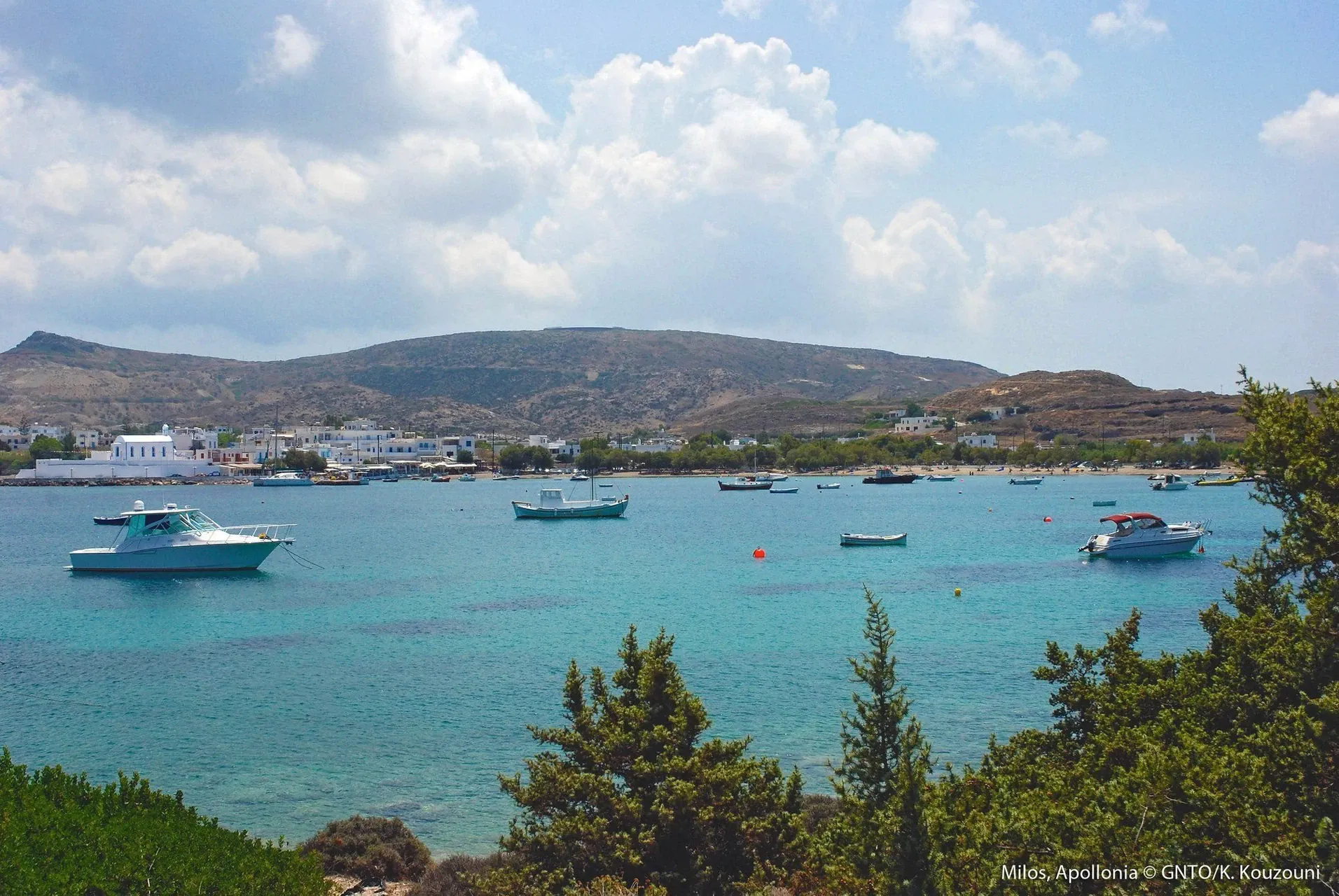
To the west of the archipelago, three more discreet islands shelter some of the finest balcony villages in the Cyclades. The Chora of Serifos is one you do not forget: built as an amphitheatre on top of a rock, more than two hundred metres above the port of Livadi, it lines up its white houses, its windmills and its car-free lanes. The climb is made on foot, unhurriedly, and each landing reveals a new panorama over the bay. At the top, two or three tavernas are enough to make an evening.
On Milos, Plaka is one of the best-preserved Cycladic capitals. Perched at 220 m, it offers, from the rock of the Kastro, its old fortress, a sunset that many hold to be the finest on the island. The lanes, white and narrow, were once laid out to confuse pirates; today they are the walker's delight. Close by, the small island of Kimolos keeps its Chorio, a medieval village curled around a fortified kastro, where dozens of chapels nestle between the whitewashed walls. You meet more donkeys than cars there, and that is exactly right.
These three islands form the heart of our Cycladic enchantment: Serifos, Sifnos and Milos, to be walked in complete freedom, and of the guided version Sifnos, Milos and Kimolos: the enchanted Cyclades, in a small group.
And Santorini?
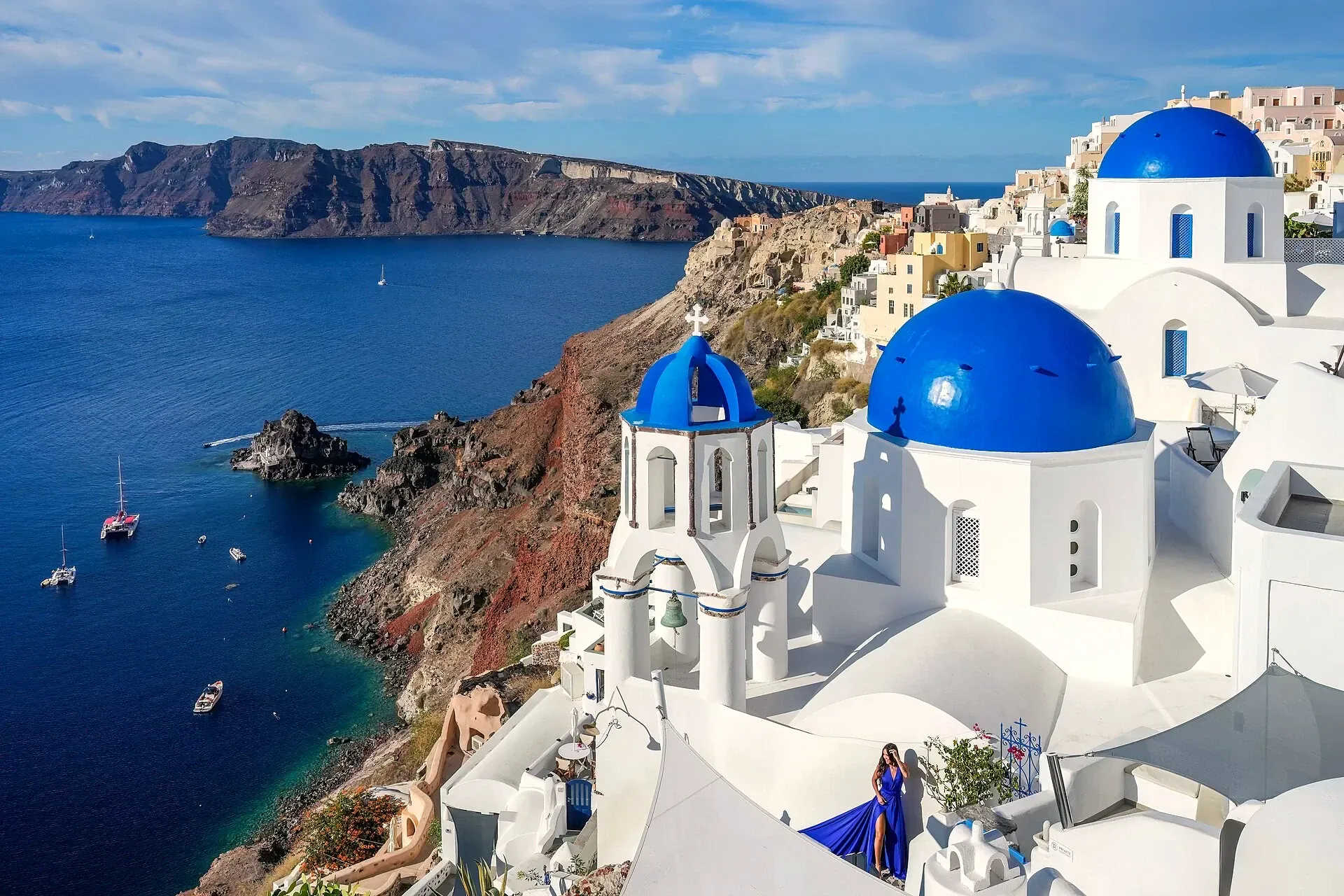
It is impossible to speak of Cycladic villages without mentioning Oia, on Santorini, and its famous blue domes above the caldera. The view is spectacular, granted. But in the fine season the crowd presses in tight ranks, and the serenity you look for in the Cyclades evaporates fast. We prefer to take you where that same charm is found, with calm added: the flower-filled lanes of Apollonia, the Chora of Serifos rising as an amphitheatre above Livadi, or the marble alleys of Apeiranthos. The secret of the most beautiful villages in the Cyclades lies not in the postcard, but in the time you take to live them.
When to go
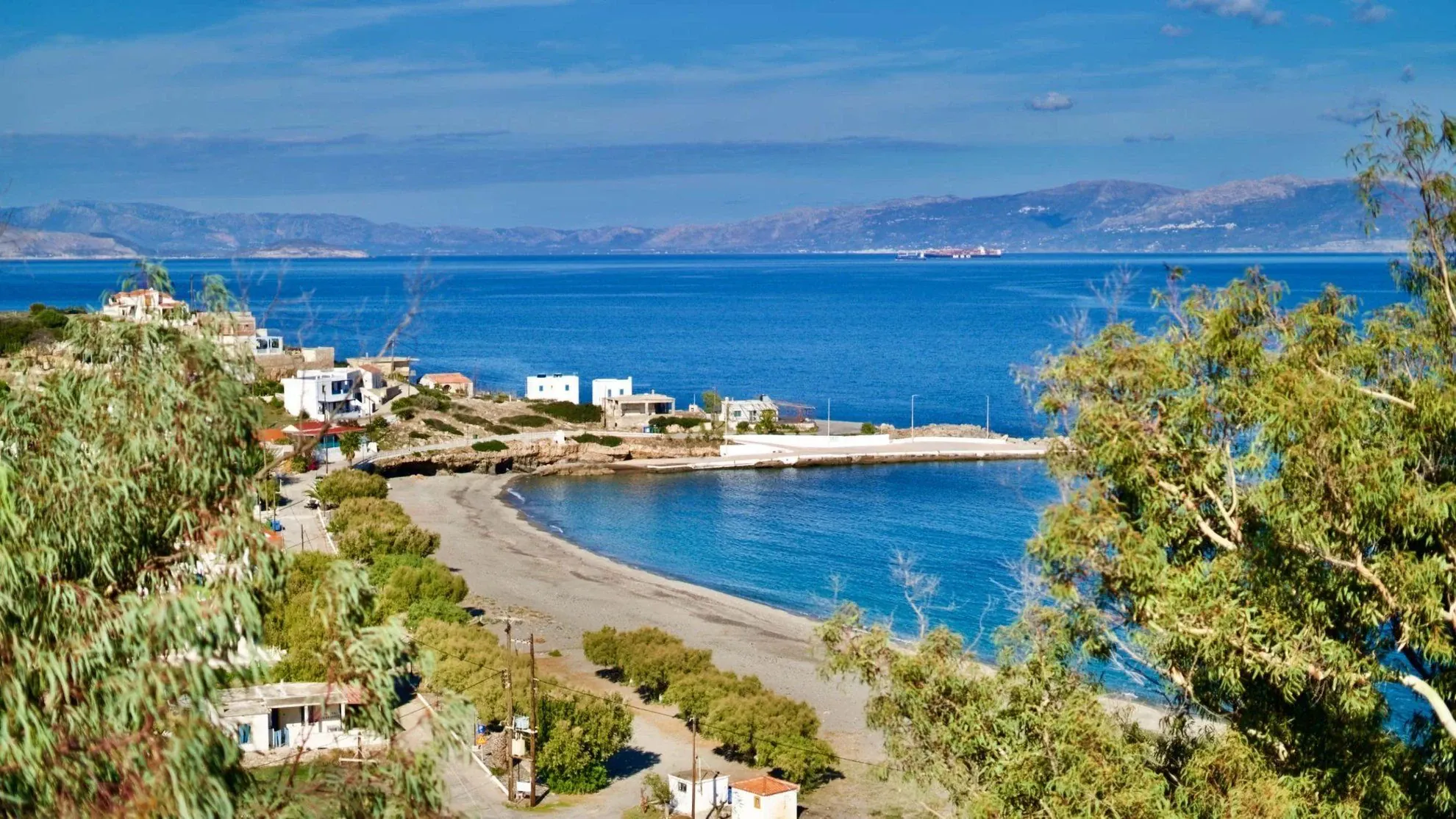
The mildness of spring, from mid-May to the end of June, offers villages flowering with bougainvillea and fragrant paths, without the heat of summer. It is also the season when the islanders restore the chapels before the patron saints' festivals, and when the terraces fill with seasonal dishes, the first capers, broad beans and fresh cheese. The late season, from September to mid-October, is every bit as lovely: the sea stays warm enough for swimming, the tavernas are still open, and the light takes on those golden tones that delight walkers. Avoid the height of summer if you can, when Milos and Naxos fill up and the midday heat would rob you of the pleasure of wandering the lanes.
In every case, these villages are discovered on foot, without haste, letting yourself drift from one terrace to the next. The distances between them are short, the paved paths well traced, and your luggage awaits you at the next stage: all that is left is to keep your eyes open and savour. That is the whole spirit of the Cyclades, and it is what we love to share with you.
Frequently asked questions about the villages of the Cyclades
Which are the most beautiful villages in the Cyclades?
Our selection favours the perched settlements you reach on foot, far from the crush of Santorini. On Sifnos, the trio of Apollonia, Artemonas and medieval Kastro; on Naxos, Apeiranthos and its marble lanes; on Amorgos, the Chora and Langada suspended above the Aegean. To the west, add the balcony villages of the Chora of Serifos, Plaka on Milos and the Chorio of Kimolos. All places where you drift from terrace to chapel, with no monument to tick off.
What does "Chora" mean in the Cyclades?
In the Greek islands, the Chora is quite simply the main settlement, the small historic capital of the island. That is why we speak of the Chora of Naxos, the Chora of Amorgos or that of Serifos: each is the ancient heart of its island, often perched and topped by a kastro, the fortified enclosure of Venetian origin. The word is pronounced "hora".
Can you visit these villages on foot, without a car?
Yes, and it is even the finest way to discover them. Many of these villages, such as the Chora of Amorgos, the Chora of Serifos or the Chorio of Kimolos, are closed to cars and linked by old paved paths, the kalderimia. On a self-guided trip such as Cycladic enchantment: Serifos, Sifnos and Milos, you follow detailed route notes from one village to the next while your luggage travels without you, at your own pace and with nothing to arrange in advance.
Which is the most authentic and least touristy village in the Cyclades?
If you are looking for calm, look west and inland rather than towards Santorini or Mykonos. Serifos and its amphitheatre Chora, Sifnos and its suspended Kastro, austere Apeiranthos on Naxos or tiny Kimolos remain wonderfully preserved, especially in spring and in the late season. You will meet more donkeys and cats than coachloads of tourists, and that is exactly what makes them precious.
Your question is not on this list?
Write to us, and we will reply to you personally by email.
Continue reading
- Which Cyclades island to choose for the trip you have in mind?
- Hiking in Sifnos: the island of flavours on foot
- Hiking in Greece: the best trails island by island
- The Most Beautiful Greek Islands, one for every wish
Article written by
Maria Papadopoulou (Μαρία Παπαδοπούλου)
Editorial lead
I hike, and Greece is the place I keep coming back to. My initial studies (a Master’s in Marketing and a degree in Applied Foreign Languages) taught me how to build an editorial project, and the trails taught me the… Read more