

Let us be honest: Greece in August is not the kindest. The thermometer climbs, the ferries fill up, and the most famous islands are fully booked. And yet hundreds of thousands of travellers spend the finest holiday of their lives there. The secret comes down to two things: where to go in Greece in August, and how. Choose a corner where the air circulates and shade is not lacking, set your day to the Greek one (walking at first light, a siesta at midday, a long swim and a taverna in the evening), and the heatwave becomes a detail. Here are our four favourite destinations for enjoying the sunniest month rather than enduring it.
| In brief | August in Greece is doable: aim for wind, shade and altitude, and settle into the Greek rhythm. |
|---|---|
| Ideal for | Travellers of 60 and over whose only window falls in high summer |
| Where to go | Windy Cyclades (Naxos, Amorgos), inland Crete, wooded Ionian islands (Corfu, Paxos), the Peloponnese |
| Pace | Gentle: a walk at first light, rest at midday, swimming and a terrace in the evening |
| Our trips | Self-guided, so you can walk at dawn and rest through the hot hours |
August in Greece: the truth about heat and crowds
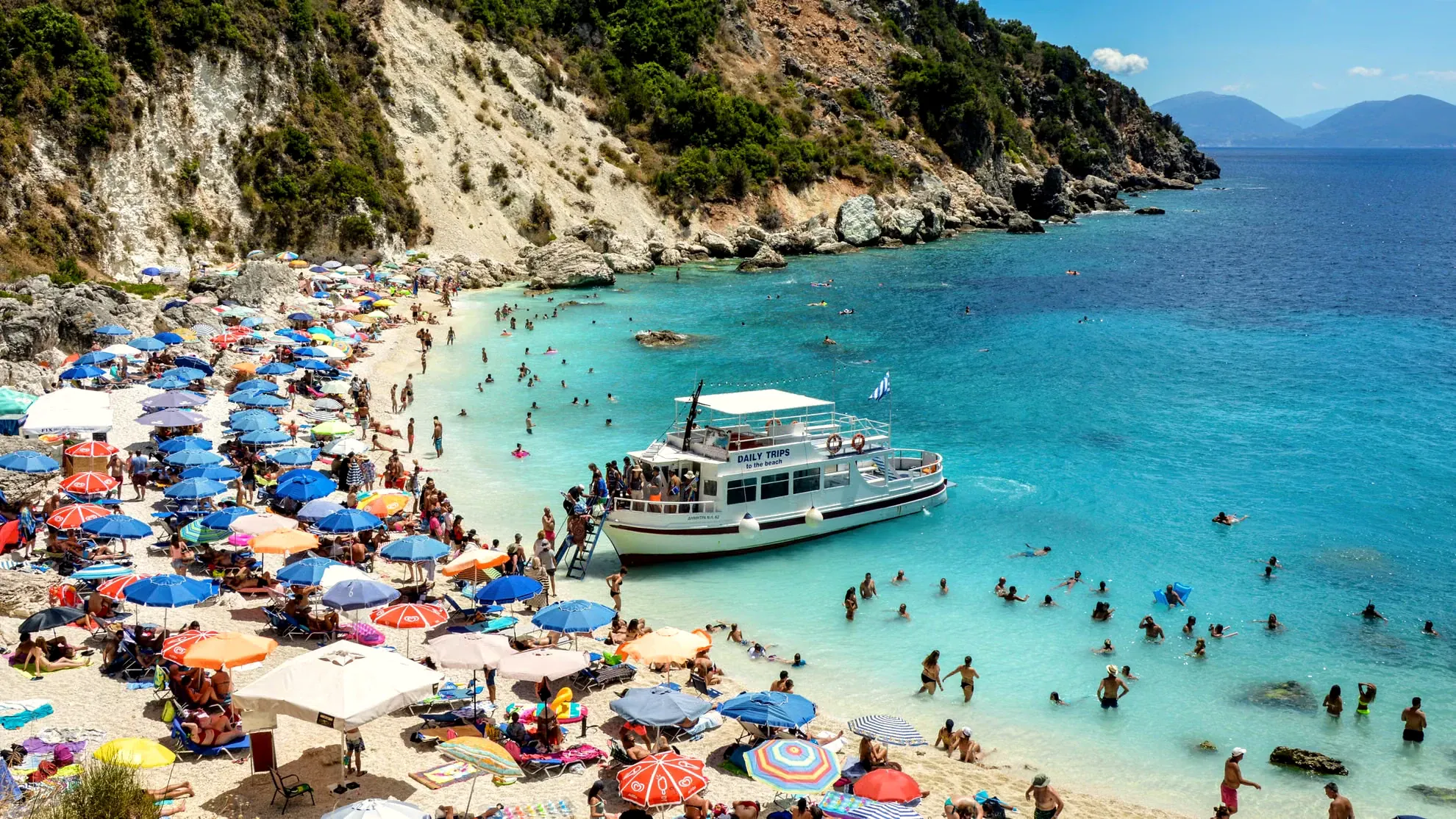
Let us begin with what we would have liked someone to tell us straight. Inland, the thermometer regularly passes 33 °C in August, and heatwaves are not rare. The sea, for its part, reaches its annual maximum around 26 °C: warm, almost tropical water in which you stay for hours. As for numbers, August is the peak month: it is also the month of the Greeks' own summer holidays, and the star islands (Santorini, Mykonos) run at full tilt.
So it is not the moment to string together long walks in full sun, nor to look for absolute tranquillity on a postcard beach. But heat can be worked around, and crowds can be chosen. The whole art is to aim for places where the wind blows, where forests give shade, or where altitude cools the mornings. And to adopt the right tempo: you walk early, you rest at midday like the locals, you keep the afternoon for swimming and the evening for the taverna. For the month-by-month detail, from temperatures to prices, our guide When to visit Greece usefully completes this page.
One piece of good news for August: it is the season of the panigiria, those village patron-saint festivals. The most important, on 15 August for the Assumption of the Virgin, is celebrated throughout the country with processions, music and long shared tables. Finding yourself at table on a festival evening in a village remains one of the finest memories Greece offers at this time of year.
The Cyclades swept by the meltemi: Naxos and Amorgos
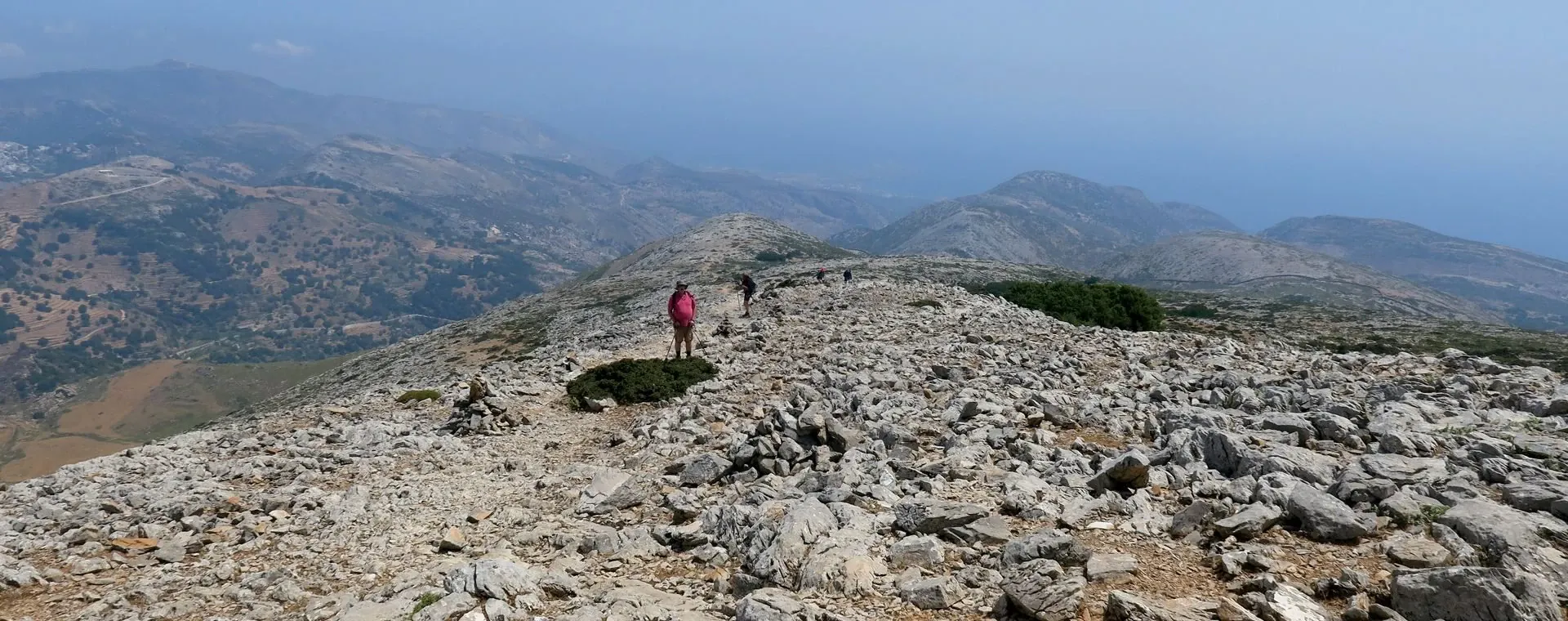
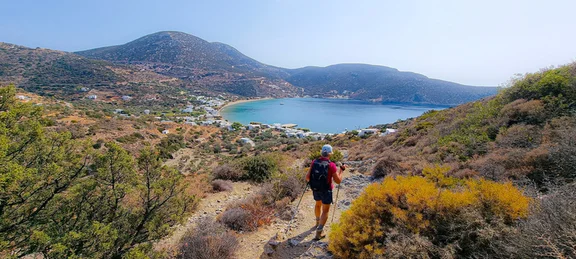
If there were only one reason to risk the Cyclades in high summer, it would be the meltemi. This north wind, characteristic of the Aegean from July to September, markedly cools the feeling of heat, clears the sky and gives the end of the day an incomparable light. It can sometimes delay a ferry, but it turns a morning walk into pure pleasure: the air circulates, the sweat dries, and you enjoy the panoramas without stifling.
Naxos is the most generous of the Cyclades. In the centre of the island, the massif of Mount Zas (the highest summit in the Cyclades) keeps perched villages such as Filoti, fertile valleys and springs that maintain a greenery rare in August. You walk in the morning between the orchards and the chapels, come back down to lunch in the shade of a plane tree, then head for Plaka, the island's longest beach, and for the nearby cedar wood of Alyko, whose junipers offer a little shade in the hot hours. Amorgos, its wilder neighbour, unrolls coastal paths facing the great blue and shelters the monastery of Panagia Hozoviotissa, clinging to the cliff. The sense of space there is total, even in August.
To link these two islands at your own pace, with nothing to organise, discover our holiday Naxos and Amorgos self-guided, 10 days between fertile valleys and wild paths. The self-guided formula is precisely what you want in high summer: you set off walking at dawn, in the cool, and keep the burning hours for a siesta and a swim. Nobody is waiting for you, nobody hurries your step.
Crete, cooler as soon as you leave the coast
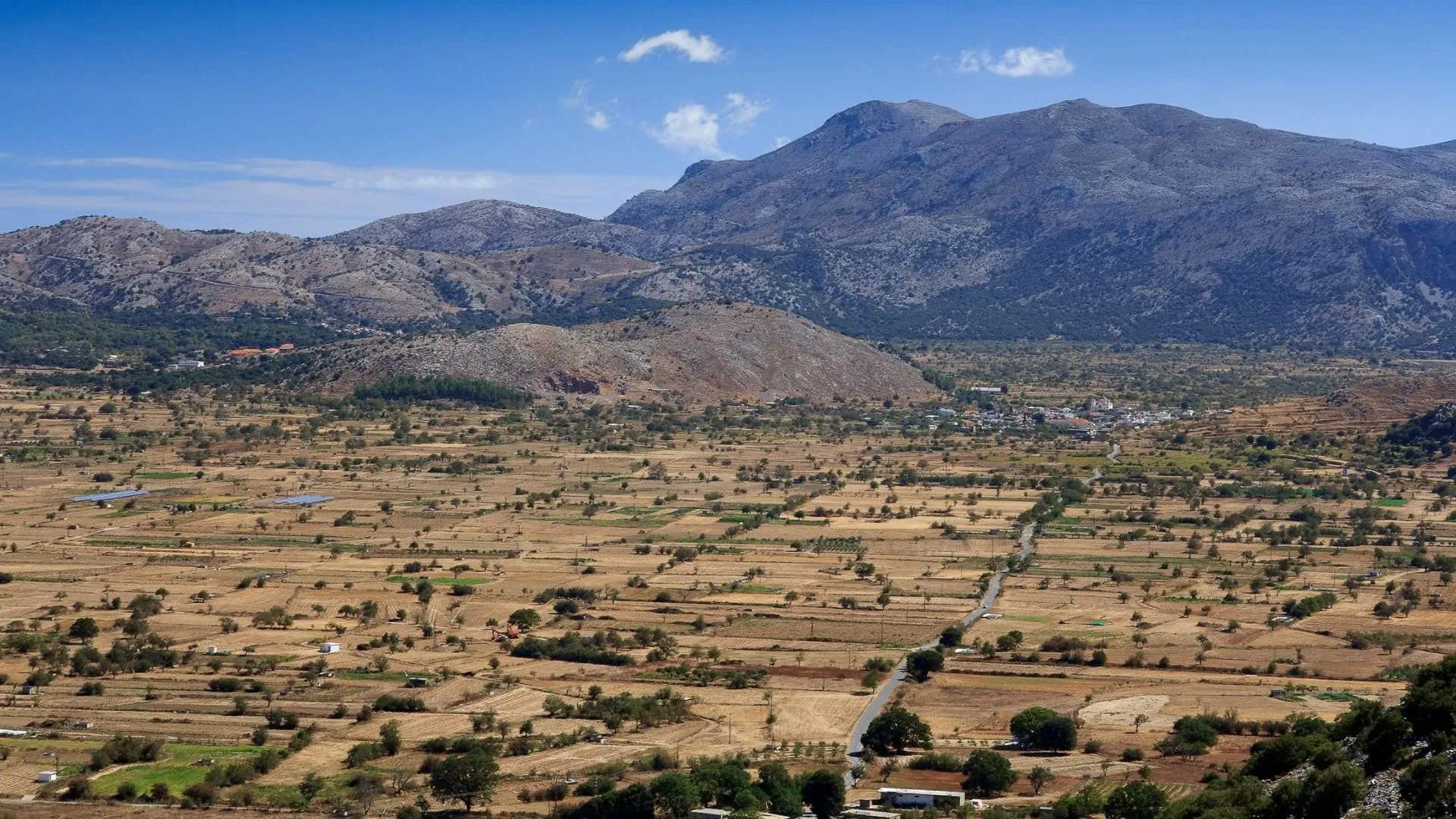
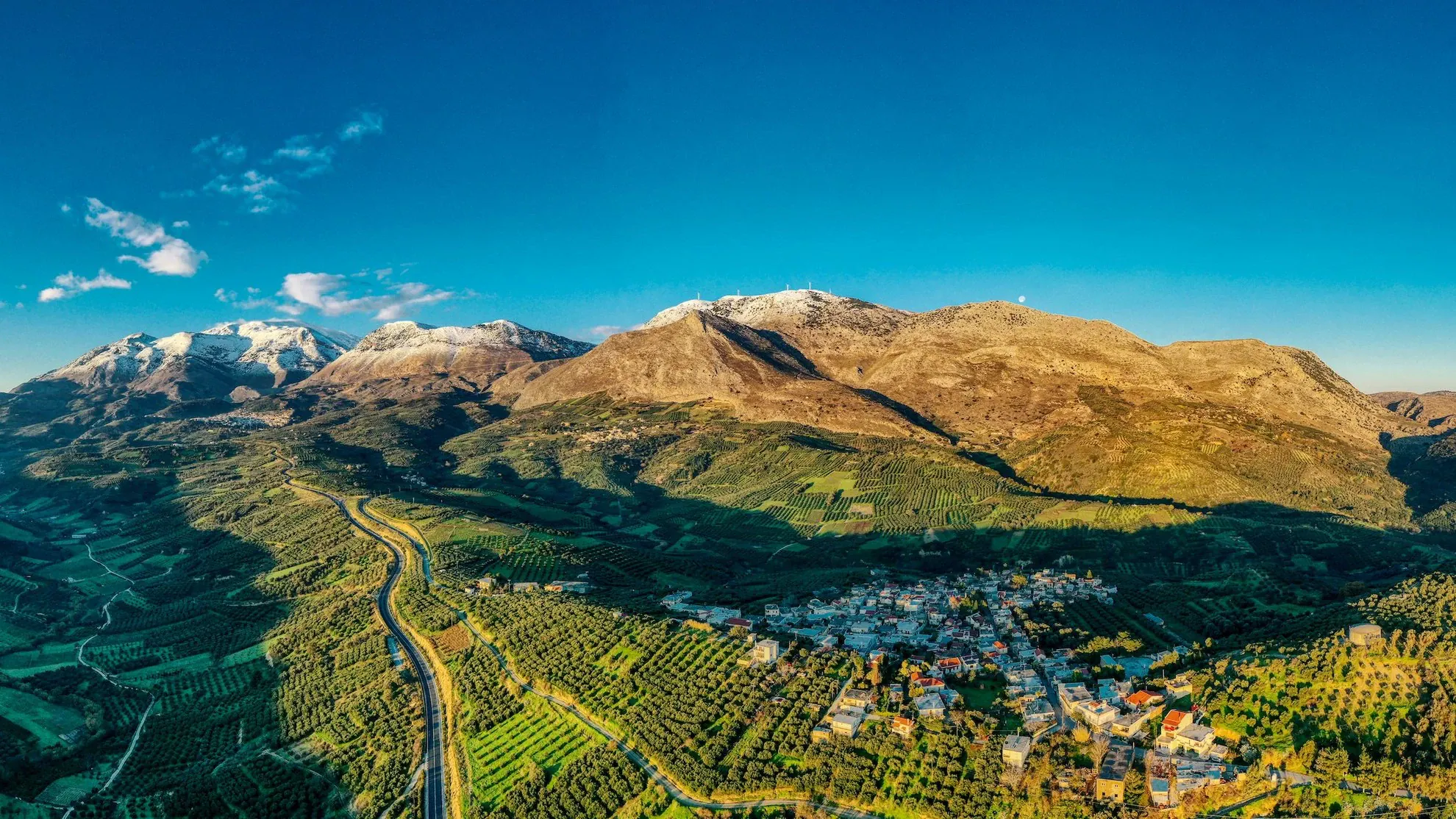
Crete is a miniature continent, and that is what makes it such a comfortable destination in August. On the coast the heat is frank, but as soon as you gain a little altitude the air changes. The Lassithi plateau, at more than 800 metres, keeps genuinely cool mornings and mild evenings. The approaches to the great gorges, such as Samaria, also offer a few degrees less, in the shade of the walls and beside the streams.
It is also in Crete that village culture keeps all its meaning in high summer. There you taste tomatoes still warm from the sun, fresh cheese and thyme honey, and take coffee in the shade of a vine trellis while the heat passes. The south coast, turned towards the Libyan Sea, lines up coves and beaches reached by short shaded paths, often less busy than the sites in the north of the island.
To discover this Crete of villages and the Libyan Sea without worrying about the logistics, our holiday Crete, island of a thousand flavours, from Chania to the Libyan Sea takes you on foot from one end of the island to the other, self-guided. Here again, you walk when it suits you, ideally in the gentle hours, and your luggage waits for you at each charming address.
The Ionian Islands, green and shaded: Corfu and Paxos
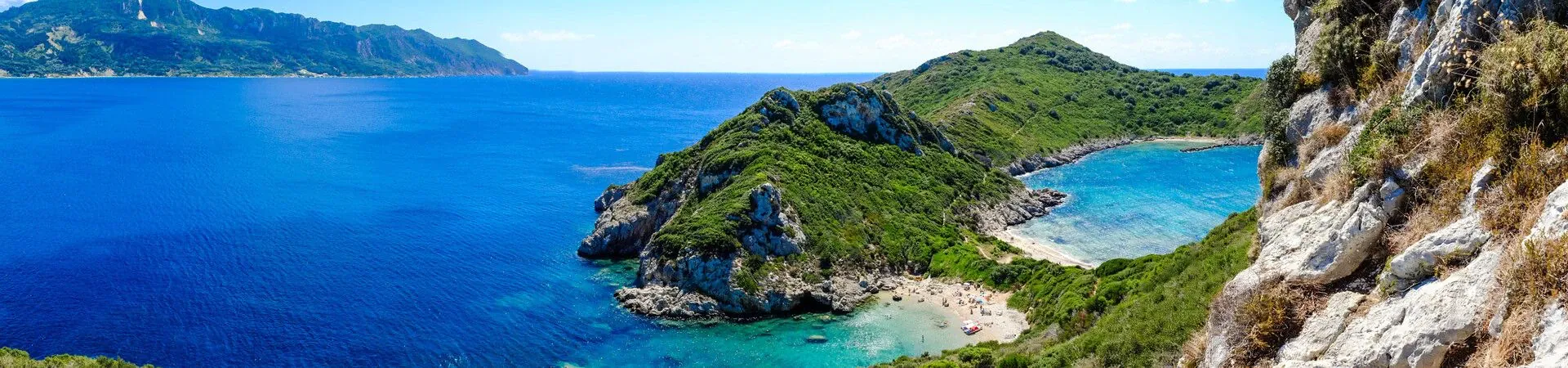
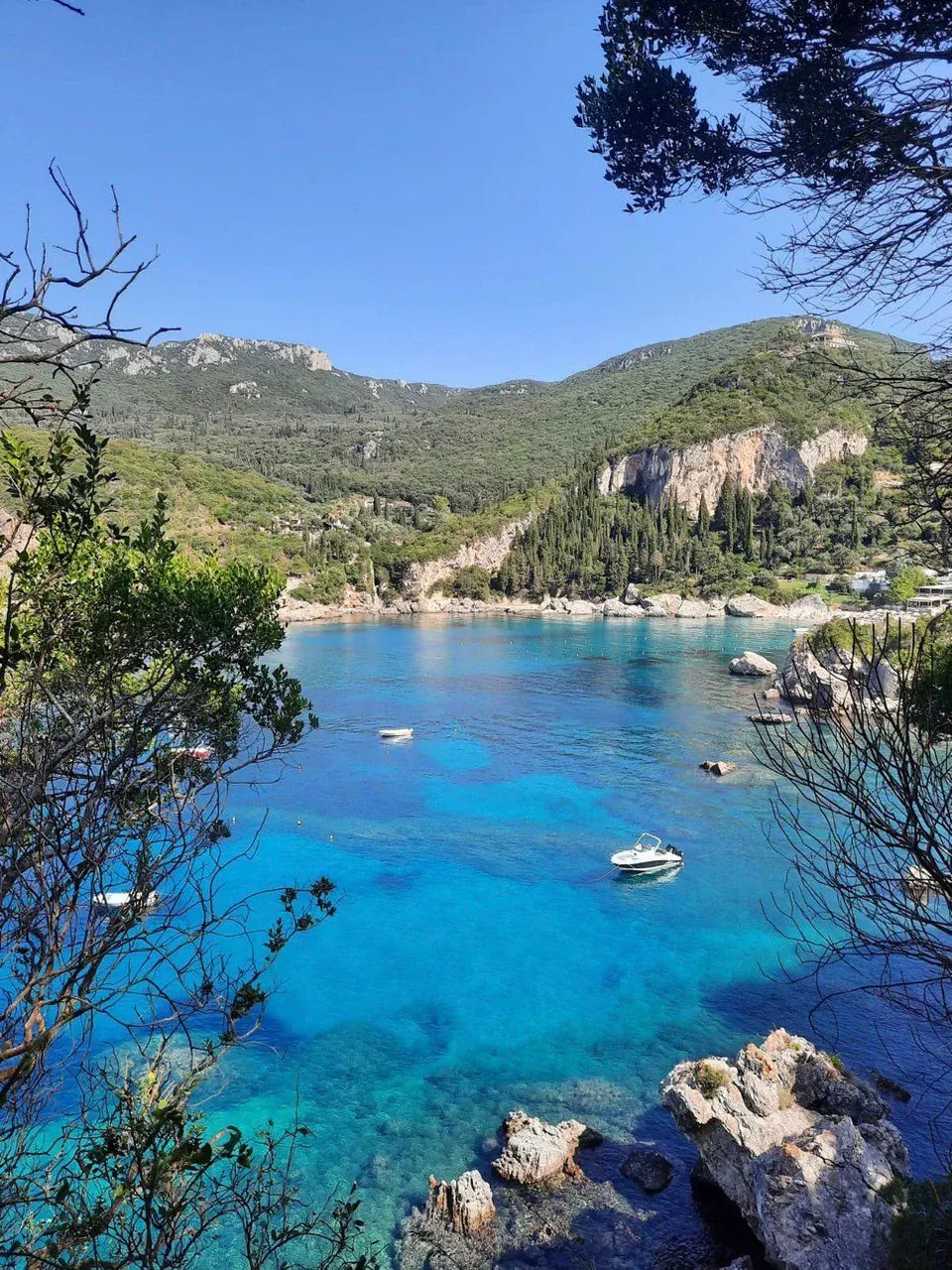
To the west of Greece, the Ionian Islands play quite another tune. Wetter than the Cyclades, they are also the most wooded in the country: three million olive trees cover Corfu, and cypresses stand guard along the paths. That lush vegetation changes everything in August: it filters the light, screens the heat, and keeps the paths shaded for a good part of the day. Walking beneath century-old olive trees, in that green and tender light, is nothing like a stroll in the full glare.
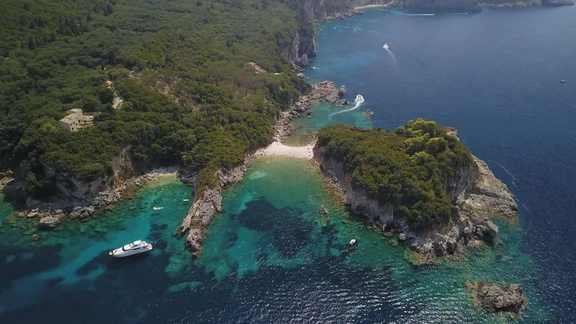
Corfu, the greenest of the Greek islands, hides in the hollow of its coves beaches of an emerald blue reached by short shaded descents. Its neighbour Paxos, tiny and unspoilt, is an interlude outside time, with its miniature harbours, its vines and its translucent waters. Life there runs slowly, which suits the heat well. To taste that gentleness on foot, our holiday Corfu, the Emerald Isle, walks between olive groves and coves has you discover the island self-guided, at your own pace, with the pleasure of a swim at the end of every path.
A word of caution: the Ionian islands are among the busiest regions of Greece in August, especially on the well-known beaches. The remedy is the same as everywhere: walk early, choose the coves you earn after a short walk, and avoid the big beaches at peak hours.
The Peloponnese, far from the crush of the islands
Here is our advice for anyone wanting to breathe in August: turn your back on the islands. The Peloponnese, that great peninsula attached to the mainland, gets far less of the summer rush, although it holds some of the finest landscapes in Greece. No ferry to catch, no crowded port: you move about freely, and you easily find space.
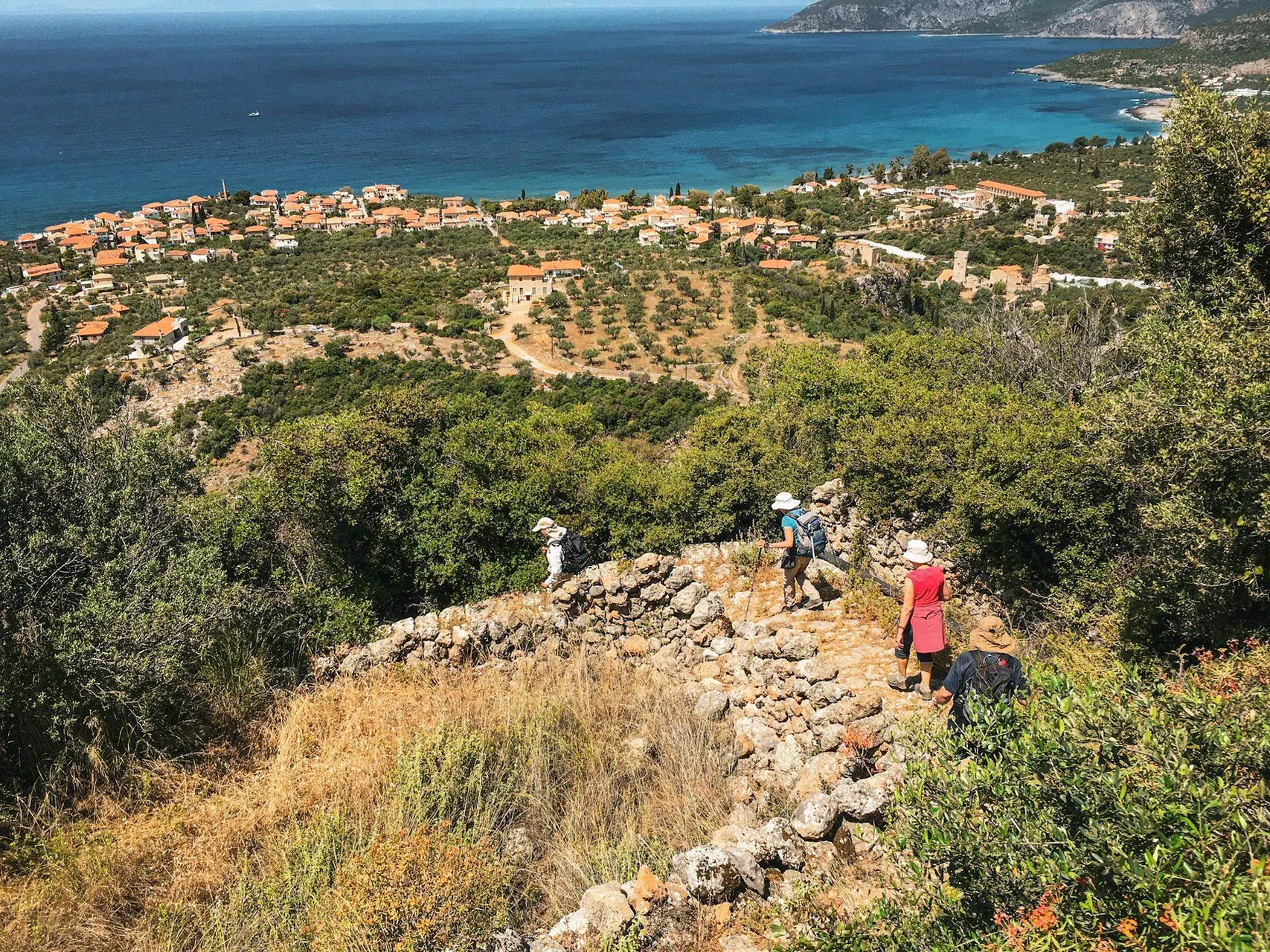
Inland it keeps cool refuges. The perched villages of the Mani, that austere peninsula bristling with stone towers, and those of mountainous Arcadia keep cool mornings and mild evenings. You walk between olive trees and ancient ruins, visit an archaeological site early in the morning before the heat, then drop down to a discreet cove on the coast. The Peloponnese rewards curious travellers who prefer depth to effervescence, and that is precisely what makes it a safe bet when the islands overflow.
To travel this peninsula at your own pace, with nothing to organise, our holiday Ancient beauties of the Peloponnese, 10 days between ancient sites and coves takes you on foot, self-guided: you walk at dawn, in the cool, and keep the burning hours for a siesta and a swim.
The right rhythm for August: the self-guided formula
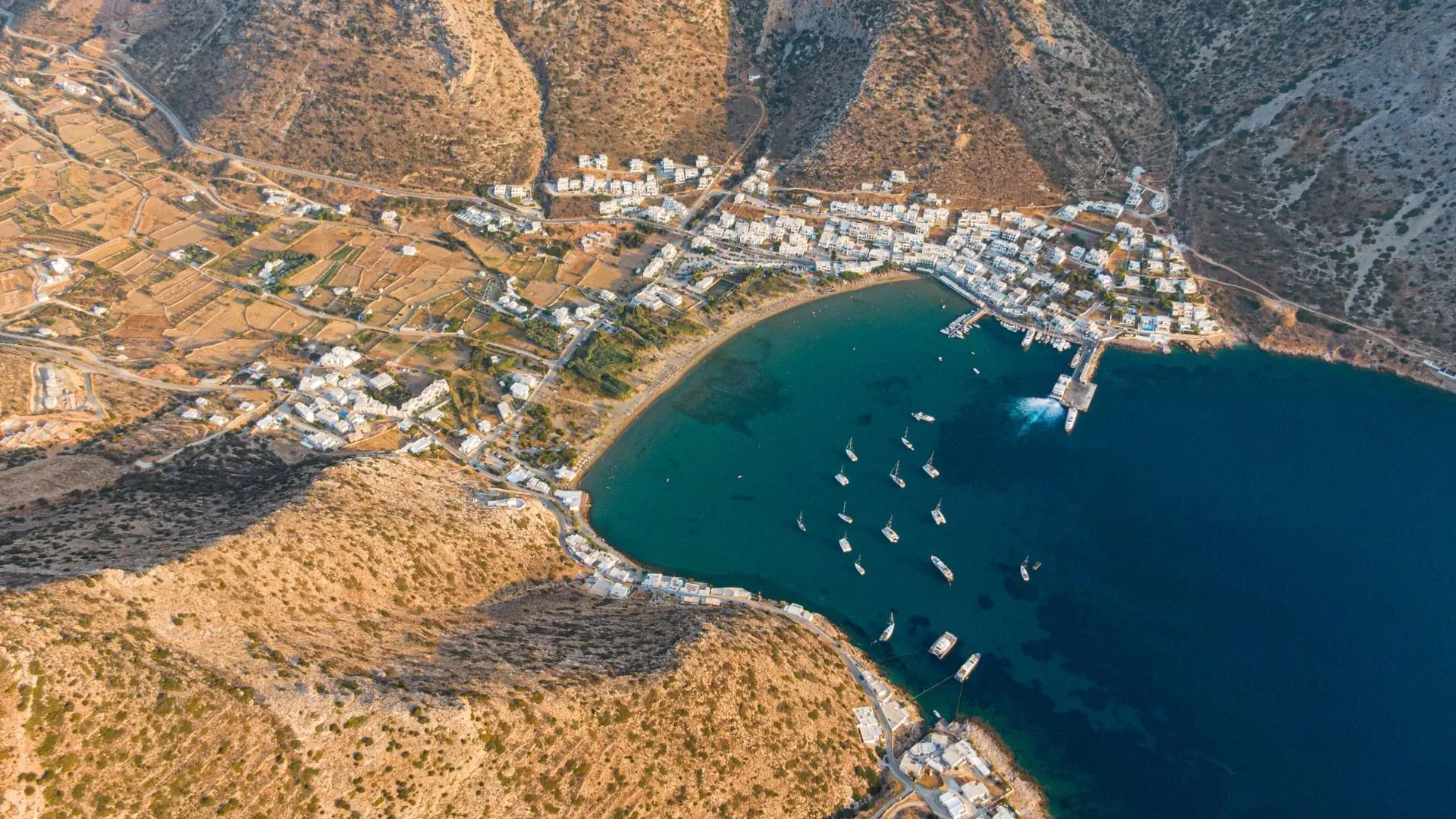
Whatever the destination, the real key to a successful August lies in the rhythm. And on that point, the self-guided trip is unbeatable. You are not held to a group's timetable: you put on your sandals at first light, when the air is still cool and the paths deserted, you walk 2 or 3 hours at your own pace, then come back before the sun beats down. The afternoon is yours: a siesta behind closed shutters, a long swim when the water is at 26 °C, reading on a terrace. And in the evening, when the heat falls away, you sit down late in a taverna, like the Greeks.
It is a way of travelling that suits travellers of 60 and over particularly well: you enjoy the coolness without ever enduring the heatwave, you take your time, and all the logistics (the hotels of character, the luggage transfers, the connections between the islands) are settled in advance. All that is left is to follow the path. If you are still hesitating over the island that suits you, our guide Which Greek island to choose? points you by mood and by pace, and our selection of the most beautiful beaches in Greece will give you a few rewards to aim for at the end of each walk.
Frequently asked questions about Greece in August
Which Greek island is the coolest in August?
The Cyclades are the airiest, thanks to the meltemi, the north wind that sweeps the Aegean all summer and clearly brings down the felt temperature: Naxos and Amorgos benefit fully. To gain real degrees, bet on altitude rather than on the sea. The Lassithi plateau in Crete, at more than 800 metres, and the perched villages of the Mani or of Arcadia, in the Peloponnese, keep genuinely cool mornings.
Is the sea good for swimming in August?
It is even the best moment of the year. The sea reaches its annual maximum, between 25 and 27 °C depending on the region, warm and limpid water in which you stay for hours without shivering. After a morning walk, a long swim at the end of the day is the sweetest of rewards.
How can you avoid the crowds in Greece in August?
Three reflexes are enough. Turn your back on the star islands such as Santorini or Mykonos, in favour of the mainland Peloponnese or of more discreet islands such as Amorgos or Paxos. Walk early, when the paths are still deserted, and prefer the coves that have to be earned at the end of a path to the big beaches you reach by car.
Is it too hot to walk in Greece in August?
No, provided you choose your hour. You put on your sandals at first light, when the air is still cool, walk 2 or 3 hours at your own pace, then come back before the sun beats down. That is the whole point of the self-guided formula: you set off when you wish, with no group timetable, and keep the hot hours for a siesta and a swim.
Your question is not on this list?
Write to us, and we will reply to you personally by email.
Continue reading
- Which Greek island is right for you? The complete guide
- The Most Beautiful Beaches in Greece, our favourite coves far from the crowds
- Crete in October, a golden season
- When to Visit Greece: Our Month-by-Month Guide
Article written by
Solène Roux
Responsable Éditoriale
Passionnée par les voyages et adepte du slow travel, j’ai la chance de transformer mon goût pour l’aventure en récits captivants. En tant que Responsable éditoriale chez Kelifos, agence spécialisée dans le trekking et…