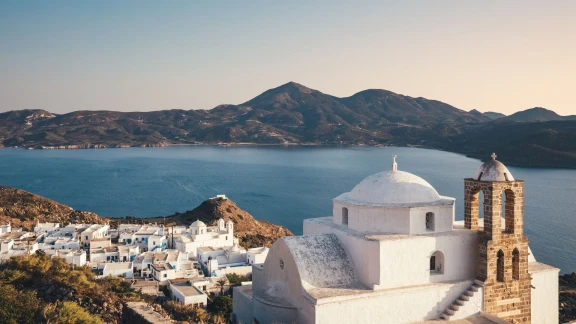


One night on Naxos, sitting under a vine trellis at Halki, we asked ourselves the question everyone ends up asking when it comes to booking: which island should I start with? The Cyclades are not 2 or 3 blue-and-white postcards, but some twenty inhabited islands, each with its own character, its own cooking, its own light. For anyone who likes to walk quietly and eat well in the evening, the real question is not "the most beautiful" but "the one that suits you". Here, as a friend who comes back every spring, is how to know which Cyclades island to choose according to what you feel like right now.
| In brief | Every Cycladic island has its own personality: you choose by mood (walking, food, quiet, colour), not by ranking. |
|---|---|
| Ideal for | Walkers of 60 and over, as a couple or with friends, who like a gentle pace and a good table |
| Best season | May-June and September-October: mildness, flowers or the grape harvest, calmer crowds |
| Pace | Gentle, à la carte, with time for a swim and the taverna |
| Our trips | See all our Cyclades walking ideas |
Why "the best Cycladic island" does not exist
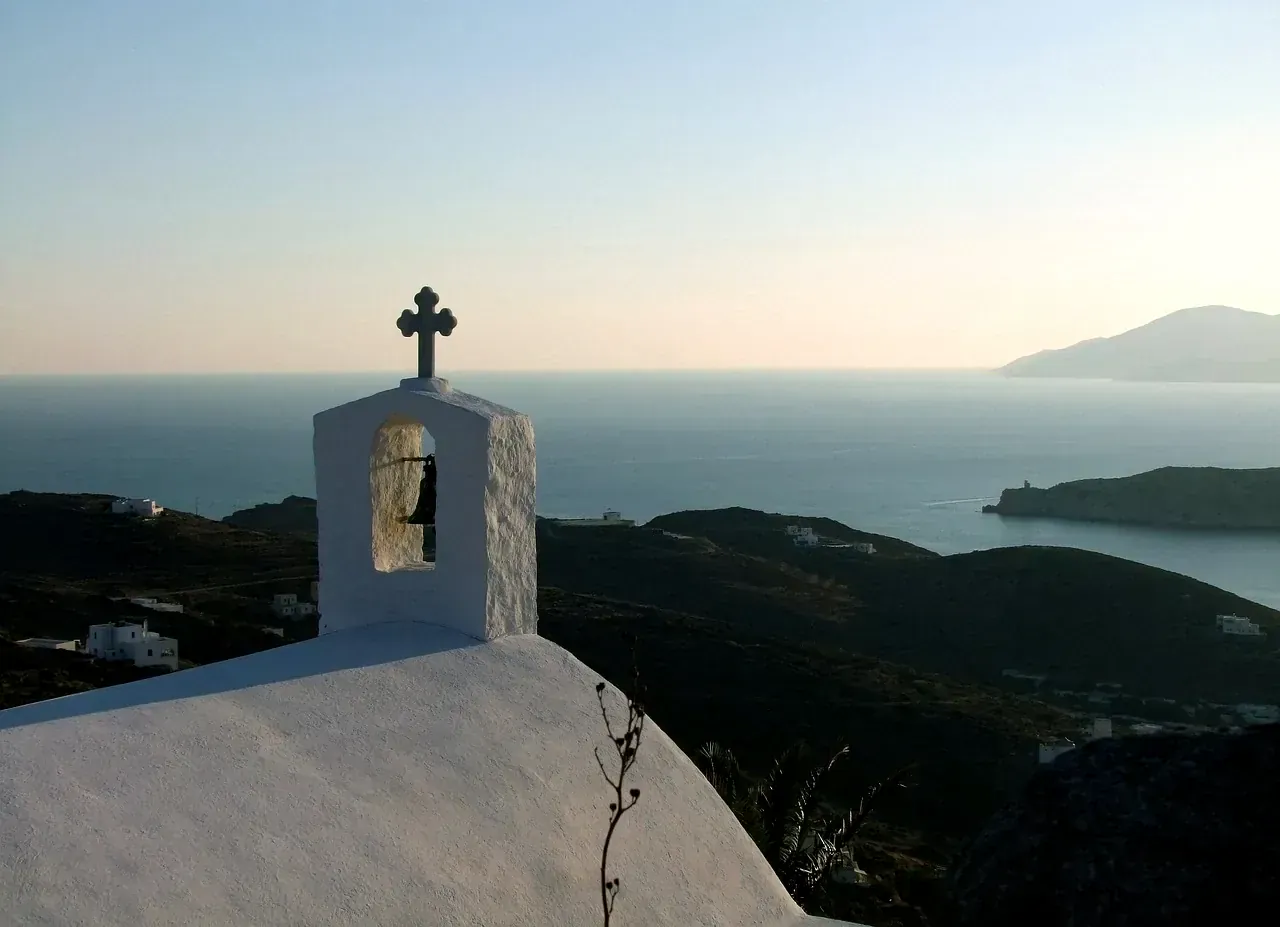
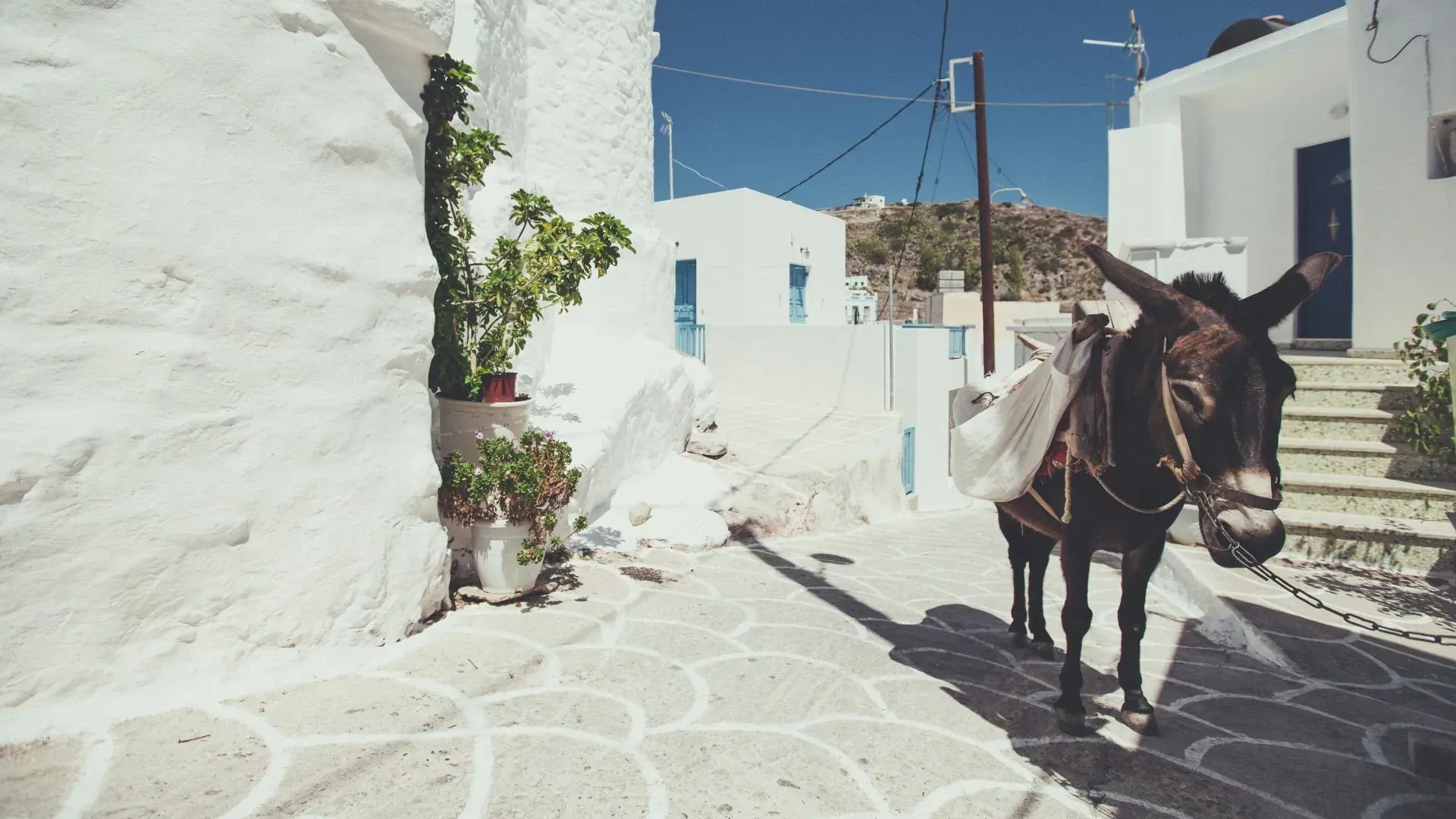
People often ask us which island is the one you absolutely must see. The truth is something we would have liked to hear before our first trip: there is no hierarchy, there are moods. A green, fertile island does not give the same pleasure as a mineral land of coloured rock. A table famous for its chefs does not draw the same traveller as a village where you meet more donkeys than tourists.
Our advice comes down to one sentence: over ten days or so, 2 islands are plenty. The ferry is part of the journey, but it takes time, and the whole point of the Cyclades is to linger. Better to know two islands well than to skim four. It is in that spirit that our holidays almost always pair complementary islands, linked by straightforward sea connections. The season matters too: in spring, the hills are covered with flowers and thyme, while autumn offers a sea that is still warm and the first grape harvests. We avoid July and August, hotter and busier, and prefer the shoulder seasons, when the villages breathe and the tavernas take the time to welcome you.
That leaves the question of what moves you. Here are our families of islands, sorted by mood.
If you come to walk: Naxos and Amorgos
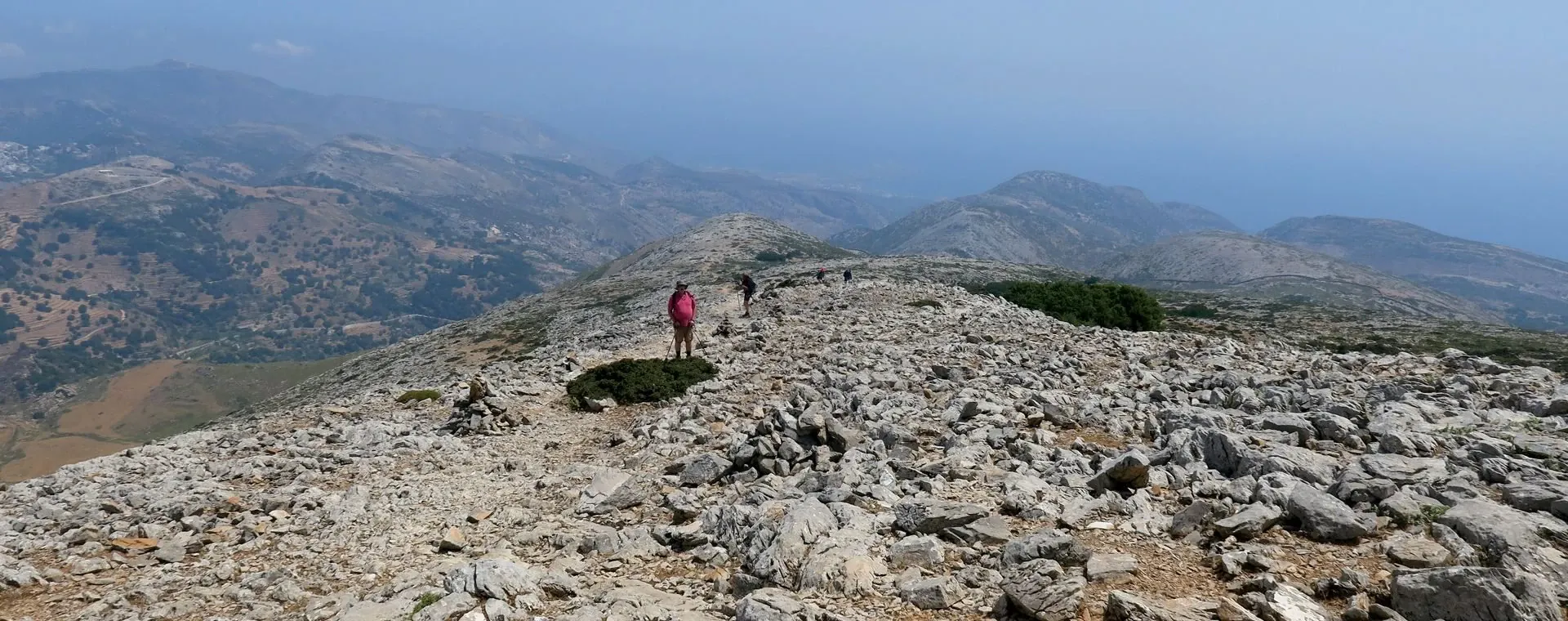
If you are coming first of all for the paths, this pair is our favourite. Naxos is the largest of the Cyclades and the most varied. Its heart, the Tragea valley, is an ocean of olive trees dotted with old Byzantine chapels, among the oldest in Greece. You walk from Halki towards the Venetian fortress of Apano Kastro on paths lined with low stone walls, in the shade. Above, Mount Zas rises to 1,004 metres: it is the highest point in the whole archipelago, and mythology makes it the place where Zeus grew up. There is no need to reach the summit to enjoy it — perched villages such as Filoti already offer fine panoramas.
Amorgos is wilder, longer and narrower, set like a reef at the very end of the Cyclades. It is the island of the monastery of Panagia Hozoviotissa, a white house clinging to a vertiginous cliff above the sea, one of the most striking images in Greece. You walk there between oleander and isolated chapels, with the sea almost always below. Film lovers will recognise the settings of The Big Blue.
These two islands form the backbone of our self-guided holiday Naxos and Amorgos, 10 days between fertile valleys and wild trails. Your luggage awaits you at each stage; you have only to follow the paths.
If you come to eat well: Sifnos
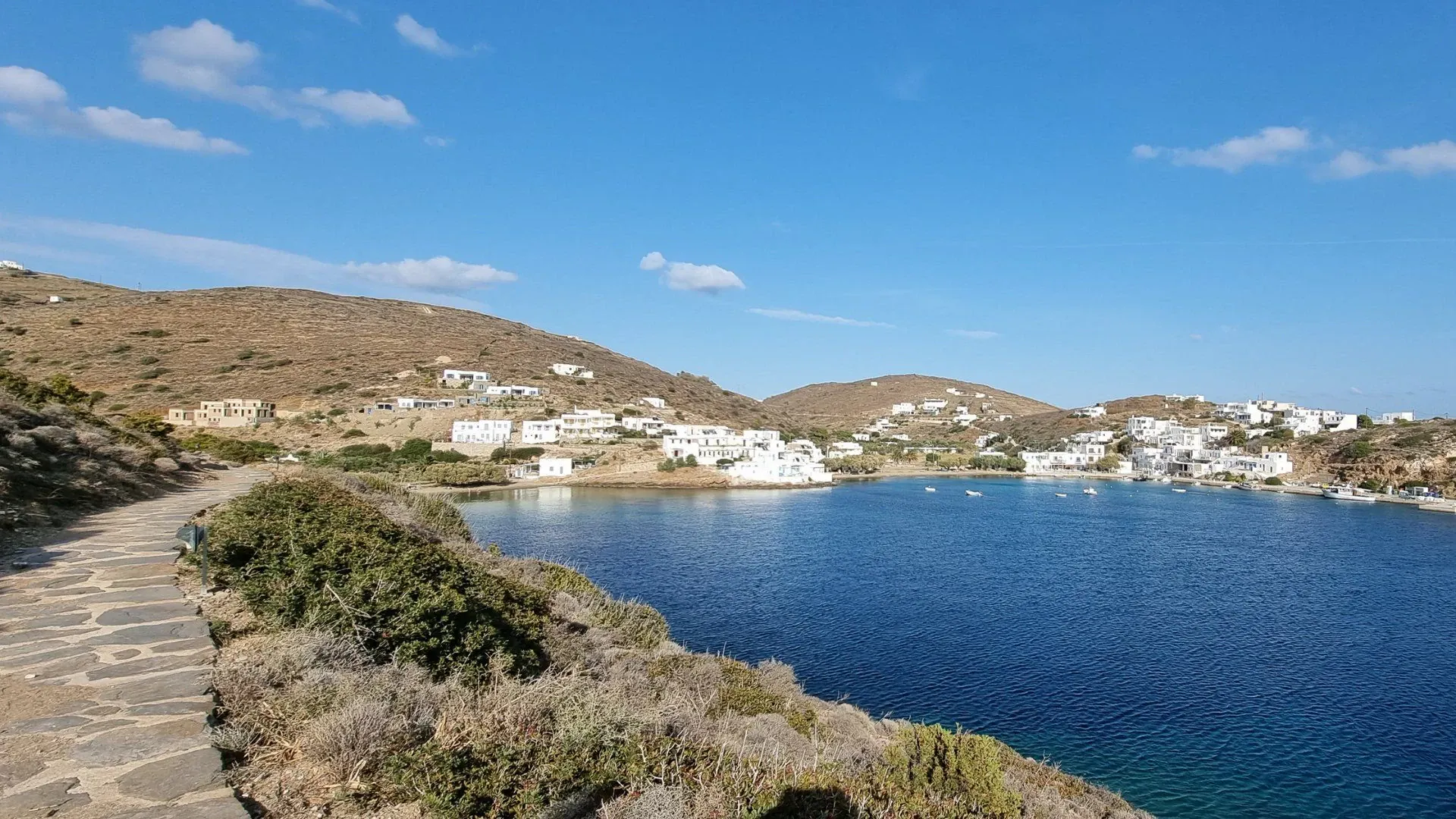
Ask a Greek which island cooks best, and Sifnos almost always comes back. It is the homeland of Nikolaos Tselementes, author of the first great book of modern Greek cookery, and the island keeps a genuine culture of the table. There you savour revithada, a chickpea stew simmered all night in an earthenware dish, and mastelo, lamb with red wine and dill cooked likewise in local pottery — for Sifnos is also an island of potters.
The walking there is gentle and beautiful. The paths link the white villages of Apollonia and Artemonas, descend to the delightful monastery of Chryssopighi set on its islet, or follow the coast to the bay of Vathy. Everywhere, blue-domed chapels punctuate immaculate low walls. It is the island where you wander in the morning and sit down at length in the evening.
Sifnos features in two of our itineraries: the self-guided traverse Serifos, Sifnos and Milos in the western Cyclades, and the guided trip Sifnos, Milos and Kimolos, three secret islands of the Cyclades.
If you come for quiet and authenticity: Serifos and Kimolos
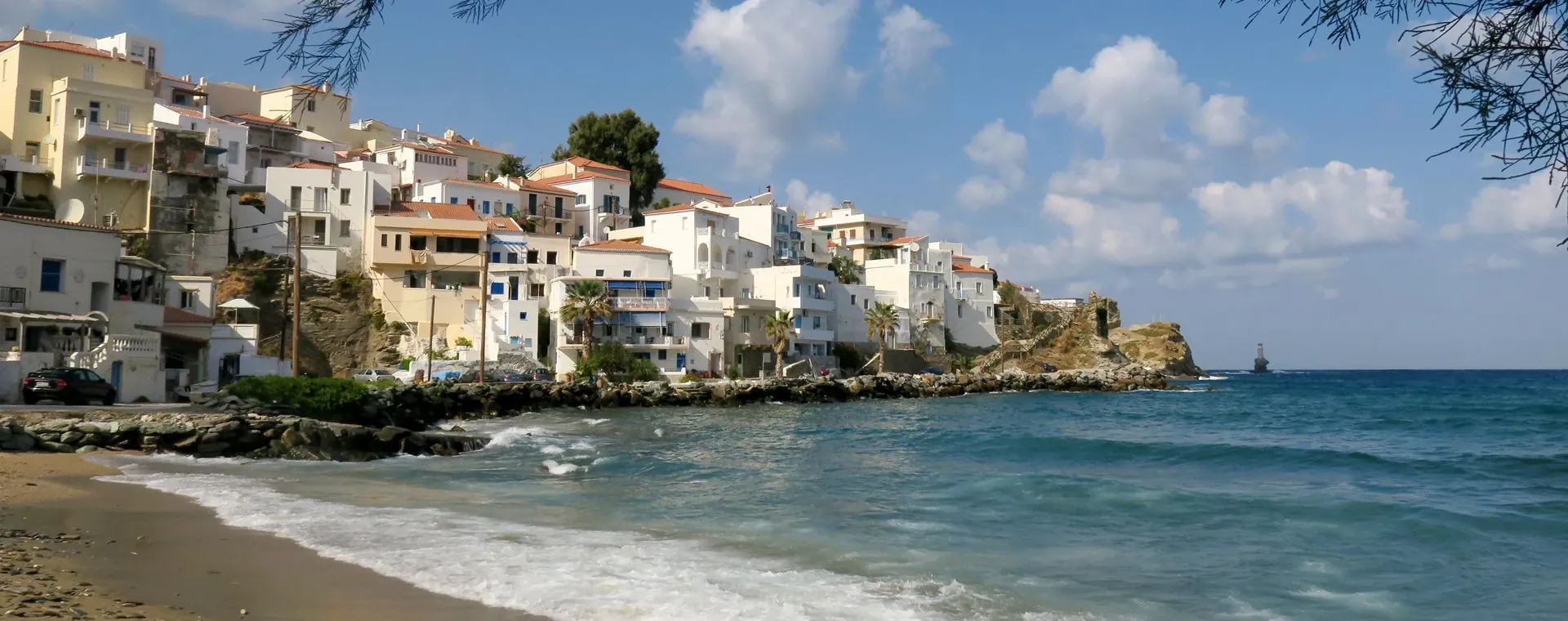
For those escaping the bustle, two small islands have our affection. Serifos unfolds secret valleys and beaches where you often find yourself alone. Its Chora, clinging to the slope like a staircase of white houses, is among the finest in the Cyclades. A lovely walk leads to the monastery of the Taxiarchis, fortified like a small citadel. The atmosphere there is simple, almost outside time.
Kimolos, neighbour to Milos, is more confidential still. 35 square kilometres, a few hundred inhabitants, a single real village, Chorio, perched and labyrinthine. The island maintains a dozen waymarked paths, short and easy, walkable in a day. The beach of Prassa, white sand and turquoise water, stays quiet even in high summer. It is exactly the kind of place you come back from saying you wish you had stayed longer.
You will find Serifos on our self-guided traverse of the western Cyclades, and Kimolos on the guided Sifnos, Milos and Kimolos trip.
If you come for colour and geology: Milos
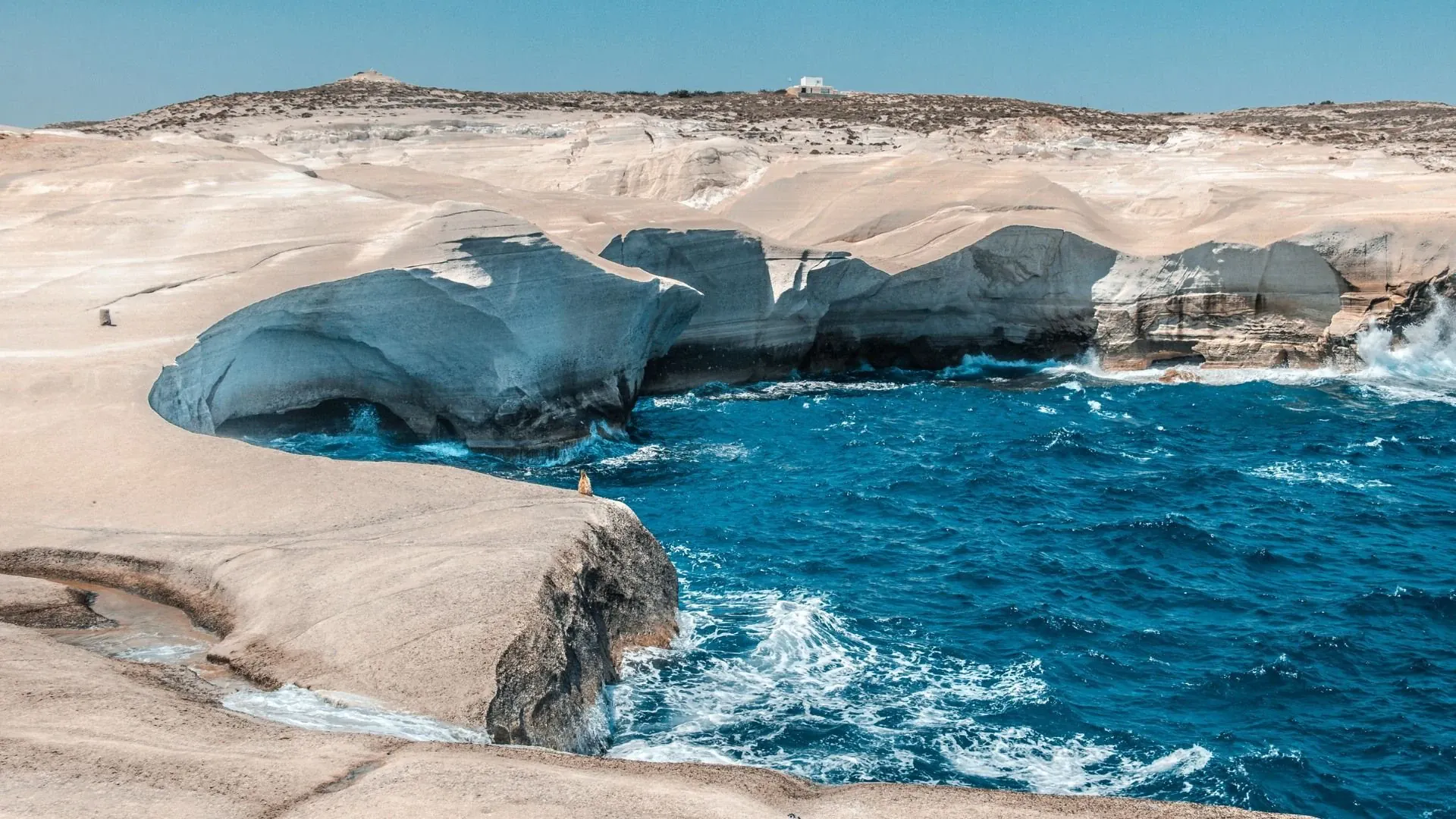
Milos was born of a volcano, and it shows everywhere. Its coasts line up settings found nowhere else: the milky-white rocks of Sarakiniko, sculpted by wind and sea into a lunar landscape, the ochre and rust cliffs of other coves, water of an incredible turquoise. It is the island of amateur geologists and lovers of swimming. It was also on Milos that the famous Venus was discovered, today in the Louvre.
The walking there is easy and the visual reward immediate. You reach the old mines, wander the colourful harbour of Klima with its painted fishermen's houses, stop at Plaka for the sunset. Milos brings both our western traverses to a fine close, one self-guided, the other led.
For a first Cycladic island: Andros and Tinos, or the grand tour
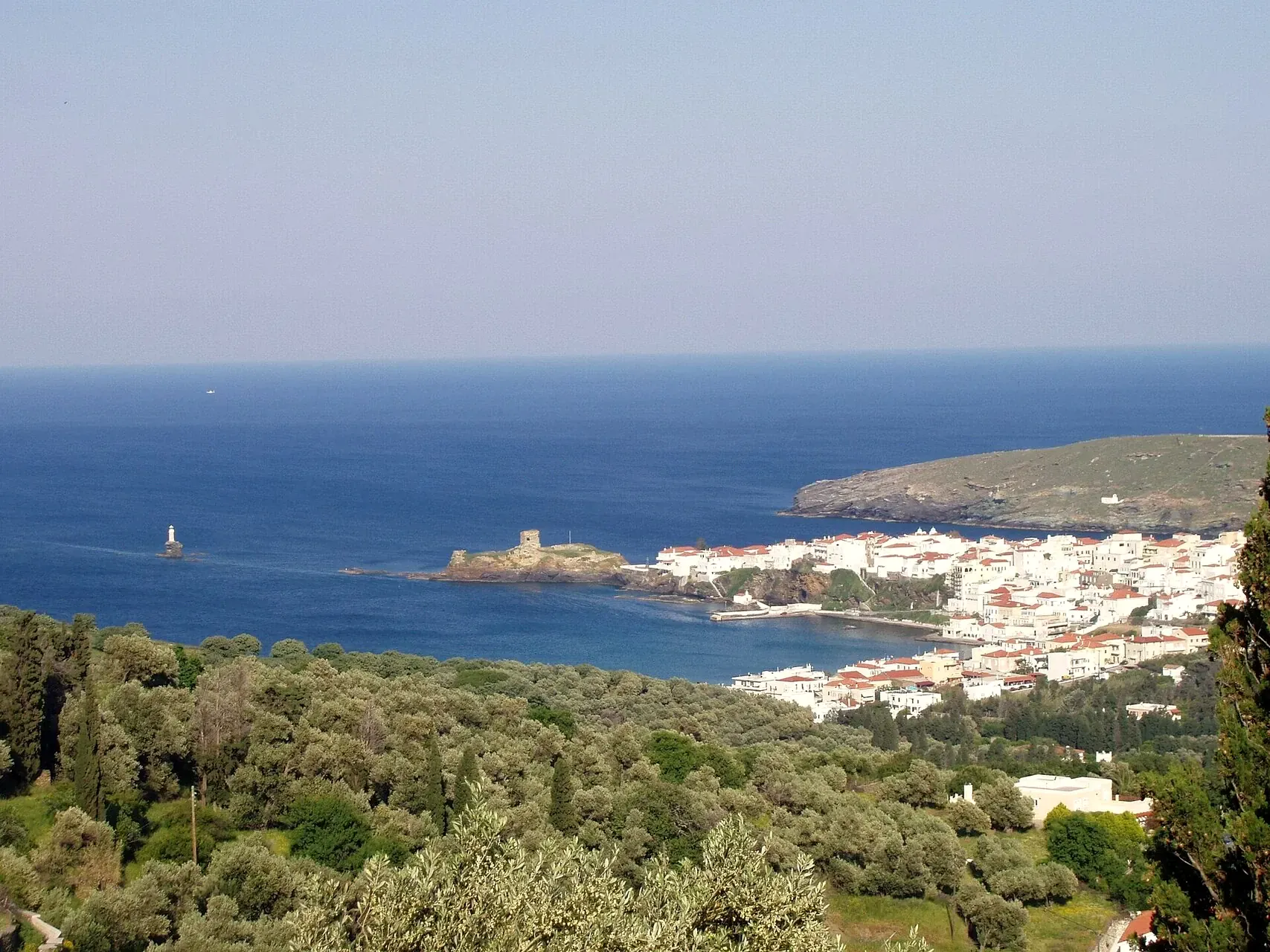
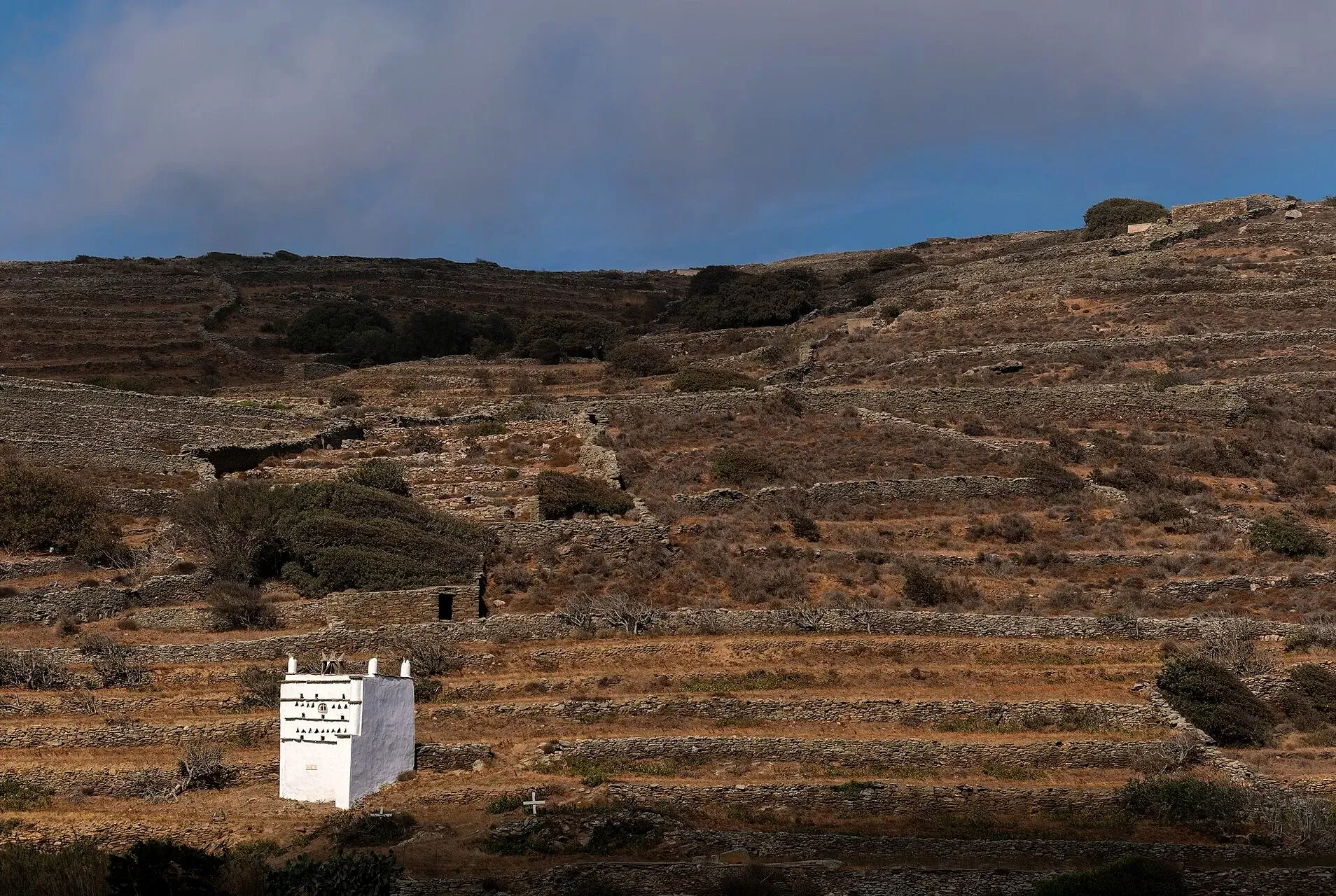
If this is your very first trip to the archipelago and you are still hesitating, two options are open to you.
Travellers who love greenery and water will head for Andros and Tinos, in the north. Andros is the greenest of the Cyclades, criss-crossed with springs and streams, renowned for its wine since antiquity and for its network of beautifully maintained ancient paths. Tinos, a pilgrimage island, charms with its perched villages and its whitewashed dovecotes, decorated with openwork patterns. These 2 islands open our grand tour of the Cyclades, from Andros to Amorgos, a 14-day itinerary linking five islands, including the sacred island of Delos. It is our formula for anyone who wants to take in the archipelago in a single trip, without rushing.
And the 3 big stars? Santorini and Mykonos are splendid, but designed for lazing, partying and photographs, not for walking in peace. Paros is pleasant and well placed for sea connections, without being among our walkers' favourites. We do not shun them; they have their charm and their liveliness. Simply, they are not the islands we recommend first to someone coming for the paths, the village tavernas and the silence of the evening.
Self-guided or guided, it is up to you
One last question comes up often: should you set off alone or in a small group? Both formulas exist with us, and neither is more demanding than the other — the pace stays gentle in both cases.
Self-guided, you follow detailed route notes and tracks at your own hand, you leave when you like in the morning, you stop where you want for lunch. It is ideal for couples who value their independence. Your luggage travels from one address to the next; you carry only a small daypack.
Guided, an English-speaking leader knows the paths, the chapels that are open and the best tavernas, and shares the stories of each island. It is reassuring for a first time in Greece, and a chance to walk in good company. The group stays small, the tempo unhurried.
So, which Cycladic island should you choose?

Trust what you feel like. You dream of varied paths and panoramas: Naxos and Amorgos. You come first for the table: Sifnos. You are looking for quiet and authenticity: Serifos and Kimolos. You want colour and geology: Milos. It is your first time and you want to see everything, without hurrying: the grand tour, or the green pairing of Andros and Tinos.
Whichever island you choose, the principle stays the same: few kilometres, a great deal of pleasure, and time to sit down. Our holidays take care of the ferries, the charming addresses and your luggage. You have only to choose the first island; the rest follows.
Frequently asked questions about choosing a Cycladic island
Which Cycladic island should you choose for a first visit?
For a first trip, we suggest an island that is easy to live with and well connected. Andros and Tinos, in the north, combine greenery, well-maintained ancient paths and peaceful villages, an ideal pair for entering the archipelago without going wrong. If you would rather take it all in on a single trip, the grand tour of the Cyclades, from Andros to Amorgos, links five islands in 14 days, and the guided formula with an English-speaking leader puts you at ease straight away.
Which Cycladic islands should you choose for quiet walking?
Naxos and Amorgos form our favourite walkers' pair, between olive valleys, Byzantine chapels and seaside paths, all at a gentle pace. Sifnos delights anyone wanting to combine easy walks with great cooking, while Milos rewards every step with its coloured rocks. These islands are covered self-guided, as on Naxos and Amorgos in 10 days, with luggage carried from stage to stage. To prepare your walks, the Anavasi and Terrain topographic maps cover the Cyclades well, and our self-guided holidays additionally provide detailed route notes and the tracks, with nothing to organise yourself.
Which is the quietest and most authentic Cycladic island?
For silence and village life, we have a soft spot for Serifos and Kimolos. Serifos unfolds secret valleys and often deserted beaches, beneath one of the finest Choras in the archipelago. Kimolos, tiny and confidential, maintains a dozen easy waymarked paths, walkable in a day. You will find Serifos on our self-guided traverse of the western Cyclades, and Kimolos on the guided Sifnos, Milos and Kimolos trip.
How many Cycladic islands should you link in a single trip?
Over ten days or so, two islands are plenty. The ferry is part of the pleasure but takes time, and the whole point of the Cyclades is to linger: better to know two islands well than to skim four. That is why our holidays pair complementary islands, linked by straightforward sea connections. For anyone wanting to see more in one go, the grand tour links up to five islands in 14 days.
Your question is not on this list?
Write to us, and we will reply to you personally by email.
Continue reading
- Sifnos or Serifos: which one is right for you?
- Which Greek island is right for you? The complete guide
- Naxos or Paros: which Cycladic island suits the trip you want?
- Hiking in Sifnos: the island of flavours on foot
Article written by
Maria Papadopoulou (Μαρία Παπαδοπούλου)
Editorial lead
I hike, and Greece is the place I keep coming back to. My initial studies (a Master’s in Marketing and a degree in Applied Foreign Languages) taught me how to build an editorial project, and the trails taught me the… Read more