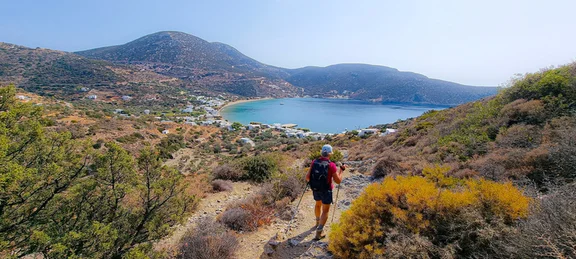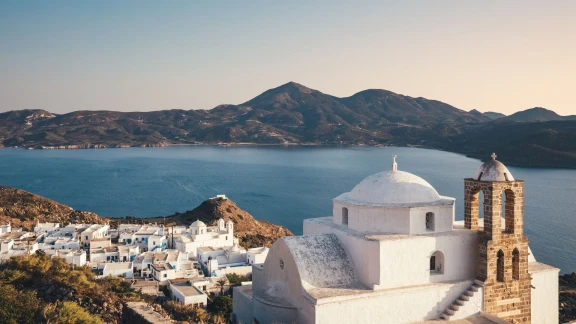


There are islands you pass through, and there is Folegandros, which you keep to yourself. Set away from the main ferry routes, this small Cycladic island reveals a Chora suspended above the void, nestled on the edge of a cliff that plunges straight into the Aegean. When evening comes, you climb the winding path towards the church of the Panagia, you sit on a wall still warm, and you understand why Folegandros is murmured about rather than sold. Here is what we would have liked to know before setting down our bags there.
| In brief | The most discreet of the Cyclades: a perched Chora, spectacular cliffs and a pace of life from before. |
| Ideal for | Travellers in search of calm, authenticity and raw landscapes, far from the crowds of Santorini. |
| Best season | From May to June and from mid-September to October: a sea still mild, golden light, quiet terraces. |
| Pace | Gentle, à la carte: wandering in the Chora, swimming, short coastal walks. |
| Our trip | No Kelifos trip on Folegandros for the moment: explore our trips in the neighbouring Cyclades. |
A Chora clinging to the cliff
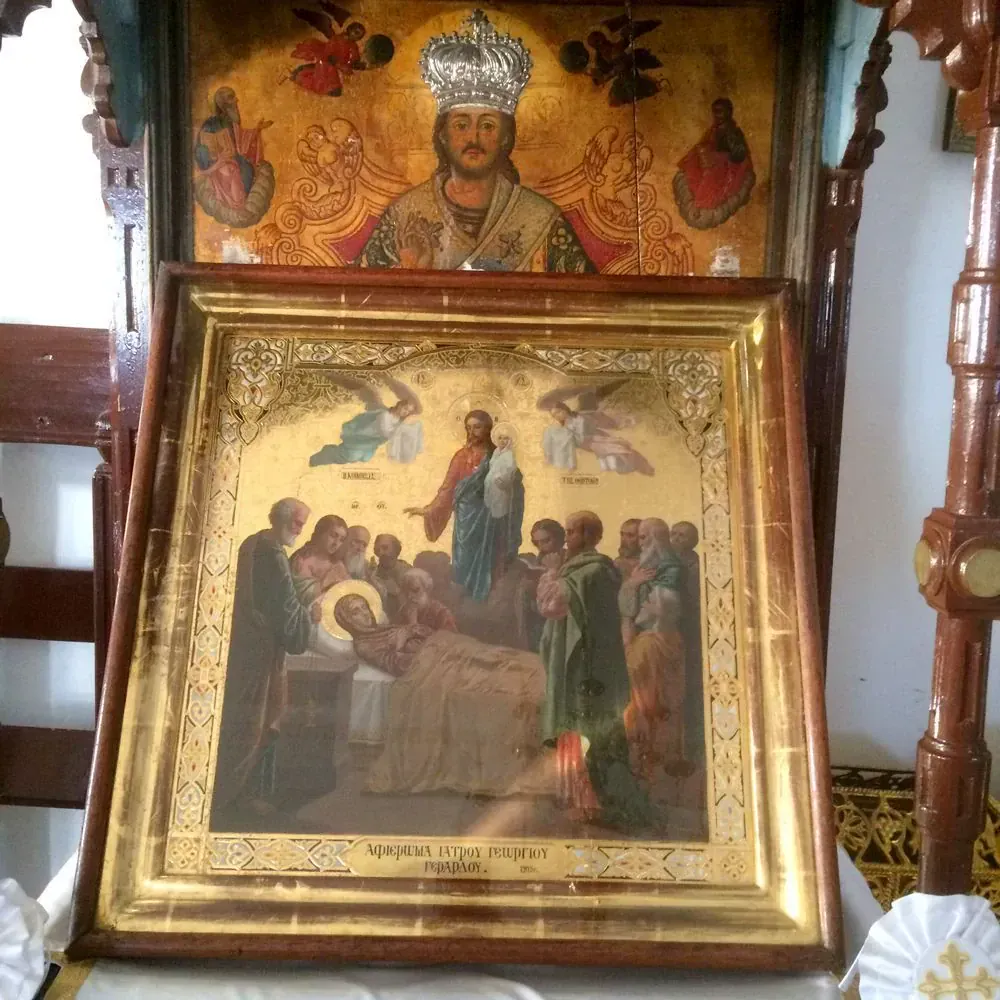
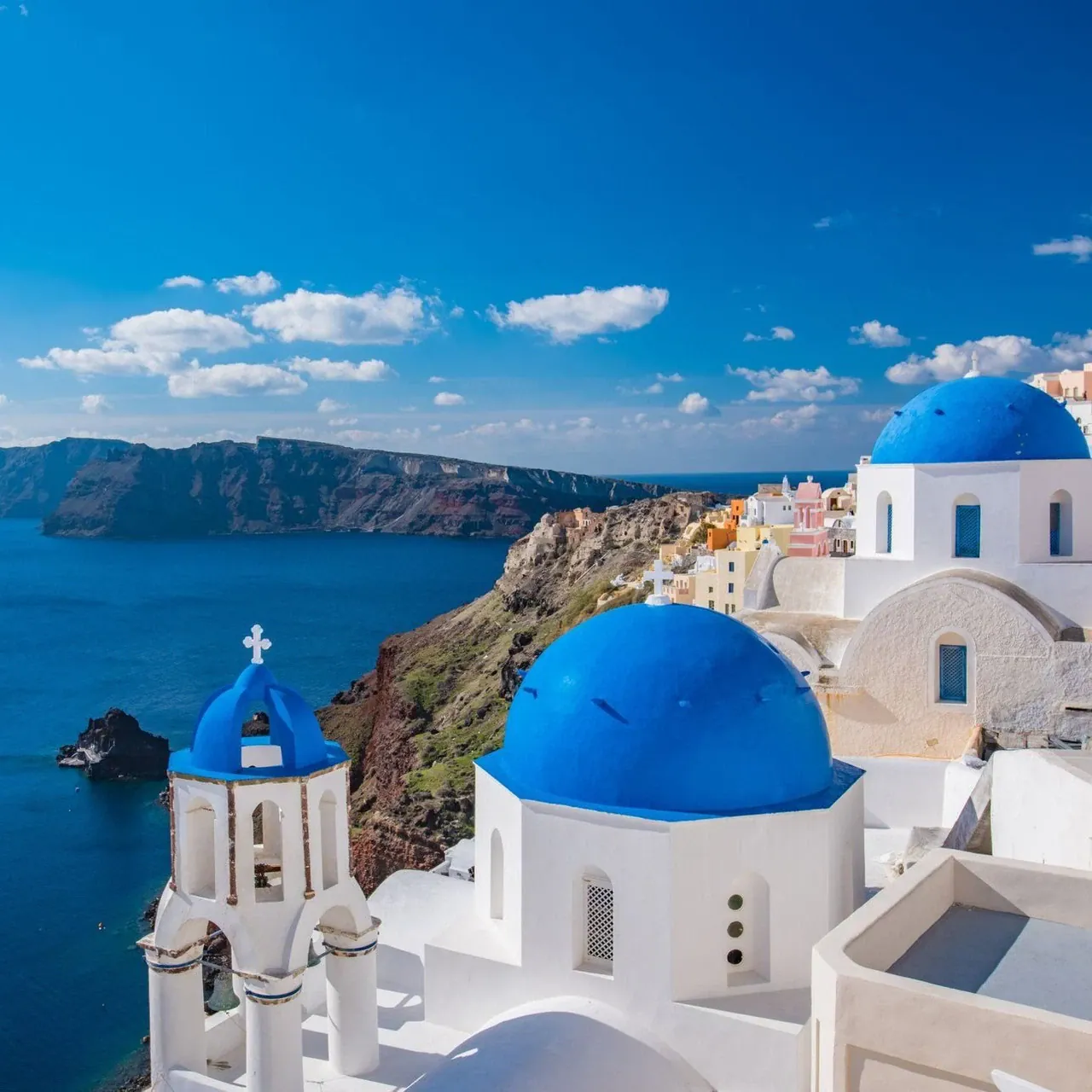
The island's capital simply bears the name Chora, as is often the case in the Cyclades. It is one of the oldest villages in the archipelago, and probably one of the most photogenic. You enter it by the Kastro, that fortified medieval maze built into the very edge of the cliff, once designed to hold out against pirates. Today you lose yourself there with pleasure among the white houses, the blue shutters and the bougainvillea, until you come out onto a small shaded square where a taverna serves the morning coffee.
The Chora is discovered slowly, on foot, without a car (access is in fact forbidden). Its four small squares follow one another like open-air drawing rooms, planted with trees and lined with terraces. That is where the heart of the island beats, especially in the evening, when the inhabitants bring their chairs back out and ouzo accompanies the first plates of mezze.
It is also in the Chora that you choose to stay: there you find small charming addresses, whitewashed guest houses and rooms with blue shutters, rather than at Karavostasi, the harbour, where the atmosphere does not have the same gentleness. Book early if you come in high season, as the choice remains on a human scale. On the food side, let yourself be tempted by souroto, the local fresh cheese, and by the fish of the day brought in that very morning.
The path to the Panagia, for the sunset
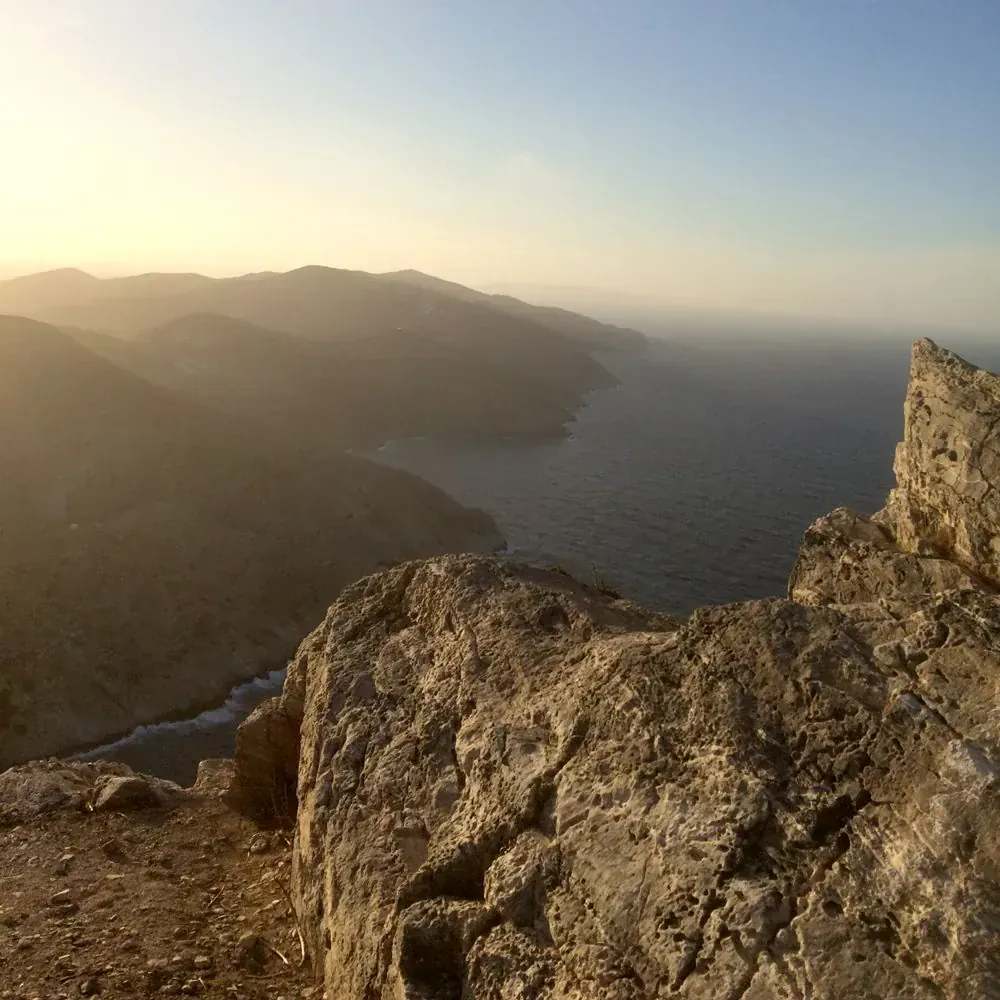
Above the village, on a hill, the white church of the Panagia keeps watch. You climb up by a winding path, wide and well laid out, which is walked quietly in about twenty minutes, at your own pace and with a few pauses to get your breath and the view back. Every bend opens the horizon a little further over the Aegean and over the Chora receding below.
At the top, the reward is total: the sea as far as the eye can see, the deep blue tinged with orange as the sun goes down. Many choose to make this climb at the end of the day, precisely for that moment. Remember to bring a little water and good flat shoes: the ground is uneven in places, nothing insurmountable, but you feel more at ease than in town sandals.
Beaches you have to earn a little
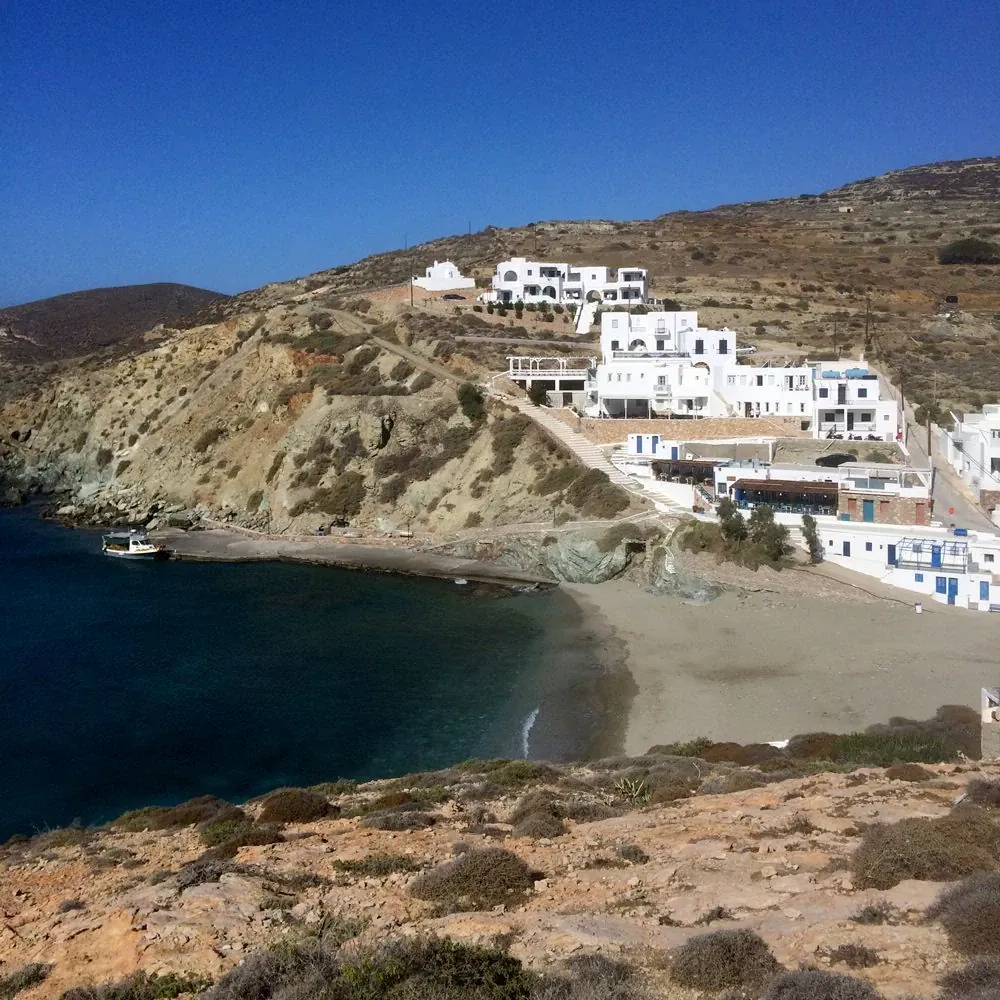
Folegandros is not an island of long, easy sandy beaches. Here the crystalline water has to be earned, and that is its whole charm.
Katergo is the best known. A pretty cove of pebbles and fine sand, with translucent blue water. It is reached either by a small boat from Karavostasi, or by a path descending from the hamlet of Livadi. The boat remains the most restful solution, and the crossing is already part of the pleasure.
Agali (also written Agkali) is the liveliest beach on the island, with a few tavernas at the water's edge where you lunch on a grilled fish after swimming. From there, a coastal path leads in about twenty minutes to the small neighbouring beach of Agios Nikolaos, wilder, where two traditional tavernas serve a light lunch facing the open sea. Many prefer here again to go by the boat shuttle, gentler.
Ano Meria, the island's other face
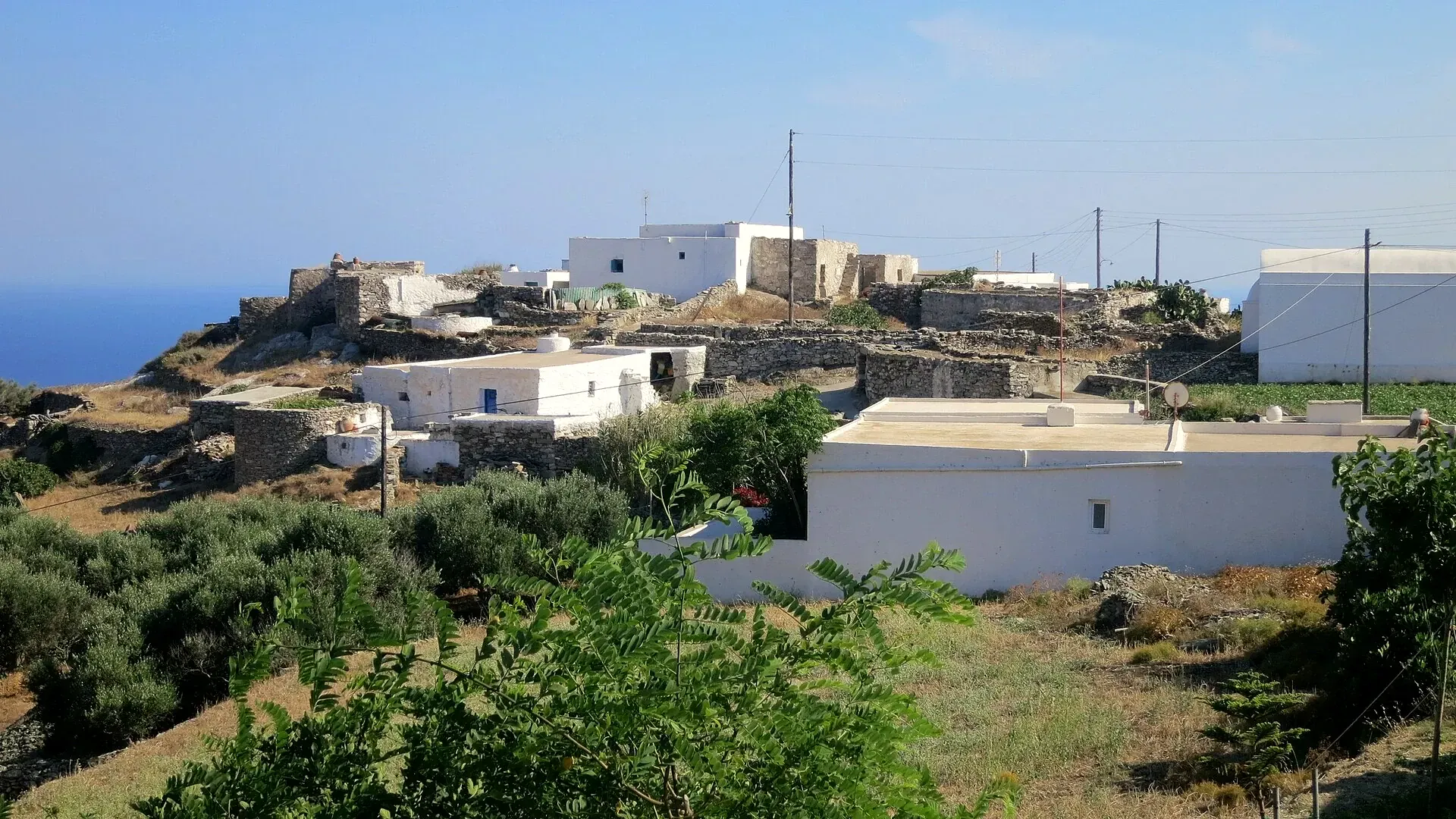
At the opposite end from the Chora, to the north-west, the village of Ano Meria tells of another Folegandros: that of terraced fields, of goats and of rural life. Tourists are rare there, and that is precisely what makes it precious. You come across farms scattered along the road, a small museum of popular arts and traditions which reconstructs the dwellings of former times, and a few family tavernas where you taste matsata, that home-made pasta served with a cockerel or rabbit stew, the island's speciality.
Take the time for a halt here, if only for the contrast: after the white elegance of the Chora, Ano Meria offers the Greece of the countryside, simple and warm.
Karavostasi, the harbour and the rhythm of the boats
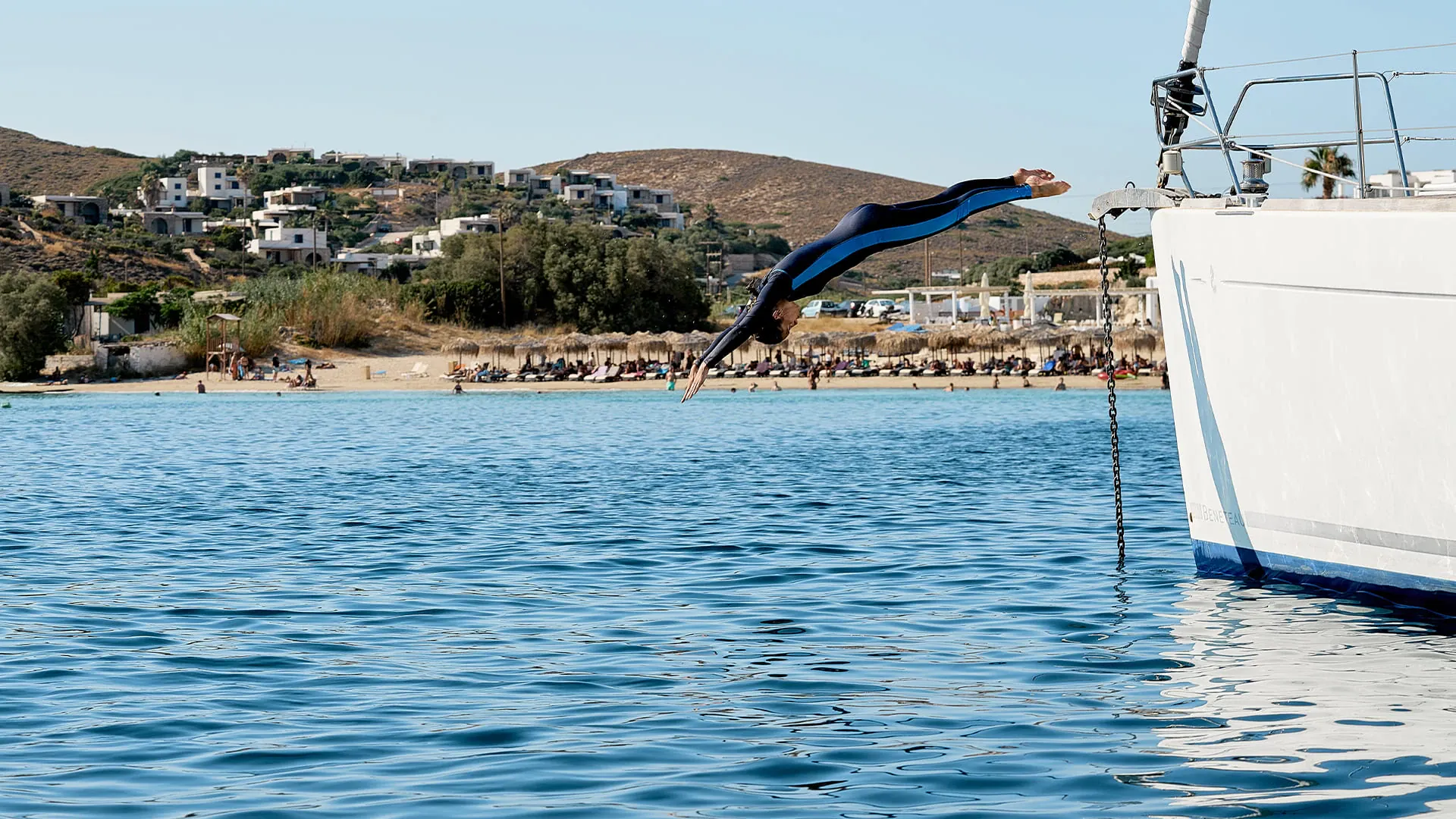
It is through Karavostasi, the small harbour in the south-east, that you arrive and that you leave. A few cafés, one or two tavernas, fishing boats: you do not really stay there, the Chora remains far more appealing for setting down your bags, but it is a convenient anchor point for boat excursions towards Katergo and the coves of the south. It is also from there that the sea trips around the island leave, one of the finest ways to grasp the verticality of its cliffs.
Getting there, and how long to stay
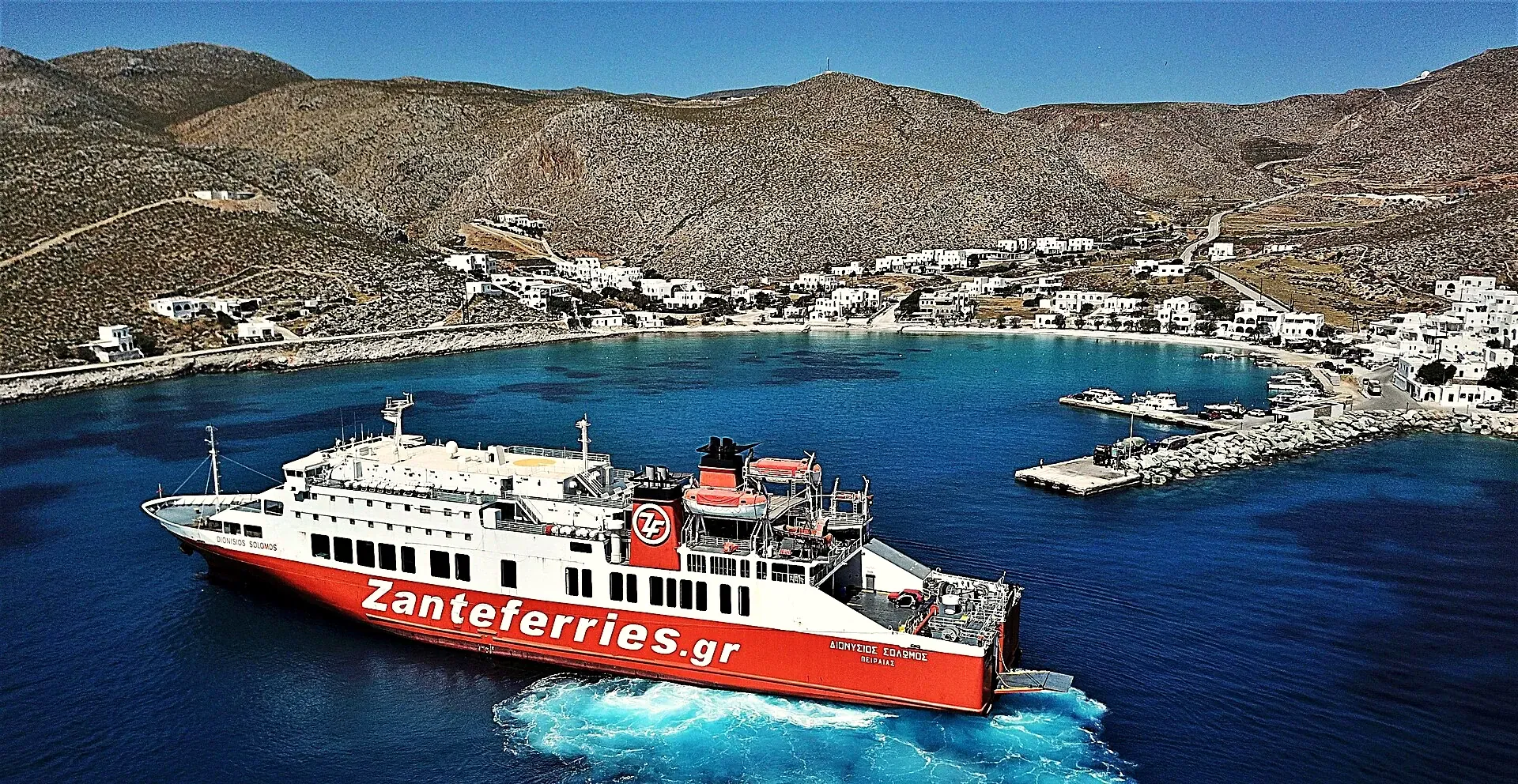
Folegandros has no airport. It is reached only by sea, by ferry, most often via Piraeus (the port of Athens) or by hopping from island to island from Milos, Santorini, Ios or Naxos. Sailings are regular in summer, more spread out off season: check the timetables in advance, because they really do shape the organisation of the trip.
To taste the island without hurrying, reckon on 3 to 4 nights: enough to wander in the Chora, climb to the Panagia, enjoy two or three beaches and push on to Ano Meria. Folegandros lends itself wonderfully to island hopping: it is readily combined with Milos, Sifnos or Sikinos, its very small neighbour, to compose an itinerary of confidential Cyclades.
Should you choose Folegandros?
If you are looking for big hotels, equipped beaches and nightlife, move along. If you dream of a white village suspended above the sea, of quiet dinners on a small square and of landscapes that belong to nothing but themselves, then yes, Folegandros is made for you. It is an island savoured slowly, like a glass of local wine at sunset.
To place Folegandros among its neighbours and build the itinerary that suits you, our comparison guides will help you decide: begin with which Cycladic island to choose according to your wishes, then widen the reflection with which Greek island to choose. And to discover the trips we offer in the archipelago, everything is gathered in one place.
Frequently asked questions about Folegandros
How do you get to Folegandros?
Folegandros has no airport: you arrive only by sea. From Piraeus, the port of Athens, reckon on about 4 h by fast ferry, running from March to October, or 7 to 8 h on a conventional ferry. The island also lends itself to island hopping: Milos is less than 1 h 30 away, Santorini less than 1 h by fast ferry, Naxos about 3 h 30. Always check the timetables before booking, as sailings thin out markedly off season.
What is there to do in Folegandros in 3 or 4 days?
The heart of the island lies in its Chora, which you pace without hurrying, from one small square to the next. Set aside an end of day for the climb to the church of the Panagia and its sunset, and at least half a day for the beaches of Katergo or Agali, readily reached by boat from Karavostasi. For the contrast, push on to Ano Meria, rural Folegandros, and treat yourself to a plate of matsata, the island's home-made pasta.
Can you visit Folegandros without a car, on foot?
Yes, and it is even the finest way to taste it. The Chora is entirely pedestrian: you move about on foot between the lanes and the squares. A local bus regularly links the harbour of Karavostasi, the Chora and the village of Ano Meria, while boat shuttles serve the beaches of the south. Walkers also link Agali to the neighbouring cove of Agios Nikolaos by a coastal path of about twenty minutes.
Where should you stay in Folegandros, the Chora or the harbour?
Favour the Chora: its whitewashed guest houses and its evening atmosphere, when the terraces come alive, make it the most appealing address. Karavostasi, the harbour, remains convenient for a very early or very late ferry, but the atmosphere there is more functional. The choice remains on a human scale, so book early if you come in July or August.
Your question is not on this list?
Write to us, and we will reply to you personally by email.
Continue reading
- The most beautiful villages in the Cyclades, savoured without the crowds
- Which Cyclades island to choose for the trip you have in mind?
- Which Greek island is right for you? The complete guide
- Hiking in Greece: the best trails island by island
Article written by
Maria Papadopoulou (Μαρία Παπαδοπούλου)
Editorial lead
I hike, and Greece is the place I keep coming back to. My initial studies (a Master’s in Marketing and a degree in Applied Foreign Languages) taught me how to build an editorial project, and the trails taught me the… Read more