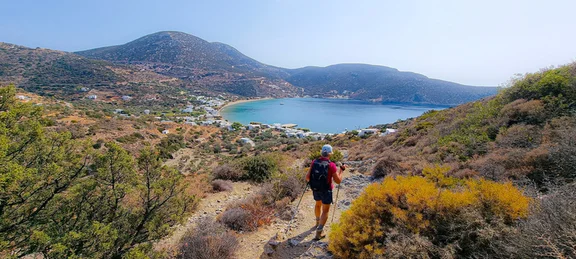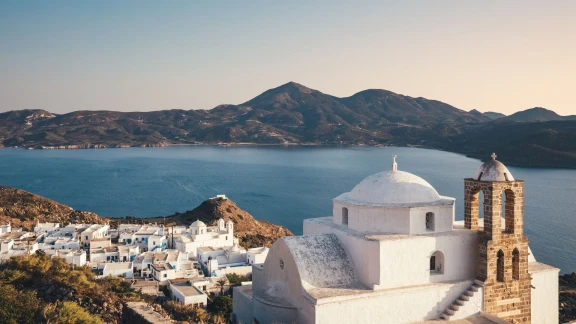


Picture a sunset whose light passes through the Portara, the immense marble doorway standing alone on its islet facing Chora. That is the image everyone brings back from Naxos, and it is deserved. But the island, the largest of the Cyclades, keeps its real riches inland: marble villages clinging to the mountain, a valley strewn with Byzantine churches, a cheese to be tasted in the shade of a plane tree, and beaches of soft sand where you walk into the water without a single pebble underfoot. Here is what we like to do on Naxos when there is time to do things properly, and what we would have liked to know before setting off.
| In brief | The largest of the Cyclades, green and full of flavour: marble villages, Byzantine churches, sandy beaches and a good table |
|---|---|
| Ideal for | Curious travellers who like to mix culture, gentle walking, swimming and food |
| Best season | May to June and September to early October: mildness, light, and the island to yourself |
| Pace | At your own rhythm, one discovery per half-day, the rest for the terrace |
| Our holiday | Naxos and Amorgos self-guided, 10 days |
The Portara and the Chora, the finest arrival in the Cyclades

You begin where the boat sets you down. The Portara is that marble doorway several metres high, the remains of a temple of Apollo left unfinished 2,500 years ago, set at the end of a causeway a couple of steps from the port. You walk out to it before dinner, when the stone turns pink and the excursion crowds have gone back to the ferries. Behind it, the old town climbs in white lanes towards the Kastro, the citadel built in the 13th century by the Venetian dukes, still ringed by part of its walls and towers. You lose yourself there with pleasure: cool vaults, coats of arms carved above doorways, craft workshops, small tavernas where you sit down as soon as your legs ask for it. In the morning, the harbour market overflows with cheeses, olives and island fruit, enough to make up a fine picnic. Nothing to tick off here, just wandering and letting yourself be carried along.
Apeiranthos, the marble village
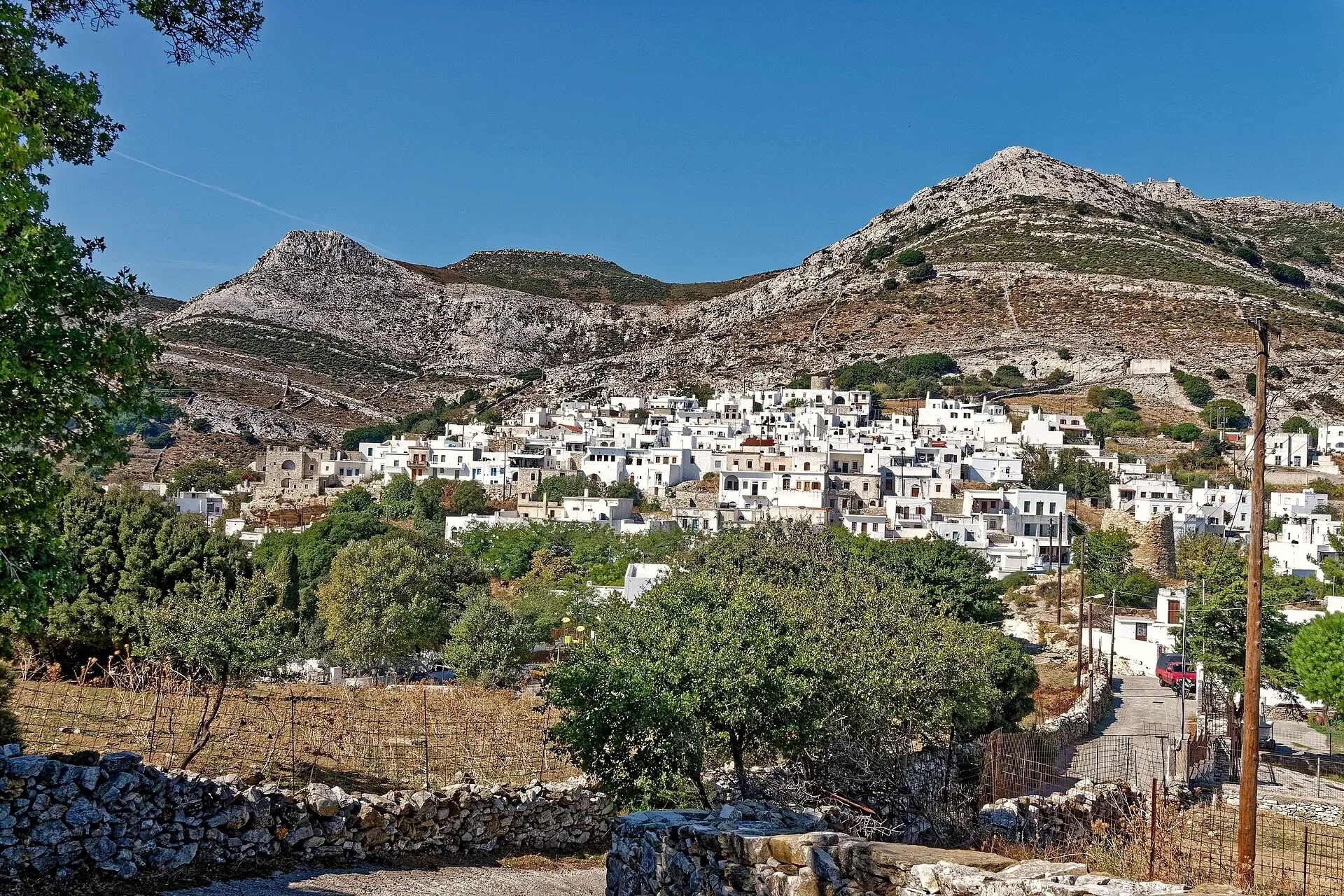
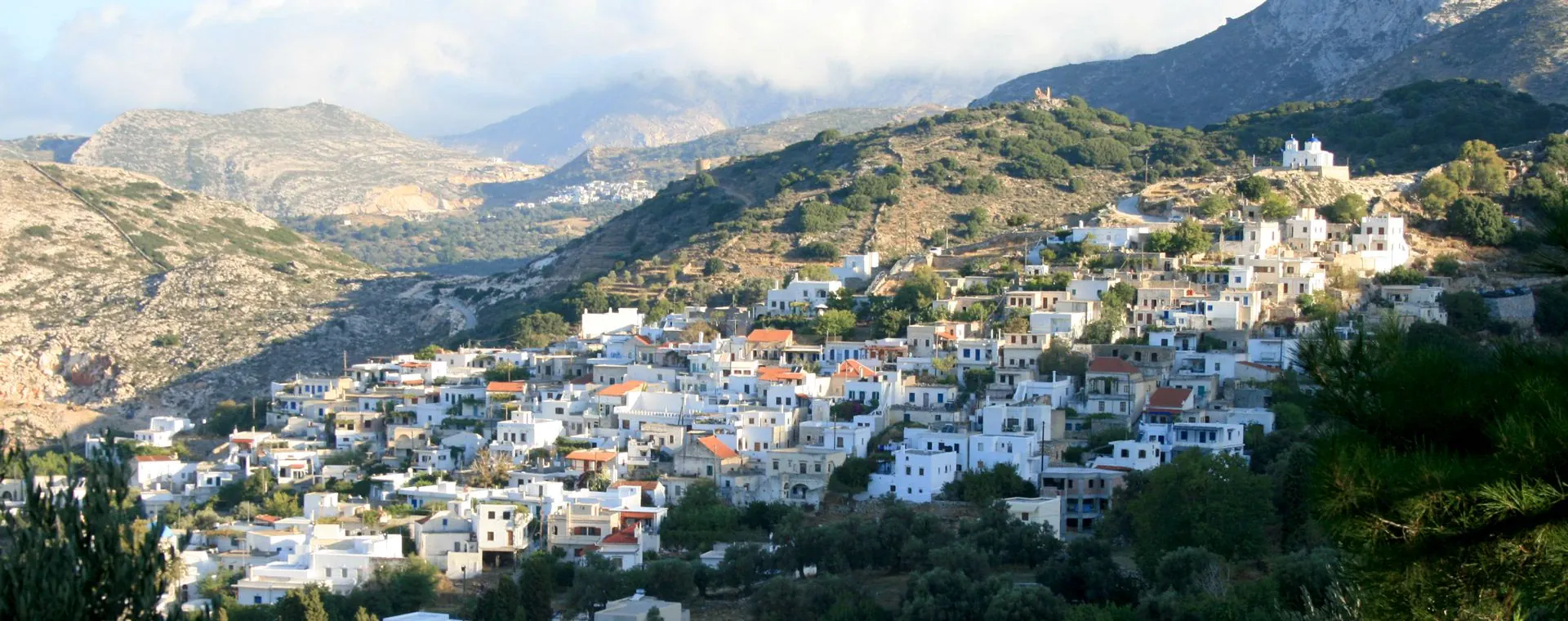
An hour's drive from Chora, perched on the mountainside, Apeiranthos is probably the most beautiful village on the island. Its lanes, its stairways and even some of its façades are of local marble, smooth and polished by footsteps. You breathe the Venetian air of the seigneurial towers and take coffee on a shaded little square, facing the peaks. The village holds several small museums, including an archaeological museum worth the stop for its Cycladic figurines. Take your time: here the marble keeps its coolness even at the height of summer, and that is the whole point of climbing up.
The Tragea valley and its Byzantine churches
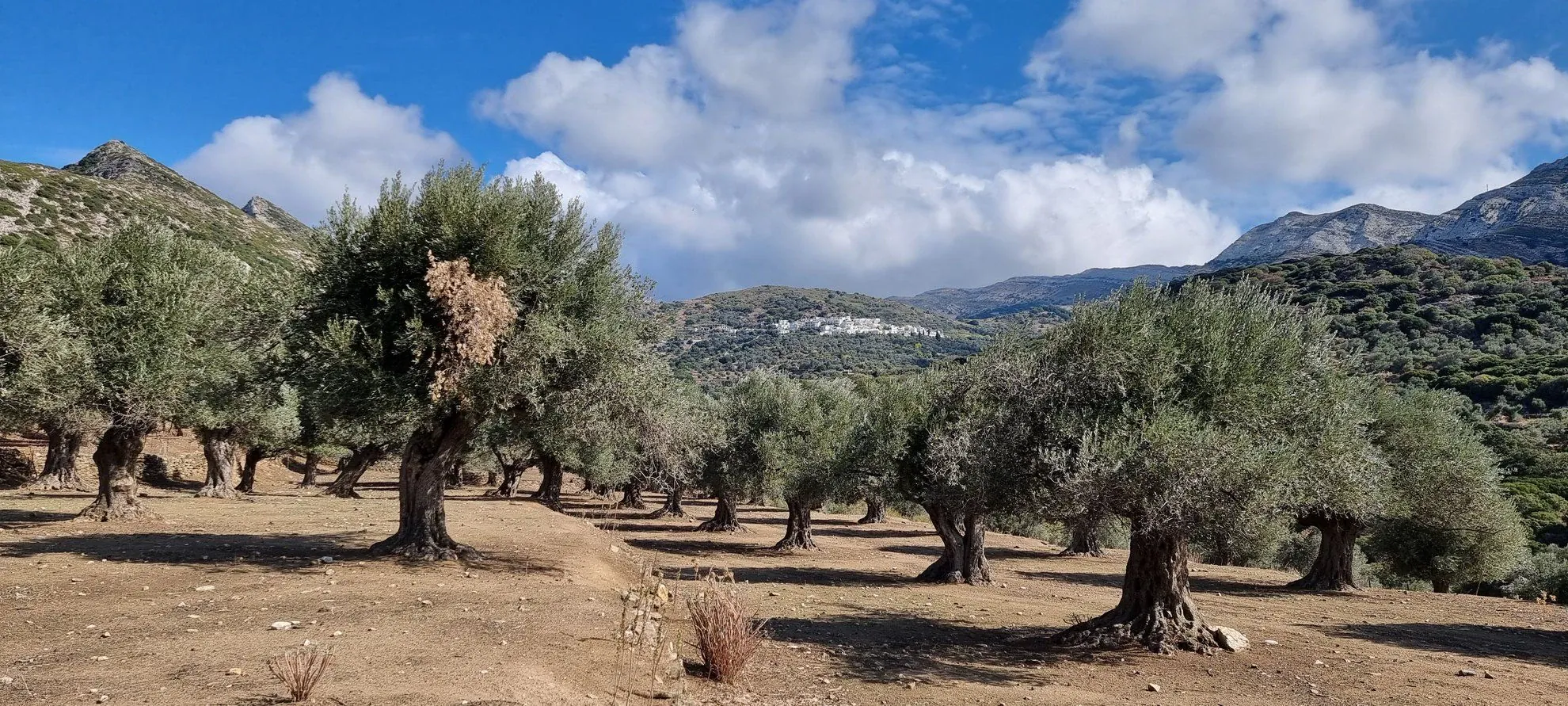
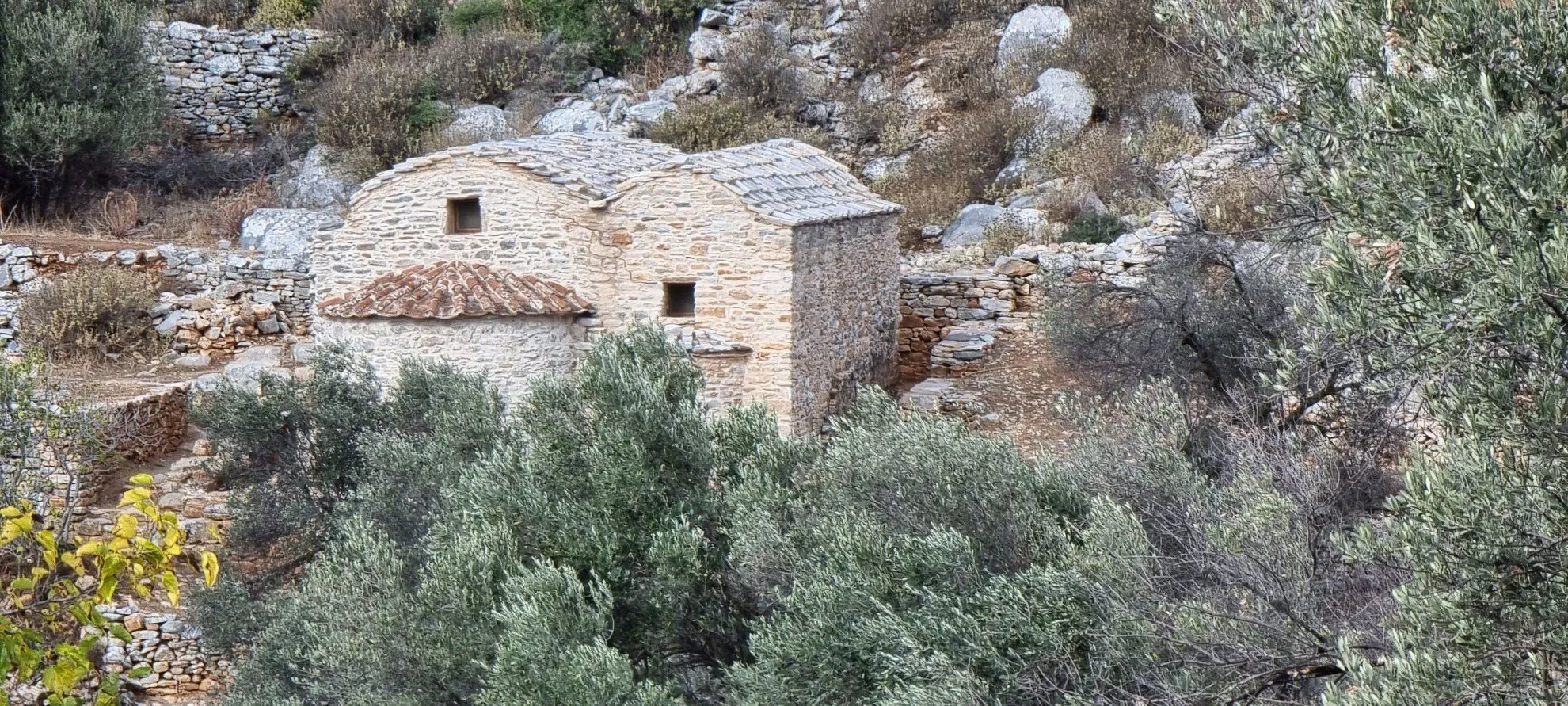
Below the villages stretches the Tragea valley, a sea of century-old olive trees from which dozens of chapels emerge. It is the green heart of Naxos, and the gentlest walk there is: almost level dirt tracks link the hamlets in the shade of the trees. Many of these Byzantine churches are among the oldest in Greece, some going back to the 6th century and keeping their original frescoes. Close by, at Filoti, the largest village of the valley clinging to the slopes of Mount Zas, the basilica of Panagia Filotitissa overlooks the shaded square. And not far away, at Moni, the chapel of Panagia Drosiani preserves 6th-century frescoes among the rarest in the Balkans. You walk an hour or two, stop at a fountain, set off again. This is the Naxos the ferries never see.
Halki and kitron, the delicious pause
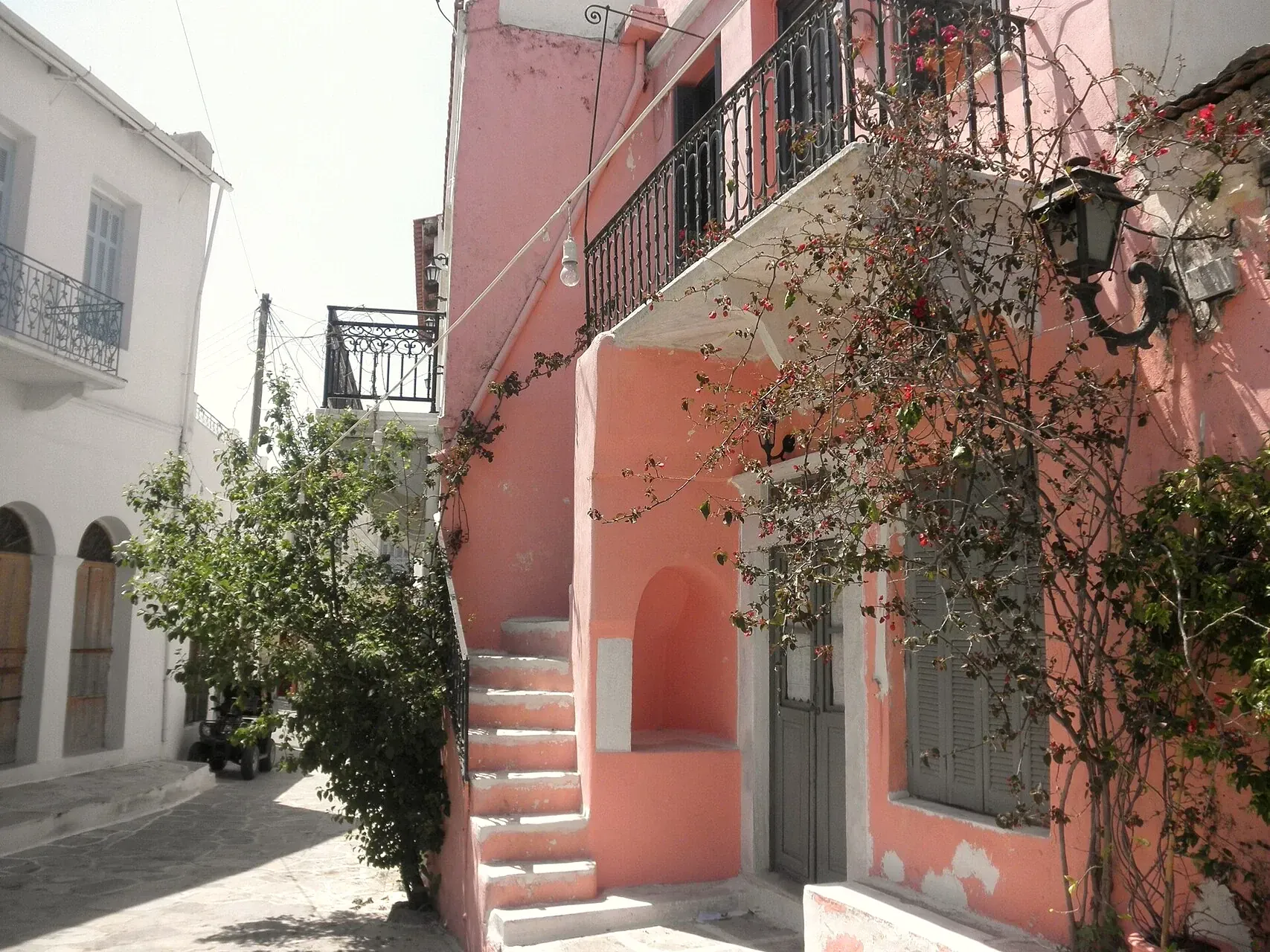
The island's former capital, Halki is a quiet village of neoclassical houses in ochre tones and craftsmen's shops. You come here for one particular reason: kitron, a fragrant liqueur drawn from the leaves and fruit of the citron tree, a Naxos speciality since the 19th century. The Vallindras distillery, in operation since 1896 and run by the same family, can be visited and offers a tasting of the three colours of kitron, from the mildest to the most full-bodied. A couple of steps away, a shop of local produce and a good restaurant make Halki an ideal midday halt, in the shade, without hurrying.
Mount Zas, the roof of the Cyclades within your reach
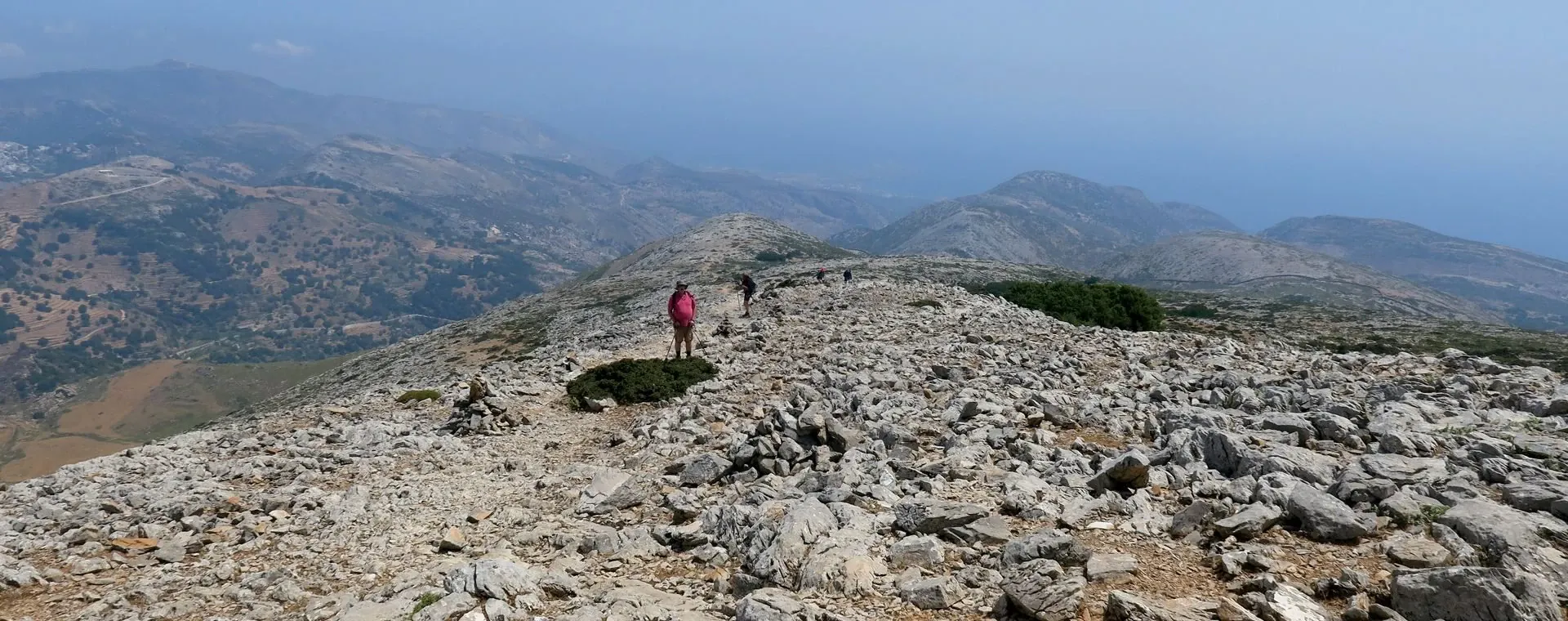
Mount Zas rises to 1,004 metres: it is the highest point in all the Cyclades. Do not let that worry you. The waymarked path starts from the chapel of Agia Marina, above Filoti, and climbs steadily through the stone terraces. On the way you pass the cave of Zeus, where legend has it the god grew up: a vast cool cavity where you gladly stop. There is no need to reach the summit to be rewarded. Half way up already, the view takes in the valley, the sea and the neighbouring islands. It is a walk you make at your own pace, early in the morning or at the end of the afternoon, with water and a hat.
The kouros of Apollonas, the sleeping giant
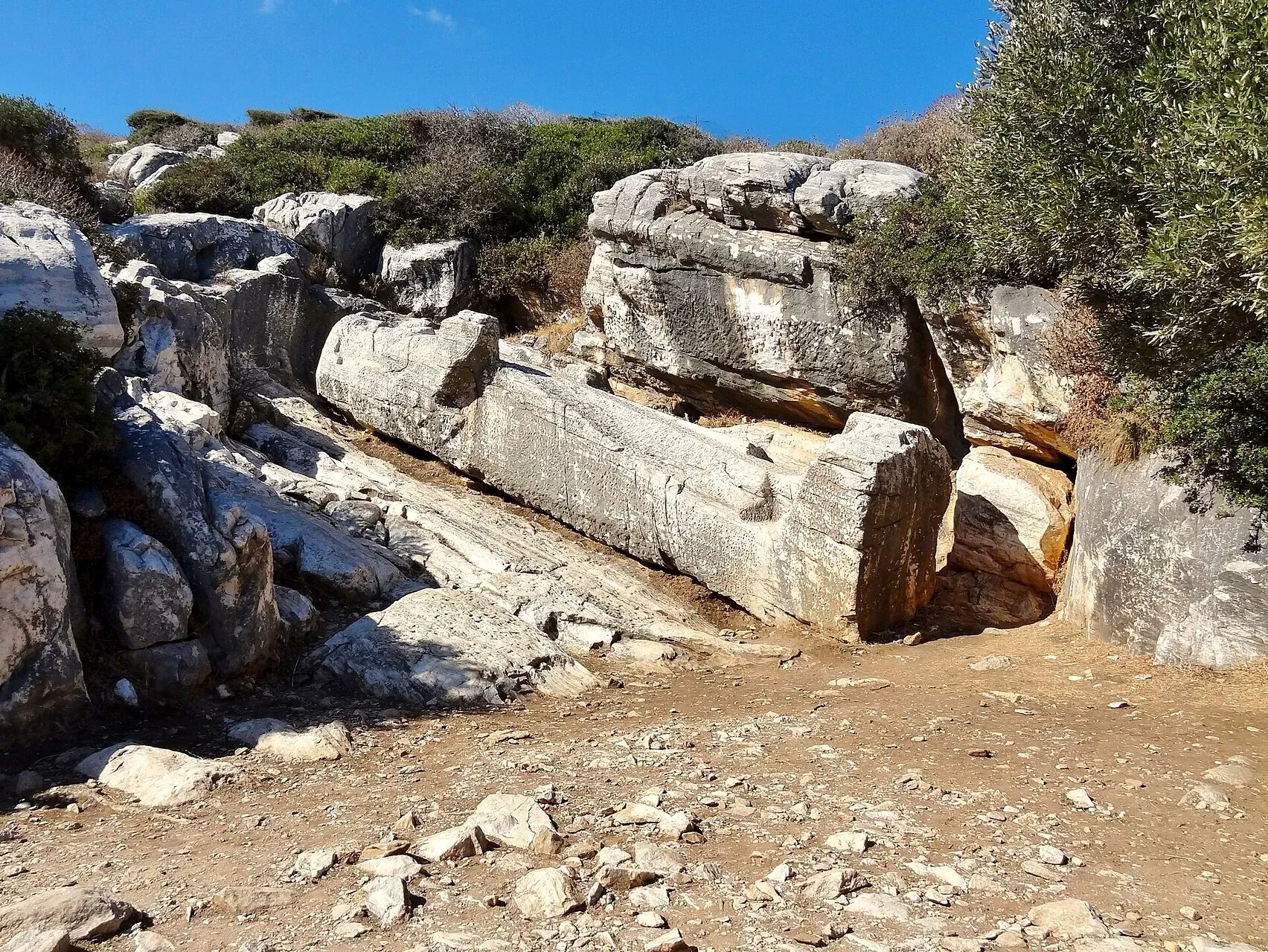
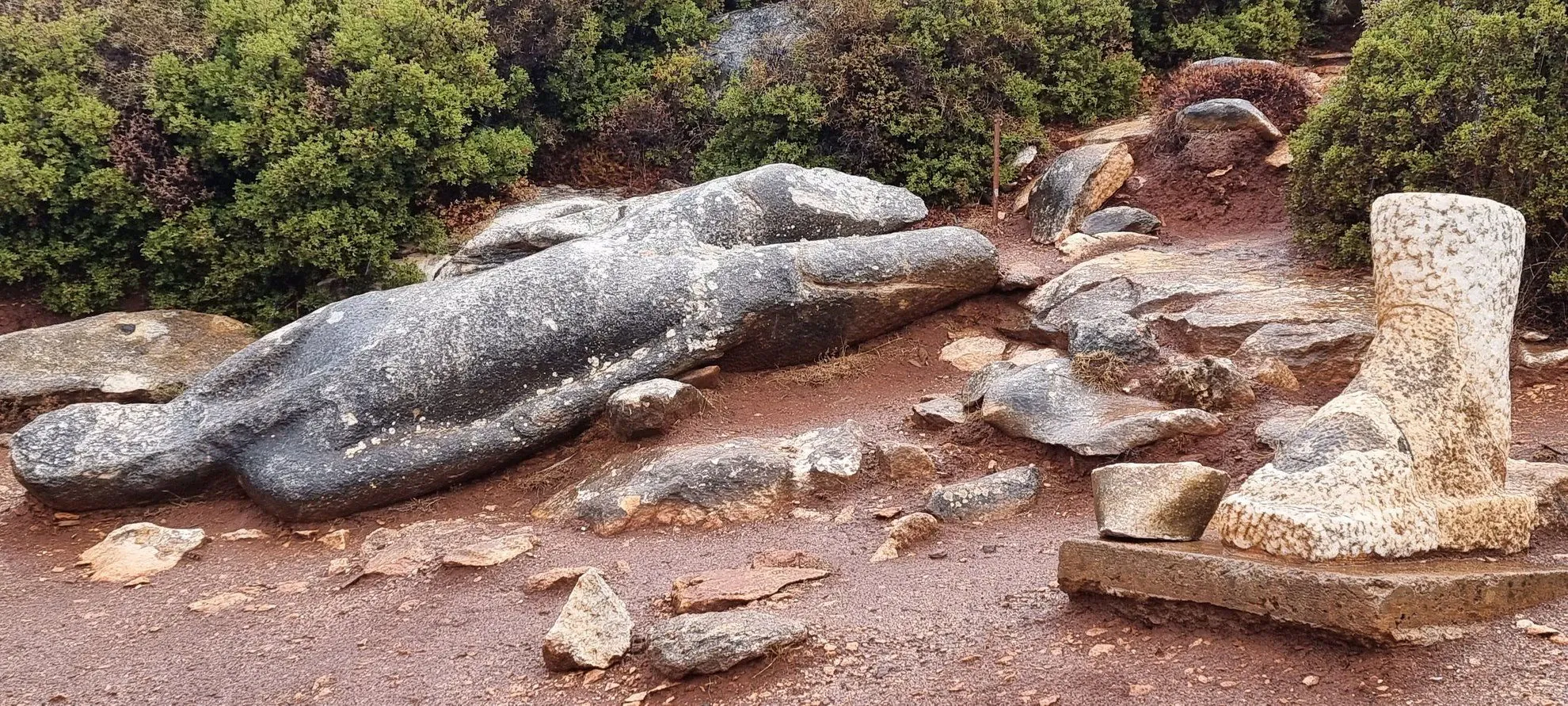
At the far north of the island, near the little port of Apollonas, a marble colossus has lain since antiquity in an ancient quarry. This unfinished kouros measures more than ten metres and has never left the stone it was born from: too heavy, probably cracked, it was abandoned where it lay. You reach it by a few easy steps, and the contrast between that sleeping figure and the sea below has something striking about it. Two other kouroi, more modest, slumber in the greenery of Melanes, in the centre of the island, at the end of a shaded walk that is perfect for the end of a morning.
The temple of Demeter, in the middle of the fields
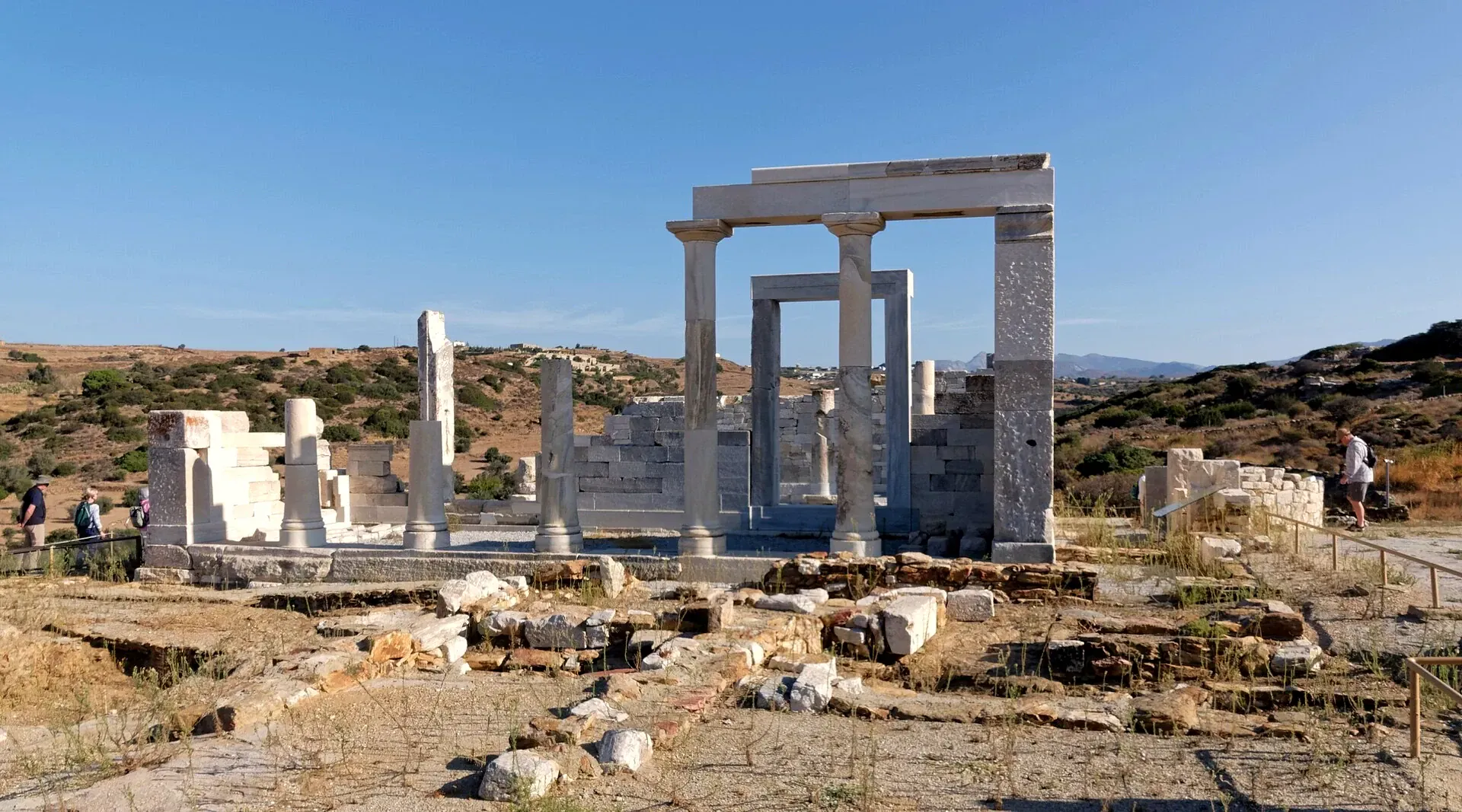
In the south of the island, in the quiet countryside of Sangri, the temple of Demeter stands alone in the hollow of a cultivated plain. Built around the 6th century BC in white Naxos marble, it was one of the first Greek temples entirely of marble, and part of its columns has been re-erected. The place is peaceful, almost secret, and the small adjoining museum tells the story of its restoration nicely. You stop for half an hour, on the way back from the beaches or heading towards the villages, for the pleasure of an ancient site you often have entirely to yourself.
The beaches of Plaka and Agios Prokopios
Naxos has some of the finest beaches in the Aegean, all on the west coast, within reach of Chora. Agios Prokopios unrolls fine sand and shallow water, edged by a few tavernas with their feet in the sand. Just beyond, Plaka stretches its kilometres of white sand backed by dunes, quieter, ideal for a long swim and a nap in the shade of a tamarisk. The water stays clear and warm well beyond the summer. You come at the end of the day, after the villages, for the simple pleasure of a swim and a drink facing the declining sun.
Naxian cooking, an island that is sufficient unto itself
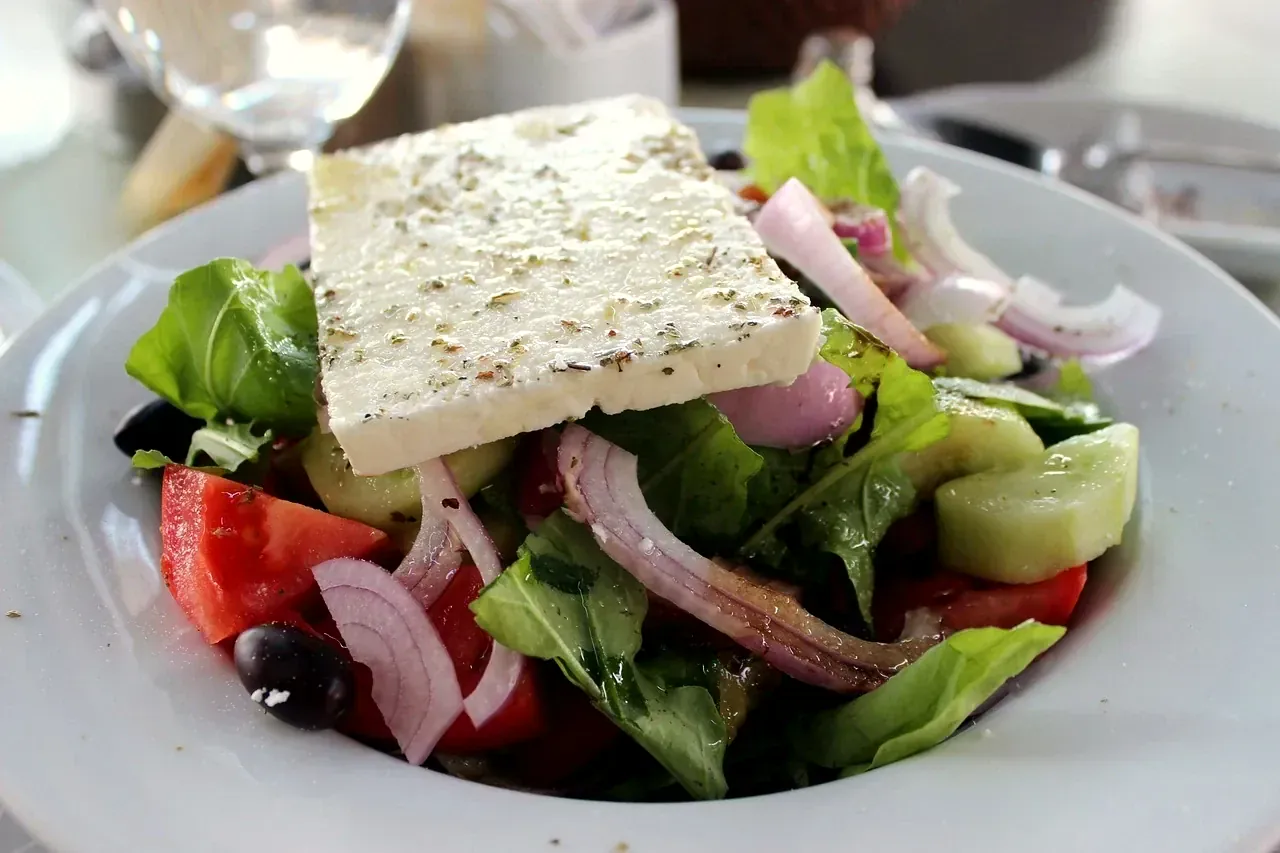
Naxos has the good fortune to be fertile, and you can taste it on the plate. Naxos graviera, a hard cheese made from cow's milk, sometimes with sheep's milk added, holds a protected designation: it is eaten in slices, fried as saganaki, or simply with a trickle of local honey. Naxos potatoes, famous throughout Greece, accompany the slow-cooked meats of the mountain tavernas. Add the olive oil of the valley, the citrus fruit, the thyme honey and a glass of kitron as a digestif, and you understand why people linger here. The best is to eat where the villagers eat, at Halki, at Filoti or at Apeiranthos, far from the harbour terraces.
How many days, and when to come
To taste all of this without rushing, allow at least four or five days: a day for Chora and its beaches, one for the Tragea valley and its villages, one for the north and the kouros of Apollonas, the rest for wandering and swimming. The best season runs from May to June, when the island is green and in flower, and from September to early October, when the sea stays warm and the villages recover their calm. In July and August, favour the mountains in the morning and the beaches at the end of the day. A hire car remains the simplest way to link the inland villages.
Naxos lends itself wonderfully to a self-guided trip, where you walk a little each day at your own pace, sleep in good addresses and let your luggage travel for you. That is exactly the spirit of our holiday Naxos and Amorgos self-guided over 10 days, which carries the discovery on to the neighbouring island of Amorgos. To prepare your trip, our guide to the Cyclades gathers our itineraries and our advice island by island.
Frequently asked questions about Naxos
What can you do in Naxos in two or three days?
If your stay is short, keep to the essentials. A first half-day for the Portara and the lanes of the Kastro in Chora, followed by an afternoon on the sand at Agios Prokopios. The next day, climb inland for the Tragea valley, the marble village of Apeiranthos and a kitron pause at Halki. If you have a third day left, add the gentle walk to the cave on Mount Zas and a last swim at Plaka. You will have tasted both faces of the island, sea and mountain, without rushing.
Can you discover Naxos on foot?
It is even the finest way to know its interior. The Tragea valley is crossed by almost level paths between olive trees and Byzantine chapels, the marble villages are linked by old mule tracks, and Mount Zas is climbed steadily by a waymarked path from Filoti. Without a car, the KTEL bus serves Chora and several villages, but it is by walking from one hamlet to the next that the island really gives itself up. That is the whole spirit of a self-guided trip, where you move on each day at your own pace while your luggage travels for you.
Where can you find a map or a walking itinerary on Naxos?
Two Greek publishers cover the island well at 1:40,000: the Anavasi map, which details the Byzantine park of Tragea, and the Terrain map, which lists the waymarked paths and their distances. You find them in travel bookshops or on the spot in Chora. If you would rather prepare nothing, our Naxos and Amorgos self-guided holiday gives you detailed route notes and the tracks of the itineraries, day after day. You have only to walk and enjoy.
Which are the most beautiful beaches on Naxos?
They all string out along the west coast, south of Chora, and run into one another almost without a break. Agios Prokopios and Plaka offer the finest sand and shallow water, edged with tavernas at the water's edge. Between the two, Agia Anna shelters a family cove shaded by cedars, perfect for children. Further south, Mikri Vigla appeals to windsurfers, and Alyko hides its golden dunes in the hollow of a rare cedar forest. You can still swim there happily in September, when the great beaches recover their calm.
Continue reading
- Which Greek island is right for you? The complete guide
- Naxos or Paros: which Cycladic island suits the trip you want?
- The Best Hikes in Naxos
- Hiking in Greece: the best trails island by island
Article written by
Maria Papadopoulou (Μαρία Παπαδοπούλου)
Editorial lead
I hike, and Greece is the place I keep coming back to. My initial studies (a Master’s in Marketing and a degree in Applied Foreign Languages) taught me how to build an editorial project, and the trails taught me the… Read more