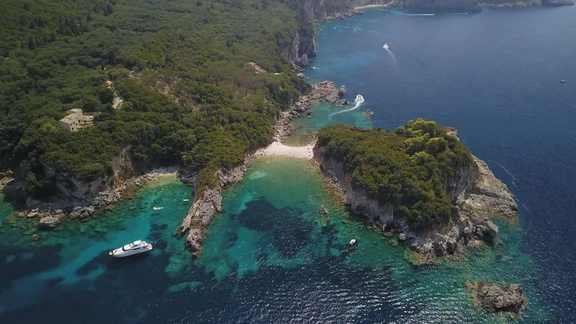


Picture a gulf so deep and so enclosed that you would take it for a lake, a few sailing boats rocking there, hills of silver olive trees dropping down to the water, and a small white harbour waking to the sound of cafés being opened. You are on Ithaca, the most discreet of the Ionian Islands, the one where, legend says, Odysseus dreamed of returning after ten years of wandering. Many travellers cross Greece without ever stopping here, and that is rather what makes its luck: Ithaca, set to the east of Kefalonia, has kept the calm and the sincerity of an island you come to in order to slow down, not to tick boxes.
| In brief | A small Ionian island, peaceful and charged with myth, made for wandering |
| Ideal for | Homeric memory, fishing harbours, quiet coves |
| Best season | May, June, September and early October (mildness, fine light, few people) |
| Pace | gentle, at your own rhythm, from village to village |
| How to live it | as an escape from neighbouring Kefalonia (free inspiration, no dedicated holiday for the moment) |
Ithaca belongs to the Ionian Islands archipelago, to the west of Greece, facing the sea that separates it from the mainland. It is a very small island: under 100 km², about three thousand inhabitants, two massifs joined by a narrow isthmus. You can drive round it in a day, but that would be to miss the essential. Ithaca has to be earned slowly, over a coffee on a terrace, a swim in a nameless cove, a conversation with a fisherman bringing in his boat.
The homeland of Odysseus, and the setting of the Odyssey
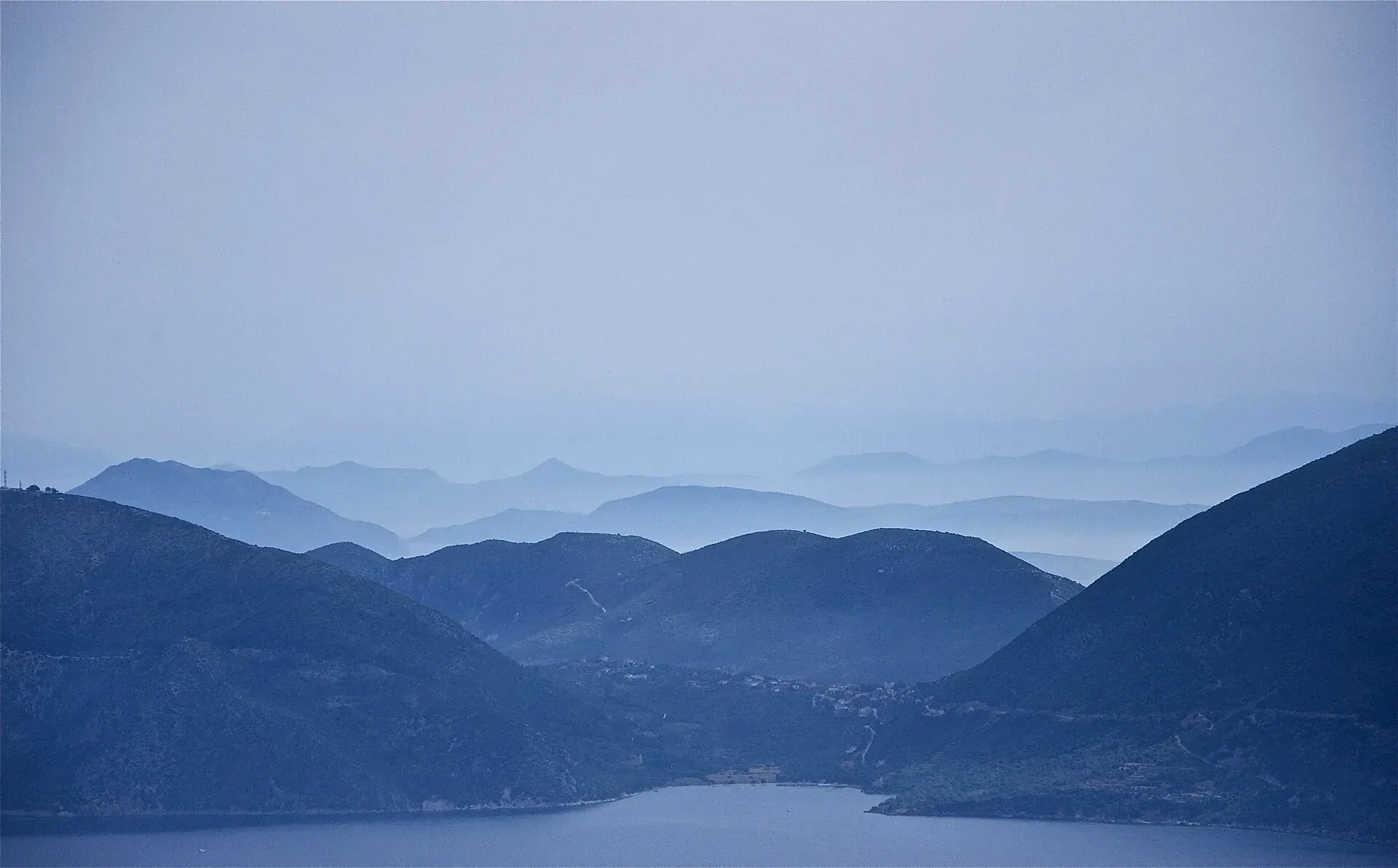
Ithaca owes its fame to a man who perhaps never existed. It is here that Homer places the kingdom of Odysseus, the king who went off to fight at Troy and took ten years to find his island again, along with his wife Penelope and his son Telemachus. The poem may be nearly three thousand years old, yet people still enjoy recognising, or imagining, the places it describes. Scholars still debate whether Homer’s Ithaca is really today’s, and that doubt is part of the journey.
So you should not come here as you would visit a museum. No “site of Odysseus” awaits you, ticket office included. The Odyssey walks along with you instead, in the background, while you follow an olive grove or watch the sun drop behind the mountains of Kefalonia. It is that discreet presence of the myth, mixed with the quiet life of today, that makes the island so endearing.
Vathy, the capital at the end of its gulf
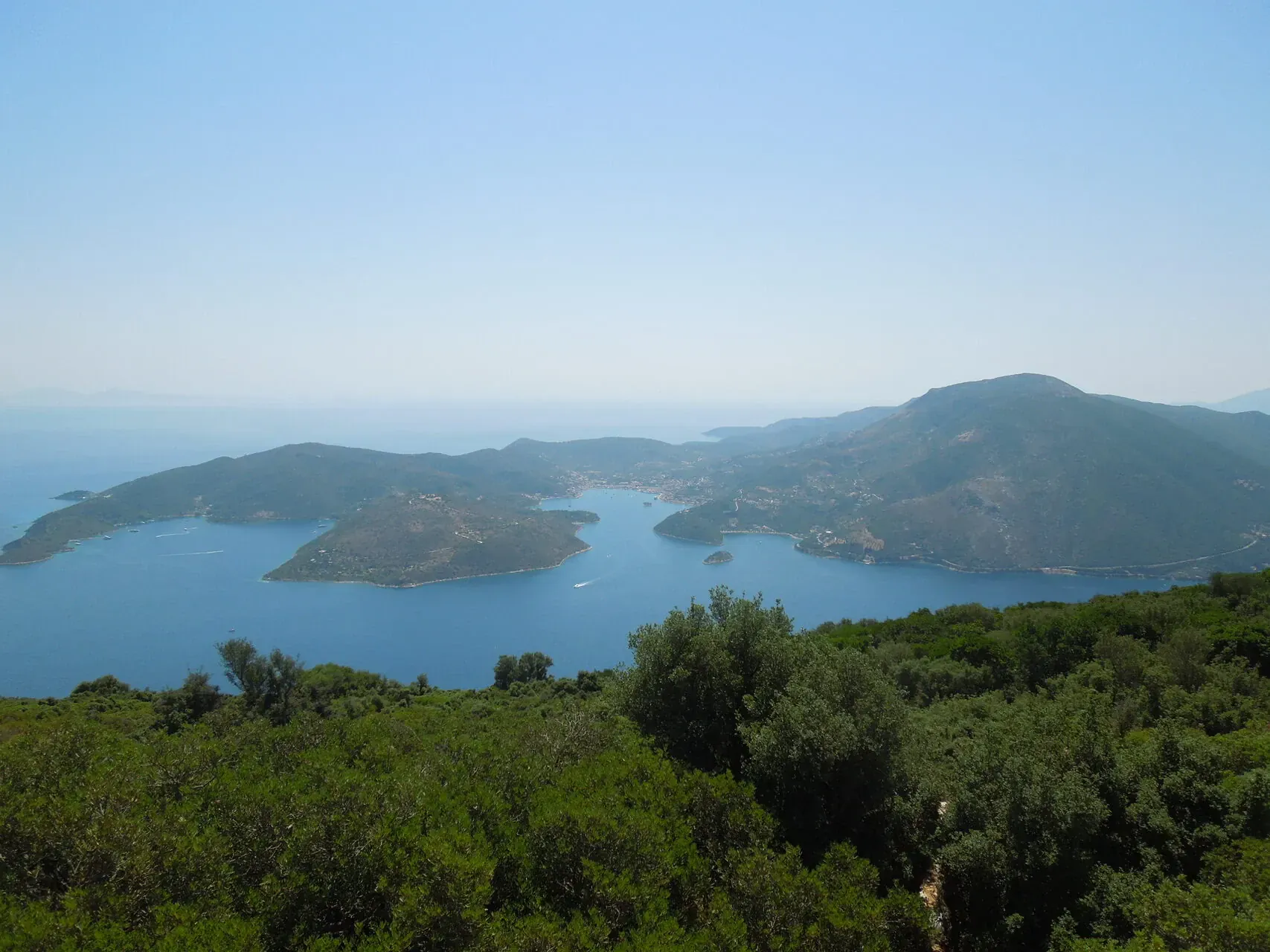
Vathy (the word means “deep” in Greek) is well named: the small capital nestles right at the end of a gulf so well sheltered that you feel as if you were in a large, peaceful swimming pool. The red-tiled houses line up around the harbour, patiently rebuilt after the earthquake of 1953 that shook the whole archipelago. A tiny islet points up in the middle of the bay, just there for the pleasure of the eye.
It is the best base for exploring. You will find there most of the tavernas, the shops and the cafés where you sit down without haste, and several beaches can be reached on foot from the centre. In the morning, the market and the terraces come gently to life. When evening comes, you dine facing the masts, a carafe of local wine on the tablecloth. Nothing is pressing, and that is exactly what you came for.
Kioni and Frikes, the northern harbours
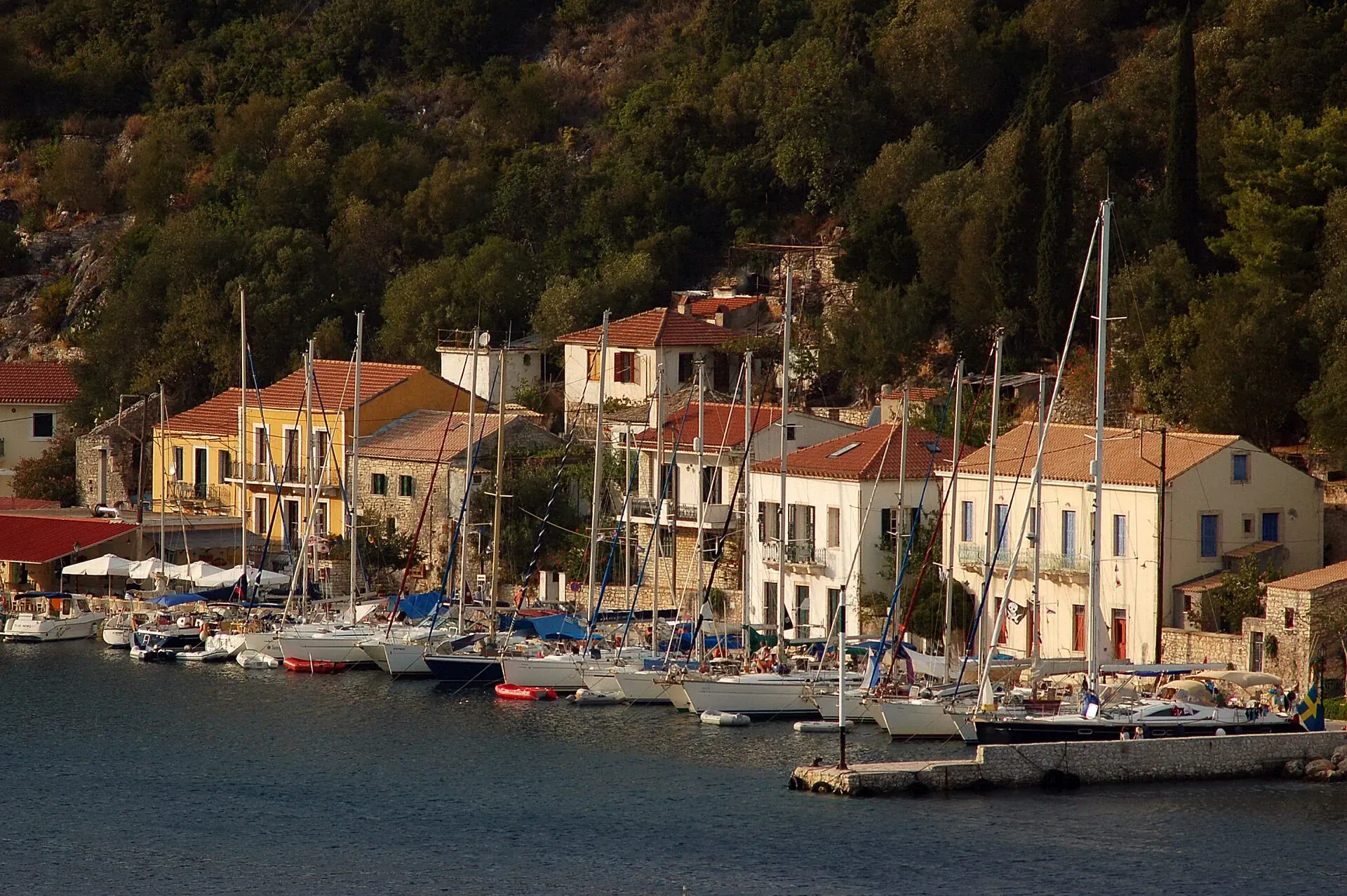
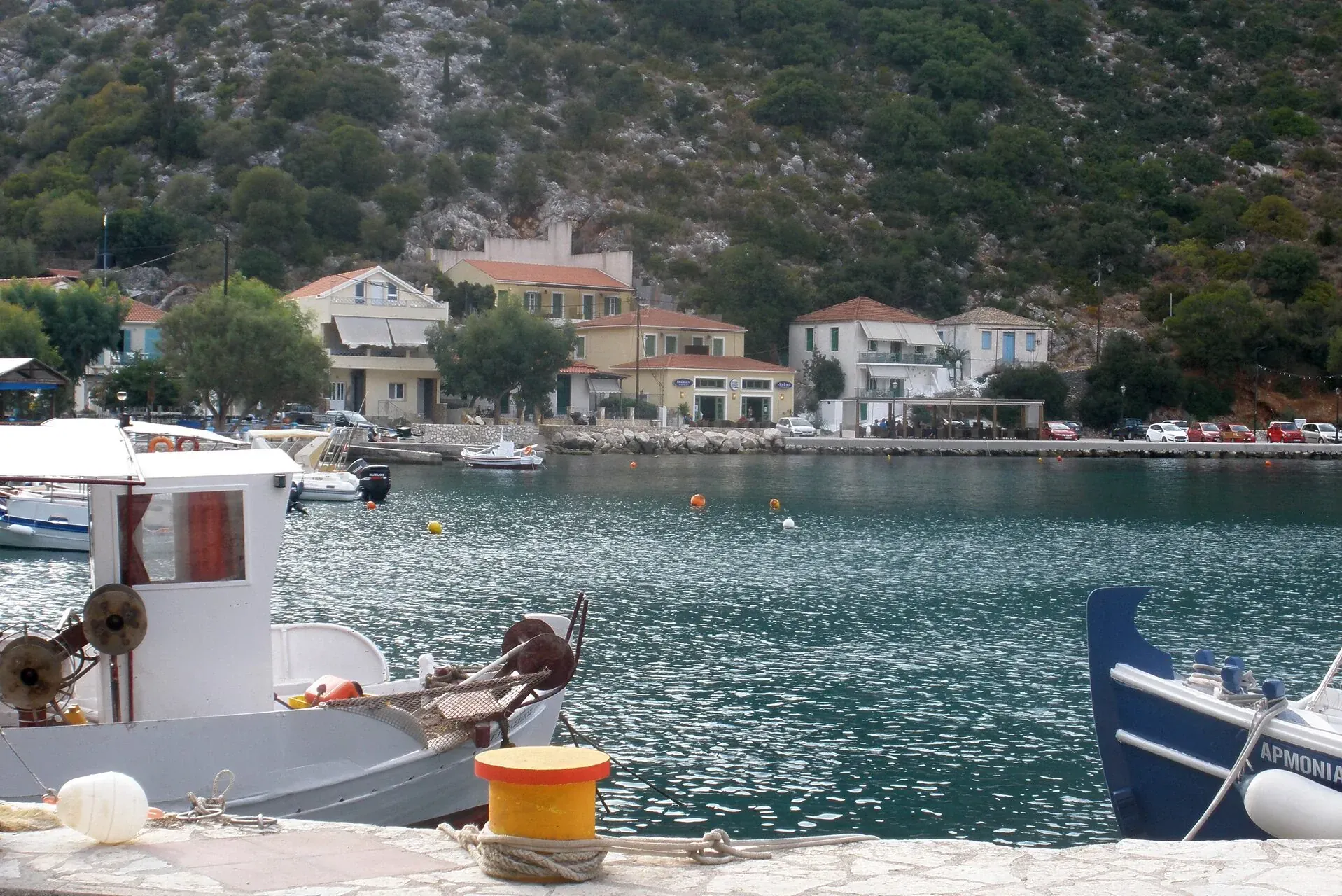
At the other end of the island, the north hides two small fishing harbours you take to at once. Kioni is probably the prettiest village on Ithaca: its stone houses rise in tiers on a green hill, three old ruined windmills watch over the entrance to the bay, and colourful boats rock in front of the tavernas set at the water’s edge. You settle in for lunch with a view over the marina, and find it hard to leave.
Frikes, its neighbour, is more modest and just as sincere. It is from this small harbour that the ferries leave for Kefalonia and Lefkada, which makes it a convenient way in and out. You eat grilled fish at the edge of the quay, watching the boats manoeuvre. Between the two villages, the road winds above translucent coves: take the time to stop at the first one that tempts you.
In the footsteps of Homer
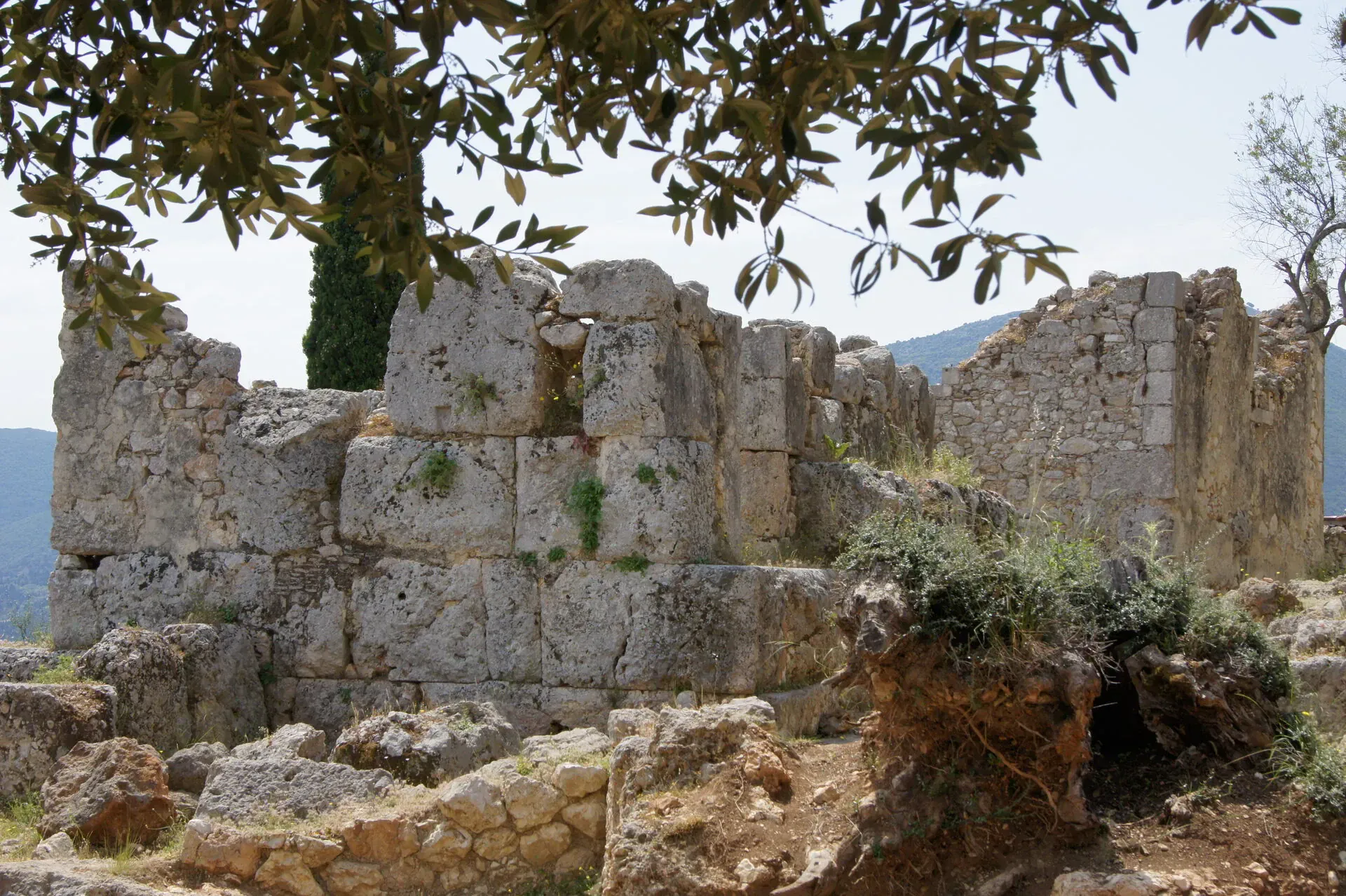
For anyone who likes to let the myth show through, a few places are worth the detour. Above the village of Stavros, in the north, the school of Homer is an excavation site where the remains of a building from the Mycenaean period have been uncovered. Some dream of recognising the palace of Odysseus there; nothing proves it, but the panorama over the northern bays amply rewards the steady climb.
Closer to Vathy, the cave of the Nymphs (the locals call it Marmarospilia) opens its cool shade above Dexa beach. Tradition has it that Odysseus hid there, on his return, the gifts offered by the Phaeacians. Here again, nobody will ask you to believe it: it is enough to enjoy the coolness and the story you tell yourself. The small archaeological museum at Stavros nicely completes the walk for anyone wanting to know a little more.
Anogi and Perachori, the Ithaca of the heights
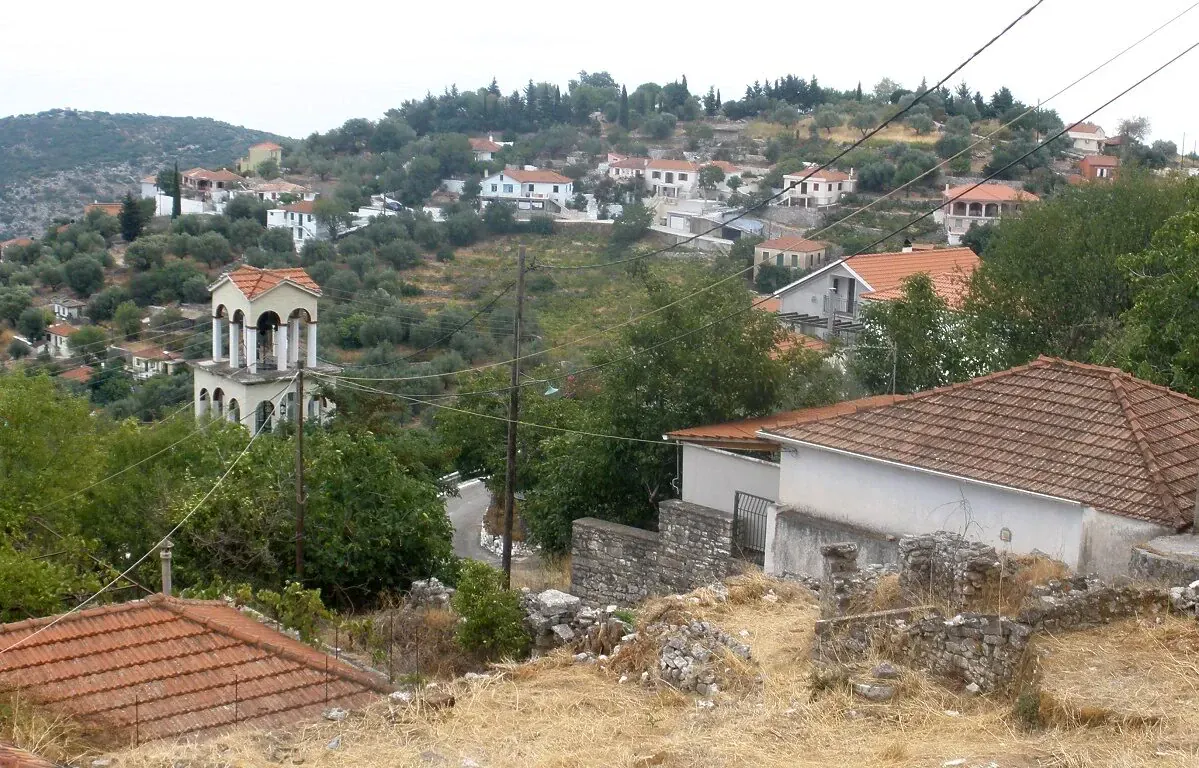
By gaining height, you discover another Ithaca, more secret. Anogi, a former medieval capital almost deserted, clings to the slopes of Mount Niritos, in the north of the island. All around, enormous blocks of white limestone emerge from the scrub, those famous “rocks” of Anogi long taken for prehistoric menhirs. The most impressive, nicknamed Araklis, raises its 9 m just below the village houses. Their origin is in fact geological, but the spectacle remains striking. In the small church of the Panagia hide Byzantine frescoes, and a Venetian bell tower watches over this hamlet outside time.
Further south, Perachori plays the balcony above Vathy. You stop for the view, immense, taking in the gulf and, in clear weather, the coasts of the mainland. A village café is enough for your happiness, especially if you then press on to the ruins of Paleochora, the island’s former capital in Venetian times, today given back to wild grasses and silence.
Discreet coves and very gentle paths
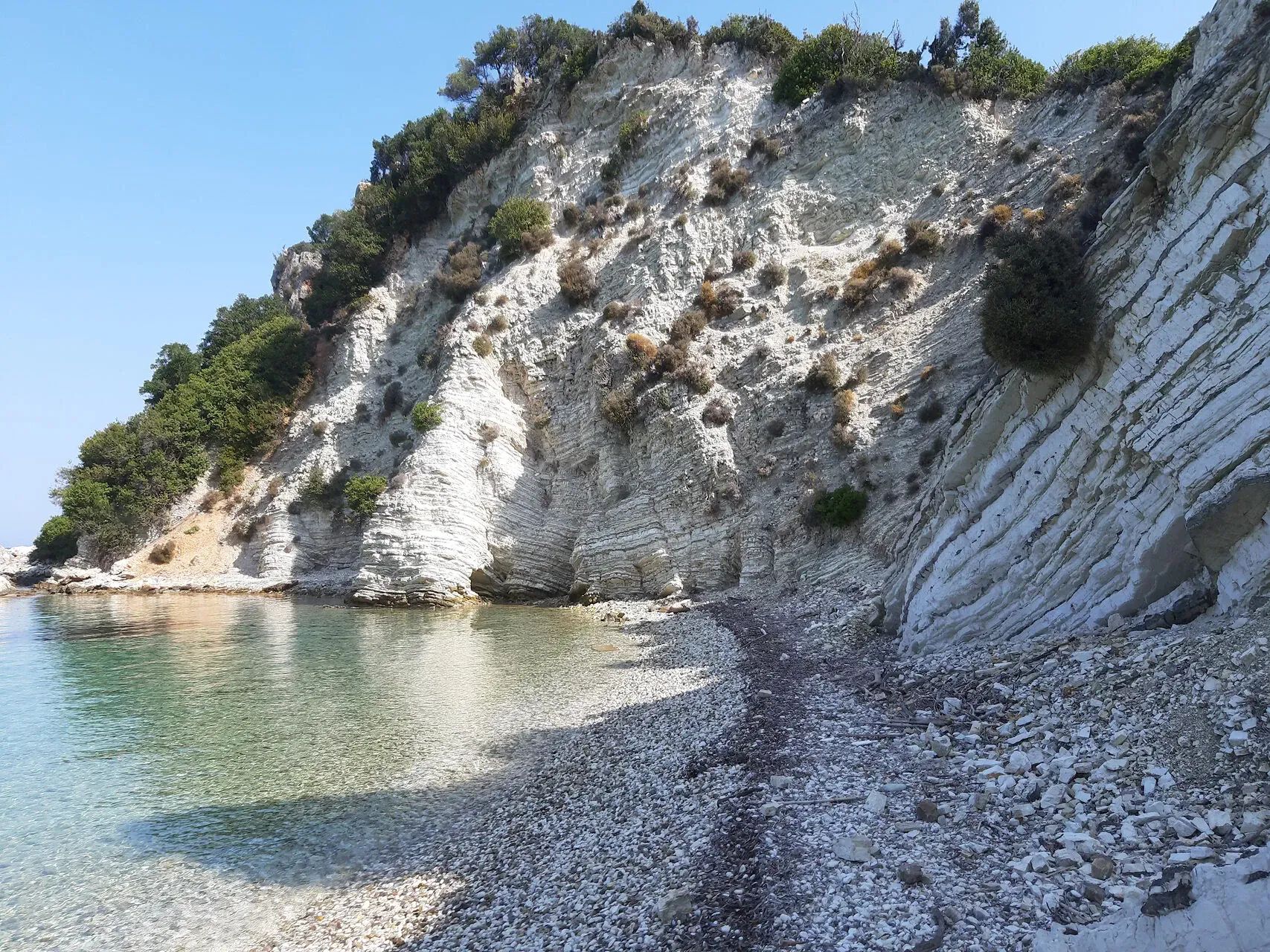
Ithaca rewards those who walk a little, without ever asking too much of them. The island’s finest beach, Gidaki, is earned by a pleasant coastal path starting from Vathy: a long strand of pale pebbles and limpid water, with no road to reach it. If walking only half tempts you, a small kaiki (the local boat) drops you there in a few minutes from the harbour. Close by, the pretty beach of Filiatro, easier to reach, unrolls its arc of pebbles in a setting of greenery.
Everywhere, ancient paths link the villages and the coves between olive trees and cypresses. You move on at your own pace, in the shade in the morning, with the sea appearing at every bend. Take water, a hat and good sandals, and let yourself be carried: here, the aim is never to arrive quickly, but to look properly.
When to come, and how
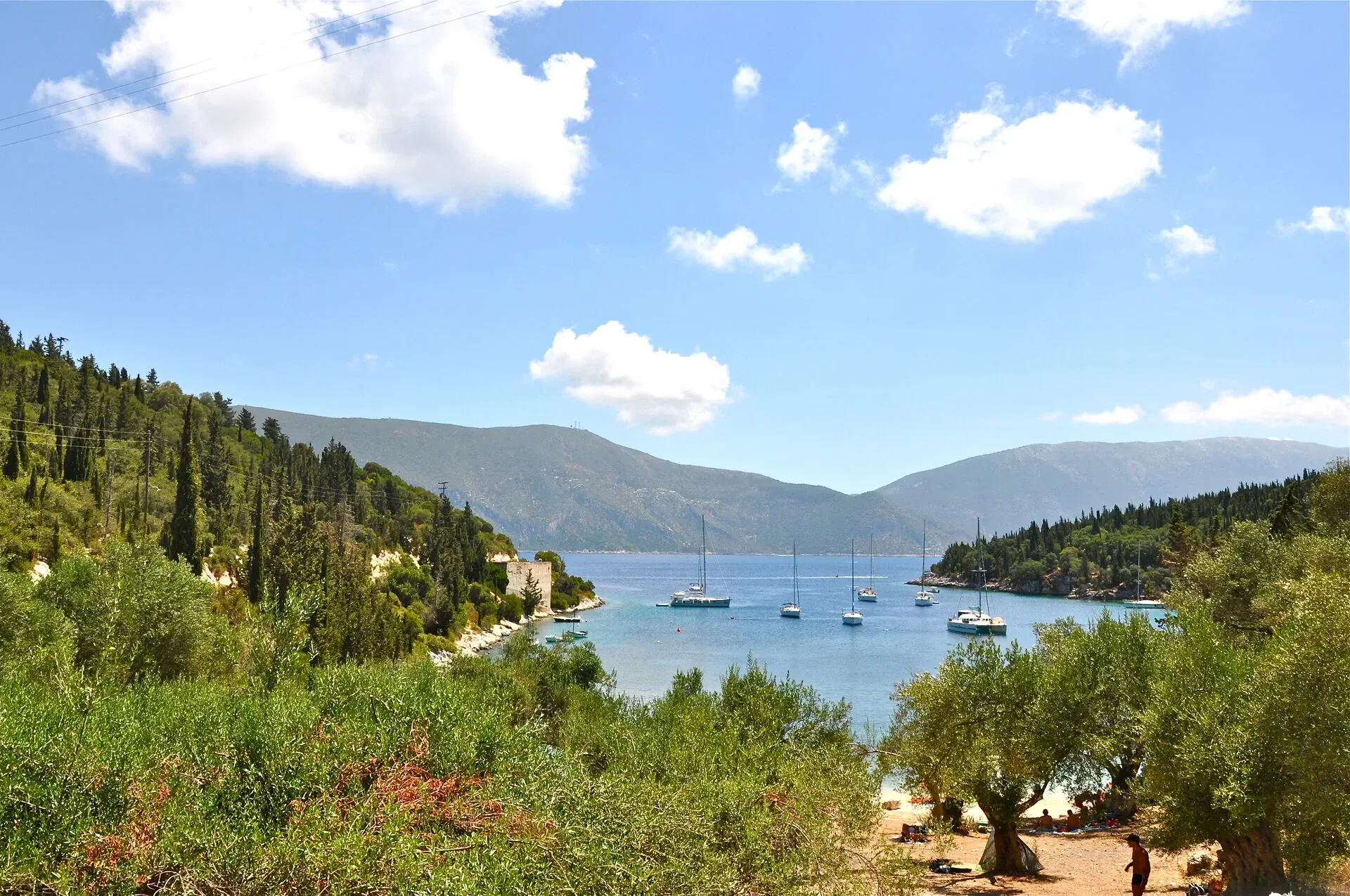
Ithaca is savoured at the end of spring and the beginning of autumn, when the light is soft and the terraces never crowded. May, June, September and early October offer that perfect balance between pleasant warmth and tranquillity. Summer stays beautiful but livelier, especially around the harbours.
Let us be frank: we do not yet offer a Kelifos holiday on Ithaca itself. The island is discovered rather as an interlude, alongside its larger neighbour. From Kefalonia, a ferry sets you down in less than an hour (from Sami to Pisaetos, or from Fiskardo to Frikes in summer), for a long day or one or 2 nights. If you are still hesitating over your anchor point, our comparison Corfu or Kefalonia will help you choose the island that suits you. And to link walking with the pleasure of wide landscapes, take a look at our holiday Kefalonia by bike, self-guided, a lovely way to extend the Ionian escape at your own pace.
Frequently asked questions about Ithaca
How do you get to Ithaca?
Ithaca has no airport, and that is rather the secret of its calm. The simplest is to fly to Kefalonia, its large neighbour, then board a ferry: the crossing from Sami to the port of Pisaetos takes only about twenty minutes. From the mainland, boats also link Astakos to Pisaetos or to Frikes, and the island of Lefkada reaches northern Ithaca in season.
Is Ithaca really the island of Odysseus?
It is here that Homer places the kingdom of Odysseus, but no archaeological proof confirms that today’s island is exactly the one in the Odyssey. Researchers have long debated it, some even proposing that Homeric Ithaca corresponds to the Paliki peninsula, on Kefalonia, an attractive hypothesis but never demonstrated. On the spot, the school of Homer near Stavros and the cave of the Nymphs keep the legend nicely alive, without any “palace of Odysseus” being established.
What is there to do on Ithaca and where can you swim?
You come above all to wander: a coffee on the harbour at Vathy, lunch with your feet in the water at Kioni or Frikes, a climb to the balconies of Anogi and Perachori for the view over the gulf. For swimming, Gidaki beach, a long strand of pale pebbles, is reached on foot from Vathy or by small kaiki; Filiatro, more accessible, and Dexa, at the foot of the cave of the Nymphs, complete the picture. Lovers of ancient memory will press on to the small archaeological museum at Stavros.
Can you combine Ithaca and Kefalonia?
Yes, and it is even the finest way to discover it. Kefalonia holds the airport, the accommodation and the ferry that reaches Ithaca in less than an hour, which makes it the ideal anchor point for an escape of a day or 2 nights on the island of Odysseus. If you are hesitating over your base island, our comparison Corfu or Kefalonia will help you decide.
Your question is not on this list?
Write to us, and we will reply to you personally by email.
Continue reading
- Corfu or Kefalonia: our advice for choosing well
- Which Greek island is right for you? The complete guide
- Hiking in Greece: the best trails island by island
- The Most Beautiful Greek Islands, one for every wish
Article written by
Maria Papadopoulou (Μαρία Παπαδοπούλου)
Editorial lead
I hike, and Greece is the place I keep coming back to. My initial studies (a Master’s in Marketing and a degree in Applied Foreign Languages) taught me how to build an editorial project, and the trails taught me the… Read more