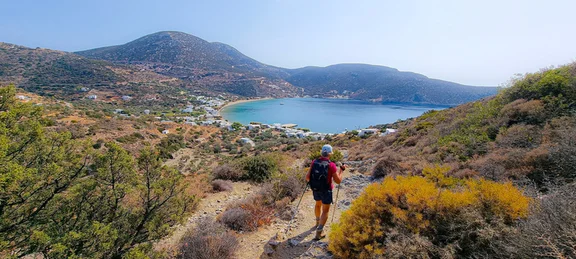
Picture a Greek island dressed entirely in green, where the pines run gently down to the water’s edge and where you dine almost with your feet in the sea. Welcome to Skopelos, the greenest of the Sporades, which has stayed away from the main tourist flows. You may already have glimpsed it without knowing: it was here, on a rock capped with a small white chapel, that the wedding scene of Mamma Mia was filmed.
| In brief | The greenest of the Greek islands, scented with pine, made famous by Mamma Mia and still surprisingly peaceful. |
| Ideal for | Travellers who love nature, authentic villages and quiet swimming, far from the crowds |
| Best season | May to June and September to October: mild sea, paths in flower, golden light |
| Pace | Gentle, at your own speed, between forest, beaches and tavernas |
| Our trip | No Kelifos trip in the Sporades for the moment: a free inspiration page |
The greenest of the Greek islands
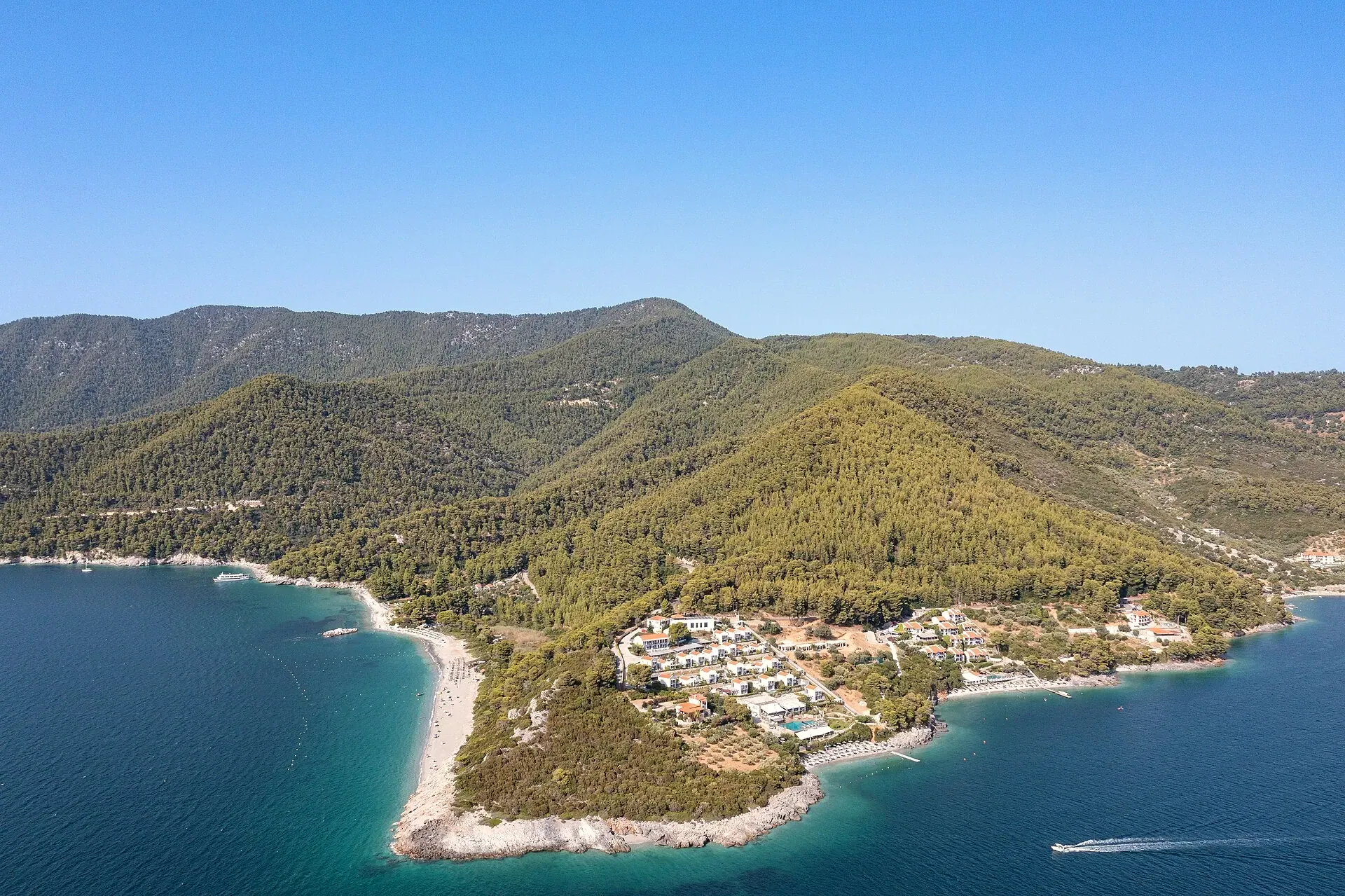
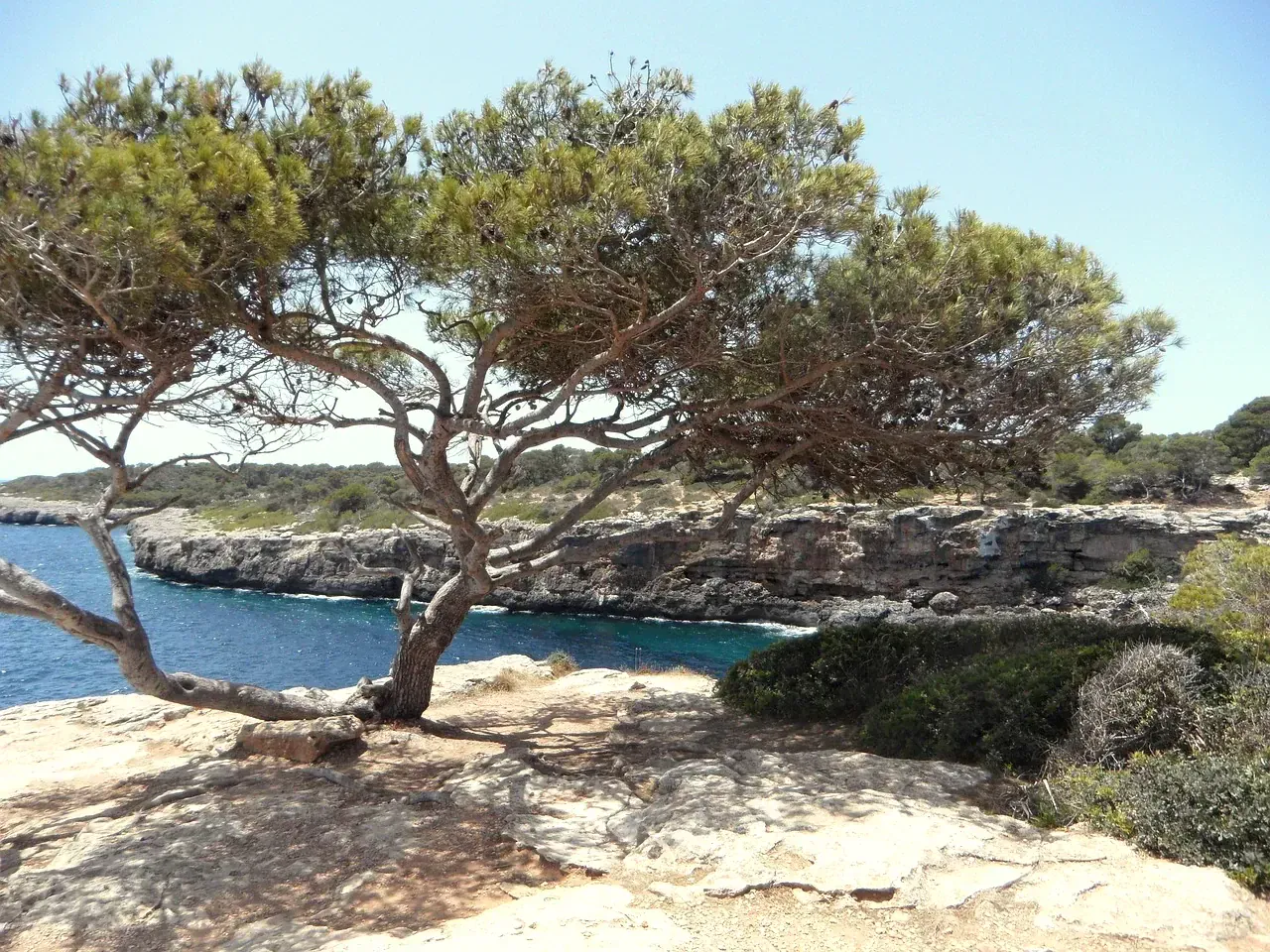
Skopelos belongs to the Sporades archipelago, in the north of the Aegean, a short distance from Skiathos and Alonissos. Where many Greek islands offer dry, mineral landscapes, this one cultivates the exception. A large part of its relief disappears beneath a thick forest of Aleppo pines, which sometimes descends as far as the sand. You walk in the shade, you breathe a smell of resin warmed by the sun, and at the turn of a path the sea appears, deep blue, framed by branches.
This generous nature is no accident. The island has long taken care to preserve its green mantle and the traditional architecture of its villages, with their slate roofs and wooden shutters. The result is a rare gentleness. Very close by, the national marine park of the Northern Sporades, the largest in Europe, protects the waters of Alonissos, one of the last refuges of the Mediterranean monk seal. For anyone still hesitating between the different Greek islands, Skopelos plays a score of its own: that of greenery and calm.
The little chapel of Mamma Mia
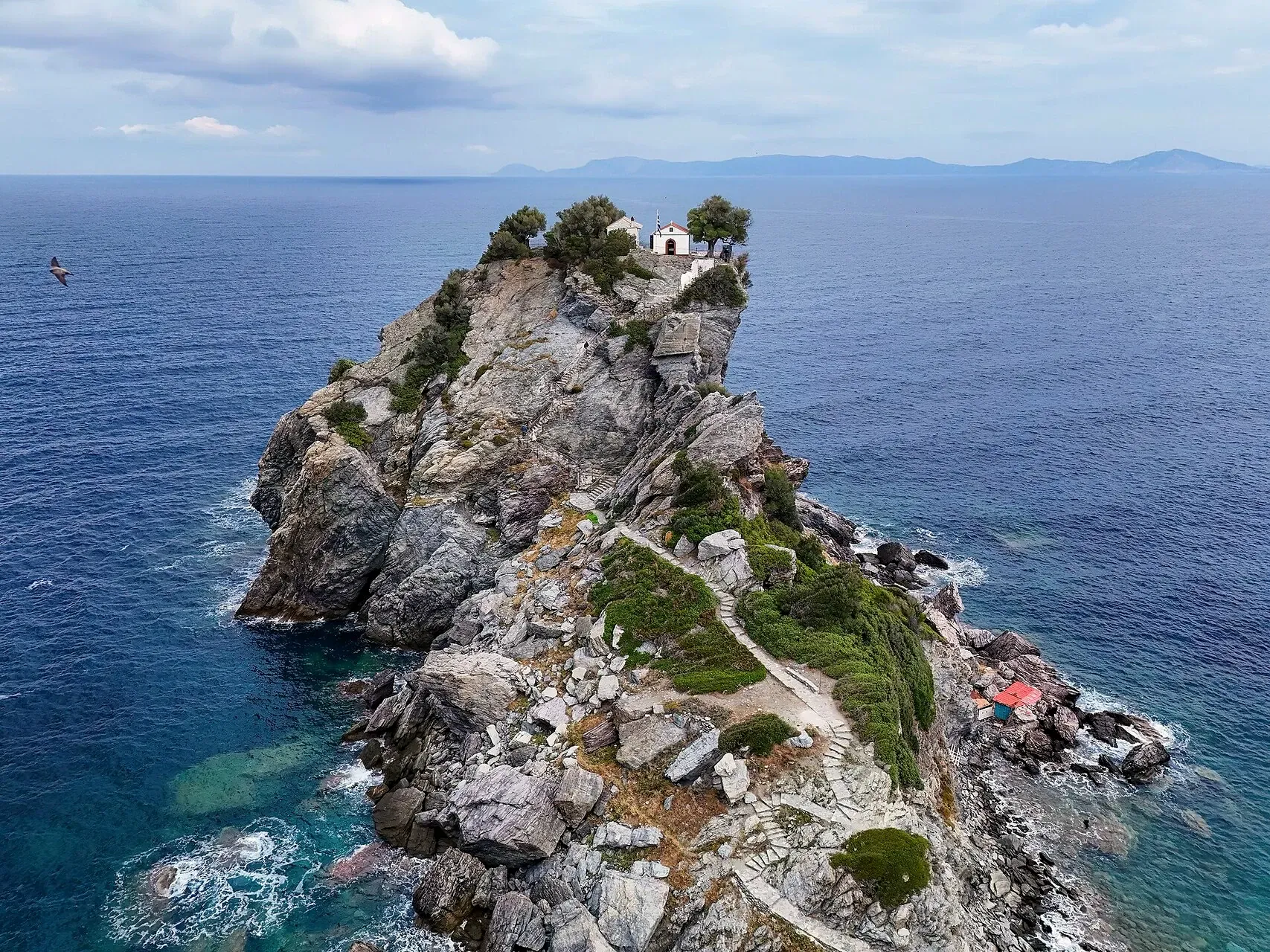
On the north-east coast, a pinnacle of rock springs above the waves, a hundred metres or so high. At its summit, tiny and white, the chapel of Agios Ioannis sto Kastri keeps watch. It is the one that went round the world in 2007, when the film Mamma Mia shot the wedding scene there. A little over a hundred steps cut into the stone climb to the door. The ascent is made quietly, stopping to catch your breath and to look at the green coast plunging into transparent water.
At the top, the view amply rewards every step: the sea as far as the eye can see, the wooded headlands, the silence barely disturbed by the wind. It is a chapel still in use, so you visit with respect. Below hides a small beach where you can cool off after the descent. Even without having seen the film, you quickly understand why this setting won so many people over.
Chora, the white town in an amphitheatre
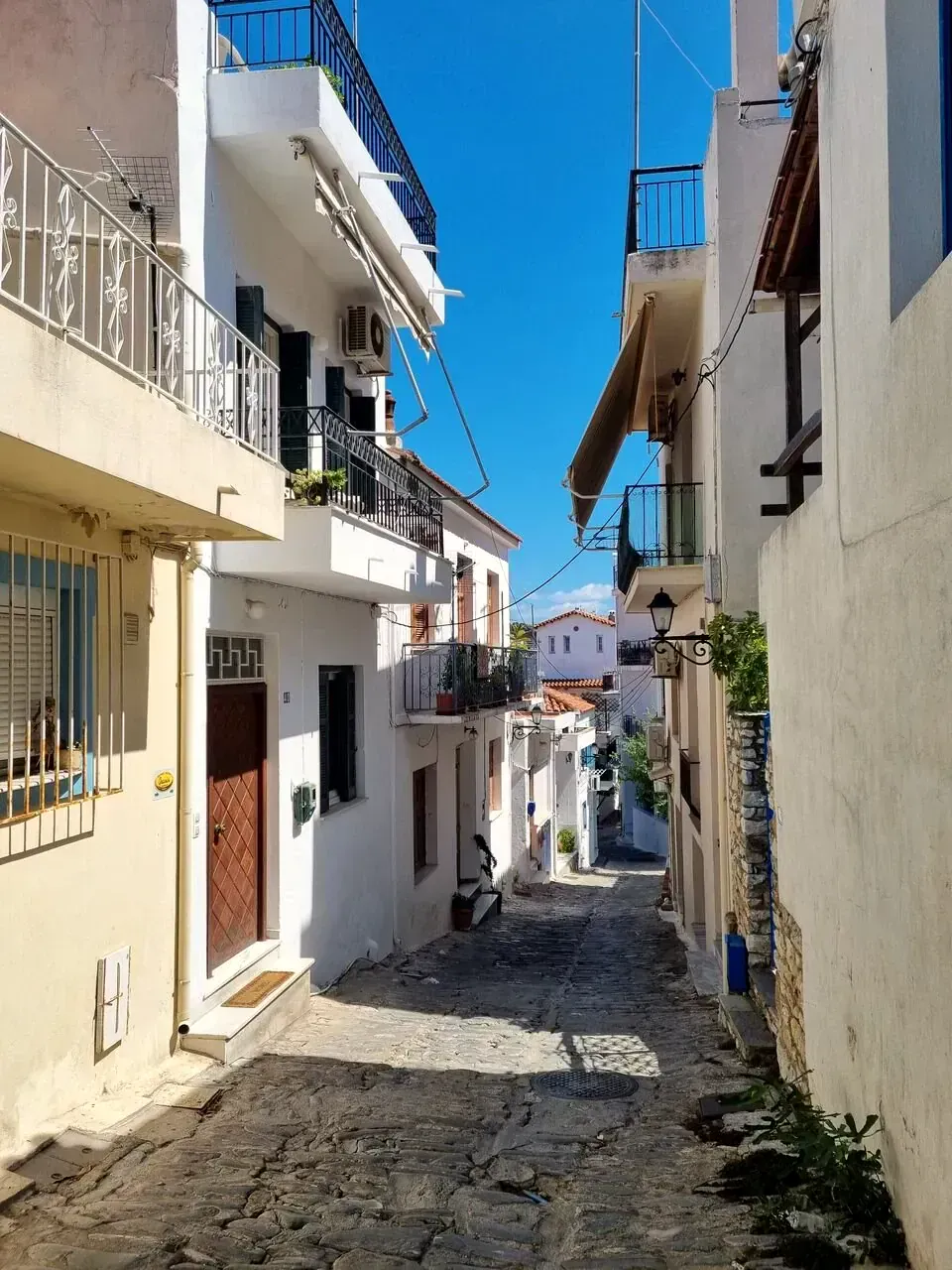
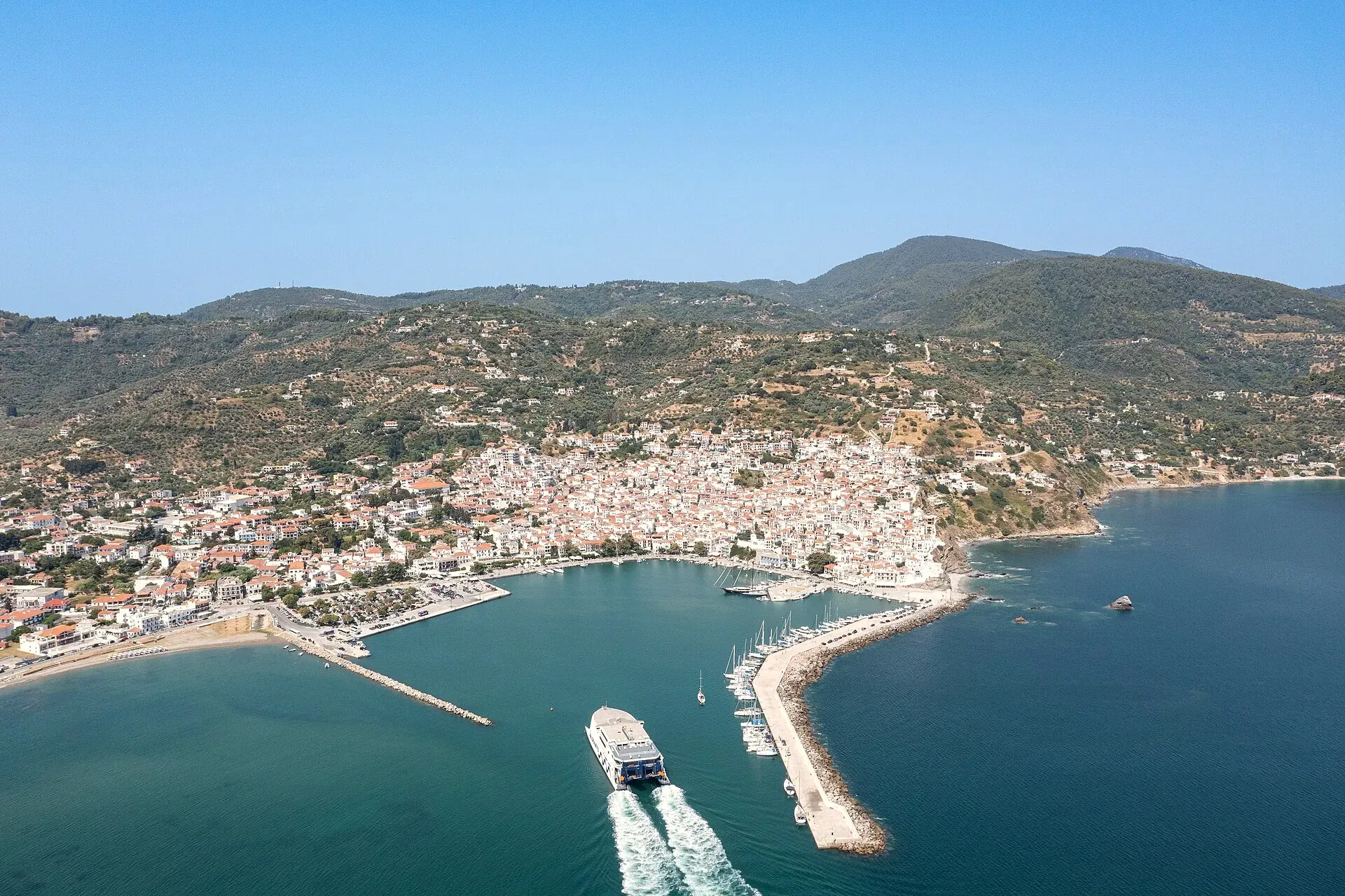
Skopelos town, which the Greeks simply call Chora, rises in an amphitheatre from the old castle, the Kastro, down to the harbour. The white houses press against one another and draw a maze of cobbled lanes where it is good to get lost without a map. There is a profusion of small churches, more than a hundred in the town alone, many tucked between two façades, some of them private.
When evening comes, life gathers on the seafront. You sit at a family taverna, order a meze and a glass of local wine, and watch the fishing boats rock as the light fades. It is the hour of the slow stroll, that moment when the island reveals itself in all its gentleness of living.
Glossa and Loutraki, the balcony of the north
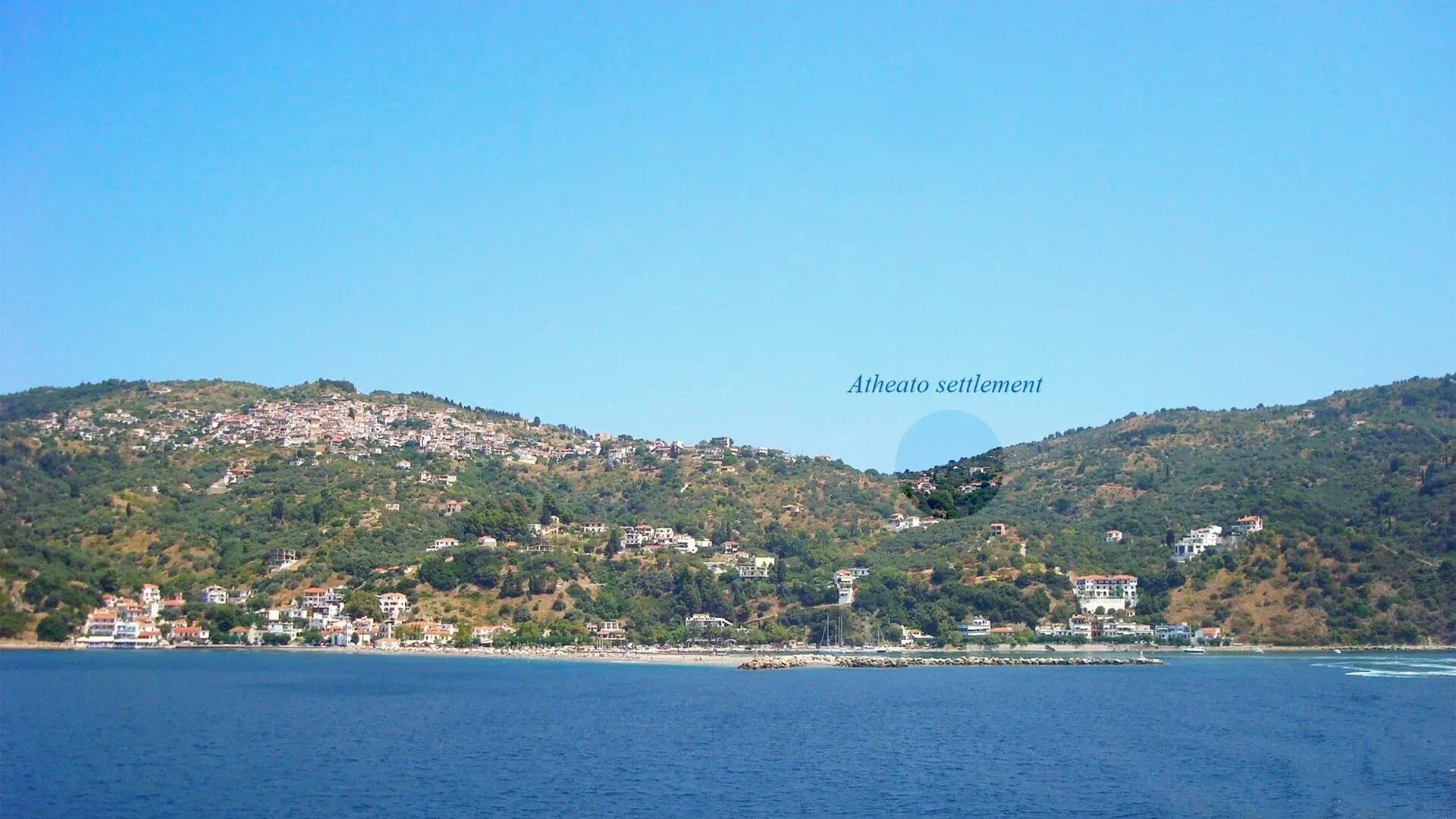
At the other end of the island, Glossa watches over the north-west coast from its hill. The second village of Skopelos, more discreet than Chora, it lines up its stone houses above the small harbour of Loutraki, which serves as its window on the sea. You climb up for the view, especially at the end of the day, when the sun slides behind the wooded hills and sets the bay ablaze.
Glossa keeps an air of the Greece of former times: quiet terraces, cats in the sun, a few ouzeris where you nibble small dishes facing the open sea. Going down to Loutraki, you find the water again, the boats and a handful of tavernas almost in the waves. The contrast between the perched village and its harbour below makes all the charm of this corner of the island.
The beaches hidden beneath the pines
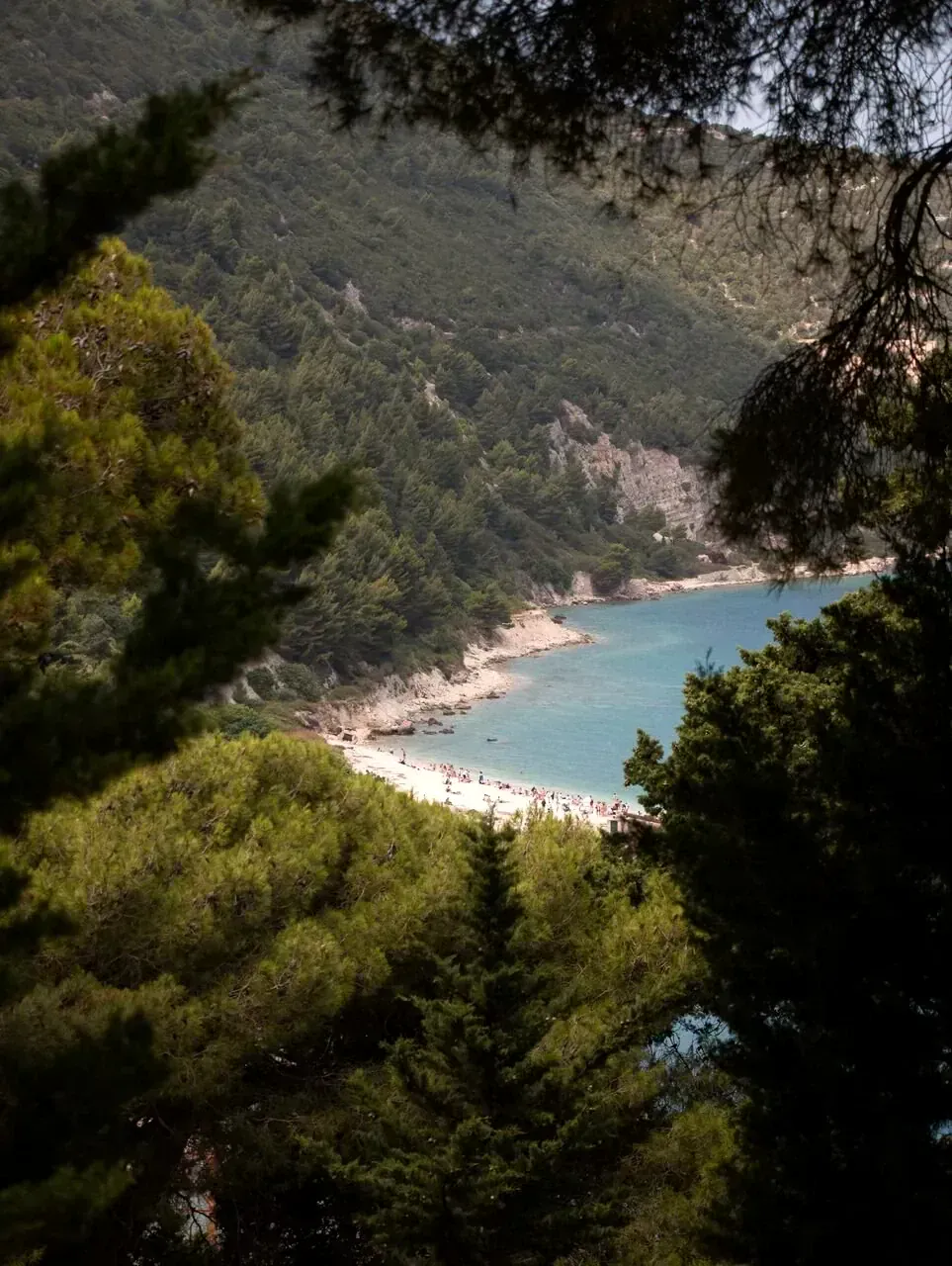
What makes the beaches of Skopelos so particular is that forest which borders them and comes down to the water. In the south, a few minutes from Chora, Stafylos unrolls a cove well protected from the wind, with limpid water, appreciated by families. On the west coast, Kastani displays the pale pebbles and turquoise water made famous by the filming of Mamma Mia.
Just next door, Milia is often the favourite: a long beach facing the wooded islet of Dasia, where the pines almost touch the sea. Further south, Panormos occupies a large sheltered bay, well equipped with tavernas and sun loungers for those who like to spend the day at the water’s edge. If you like collecting these discreet coves, our tour of the most beautiful beaches in Greece will give you other swimming ideas.
The monasteries of Mount Palouki
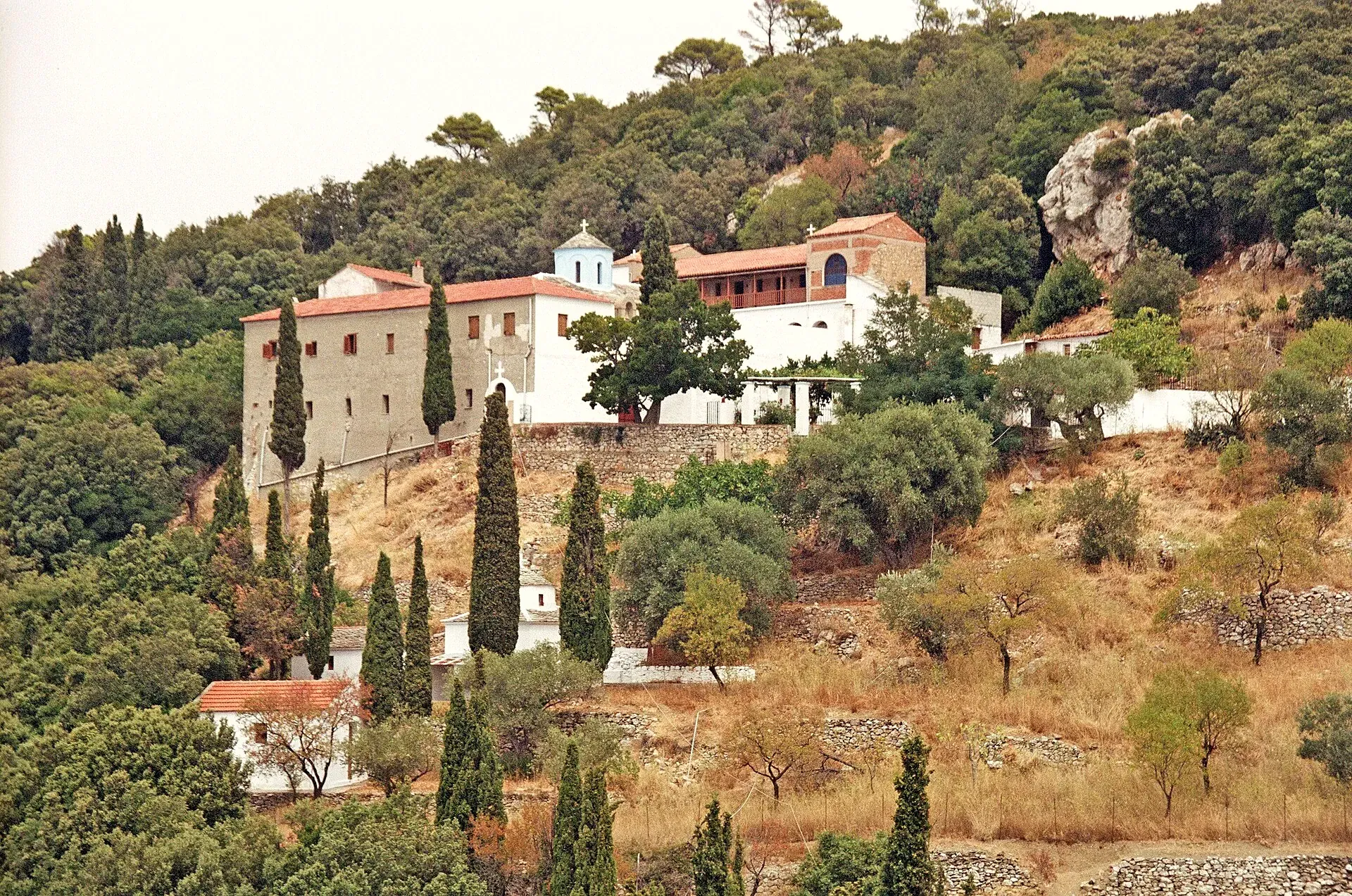
Above the harbour of Chora rises Mount Palouki, whose slopes shelter several monasteries set like sentinels. The best known, the monastery of the Evangelistria, was built in 1712 and still has the look of a small fortress, a legacy of the days when pirates prowled these coasts. From up there, the eye takes in Chora and the bay. The road linking these sanctuaries is covered at your own pace, stopping to enjoy the panorama and the coolness of the pines.
At table: the famous plums of Skopelos
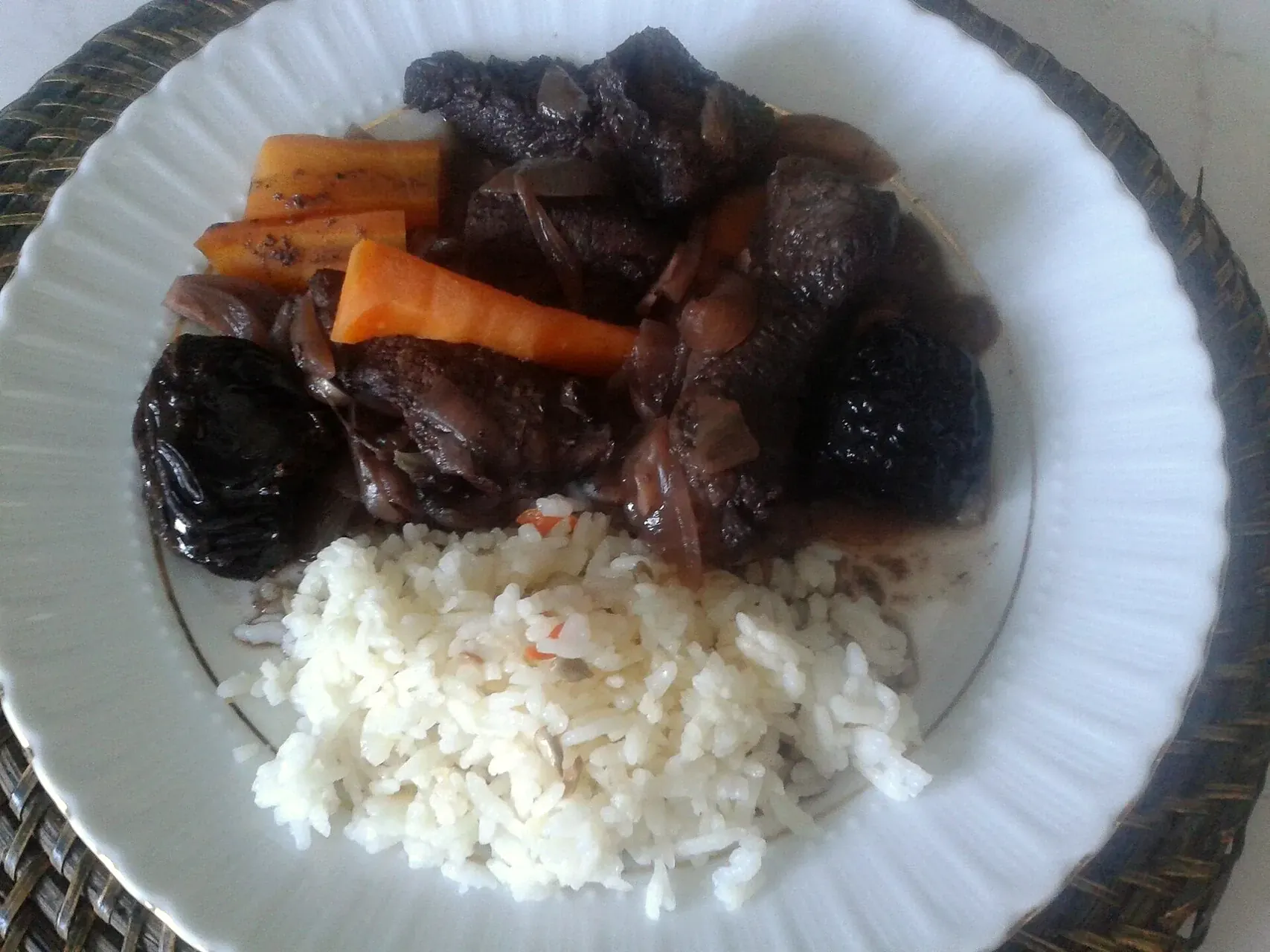
You do not leave Skopelos without having tasted its plums. The island has grown them for more than two centuries and has made them a real signature. You find them dried, in jams, in liqueur, but also cooked with meat for simmered dishes full of character. The spoon sweet prepared from the small avgato plums, served with a coffee, remains a gourmet memory hard to forget.
The other treasure of the local table is a cheese pie rolled into a spiral, browned in a pan in olive oil rather than in the oven. Add to that a fragrant honey, almonds, the island’s cheese, and you have enough to draw out a lunch in the shade for a long time. That too is the Greek art of living: taking the time to savour.
When to come, and how to get there
Skopelos is tasted in spring and in autumn, when the heat stays mild and the paths cover themselves in flowers. May and June offer brilliant nature and a sea already pleasant, September and October water still warm and golden light. Summer marks the busy period, especially around the cinema beaches, but the island stays far more peaceful than its Cycladic neighbours.
As the island has no airport, you reach it by boat. The simplest is to get to Skiathos by plane, then board for a short crossing. From the mainland, ferries also leave from Volos and from Mantoudi, on the island of Euboea. This little detour by sea is part of the journey: you arrive at Skopelos gently, by water, as is only right.
Skopelos with Kelifos?
Let us be honest: Kelifos does not yet offer a walking trip in the Sporades. This page is therefore a free invitation, to dream and to prepare a stay in your own way. If the urge to walk in Greece takes hold of you, our gentle paths for now pass through the Cyclades, Corfu and Crete. And to refine your choice, let yourself be guided by our selection of the most beautiful Greek islands, where each island answers a different wish. Skopelos, for its part, will stay in a corner of your mind: the green one, the discreet one, the one that smells of pine and plum.
Frequently asked questions about Skopelos
How do you get to Skopelos?
Skopelos has no airport, so you reach it by sea. The simplest way is to fly to Skiathos, the nearest airport, then board for a short ferry crossing. From the mainland, boats also link the island from Volos and from Mantoudi, on the island of Euboea. This final approach by water is fully part of the journey.
Where were the Mamma Mia scenes on Skopelos filmed?
Two settings on the island became famous thanks to the film. The wedding scene was filmed at the chapel of Agios Ioannis sto Kastri, perched on its rock above the sea, on the north-east coast. Several musical scenes were shot at the beach of Kastani, on the west coast, where the pines come down to the turquoise water.
What is there to do on Skopelos in a few days?
A few days are enough to taste the best of the island at your own pace. You wander in the white lanes of Chora, treat yourself to swims in the pine-lined coves, climb up to see the monasteries of Mount Palouki for the panorama, and make your way up to the little Mamma Mia chapel. All of it broken up by long pauses in a taverna, facing the sea.
Your question is not on this list?
Write to us, and we will reply to you personally by email.
Article written by
Maria Papadopoulou (Μαρία Παπαδοπούλου)
Editorial lead
I hike, and Greece is the place I keep coming back to. My initial studies (a Master’s in Marketing and a degree in Applied Foreign Languages) taught me how to build an editorial project, and the trails taught me the… Read more