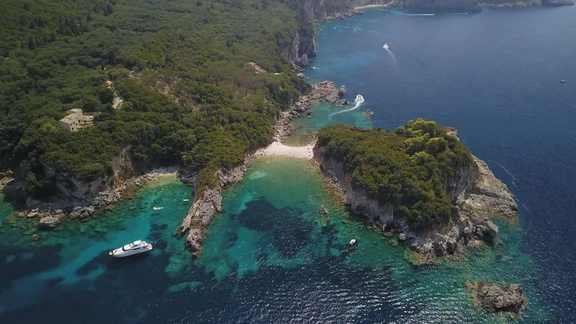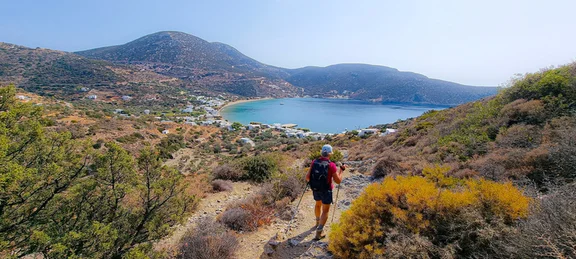


200 inhabited islands, flavours that change from one harbour to the next, and always the same hesitation at the moment of booking. To choose well, forget for a moment the ranking of the most beautiful: the best island does not exist in the absolute, it exists for you. An island is chosen the way you choose a pleasure. Do you feel like perched villages where time slows, turquoise coves for an end-of-day swim, a table where you taste a farm cheese with a hazelnut note? Knowing which Greek island to choose means first knowing what makes you dream. Since 1983 we have been putting together walking holidays in these archipelagos, and this guide gathers what forty years of paths have taught us: to each mood, its island.
| In brief | The best Greek island does not exist in the absolute: you choose it according to your mood of the moment. |
|---|---|
| Ideal for | First time: Naxos or Corfu. Quiet: Corfu, the Mani. Authenticity: Amorgos, Serifos, Kythira. Food: Sifnos, Crete. Beaches: Milos, Crete. |
| Best season | April to June and September to the end of October (flowering paths in spring, warm sea and golden light in autumn). |
| Pace | Gentle, at your own rhythm: you link two villages, stop at a chapel, drop down to a cove. |
| Our destinations | Cyclades, Ionian Islands, Crete, Peloponnese. |
The Greek archipelagos at a glance
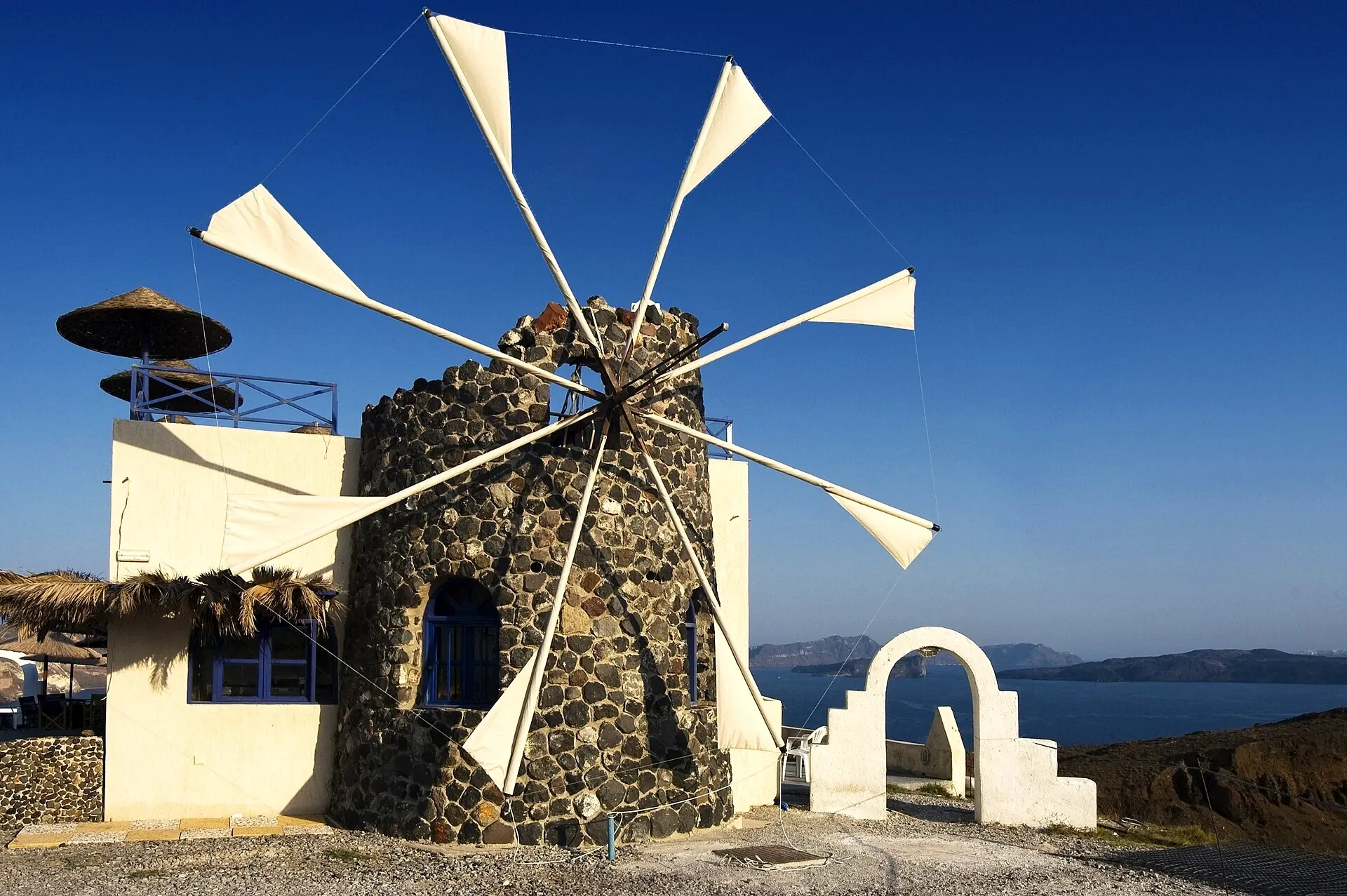
Greece reads like a menu of moods. Each archipelago has its own light, its own terroir, its own tempo. Before going into detail, here are the great families.
The Cyclades are the Greece of postcards: white houses, blue domes, kalderimia (those marble-paved paths) that have linked the villages for centuries. Naxos, Paros, Sifnos, Milos, Amorgos, Serifos, Tinos and Andros make up an archipelago where you move easily from one island to the next by ferry.
The Ionian Islands, to the west, surprise you with their greenery. Corfu, Paxos, Kefalonia and discreet Kythira unfold olive groves, cypresses and deep green waters, under a Venetian heritage visible everywhere.
Crete is a world in itself, almost a continent. Gorges, mountain plateaux, a wild south coast and one of the most generous cuisines in the Mediterranean: you always come back.
The Peloponnese, a peninsula attached to the mainland, mixes ancient theatres, tower villages of the Mani and coastal paths. It is not an island, but the spirit of the journey is the same.
Further east, the Dodecanese (around Karpathos) keeps traditional villages of rare authenticity. We might also mention Santorini or Rhodes, famous but which we happily leave to others: our favourite paths run elsewhere.
For a first time in Greece
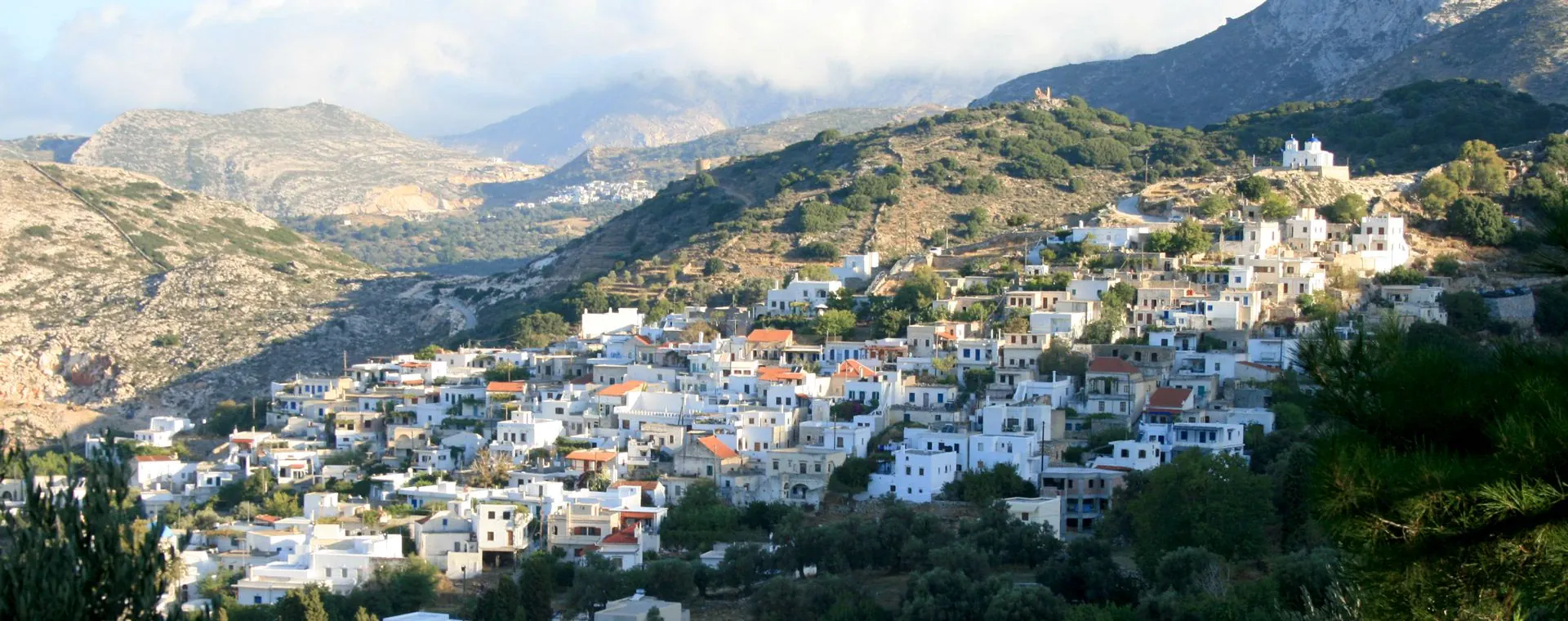
If this is your first walking trip in the islands, better a destination that offers everything without imposing anything: villages that come alive in the evening, easy paths in the morning, beaches in the afternoon, and enough to eat like royalty.
Naxos ticks every box. The largest of the Cyclades is also the greenest and the most complete: a lively capital with its Portara standing against the sunset, mountain villages linked by old marble paths, long sandy beaches to the south. You taste the local potato, graviera matured for several months, and kitron, that citron liqueur distilled at Halki since 1896. To discover the island, read our guide to the best hikes in Naxos.
Corfu is the other fine way in, especially for anyone who likes greenery and comfort. The most Venetian of the islands combines a UNESCO-listed old town, accessible coves and tavernas where you sit down almost with your feet in the water. Our holiday Corfu, the Emerald Isle gives a fine taste of it, at your own pace.
For walking quietly, on gentle paths
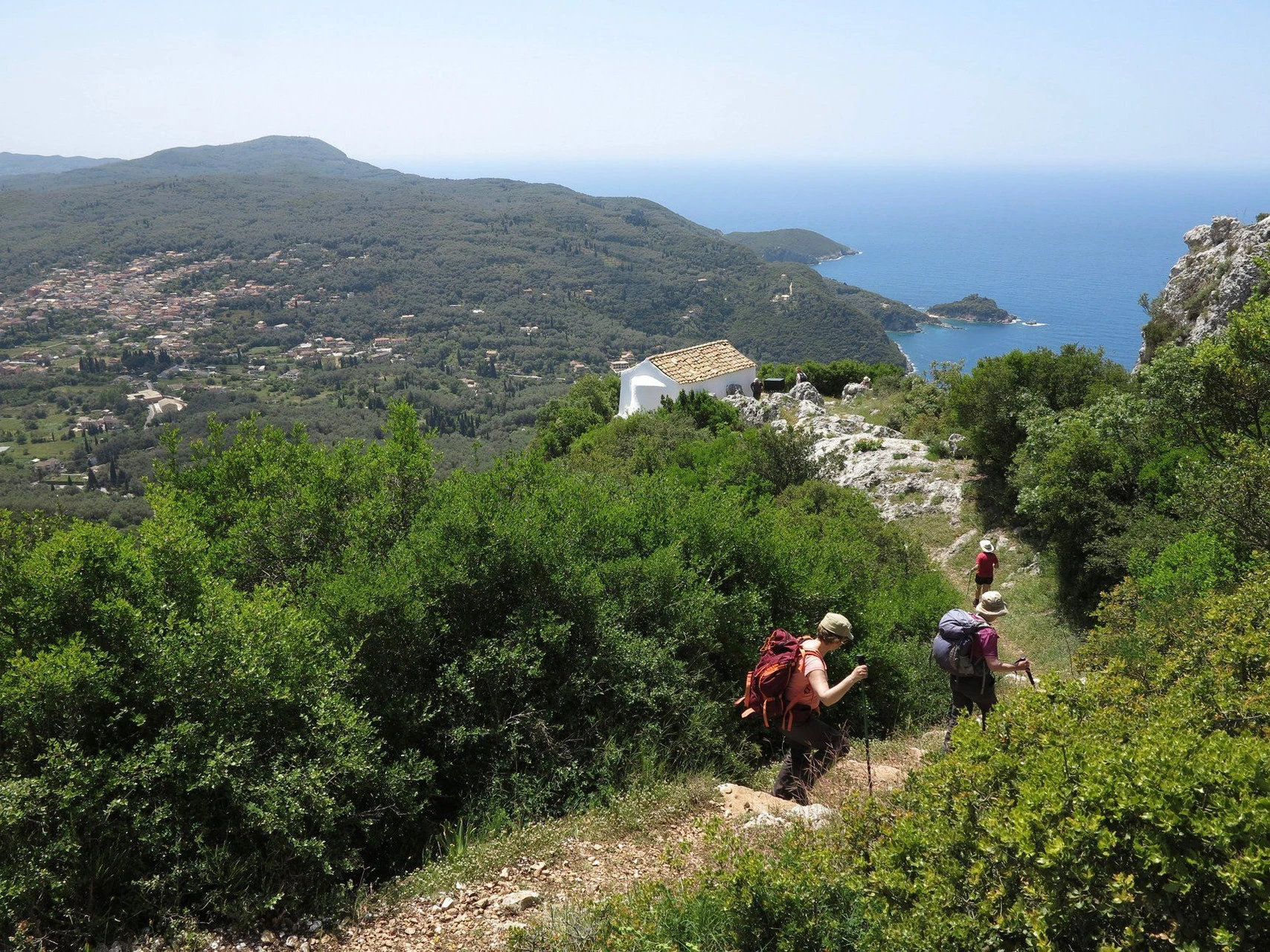
Walking in Greece is not about aiming for a summit, it is about linking two villages, stopping in front of a chapel, dropping down to a cove. Some islands lend themselves to it better than others, with shaded paths and forgiving terrain.
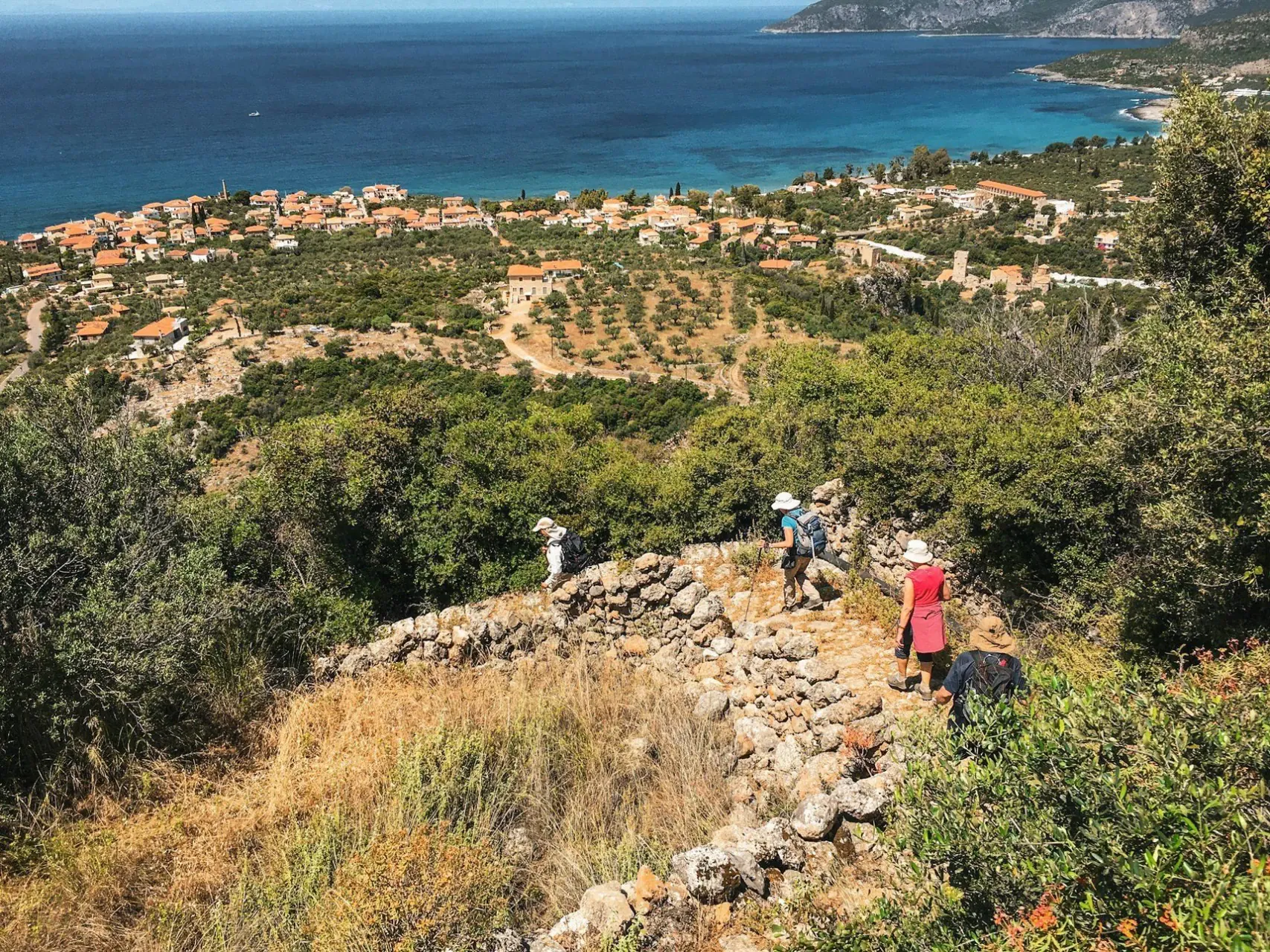
Corfu remains a safe bet: the north-east coast, from Kassiopi to Kouloura, unrolls an almost level path between maritime pines and pebble beaches. Paros offers the Byzantine path paved with marble that links Lefkes to the coast, a simple and perfect walk. And the Peloponnese, on the Mani coastal path between Kardamyli and Stoupa, offers a walk overlooking the sea, punctuated by coves where you can dive in, with pauses as long as you like.
On all our formulas, your luggage awaits you on arrival, the stages keep to a gentle rhythm, and route notes guide you from one halt to the next. You have only to enjoy the way.
To escape the crowds and look for authenticity
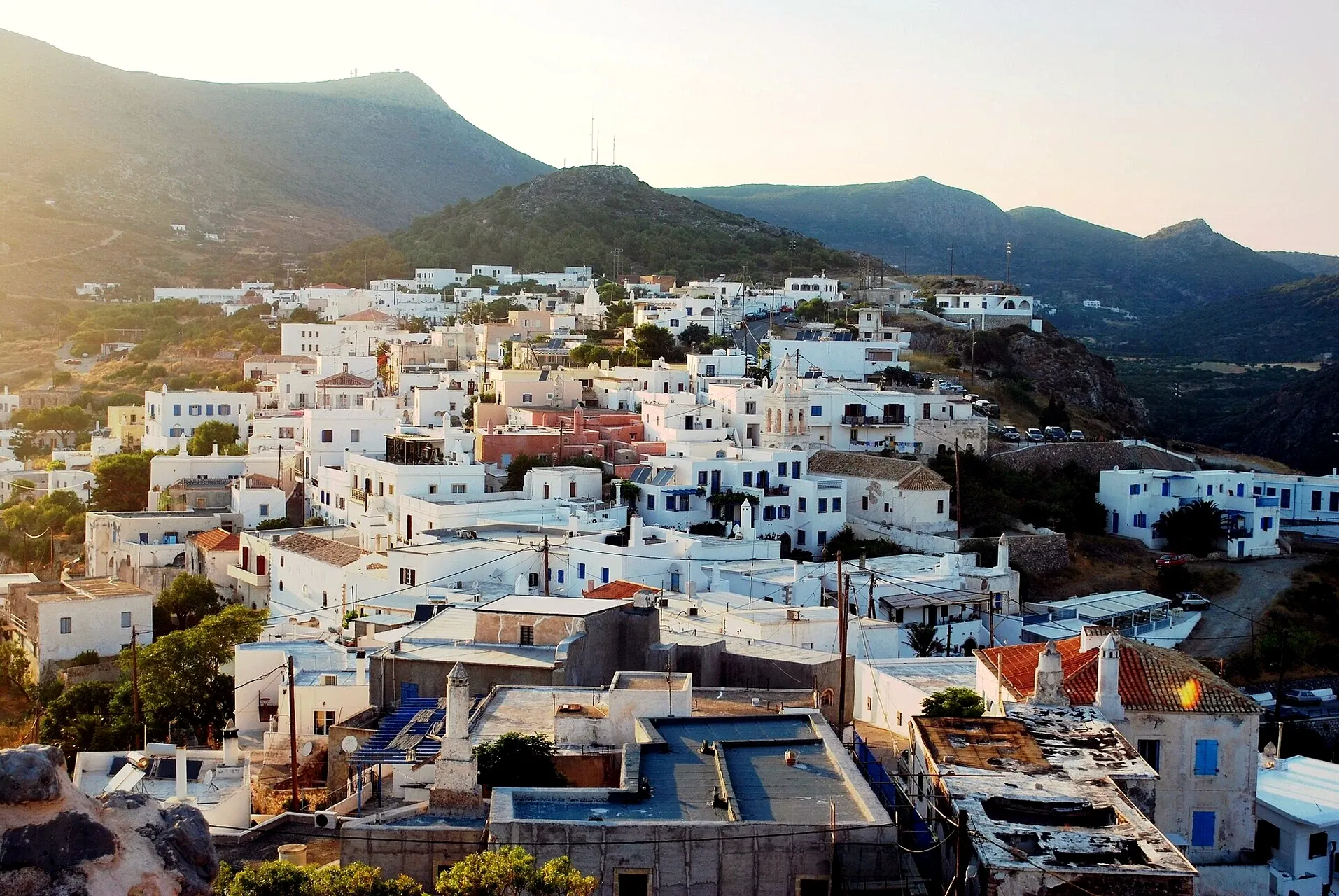
Some islands have to be earned a little, and that is their whole charm. Fewer people, more silence, that rare feeling of having a shore to yourself.
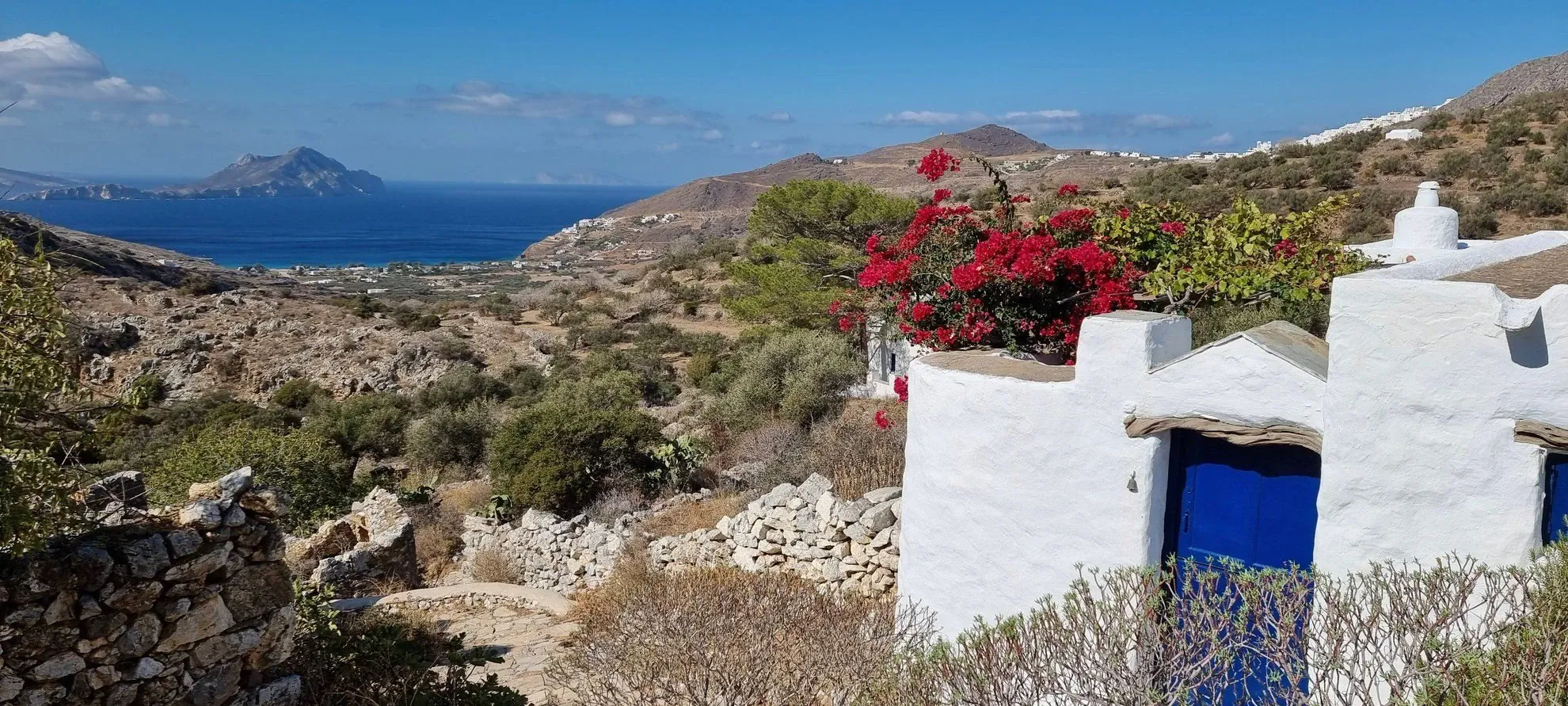
Amorgos, the wildest of the Cyclades we visit, raises its abrupt outline and its monastery of Panagia Hozoviotissa clinging to the cliff. You walk there in an inhabited silence, between sky and sea. Our trip Naxos and Amorgos pairs the generous with the contemplative.
Serifos, more secret still, terraces its olive groves against the deep blue of the Aegean. Kythira, set between the Peloponnese and Crete, stays off the circuits: green gorges, Byzantine villages, deserted beaches. It is the island for those who have already seen the others and are looking for something else. And in the Peloponnese, Arcadia and the Lousios gorges offer a mountain Greece that few travellers suspect.
For food and villages of character
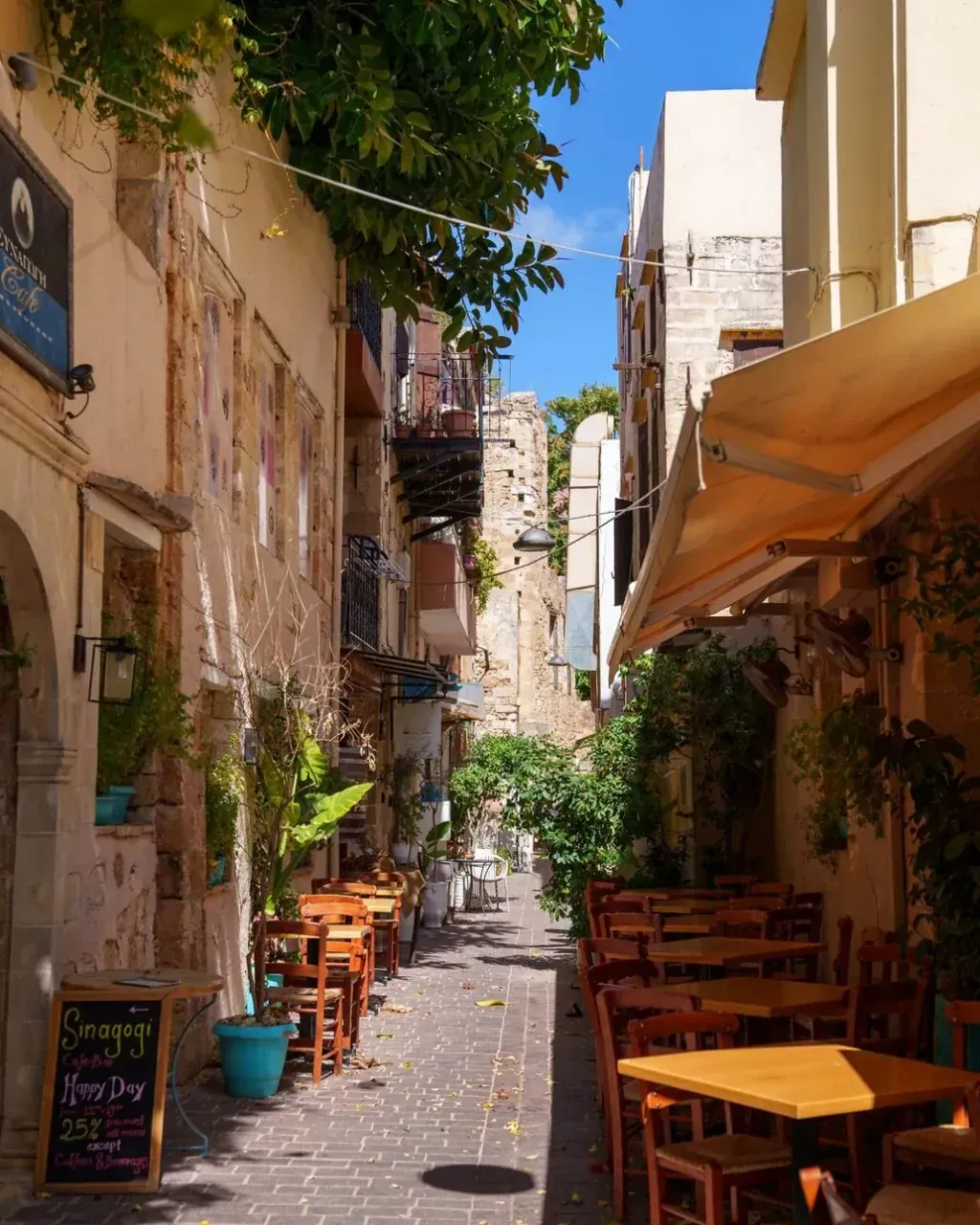
In Greece, the path always leads to a table. But for epicureans, some destinations are worth the detour for the plate alone.
Sifnos is the island Greek gourmets recommend first. Culinary capital of the Cyclades, it has raised country cooking to the rank of an art: revithada, a chickpea stew simmered all night in an earthenware oven, is its emblem. A network of waymarked paths among the most extensive in the Cyclades, more than 100 km, links its immaculate villages, its pottery workshops and its chapels set at the sea's edge. Our holiday Sifnos, Milos and Kimolos reveals all its richness.
Crete plays in another category: generous olive oil, sheep's cheeses, wild herbs from the maquis, raki offered as a sign of welcome. Its cooking is perhaps the most authentic in the whole Mediterranean, and its Venetian towns (Chania, Rethymno) are among the finest in the country. The holiday Crete, the fantastic voyage sets the tone, with a passionate guide.
For turquoise sea and beaches
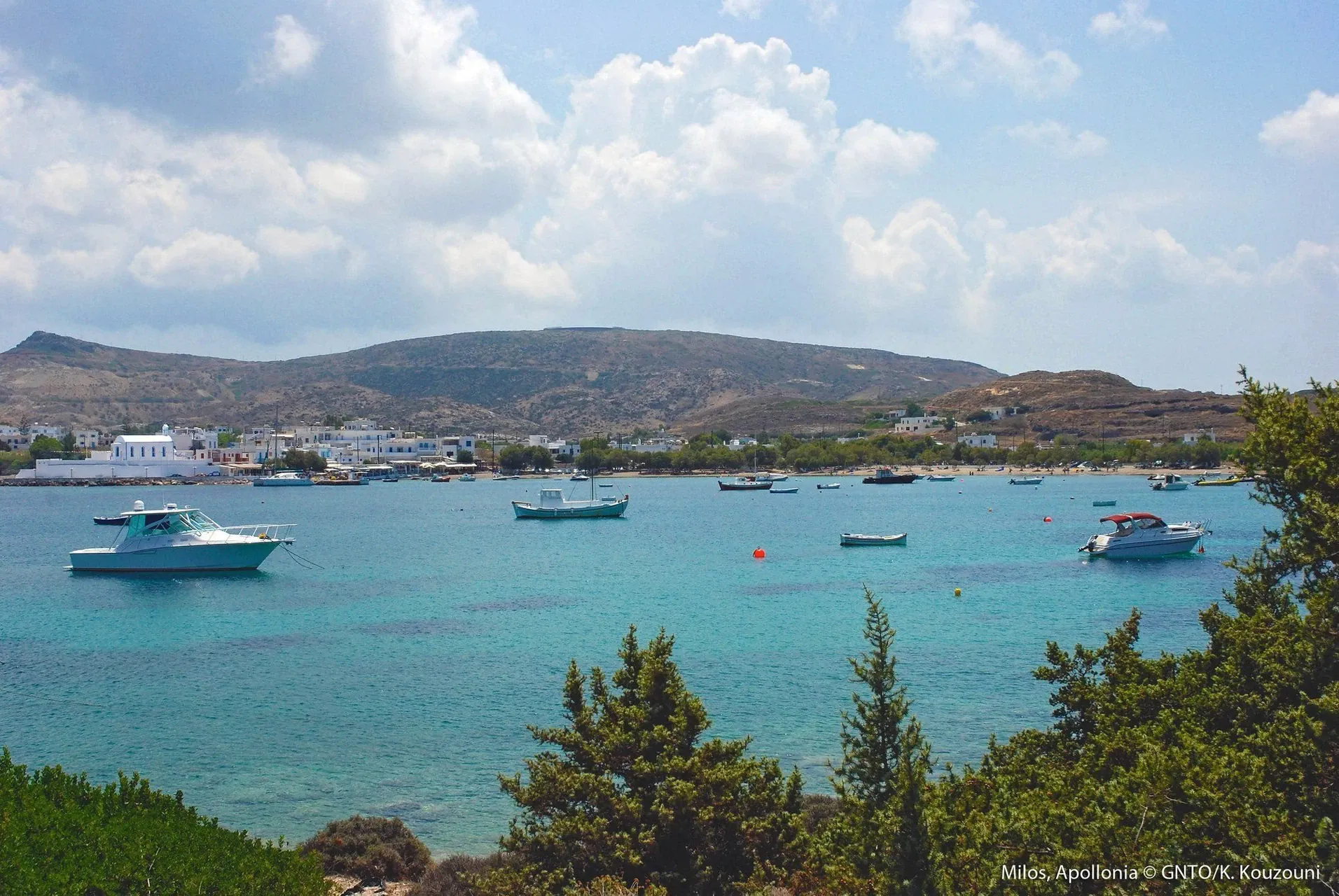
When the water is the first desire, the choice narrows fast. Some islands turn the end of every walk into a swim.
Milos is the painter's palette: Sarakiniko and its chalk rocks sculpted by the wind, Kleftiko and its arches reached from the sea, coves of milky water. Crete lines up wonders, from the pink lagoon of Elafonissi to the lagoon of Balos. And the south of Naxos, around the Alyko peninsula, hides wild beaches where a cedar forest comes down to the sand. To combine paths and coves, Crete and the Cyclades remain our favourite playgrounds.
Which Greek island to choose: the summary table by mood
| Your mood | Our island | Best season | Kelifos destination |
|---|---|---|---|
| First time in Greece | Naxos, Corfu | April to June | Cyclades, Ionian Islands |
| Walking quietly | Corfu, Paros, Mani | April to June, September | Ionian Islands, Peloponnese |
| Escaping the crowds | Amorgos, Serifos, Kythira | May to June, September | Cyclades, Ionian Islands |
| Food and villages | Sifnos, Crete | April to June, autumn | Cyclades, Crete |
| Turquoise sea and beaches | Milos, Naxos, Crete | September to October | Cyclades, Crete |
Comparing two islands before choosing
Once you have spotted the family of islands, it remains to decide between two candidates. Our detailed comparisons help you settle it according to your tempo and your wishes. The first sets two much-in-demand Cyclades against each other: Naxos or Paros, the generous against the elegant. Others will follow to help you choose between Crete and the Cyclades, or between two Ionian islands.
And if you are still hesitating, our advisors, fine connoisseurs of Greece, will put together with you the itinerary that suits you. Browse all our holidays in Greece and our finest paths, island by island to feed the desire.
Frequently asked questions
Which Greek island should you choose for a first trip?
For a first time, Naxos and Corfu offer the best balance: lively villages, easy paths, beaches and a real sweetness of life. Naxos, in the Cyclades, wins you over with its generosity (mountain, marble paths, long beaches, food). Corfu, in the Ionian, charms with its greenery and its comfort. Both suit a self-guided trip as well as a guided holiday.
Which is the most beautiful Greek island for walking?
It all depends on what makes you dream. For perched villages and ancient paths, Naxos and Sifnos are incomparable. For greenery and shaded coastal paths, Corfu is obvious. For silence and unspoilt landscapes, Amorgos and Kythira satisfy lovers of byways. None of them demands that you be a great walker: every walk is savoured at your own pace.
Which Greek island should you choose for the food?
Sifnos, culinary capital of the Cyclades, and Crete, land of olive oil and sheep's cheeses, are unrivalled. On Sifnos you taste revithada simmered all night; in Crete, dakos, raki and the herbs of the maquis. Naxos is not far behind, with its renowned potato, its graviera and its kitron.
When should you go to the Greek islands?
Spring (April to June) and autumn (September to the end of October) are the ideal walking seasons. In spring the hills cover themselves with flowers and the paths are deserted. In autumn the sea stays warm for swimming and the light takes on golden tones. At the height of summer, in July and August, the heat invites you to set off early in the morning and keep the afternoon for swimming: the Cyclades, cooled by the meltemi breeze, and the heights of Crete are then the most agreeable. Crete and Corfu, with their milder climate, welcome travellers even in early winter.
Should you choose a single island or combine several?
Both are possible, and that is the whole charm of island Greece. The ferries link the Cyclades to each other regularly, which allows you to pair two or three islands in the same trip (Naxos and Amorgos, or Sifnos, Milos and Kimolos, for example). We organise all the crossings and transfers, so that each link stays a pleasure and not a piece of logistics.
How many days should you allow for a walking trip in the islands?
A week is enough to discover one island in depth: time to link its villages, taste its table and enjoy long swims without ever rushing. To pair two or three islands, reckon rather on 10 to 15 days, according to the ferries. That is the ideal length for catching the nuances of an archipelago, from one harbour to the next, at your own pace.
Is it better to go self-guided or on a guided trip?
Both formulas have their followers, and Greece lends itself wonderfully to either. Self-guided, you walk as you please, route notes in hand and luggage transferred from stage to stage: the gentlest kind of independence, with no organising to worry about. On a guided trip, a passionate leader opens up the history of the places, the byways and the good addresses, in the good company of a small group. To each their own pleasure: browse the range of our holidays in Greece to find yours.
Where can you find a map or a walking itinerary in the Greek islands?

For Greece, the topographic maps from Anavasi and Terrain cover most of the islands and are the reference among walkers; you find them in specialist bookshops or on the spot, in the harbour shops. On our self-guided trips, however, you have nothing to prepare: detailed route notes and the tracks of the paths are given to you, so you can follow each path with a light mind.
Your question is not on this list?
Write to us, and we will reply to you personally by email.
Continue reading
- Which Cyclades island to choose for the trip you have in mind?
- Crete or the Cyclades: which one is right for you?
- Naxos or Paros: which Cycladic island suits the trip you want?
- Hiking in Greece: the best trails island by island
- When to Visit Greece: Our Month-by-Month Guide
Article written by
Maria Papadopoulou (Μαρία Παπαδοπούλου)
Editorial lead
I hike, and Greece is the place I keep coming back to. My initial studies (a Master’s in Marketing and a degree in Applied Foreign Languages) taught me how to build an editorial project, and the trails taught me the… Read more