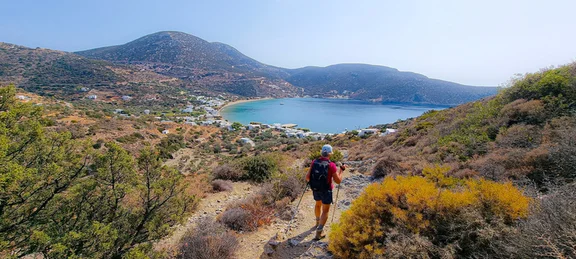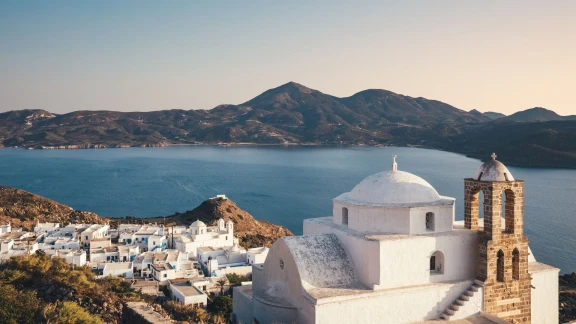


It is a little past 8 o'clock in Lefkes, and the air already smells of thyme warmed by the sun. Ahead of you, a path of pale marble drops gently towards the valley. These are the polished slabs of the old Byzantine road, worn by a thousand years of footsteps, mules and merchants. No haste here: you walk for a morning, stop in the shade of an olive tree, and discover that walking in Paros is above all a long ramble between white villages, ancient quarries and small fishing harbours. Here is what we would have liked to know before setting foot there.
| In brief | An island of marble and white villages, perfect for short cultural walks on the level or on a gentle slope. |
|---|---|
| Ideal for | Curious epicureans who like to walk for an hour or two, then savour a terrace and a swim. |
| Best season | From late April to June, then September to mid-October: mildness, light and tavernas still quiet. |
| Pace | Gentle, à la carte: short waymarked paths that you walk at your ease. |
| Our holiday | No Kelifos holiday on Paros for the moment. See its neighbouring island with Naxos and Amorgos self-guided. |
Paros lies at the exact centre of the Cyclades, a ferry hop from Naxos. People often come for its beaches and its atmosphere, and leave remembering something else: the whiteness of a village suspended among the pines, the grain of a block of marble in a forgotten quarry, the light of a harbour at dinner time. The island lends itself wonderfully to quiet walking, because its finest places are linked by ancient paths, level or gently sloping, easy to follow. There is no need to be a great walker: a morning here, a late afternoon there, and you will have seen the best of the island.
The old Byzantine road, from Lefkes to Prodromos
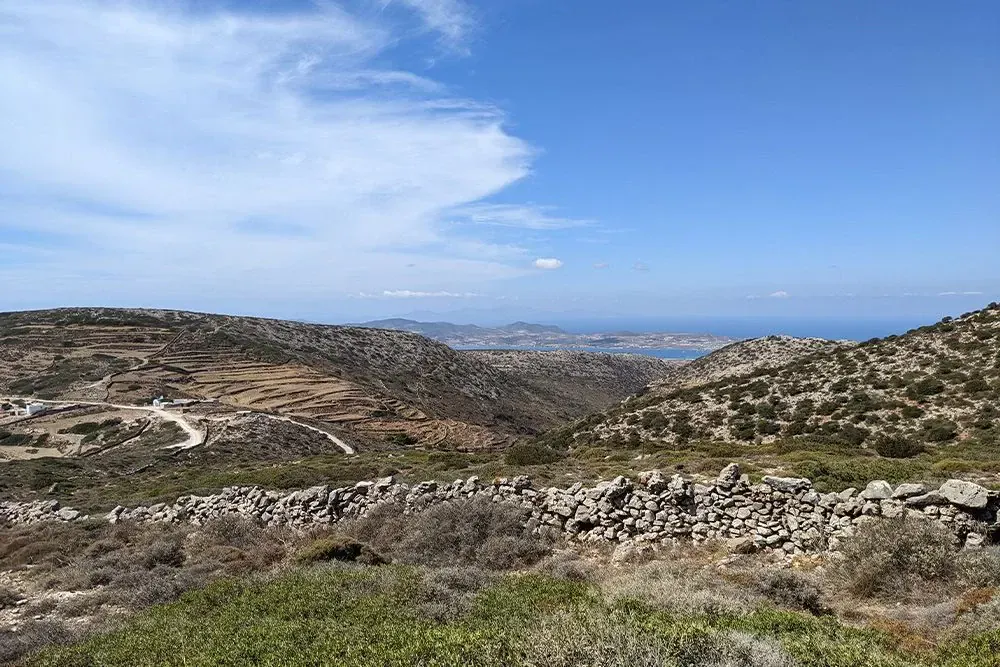
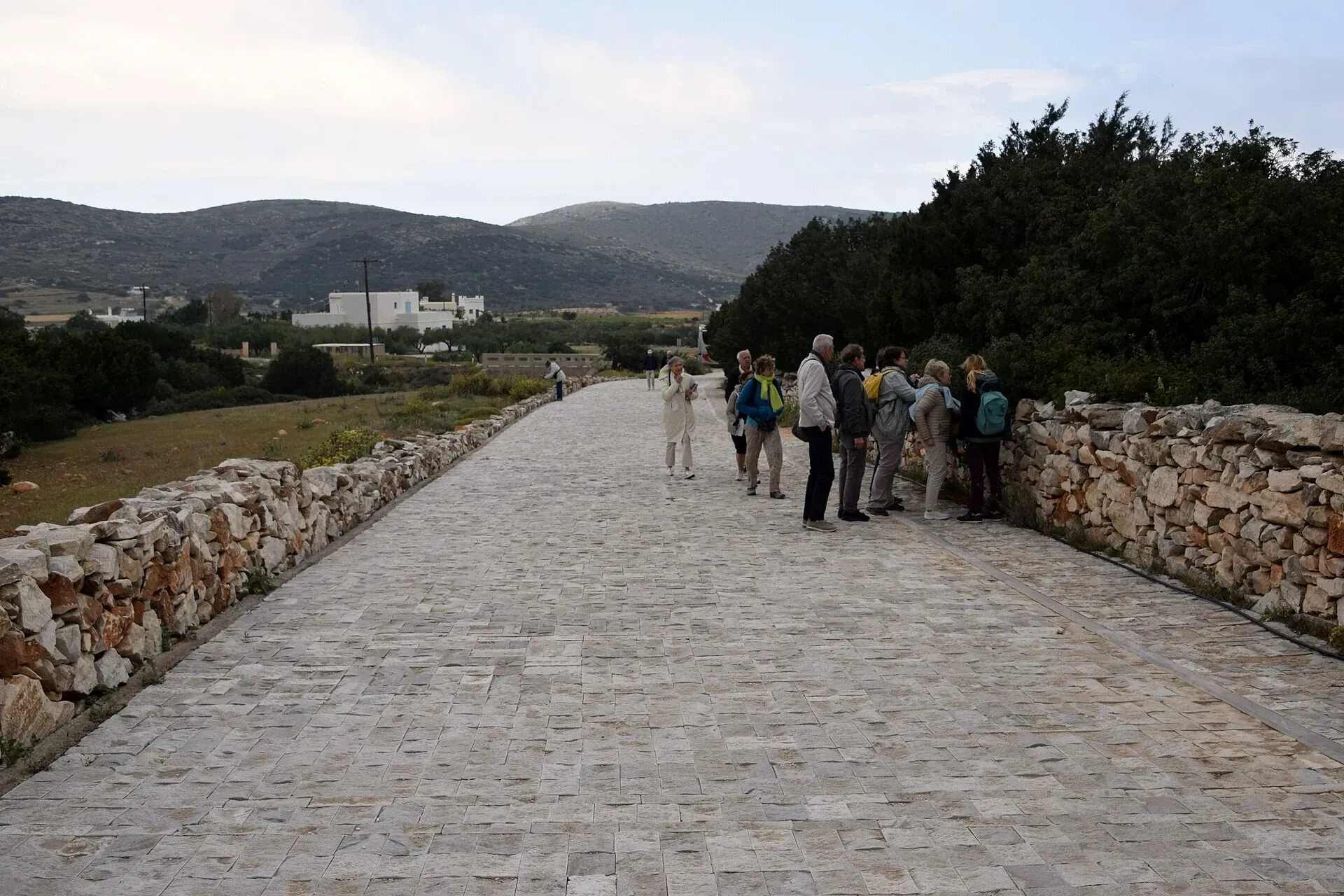
This is the island's emblematic walk, and the finest for understanding Paros. This marble-paved way has linked the village of Lefkes to that of Prodromos for nearly 1,000 years. You walk it in a good hour, over a little less than 4 kilometres, descending steadily from Lefkes towards the sea. The path, waymarked and easy to follow, runs along a hillside among olive trees and fragrant low scrub.
Beneath your feet, the great slabs of pale marble, laid there by medieval hands, have kept the polish of use. The eye carries far: the Aegean below and, in clear weather, the outline of Naxos on the other side of the channel. Remember a hat and a good reserve of water, as shade is scarce and there is no water point along the way. On arrival, Prodromos awaits you with its white lanes and the promise of a well-earned frappé. Many choose to do the walk in this direction, from Lefkes to Prodromos, because the slope carries you almost the whole way.
Lefkes, the old capital among the pines
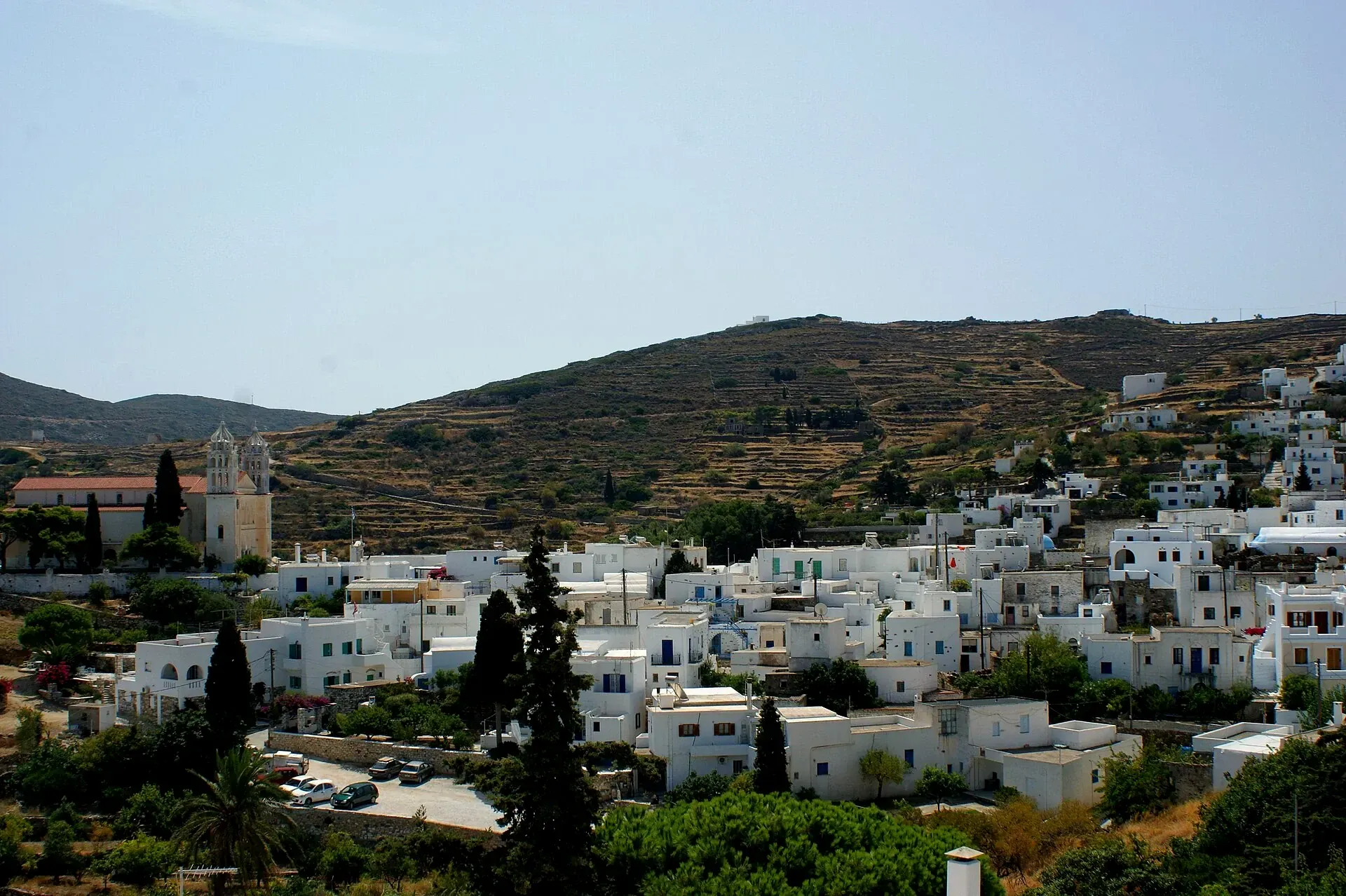
Before or after the Byzantine road, take the time to wander in Lefkes. Perched at about 250 metres, in the hollow of a green valley planted with pines, this village is the island's former capital and probably its most authentic heart. You lose yourself there with pleasure in a maze of whitewashed lanes, punctuated by bougainvillea and blue doors.
Around the corner of a small square, the church of the Holy Trinity raises its walls of local marble, which catch the morning light as nowhere else. Sit down on a shaded terrace, order a warm loukoumade and a Greek coffee, and watch village life flow past. It is here, rather than by the sea, that the true pulse of Paros beats.
The marble quarries of Marathi
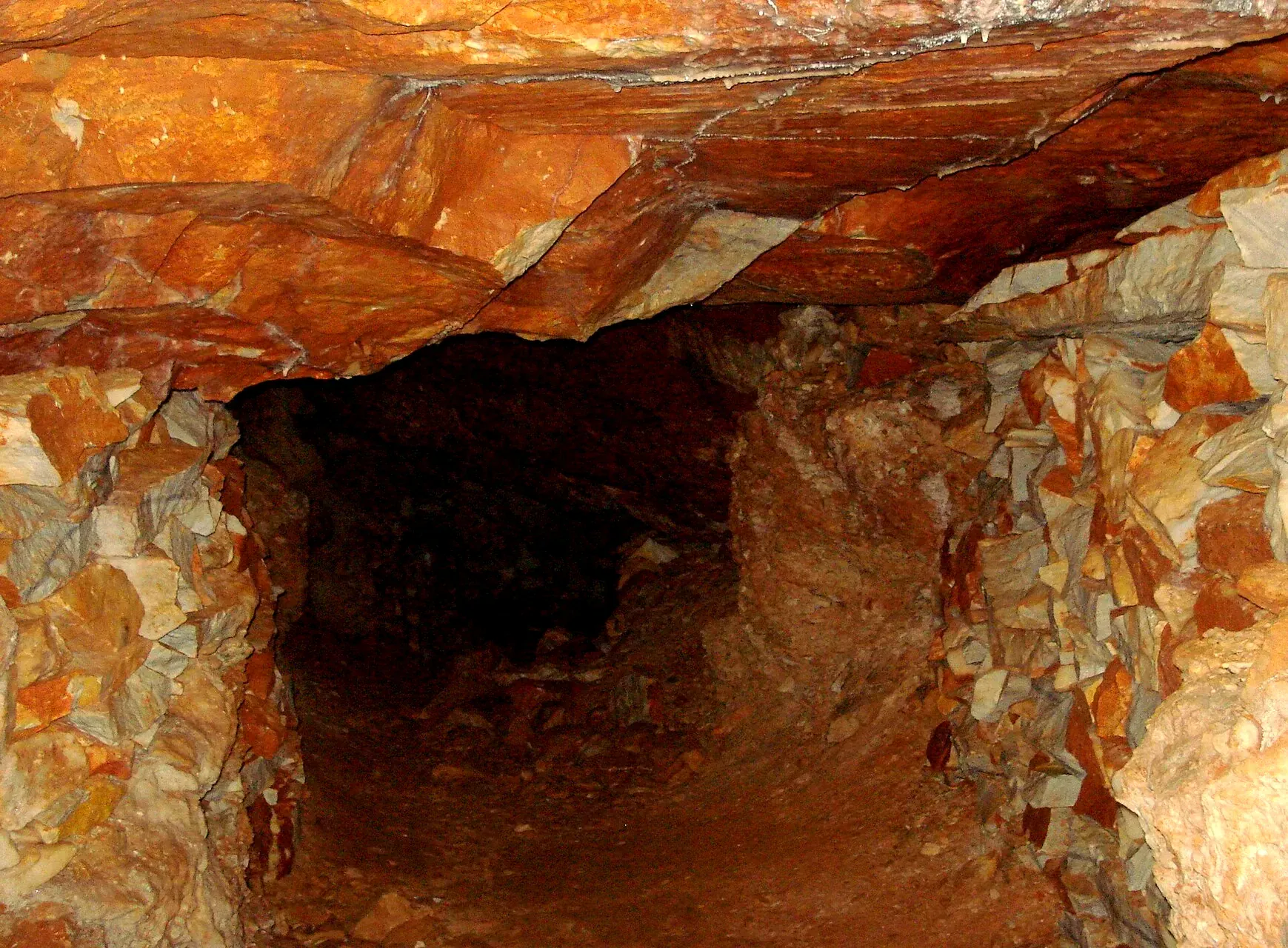
A few kilometres from Parikia, on the road to Naoussa, a short walk leads you to a place charged with history: the ancient marble quarries of Marathi. Backed against Mount Marpissa, they supplied for centuries the famous marble of Paros, the most translucent of the ancient world.
From that marble were born some of the most famous works in Greece: the Venus de Milo and the Hermes of Praxiteles were carved from this luminous stone. You can still make out the entrance to the underground galleries, the best known of which bears the name of the Nymphs. The site is free, little visited, and the walk that leads there remains very accessible. A particular silence hangs there, the silence of places where history has gone to sleep.
Marpissa and the monastery of Agios Antonios
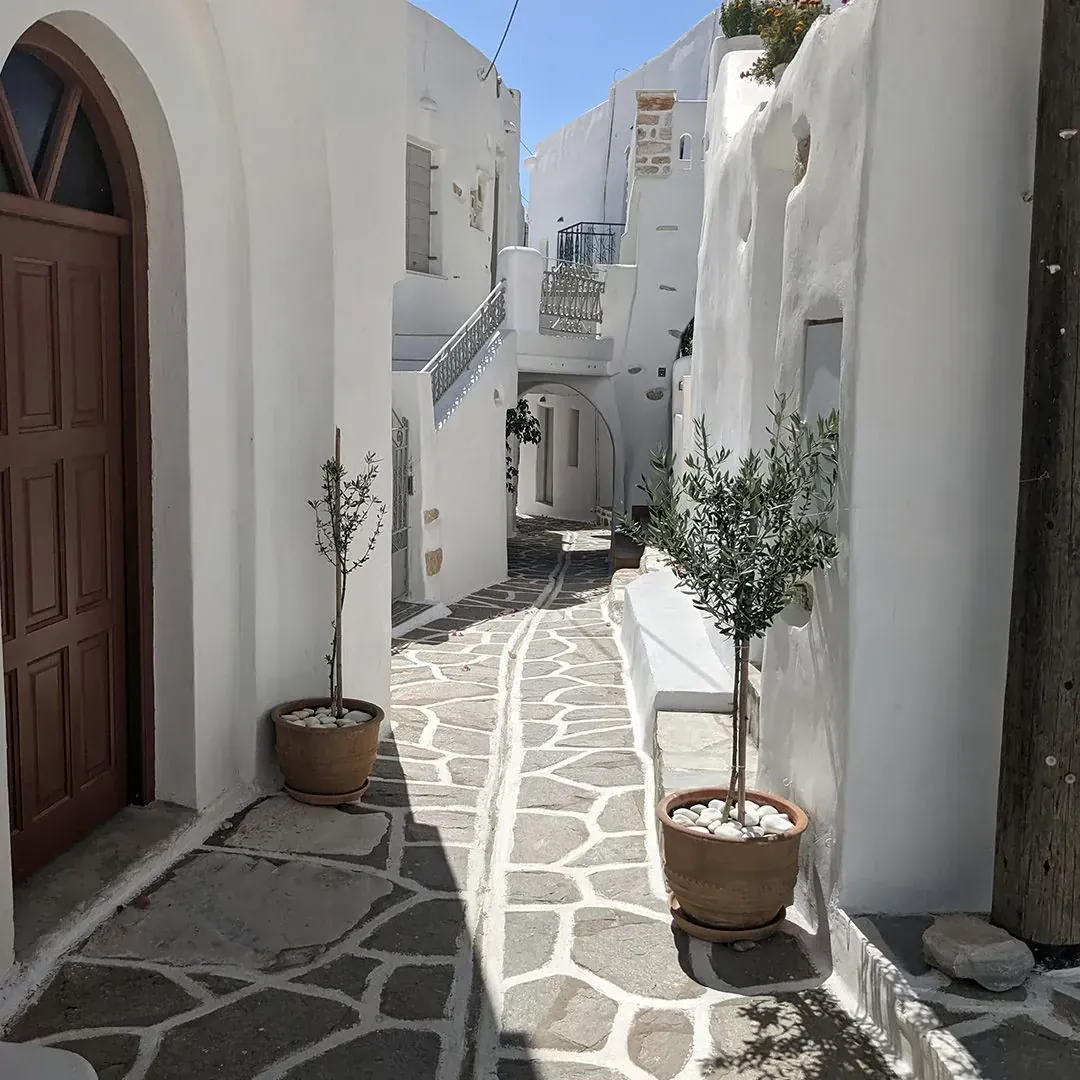
Further east, the village of Marpissa caps a hill with its white houses pressed one against another. It is one of the most endearing villages on Paros, and the starting point of a gentle climb, at your own pace, to the monastery of Agios Antonios.
The path rises slowly among the terraces and dry-stone walls to the summit, where the 16th-century monastery sits beside the remains of a medieval castle. The reward is at the top: a view taking in the whole eastern coast of the island, the indented bays, and the sea that changes blue as the hours pass. Half an hour of walking is enough, but you gladly stay longer, simply for the panorama. In spring, lovers of tradition gather there for a well-attended night walk, in the atmosphere of a village festival.
Naoussa and its little Venetian harbour
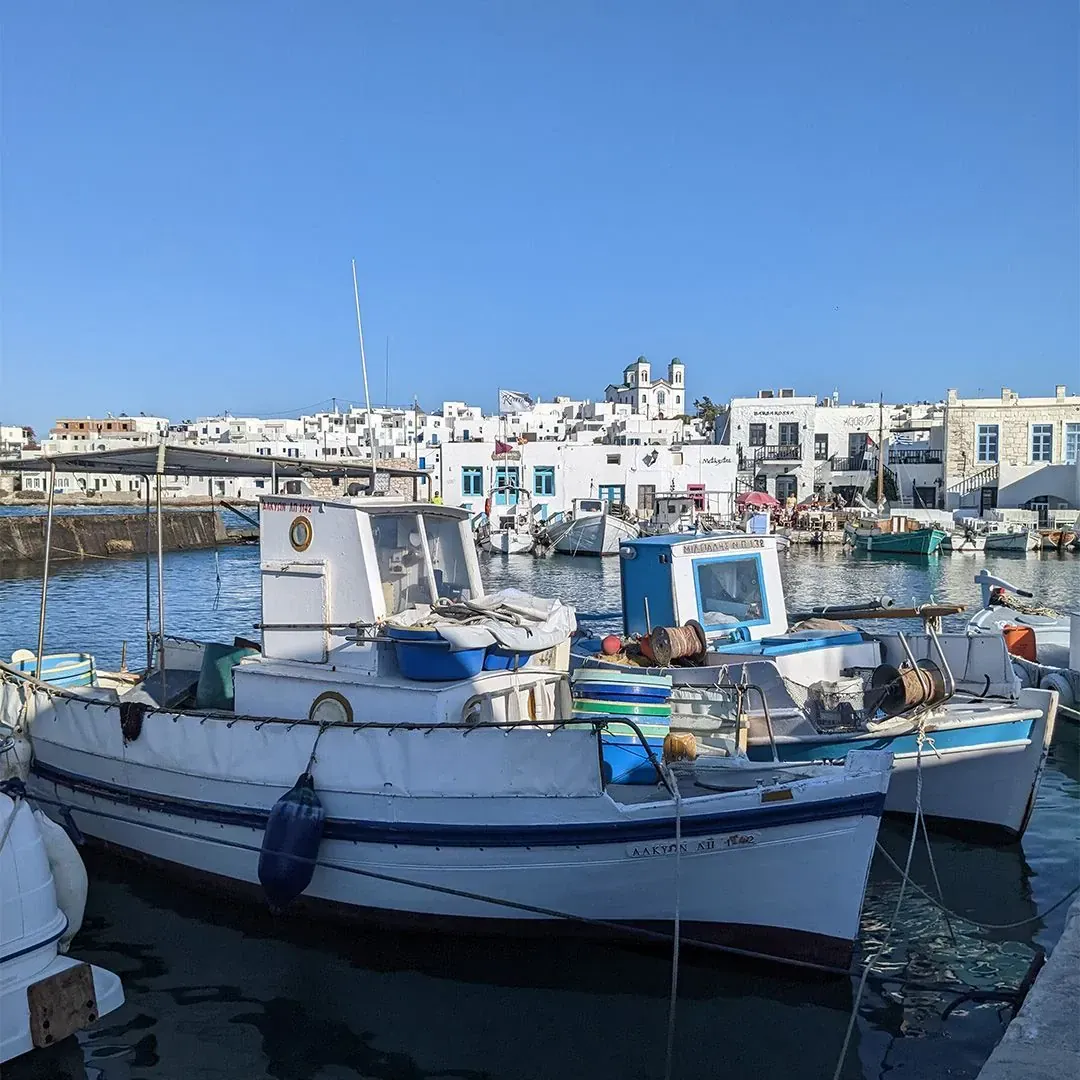
When evening comes, go down to Naoussa. This former fishing village has become one of the most charming harbours in the Cyclades, without losing any of its authenticity as soon as you step away from the main lane. Colourful fishing boats rock in the basin, and at the harbour entrance stand the half-submerged ruins of a Venetian fortress, built as a guard against pirates.
It is the ideal place to end a day of walking: you settle at a table right by the water, order grilled fish and a glass of local wine, and watch the sun gild the old stones of the kastro. A slow walk along the quay at dusk is worth any programme.
Kolymbithres, the reward by the water
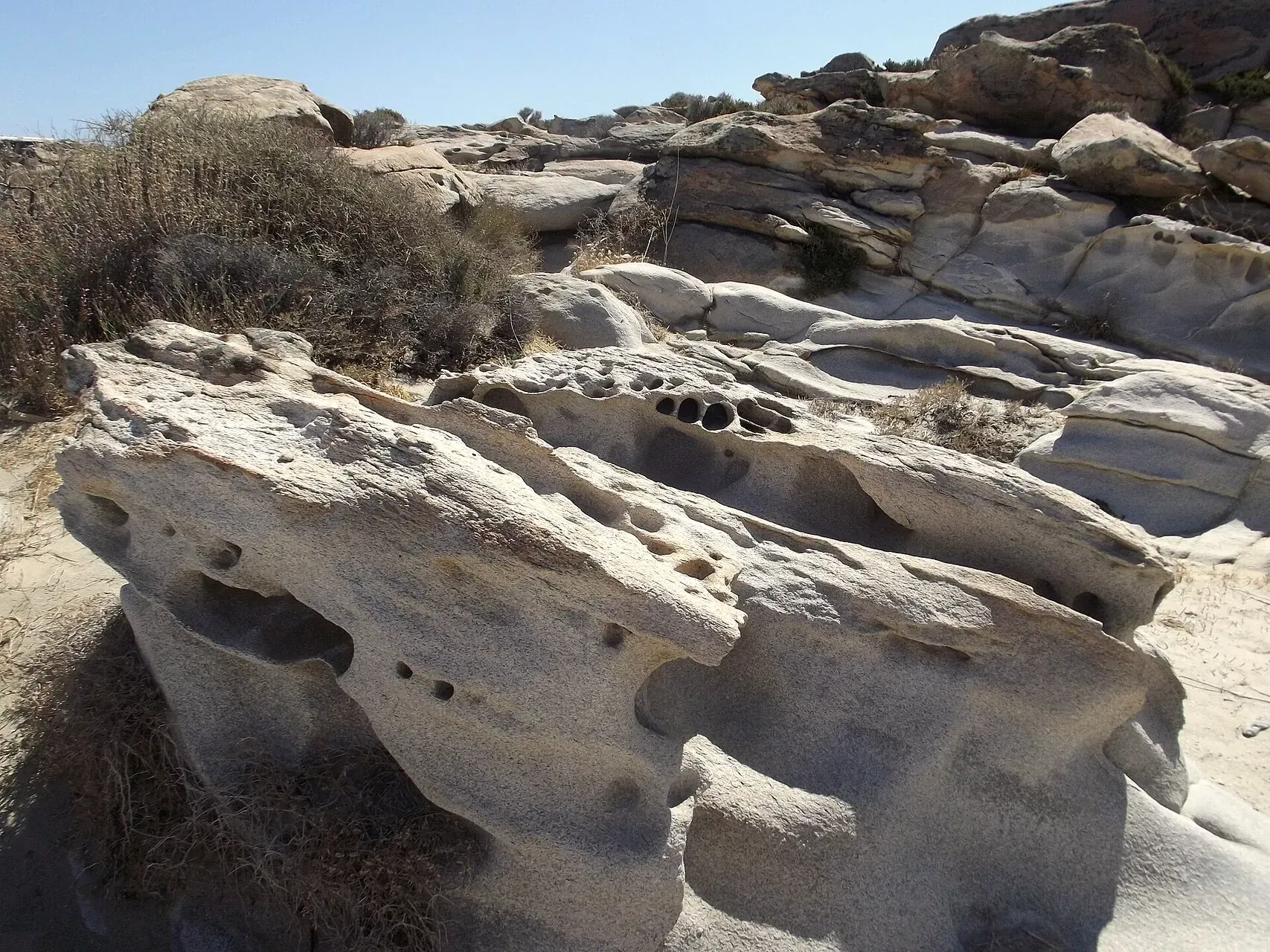
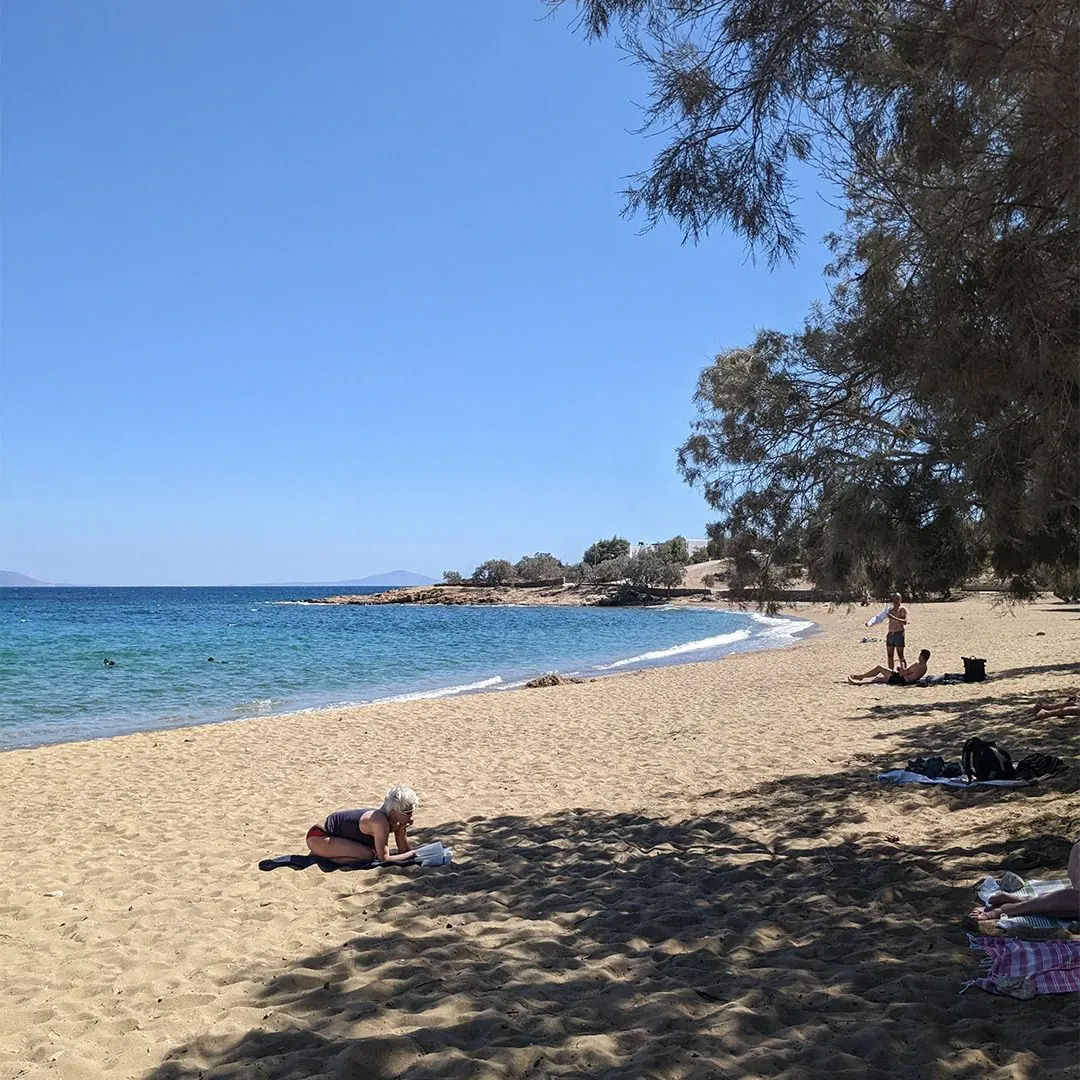
A few minutes from Naoussa, on the other side of the bay, the beach of Kolymbithres is worth a stop. Its curious granite formations, sculpted by wind and waves into soft rounded shapes, draw a succession of small sheltered coves. You move from one to the next on foot, unhurriedly, in search of your patch of shade and your translucent water. Just above stretches the park of Agios Ioannis Detis, whose 7 kilometres of waymarked paths lead gently to the old lighthouse of Korakas, at the northern tip of the island.
After a morning on the paths, a swim there takes on a particular savour. The water is calm, shallow, ideal for floating without a care. It is exactly the kind of reward you hope for after a walk: simple and welcome. A few tavernas almost at the water's edge serve grilled octopus and tomato salad at the end of the day, while you watch the sky pass from pink to indigo.
When to come, and how to walk at your own pace
The best moments to discover Paros on foot run from late April to June, then from September to mid-October. The heat stays gentle, the paths smell of thyme and oregano, and the villages do not yet have (or no longer have) the crush of summer. In the thick of July and August, it is better to keep the walks for the first hours of the day and save the afternoons for terraces and swimming.
Nothing here obliges you to long days of walking. The paths of Paros are short, waymarked and easily adjusted: an hour is enough to taste the Byzantine road, half an hour to climb to the monastery. You compose your day like a menu, alternating a little walking, a visit, lunch in the shade and a swim. Good supple shoes, a hat and water: that is about all you need to enjoy the island.
And a Kelifos holiday on Paros?
Let us be honest: we do not yet offer a walking trip centred on Paros. But its immediate neighbour, one ferry crossing away, is discovered in the same spirit of gentleness and authenticity. Our self-guided trip Naxos and Amorgos takes you onto the marble paths and into the perched villages of Naxos, the twin island of Paros in many respects, before reaching wild Amorgos. Luggage carried, crossings organised, charming addresses booked: you have only to walk and savour.
Hesitating between the two neighbouring islands? Our comparison Naxos or Paros helps you choose according to your wishes. And if you want to take a wider view of the whole archipelago, the Cyclades hub gathers our trip ideas across the islands.
Frequently asked questions about walking in Paros
Can you really go hiking on Paros?
Yes, provided you like gentle walking rather than long traverses. The island does not have the vast path network of its neighbour Naxos, but it lines up pretty short waymarked walks: the Byzantine road from Lefkes to Prodromos in a good hour, the paths of the Agios Ioannis Detis park, or the quiet climb to the monastery at Marpissa. Here you walk an hour or two at a time, between two villages, a visit and a swim.
Where can you find a map or a walking itinerary on Paros?
Two maps at 1:40,000 cover the island well, paths, times and distances included: Anavasi no. 10.23 and Terrain no. 310, both dedicated to Paros and Antiparos. You can dig them out in travel bookshops or on the spot before setting off. For Naxos and Amorgos, its neighbours, our self-guided trip additionally gives you detailed route notes and the tracks to follow, with nothing to prepare yourself.
Paros or Naxos for walking?
If walking guides your choice, Naxos has the edge: the neighbouring island unfolds a far more extensive network of ancient paths, from mountain villages to hidden coves, where Paros is savoured in small contemplative walks. It is in fact on Naxos, paired with wild Amorgos, that our walking trip Naxos and Amorgos self-guided takes place. The ideal is often to combine the two: the gentleness of Paros and the paths of Naxos, one ferry crossing apart.
How do you reach the paths of Paros without a car?
It is entirely possible. In season, buses link Parikia to Naoussa, Lefkes, Marpissa and Piso Livadi several times a day, enough to reach the start of most of the walks. You can thus walk down the Byzantine road from Lefkes to Prodromos, then leave by bus without having to retrace your steps. A scooter or a taxi easily completes the journeys from one village to another.
Your question is not on this list?
Write to us, and we will reply to you personally by email.
Continue reading
- Which Cyclades island to choose for the trip you have in mind?
- Naxos or Paros: which Cycladic island suits the trip you want?
- The Best Hikes in Naxos
- Hiking in Greece: the best trails island by island
Article written by
Maria Papadopoulou (Μαρία Παπαδοπούλου)
Editorial lead
I hike, and Greece is the place I keep coming back to. My initial studies (a Master’s in Marketing and a degree in Applied Foreign Languages) taught me how to build an editorial project, and the trails taught me the… Read more