

The ancient Greeks were convinced that the centre of the world lay here, on a stone balcony suspended between the sky and a sea of olive trees. Delphi, in central Greece, was for more than a thousand years the most consulted sanctuary of antiquity. People came from all over the Mediterranean, kings and simple shepherds alike, to hear the voice of Apollo's oracle. Today you climb up mainly for the beauty of the place: those golden columns standing out against the flanks of Mount Parnassus, and that particular silence which still seems to be holding something back. Here is why Delphi keeps a place apart in a trip to Greece.
| In brief | The most famous sanctuary of ancient Greece, clinging to the slopes of Mount Parnassus |
| Ideal for | Lovers of history and fine stonework, as a couple or with friends |
| Best season | Spring (April to June) and autumn (September, October) |
| Pace | Visit at your own rhythm, a few gentle climbs along the sacred way |
| Heritage | UNESCO World Heritage listed since 1987 |
| Our holiday | Free inspiration: no Kelifos trip on the spot, to be extended on the ancient Peloponnese side |
At the centre of the world: the oracle of Apollo
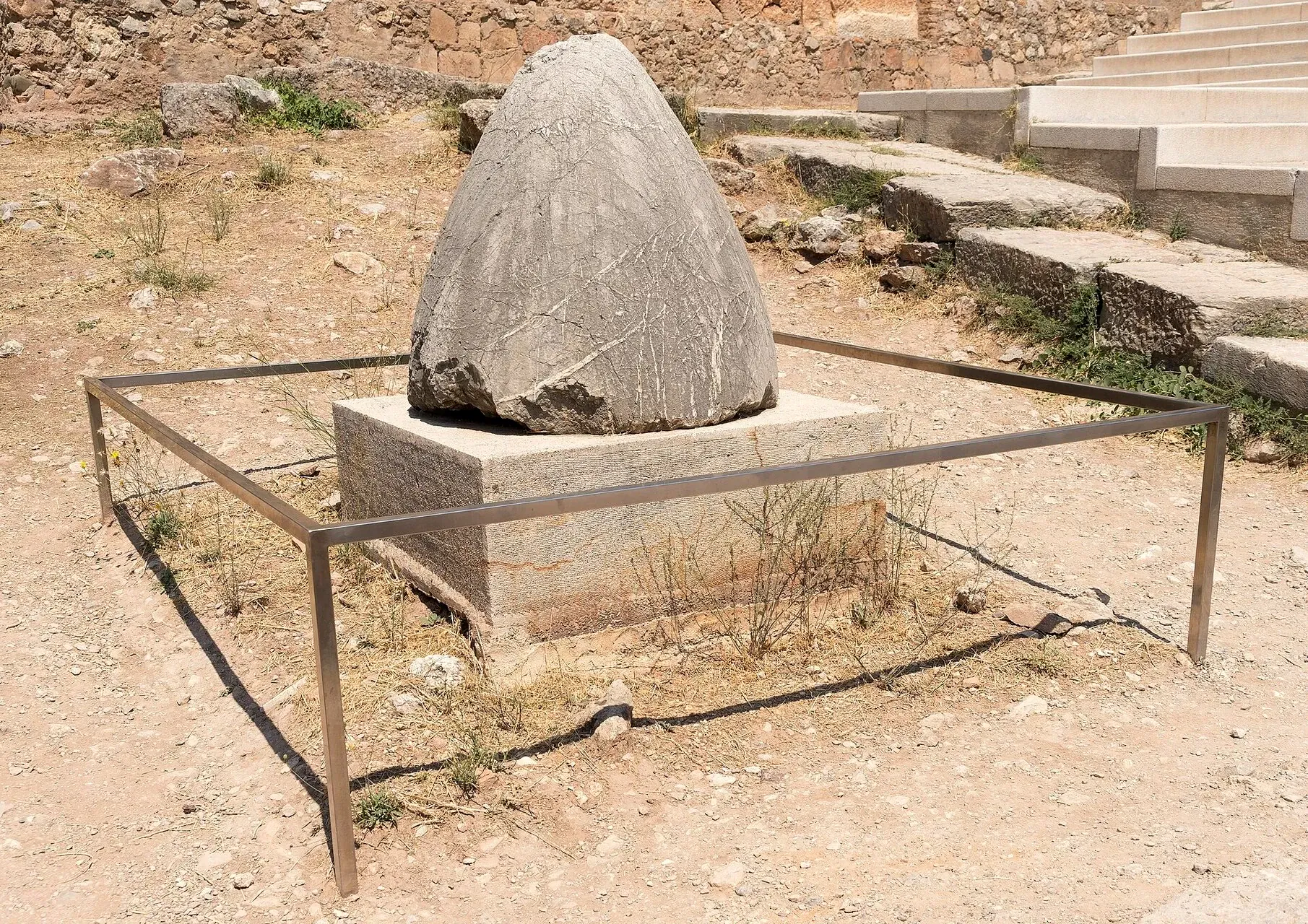
Legend has it that Zeus released two eagles at the two ends of the Earth. They met above Delphi: that point marked the navel of the world, the omphalos. A carved stone marked the spot, and a copy can still be seen on the site, the original being kept in the museum.
It was here that the Pythia spoke, the priestess of Apollo. Seated on a tripod deep inside the temple, she uttered obscure words which the priests translated into oracles. For centuries people consulted Delphi before founding a city, going to war or marrying off their children. At the temple entrance, two maxims greeted the visitor: "Know thyself" and "Nothing in excess". Two short phrases that sum up Greek wisdom rather well, and that have not aged a day.
The oracle's answers were often double-edged, which was the whole of their strength. King Croesus of Lydia, it is said, asked whether he should attack the Persians; he was told that by crossing the frontier he would destroy a great empire. He set off confident, and it was his own that he lost. Two generations later, when the Persians threatened Athens, the Pythia spoke of a wooden wall. The Athenians saw in it their fleet, gave battle at Salamis and saved Greece. Walking on these stones with those stories in mind gives the site a quite different depth.
What strikes you on arrival is how far the place itself takes part in the mystery. The sanctuary was not set down here by chance: between the two cliffs of the Phaedriades, above the valley, the eye carries far and the air seems purer. You understand why the Ancients sought the voice of the gods here.
The sanctuary of Apollo, step by step
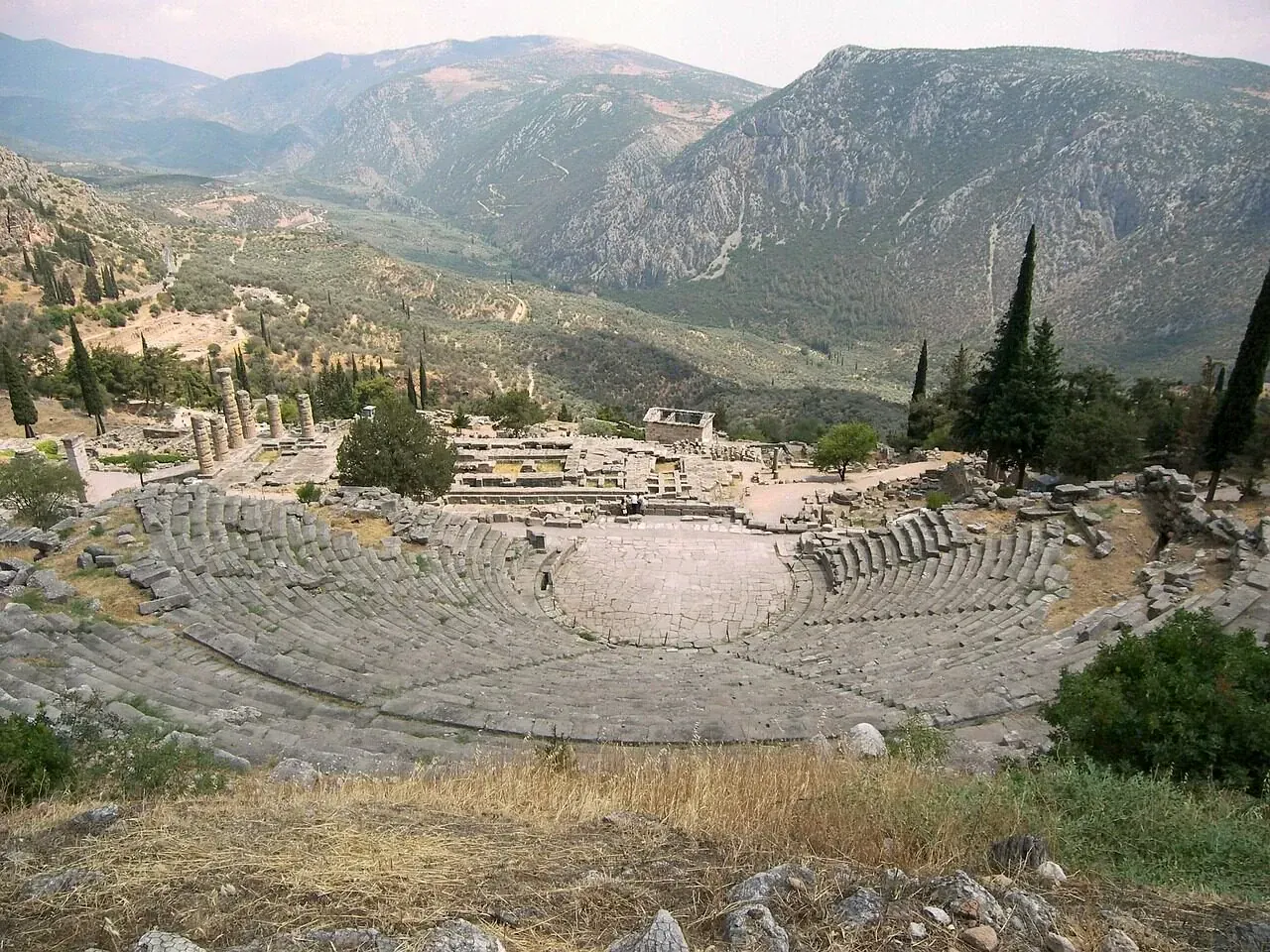
The visit begins at the bottom and climbs in zigzags along the sacred way. The path is in no way trying: you move slowly, stop often, and every bend reveals a new piece of the history. On either side once stood the treasuries, those small buildings where the cities laid down their offerings, including the delightful treasury of the Athenians, raised stone by stone.
Higher up opens the temple of Apollo, six of whose columns have been re-erected. It is the heart of the sanctuary, where the Pythia officiated. Higher still, the ancient theatre overlooks the whole: backed against the slope, cut from the pale limestone of Parnassus, it could hold nearly five thousand spectators. Sit for a moment on its tiers: the plunging view over the columns and the olive valley is one of the great memories of a trip to Greece.
Right at the top, after a few more minutes of walking, hides the stadium. It is one of the best preserved in all Greece, with its stone tiers almost intact. The Pythian Games, cousins of the Olympic Games, were held here. Many visitors stop at the theatre. Those who press on to the stadium are rewarded with calm and the panorama.
The tholos of Marmaria, below
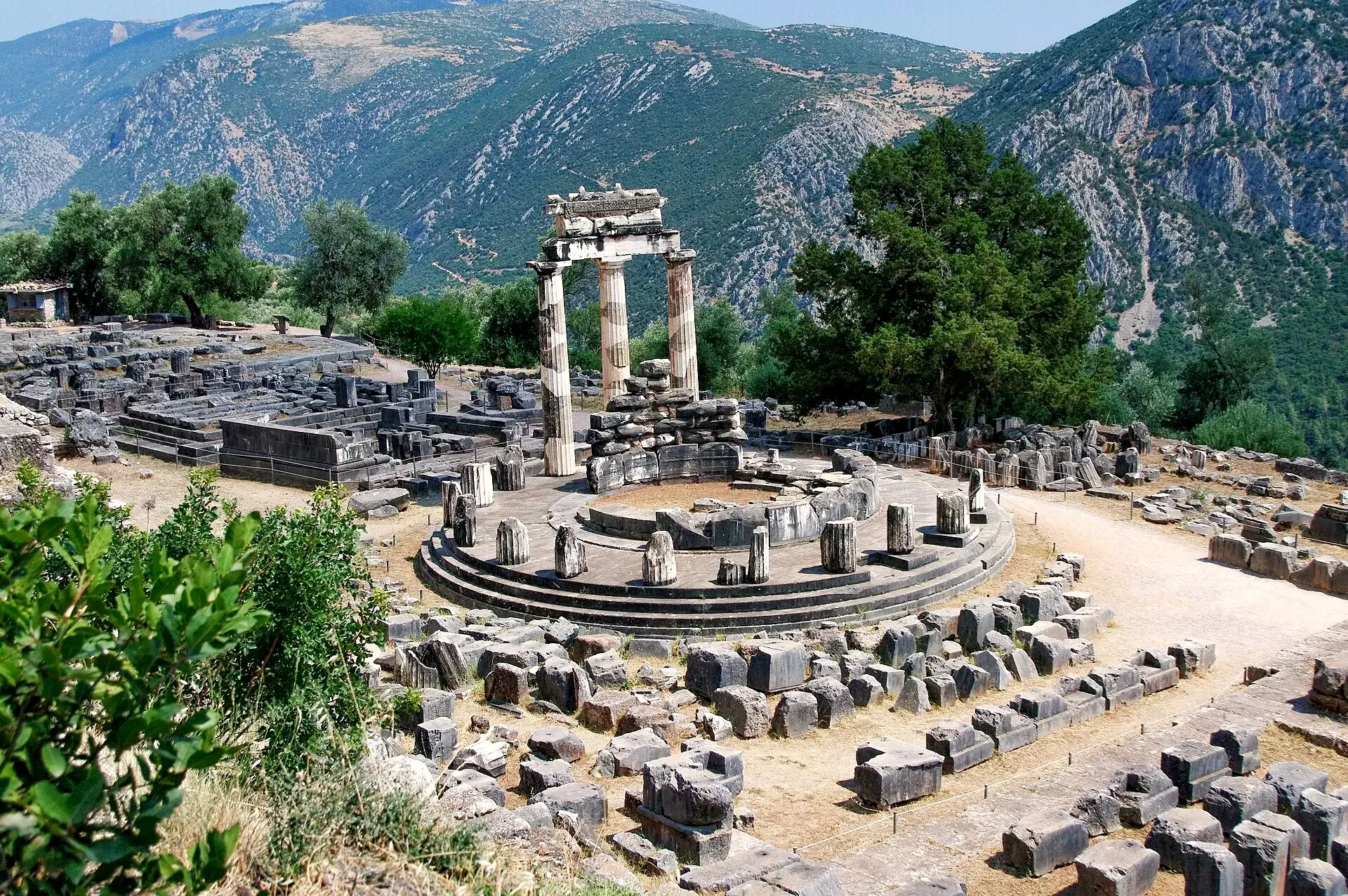
Before you reach the great sanctuary, below the road, stretches a second site that is often neglected: Marmaria, dedicated to Athena Pronaia. Yet it is there that the most reproduced image of Delphi is found, the tholos. This small circular temple of the 4th century BC, three of whose columns have been re-erected, keeps a share of mystery: it is still not known exactly what it was for.
The walk to the tholos is short and level, ideal at the end of a morning. Set among the olive trees, this rotunda of pale marble composes a picture of rare elegance. Take the time to walk round it: the light there changes all through the day.
Between the two sanctuaries flows the Castalian spring, at the foot of the cliffs. Pilgrims came to purify themselves there before consulting the oracle, and the spring still feeds the little valley. You no longer bathe in it, but the spot, shaded and cool, remains a pleasant halt away from the crowd.
The Charioteer and the museum of Delphi
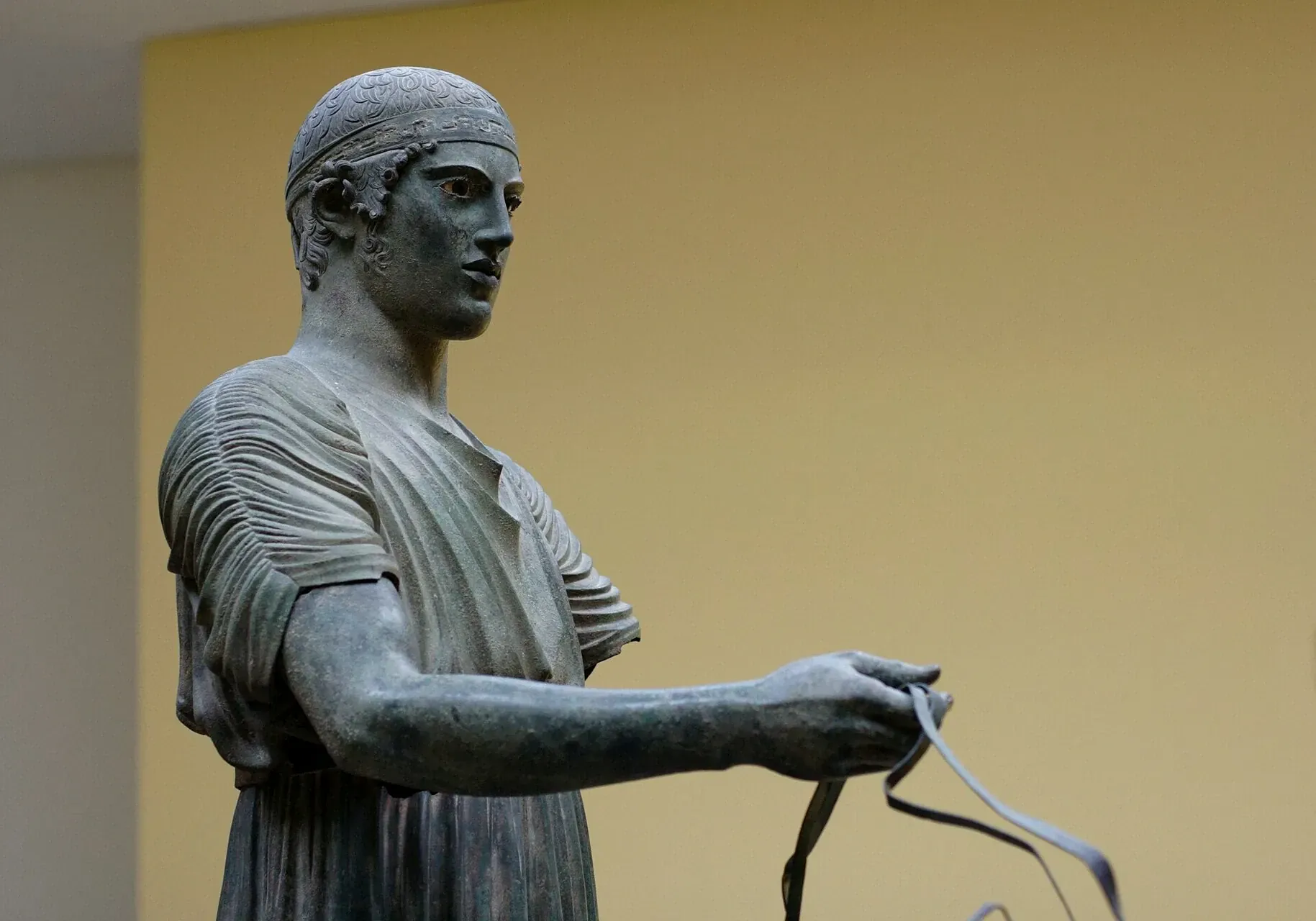
You do not leave Delphi without its museum, a couple of steps from the site entrance. It holds masterpieces gathered over the course of the excavations, and one of them justifies the visit on its own: the Charioteer of Delphi. This bronze chariot driver, life-size, dates from around 470 BC. He has crossed the centuries almost intact, with his enamel-inlaid eyes that still seem to fix on you. He is one of the very few large Greek bronze statues to have reached us, and his serenity has something overwhelming about it.
The museum is walked through in the cool, in about an hour. You also meet the marble omphalos, the carved friezes of the treasury of the Siphnians and the great Sphinx of the Naxians. Enough to give flesh to everything you have just seen up above.
Arachova, Parnassus and the sea of olives
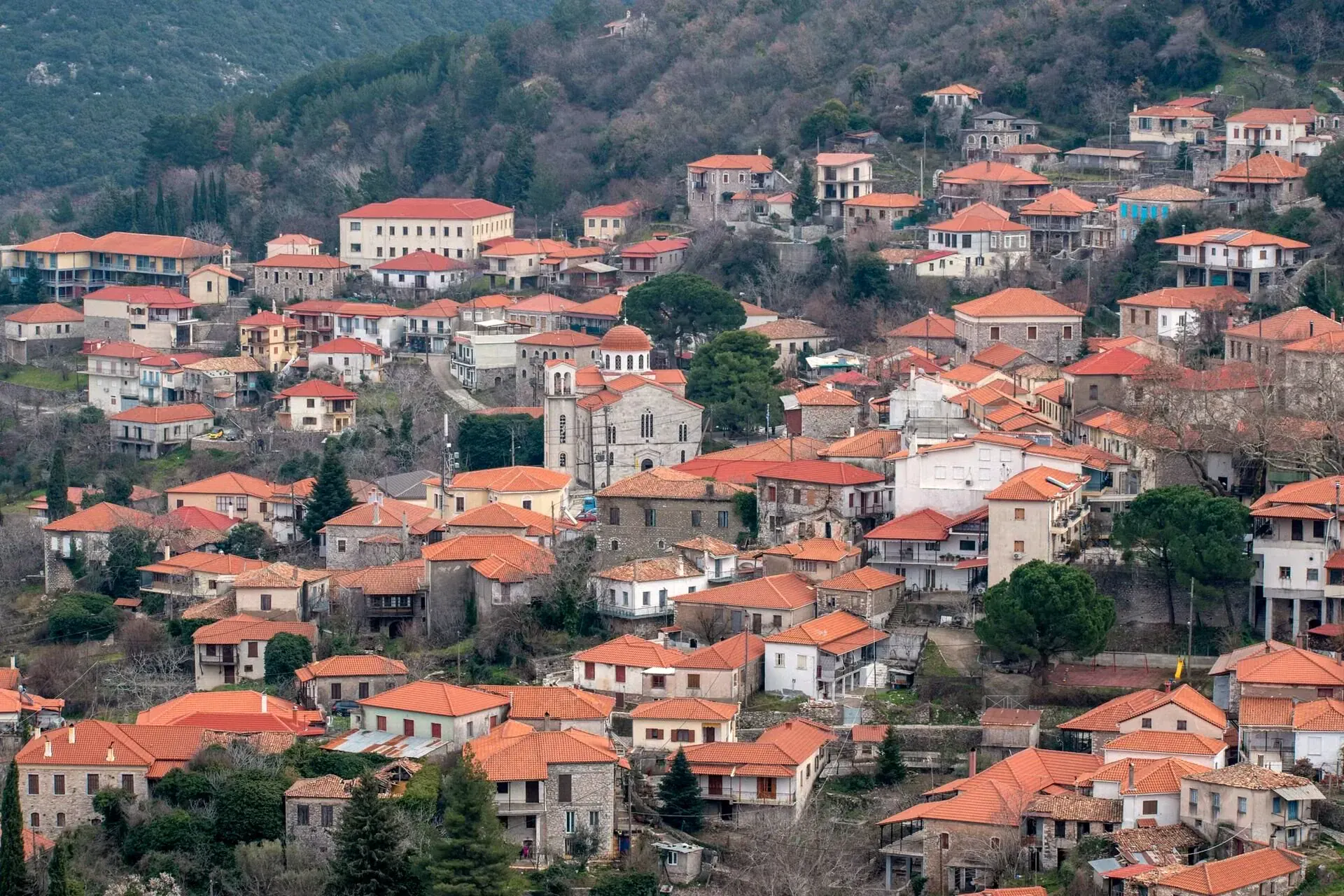
Delphi is not summed up by its stones. The setting counts as much as the site, and it is worth lingering in the surroundings. A few kilometres away, clinging higher on Parnassus, the village of Arachova lines up its stone houses and its sloping lanes. You come for its cheese, formaela, its mountain honey and its woven rugs, but also for the terraces where you sit in the sun, facing the mountains.
On the other side, the eye drops towards Amfissa and the Gulf of Corinth. There stretches one of the vastest olive groves in Greece, a silver swell nicknamed the sea of olives. In spring, everything is green and in flower; in autumn, the first olives ripen and the light grows softer. These are the two seasons we prefer for discovering the region: the heat stays measured and the sites breathe. The tavernas, for their part, have recovered their quiet rhythm.
How to come, and when
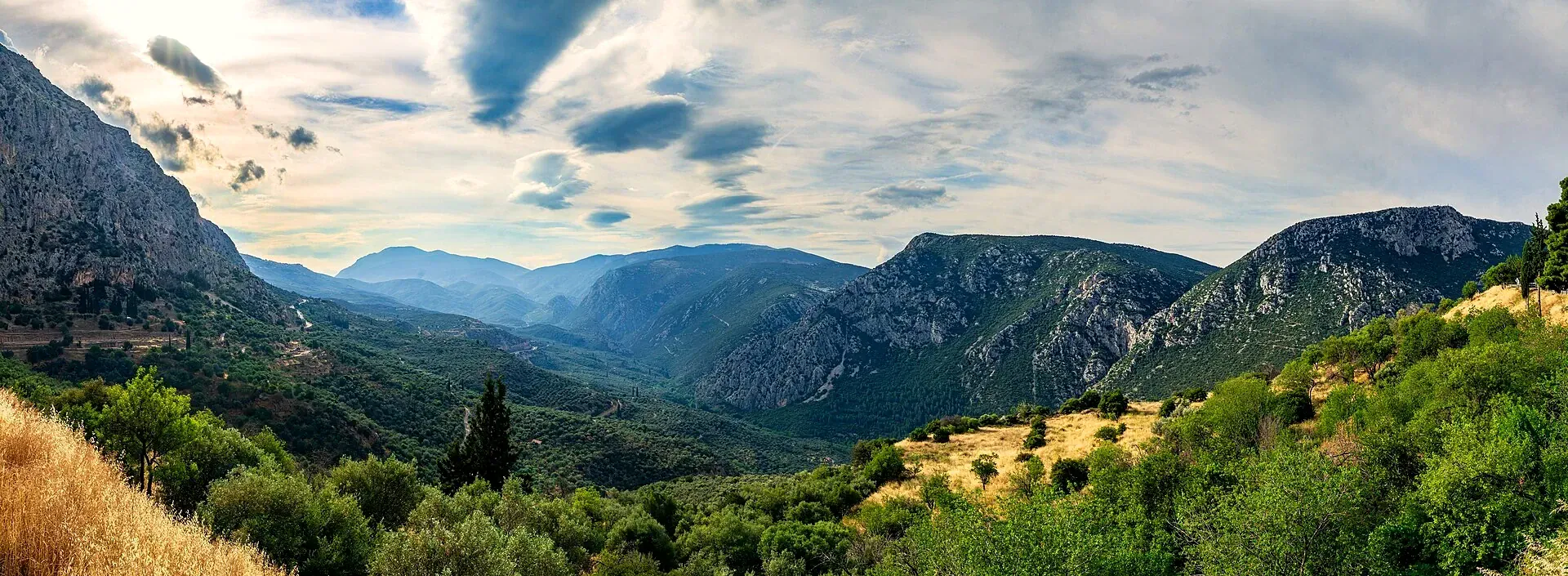
Delphi is about 180 km from Athens, that is 2 h 30 of road across Boeotia. Many people visit it in a day from the capital, but it is a pity to rush. A night on the spot, at Arachova or in the village of Delphi, lets you discover the site early in the morning or at the end of the day, when the light is finest and the coaches have left.
As for the calendar, spring and autumn win without hesitation. From April to June, the hills are in flower and the coolness of the morning makes the climb pleasant. In September and October, the heat falls away, the numbers with it, and the sea of olives takes on superb tones. Summer remains possible, provided you come as soon as the site opens and keep the afternoon for the shade of a terrace.
Delphi does not appear on one of our Kelifos trips, but it marries wonderfully with a wider discovery of mainland Greece. And if the urge takes you to walk among ancient sites, the same emotion awaits you on the other side of the gulf: our self-guided walking trip Ancient beauties of the Peloponnese takes you from Mycenae to Olympia, at your own pace. To explore all our Greek paths, browse our walking holidays in Greece.
Frequently asked questions about Delphi
How do you get to Delphi from Athens?
Delphi is about 180 km from Athens, that is 2 h 30 to 3 h of road depending on the traffic. By car, the route crosses Boeotia and presents no difficulty. Without a vehicle, KTEL buses leave several times a day from the Liossion terminal and reach the village in about 3 h. A day visit therefore remains possible, even if a night on the spot will let you discover the site early in the morning, away from the excursion coaches.
How long do you need to visit Delphi?
Reckon on a good half-day for the site and the museum together. The sanctuary of Apollo asks about 2 h of steady climbing as far as the stadium, and the museum an hour more, out of the heat. Adding the tholos of Marmaria and lunch on a terrace at Arachova, you fill a whole day agreeably.
What is there to see at Delphi?
The heart of the visit is the sanctuary of Apollo, where the oracle spoke, with the temple and its six re-erected columns, the ancient theatre and the stadium right at the top. Below, the tholos of Marmaria composes the most photographed image of the place. Do not miss the neighbouring museum either, which holds the Charioteer of Delphi, one of the very few large Greek bronzes to have reached us almost intact.
Can you combine Delphi and Meteora?
Yes, it is one of the finest pairings in mainland Greece, provided you savour it over 2 days rather than in a single dash. Meteora is about 3 h of road north of Delphi, on the Kalambaka side. The ideal is to visit Delphi on the first day, spend the night at the foot of the monasteries, then discover Meteora in peace the next morning.
Your question is not on this list?
Write to us, and we will reply to you personally by email.
Continue reading
- What to see in mainland Greece? The highlights of a tour
- Which Greek island is right for you? The complete guide
- Hiking in Greece: the best trails island by island
- When to Visit Greece: Our Month-by-Month Guide
Article written by
Maria Papadopoulou (Μαρία Παπαδοπούλου)
Editorial lead
I hike, and Greece is the place I keep coming back to. My initial studies (a Master’s in Marketing and a degree in Applied Foreign Languages) taught me how to build an editorial project, and the trails taught me the… Read more