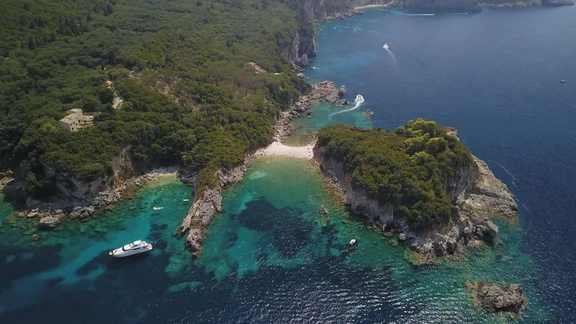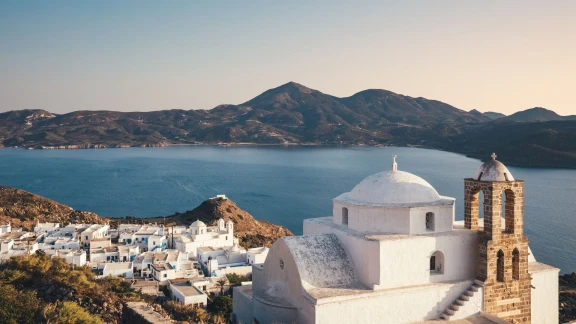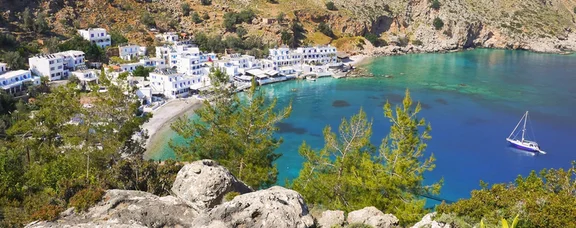


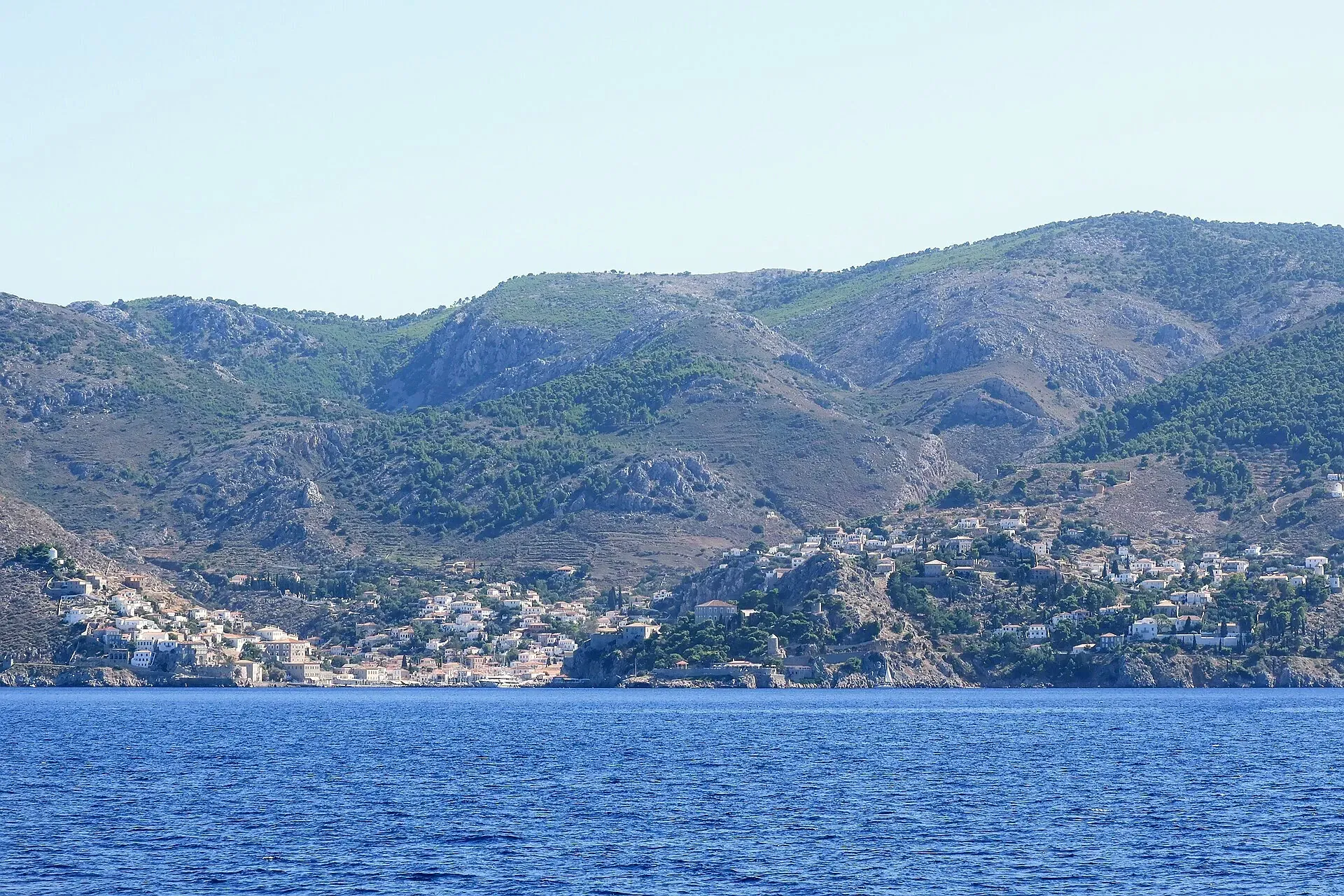
The ferry slows, rounds a last promontory, and Hydra appears all at once: an amphitheatre of stone houses raised above a tiny harbour, without a single car to disturb its calm. On the quay it is donkeys that wait, not taxis. Welcome to the most singular island in the Saronic Gulf, barely an hour and a half from Piraeus. Hydra, in Greece, made a rare choice: to banish engines. That is precisely what makes it an interlude outside time, made for anyone who likes to travel without hurrying.
| In brief | The car-free island of the Saronic Gulf: an amphitheatre harbour, coastal paths and a silence that has become rare in Greece. |
| Ideal for | Travellers of 60+ in search of calm, heritage and gentle walks at the water's edge |
| Best season | Spring (April-June) and autumn (September-October) |
| Pace | Gentle: getting about on foot, by donkey or by water taxi |
| How to get there | Fast ferry from Piraeus, about 1 h 30 |
| Our holiday | No Kelifos tour on Hydra: free inspiration, to be combined with our walking holidays in Greece |
An island that has banned the car, and even the bicycle
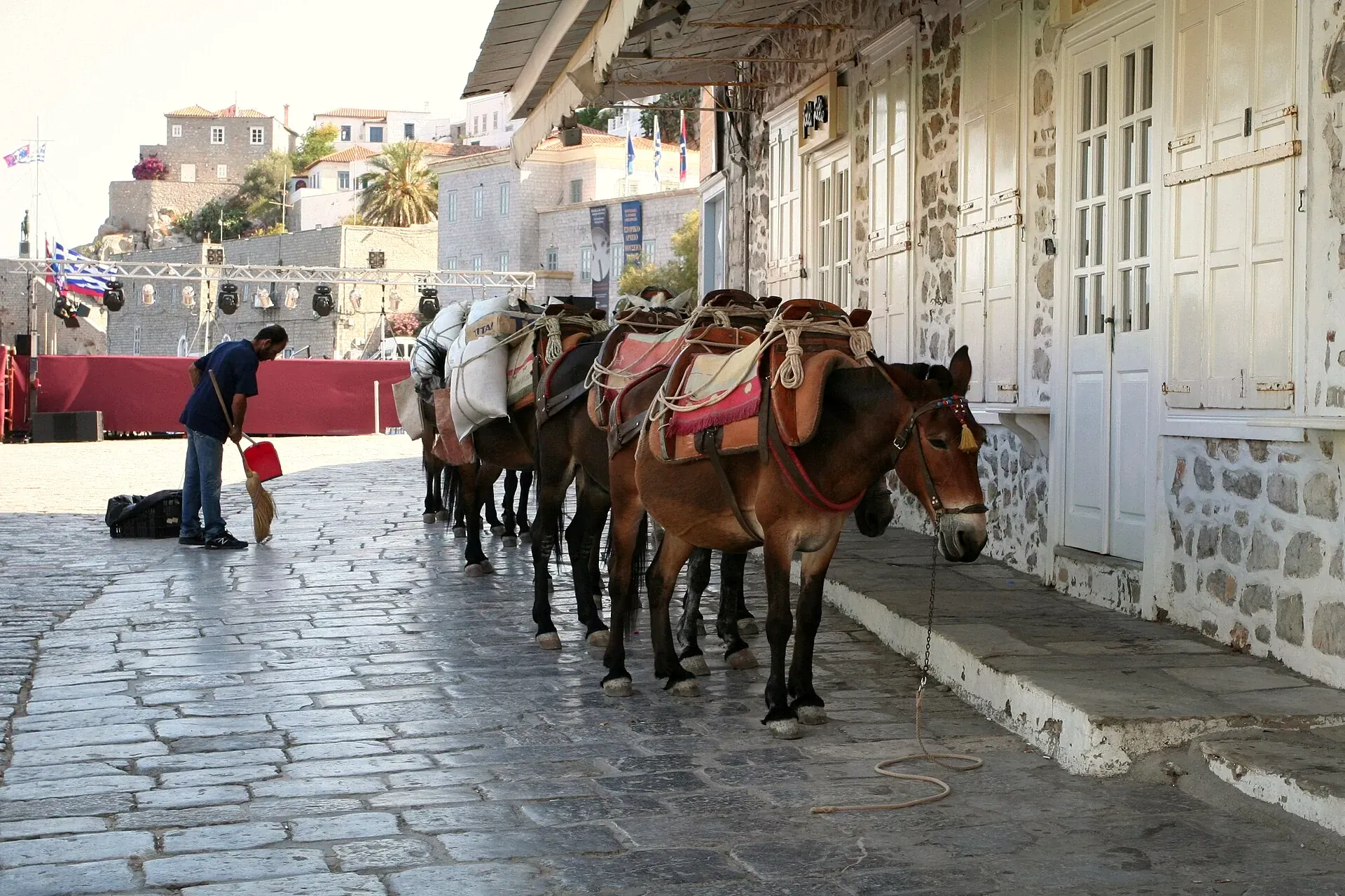
The first thing that strikes you on Hydra is what you do not hear. No horn, no scooter, no traffic. A law of the 1950s banned motor vehicles on the island, and the measure goes further than you might think: even bicycles are prohibited. As a result, you get about here as people did two centuries ago, on foot through the maze of lanes, by donkey or mule for loads, and by water taxi to reach a distant cove.
That choice changes everything. You walk in the middle of the roadway without thinking about it, children play on the quays, conversations are held quietly. For a traveller looking for rest, it is a luxury that has become rare in the Mediterranean. And since distances in the town stay short and the slopes reasonable, the absence of cars never complicates life: it lightens it. You set down your bags and let yourself be carried by the island's rhythm.
An amphitheatre harbour and shipowners' houses
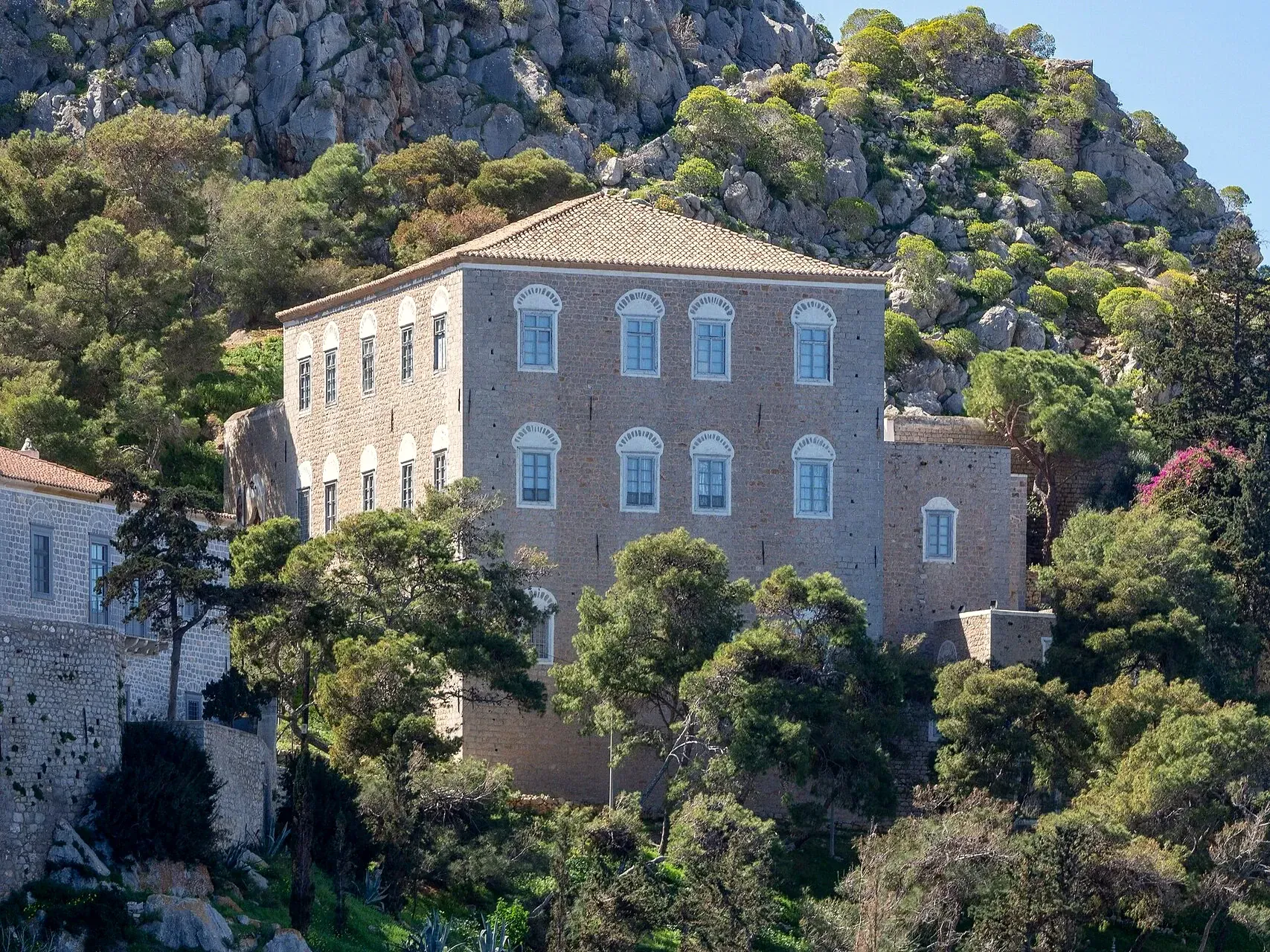
Hydra owes its beauty to a golden age. In the 18th century, the island was one of the great maritime powers of the Aegean. Its merchant fleet numbered more than a hundred ships criss-crossing the Mediterranean and the Black Sea, loaded with grain, silks and spices. The shipowning families built their fortunes there, and with them proud stone houses, the archontika, which you glimpse clinging to the slopes above the harbour.
These captains' houses, high-ceilinged, decorated with frescoes and marble floors, still tell of that prosperity. Some can be visited, such as the house of the Kountouriotis family, now a museum. At the end of the day, sit on a harbour terrace: the golden light slides over the façades, the fishing boats rock, and you understand why so many travellers fall in love with this setting. A few old bronze cannon, turned towards the open sea, recall that this elegance was also that of a fighting island, a heroine of the Greek War of Independence.
The coastal paths: Kamini, Vlychos and Mandraki
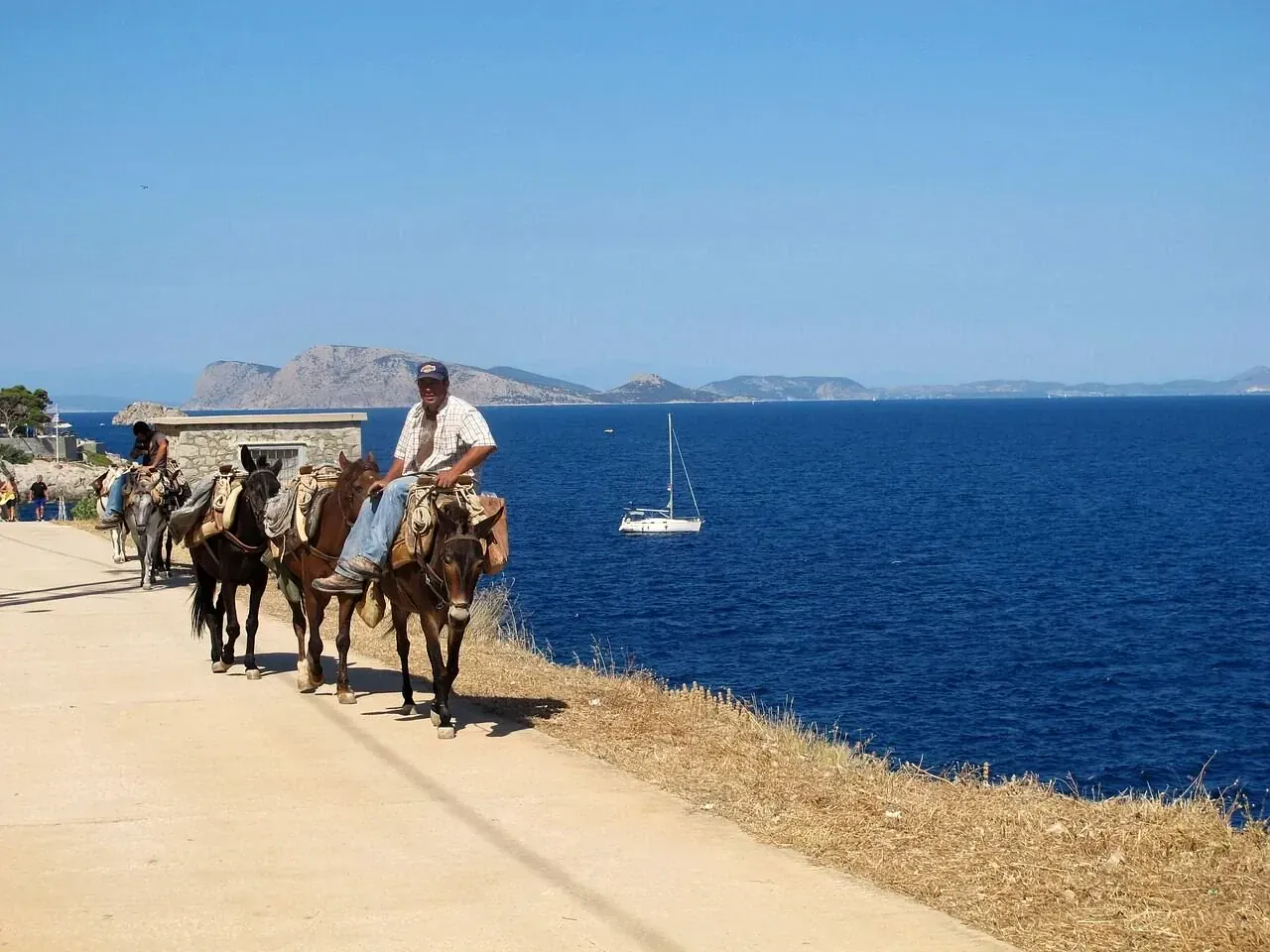
It is on foot that you best taste Hydra. From the harbour, a coastal path runs west, almost level, paved in places, dotted with small coves where you can swim. In about twenty minutes of steady walking you reach Kamini, a fishermen's hamlet with a miniature harbour where the nets dry in the sun. The path continues to Vlychos, its pebble beach and its old stone bridge, about half an hour further. You stop on the way for a dive, then for a fish lunch in the shade of a tamarisk.
To the north, another path leads to Mandraki, about twenty minutes from the harbour, where the island's only sandy beach is found. These are gentle walks, within everyone's reach, which you adapt to your mood of the day. If the heat rises or your legs hesitate, a water taxi brings you back to the harbour in a few minutes. On Hydra, walking is never a constraint: it is the natural way to link two swims.
The monastery of Profitis Ilias, up in the heights
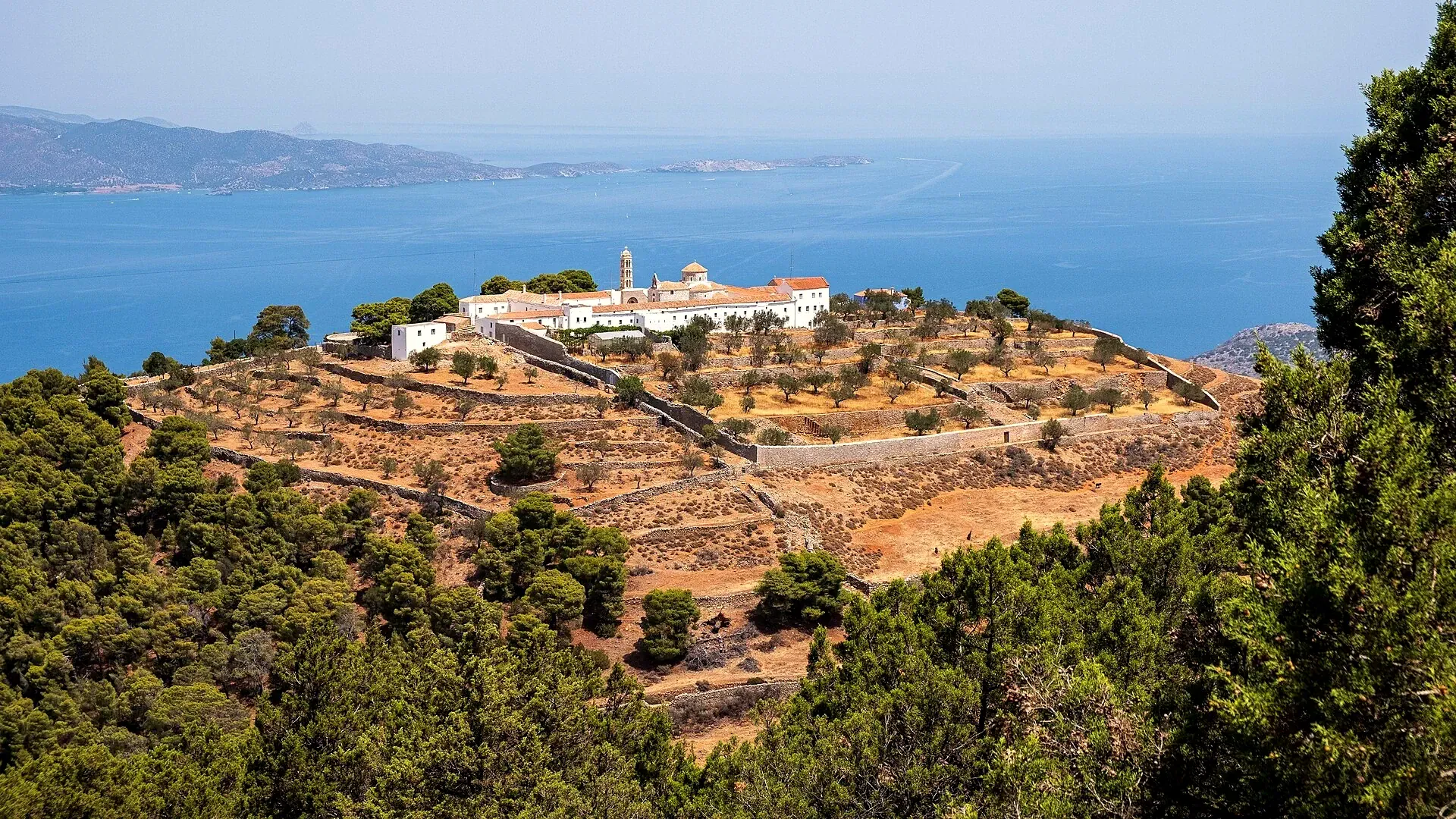
For anyone wanting to gain a little height, a path climbs gently from the town towards the monastery of Profitis Ilias, perched on the slopes of Mount Eros, the island's highest point. The climb is made at your own pace, in the shade of the pines, with regular halts to catch your breath and take in the panorama. At the top, the reward is total: the harbour of Hydra draws its perfect amphitheatre below, the sea sparkles, and in clear weather you can make out the coasts of the Peloponnese on the horizon.
The monks still live there and maintain the place with care. The silence up there is broken only by the wind and the distant chime of a bell. It is a walk we recommend early in the morning, before the sun heats up, or at the end of the afternoon for the light. Nothing demanding: only the pleasure of climbing unhurriedly towards a viewpoint that sums up the whole island.
Hydra, refuge of artists
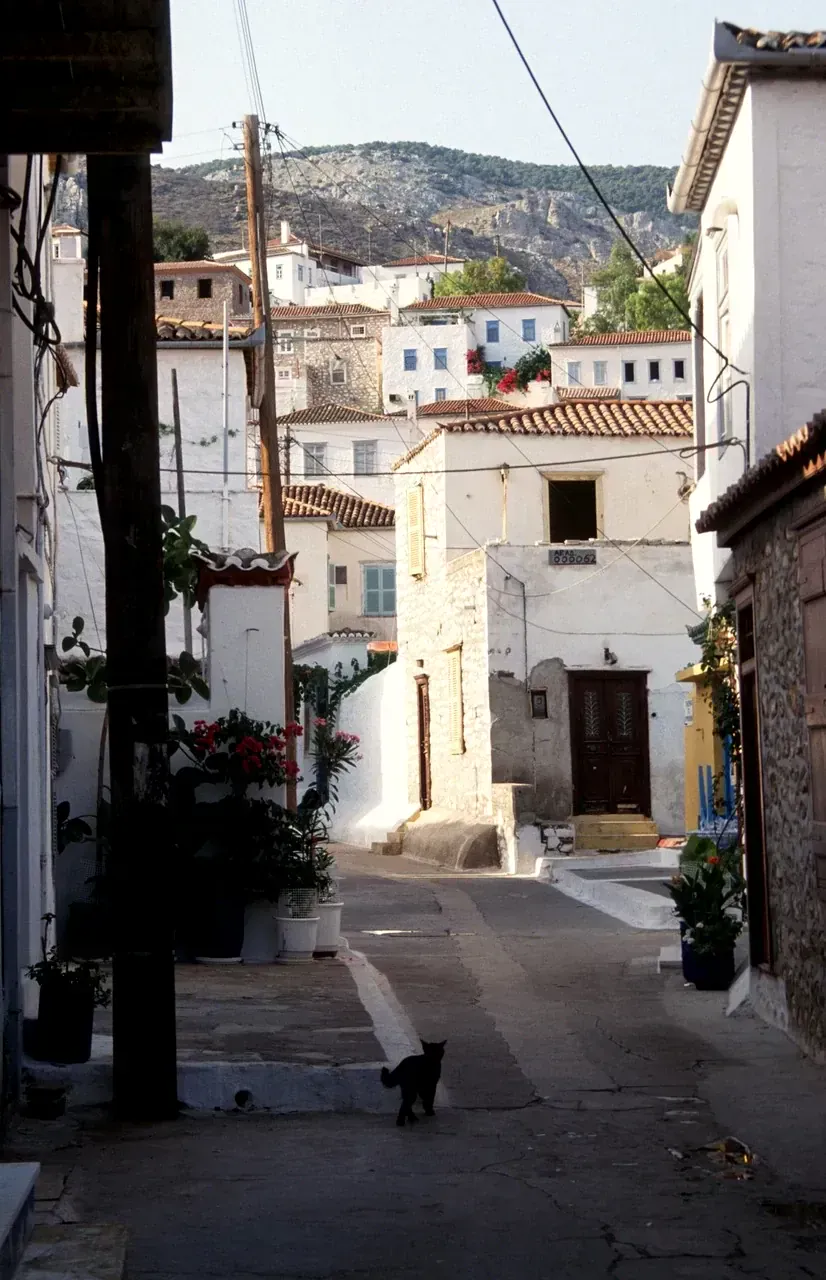
In the 1960s, Hydra became the haunt of an international bohemia. The singer Leonard Cohen bought a house there in 1960 and lived there for several years, writing and composing facing the sea, alongside his muse Marianne Ihlen. Before him, writers such as Henry Miller and Patrick Leigh Fermor had succumbed to the island's charm, and painters set up their studios there. That artistic memory still floats in the lanes, in the galleries and the cafés where people talk music and literature.
The island drew those creators for the same reasons that appeal to today's traveller: the bare beauty of the stone, the light, the calm and that impression that time flows differently. You come to Hydra for that extra soul as much as for its landscapes.
Flavours and the art of living

When evening comes, life gathers around the harbour and in the lanes above it. The tavernas serve the fish of the day grilled quite simply, dressed with olive oil and lemon, with a few mezze and a glass of local wine. Hydra also has its signature sweet, amygdalota, small melting almond cakes that people gladly bring home in their luggage. Take the time for a slowly prepared Greek coffee on the quay, watching the donkeys, the boats and the cats basking in the sun go by: it is a spectacle you never tire of.
The island lends itself wonderfully to what Kelifos loves above all, travel on a human scale, where you savour the encounters and the flavours as much as the landscapes. To place Hydra among the other destinations of the archipelago, our guide to choosing the Greek island that suits you will help you see clearly, and our selection of the most beautiful Greek islands sets it in the wider picture.
When to go and how to get there
Hydra is savoured preferably in spring (April to June) or in autumn (September and October). The temperatures then invite you to wander, the paths are in flower or golden depending on the season, and the island breathes far from the summer crowds. Summer remains pleasant near the water, but the stone stores the heat and the harbour fills up during the day. In the depths of winter, many places close, even if the atmosphere then has a rare charm.
You reach Hydra by sea, from Piraeus, the port of Athens. The fast ferries (Flying Cat, Hellenic Seaways) link the island in about an hour and a half; slower boats also exist, more economical, for those who like travelling at the water's pace. Many visitors come only for the day: that is a pity. Hydra really gives itself up in the evening and early in the morning, when the day trippers have left and the island recovers its silence. Give yourself at least one night on the spot.
Hydra belongs to the Saronic islands, easy to reach and perfect for a first discovery of Greece on foot. If the idea of walking gently from one village to the next, with no constraint and no car, tempts you, take a look at our suggestions for easy walks in Greece. You will find there the spirit of Hydra, in other islands and on the mainland.
Frequently asked questions about Hydra
How do you get to Hydra from Athens?
Hydra has neither an airport nor a bridge: it is reached only by sea, from Piraeus, the great port of Athens. The fast ferries (Flying Cat, Hellenic Seaways) reach the island in about an hour and a half, while slower, more economical boats take a little over 2 h depending on the stops. In high season, it is better to book your ticket in advance, especially at weekends.
Why are there neither cars nor bicycles on Hydra?
A law of the 1950s prohibits all motor vehicles on the island, and the rule extends even to bicycles. The aim was to preserve the calm and the character of Hydra, whose cobbled, steep lanes lend themselves poorly to traffic. So you get about on foot, by donkey or mule for loads, and by water taxi to reach the coves. There is therefore no point looking to hire a bicycle on the spot.
Can you visit Hydra for the day from Athens?
Yes, many visitors discover it on a day cruise from Athens, often combined with the neighbouring islands of Aegina and Poros. It is a pretty taster, but the island gives itself up above all in the evening and early in the morning, once the day trippers have left. If you can, allow yourself at least one night on the spot to taste its real silence.
Where can you swim on Hydra?
Hydra has no long sandy beaches, rather pretty coves reached on foot along the coast. To the west, the path leads to Kamini then to Vlychos and its pebble beach, about half an hour's walk. To the north, Mandraki shelters the island's only sandy beach. For the more retired coves, a water taxi drops you there in a few minutes from the harbour.
Your question is not on this list?
Write to us, and we will reply to you personally by email.
Continue reading
- Greece on foot, gently: our finest accessible walks
- Which Greek island is right for you? The complete guide
- Hiking in Greece: the best trails island by island
- The Most Beautiful Greek Islands, one for every wish
Article written by
Maria Papadopoulou (Μαρία Παπαδοπούλου)
Editorial lead
I hike, and Greece is the place I keep coming back to. My initial studies (a Master’s in Marketing and a degree in Applied Foreign Languages) taught me how to build an editorial project, and the trails taught me the… Read more