

In the early morning a light mist still clings to the walls and the rocks seem to float, detached from the earth. Then the sun rises over the plain of Thessaly, the stone turns to honey, and up there, set on dizzying pinnacles, monasteries appear as though suspended between sky and land. To visit Meteora in Greece is to give yourself one of those rare moments where the landscape takes your breath away, where you understand without a word being needed why monks chose these summits to come closer to heaven.
| In brief | Six Orthodox monasteries perched on sandstone pinnacles, in Thessaly, a UNESCO World Heritage Site since 1988. |
| Ideal for | Lovers of grandiose landscapes, Byzantine heritage and places charged with meaning, to be discovered without hurrying |
| Best season | Spring (April to June) and autumn (September to October): soft light, welcome coolness |
| Pace | Gentle, at your own rhythm: short walks between the viewpoints, a few steps cut into the rock to reach the monasteries |
| Our trip | Free inspiration: Kelifos does not offer a trip dedicated to Meteora, but you can link it to a tour of mainland Greece |
Why Meteora has amazed people for centuries
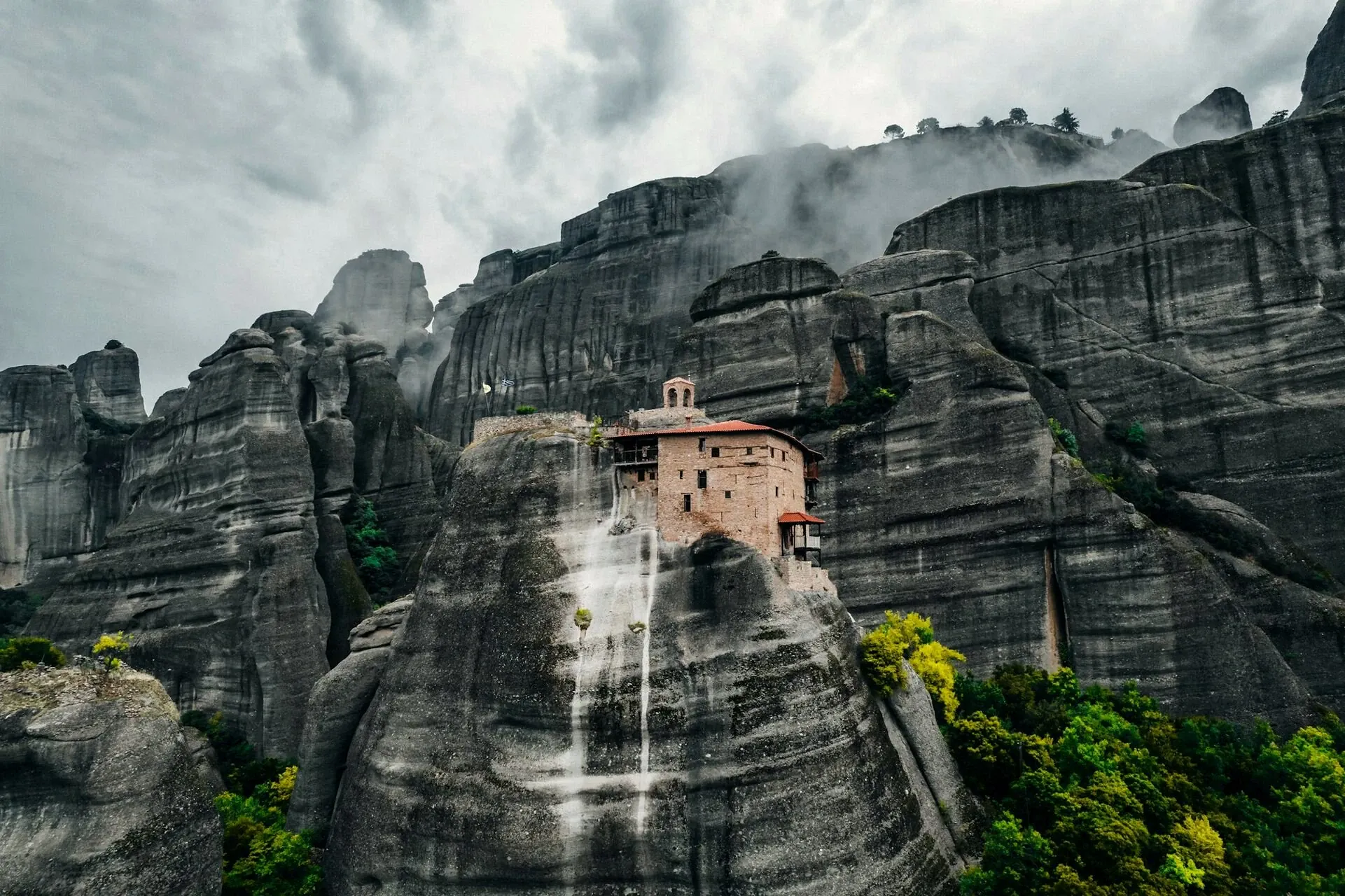
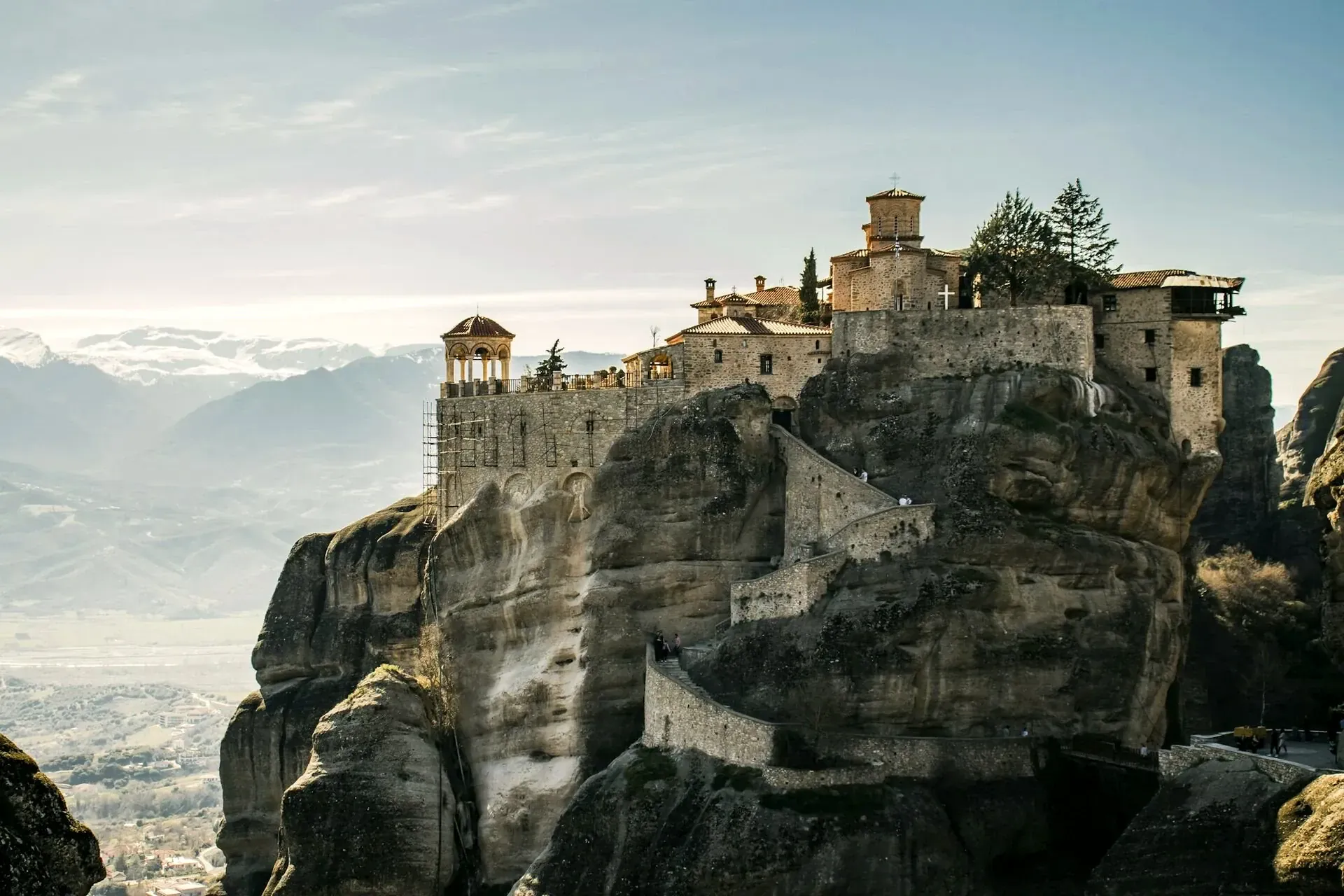
The word Meteora comes from the Greek meteoros, meaning "suspended in the air". That says it all. These colossi of sandstone and conglomerate rise up to three hundred metres above the plain, like a forest of stone escaped from a dream. The geology tells a long story: millions of years ago a river delta laid down sand and pebbles there, the seabed rose, and then water, wind and frost patiently sculpted these rounded towers.
The first hermits settled in the caves of these walls as early as the 11th century, in search of silence and solitude. From the 14th century onwards, monks built real monasteries on the summits, in places you would think inaccessible. And they very nearly were: you went up only by retractable ladders or hoisted in a net, at the end of a winch, hanging above the void. That audacity, coupled with a beauty that seems painted rather than built, has earned the site UNESCO World Heritage status since 1988, both for its nature and for its culture.
The six hanging monasteries, one by one
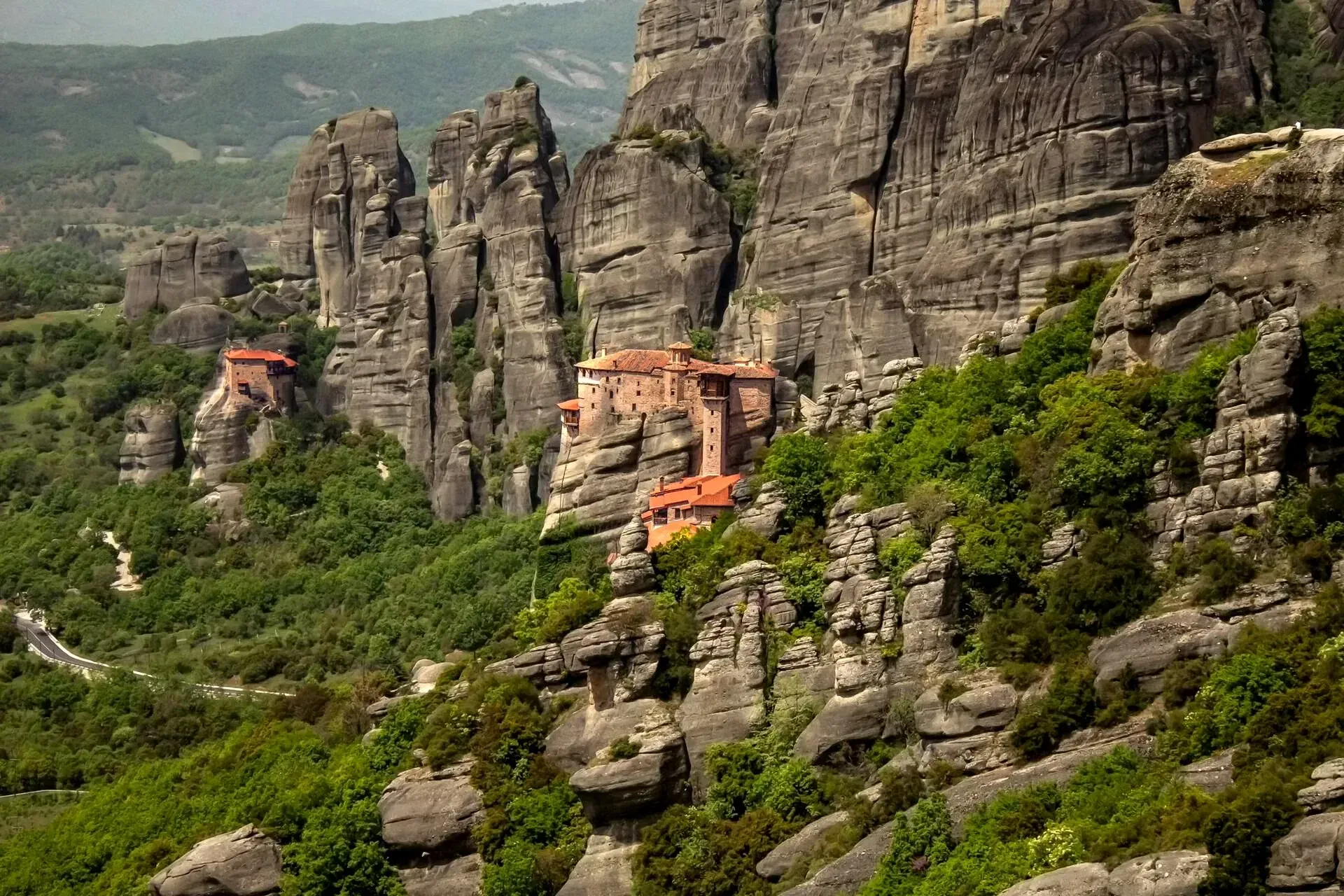
Of the twenty or so monasteries that once crowned Meteora, six remain inhabited today and open to visitors. Each has its own character and its own panorama. There is no need to see them all: two or three in a day leave time to savour each place.
- The Great Meteoron (Megalo Meteoro): the oldest, founded around 1340 by the monk Athanasios, and the largest. Set on the highest rock, it houses a museum, a former refectory and a vaulted kitchen blackened by the centuries. The view over the whole site from there is immense.
- Varlaam: perched on a neighbouring pinnacle, separated from the Great Meteoron by a deep ravine. Founded in 1517, it is almost as large, with a magnificent panoramic terrace and richly detailed frescoes from 1548. You can still see the old winch tower and the net used to hoist up men and provisions.
- Roussanou (or St Barbara): probably the most photographed, because it caps an entire slender spur, like a nest of stone. Having become a women's monastery at the end of the 1980s, it is reached by small flower-lined footbridges.
- Agios Nikolaos Anapafsas: the closest to the village of Kastraki, founded at the end of the 14th century. Small and intimate, it preserves remarkable Byzantine frescoes, among the finest on the site.
- Agios Stefanos: the most accessible of all. You enter on the level by a simple footbridge, without having to climb, which makes it the ideal choice if steps put you off. It is today a welcoming community of nuns.
- Agia Triada (the Holy Trinity): the most isolated, perched alone on its pinnacle facing the town of Kalambaka. It is reached by about a hundred and forty steps cut into the rock, rewarded by a striking panorama. Film lovers will recognise it: it serves as the setting for a scene in the James Bond film For Your Eyes Only (1981).
Kalambaka and Kastraki, your villages at the foot of the rocks
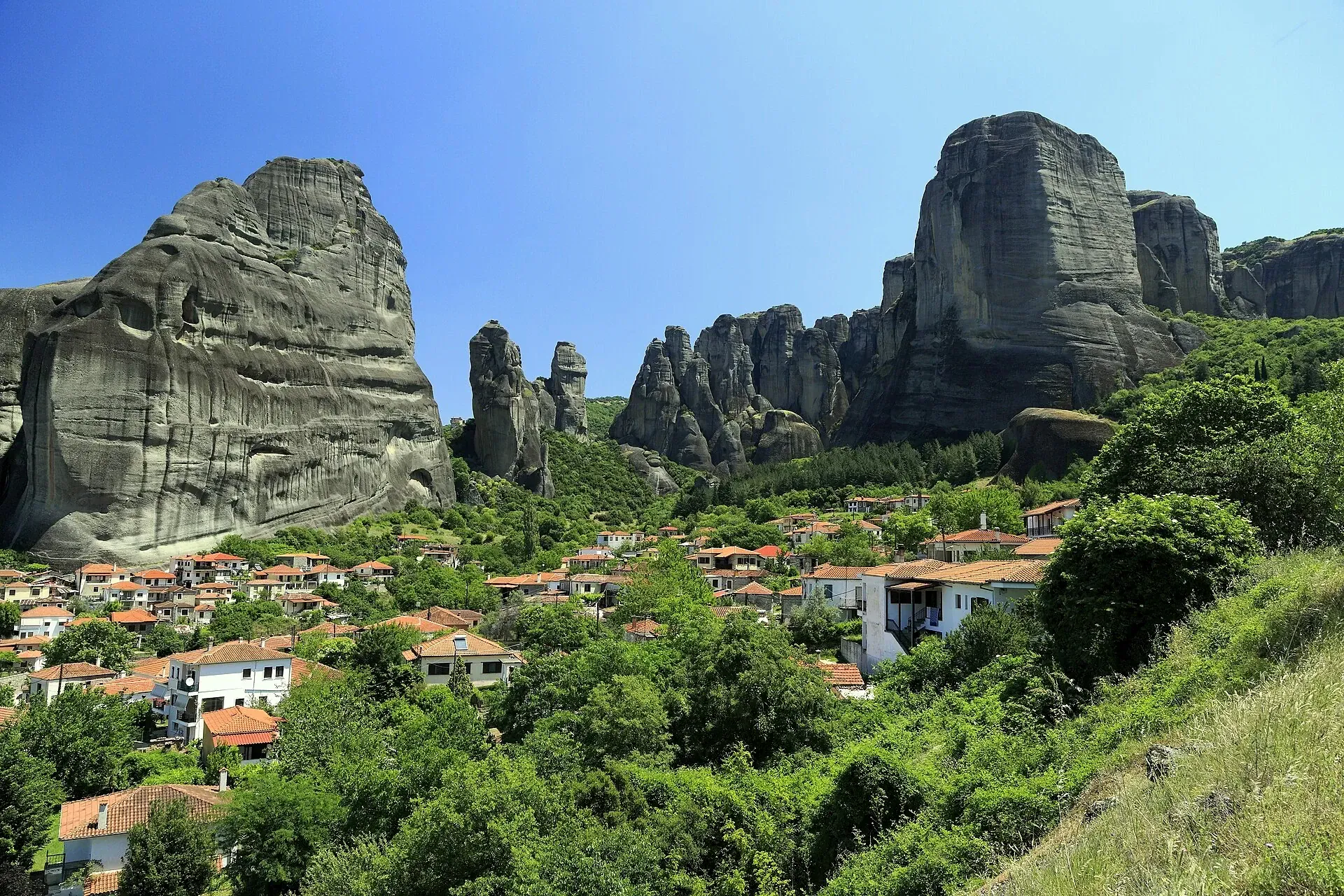
At the foot of the pinnacles lie two peaceful little towns that make perfect bases. Kalambaka is the larger, lively and well equipped, with its tavernas, its terraces and its fine Byzantine church of the Dormition. Kastraki, smaller and more village-like, huddles literally beneath the rocks, a few minutes from the paths. Both are less than a quarter of an hour from all of the monasteries.
Set down your bags for 2 or 3 nights in one or the other, and you will taste the simple pleasure of a dinner on a terrace facing walls that catch fire at dusk. The tavernas there serve a generous Thessalian cuisine, slow-cooked lamb, mountain cheeses, vegetables from the garden and wine from the region, in an unfussy atmosphere.
On foot between the monasteries, on the paths of long ago
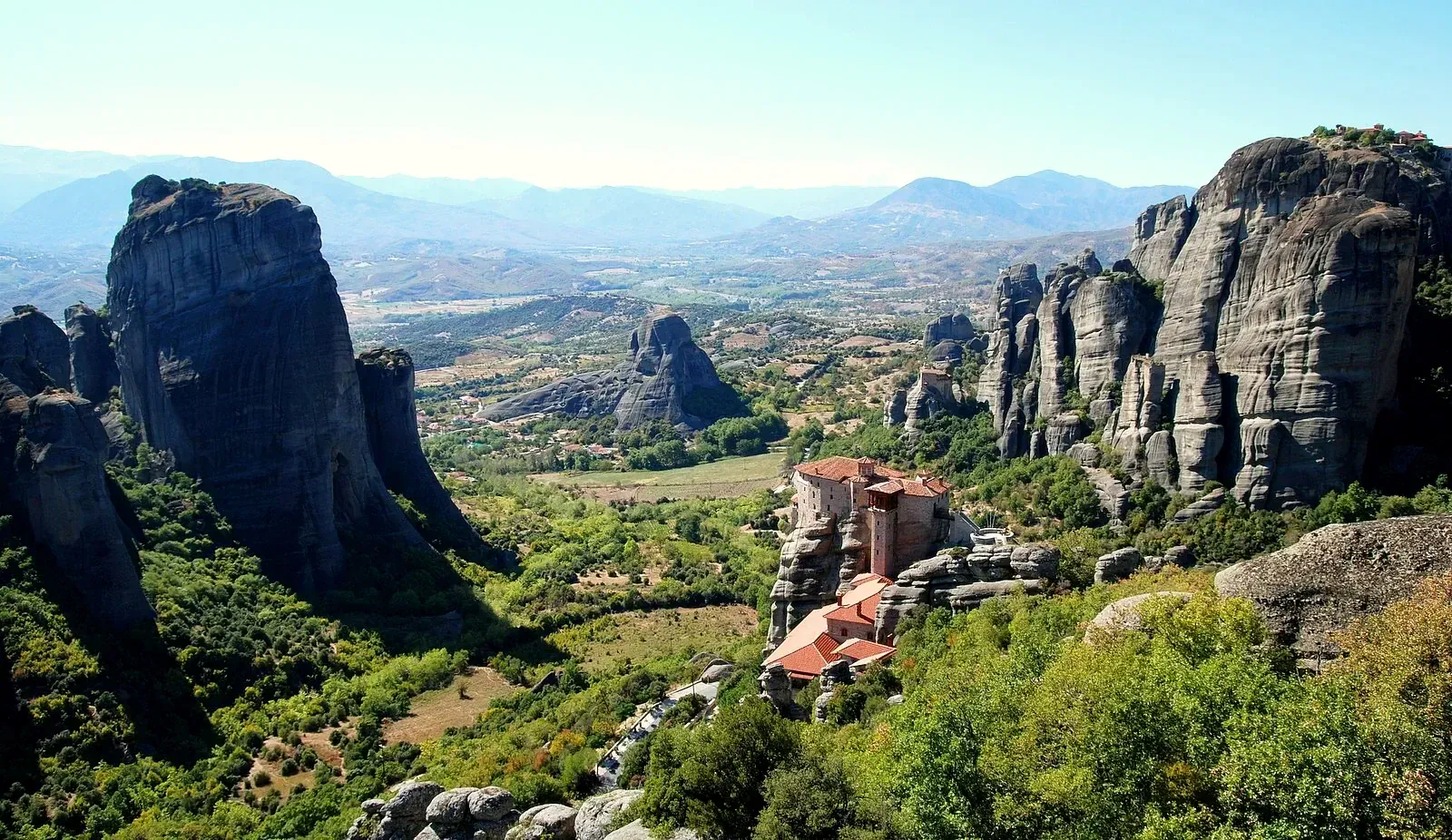
Long before the roads, paths linked the monasteries to one another, used every day by the monks. These ancient ways still exist, and they offer the finest way to discover Meteora: on foot, at your own pace, as close as possible to the rock. You walk in the shade of the oaks, pass between two sandstone towers, and suddenly come out on a viewpoint where no car has arrived before you.
Nothing demanding here: most of these walks take 1 to 2 h, on gentle paths you adapt to the mood of the day. You can link the Great Meteoron and Varlaam by a short path, or climb up from Kastraki by the old paved way rather than by the road. And if a climb tempts you less, the panoramic road serves all the monasteries: you are free to walk a little, drive a little, and stop at every viewpoint.
Sunset over Meteora, the moment not to miss
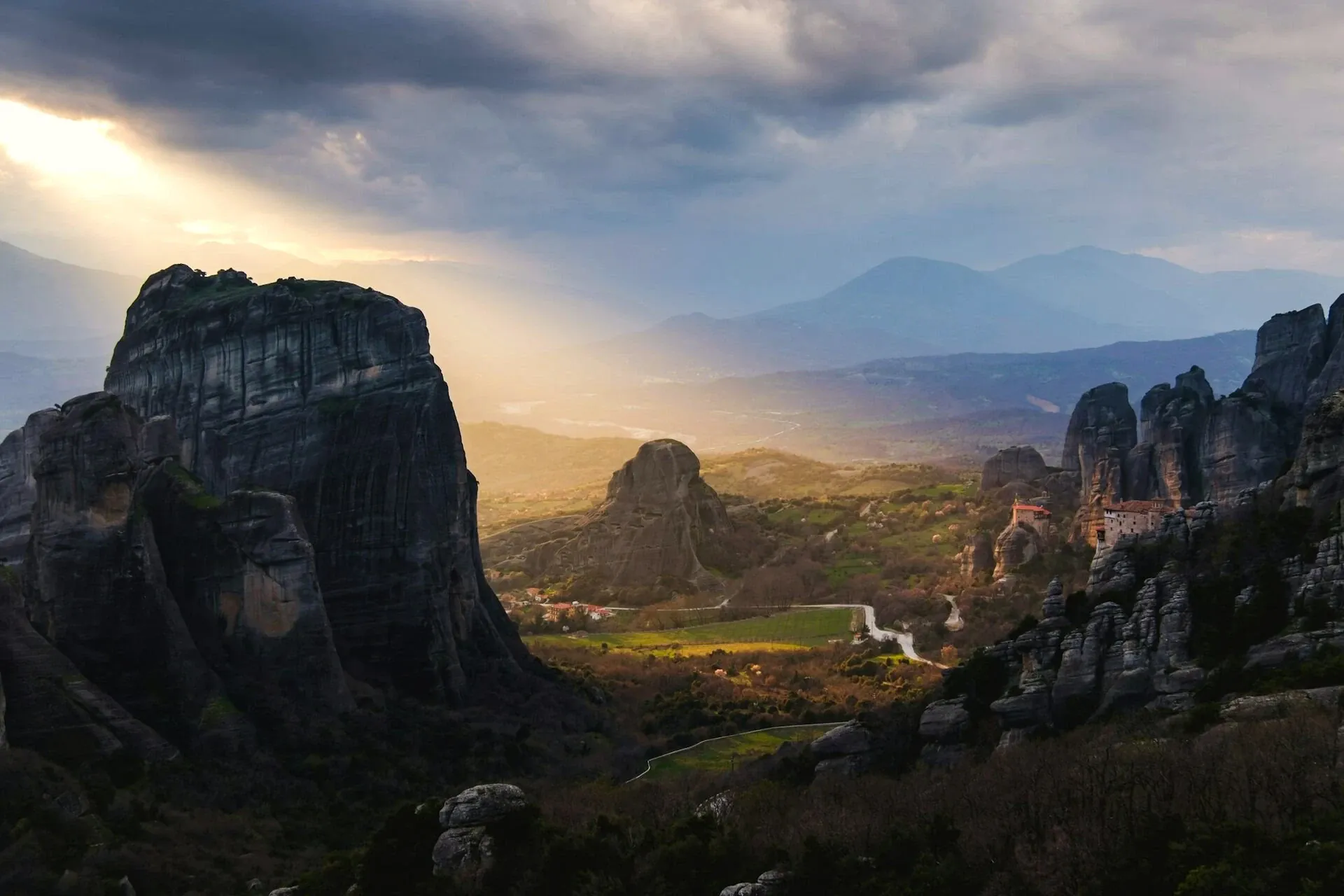
If you had to keep only one memory, it would be this one. At the end of the day the low light sets the sandstone alight in gold and pink, the shadows lengthen in the ravines, and the monasteries seem to float more than ever. The Psaropetra viewpoint, near Roussanou, is one of the most sought-after spots for this spectacle, but any west-facing rock will do. Arrive a little early, settle yourself quietly, and let Thessaly fall asleep before your eyes.
When to visit Meteora and how to get there
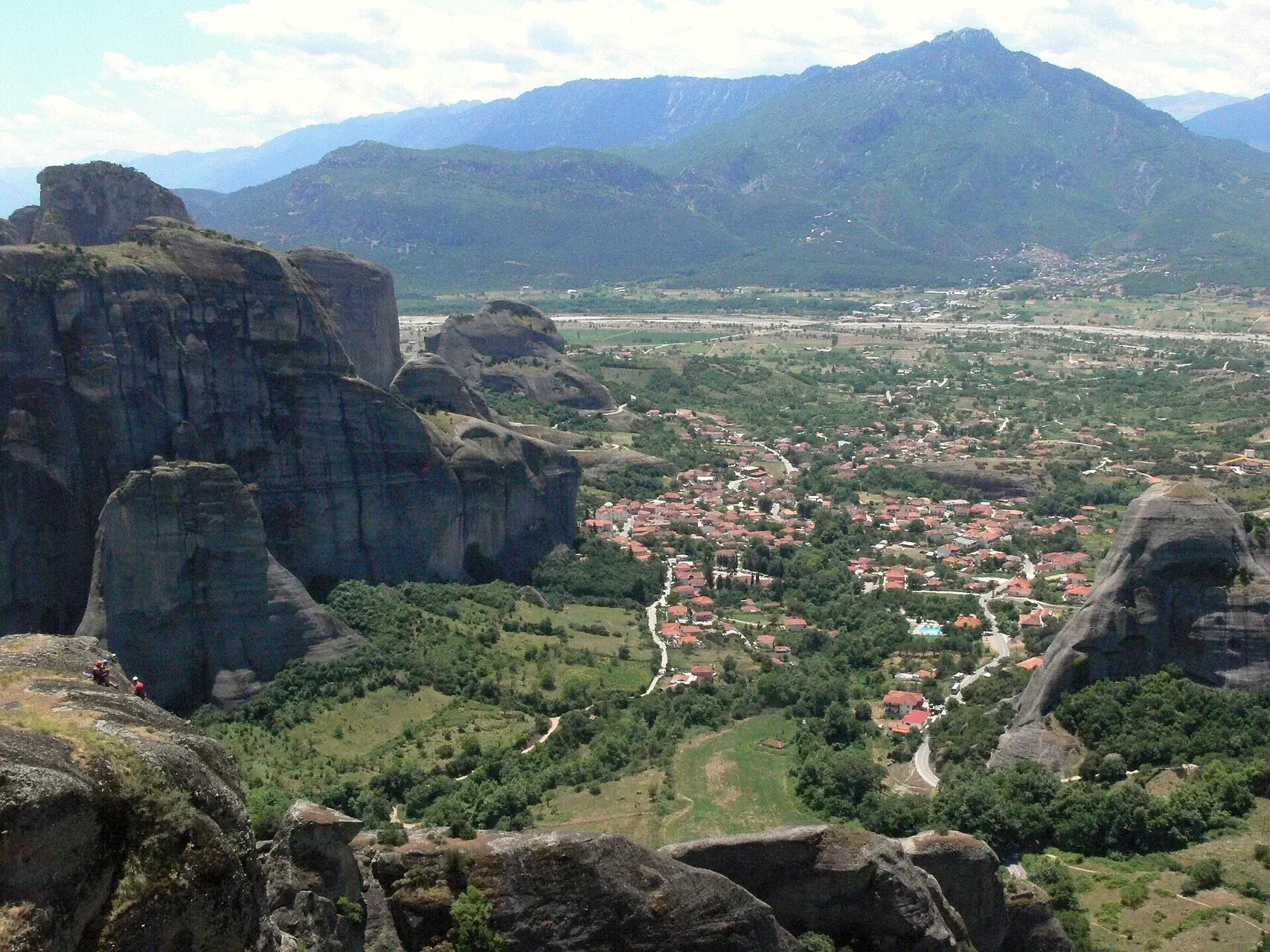
As is often the case in Greece, spring (April to June) and autumn (September to October) are the most agreeable seasons: the light is soft, the heat bearable and the hills in flower in spring. Summer remains possible but the plain of Thessaly becomes scorching in the middle of the day. Winter has a charm of its own, when mist wraps the pinnacles and the monasteries emerge from the clouds, almost unreal. The site can be visited all year round, but remember to check the opening times, which change with the season.
Meteora lies about 350 km north of Athens, that is 4 to 5 h by road. The train is an agreeable option: from Athens as from Thessaloniki, you reach Kalambaka (usually with a change at Paleofarsalos), the last stretch leading to the very foot of the rocks. Many travellers fit the stage into a wider journey through mainland Greece, between Delphi, Mount Olympus and the capital.
What we would have liked to know before setting off
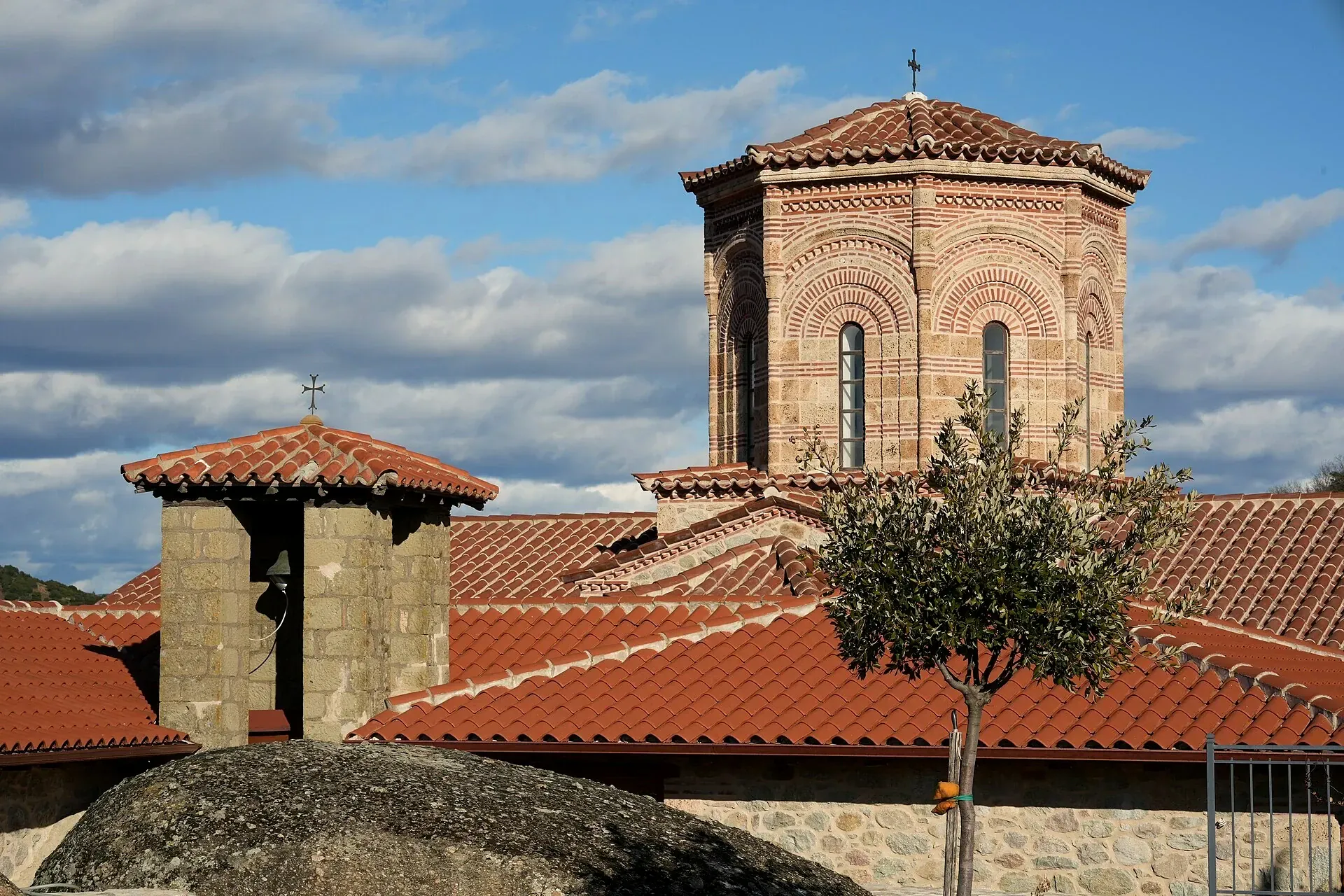
A few details make the visit more relaxed, and we would have liked to know them in advance. The monasteries are places of worship: clothing covering the shoulders and knees is required, and women must wear a skirt, with wraps lent at the entrance for those who do not have one. Each monastery closes one day a week, different from site to site, whereas all open at the weekend: a glance at the calendar before setting off avoids disappointment. A small entrance fee, modest, is asked at each monastery.
Bring comfortable shoes for the steps cut into the rock, a little water and something to protect you from the sun. And above all, do not try to string everything together: two or three monasteries in the day, broken up by a pause on a terrace, are worth more than a race against the clock. Meteora is savoured slowly.
Linking Meteora to your trip in Greece
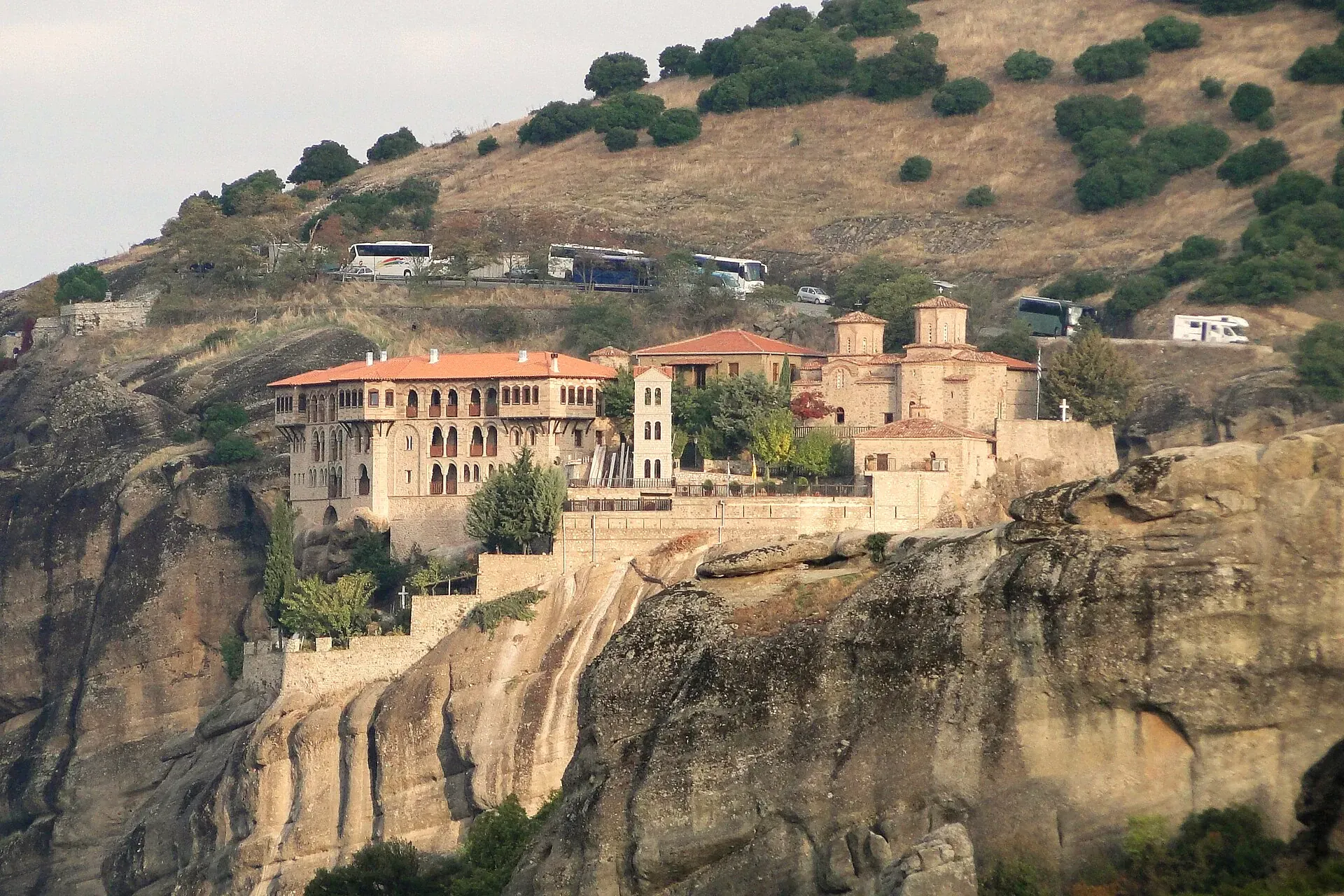
Let us be honest: Kelifos does not, to date, offer a trip dedicated to Meteora. Yet this unique place goes wonderfully with a discovery of mainland Greece, far from the islands and their beaches. To carry the inspiration further, our guide to a tour of mainland Greece places Meteora within a fuller itinerary, between ancient sites and mountain villages.
If what you dream of above all is thousand-year-old heritage and gentle paths, the Peloponnese self-guided in 10 days blends ancient theatres, turquoise coves and the Greek art of living, in the same quiet spirit that we love. And to explore all our ways of travelling the country on foot, at your own pace, visit our walking trips in Greece page.
Frequently asked questions about Meteora
How long do you need to visit Meteora?
A full day is amply enough to discover two or three monasteries at your own pace, taking time to linger at the viewpoints and enjoy the outlooks. If you want to see all six without ever hurrying, reckon rather on 2 days, ideally staying at Kalambaka or Kastraki. Most visitors in fact prefer to choose a few and savour them fully, rather than string everything together in the same day.
Which Meteora monasteries should you visit?
Six monasteries can be visited today: the Great Meteoron, Varlaam, Roussanou, Agios Nikolaos Anapafsas, Agios Stefanos and Agia Triada. If you had to keep only two, the Great Meteoron (the largest and the highest perched) and its neighbour Varlaam are the simplest to combine, since they share the same access. And if you would rather avoid steps, Agios Stefanos is reached on the level by a footbridge. Just remember to check the opening times, as each monastery closes one day a week, different from site to site.
How do you get to Meteora?
Kalambaka (sometimes written Kalabaka) is the access town, nestled right at the foot of the rocks. It is linked by train to Athens as well as to Thessaloniki, and its station is a stone's throw from the pinnacles. From Kalambaka the monasteries are only a few kilometres away, reached afterwards by car or on foot along the old paths. If you come by road, reckon on about 4 to 5 h from Athens.
What should you wear to enter the monasteries of Meteora?
The monasteries remain places of worship, and covering clothing is required at the entrance. Shoulders must be covered (avoid sleeveless tops) and the garment must come below the knee. Women are asked to wear a long skirt, and a wrap is lent at the entrance for those who do not have one. Men, for their part, must wear trousers.
Your question is not on this list?
Write to us, and we will reply to you personally by email.
Continue reading
- What to see in mainland Greece? The highlights of a tour
- Which Greek island is right for you? The complete guide
- Hiking in Greece: the best trails island by island
- When to Visit Greece: Our Month-by-Month Guide
Article written by
Maria Papadopoulou (Μαρία Παπαδοπούλου)
Editorial lead
I hike, and Greece is the place I keep coming back to. My initial studies (a Master’s in Marketing and a degree in Applied Foreign Languages) taught me how to build an editorial project, and the trails taught me the… Read more