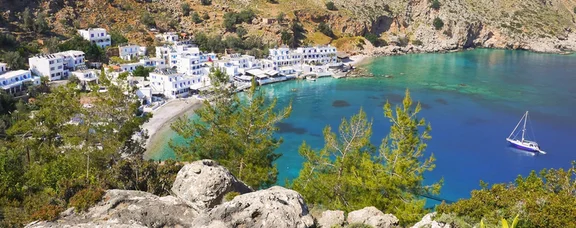


A waterfall in the hollow of the rock, the cool shade of plane trees after the sun of the coast, and at the end of the path a taverna where you order grilled fish almost with your feet in the water. That is what the easy gorges of Crete promise, those canyons shorter and gentler than great Samaria, where you walk at your own pace without ever straining. The island has a handful of them that can be covered in a few hours, almost always downhill, with a return assured by shuttle or by boat. You pass dry-stone walls, wild fig trees, the murmur of a thread of clear water. These are walks for taking your time, breathing in the thyme and the sage, and savouring Crete without the crowds.
| In brief | Cretan gorges without the crowds of Samaria |
|---|---|
| Ideal for | Quiet walkers who want shade, coolness and the sea at the end of the path |
| Best season | April to June, then September and October |
| Pace | Gentle, 2 to 3 hours of downhill walking, at your own rhythm |
| Our holiday | Crete, island of wonders |
Why choose the easy gorges of Crete
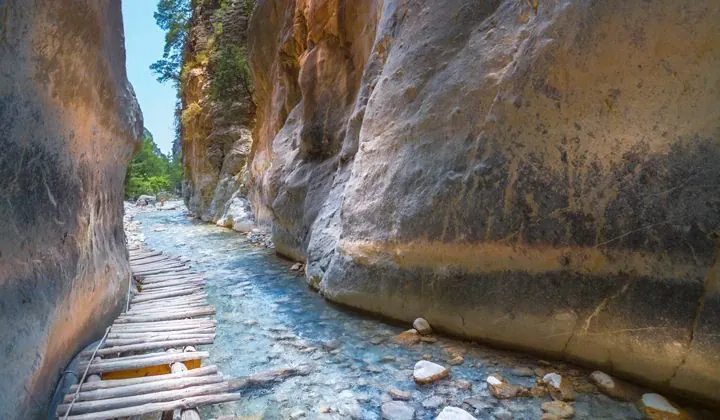
The Samaria gorge is a wonder, and that must be said plainly. Among the longest gorges in Europe with its 16 kilometres, listed as a UNESCO biosphere reserve, it remains one of the finest walks in the Mediterranean. But it is also a demanding day: 5 to 7 hours of descent, rocky sections from the very start, and at the height of summer several hundred visitors on the same path, sometimes more than a thousand on busy days. For anyone who values serenity, the early start and the queue at the entrance spoil a little of the magic.
The easy gorges of Crete offer another way, every bit as beautiful and far more peaceful. They are shorter, are walked largely downhill, and you come out of them fresh and happy rather than exhausted. Most offer a shuttle, a taxi or a boat for the return, which avoids any complicated logistics. Above all, you often walk almost alone there, in the shade of the plane trees, with the feeling of having the island to yourself. It is that Crete, the one of gentleness and recovered time, that we love to share.
The Imbros gorge: the most accessible
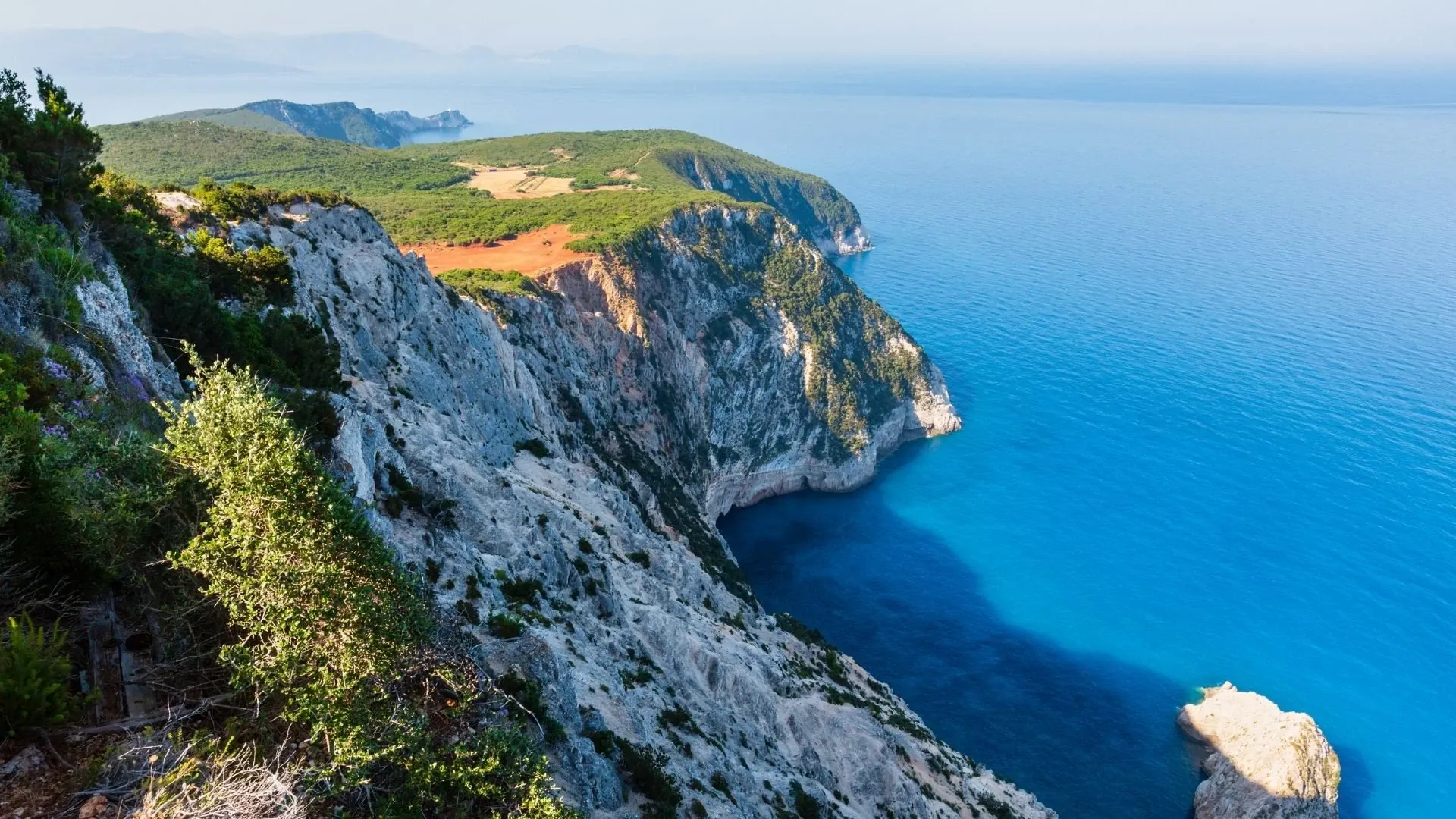
If you had to choose only one, it would probably be Imbros. The path starts from the village of the same name, high in the White Mountains, and drops steadily southwards over about ten kilometres. The gradient is even, never steep, and the wide, well-traced path lends itself to contemplative walking. Reckon on two to three good hours, breaks included, to reach the village of Komitades.
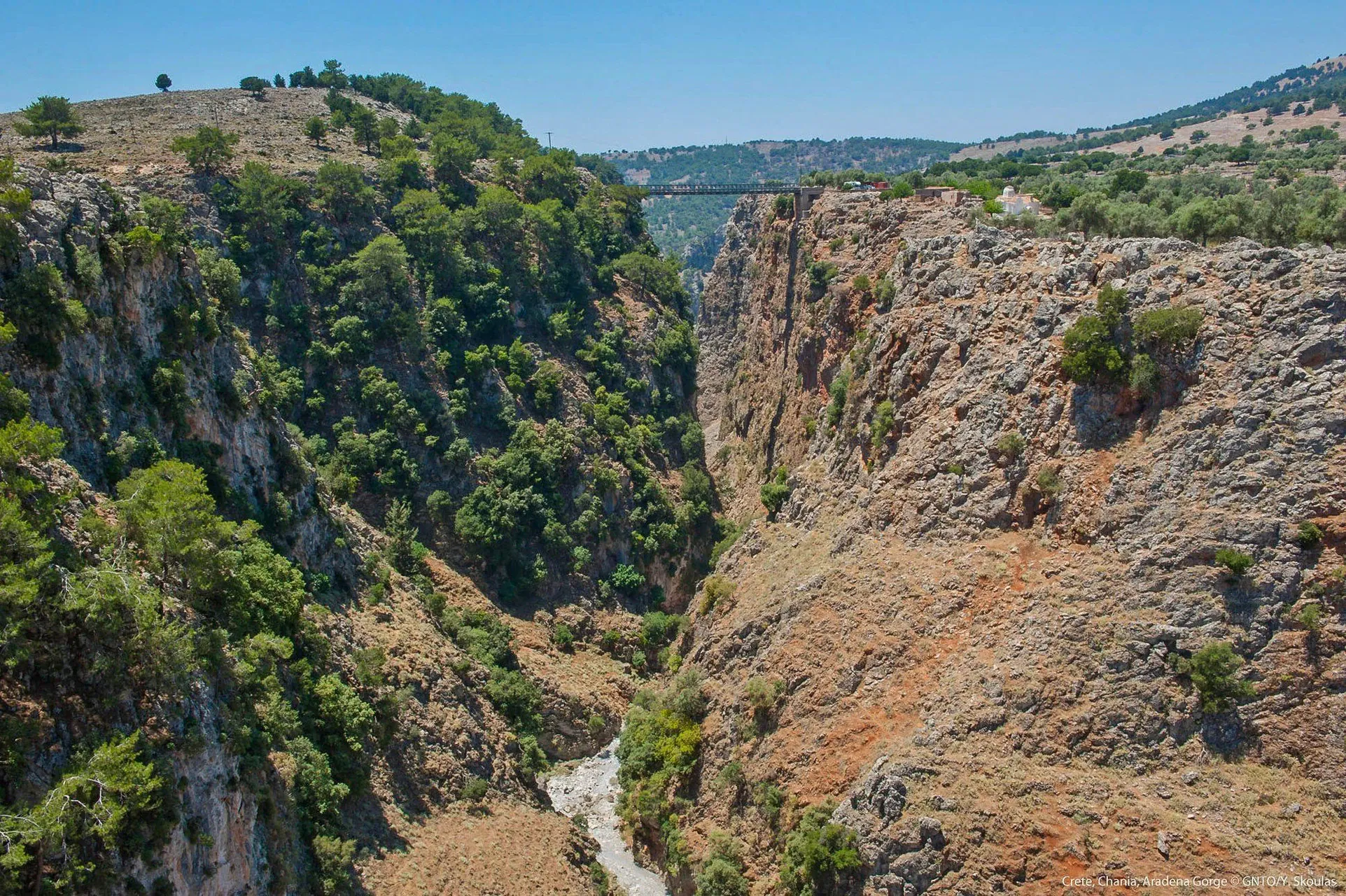
All the way down, the walls draw closer then move apart, sculpted by the centuries. At the narrowest passage, the rock leaves only a corridor barely more than a metre and a half wide, topped by vertiginous walls: a striking moment. Shepherds' walls line the path and the air smells of sage warmed by the sun. At Komitades, a shuttle or a taxi brings you back to your starting point, which makes the day simple to organise. A table in the shade, olives, fresh cheese: the Cretan reward is there.
The Agia Irini gorge: shade and coolness
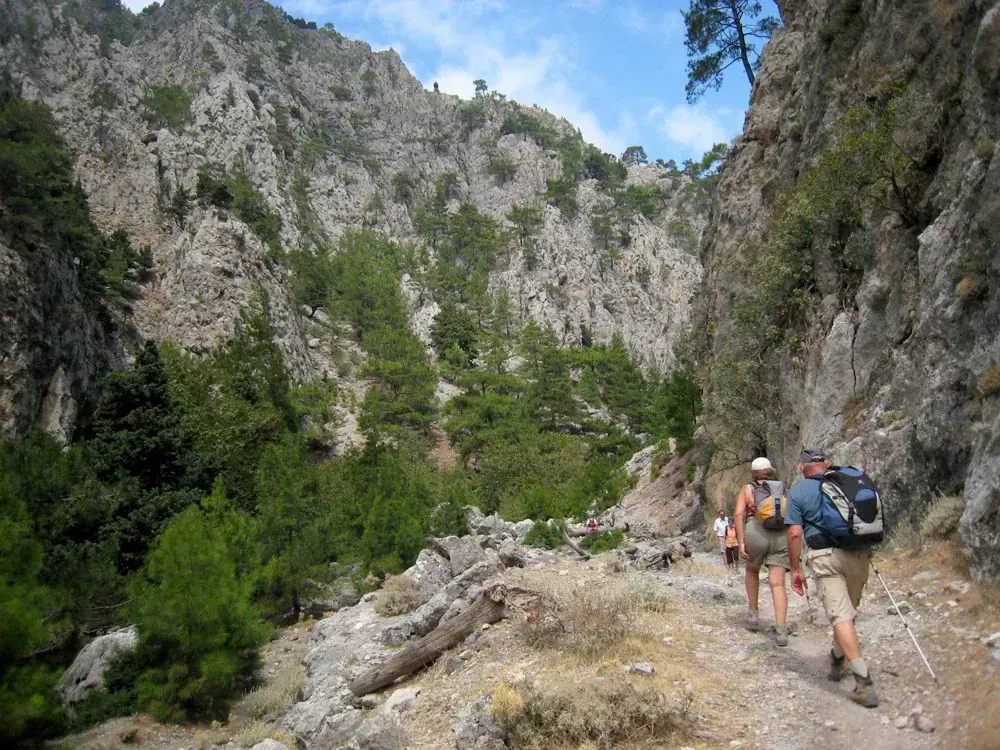
Less known than its neighbour Samaria, the Agia Irini gorge wins you over with its gentleness and its generous vegetation. The path descends for about 7 km, through a forest of pines, century-old plane trees and oleanders that offers almost continuous shade. It is precisely that leafy cover that makes it a delight even in strong heat: you move on in the cool, accompanied by birdsong and the murmur of water between the rocks.
The walk is easy, with no abrupt sections, and suits all walkers, even occasional ones. The path comes out a few kilometres from Sougia, a pretty seaside village where you gladly sit down to grilled fish facing the Libyan Sea. A taxi spares you the last kilometres of tarmac if you would rather save your strength for the swim. It is the ideal walk for a day of complete slowness, picnic in the bag.
The Richtis gorge: waterfall and greenery in the east
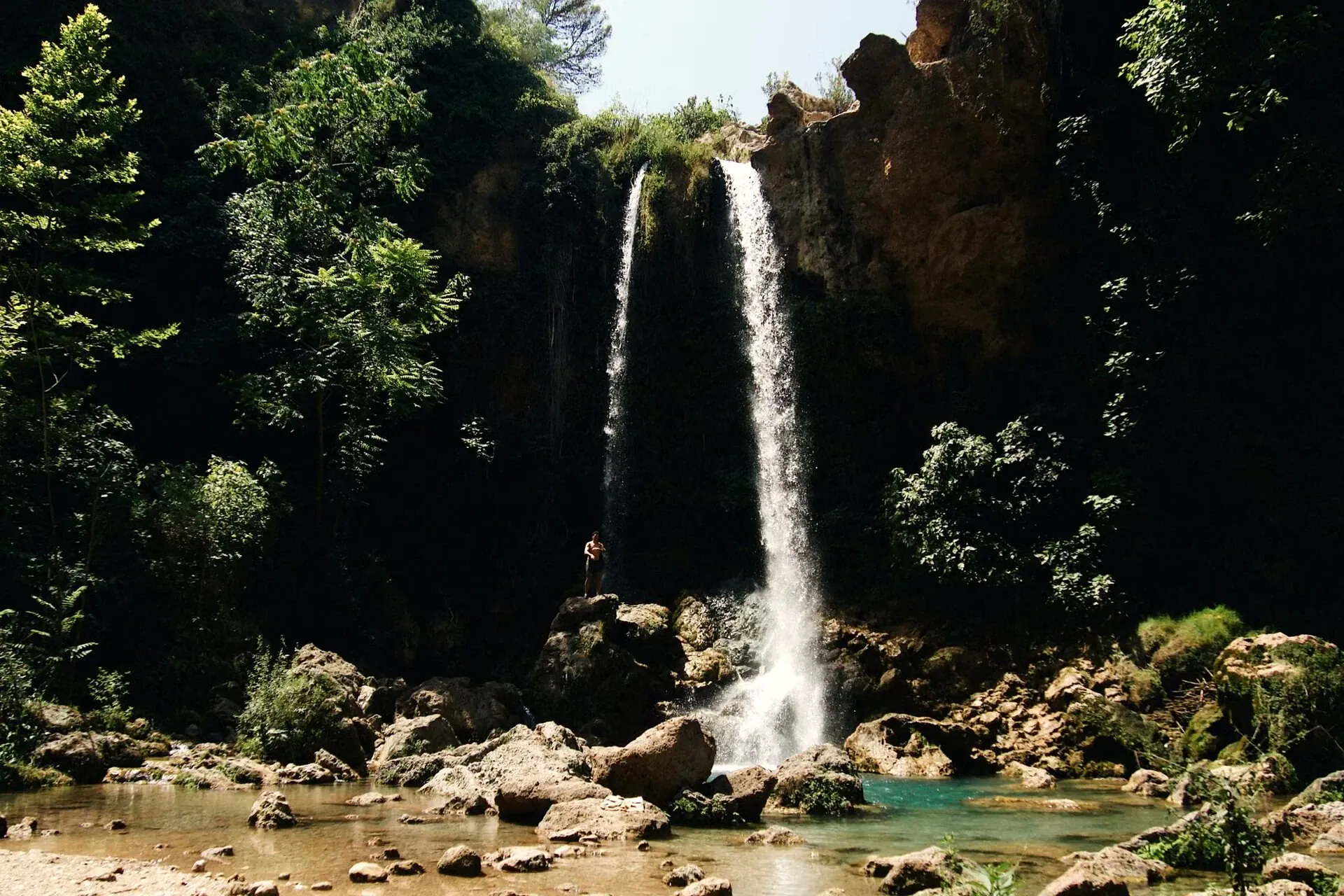
Far from the paths of western Crete, the Richtis gorge hides one of the island's prettiest secrets: a waterfall of more than 20 m that drops into a pool of clear water, in the middle of vegetation astonishingly lush for Crete. Plane trees, ivy and ferns make up an almost tropical setting, away from the tourist crowds.
An honest note is needed: the lower part of the gorge, the one dropping towards the beach, asks a little care, with a few places where you put your hands on the rock. But the waterfall is easily reached by a short path from the Lahanas bridge, in less than an hour of gentle walking, which lets everyone enjoy the finest part of the site at their own pace. Below, the small pebble beach of Richtis, fringed with tamarisks, invites a well-earned swim. This is eastern Crete, secret and green, which few travellers take the time to discover.
Towards the Libyan Sea: Loutro and Agia Roumeli, reached on foot or by boat
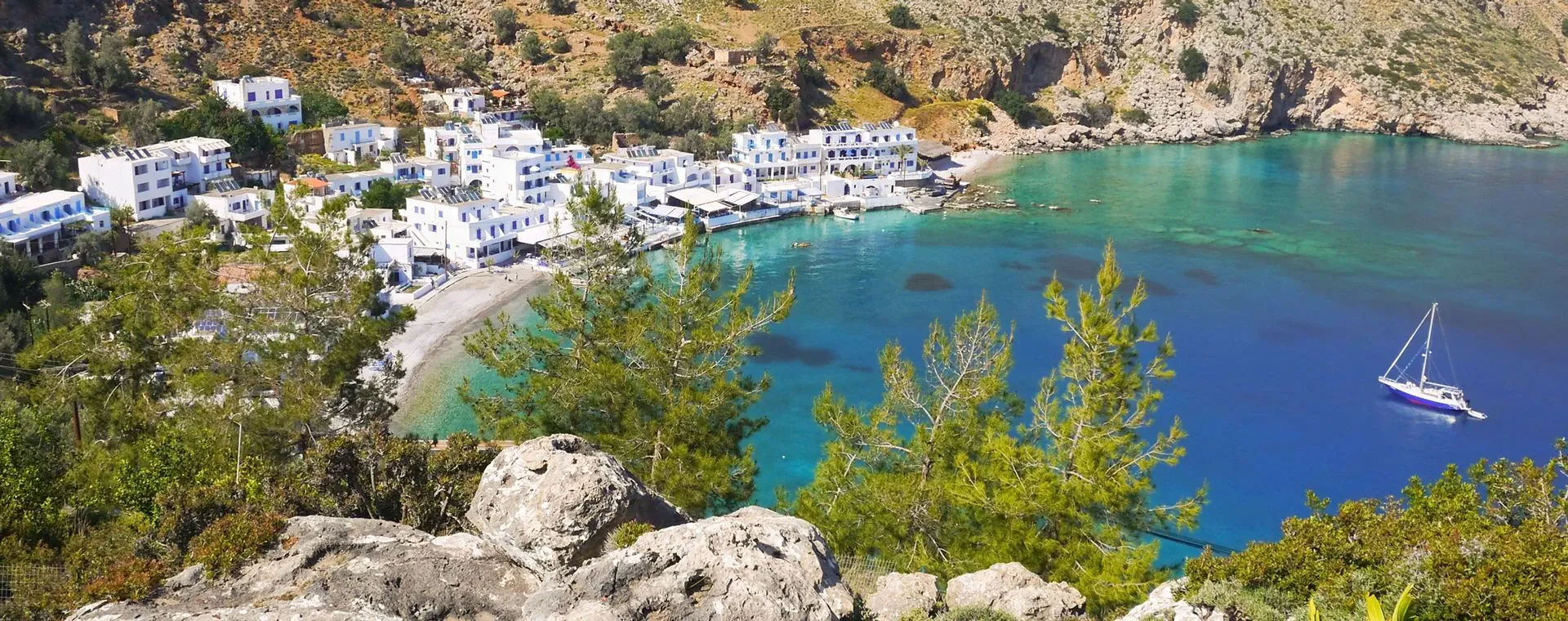
The real luxury of the southern gorges is where they come out. Several paths and several gorges lead to villages that no road reaches: Loutro and Agia Roumeli can only be reached on foot or by sea. That absence of cars changes everything. In the evening, when the last boat has left, the village recovers a calm from another age: the terraces facing the bay, the lapping of the Libyan Sea, the sky ablaze above the White Mountains.
Agia Roumeli is the exit port of Samaria, but you can just as well arrive there by the coastal path, at the pace of a stroll. Loutro, nestled in its sheltered inlet, is reached in a few hours of gentle walking from Hora Sfakion, or by boat. The regular ANENDYK services link Hora Sfakion, Loutro, Agia Roumeli, Sougia and Paleochora along the south coast: you choose to walk one way and come back by sea, sitting in the bow of a caique, your face offered to the warm wind. That element of exclusivity, those white villages reserved for walkers and sailors, is what gives the Cretan south coast its savour.
Advice for walking with an easy mind
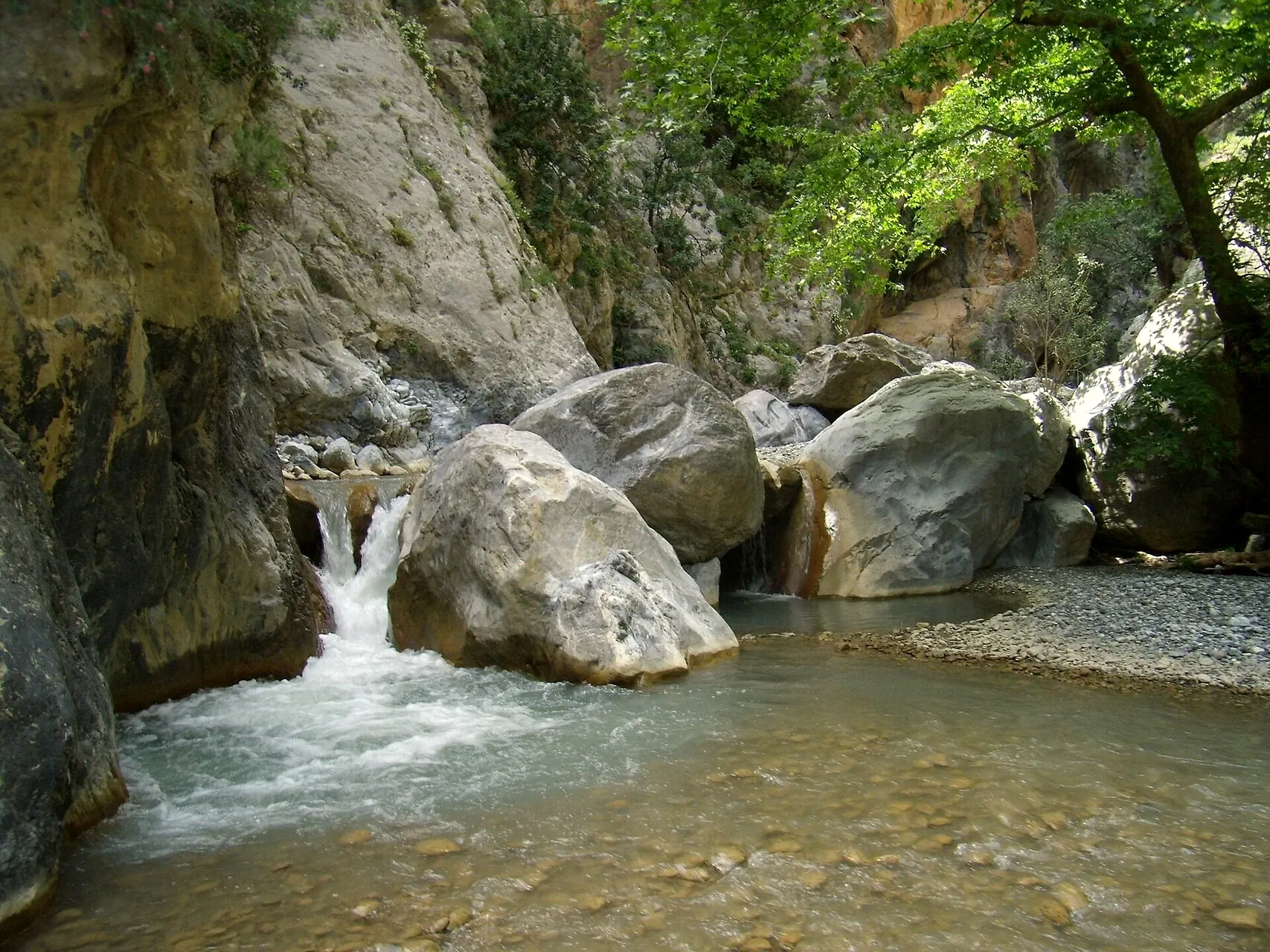
A few simple precautions are enough to enjoy these days fully. Heat is the main thing to anticipate: set off early in the morning, especially in summer, and carry plenty to drink, as most of the gorges have no water point along the way. A hat, sun cream and good walking shoes complete the kit. Slip a swimming costume into the bag too: almost all these walks end near a beach or a cove.
Think about the return before you set off. At Imbros as at Agia Irini, a shuttle or a taxi waits for you at the bottom; on the south coast, it is the boats that make the link. Check the timetables the day before, as they vary with the season. As for the calendar, spring, from April to June, and autumn, from September to October, are the finest windows: the air is mild, the gorges quiet, and the sea stays warm enough for swimming. Finally, after heavy rain some gorges close for a few days: a word to your hotelier or to the locals will save you any unpleasant surprise.
Our holidays for discovering the gorges of Crete
Kelifos has put together several trips that give pride of place to these gentle gorges and to the villages of the south coast, with charming addresses and luggage waiting for you on arrival:
- Crete, White Mountains and azure sea: a thread between Chania and the south coast, bringing together the Agia Irini and Samaria gorges, the coastal path towards Loutro and swims in the Libyan Sea.
- Secret Crete, from Chania to the turquoise lagoons: rural, green Crete self-guided, with a gentle option towards Loutro and the optional Samaria experience.
- All our holidays in Crete: mountains, plateaux and southern shores, on foot and at your own pace.
To place these gorges within the island as a whole, our notebook The best hikes in Crete travels wild coasts, plateaux and mountain villages. And if Greece on foot tempts you more widely, our finest paths in Greece open the door to the other islands, from the Peloponnese to the Cyclades.
Frequently asked questions about the gorges of Crete
Which gorge in Crete is the easiest?
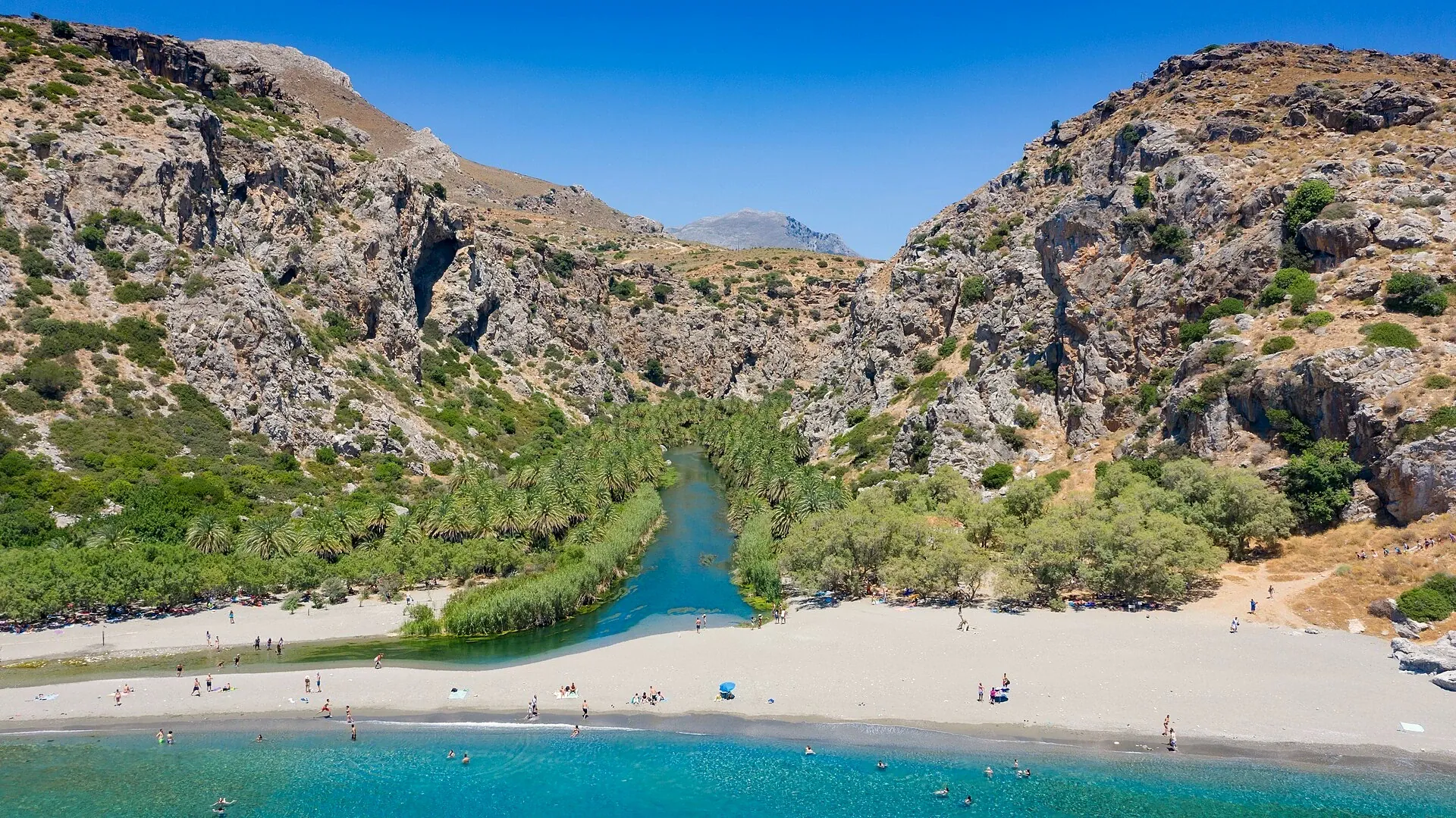
The Imbros gorge is the most accessible of the great Cretan gorges: about ten kilometres of gentle descent, a wide path, 2 to 3 hours of walking, and a shuttle for the return. For an even shorter option, the Kourtaliotiko gorge, near Preveli, is discovered in about fifteen minutes by a stone stairway leading to a chapel set in the rock and to a waterfall. Ideal for a first stretch of the legs.
Is the Samaria gorge accessible?
Samaria is not dangerous, but it is a long day. Reckon on 16 km of descent, 5 to 7 hours of walking, rocky sections especially at the start, and heavy attendance in summer. For anyone who likes to walk unhurriedly and without the crowds, the shorter gorges such as Imbros or Agia Irini offer a more serene experience, with the same mineral beauty and the same joy of arriving at the edge of the Libyan Sea.
Can you walk the gorges of Crete without a guide?
Yes, most of the easy gorges are well waymarked and can be walked in complete independence. Imbros and Agia Irini, for example, follow a clear path from beginning to end. With Kelifos, you move on as you please thanks to detailed route notes and our navigation app, while we take care of the accommodation, the transfers and your luggage. All that is left is to walk and savour.
Where can you find a map or a walking itinerary in Crete?
To prepare it yourself, the topographic maps from the Greek publishers Anavasi and Terrain cover the island's massifs and gorges in detail, and are obtained in travel bookshops or online. The European E4 path also crosses Crete from east to west and links several gorge villages of the south coast, from Paleochora to Hora Sfakion. With our self-guided holidays, however, you have nothing to prepare: detailed route notes and the tracks in our navigation app take you from stage to stage, while we book the accommodation and forward your luggage.
When should you walk the gorges of Crete?
Spring, from April to June, and autumn, from September to October, are the two finest seasons: the air is mild, the gorges are cool and quiet, and the sea stays warm enough for a swim at the end of the path. Summer remains possible but the heat calls for early starts. Note that the Samaria gorge closes in winter, generally from mid-October, and that some gorges may be impassable after heavy rain.
Is there a shuttle or a boat for the return?
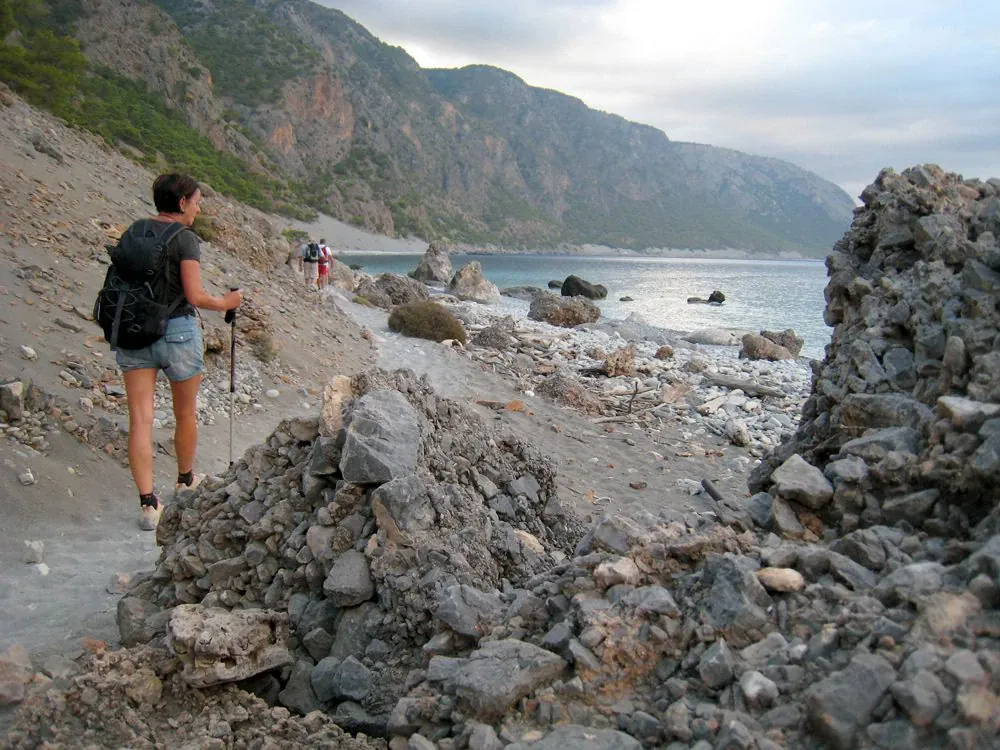
Yes, and it is one of the great advantages of these gorges. At Imbros, a shuttle or a taxi links Komitades to your starting point. At Agia Irini, a taxi brings you back from the outskirts of Sougia. And on the south coast, the ANENDYK boats link Hora Sfakion, Loutro, Agia Roumeli, Sougia and Paleochora: you walk one way and come back by sea. No complicated logistics, and the pleasure stays whole.
Your question is not on this list?
Write to us, and we will reply to you personally by email.
Continue reading
- Crete or the Cyclades: which one is right for you?
- The Best Hikes in Crete
- Crete in October, a golden season
- Hiking in Greece: the best trails island by island
Article written by
Maria Papadopoulou (Μαρία Παπαδοπούλου)
Editorial lead
I hike, and Greece is the place I keep coming back to. My initial studies (a Master’s in Marketing and a degree in Applied Foreign Languages) taught me how to build an editorial project, and the trails taught me the… Read more