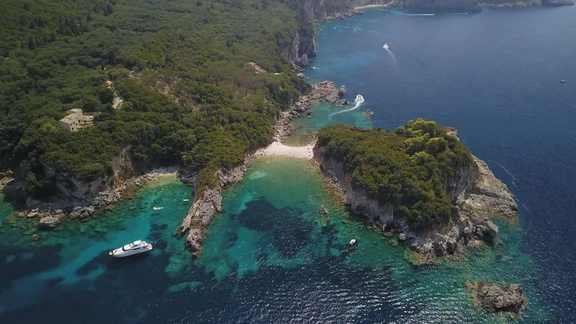


Picture water so clear it shifts from turquoise to cobalt depending on the hour, white cliffs falling straight into the sea, and an island that has stayed green where Greece is often golden and dry. This is Zakynthos, also known as Zante, the most southerly of the large Ionian islands. It is known for a beach that has become a worldwide postcard, but it reveals itself above all to those who take the time to climb towards its perched villages, to follow its headlands and to sit at a terrace at the moment the sun tips into the sea. Here, without embellishment, is what really makes the journey worthwhile.
| In brief | An Ionian island that has stayed green, waters among the clearest in Greece and Shipwreck beach, famous the world over |
| Ideal for | lovers of coastal landscapes, quiet swimming and authentic villages |
| Best season | May, June, September and early October (mildness, fine light, far fewer people) |
| Pace | gentle, at your own rhythm: walks, panoramas and long terraces |
| Our trip | no Kelifos trip to Zakynthos for the moment: free inspiration (see our trips in the Ionian Islands) |
Zakynthos closes the Ionian archipelago to the south, facing the Peloponnese. It is a milder and wetter island than the Cyclades, covered in olive trees, vines and pines. The Venetians, who governed it for a long time, nicknamed it Fioro di Levante, the flower of the East, and you understand why as soon as you move a little away from the southern beaches, which are very busy in high summer: the interior has stayed green and welcoming. Happiness here has to be earned very little and savoured a great deal.
Shipwreck beach (Navagio), let us be honest
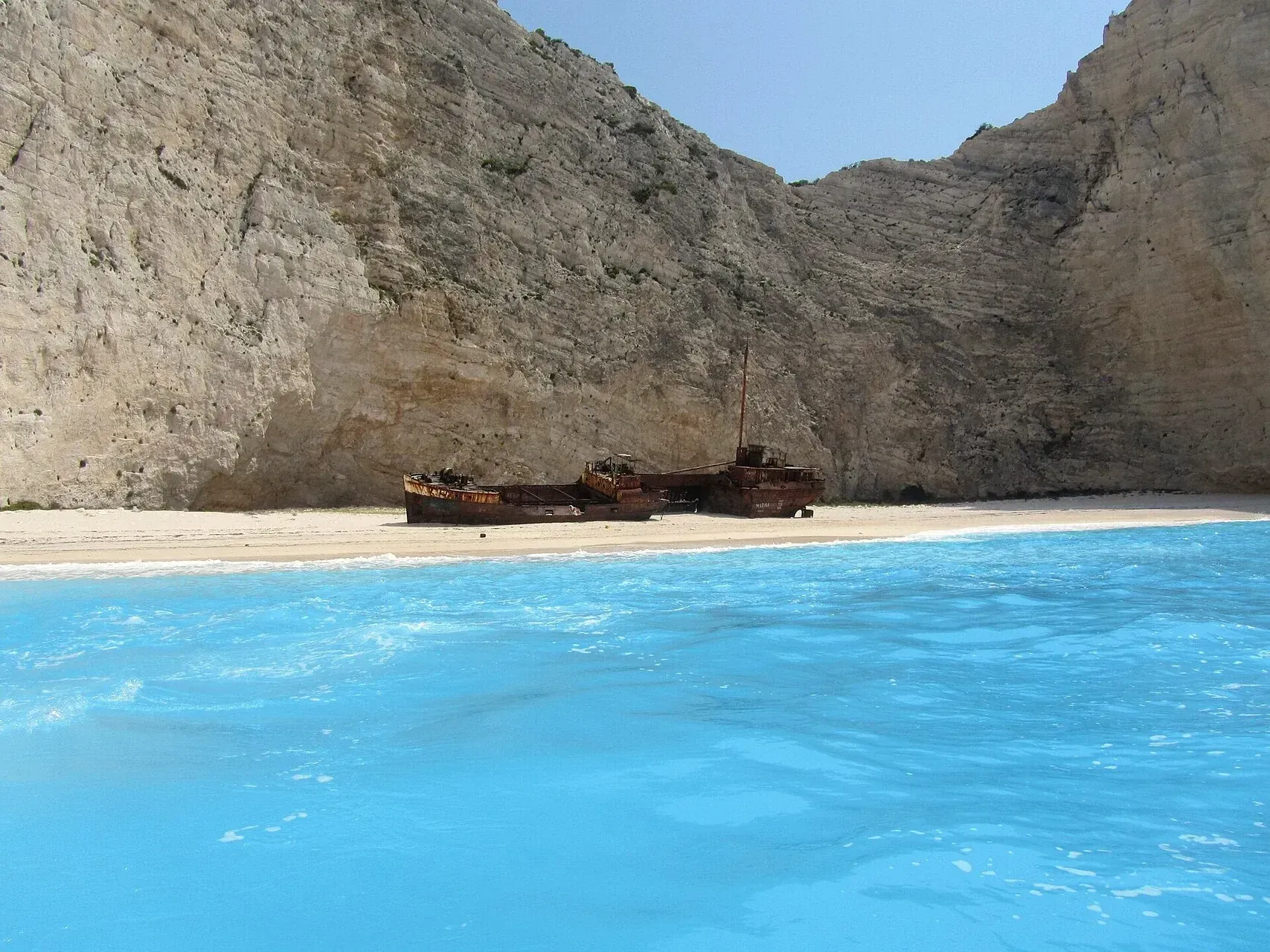
This is the image that probably made you want to come: a strip of white sand hemmed in by immense cliffs, a rusted wreck in the middle, water of an unreal blue. This cove is called Navagio, Shipwreck beach, and it deserves its reputation. But you need to know this before setting off: you cannot reach it on foot. No path descends to the sand. The beach is reached only by boat, from small northern harbours such as Porto Vromi or Agios Nikolaos.
And even by sea, things have changed a great deal. For reasons of cliff stability, the Greek authorities have closed the cove: following seismic assessments, access to the sand and swimming there are forbidden for the whole of the 2026 season, until 31 October. Excursion boats still enter the bay, but they must stay at a distance from the shore, without landing or anchoring near the beach. The situation is reviewed periodically, so find out about the rules in force before booking a trip: today you come to photograph the Navagio from the sea or from the viewpoint, no longer to swim there.
The finest view, in reality, is not taken from below but from above. A purpose-built viewpoint overlooks the cove from the top of the cliffs, in the north of the island, near the village of Anafonitria. You reach it by car and then by a short walk, and the panorama over the wreck and the turquoise water, far below, is quite simply striking. Come early in the morning or at the end of the day: the light is softer and the tour coaches fewer.
The blue caves of Cape Skinari
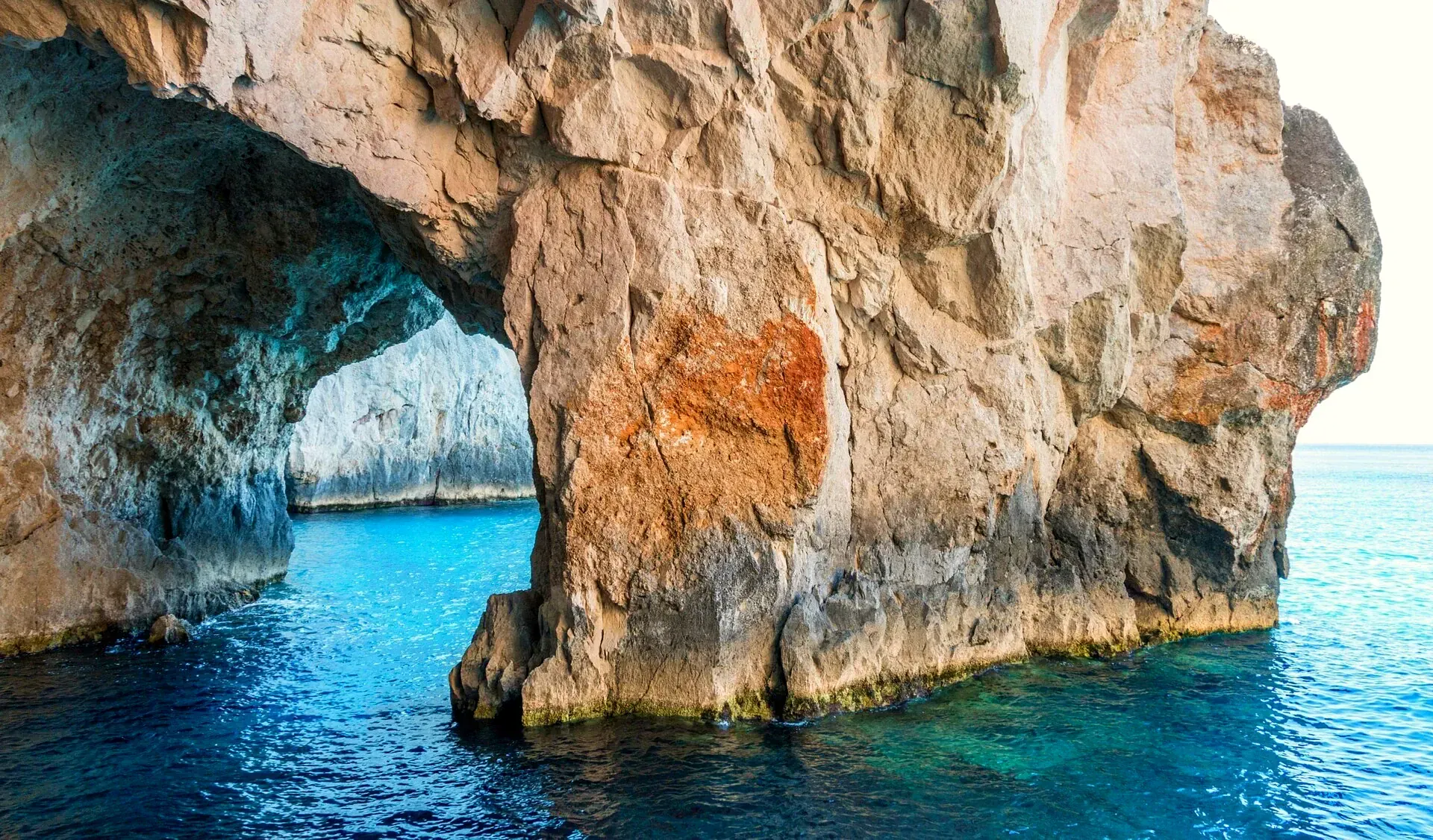
At the northern tip of the island, the coast is hollowed by a succession of arches and cavities into which the sea rushes: these are the blue caves, the Blue Caves. When the sun strikes the pale seabed, the water throws back an electric blue light that illuminates the walls from below. It is one of those moments when you understand why the Ionian islands so attract lovers of the sea.
The boats leave from Cape Skinari and from Agios Nikolaos, right in the north. The small craft enter the arches, cut the engine, and some skippers let you slip into the water for a swim in that turquoise light. Many excursions combine the blue caves and the view over the Navagio in the same outing: a quiet morning is enough to cover the whole north coast.
The Caretta caretta turtles of Laganas bay
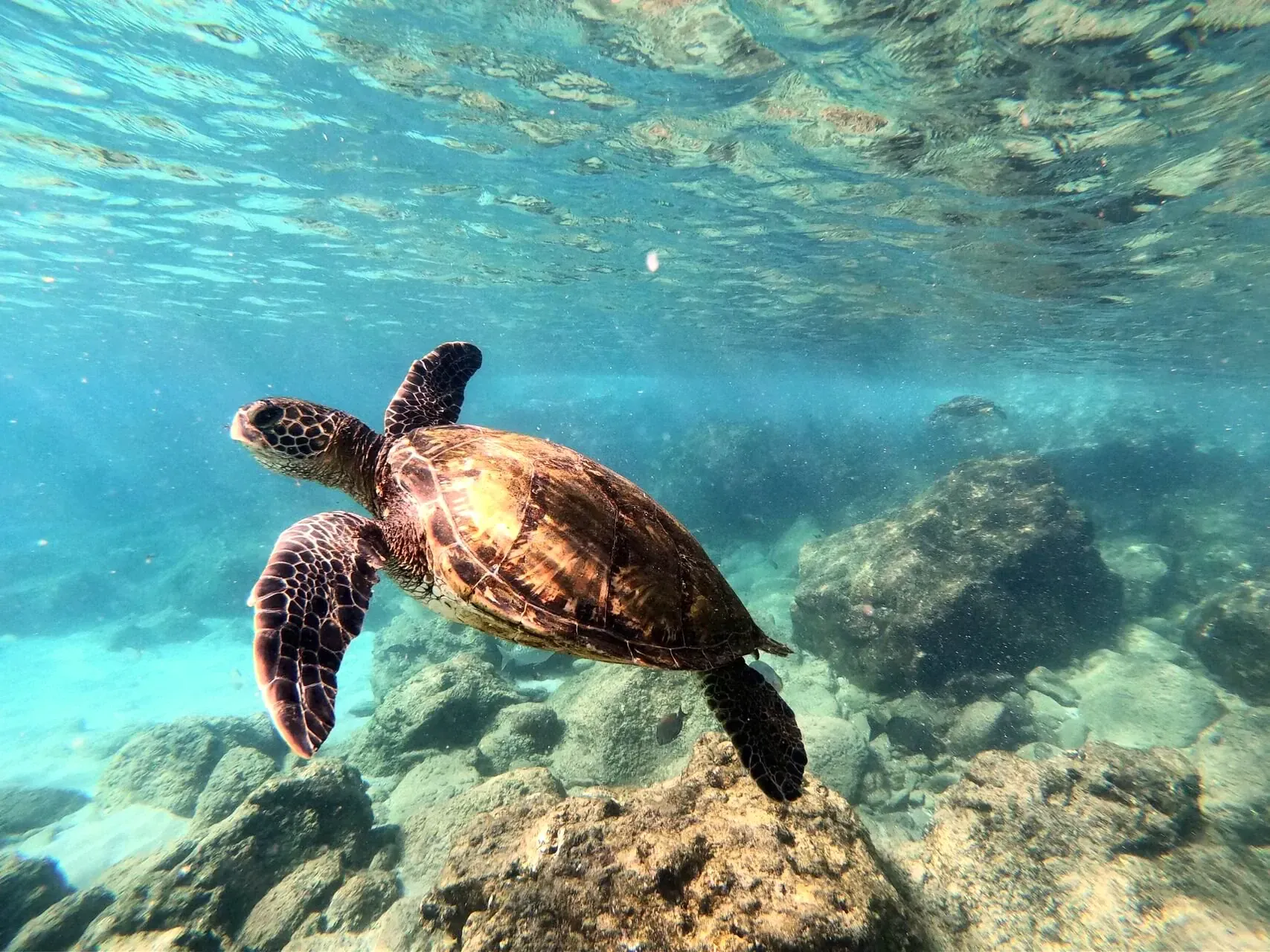
In the south, the great bay of Laganas shelters one of the discreet treasures of the Mediterranean: it is one of the main nesting sites of the Caretta caretta sea turtle, the loggerhead. To protect it, a national marine park was created in 1999. Every summer the females come to lay at night on a few preserved beaches, and the rules there are strict, for good reasons.
The beach of Gerakas, at the end of the Vassilikos peninsula, is the most emblematic of these nesting beaches. Its golden sand and shallow water make it a magnificent place for a calm swim, but it has to be earned with respect: access closed from nightfall to daybreak during the season, no parasols or sun loungers on the protected part, and you stay near the shore. You can also approach the turtles at sea, on a glass-bottomed boat trip in the bay: choose a respectful operator, one that keeps its distance and cuts its engine. Glimpsing a loggerhead gliding beneath the hull remains a memory you talk about for a long time.
Bochali and the view over Zakynthos town
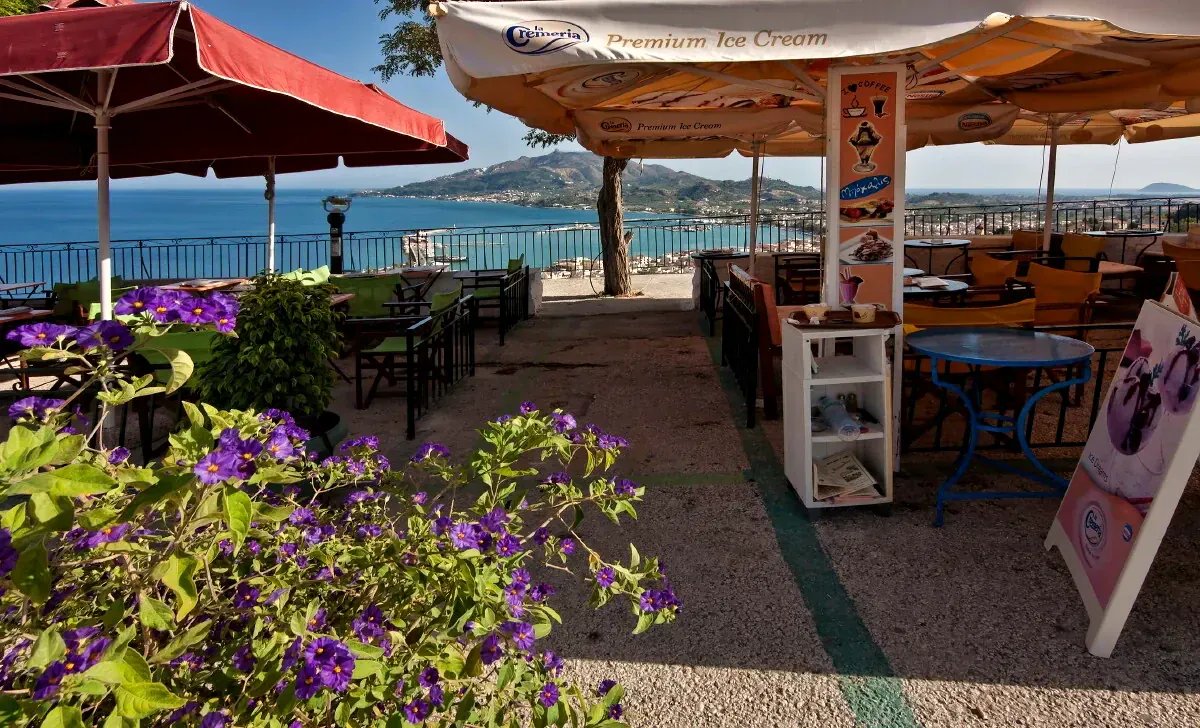
Zakynthos town was almost entirely rebuilt after the earthquake of 1953, but it has kept its Venetian spirit: the great Solomos square, the church of Saint Dionysius, the arcades, the cafés at the water’s edge. To see it at its best, climb up to Bochali, the village clinging to the hill just above.
From up there, near the ruins of the Venetian castle and beneath the pines, the town and its harbour spread out at your feet. It is the ideal place for a drink at the end of the afternoon, when the bay turns to gold and the first lights come on along the seafront. Take your time, order an ouzo or a local wine, and let the evening come: it is exactly the kind of moment you come to the Ionian islands for.
Keri and its cliffs
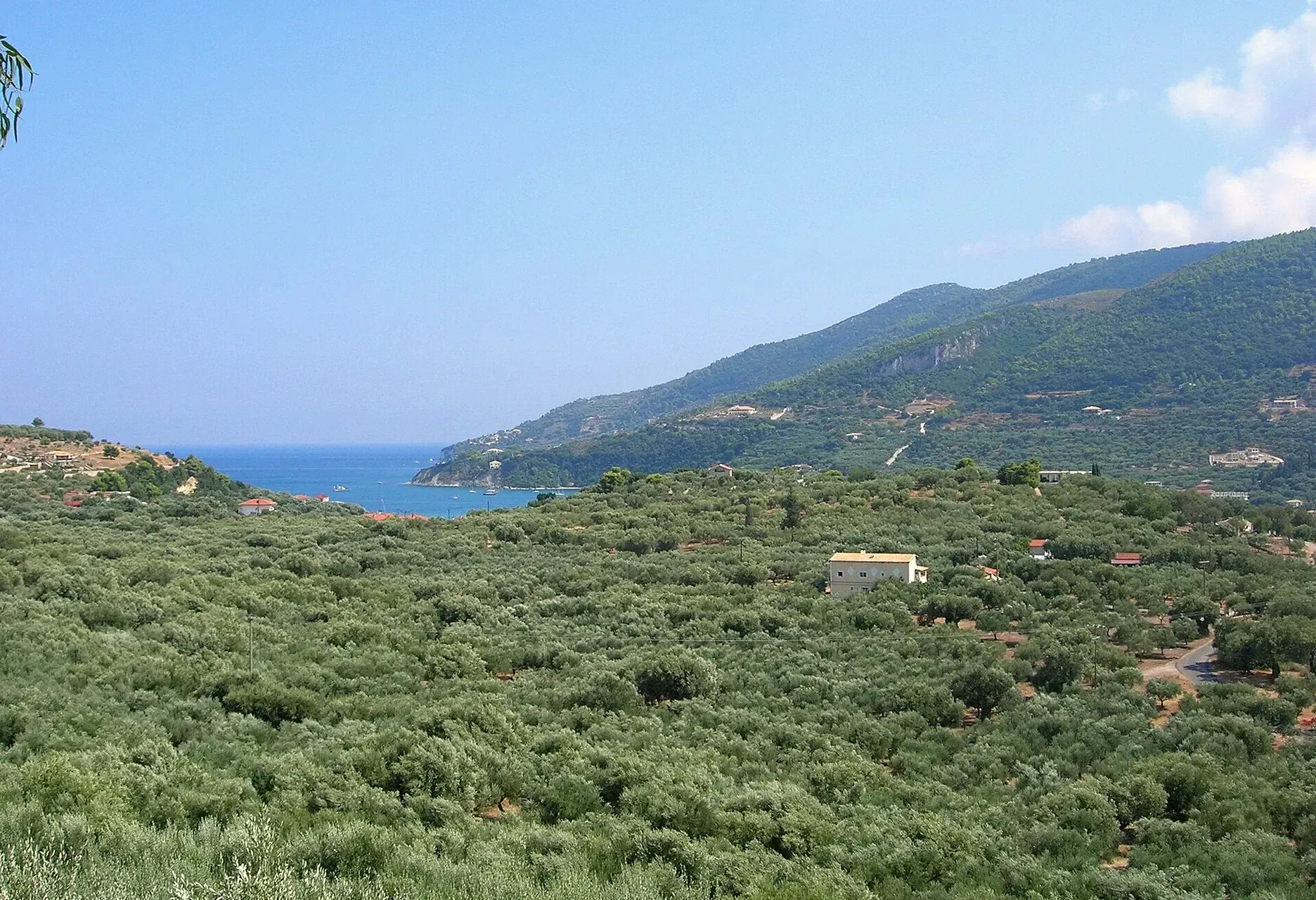
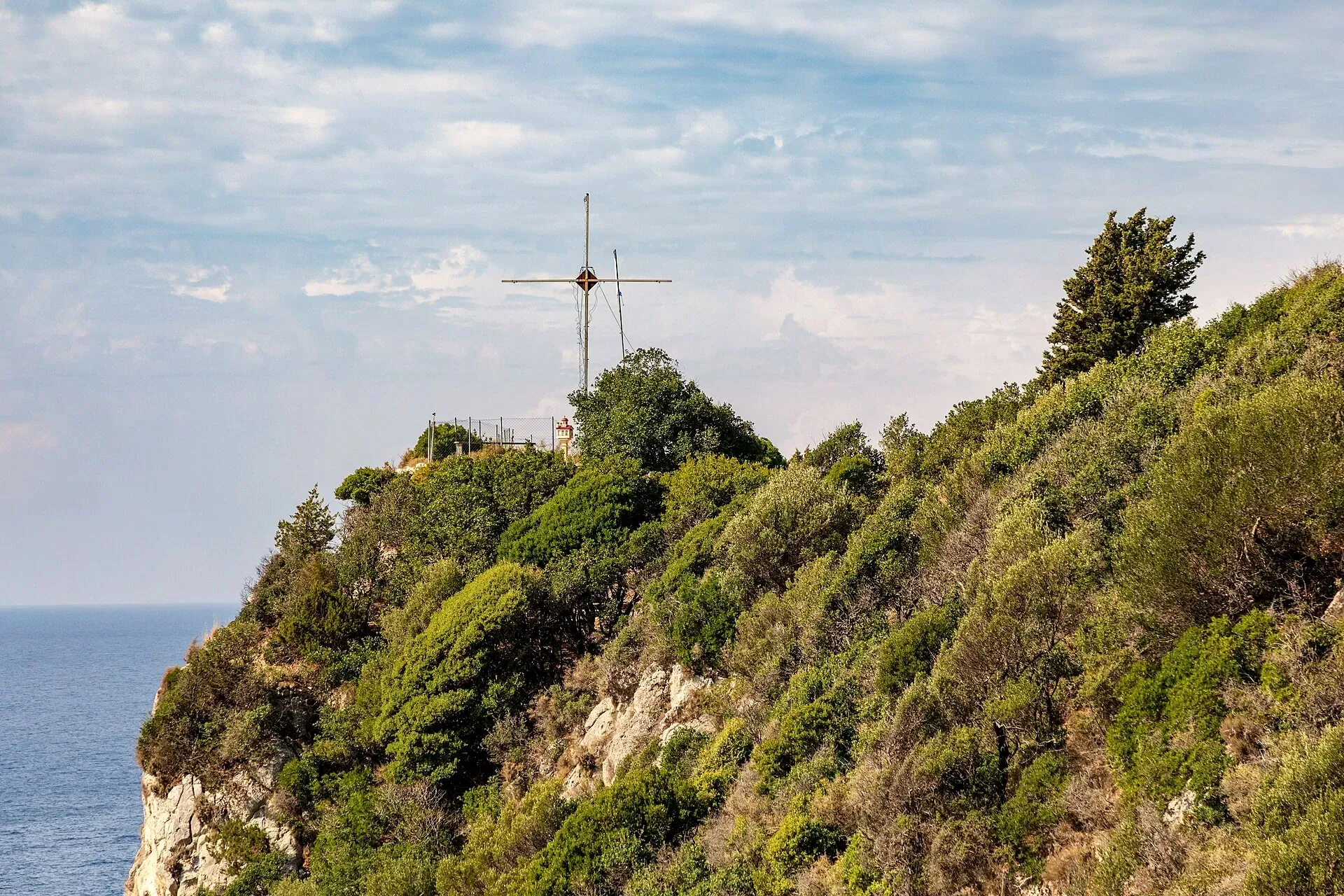
At the south-western extremity, the village of Keri overlooks a coast of white cliffs and coves with translucent waters. Below, the Keri Caves form a maze of caves and detached rocks where you swim in limpid, cool water. The small lighthouse of Keri offers, for its part, one of the finest viewpoints on the island for the sunset, facing the open sea, with nothing but water to the horizon.
The village itself, away from the seaside bustle, has kept its stone houses and its family tavernas. It is a perfect halt for lunch in the shade of a vine, far from the tumult of the southern beaches.
The mountain villages of the west
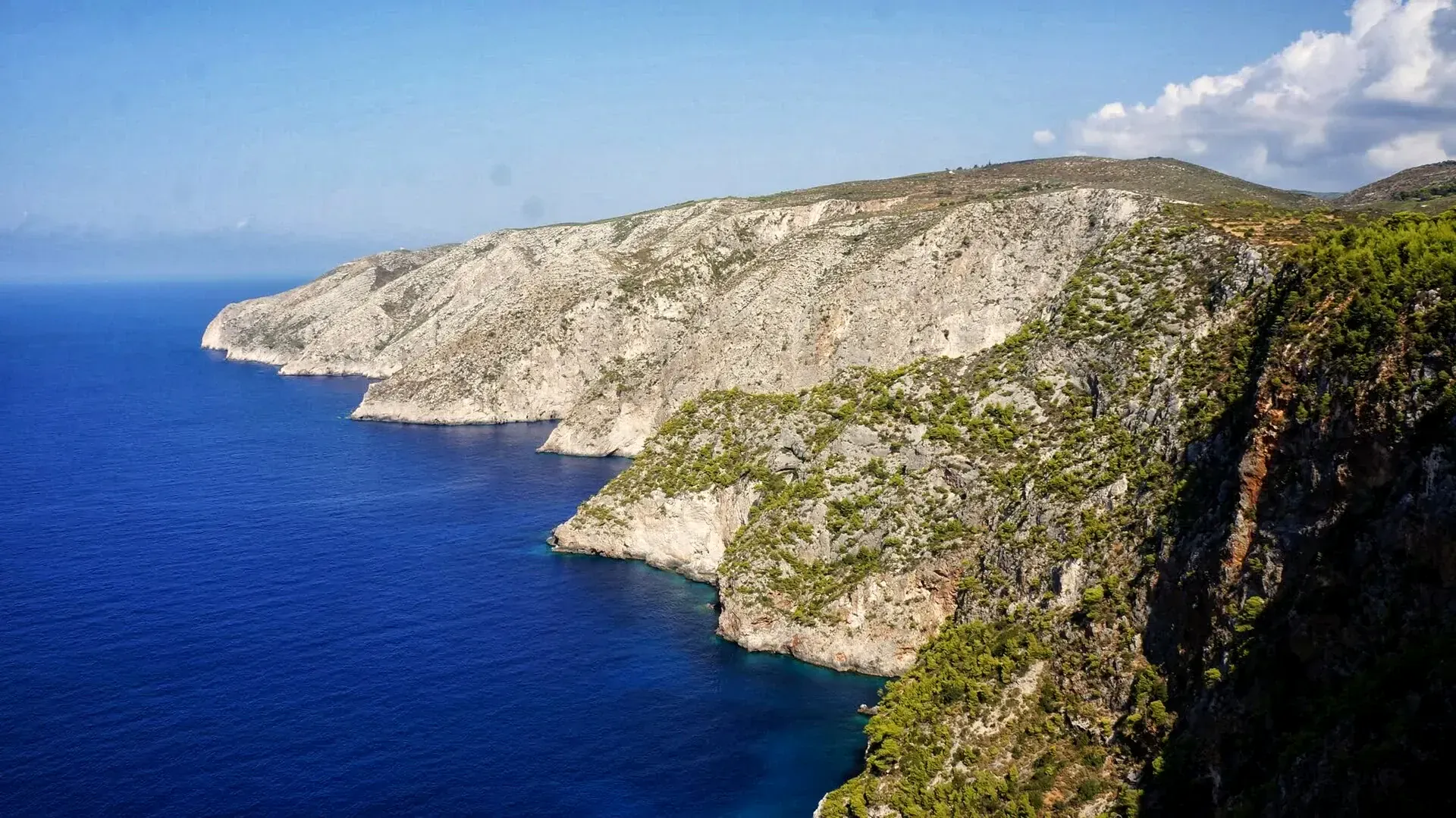
This is perhaps where Zakynthos will surprise you most. As soon as you leave the coast for the heights of the west, you discover another island: roads winding between the olive groves, silent hamlets, dizzying viewpoints over the sea. Villages such as Anafonitria, Maries, Volimes (renowned for its hand-woven rugs and textiles) or Exo Chora show you the Zakynthos of before tourism, that of monasteries, springs and long tables.
You move about at your own pace, stopping for a Greek coffee on a small square, to buy honey or olive oil directly from the producer, to listen to a church bell in the silence of midday. These gentle ways through the countryside are, for many travellers, the real heart of the island.
When to come, and how to make the most of it
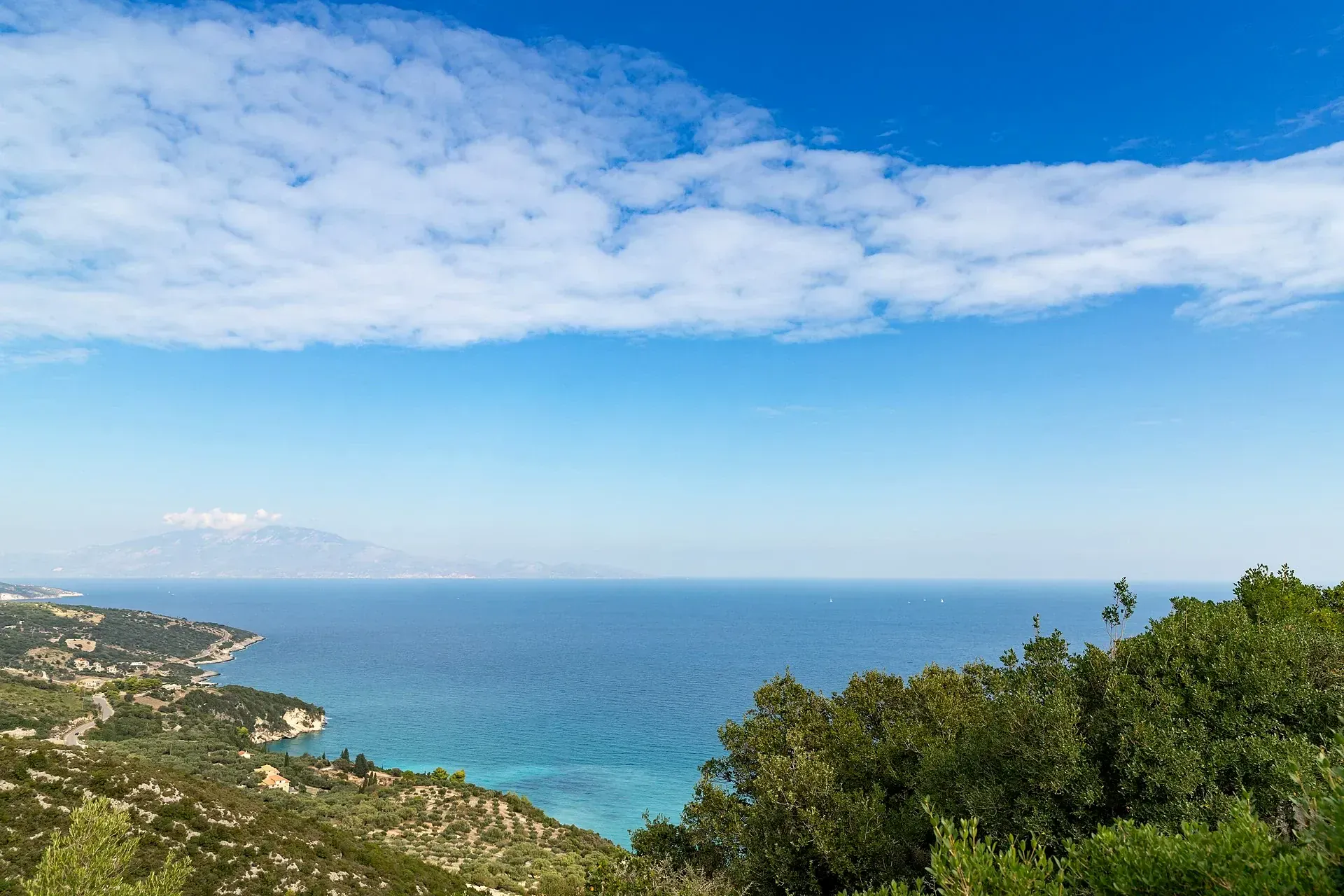
Zakynthos is best experienced in spring and early autumn. In May and June the island is green and in flower, still quiet, and the sea already good. In September and early October the water is at its most agreeable temperature, the light turns golden and the summer crowds have dispersed. High summer remains superb for the colour of the sea, but the south of the island, around Laganas, becomes very lively: it is then better to stay in the north, at Vassilikos or in the inland villages.
The island lends itself to quiet travel: short coastal walks, days on the beach, late afternoons on a terrace. You do not come to Zakynthos to pile up the kilometres, but to taste a certain Ionian gentleness of living, between a swim, a plate of grilled fish and a sunset.
Discovering the Ionian islands with Kelifos
Let us be transparent: we do not, to date, offer a trip to Zakynthos. If the spirit of this green island tempts you, know that its large northern neighbour is admirably discovered on foot with us. Our trip Corfu, the Emerald Isle self-guided takes the same landscapes of olive trees, Venetian villages and turquoise coves, at your own pace and with your luggage transported. And if you are still hesitating over the ideal destination in the archipelago, our comparison of Corfu or Kefalonia will help you choose the island that suits you. For an overview, all our trips in the Ionian Islands are gathered in one place.
Frequently asked questions about Zakynthos
How do you get to Zakynthos?
Zakynthos has its own international airport (code ZTH), a few kilometres south of the capital. In summer, direct flights link several European cities to the island, otherwise you go via a connection in Athens. The other route, slower and prettier, is to reach the Peloponnese and then board at the port of Kyllini: the crossing to Zakynthos town takes about 1 h 15, with several departures a day in season.
How many days should you allow to visit Zakynthos?
Reckon on 4 to 5 days to taste the essentials without rushing: the north coast and its blue caves, Laganas bay and its turtles, the perched villages of the west and a few late afternoons on a terrace. A week will give you time to really slow down, or to combine Zakynthos with another island in the archipelago. If the urge to extend your time in the Ionian islands takes hold, our trips in the Ionian Islands set out precisely to discover that spirit, on foot and at your own pace.
Where should you stay on Zakynthos for a quiet trip?
It all depends on the atmosphere you are after. The south, around Laganas and Kalamaki, concentrates the seaside animation and becomes very busy in high summer. For more calm, favour the Vassilikos peninsula in the south-east, the more peaceful northern resorts such as Alykes, or better still an inland village, in the middle of the olive groves. Zakynthos town, lively and well placed, remains a good base from which to range across the whole island.
Do you need to hire a car to visit Zakynthos?
It is strongly advised. Public transport serves mainly the large southern beaches, whereas the finest corners of the island — the Navagio viewpoint, the Keri lighthouse or the mountain hamlets of the west — are reached by small winding roads. A car lets you set off early in the morning, in the manner of a self-drive tour, stop as the panoramas take you and reach the northern harbours from which the excursions to the blue caves set out. Drive without haste: here, slowness is part of the pleasure.
Your question is not on this list?
Write to us, and we will reply to you personally by email.
Continue reading
- Corfu or Kefalonia: our advice for choosing well
- Which Greek island is right for you? The complete guide
- The Most Beautiful Beaches in Greece, our favourite coves far from the crowds
- Hiking in Greece: the best trails island by island
Article written by
Maria Papadopoulou (Μαρία Παπαδοπούλου)
Editorial lead
I hike, and Greece is the place I keep coming back to. My initial studies (a Master’s in Marketing and a degree in Applied Foreign Languages) taught me how to build an editorial project, and the trails taught me the… Read more