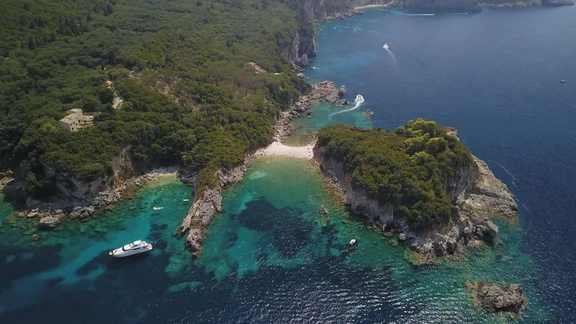


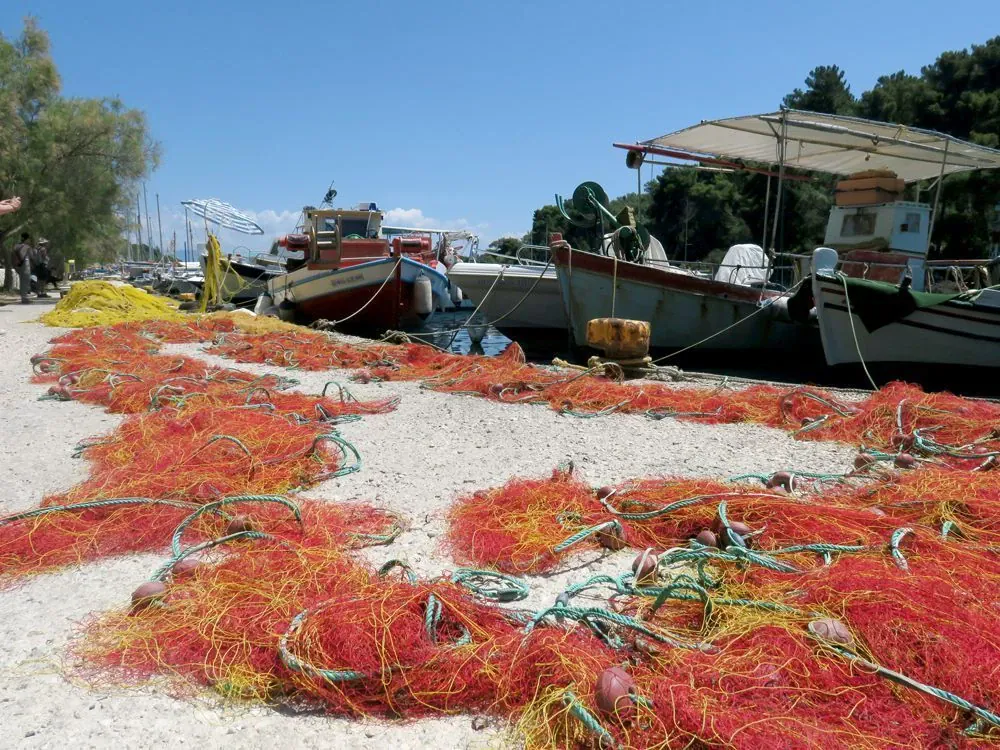
There is a moment on Paxos when you stop looking at your watch. It may be at the harbour of Gaios, when the fisherman’s caique comes back and the cats come to sniff the nets. Or later, when the boat sets you down in front of the cove of Voutoumi, on Antipaxos, and the water takes on that shade of turquoise you thought was reserved for postcards. Paxos and Antipaxos are two scraps of land set south of Corfu, away from the tumult, where the Ionian Sea gives the best of itself. You come to slow down, to walk a little among the olive trees, and to sit on terraces a great deal.
| In brief | Two small Ionian islands for the gentleness of living: Paxos is walked between villages and olive groves, Antipaxos is savoured from a boat, with your feet in the water. |
| Ideal for | Epicurean travellers who love quiet harbours, swimming and grilled fish on a terrace |
| Best season | From May to June and from September to early October: soft light, a sea still mild, fewer people |
| Pace | Gentle: short walks between the villages of Paxos, and plenty of pauses at the water’s edge |
| Our trips | Corfu and Paxos self-guided or the guided version |
Paxos, the art of hurrying nothing
Paxos is tiny: some ten kilometres from north to south, barely more than two thousand inhabitants. That is precisely what makes its charm. Here there are no large resorts or long crowded beaches, but a succession of hamlets, olive groves and coves where you quickly get the feeling of being at home.
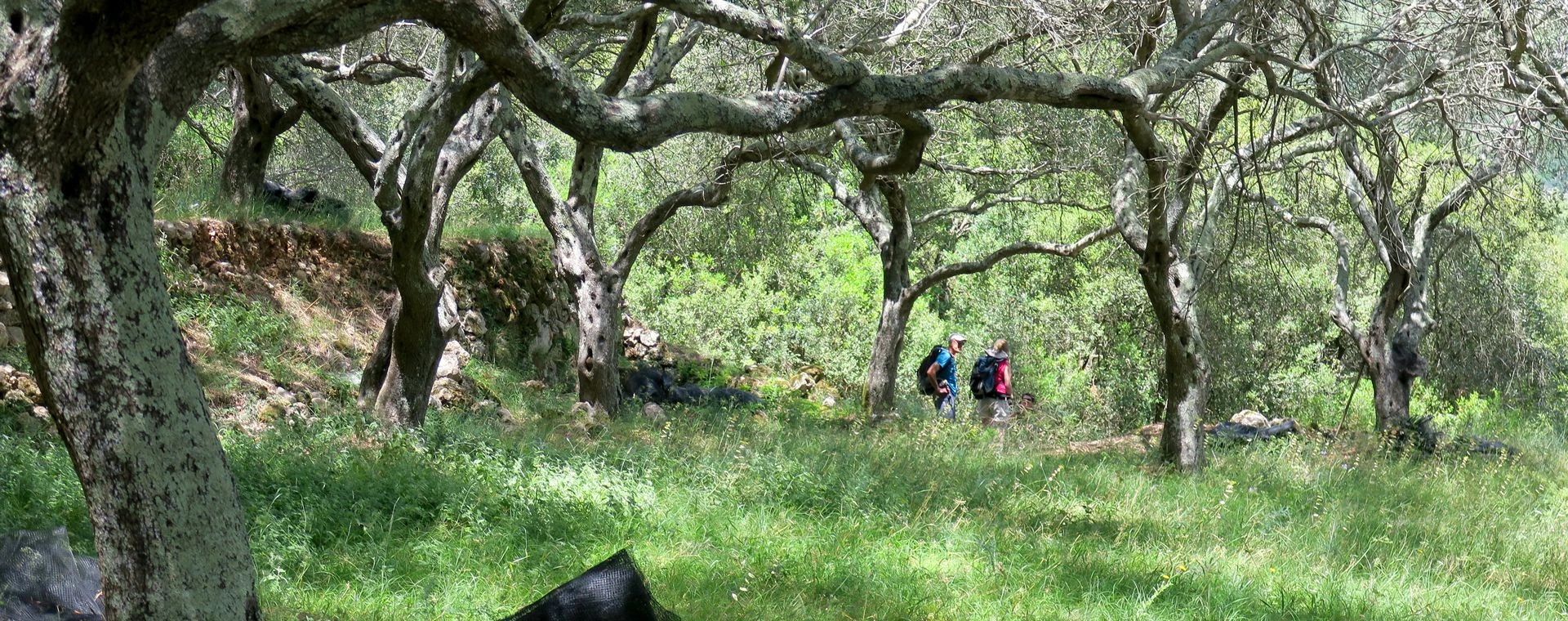
The island’s history owes a great deal to its olive trees. Under Venetian rule, the inhabitants were encouraged to plant as many as possible to supply the Serenissima with oil. The result can still be seen today: immense, gnarled trees, some of them centuries old, whose twisted trunks draw a landscape apart. You walk beneath them as in a vegetal cathedral, in the shade, at a quiet pace.
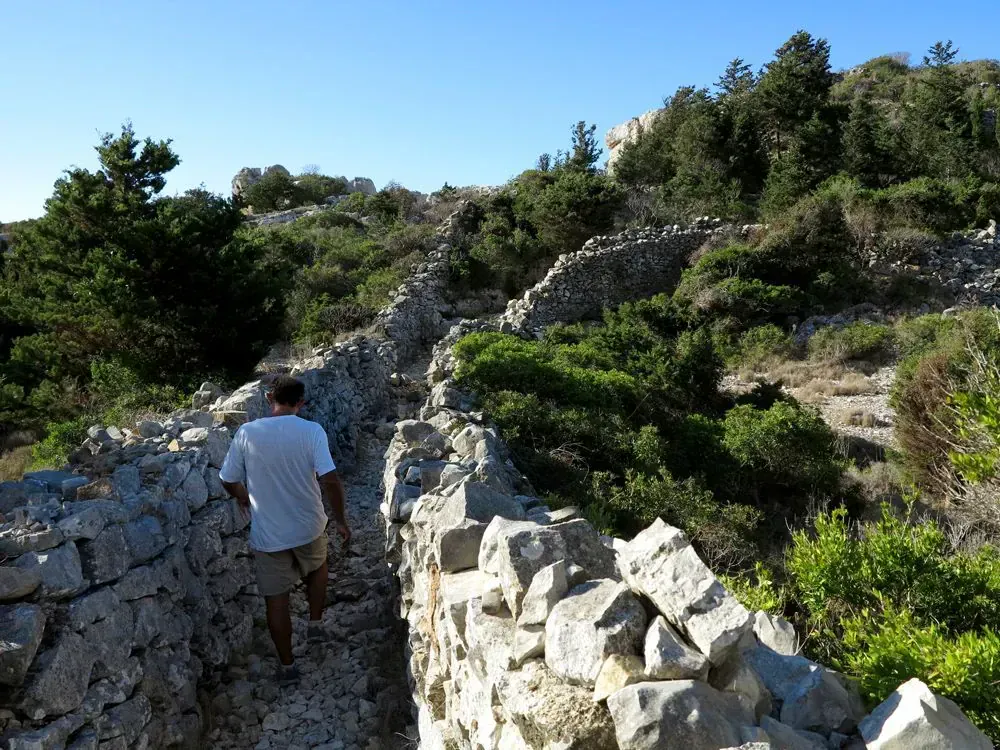
The coast tells two stories. To the east, facing mainland Greece, the water is calm, the shoreline cut into small sheltered bays. To the west, the setting changes completely: white cliffs plunge into the sea, pierced by sea caves discovered from the water. Between the two, paths lined with dry-stone walls link the villages, and it is on foot that you best grasp the soul of Paxos.
Three villages, three moods
The heart of the island beats in its three small towns, and each has its own temperament.
Gaios is the capital and the main harbour, where the boats from Corfu dock. The water is sheltered by two small wooded islets, Panagia and Agios Nikolaos, which close the bay like a stage set. You wander along the quay, between houses in faded colours, you sit down to a Greek coffee, you watch the sailing boats manoeuvre. In the evening, the terraces come gently to life, without ever losing their calm.
Lakka, in the north, curls at the end of a horseshoe bay. It is a renowned mooring, where sailing boats come to anchor in clear water. The village keeps the look of a fishing harbour, with its small tavernas at the water’s edge and its shaded lanes.
Loggos, the most discreet of the three, amounts to a few houses around a miniature harbour. A former soap works recalls the industrial past linked to olive oil. You come above all for the pleasure of a lunch facing the boats, without noise, without crowds.
From one village to another, the paths cross the olive groves and offer, here and there, a gap onto the sea. The distances are short, the terrain accessible, and you stop as much as you walk: a chapel, a viewpoint, a cove for a dip.
One of our favourite spots is in the south-west of the island, over towards Tripitos. There, the limestone has been hollowed into a natural arch spanning the void, just above the water. You reach it by an easy path from the road, and the spectacle is well worth the small detour: the sea framed by stone, an intense blue, with sometimes a sailing boat passing in the distance. It is the kind of halt where you stay longer than planned.
At table, the real pleasure of Paxos
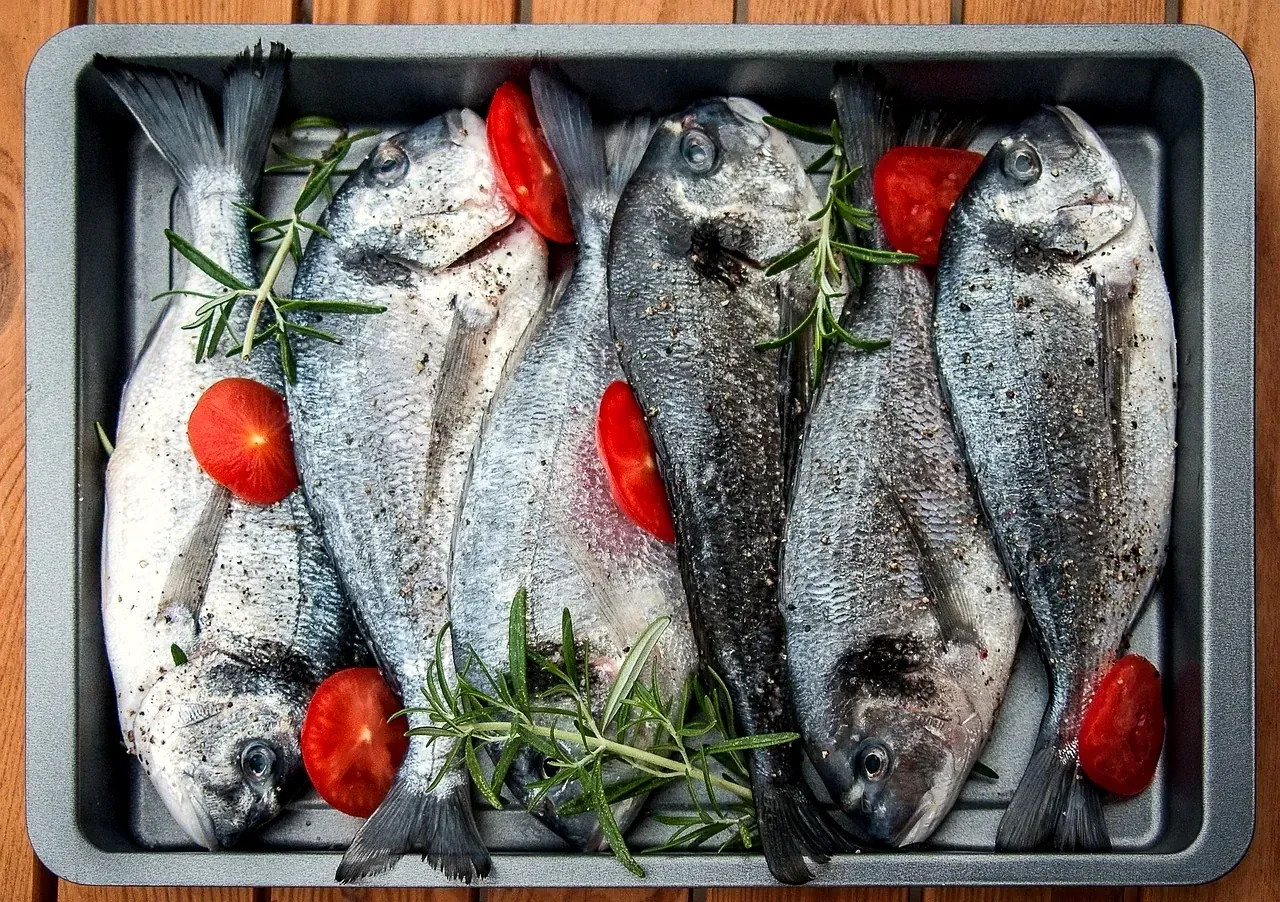
A meal on Paxos is never a formality. The tavernas lined along the harbours serve what the sea gave that very morning: gilthead bream, grilled octopus, small fried fish, all dressed with a drizzle of local olive oil in which the island takes all its pride. You accompany it with a generous salad, a few mezze to share and a glass of cool wine.
Take the time to talk with the owners. Many have run their establishment for decades and know the story of every family in the village. It is often in these conversations, more than in the guidebooks, that the character of Paxos reveals itself: an island attached to its roots, where the traveller is welcomed like a neighbour passing through.
Antipaxos, the little paradise earned by boat
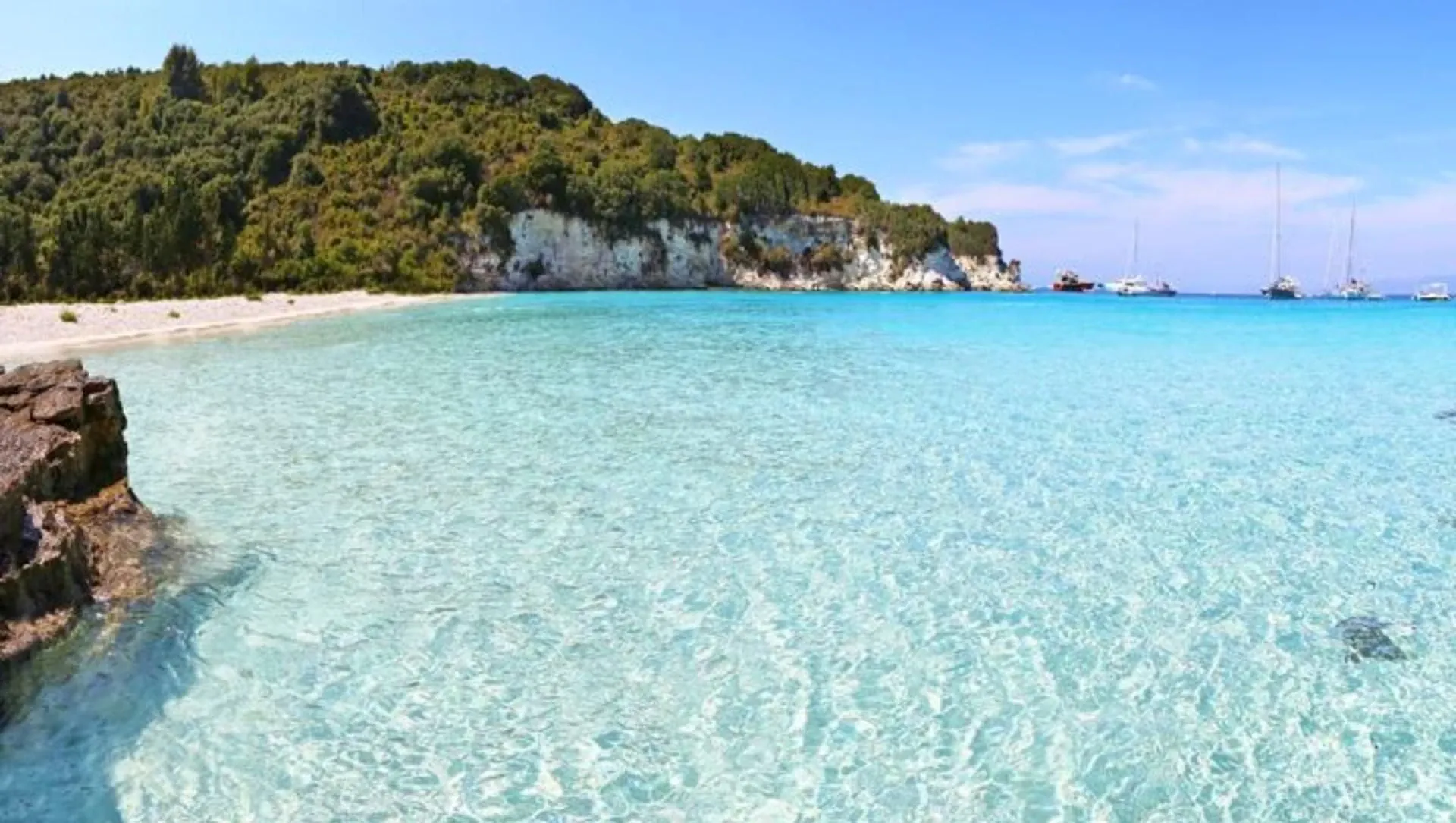
Let us be honest: Antipaxos is not a walking destination. It is an islet even smaller than Paxos, covered in vines, where a handful of people live. You do not really stroll there, you come for the water. And what water.
A short boat trip, about fifteen minutes from Gaios, is enough to reach its two now-famous beaches. Vrika, to the north, unrolls fine golden sand in a sheltered cove. Voutoumi, a little further south, alternates pale pebbles and water of an unreal turquoise, probably one of the finest shades in all of Greece. Many travellers leave saying they have never seen a sea like it.
The best advice we can give: favour early morning or late afternoon, especially in high summer, when the excursions flood in. In low season, you will sometimes have the cove almost to yourself. The few tavernas set above the beaches serve fish and the local wine from those vines that cover the island. A lunch with your feet in the sand, then a last swim before taking the boat back: that is more or less the whole programme of Antipaxos, and it is very good so.
How to get to Paxos and Antipaxos
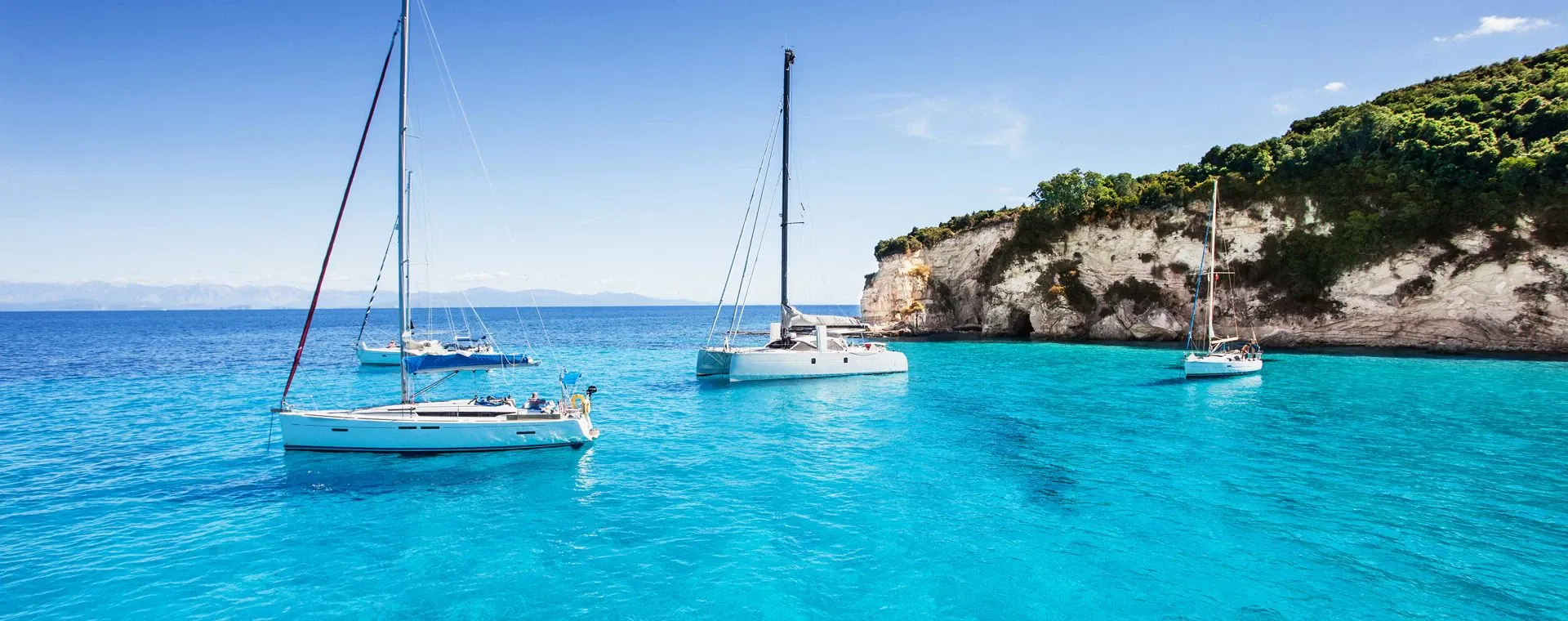
Paxos has no airport. You arrive by sea, almost always from Corfu, whose airport is well served. Regular ferry or fast-boat services link Corfu to Gaios in 1 to 2 h depending on the type of vessel. Once there, Antipaxos is reached by shuttle or small boat from Gaios.
This dependence on the sea is part of the journey. The crossing, the deep blue of the Ionian, the islets slipping past: all of it gently prepares you for the rhythm of Paxos. There is no point chasing timetables, better to allow plenty of time and enjoy every stop.
Discovering Paxos with Kelifos
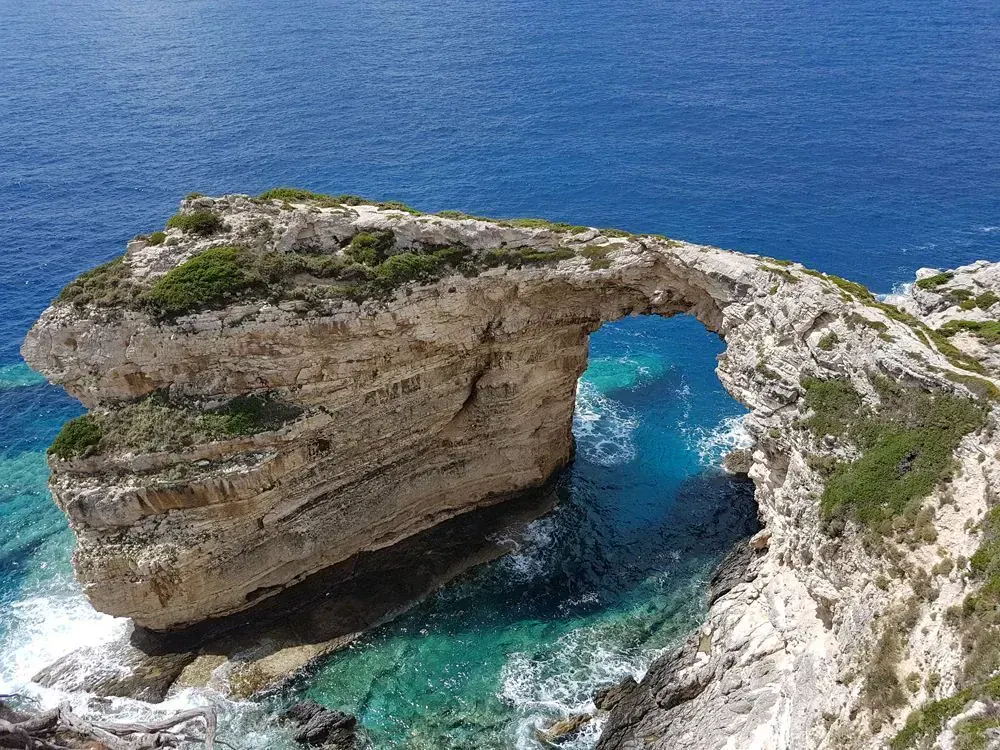
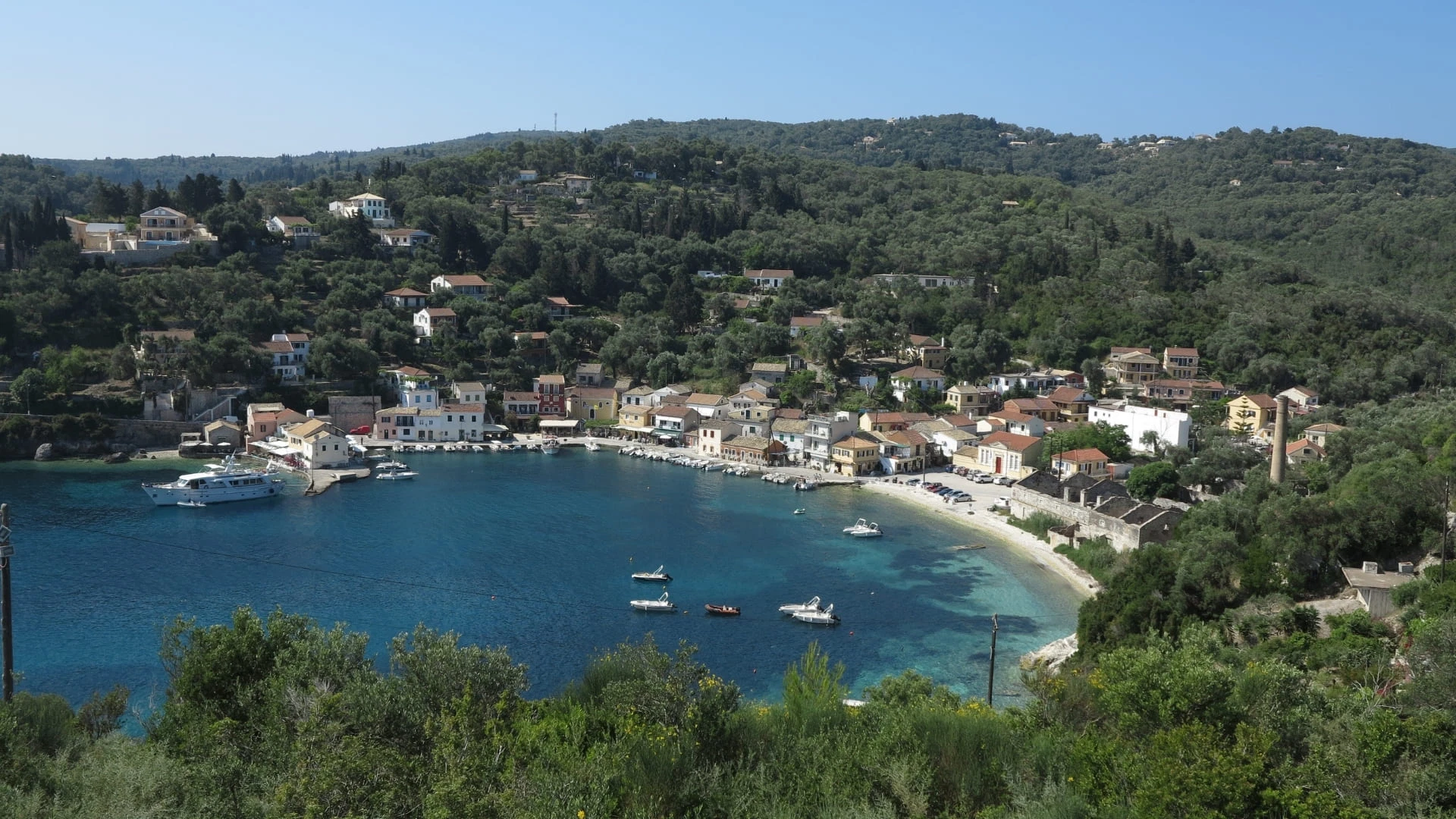
In our walking trips between Corfu and Paxos, Paxos holds a place of honour: a few days to walk between the villages, wander in Gaios, discover the natural arch of Tripitos and swim in the coves. Your luggage travels without you and the boat crossings are organised. The charming addresses, for their part, are chosen for their setting as much as for their table.
Two formulas exist according to your wishes. The self-guided trip between Corfu and Paxos lets you set your own tempo, map and advice in hand. The guided version of Corfu and Paxos puts you in a small group, accompanied by a guide who knows every path and every taverna. In both cases, you explore the whole of the Ionian Islands at your own pace, in complete serenity.
Frequently asked questions about Paxos and Antipaxos
Can you visit Paxos on foot?
Yes, and it is probably the prettiest way to discover it. The island is small and its relief all in gentle curves: paths lined with dry-stone walls link Gaios, Lakka and Loggos across the century-old olive groves, on easy terrain accessible to all. To find your way, the Greek walking-map publishers such as Anavasi or Terrain cover the region. And if you set off with us on a self-guided trip, you receive detailed route notes and the itinerary tracks, with nothing to prepare.
What is there to do on Antipaxos?
Antipaxos is experienced at the water’s edge rather than on foot. You come for its two now-famous beaches: Vrika, in the north, and its golden sand, and Voutoumi, a little further south, and its unreal turquoise. The ideal programme amounts to a swim, a fish lunch in one of the tavernas above the coves, then a last dip before taking the boat back.
How do you get from Paxos to Antipaxos?
A shuttle or small boat links Gaios to Antipaxos in about fifteen minutes, with several rotations a day in season. In summer, board early to get ahead of the excursion boats. Off season, the crowds subside and the coves recover all their calm.
Can you discover Paxos and Antipaxos from Corfu?
Yes, many travellers reach the two islands on a day excursion from Corfu, by ferry or on a cruise. A single day, however, barely brushes their surface. To really taste their gentleness, it is better to sleep there a few nights: that is the whole spirit of our Corfu and Paxos trips, which take the time to link the two islands on foot and by boat, over close to a week.
Your question is not on this list?
Write to us, and we will reply to you personally by email.
Continue reading
- Corfu or Kefalonia: our advice for choosing well
- The Best Hikes in Corfu
- Corfu and Paxos on Foot: a travel journal from the Ionian Sea
- Hiking in Greece: the best trails island by island
Article written by
Maria Papadopoulou (Μαρία Παπαδοπούλου)
Editorial lead
I hike, and Greece is the place I keep coming back to. My initial studies (a Master’s in Marketing and a degree in Applied Foreign Languages) taught me how to build an editorial project, and the trails taught me the… Read more